
Windows 10 is a particularly consequential example for PC users. Mainstream support ended on October 14, 2025; PCs still run, but most editions no longer receive free security fixes or feature updates. Microsoft offers Extended Security Updates as a temporary route for eligible systems, yet hardware that cannot meet Windows 11’s requirements can still be pushed toward replacement rather than continued use.
 The Device Did Not Necessarily Fail
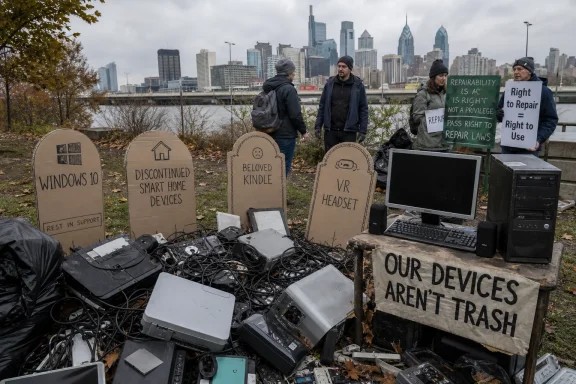
The advocacy groups’ wider point is that a connected device can become functionally obsolete because its vendor ends an app, server, cloud API, or update stream—not because a component broke. CBS Philadelphia cited Belkin’s discontinued Wemo Smart Home line, older Kindle models, and Meta’s original Quest headset among the products highlighted in the campaign.
U.S. PIRG’s Electronic Waste Graveyard tracks more than 100 product lines affected by discontinued software or services. The group says the accumulated weight of devices made obsolete this way has reached at least 130 million pounds, though that estimate covers a longer period than the past year.
For Windows users, the distinction matters. An unsupported Windows 10 PC is not dead hardware, and Microsoft’s own guidance makes clear that it will continue functioning after end of support. But without patches, continuing to use it on the internet becomes a security decision, not simply a matter of preference.
Pennsylvania’s Bill Is Still Waiting in the Senate
The groups are directing attention to Pennsylvania House Bill 1512, the proposed Right-to-Repair Act. The state House passed the measure 110–93 on October 27, 2025, and it was referred to the Senate Consumer Protection and Professional Licensure Committee on November 5, 2025, where it remains.
The bill would require manufacturers of digital electronic equipment to make repair documentation, parts, and tools available to owners and independent repair providers on fair and reasonable terms. It would not restore a vendor’s cloud service or force security updates indefinitely, but it could make physical failures less likely to become an automatic replacement event.
The harder policy question is the one the Philadelphia display put front and center: whether vendors should say, at the point of sale, how long a product’s essential online functions will be supported. For a Windows PC, the support lifecycle is at least published. For smart-home and cloud-connected products, that promise is often far less visible—until the service shuts down.
