

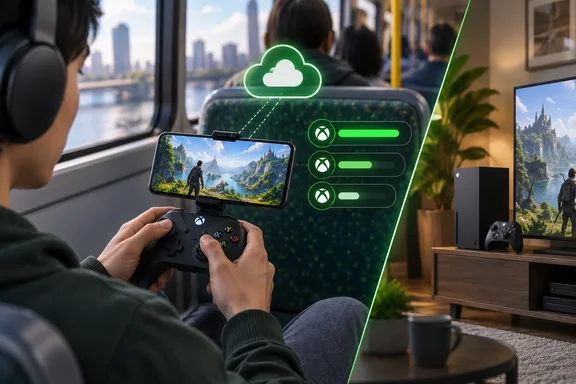
Xbox Cloud Gaming Swaps Unlimited Streaming for Monthly Game Pass Allowances
Xbox Wire announced the policy on September 3, 2026. Xbox Wire editor-in-chief Joe Skrebels wrote that beginning in November, Xbox is changing how cloud gaming is included with Xbox Game Pass. Game Pass plans will include a set number of cloud gaming hours each month: Game Pass Ultimate: 15 hours · Game Pass Premium: 10 hours · Game Pass Essential: 5 hours. The same post says that today, eligible subscribers stream without these monthly hour limits.
CNBC, Pure Xbox, Windows Central and Tom's Hardware all reported the change. CNBC described it as ending years of unlimited access, as the company seeks to find a better balance between usage and costs. CNBC also gave a price for the top tier: Game Pass Ultimate, which costs $22.99 per month, will have access to 15 hours of cloud gaming.
The limit applies to streaming only, not to Game Pass as a whole. Tom's Hardware confirmed that the changes affect only Xbox Cloud Gaming, a feature included with Xbox Game Pass that lets subscribers stream and play games directly from Microsoft's servers over the Internet. Subscribers can still download and install as many Xbox Game Pass titles as they want on their consoles or gaming systems, with no monthly limits on playtime. Someone who downloads Forza Horizon 5 to an Xbox Series X or a Windows PC is not affected. Someone who streams the same game to an Android phone on a train is.
Averaged over a 30-day month, the allowances work out to about 30 minutes a day on Ultimate, 20 on Premium and 10 on Essential. That's simple arithmetic, but it's useful for judging your own habits. In practice, a couple of long weekend sessions could use up an Ultimate subscriber's month.
Microsoft Says 4% of Game Pass Subscribers Will Hit the 15-Hour Cap
Microsoft gives cost as its reason. The Xbox Wire post says "We're introducing this model because the cost of providing cloud gaming grows as more people use it and play for longer. Moving to monthly limits allows us to keep offering the service while continuing to invest in its reliability and performance. We understand that for some players the practical result is a higher cost." For a vendor announcement, that's an unusually direct admission.
The company also puts a number on the impact: "We recognize that introducing limits is a meaningful change, particularly for players who regularly spend more time gaming through the cloud. We expect this upcoming change to impact 4% of Game Pass subscribers." Xbox hasn't explained how it got to 4%, whether it's based on recent usage, or whether it counts all subscribers or only those who have ever streamed.
That 4% figure is Microsoft's partial answer to the question Will raises on the podcast about why the cap is 15 hours. If most subscribers stream little or nothing, a limit set above typical usage leaves them alone and charges the heavy users who cost the most to serve. What the figure doesn't show is who that 4% is. Pure Xbox's comment section gives a sense of it. One reader said they travel a lot, their gaming PC runs Linux, and they plan to cancel Ultimate. Another argued that 15 hours for Game Pass Ultimate is unacceptable. These are individual reader comments, not survey data, but they fit the profile Microsoft describes: people for whom the cloud is the main way they play.
Windows Central put the change in industry context, writing that Xbox Cloud Gaming is joining NVIDIA and other platforms in putting hourly limits on its streaming service. Commenters have compared Xbox's cap with NVIDIA GeForce NOW's much larger monthly allowance on its paid tiers. The comparison is fair on hours alone, but the two services price and package games differently.
Mobile Game Pass Players Carry the Heaviest Burden
The podcast focuses on mobile, which is the right place to look. On a phone or tablet, cloud streaming is usually the only way to play Xbox console games at all. A console owner who runs out of hours can install the game locally. A phone-only player can't.
Xbox's cloud gaming page lists the supported hardware as phones and tablets alongside Windows PCs, Xbox consoles, select LG, Samsung and VIDAA OS smart TVs, Amazon Fire TV and select Meta Quest headsets. Getting started requires an active Ultimate, Premium or Essential subscription, a supported game in a supported region, and a compatible controller connected over Bluetooth or USB, although select games support Xbox touch controls. On phones, tablets and PCs you can also play through supported browsers at xbox.com/play, including Microsoft Edge, Google Chrome and Safari.
Xbox has not announced a separate mobile allowance. Your plan's monthly hours cover every device you stream to. If you stream on a Fire TV stick in the living room and on a phone during your commute, both draw from the same allowance. The Xbox FAQ also covers people with more than one subscription: cloud playtime hours included with Game Pass do not stack if you have more than one eligible Game Pass subscription. If you get Game Pass through a partner offer and also pay for Ultimate, only the subscription with the higher allowance counts.
PC Game Pass is a separate case. The Xbox page's footnote says monthly cloud limits vary by plan and that cloud gaming is not included with PC Game Pass at all. Subscribers on that tier who expected cloud access are not losing anything in November, because they never had it.
Xbox also frames the cloud as a way into its games in markets where consoles are harder to buy. The Wire post says cloud gaming can also give Xbox One owners access to eligible games built for Xbox Series X|S without requiring an immediate hardware upgrade, and that this can be especially useful where consoles are less available or affordable. Those same players now face a monthly limit on that access.
Connectivity and Cost: What Pocket Gamer Podcast Episode 96 Gets Right
The podcast's sharpest question is how charging for extra hours affects players whose connections are far from perfect. The hour cap and the quality of your connection are two separate limits, and the new policy makes each one worse for the other.
Xbox's minimums are modest on paper. The FAQ calls for a Wi-Fi / LTE data connection with minimum of 10Mbps down-speed, notes that some devices may need 20Mbps for the best quality, and recommends 5GHz Wi-Fi. Best performance is listed at 10 Mbps on mobile devices and 20 Mbps on consoles, PCs and tablets. Xbox also warns that streaming performance depends on your connection, location, device and other factors. Even when conditions are good, streamed games can run at lower video resolution, support fewer audio outputs, save to the cloud only, and work with fewer accessories.
Here's the problem. Xbox hasn't said how hours are counted: whether time spent in queues, loading screens or sessions that drop and reconnect counts against your allowance. In its words, it will explain how players can check their remaining time in November. Until then, it's an open question whether a player on flaky mobile data loses paid hours to stutter and reconnects. Nobody has published data on how often that happens, but it's the practical risk the podcast is pointing at.
Stream quality already varied by tier before the caps. The Verge reported earlier that Xbox Cloud Gaming's 1440p option would be exclusive to Ultimate, with Premium and Essential capped at 1080p. Ultimate subscribers get the best picture and the most hours. Essential subscribers get a third of the time at a lower maximum resolution.
The episode also moves on to Epic Games Store giveaways and Netflix's games catalogue. The hosts hope Netflix won't split its games from its shows. These come up as comparisons between subscription models, not as new announcements. They show why a metered Game Pass lands badly with mobile players: competing services offer free or bundled games, and Xbox is now charging for time.
Pay-As-You-Go Cloud Hours Open Xbox Streaming to Non-Subscribers
The November change includes something new alongside the restriction. According to the Wire post, players will be able to purchase cloud playtime hours through the Xbox Store and stream eligible games they own on supported devices. Xbox pitches this at people who want occasional cloud gaming or don't want a recurring Game Pass subscription.
That fits with a capability Xbox already offers. The cloud gaming page says you can stream select games you own or buy, including most Xbox Play Anywhere titles. Windows Central noted that Xbox's disc-to-digital program lets you play disc-based Xbox games you own if they're included in Xbox Cloud Gaming. Players who own a library but don't want Game Pass get a metered way to stream it. Xbox hasn't published the list of eligible games, the markets or the price per hour.
Tom's Hardware summed up the new model as the company has decided to monetize actual gaming time, and said subscribers who reach their limit will be prompted to buy more hours from the Xbox Store. The outlet also pointed out that the policy takes effect in the same month Grand Theft Auto VI launches on November 19. That's the outlet's reading of the timing. Microsoft hasn't linked the two.
Several details that decide whether this is a fair deal are still missing. Xbox has promised more information about pricing, purchasing additional hours, eligible games, market availability, and how players can check their remaining time in November, and says available hours, purchasing options, and cloud gaming features may vary by market. The announcement doesn't say whether unused hours roll over. A few social-media summaries claim they do, but Xbox's own materials say nothing about rollover, so don't count on it.
What this means for you
What you should do depends on where you play. If you mostly install Game Pass games on an Xbox Series X|S, Xbox One or Windows PC, November changes nothing for your normal play. If you stream to a phone, tablet, TV app, browser or headset without a local fallback, now is the time to measure your real usage and decide what to do before the prices for extra hours come out.
- Track roughly how many hours you stream in a normal month now, while streaming is still unlimited. Compare that with 15 hours for Ultimate, 10 for Premium and 5 for Essential.
- If you have a console or capable Windows PC at home, install the games you play most so they don't use up cloud hours. Keep your allowance for travel and away-from-home play.
- Don't pay for a second Game Pass subscription, such as a partner bundle, to get more cloud hours. Allowances don't stack, and only the higher one applies.
- If you're on PC Game Pass, cloud streaming isn't included in your plan and the November allowances don't apply to you.
- Watch for Xbox's November details on extra-hour pricing, how time is counted and how to check remaining hours before you renew an annual plan or buy a streaming-focused accessory.
- If you stream on weak or unstable connections, test your setup against Xbox's 10 Mbps minimum and 5GHz Wi-Fi recommendation, since unreliable sessions may cost more once time is metered.
Microsoft has been clear that its cloud costs have outgrown flat-rate streaming. It has also said the policy will cost more for some players and that it will listen to feedback and publish any adjustments. The Pocket Gamer hosts' main point holds up: the people this change hurts most are the ones who use the cloud because they don't have a console. The November pricing announcement will settle whether that 4% ends up paying more or moves to installing games locally.