

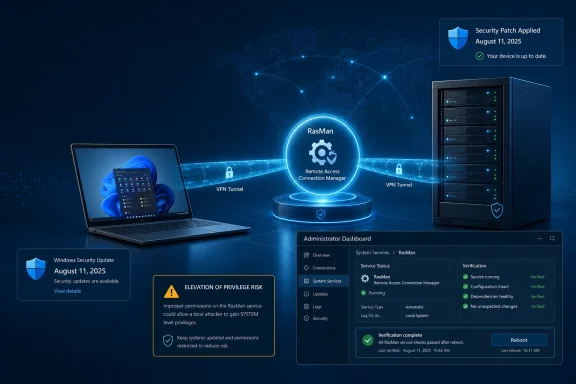
The more important finding from the record is what Microsoft has not yet made public. The Security Update Guide entry establishes that the vulnerability exists and is being serviced, but the material reviewed for this report does not provide a CVSS score or vector, the underlying weakness category, affected Windows versions and build cutoffs, an attack path, mitigation guidance, or a statement that exploitation has been observed. Searches of the NVD and CVE Program records available at publication did not surface a corresponding indexed entry. That gap is common on release day, but it means administrators should resist filling in the blanks with assumptions.
The submitted advisory language also includes an explanation of the “Exploit Code Maturity” metric. That is explanatory text for a CVSS metric, not a disclosed exploitability rating by itself. It does not mean public exploit code exists, that a proof of concept has circulated, or that Microsoft has confirmed active exploitation.
What CVE-2026-62783 Does — and Does Not — Establish
Microsoft’s title is specific on one point: CVE-2026-62783 is classified as an elevation-of-privilege issue in Windows Remote Access Connection Manager. In practical terms, that means a successful attacker could obtain permissions beyond those initially available to them. It does not establish whether that final access is administrator, LocalSystem, another user context, or a more limited security boundary.
Neither does “elevation of privilege” answer the question most security teams will ask first: can the attack start remotely? Microsoft has not publicly described whether exploitation requires local code execution, an authenticated session, a crafted connection profile, network interaction, user action, or a particular VPN configuration. Those distinctions determine whether this is primarily a post-compromise tool, a remote-access exposure, or an issue confined to a narrower set of configurations.
At 00:57 UTC on August 12, no independent security outlet located in this review had published technical analysis of CVE-2026-62783. No researcher credit, proof of concept, exploit sample, or public incident report was identified. The absence of that material is not a reason to defer patching; it is a reason to describe the risk accurately rather than label an incompletely documented flaw a zero-day or claim that it grants SYSTEM access.
Microsoft’s Security Update Guide is authoritative that the issue was published on August 11. It is not yet sufficient, on its public face, to support stronger claims about exploitability or scope.
RasMan Is a VPN Dependency, Not a Server Role Indicator
Remote Access Connection Manager is often confused with the Windows Routing and Remote Access Service, whose service name is RemoteAccess. They are related components, but they are not interchangeable. RasMan is the client-side service that manages dial-up and VPN connections from a Windows device to the Internet or another remote network; Microsoft’s service guidance says it is installed on Windows systems and warns that services explicitly dependent on it cannot start if it is disabled.
That makes CVE-2026-62783 relevant beyond organizations running a Windows Server VPN gateway. A Windows 11 laptop using a corporate VPN, a Windows 10 LTSC endpoint with a legacy connection profile, or a server initiating an outbound remote-access connection may all rely on RasMan. Conversely, RasMan’s presence alone does not prove that a machine is exposed to whatever trigger this vulnerability requires, because Microsoft has not published that trigger.
For IT teams, the operational consequence is clear: do not treat disabling Remote Access Connection Manager as a routine compensating control. Stopping or disabling RasMan can break user VPN connectivity, Always On VPN behavior, connection profiles, and applications that rely on Windows remote-access APIs. It may be appropriate as a narrowly approved, temporary containment measure for a system that demonstrably does not need remote access, but Microsoft has not identified it as a mitigation for CVE-2026-62783.
The correct default is patch deployment and verification, not service surgery.
The Missing Build List Is the Immediate Management Problem
Microsoft normally maps Windows CVEs to specific product releases, KB articles, and fixed build numbers in the Security Update Guide. That mapping is the information administrators need to convert “patch August updates” into a defensible compliance query: which Windows 11 releases, Windows 10 LTSC editions, and Windows Server versions are actually affected; which cumulative update resolves the issue; and which build number proves remediation.
Those concrete fields were not available in the material reviewed here. As a result, organizations should not create a custom detection rule that claims a particular KB or OS build remediates CVE-2026-62783 until Microsoft’s own deployment data names it. Guessing from adjacent August releases can produce a false “patched” status, especially across Windows servicing branches and Extended Security Update products.
This is also a reminder that vulnerability scanners may lag a new Microsoft CVE in two different ways. A scanner can know that the CVE exists while lacking reliable product mappings, or it can inherit incomplete third-party database information before NVD enrichment appears. Neither condition proves a device is unaffected. For the first deployment cycle, update compliance should be measured through the approved August cumulative update for each supported Windows branch and then reconciled against Microsoft’s revised advisory when the product table is available.
Administrators with tightly controlled change windows should prioritize machines where a compromised standard user would have a valuable next step after escalation: shared workstations, jump hosts, developer endpoints, VPN concentrator management workstations, and systems used by IT support personnel. That is sound privilege-escalation hygiene, but it should not be misrepresented as evidence that those systems are uniquely vulnerable to this CVE.
What to Do in This Patch Cycle
Teams should incorporate CVE-2026-62783 into the August Windows security-update rollout, but retain the uncertainty in the ticket and risk record rather than converting it into invented technical details.
- Deploy the applicable August 11, 2026 Windows security update to supported client and server rings, beginning with VPN-using endpoints and privileged-administration workstations.
- Confirm installation through normal update-compliance reporting and actual post-restart build verification; a downloaded or pending update does not remediate the vulnerability.
- Do not disable the
RasManservice across the fleet as a blanket response, because doing so can remove VPN capability and may disrupt dependent services without a Microsoft statement that it blocks exploitation. - Preserve standard endpoint controls that limit low-privilege code execution, including application control, least privilege, controlled software deployment, and monitoring for unexpected local administrative changes. These controls reduce the value of privilege escalation generally, even though Microsoft has not described this flaw’s attack chain.
- Watch for a revision to Microsoft’s advisory that adds the CVSS vector, exploitability assessment, affected products, KB mappings, mitigations, or acknowledgement information. Microsoft’s CVRF-based Security Update Guide data is designed to carry exactly those later revisions.
Do Not Let the Label Drive the Severity Decision
CVE-2026-62783 should be patched promptly because Microsoft released it as a Windows security vulnerability, not because the available record proves it is remotely exploitable, publicly weaponized, or capable of immediate SYSTEM takeover. Those are materially different claims, and none is established in the public information reviewed so far.
The strongest conclusion available today is narrower: Windows administrators have a newly published RasMan elevation-of-privilege fix embedded in the August 11 servicing cycle, while the technical record needed to prioritize it against other Windows flaws remains incomplete. Treat the patch as required maintenance, verify it landed, and do not make operationally damaging configuration changes on the basis of a title and a metric tooltip.