AFEELA Prototype 2026: SUV Near Production Timeline Confirmed at CES

  • Thread Author
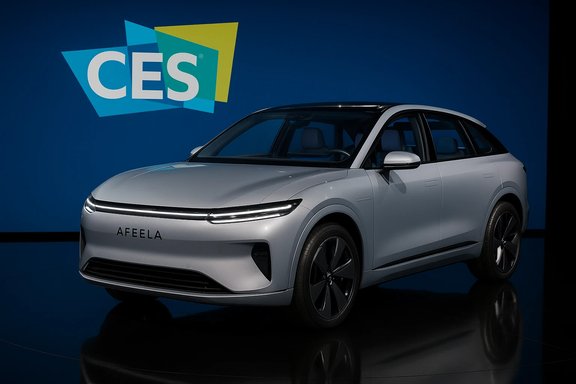
A sleek AFEELA electric SUV on display at CES.
Sony Honda Mobility used CES 2026 to push the AFEELA project beyond a show car and into a near‑production reality, debuting a new AFEELA Prototype SUV while confirming concrete timelines, partners, and commercial plans that make the venture feel far more engine‑room than concept‑stage.

Background / Overview​

Sony Honda Mobility (SHM), the 2022 joint venture between Sony Group and Honda Motor, launched AFEELA as a mobility brand that deliberately blends entertainment, AI, and automotive engineering. The intent has always been to build vehicles that act as intelligent partners—rolling software platforms that center the cabin as a creative entertainment space rather than merely a means of transport. That strategy first showed traction with the AFEELA 1 liftback and has been iterated publicly since the brand’s initial unveilings in 2023 and the AFEELA 1 announcements at CES 2025. SHM used CES 2026 to present the next chapter: a production‑intended SUV prototype alongside updates on production, partnerships, and commercial roll‑out. The takeaways from SHM’s CES presence are straightforward and consequential for both consumers and the industry: AFEELA 1 is moving into production and customer deliveries in the U.S. this year with an ambitious entertainment‑first software stack; SHM is laying out a technology roadmap centered on the Snapdragon Digital Chassis and Microsoft Azure OpenAI Service; and the company is exploring novel business models—from subscription features to an on‑chain “X‑to‑Earn” incentive program—that explicitly court creators and developer ecosystems.

What SHM Announced at CES 2026​

The new prototype and production intent​

At a January 5 press event held ahead of the consumer show floor, SHM unveiled the AFEELA Prototype 2026 — an SUV concept designed to demonstrate spatial flexibility and a platform for more accessible, entertainment‑centric cabin experiences. SHM stated a production model based on this prototype could arrive in the U.S. market as early as 2028, indicating the SUV is intended to be more than a design exercise. Reuters and SHM’s own releases reinforced the timeline and strategic purpose of the prototype reveal.

AFEELA 1: deliveries, pricing, and availability​

SHM reiterated that AFEELA 1—the company’s first production vehicle—will begin customer deliveries in California later this year, priced from $89,900 for the Origin trim and $102,900 for the Signature trim. Reservations opened in January 2025 with a refundable fee, and SHM says it has been using public showrooms and temporary studios to give customers hands‑on demos. Multiple outlets confirm the pricing and the initial California‑only reservation window.

Verified traffic and demo metrics​

SHM published engagement numbers from its first year of reservation and studio activity: more than 100,000 showroom visitors and roughly 24,000 in‑vehicle demonstrations across its AFEELA Studio events. Those figures indicate active consumer interest during the reservation and experiential campaign period, and SHM has used these results to justify phased dealership‑free rollouts and studio‑based delivery hubs. These engagement numbers appear in the company’s official communications about CES 2026.

Production, Trial Runs, and the Supply Chain​

Manufacturing partner and trial production​

SHM confirmed trial production of AFEELA 1 at Honda’s East Liberty (Ohio) plant during fall 2025 as part of production validation. The East Liberty plant is being used under contract manufacturing arrangements; this is consistent with Honda’s role as manufacturing partner while Sony contributes software, entertainment IP, and human‑machine interface expertise. Trial runs at an existing facility are typical for new EV brands because they reduce capital intensity and accelerate ramp capabilities.

Geographic roll‑out plan​

  • AFEELA 1 initial deliveries: California (late this year).
  • Sales expansion: planned for Arizona in 2027.
  • Japan deliveries: scheduled for the first half of 2027 (per SHM’s CES 2026 communications).
SHM is explicitly phasing market introductions rather than pursuing a simultaneous global launch, a pragmatic approach given regulatory, service network, and localization needs for advanced driver assistance and entertainment features.

The Technology Stack — What’s Under the Hood​

Snapdragon Digital Chassis and compute​

SHM has declared Qualcomm’s Snapdragon Digital Chassis as a core element of its future E/E architecture. That decision ties AFEELA’s roadmap to a vendor ecosystem focused on integrated telematics, connectivity, AD/ADAS compute, and IVI workloads—a common choice for companies building software‑heavy EV platforms without designing silicon in‑house. Qualcomm’s chassis solutions have been referenced by SHM since the brand’s inception and were re‑affirmed in the CES 2026 messaging.

AFEELA Intelligent Drive: from Level 2+ to a Level 4 target​

SHM framed AFEELA Intelligent Drive as an evolving, model‑based ADAS strategy that starts with Level 2+ driver assistance for end‑to‑end route support and aims for Level 4‑equivalent capabilities in the longer term. Practically, that means a staged approach: rich driver assistance and hands‑on semi‑autonomy today; more sophisticated, restricted‑domain autonomy later, contingent on validation, regulatory approvals, and hardware upgrades. SHM’s public briefings emphasize the aspiration, but they also make clear full Level 4 deployment is a future target rather than a near‑term guarantee.

Azure OpenAI Service and the AFEELA Personal Agent​

SHM confirmed a close collaboration with Microsoft for the AFEELA Personal Agent, a conversational, personalized in‑vehicle assistant that leverages Microsoft Azure OpenAI Service and managed cloud services for data storage and orchestration. Microsoft’s own case materials and SHM’s announcements describe a hybrid edge/cloud approach—speech capture and deterministic functions at the car edge, with conversational context, personalization, and model updates orchestrated via Azure services. The partnership is a clear signal that SHM intends to build large‑scale conversational AI into the user experience while relying on established cloud governance and distribution tools.

Immersive UX: displays, audio, and entertainment integration​

The AFEELA cabin is explicitly designed as an entertainment space, featuring optimized panoramic displays and a Sony‑powered spatial sound system. SHM has promoted support for high‑quality game streaming and content ecosystems, including PlayStation‑adjacent experiences, Unreal Engine visuals for AR/navigation layers, and developer APIs through the AFEELA Co‑Creation Program. These elements position the vehicle as a long‑dwell platform for media and interactive experiences.

Business Model & Ecosystem: Subscriptions, Studios, and Co‑Creation​

Direct sales + studio model​

SHM is avoiding traditional dealer networks, opting for direct sales, owned AFEELA Studio & Delivery Hubs (Torrance, Fremont and other temporary experiential locations) and experience‑led delivery. The approach echoes direct‑to‑consumer patterns from other new EV entrants and is intended to control brand presentation and deliver a curated customer onboarding for a software‑rich vehicle. Early reservation holders are being rolled into an AFEELA Advanced Access program for demo drives and staged feature access.

Subscriptioned features​

Both AFEELA 1 trims include a complimentary three‑year subscription for certain services, like AFEELA Intelligent Drive and the Personal Agent, signaling a recurring revenue strategy. Post‑trial, customers will likely face subscription tiers—typical for SDV (software‑defined vehicle) models—making the car an ongoing software platform rather than a one‑time hardware purchase.

AFEELA Co‑Creation Program & developer ecosystem​

SHM announced the AFEELA Co‑Creation Program, which opens APIs, SDKs, and development documentation to creators and third‑party developers for in‑vehicle entertainment apps and experiences. This is an explicit attempt to make the vehicle attractive to content creators, enabling custom theme sets, apps, and experiences that can be distributed via the AFEELA ecosystem. The program aims to bootstrap an app economy for the cabin—think in‑car entertainment, game streaming optimizations, AR navigation themes, and more.

On‑chain mobility platform and X‑to‑Earn​

Perhaps the most speculative commercial idea SHM announced is an on‑chain mobility service platform that uses token‑based incentives under the “X‑to‑Earn” concept. The stated goal is to reward creativity and participation across ideation, development, and evaluation cycles. While the idea maps cleanly onto creator economies in media, it raises immediate questions about regulatory compliance, token custody, and integration with existing automotive service chains. SHM’s statement is exploratory and framed as a future experiment open to other industry participants.

Strengths: Why AFEELA Has Credible Momentum​

  • Sony + Honda combination: Sony brings entertainment, UX, and content ecosystems; Honda offers manufacturing scale and safety‑critical engineering. That pairing reduces classic new‑brand execution risk.
  • Partnered platform approach: Tying Snapdragon Digital Chassis and Azure OpenAI Service into the architecture means SHM is leveraging mature vendor ecosystems, shortening time to market for complex features like in‑car LLM integration and automotive‑grade compute.
  • Experience‑led go‑to‑market: Demonstration studios, demo drives, and curated delivery hubs give SHM control over the first‑user experience—important when the vehicle’s value proposition is software and entertainment rather than purely hardware specs.
  • Active developer outreach: The Co‑Creation Program and SDK approach can accelerate third‑party engagement, bringing specialized content and apps into the cabin faster than SHM could build in‑house.

Risks, Gaps, and the Hard Questions​

Despite its strengths, the AFEELA strategy comes with material risks and open questions that will determine whether the product becomes a durable success or an over‑promised novelty.

1. Autonomy promises vs. reality​

SHM’s roadmap includes a target of Level 4‑equivalent autonomy in the future, but the company is shipping Level 2+ systems today. The path from advanced driver assistance to true L4 autonomy is paved with regulatory hurdles, massive validation costs, and edge‑case complexity. The public messaging is realistic in acknowledging this as a future target, but investors and buyers should treat Level 4 timelines as aspirational until independent validation and regulatory approvals appear.

2. Data privacy and cloud dependency​

Using Azure OpenAI Service and cloud personalization introduces privacy and latency considerations. SHM’s materials highlight hybrid edge/cloud approaches and low‑latency engineering, but the transfer and storage of voice interactions, personalization data, and usage telemetry to cloud services create a significant responsibility for secure data handling, consent, and compliance—especially given different regulatory regimes across the U.S., EU, and Japan. Microsoft’s involvement mitigates many platform risks, but privacy remains an operational challenge.

3. Cybersecurity and attack surface​

A vehicle that is a cloud‑connected entertainment hub expands attack surface dramatically: infotainment, OTA updates, LLM interactions, external APIs and tokenized services all create potential vectors. SHM will need hardened partitioning between safety‑critical systems and entertainment/third‑party apps and a robust update and incident response program to mitigate risk. Industry experience shows hyperconnectivity demands continuous security investment.

4. On‑chain token model: regulatory and practical friction​

The on‑chain mobility service and “X‑to‑Earn” idea is forward‑looking but fraught with regulatory uncertainty—securities law, taxation, KYC/AML procedures, and consumer protection rules could all complicate rollout. Without clearer go‑to‑market mechanics and compliance guardrails, token incentives risk becoming a splashy signaling device rather than a stable business mechanism. SHM’s announcements frame the platform as exploratory; prudent readers should treat the blockchain plan as experimental until specifics emerge.

5. Pricing and market timing​

AFEELA 1’s starting price near $89,900 places it in the premium luxury EV bracket. The U.S. EV market shows signs of cooling and intensifying competition from established luxury brands and price‑aggressive challengers. SHM must demonstrate clear differentiation via entertainment ecosystems and software experiences to justify a premium price and secure a stable buyer cohort. Early engagement metrics are encouraging, but conversion from showroom curiosity to sustainable ownership at that price point is not guaranteed.

Developer & Windows Ecosystem Implications​

From a WindowsForum readership perspective, the AFEELA story is notable beyond automobiles. The vehicle becomes a distributed endpoint for cloud services—Azure, conversational AI, and connected developer ecosystems—areas where Windows developers and platform integrators already have skills and toolchains. The AFEELA Co‑Creation Program’s Android IVI environment and cloud APIs will likely complement, not replace, existing cross‑platform and Windows‑centric tooling. For enterprise and consumer developers, SHM’s approach creates opportunities to:
  1. Build immersive, AR‑tied navigation and content apps that integrate with cloud services and on‑device sensors.
  2. Explore hybrid cloud/edge models requiring low‑latency inference, where experience deploying LLMs on Azure can map to in‑vehicle scenarios.
  3. Evaluate security best practices for partitioning entertainment apps away from safety‑critical stacks—lessons that generalize to other SDV projects.
In short, AFEELA’s architecture is a testbed for cloud‑driven, AI‑first consumer devices with a unique form factor. Those building on Azure, UWP/WinUI or cross‑platform stacks should track how SHM exposes SDKs, APIs, and distribution channels for third‑party apps.

Practical Buyer Checklist (for early reservation holders)​

  • Confirm exact delivery timing and your place in the reservation queue; early demos do not guarantee immediate allocation.
  • Review included subscription details and what features will be complimentary for three years vs paid thereafter.
  • Ask about data handling: how voice transcripts, personalization profiles, and telemetry are stored and deleted.
  • Validate what safety features are enabled at delivery (Level 2+ assistance vs. any supervised/autonomous features) and how future Level 4 capabilities, if delivered, will be certified.
  • Understand dealer‑free delivery: warranty repairs, maintenance logistics, and certified service centers for Tesla‑style over‑the‑air architectures.

Final Assessment: Why This Matters​

Sony Honda Mobility’s CES 2026 announcements make AFEELA feel like a deliberate entry into the premium software‑defined vehicle market rather than a speculative tech‑brand vanity project. The company has paired credible manufacturing capability (Honda) with entertainment and cloud expertise (Sony and Microsoft), and anchored its software strategy around industry partners (Qualcomm, Microsoft). Those partnerships materially lower execution risk for compute, connectivity, conversational AI, and developer distribution—three pillars of SHM’s stated strategy. However, the business will be judged not by press releases but by execution: safe and reliable rollout of ADAS features, secure handling of data and cloud integrations, and convincing consumers that a car built around entertainment and subscriptions delivers measurable utility relative to similarly priced alternatives. The on‑chain incentives and creator economy play are intriguing, but they are the riskiest, least‑defined part of the plan and deserve cautious monitoring. For tech and Windows‑community readers, AFEELA’s approach underlines an important trend: vehicles are becoming platforms where cloud services, developer ecosystems, and entertainment content are as strategically important as battery chemistry or motor power. That shift opens clear opportunities for software developers, platform partners, and service integrators—but it also raises new responsibilities around privacy, security, and regulatory compliance.
Sony Honda Mobility’s CES 2026 show was as much about credibility as it was about spectacle: the AFEELA Prototype SUV positions the company to move beyond a single model; trial production, showroom metrics, and named partnerships demonstrate real program momentum; and the combination of entertainment IP with automotive engineering sets a distinct product positioning. The road ahead is complex—autonomy validation, cloud‑native safety, and a competitive luxury EV market are unforgiving—but SHM has assembled the pieces needed to give the AFEELA experiment a credible shot. The next milestones to watch are real‑world safety validation data, demonstration fleet feedback from Advanced Access demos later this year, and how SHM turns creative developer interest into production‑grade, monetizable in‑vehicle experiences.
Source: Technobezz Sony Honda Mobility Debuts AFEELA Prototype SUV at CES 2026
 

Sony Honda Mobility used CES 2026 to push the AFEELA program further into product reality, revealing a pre-production AFEELA 1 sedan that will begin U.S. deliveries in 2026 and — crucially for buyers and industry watchers — teasing a larger, production-intent SUV expected to land in the U.S. as early as 2028. The move signals that Sony Honda Mobility (SHM) intends to broaden the AFEELA lineup beyond an entertainment-first, software-defined sedan into a more conventional, higher-volume body style, while doubling down on the company’s headline strategy: cloud-powered conversational AI, PlayStation-class entertainment, and a Snapdragon-based automotive compute stack.

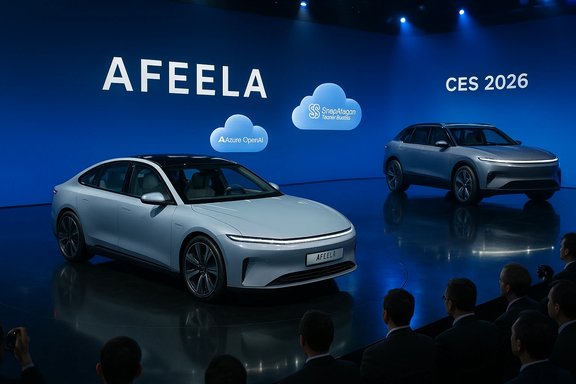
CES 2026: Afeela electric cars on stage beneath blue lighting with cloud AI logos.Background: AFEELA’s pivot from concept to near-production​

Sony Honda Mobility — the 2022 joint venture marrying Sony’s media and software strengths with Honda’s manufacturing and safety expertise — has been framing AFEELA as a “Creative Entertainment Space” since the first prototypes. The CES 2026 presentation crystallized that ambition into concrete commercial signs: the AFEELA 1 is now a pre-production model with confirmed pricing and a delivery window, while a new SUV prototype (the AFEELA Prototype 2026) was shown as a near-production study with a potential U.S. launch around 2028. These announcements convert years of concept demos into tangible product timelines.
  • AFEELA 1: pre-production shown at CES 2026; deliveries in California scheduled within 2026; expansion to Arizona and Japan planned in 2027.
  • AFEELA Prototype 2026 (SUV): presented as production-intent prototype; SHM states a production model could arrive in the U.S. as early as 2028.
This progression reflects SHM’s pragmatic approach: validate an initial premium sedan and then scale product breadth with derivative body styles that reuse the same technical base — a common OEM play to amortize development costs.

What SHM actually showed at CES 2026​

The pre-production AFEELA 1​

The AFEELA 1 that rolled onto the CES stage was presented as a near-production pre-production model rather than a conceptual mock-up. Key confirmed points from SHM and independent reporting:
  • Two trims: Origin (entry) and Signature (premium). Pricing announced: Origin starting at $89,900, Signature at $102,900. Signature is the launch trim for 2026; Origin deliveries are slated to follow in 2027.
  • Target driving range: up to 300 miles (target value, under development). Battery and powertrain technicals were described in outline by SHM and reported by industry outlets (e.g., a ~91 kWh battery target and AWD motorization in some spec reporting), but many specs remain labeled as “target” rather than fully verified production figures. Treat the 300-mile figure as an aspirational target disclosed by SHM.
  • Entertainment and services bundle: Both trims include a three-year complimentary subscription for services such as AFEELA Intelligent Drive and the AFEELA Personal Agent, as well as curated entertainment content and theme sets. After the trial period, features will likely be tiered behind paid subscriptions.
  • Manufacturing: Trial production has been run at Honda’s East Liberty (Ohio) facility as part of validation; SHM intends to produce AFEELA 1 using existing Honda capacity.

The AFEELA Prototype 2026 SUV​

Visually, the SUV prototype carries family resemblance to the sedan — same design language, wider cabin, taller ride height — but it’s presented as a distinct product with a different value proposition: more interior space, flexible seating arrangements, and a target to address broader household and family use cases.
  • SHM described the SUV as sharing the AFEELA 1’s technical base — including sensor suites and the same E/E architecture direction — while promising greater interior flexibility and accessibility. SHM positions the SUV as a natural second model to scale the brand.
  • Timing: SHM says a production model based on the prototype could launch in the U.S. as early as 2028. That is an explicit but conditional timeline: “as early as” implies room for delay.

The technology stack: compute, cloud AI, sensors and entertainment​

SHM’s CES messaging was less about raw horsepower and more about the cabin experience and software platform. Several named partners and technologies anchor that story.

Microsoft Azure + OpenAI: AFEELA Personal Agent​

At the core of SHM’s in-cabin AI is the AFEELA Personal Agent, a conversational assistant SHM says will leverage Microsoft Azure OpenAI Service for natural dialogue, personalization, and cloud orchestration. SHM’s public materials and Microsoft-type statements describe a hybrid architecture: latency-sensitive, deterministic functions and safety-critical voice capture remain on the car edge, while conversational context and personalization are orchestrated in Azure. What that means in practice:
  • The personal agent aims to remember user preferences, respond conversationally, and control in-car systems through natural language.
  • Microsoft’s cloud will be used for orchestration, model updates, personalization storage, and potentially larger LLM-backed reasoning.
  • This hybrid model reduces the need for full-size on-device LLMs at launch but increases cloud dependency, with attendant privacy, latency and cost considerations.
Verification status: Microsoft’s role is confirmed through SHM’s announcements and Microsoft commentary included in prior SHM press activity; the design pattern (edge + Azure orchestration) is a stated architecture rather than an independently validated live product in drivers’ hands. Ask early about concrete data retention and opt-out policies.

Qualcomm’s Snapdragon Digital Chassis and in-car compute​

SHM explicitly named Qualcomm’s Snapdragon Digital Chassis as part of its next-generation electrical/electronic (E/E) architecture. Qualcomm’s automotive-focused platform provides a familiar off-the-shelf base for telematics, connectivity, ADAS adjunct compute and in-vehicle infotainment workloads. Using a commercial automotive compute supplier reduces integration cost and shortens time-to-market for features like OTA updates, local inference acceleration, and media streaming.

Sony’s imaging, spatial audio and PlayStation integration​

Sony’s core strengths — sensors, imaging, media codecs, spatial audio systems and PlayStation IP — are front-and-center in SHM’s pitch:
  • The car emphasizes high-fidelity displays and spatial audio for immersive cabin experiences.
  • PlayStation 5-class gaming is a headline differentiator: SHM is promoting PlayStation integration (remote play / streaming-style experiences) so occupants can play PS5 titles in the car’s rear-seat or cabin displays. This is consistent with prior AFEELA demonstrations and CES 2026 content.

Sensors and autonomy roadmap​

SHM positions AFEELA Intelligent Drive as an evolving ADAS stack: Level 2+ at launch — with hands-on semi-autonomy, route support and a vision-language model ambition — and an aspirational long-term target of Level 4–equivalent capabilities for restricted “driverless” environments emphasizing entertainment while the car drives. The company is explicit that L4 is a future target requiring regulatory approvals, additional validation, and possibly hardware upgrades. Treat L4 as a roadmap goal, not an imminent deliverable.

Pricing, trims and market positioning: premium, entertainment-first​

The announced pricing places AFEELA 1 squarely in the luxury/premium EV bracket:
  • Origin: $89,900 (entry trim; deliveries delayed to 2027).
  • Signature: $102,900 (launch trim for 2026).
Both trims include a complimentary three-year services subscription that bundles driver assistance and the Personal Agent. The strategy is clear: sell a hardware shell plus an ongoing services layer that can be monetized later.

Strengths of this positioning​

  • It leverages Sony’s content assets and unique in-cabin entertainment story — a real differentiator for buyers who value integrated gaming and media experiences.
  • The direct-sales + experience-studio delivery model allows SHM to curate the customer onboarding for a software-centric product, avoiding traditional dealer complexity while showcasing the cabin features.

Weaknesses and market headwinds​

  • Price sensitivity: $89,900–$102,900 is a steep entry point in a market where comparative models (or expected competitive products) target higher range-for-dollar or stronger brand value for similar money. Critics note that rivals may offer greater range or stronger brand recognition at a lower price point. This will force SHM to justify value primarily through services, user experience, and long-term engagement.
  • Subscription friction: a three-year trial is common in SDV playbooks, but converting users post-trial depends on perceived ongoing value and equitable pricing; that’s a business risk the company must manage carefully.

The AFEELA SUV: what the teaser means — and what it doesn’t​

The SUV teaser is an important strategic signal: SHM intends to broaden its lineup beyond a single flagship sedan. For mainstream adoption and volume growth, a family-friendly SUV is often the second vehicle OEMs add.
  • Expected launch: as early as 2028 in the U.S., per SHM’s CES statement. That’s an explicit target but not a guaranteed date. Expect market, supply-chain and regulatory realities to shape the final timeline.
  • Shared foundations: SHM says the SUV will reuse the AFEELA 1’s technical base (sensors, compute stack, in-cabin systems). Reusing platforms is a practical way to reduce development costs and accelerate availability.
  • Interior and flexibility: The SUV is pitched for more interior volume, configurable seating and broader family usage scenarios. Sony/Honda will likely prioritize the same entertainment-first UX but expanded for multi-occupant experiences.
What remains unknown or unverified: battery capacity, weight and final EPA range; final U.S. pricing; timing for optional or bundled autonomy features. SHM’s prototype stage leaves many production details open. Treat any specifics not in SHM’s CES materials as speculative.

Competitive landscape: why the AFEELA story will be tested​

AFEELA’s arrival intersects several competitive pressures:
  • Traditional luxury OEMs (BMW, Audi, Mercedes) continue to refine their EV portfolios with brand cachet and dealer/service networks that new entrants lack.
  • Chinese tech manufacturers (Xiaomi, Huawei, etc. are rapidly bringing advanced EVs to market with aggressive pricing and integrated software stacks. SHM’s entertainment-first differentiation must translate into durable, defensible value to compete.
  • Range vs price trade-offs: Comparison reports highlighted that some competitors can undercut AFEELA on price while offering equal or greater range. SHM’s ~300-mile target must be realized reliably in production to avoid buyer pushback on value.

Risks and open questions (what to watch)​

  • Autonomy timelines vs reality. Level 4 claims are aspirational and will require massive validation, hardware upgrades, and regulatory approvals. Buyers should assume Level 2+ at delivery and view Level 4 as a multi-year project.
  • Cloud dependency and privacy. Leveraging Azure/OpenAI introduces cloud reliance for personalization and orchestration. Customers need clear, auditable privacy policies, retention windows, and opt-outs for voice and telemetry data. SHM has not published exhaustive data governance details at CES; ask for them before purchase.
  • Cybersecurity and partitioning. A connected entertainment hub increases attack surface. Robust partitioning between safety-critical ECUs and infotainment, hardened OTA mechanisms, and an explicit vulnerability disclosure and incident response program will be critical. SHM needs to publish the architecture and update cadence to build buyer confidence.
  • Subscription economics and long-term value. The three-year free trial is a customer-acquisition tool, but conversion depends on perceived ongoing utility. If services are overpriced post-trial or if key features are gated behind paywalls, customer satisfaction could drop.
  • Tokenized on-chain experiments — regulatory friction. SHM floated an “X-to-Earn” on-chain mobility concept. Tokenized incentives intersect with KYC/AML rules, securities law and tax rules; this part of the strategy is experimental and should be treated as such until legal/compliance frameworks are detailed.
  • Service, repairs and dealer-light model. SHM plans studio-first direct sales and experience hubs, which can be compelling for first impressions. However, buyers should demand clarity on warranty repair networks, authorized service centers, and clear escalation paths for safety recalls or software rollbacks.

What AFEELA means for developers and the WindowsForum audience​

AFEELA is not just a car — it’s an endpoint for cloud services and developer ecosystems. For Windows and Azure developers, several practical implications matter:
  • The AFEELA Co-Creation Program promises APIs, SDKs and Android IVI tooling for creators to build in-vehicle content, themes and apps. This opens a new distribution and revenue channel for creators and studios.
  • Hybrid edge/cloud patterns (edge speech capture + Azure-backed context) replicate architectures used in enterprise conversational systems; Windows developers with Azure/OpenAI experience will have transferable skills for the in-car environment.
  • Security best practices — strict partitioning, signed OTA updates, and formal incident response — will be essential knowledge areas as the AFEELA platform evolves. Lessons learned in enterprise device management can apply to software-defined vehicles.

Final assessment: credibility, constraints and the path forward​

Sony Honda Mobility’s CES 2026 push was notable for converting concept-era rhetoric into measurable product signals: confirmed pricing, a pre-production AFEELA 1, trial production at Honda’s Ohio plant, a concrete partner ecosystem (Microsoft, Qualcomm), and a clearly stated plan to broaden the lineup with a family-oriented SUV by 2028. Those are meaningful credibility milestones for a relatively young JV. Strengths:
  • Credible partner stack: Sony’s content and imaging strengths plus Honda’s manufacturing credibility reduce certain execution risks.
  • Platform-first approach: Tying in Qualcomm’s automotive-grade compute and Microsoft’s cloud reduces the need for SHM to reinvent core infrastructure and accelerates time to market.
  • Experience-led sales: Studio demos and direct-sales curation help present the vehicle exactly as SHM intends — a software-first entertainment platform.
Weaknesses and constraints:
  • Premium price vs proven utility: AFEELA 1’s pricing forces the company to deliver real, long-term software and service value; if customers perceive the experience as novelty rather than necessity, conversion risk rises.
  • Regulatory and validation hurdles for autonomy and token experiments: L4 autonomy and on-chain token economics are long-range bets that will face external constraints beyond SHM’s control.
  • Operational complexity: Direct sales, service networks, subscription billing and security for a cloud-entangled vehicle create operational complexity that established OEMs handle via scale — SHM will need to match those operational standards quickly.
What to watch next:
  • SHM’s post-CES release cadence: detailed service pricing after the three-year trial, explicit privacy policies, and a published cybersecurity architecture.
  • Practical road tests and independent range/EPA validation for the AFEELA 1 in 2026 deliveries.
  • Concrete technical details and timing for the SUV program — battery specs, pricing strategy, and whether the SUV will be positioned above or alongside the sedan in terms of price and features.

Sony’s consumer media muscle and Honda’s carmaking competence give AFEELA a genuine shot at carving a niche. The CES 2026 SUV tease is a sensible, expected next step for a new brand that must broaden model reach to achieve scale. But success will hinge on execution: shipping secure, reliable autonomy-adjacent features; keeping cloud-driven AI experiences both useful and privacy-respecting; and proving that premium buyers will pay not just for a PlayStation-in-the-car novelty, but for a durable, integrated software platform that meaningfully enhances life on the road.
The AFEELA era is now officially in the product phase — 2026 will show whether the company can turn CES spectacle into showroom reality and, by 2028, whether a second AFEELA SUV can expand that reality into a sustainable lineup.

Source: Ubergizmo CES 2026: Sony And Honda Hint At Larger Afeela Electric SUV
 

Back
Top