

When Pavan Davuluri, Microsoft’s president of Windows and Devices, wrote that “Windows is evolving into an agentic OS” ahead of Microsoft Ignite, the short post intended as a preview of new platform work instead ignited an unusually fierce public backlash — a clear signal that users are tiring of buzzy AI slogans and hungry for plain answers about control, privacy, and value.
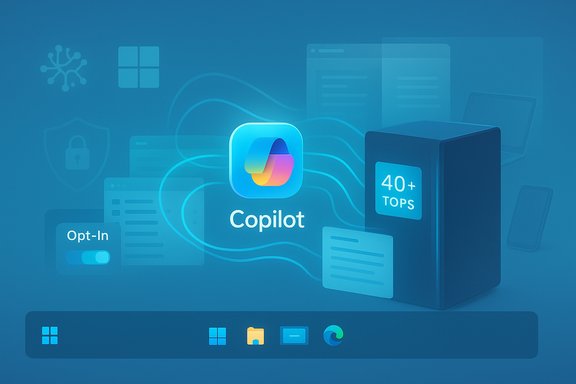
Microsoft has been explicit about pushing Windows beyond a passive UI into a platform that embeds multimodal assistants and local/hybrid AI runtimes. The company’s roadmap bundles several concrete components: system-level Copilot features (voice, vision, and multi-step Actions), platform primitives such as Model Context Protocol (MCP) support and a Windows AI Foundry runtime, and a hardware tier called Copilot+ PCs aimed at on-device inference acceleration (a Copilot+ NPU guideline is publicly described as 40+ TOPS). The Davuluri post — short and promotional in tone — was intended for mixed audiences at Ignite (partners, enterprise customers, developers). Instead, the shorthand term agentic OS rapidly escaped that context and became the focal point for a broad chorus of criticism across X, Reddit, enthusiast forums, and consumer tech pages. Coverage from major outlets confirmed the negative reaction and the core user complaints: perceived prioritization of AI features over reliability, worries about privacy and autonomy, and frustration with persistent upsell or nudging inside Windows. This article synthesizes what Microsoft is building, explains what “agentic OS” likely means in practice, analyzes why the public response was so strong, and offers practical recommendations Microsoft and other platform vendors should heed if they want to avoid deepening “AI fatigue” among core users.
But technology alone won’t carry the day. The public reaction to a single, short leadership post shows how fragile trust has become. For agentic features to win broad acceptance, vendors must pair capability with explicit, durable user controls, independent verification of hardware and privacy claims, and product roadmaps that prioritize reliability and clarity over hype. If Microsoft wants agents to earn a seat at the desktop, it must make that seat feel safe, understandable, and reversible — not inevitable.
The technical plumbing for agentic systems exists; the harder problem now is social and product design. How Microsoft answers that question at Ignite and in the months after will determine whether the company’s agentic vision becomes a productivity breakthrough — or another chapter in “AI fatigue.”
Source: HotHardware Windows Boss Ignites Angry Revolt Over Agentic OS As AI Fatigue Sets In
 Background / Overview
Microsoft has been explicit about pushing Windows beyond a passive UI into a platform that embeds multimodal assistants and local/hybrid AI runtimes. The company’s roadmap bundles several concrete components: system-level Copilot features (voice, vision, and multi-step Actions), platform primitives such as Model Context Protocol (MCP) support and a Windows AI Foundry runtime, and a hardware tier called Copilot+ PCs aimed at on-device inference acceleration (a Copilot+ NPU guideline is publicly described as 40+ TOPS). The Davuluri post — short and promotional in tone — was intended for mixed audiences at Ignite (partners, enterprise customers, developers). Instead, the shorthand term agentic OS rapidly escaped that context and became the focal point for a broad chorus of criticism across X, Reddit, enthusiast forums, and consumer tech pages. Coverage from major outlets confirmed the negative reaction and the core user complaints: perceived prioritization of AI features over reliability, worries about privacy and autonomy, and frustration with persistent upsell or nudging inside Windows. This article synthesizes what Microsoft is building, explains what “agentic OS” likely means in practice, analyzes why the public response was so strong, and offers practical recommendations Microsoft and other platform vendors should heed if they want to avoid deepening “AI fatigue” among core users.What Microsoft means by “agentic OS”: a technical primer
Agentic by design: agency vs. assistance
At its simplest, an agentic system is one that can take initiative: maintain state, remember context, plan multi-step operations, and act with scoped permissions rather than only responding to one-off commands. That’s distinct from the classic “assistant” model (respond‑to‑query), and implies software that can proactively coordinate tasks across apps and devices under a permissions model. Microsoft’s messaging frames this as a productivity play: fewer manual steps, reduced context switching, and more accessible workflows.Core building blocks Microsoft is rolling out
- Copilot Voice, Vision, and Actions — Voice wake words and conversational sessions; screen-aware Copilot Vision that can summarize or extract data from a chosen window; and Copilot Actions for chained, multi-step automations that operate across apps and files. These features are being previewed in Insider builds and product updates and are explicitly described as opt‑in in Microsoft’s materials.
- Windows AI Foundry & Runtimes — A set of platform runtimes and developer tooling to run smaller models locally or hybridize with cloud models, including vendor plug-ins for NPUs, GPUs, and CPUs. This is Microsoft’s attempt to give developers a managed way to target heterogeneous hardware for AI workloads.
- Model Context Protocol (MCP) support — MCP, an open protocol originally promoted by Anthropic and adopted across the industry, standardizes how models call tools and access capability providers (files, services, connectors). Microsoft has added MCP registry support and is positioning it as the bridge that lets agents call app-provided actions in a discoverable, permissioned way. MCP’s adoption is a deliberate interoperability bet; it’s already being integrated into Copilot tooling and Windows developer docs.
- Copilot+ hardware tier & NPUs — Microsoft markets a Copilot+ device class equipped with NPUs capable of “40+ TOPS” (trillions of operations per second) as the performance target for the fullest on‑device Copilot experiences. The 40+ TOPS figure appears repeatedly in Microsoft’s Copilot+ materials and Learn docs as a guideline for richer local inference and lower‑latency features.
Why local/hybrid inference matters
Local inference brings three practical advantages Microsoft emphasizes: latency reduction (real‑time interactions), reduced cloud egress for sensitive data, and offline capabilities. The tradeoffs are complexity and fragmentation: delivering parity between cloud and device experiences across a broad installed base is technically and economically challenging. Independent benchmarks will be required to measure the user-facing effects of raw TOPS numbers, because TOPS are a vendor-reported hardware metric and do not translate linearly into end-user performance across different model sizes and tasks.Why the phrase “agentic OS” provoked such a visceral reaction
1) Language and mental models matter
Words shape expectations. In everyday usage, agentic implies initiative. For many users this raises mental images of an OS that “acts on its own” — changing settings, initiating communications, or performing actions without explicit, granular consent. That semantic leap from “helpful assistant” to “autonomous actor” is what made the wording hit a cultural nerve: it tapped latent fears about loss of control and opacity.2) Accumulated distrust and fatigue
The public response is not only about a single post; it’s an accumulation of prior grievances:- Repeated UX churn and perceived regressions in performance.
- Persistent prompts to sign in with Microsoft accounts and in‑OS nudges toward Microsoft services.
- High-frequency feature updates that sometimes introduced regressions for early adopters.
These long-standing complaints mean many users now view new system‑level AI features through a trust‑scarred lens: they expect telemetry, upsells, and opaque defaults. Multiple outlets and community threads documented this background anger.
3) Monetization and upgrade anxiety
The Copilot+ NPU guidance implicitly stratifies experience by hardware. For users on older PCs, the messaging can feel like a nudge toward expensive upgrades. Coupled with an existing perception that Microsoft uses the OS to surface paid services, some users fear AI becomes another monetized frontier rather than a clear productivity win. This is not mere paranoia — Copilot+ marketing and device tiering do create a two‑tier experience.4) Insufficient messaging and missing demos
A recurring, pragmatic critique in community replies was that Microsoft gave little concrete context for what people should actually expect and why it would matter day‑to‑day. One commenter captured the sentiment: until you can clearly define what “agentic” does for individual users and organizations, expect pushback. The company’s high-level rhetoric felt like marketing to some and cognitive overload to others.Security, privacy, and governance: where agentic systems increase risk
Agentic features raise new threat models that stretch traditional OS boundaries.New attack surfaces and MCP risks
MCP simplifies tool integration by design, but that convenience comes with higher risk if tools, manifests, or MCP server implementations are compromised or poorly configured. Security researchers and community posts have already shown proof‑of‑concept attacks (prompt injection, tool poisoning, token theft) that could lead an agent to exfiltrate sensitive data or call privileged APIs without full understanding. Microsoft’s registry and permission gating are intended mitigations, but the initial ecosystem will be a learning period and threat surface will expand.Memory, consent, and data retention
Agentic workflows gain power from memory — short- and long-term context that helps personalization and continuity. But memory changes the calculus for privacy: where is memory stored, how long is it kept, what controls let users and admins inspect and delete it? Past features that attempted recall raised similar questions; without auditable retention policies and easy-to-use deletion and export controls, agent memory will worsen user distrust.Enterprise control and auditability
For IT departments the tradeoffs are different: agentic automation can reduce toil and enforce configuration consistency, but only if it’s auditable, enforceable via policy, and able to operate within compliance boundaries. Microsoft’s promise of enterprise-grade policy controls must be realized with readable logs, machine‑readable policies, and the ability to rollback agent actions reliably. Without these, IT will either block agentic features or restrict them severely.User experience and product-priority critique: polish first, agents later
A central theme in the backlash is pragmatic: make Windows fast, stable, and predictable first. Enthusiasts and enterprise users alike cited a long list of usability items they want fixed before handing the OS new powers:- Taskbar and UI regression fixes
- Predictable update behavior and safer rollouts
- Persistent, discoverable toggles for data collection
- A durable “power‑user” profile that persists through updates
These are not mere nostalgia for an earlier Windows; they are demands for a baseline of trustable behavior before introducing initiative-taking systems. Veteran Windows engineers, influencers, and community voices made identical points: an agentic future requires disciplined defaults and modular rollouts.
The competitive context: Apple, Google and the broader AI field
Apple’s own AI push — branded as Apple Intelligence — demonstrates that Microsoft is not alone in making device-level AI a pillar of its platform strategy. Apple has integrated writing tools, visual intelligence, and on-device models into iOS, iPadOS, and macOS, and continues to emphasize privacy and local processing as a differentiator. That comparative framing feeds user narratives: if Apple promises local-first experiences that prioritize privacy, Microsoft is under pressure to show its privacy controls are equally robust. Price‑value dynamics also matter. Reports of aggressive discounts on M4 MacBook Air units (e.g., $749.99 sale pricing reported by retail coverage) contribute to the idea that users who want better out‑of‑the‑box value and fewer platform surprises may vote with their wallets. That dynamic — hardware value + tightly controlled software defaults — is part of the migration conversation some threads referenced. These market signals, while relevant, do not negate the technical and enterprise rationale for agentic features; they do, however, raise the bar for Microsoft’s messaging and defaults.Recommendations: how Microsoft (and others) should proceed
The technology behind an agentic OS is plausible and promising, but its adoption depends on trust. Practical steps that would materially reduce the “trust tax”:- Make agentic features opt‑in by default and preserve a discoverable global toggle that disables initiative. Ship clear, step‑by‑step onboarding for admins and consumers.
- Offer a durable Power‑User (Hardcore) Mode that persists across updates and disables promotional nudges and unnecessary telemetry — a single, visible setting users can select during OOBE or in Settings.
- Publish machine‑readable permission and retention policies for agent memory, with audit logs and per‑agent export/delete controls to make privacy guarantees actionable.
- Require and publish independent benchmarks for Copilot workloads to compare claimed TOPS against real model latency, power, and user‑facing throughput on representative tasks. TOPS alone do not guarantee better UX.
- Open MCP ecosystems to third‑party security audits and red‑team programs, while delivering secure defaults for early MCP servers (principle of least privilege, signed manifests, hardened auth flows).
- Modularize feature rollouts so that Copilot+ experiences install only on compatible hardware, leaving a lean core OS for legacy machines and retaining a clearly labeled “Classic Windows” experience for users who do not want agentic features.
What’s verifiable (and what isn’t)
- Verifiable: Microsoft’s Copilot+ materials and developer guidance explain a 40+ TOPS NPU guideline for Copilot+ PCs; MCP is being integrated into Windows tooling; Copilot Voice/Vision/Actions are real feature areas Microsoft is shipping or previewing. These are documented on Microsoft pages and widely covered in major press outlets.
- Verifiable: The public backlash across social platforms and enthusiast forums is real and widely reported. Multiple outlets quoted community replies and aggregated sentiment; Windows Central, Tom’s Hardware, TechRadar, and other outlets covered the reaction.
- Caution / Unverified: Specific viral metrics that appear in some aggregated reports — for example, exact view counts or precise comment totals attached to a single Davuluri thread — can be fluid and platform‑dependent. Some reported numbers (views, comment counts) may change rapidly as platforms update or restrict comments; these exact tallies should be treated as transient and verified on the originating platform if precision is required. The broader point — that the post drew an unusually loud negative response — is verifiable; the moment‑to‑moment metrics are less so.
Conclusion — innovation plus humility
There is real potential in an agentic Windows: screen‑aware assistance can improve accessibility; hybrid on‑device inference can reduce latency and preserve privacy for certain tasks; and agentic automation can remove repetitive multi‑step work for knowledge workers and IT staff. Microsoft’s engineering trajectory — MCP, Windows AI Foundry, Copilot enhancements, and Copilot+ hardware tiering — is coherent and actionable.But technology alone won’t carry the day. The public reaction to a single, short leadership post shows how fragile trust has become. For agentic features to win broad acceptance, vendors must pair capability with explicit, durable user controls, independent verification of hardware and privacy claims, and product roadmaps that prioritize reliability and clarity over hype. If Microsoft wants agents to earn a seat at the desktop, it must make that seat feel safe, understandable, and reversible — not inevitable.
The technical plumbing for agentic systems exists; the harder problem now is social and product design. How Microsoft answers that question at Ignite and in the months after will determine whether the company’s agentic vision becomes a productivity breakthrough — or another chapter in “AI fatigue.”
Source: HotHardware Windows Boss Ignites Angry Revolt Over Agentic OS As AI Fatigue Sets In
