

Yusuf Mehdi, Microsoft’s executive vice president and consumer chief marketing officer, plans to leave Microsoft on June 30, 2027, after spending his final year helping steer Windows 11, Microsoft 365 services, and Copilot toward what he calls the “agentic era.” That is not a quiet retirement lap. It is a handoff disguised as a product strategy, and it puts Windows at the center of Microsoft’s most consequential AI bet since the company bolted a browser to the operating system. The question is no longer whether AI belongs in Windows; it is whether Microsoft can make autonomous assistance feel like an operating-system feature rather than another layer of corporate ambition pressed onto the desktop.
Executive departures usually produce two kinds of corporate prose: gratitude for the past and confidence about the future. Mehdi’s memo has both, but the important sentence is the one that turns a personnel change into a Windows strategy. He says he will work through the next fiscal year to “reimagine Windows for the agentic era,” grow Microsoft 365 services, and bring the “One Copilot” vision to life.
That phrasing matters because it narrows Microsoft’s Windows agenda. The company is not merely saying that Copilot will remain an app, a sidebar, a key on a keyboard, or a subscription funnel into Microsoft 365. It is saying that the operating system itself is being pulled toward agentic computing: software that can understand goals, traverse apps and files, make choices, and complete tasks with less step-by-step instruction from the user.
Mehdi is a fitting messenger for that pivot because his Microsoft career is almost a compressed history of the company’s consumer ambitions. He was there in the Windows 3.1 era, when the PC desktop became the default workplace for millions. He helped with Internet Explorer during Microsoft’s first great platform war, later worked on Bing as Microsoft tried to claw relevance back from Google, and became a public face for Surface, Xbox, Copilot, and Windows.
But this is also why the announcement lands with unusual weight. Microsoft is asking a longtime company operator to spend his final year defining a future Windows whose most important interface may not be Start, taskbar, File Explorer, or Settings. It may be an agent that acts across all of them.
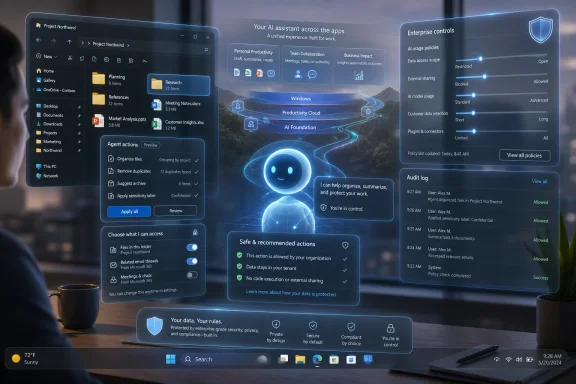
That distinction is why Windows is suddenly strategic again in a way that goes beyond upgrade cycles and market share. If agents become the next dominant software interface, the operating system is not just a place where apps run. It becomes the permission layer, memory layer, identity layer, context layer, and safety layer for AI that wants to manipulate your digital life.
Microsoft has been preparing the ground for this for years. Copilot began as a rebranding of Bing Chat’s generative AI wave, then spread across Edge, Windows, Microsoft 365, GitHub, Dynamics, and security products. Copilot+ PCs added a hardware story, requiring neural processing units capable of handling local AI workloads. Windows 11 then became the proving ground for features like Recall, Click to Do, improved semantic search, local models, and AI-assisted settings.
The next stage is more ambitious. An agentic Windows would not simply summarize a document or draft an email. It would know where the relevant document lives, which account has access, what app should open it, what action is safe, and when the user must approve the next step. That is a platform play, not a feature update.
Microsoft understands platform plays better than almost any company in technology. Windows itself was one. Office became another. Azure is one now. The risk is that Windows users have also lived through the downside of Microsoft platform logic: defaults that serve corporate priorities, services that are difficult to remove, and integration that sometimes feels less like convenience than capture.
Copilot is not Internet Explorer, and AI agents are not browsers. But the strategic instinct rhymes. Microsoft sees a new computing interface forming outside the old Windows model, and it is moving aggressively to make Windows the most convenient place to use it.
The difference is that a browser mostly mediated web pages. An agent can mediate the machine. It may see what you are working on, interpret screenshots, search files, understand messages, automate workflows, and potentially take actions across apps. The trust burden is therefore much larger than it was with the browser wars.
That is why Microsoft’s agentic Windows push cannot succeed on marketing alone. The company can call a PC “AI-native,” ship a Copilot key, or declare that Windows is becoming the computer you can talk to. But users will judge the result by a narrower and harsher standard: does it save time without creating new risk, new noise, or new confusion?
This is where the company’s first AI wave on Windows has been uneven. Some features are clearly useful, especially local semantic search, live captions, image tools, and accessibility improvements. Others have felt like Microsoft rediscovering the old temptation to insert itself between the user and the task. Copilot’s many entry points, the dedicated keyboard key, and the controversy around Recall all show how quickly enthusiasm becomes suspicion when Windows appears to change the rules of the desktop.
The backlash was predictable because Recall touched the most sensitive part of personal computing: the assumption that the things happening on your screen are not being indexed into a searchable history unless you explicitly asked for it. Microsoft responded by delaying, revising, and reframing the feature with stronger security and privacy controls, including opt-in behavior and Windows Hello requirements on supported hardware.
That reset was necessary, but it also exposed the larger problem. AI features that operate at the OS level are different from AI features in a document editor. A mistake in Word may produce a bad paragraph. A mistake in Windows can expose private activity, modify files, or create new attack surfaces.
Agentic computing magnifies that concern. If Recall raised the question of what Windows remembers, agents raise the question of what Windows may do. A local model that helps find a setting is relatively low stakes. An agent that can access files, interpret context, and perform multi-step tasks in the background is something else entirely.
Microsoft’s answer appears to be containment, consent, and hardware-backed security. That is the right vocabulary. But Windows users have learned to look for the implementation, not the slogan.
Microsoft has since acknowledged that the Copilot key created workflow problems for some users and has moved toward giving people more remapping control. That is a small concession, but it reveals a large truth about Windows: the operating system is not a blank canvas for Microsoft’s strategy. It is infrastructure people already depend on.
This is especially true for WindowsForum.com’s natural audience: administrators, power users, developers, repair technicians, and the family member who gets called when a Windows machine behaves oddly. For this crowd, the desktop is not a lifestyle accessory. It is a toolchain, a deployment target, a gaming rig, a lab environment, a production workstation, and sometimes all of the above.
If agentic Windows respects that reality, it could become genuinely useful. If it bulldozes it, Microsoft will rediscover the same resistance that greets every unwanted default, every forced account path, every Settings page that replaces a reliable Control Panel workflow before it is ready.
“One Copilot” is the obvious cleanup plan. It suggests a more unified assistant that follows the user across Windows, Office, the web, and enterprise systems. For Microsoft, that is strategically elegant. The same identity, permissions, subscriptions, and context can bind together the company’s most profitable products.
For users, the benefits are real if Microsoft executes well. A Copilot that understands your local files, work calendar, Teams threads, Outlook mail, browser research, and system settings could reduce an enormous amount of friction. It could become the connective tissue that Windows has always lacked when crossing app boundaries.
But “One Copilot” also raises a governance problem. The more unified the assistant becomes, the more important it is to know which data it can see, which tenant rules apply, which actions are logged, which model processed the request, and where the boundary sits between local and cloud execution. In an enterprise, that boundary is not a philosophical question. It is compliance, auditability, data-loss prevention, and incident response.
Microsoft can sell “One Copilot” as simplicity. IT departments will hear “one more control plane.”
That is not cynicism. It is operational reality. Every new autonomous capability must fit into existing security models, endpoint management tools, identity policies, data classification systems, and change-control processes. If an agent can operate across apps and files, an administrator needs to know whether it acts as the user, as a service, or through a special brokered permission model. If it can modify files, the changes need to be attributable. If it can interact with third-party apps, the app boundary needs to be understandable.
Microsoft’s enterprise advantage is that it already owns much of this stack. Entra ID, Intune, Defender, Purview, Microsoft 365, Windows Update for Business, and Azure provide a governance framework that rivals would struggle to match on Windows endpoints. That is precisely why Microsoft is likely to push harder here than any other platform vendor: it can argue that agentic Windows is manageable because the Microsoft cloud already manages everything around it.
The danger is complexity disguised as integration. Administrators do not need another portal full of toggles whose interactions are poorly documented. They need predictable defaults, clean policy surfaces, clear event logs, and the ability to say no without breaking unrelated features.
A successful agentic Windows for business will be less glamorous than Microsoft’s demos. It will look like a policy matrix, a deployment ring, a security baseline, and a rollback plan.
That could evolve into something like a modern shell contract. Classic Windows apps exposed menus, files, registry hooks, COM interfaces, file associations, protocol handlers, and automation surfaces. An agentic Windows needs a richer vocabulary: what the app can do, which actions are reversible, which data is sensitive, how user consent is represented, and how a task can be delegated without granting the agent everything.
This is where Microsoft’s broader agent work matters. The company has been aligning around agent frameworks, connectors, model context, and tool invocation across its developer platforms. Windows is the natural endpoint for that architecture because it remains the place where many workflows actually happen.
The opportunity is significant. A well-designed agent layer could let small developers make their apps more automation-friendly without building full natural-language systems themselves. It could make Windows workflows more accessible for users who struggle with complex UI paths. It could also create a healthier ecosystem than a world where screen-scraping bots try to click their way through interfaces designed only for humans.
The risk is equally obvious. If Microsoft privileges its own apps, clouds, and subscriptions, agentic Windows becomes another moat. Developers will participate, but they will participate on Microsoft’s terms.
That is where “agentic” can either become magical or exhausting. A PC that helps find a lost document, summarize a messy folder, clean up downloads, explain a system error, or walk a user through changing a setting could be genuinely valuable. Many Windows users do not want to learn the operating system. They want the task done.
But a PC that watches too much, suggests too often, or constantly routes users toward Microsoft services will feel invasive. The line between assistant and salesman is thin, and Microsoft has crossed it often enough that skepticism is earned. Windows 11 already carries baggage around ads, recommendations, account prompts, default browser friction, and cloud upsells. Agentic AI will inherit that baggage.
This is why opt-in design matters. Not just as a checkbox, but as a philosophy. Agentic features should be discoverable, explainable, revocable, and quiet when unused. The more personal the capability, the more control the user should have before it activates.
Microsoft’s temptation will be to accelerate adoption through defaults. Its long-term success depends on resisting that temptation.
That hardware bet is necessary but not sufficient. A fast NPU does not make a feature desirable. It only makes a feature possible. Microsoft still has to prove that local AI creates everyday value beyond benchmark slides and launch demos.
This is where Windows has an advantage over phones and browsers. The PC is still the place where complex work happens: file management, spreadsheets, coding, creative tools, business systems, remote desktops, virtualization, games, and weird legacy apps that will outlive us all. An agent that understands that environment could do more than a phone assistant trapped inside app silos.
But the Windows hardware ecosystem is fragmented. Not every Windows 11 PC is a Copilot+ PC, and not every business will refresh devices quickly just to run local AI. Microsoft must therefore support a split world: cloud-backed Copilot for broad reach, local AI for premium experiences, and enterprise policy for both. That is a difficult message to explain, and a harder one to administer.
The best version of this strategy makes AI features scale gracefully across hardware. The worst version creates another Windows feature matrix that leaves users wondering why the button exists on one PC and not another.
A successor has not been named, and Mehdi has reportedly said it is too early to determine the final leadership structure. That matters because Windows has recently been through significant leadership changes. Panos Panay’s 2023 departure ended an era in which Surface and Windows had a visible product evangelist at the top. Mehdi then became the external face of Windows and Surface with OEM and retail partners while also representing Microsoft’s consumer AI push.
Now Microsoft has to decide what kind of Windows leader it needs next. A product romantic in the Panay mold? A marketing strategist in the Mehdi mold? A systems engineer who can make agentic computing safe and boring? A cloud executive who sees Windows primarily as an endpoint for Microsoft 365 and Copilot?
The answer will shape the product. Windows has always been a compromise between user interface, developer platform, hardware ecosystem, enterprise manageability, and Microsoft business model. Agentic AI adds another force to that compromise, and it may become the strongest one.
Microsoft’s worst habit is believing that strategic inevitability equals user consent. The company often sees integration as value, while users experience it as intrusion. That gap is the central risk of Mehdi’s final-year mission.
An agentic Windows that earns trust would do several things well. It would make local context useful without making surveillance feel ambient. It would ask for permission at the right moments and remember refusals. It would be transparent about whether a task runs locally or in the cloud. It would log meaningful actions. It would respect non-Microsoft apps. It would give administrators real control. It would make the PC feel faster to use, not heavier to manage.
That is a high bar, but it is the correct one. AI agents are not wallpaper. They are delegated power.
 Mehdi’s Exit Turns Into a Roadmap
Executive departures usually produce two kinds of corporate prose: gratitude for the past and confidence about the future. Mehdi’s memo has both, but the important sentence is the one that turns a personnel change into a Windows strategy. He says he will work through the next fiscal year to “reimagine Windows for the agentic era,” grow Microsoft 365 services, and bring the “One Copilot” vision to life.That phrasing matters because it narrows Microsoft’s Windows agenda. The company is not merely saying that Copilot will remain an app, a sidebar, a key on a keyboard, or a subscription funnel into Microsoft 365. It is saying that the operating system itself is being pulled toward agentic computing: software that can understand goals, traverse apps and files, make choices, and complete tasks with less step-by-step instruction from the user.
Mehdi is a fitting messenger for that pivot because his Microsoft career is almost a compressed history of the company’s consumer ambitions. He was there in the Windows 3.1 era, when the PC desktop became the default workplace for millions. He helped with Internet Explorer during Microsoft’s first great platform war, later worked on Bing as Microsoft tried to claw relevance back from Google, and became a public face for Surface, Xbox, Copilot, and Windows.
But this is also why the announcement lands with unusual weight. Microsoft is asking a longtime company operator to spend his final year defining a future Windows whose most important interface may not be Start, taskbar, File Explorer, or Settings. It may be an agent that acts across all of them.
The Agentic Era Is Microsoft’s New Platform War
“Agentic” is an awkward word, but the idea behind it is simple enough. A chatbot answers. An agent acts. The difference between the two is the difference between asking for instructions on how to organize a folder and asking the system to organize it for you.That distinction is why Windows is suddenly strategic again in a way that goes beyond upgrade cycles and market share. If agents become the next dominant software interface, the operating system is not just a place where apps run. It becomes the permission layer, memory layer, identity layer, context layer, and safety layer for AI that wants to manipulate your digital life.
Microsoft has been preparing the ground for this for years. Copilot began as a rebranding of Bing Chat’s generative AI wave, then spread across Edge, Windows, Microsoft 365, GitHub, Dynamics, and security products. Copilot+ PCs added a hardware story, requiring neural processing units capable of handling local AI workloads. Windows 11 then became the proving ground for features like Recall, Click to Do, improved semantic search, local models, and AI-assisted settings.
The next stage is more ambitious. An agentic Windows would not simply summarize a document or draft an email. It would know where the relevant document lives, which account has access, what app should open it, what action is safe, and when the user must approve the next step. That is a platform play, not a feature update.
Microsoft understands platform plays better than almost any company in technology. Windows itself was one. Office became another. Azure is one now. The risk is that Windows users have also lived through the downside of Microsoft platform logic: defaults that serve corporate priorities, services that are difficult to remove, and integration that sometimes feels less like convenience than capture.
Windows Has Been Here Before, But the Stakes Are Higher
The obvious historical comparison is Internet Explorer. Microsoft saw the web as an existential threat to Windows, so it fused the browser into the operating system and fought to make its browser the default way users experienced the internet. That strategy helped Microsoft defend Windows for a time, but it also triggered antitrust scrutiny and left a long cultural memory of forced integration.Copilot is not Internet Explorer, and AI agents are not browsers. But the strategic instinct rhymes. Microsoft sees a new computing interface forming outside the old Windows model, and it is moving aggressively to make Windows the most convenient place to use it.
The difference is that a browser mostly mediated web pages. An agent can mediate the machine. It may see what you are working on, interpret screenshots, search files, understand messages, automate workflows, and potentially take actions across apps. The trust burden is therefore much larger than it was with the browser wars.
That is why Microsoft’s agentic Windows push cannot succeed on marketing alone. The company can call a PC “AI-native,” ship a Copilot key, or declare that Windows is becoming the computer you can talk to. But users will judge the result by a narrower and harsher standard: does it save time without creating new risk, new noise, or new confusion?
This is where the company’s first AI wave on Windows has been uneven. Some features are clearly useful, especially local semantic search, live captions, image tools, and accessibility improvements. Others have felt like Microsoft rediscovering the old temptation to insert itself between the user and the task. Copilot’s many entry points, the dedicated keyboard key, and the controversy around Recall all show how quickly enthusiasm becomes suspicion when Windows appears to change the rules of the desktop.
Recall Was the Warning Shot
Recall remains the defining cautionary episode of Microsoft’s AI Windows era. The feature was pitched as a photographic memory for the PC, periodically capturing snapshots so users could search their past activity in natural language. It was technically interesting, commercially useful to the Copilot+ PC story, and immediately controversial.The backlash was predictable because Recall touched the most sensitive part of personal computing: the assumption that the things happening on your screen are not being indexed into a searchable history unless you explicitly asked for it. Microsoft responded by delaying, revising, and reframing the feature with stronger security and privacy controls, including opt-in behavior and Windows Hello requirements on supported hardware.
That reset was necessary, but it also exposed the larger problem. AI features that operate at the OS level are different from AI features in a document editor. A mistake in Word may produce a bad paragraph. A mistake in Windows can expose private activity, modify files, or create new attack surfaces.
Agentic computing magnifies that concern. If Recall raised the question of what Windows remembers, agents raise the question of what Windows may do. A local model that helps find a setting is relatively low stakes. An agent that can access files, interpret context, and perform multi-step tasks in the background is something else entirely.
Microsoft’s answer appears to be containment, consent, and hardware-backed security. That is the right vocabulary. But Windows users have learned to look for the implementation, not the slogan.
The Copilot Key Was a Small Symbol of a Larger Misread
The Copilot key was never the most important AI feature in Windows, but it became a useful symbol of Microsoft’s impatience. For the first time in decades, the standard PC keyboard gained a new Microsoft-defined key, and the company framed it as the start of the AI PC era. That move made sense from a branding perspective. It made less sense to users whose muscle memory, shortcuts, and workflows were disrupted by a key they did not ask for.Microsoft has since acknowledged that the Copilot key created workflow problems for some users and has moved toward giving people more remapping control. That is a small concession, but it reveals a large truth about Windows: the operating system is not a blank canvas for Microsoft’s strategy. It is infrastructure people already depend on.
This is especially true for WindowsForum.com’s natural audience: administrators, power users, developers, repair technicians, and the family member who gets called when a Windows machine behaves oddly. For this crowd, the desktop is not a lifestyle accessory. It is a toolchain, a deployment target, a gaming rig, a lab environment, a production workstation, and sometimes all of the above.
If agentic Windows respects that reality, it could become genuinely useful. If it bulldozes it, Microsoft will rediscover the same resistance that greets every unwanted default, every forced account path, every Settings page that replaces a reliable Control Panel workflow before it is ready.
“One Copilot” Is a Product Strategy and a Control Strategy
Mehdi’s reference to “One Copilot” is not incidental. Microsoft has spent the last several years attaching the Copilot name to almost everything, with mixed results. There is consumer Copilot, Microsoft 365 Copilot, GitHub Copilot, Security Copilot, Copilot Studio, Windows Copilot experiences, and a growing set of agents and extensions across business software.“One Copilot” is the obvious cleanup plan. It suggests a more unified assistant that follows the user across Windows, Office, the web, and enterprise systems. For Microsoft, that is strategically elegant. The same identity, permissions, subscriptions, and context can bind together the company’s most profitable products.
For users, the benefits are real if Microsoft executes well. A Copilot that understands your local files, work calendar, Teams threads, Outlook mail, browser research, and system settings could reduce an enormous amount of friction. It could become the connective tissue that Windows has always lacked when crossing app boundaries.
But “One Copilot” also raises a governance problem. The more unified the assistant becomes, the more important it is to know which data it can see, which tenant rules apply, which actions are logged, which model processed the request, and where the boundary sits between local and cloud execution. In an enterprise, that boundary is not a philosophical question. It is compliance, auditability, data-loss prevention, and incident response.
Microsoft can sell “One Copilot” as simplicity. IT departments will hear “one more control plane.”
Enterprise IT Will Demand Boring Answers
The consumer story for agentic Windows is convenience. The enterprise story is risk management. Microsoft may want to talk about natural language computing, but administrators will ask what can be disabled, monitored, logged, governed, and rolled back.That is not cynicism. It is operational reality. Every new autonomous capability must fit into existing security models, endpoint management tools, identity policies, data classification systems, and change-control processes. If an agent can operate across apps and files, an administrator needs to know whether it acts as the user, as a service, or through a special brokered permission model. If it can modify files, the changes need to be attributable. If it can interact with third-party apps, the app boundary needs to be understandable.
Microsoft’s enterprise advantage is that it already owns much of this stack. Entra ID, Intune, Defender, Purview, Microsoft 365, Windows Update for Business, and Azure provide a governance framework that rivals would struggle to match on Windows endpoints. That is precisely why Microsoft is likely to push harder here than any other platform vendor: it can argue that agentic Windows is manageable because the Microsoft cloud already manages everything around it.
The danger is complexity disguised as integration. Administrators do not need another portal full of toggles whose interactions are poorly documented. They need predictable defaults, clean policy surfaces, clear event logs, and the ability to say no without breaking unrelated features.
A successful agentic Windows for business will be less glamorous than Microsoft’s demos. It will look like a policy matrix, a deployment ring, a security baseline, and a rollback plan.
Developers Are Being Invited Into a New Kind of Shell
For developers, the agentic Windows push is not just about end-user features. It hints at a new layer of app integration. If agents are going to operate across the desktop, apps need to expose capabilities, data, intents, and safe actions in ways agents can understand.That could evolve into something like a modern shell contract. Classic Windows apps exposed menus, files, registry hooks, COM interfaces, file associations, protocol handlers, and automation surfaces. An agentic Windows needs a richer vocabulary: what the app can do, which actions are reversible, which data is sensitive, how user consent is represented, and how a task can be delegated without granting the agent everything.
This is where Microsoft’s broader agent work matters. The company has been aligning around agent frameworks, connectors, model context, and tool invocation across its developer platforms. Windows is the natural endpoint for that architecture because it remains the place where many workflows actually happen.
The opportunity is significant. A well-designed agent layer could let small developers make their apps more automation-friendly without building full natural-language systems themselves. It could make Windows workflows more accessible for users who struggle with complex UI paths. It could also create a healthier ecosystem than a world where screen-scraping bots try to click their way through interfaces designed only for humans.
The risk is equally obvious. If Microsoft privileges its own apps, clouds, and subscriptions, agentic Windows becomes another moat. Developers will participate, but they will participate on Microsoft’s terms.
The Consumer PC Still Has to Feel Like Mine
The most delicate part of Microsoft’s plan is the consumer PC. Enterprises can absorb complexity through policy. Enthusiasts can tweak, disable, and script around annoyances. Ordinary users mostly experience Windows as a machine that should stay out of the way until needed.That is where “agentic” can either become magical or exhausting. A PC that helps find a lost document, summarize a messy folder, clean up downloads, explain a system error, or walk a user through changing a setting could be genuinely valuable. Many Windows users do not want to learn the operating system. They want the task done.
But a PC that watches too much, suggests too often, or constantly routes users toward Microsoft services will feel invasive. The line between assistant and salesman is thin, and Microsoft has crossed it often enough that skepticism is earned. Windows 11 already carries baggage around ads, recommendations, account prompts, default browser friction, and cloud upsells. Agentic AI will inherit that baggage.
This is why opt-in design matters. Not just as a checkbox, but as a philosophy. Agentic features should be discoverable, explainable, revocable, and quiet when unused. The more personal the capability, the more control the user should have before it activates.
Microsoft’s temptation will be to accelerate adoption through defaults. Its long-term success depends on resisting that temptation.
The Hardware Bet Is Still Unfinished
Copilot+ PCs were Microsoft’s attempt to give AI Windows a hardware foundation. The pitch was straightforward: local AI needs neural processing units, and a new class of Windows machines would make those workloads fast, private, and power-efficient. Qualcomm’s Snapdragon X chips gave the first wave a coherent battery-life story, while AMD and Intel later moved to meet the NPU requirements.That hardware bet is necessary but not sufficient. A fast NPU does not make a feature desirable. It only makes a feature possible. Microsoft still has to prove that local AI creates everyday value beyond benchmark slides and launch demos.
This is where Windows has an advantage over phones and browsers. The PC is still the place where complex work happens: file management, spreadsheets, coding, creative tools, business systems, remote desktops, virtualization, games, and weird legacy apps that will outlive us all. An agent that understands that environment could do more than a phone assistant trapped inside app silos.
But the Windows hardware ecosystem is fragmented. Not every Windows 11 PC is a Copilot+ PC, and not every business will refresh devices quickly just to run local AI. Microsoft must therefore support a split world: cloud-backed Copilot for broad reach, local AI for premium experiences, and enterprise policy for both. That is a difficult message to explain, and a harder one to administer.
The best version of this strategy makes AI features scale gracefully across hardware. The worst version creates another Windows feature matrix that leaves users wondering why the button exists on one PC and not another.
Leadership Uncertainty Makes the Next Year More Important
Mehdi’s long runway softens the surprise of his departure, but it also extends the uncertainty. He is not leaving immediately. He is staying through June 30, 2027, specifically to help shape the Windows and Copilot transition. That gives Microsoft time to plan succession, but it also means the company’s AI Windows agenda is tied to an executive who has already announced his exit.A successor has not been named, and Mehdi has reportedly said it is too early to determine the final leadership structure. That matters because Windows has recently been through significant leadership changes. Panos Panay’s 2023 departure ended an era in which Surface and Windows had a visible product evangelist at the top. Mehdi then became the external face of Windows and Surface with OEM and retail partners while also representing Microsoft’s consumer AI push.
Now Microsoft has to decide what kind of Windows leader it needs next. A product romantic in the Panay mold? A marketing strategist in the Mehdi mold? A systems engineer who can make agentic computing safe and boring? A cloud executive who sees Windows primarily as an endpoint for Microsoft 365 and Copilot?
The answer will shape the product. Windows has always been a compromise between user interface, developer platform, hardware ecosystem, enterprise manageability, and Microsoft business model. Agentic AI adds another force to that compromise, and it may become the strongest one.
The Real Test Is Whether Windows Becomes More Useful or Merely More Microsoft
Microsoft’s best argument is that Windows is uniquely positioned to make AI agents practical. It has decades of app compatibility, deep hardware partnerships, enterprise management, local file access, identity integration, and an enormous installed base. If an AI assistant is going to help users operate a real computer, Windows is a logical place to build it.Microsoft’s worst habit is believing that strategic inevitability equals user consent. The company often sees integration as value, while users experience it as intrusion. That gap is the central risk of Mehdi’s final-year mission.
An agentic Windows that earns trust would do several things well. It would make local context useful without making surveillance feel ambient. It would ask for permission at the right moments and remember refusals. It would be transparent about whether a task runs locally or in the cloud. It would log meaningful actions. It would respect non-Microsoft apps. It would give administrators real control. It would make the PC feel faster to use, not heavier to manage.
That is a high bar, but it is the correct one. AI agents are not wallpaper. They are delegated power.
The Year Mehdi Has Left Is Really a Trust Deadline
The concrete story is that a veteran Microsoft executive is leaving. The bigger story is that Microsoft is using his final year to push Windows from AI-assisted to agent-directed. That makes the next twelve months unusually important for anyone who cares about the future of the PC.- Mehdi plans to remain at Microsoft until June 30, 2027, giving the company a full fiscal year to shape the Windows, Microsoft 365, and Copilot transition before his departure.
- Microsoft’s phrase “agentic era” signals a move beyond chatbots toward AI systems that can take actions across apps, files, settings, and services.
- Windows 11 is the logical but risky home for this strategy because the operating system controls local context, permissions, identity, hardware, and user workflows.
- Recall showed that OS-level AI features must earn trust before they scale, especially when they involve memory, screenshots, files, or personal activity.
- Enterprise adoption will depend less on flashy demos than on policy controls, logging, rollback options, data boundaries, and clear administrative defaults.
- The central product challenge is making Copilot feel like a useful part of Windows rather than another Microsoft service competing for attention.
References
- Primary source: Technobezz
Published: Fri, 22 May 2026 18:21:54 GMT
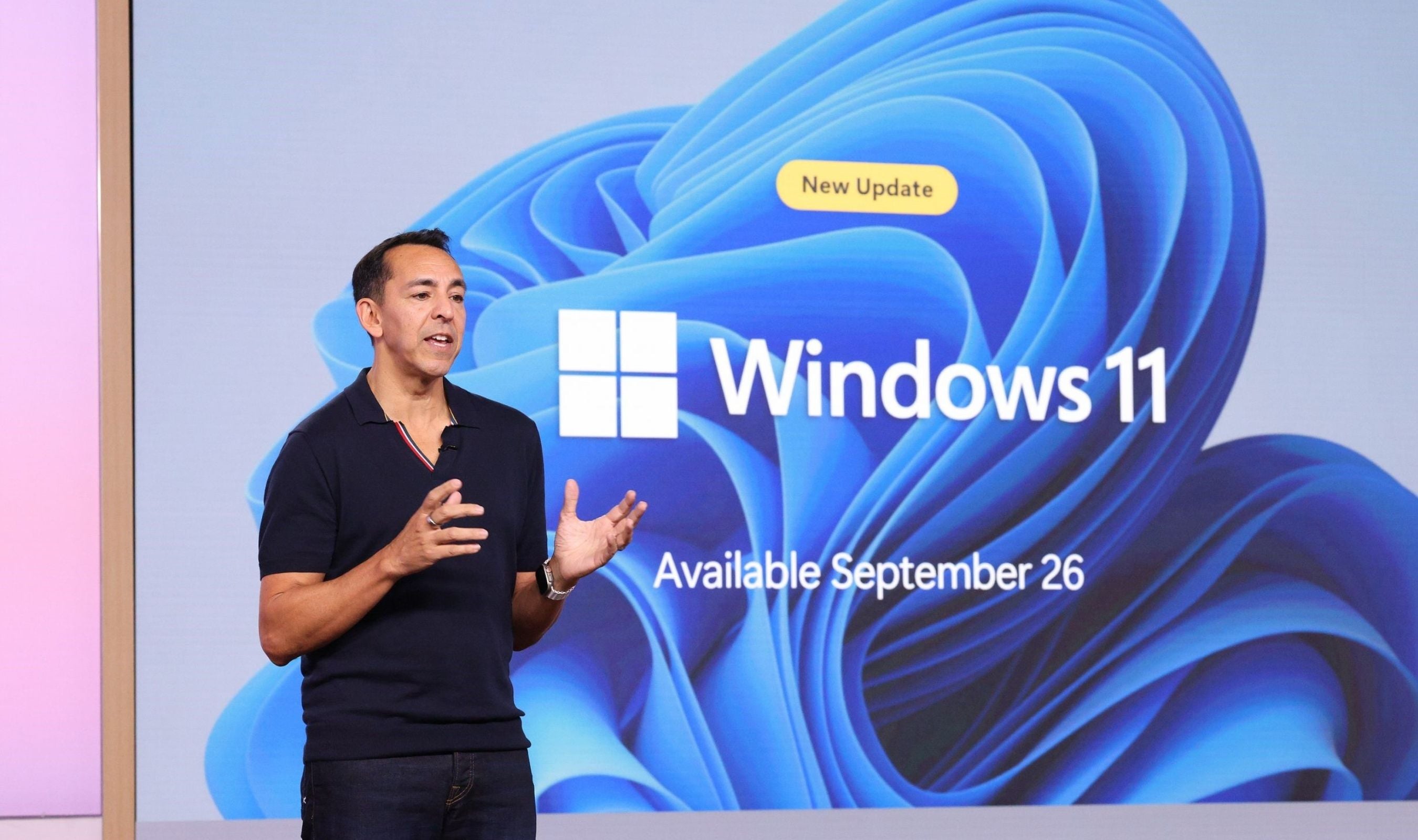
Yusuf Mehdi Plans to Reimagine Windows 11 for the Agentic Era Before Leaving Microsoft
Yusuf Mehdi will spend his final year at Microsoft reimagining Windows 11 for autonomous AI agents before retiring in 2027. www.technobezz.com
- Related coverage: windowscentral.com

Windows is entering its "Agentic Era"—and its AI architect is moving on
Yusuf Mehdi, Microsoft’s Copilot marketing chief, will leave next year after helping reimagine Windows for the agentic era. www.windowscentral.com
- Related coverage: windowslatest.com

Microsoft's Yusuf Mehdi pledges to reimagine Windows 11 for the AI era in his final year before leaving
Microsoft EVP Yusuf Mehdi plans to leave after 35 years, but says he will spend his final year pushing Windows 11 toward an agentic AI era. www.windowslatest.com
- Related coverage: arstechnica.com
Panos Panay, leader of the Surface and Windows teams, is leaving Microsoft
Will be replaced by Yusuf Mehdi, who has been leading the way on AI efforts. arstechnica.com
- Related coverage: tomshardware.com
Microsoft Surface Chief Panos Panay Left Over Budget and Product Cuts: Report
Budget cuts and product cancellations played a part in Panay's departurewww.tomshardware.com
- Related coverage: xataka.com

Panos Panay abandona Microsoft: el responsable de Windows y Surface deja la compañía tras casi 20 años
Microsoft ha anunciado en un correo interno este lunes que Panos Panay, el director de Windows y Surface, deja la compañía tras casi 20 años. El histórico...www.xataka.com
- Related coverage: pcworld.com

Surface mastermind and Windows chief Panos Panay leaves Microsoft
The veteran executive has been a constant presence in Microsoft's PC product launches. www.pcworld.com
- Related coverage: genbeta.com

El responsable de Windows 11 y Surface abandona Microsoft: Panos Panay deja la empresa tras 20 años de servicio
Los cambios han aterrizado en Microsoft en el día de hoy. El director de productos de Microsoft, Panos Panay, era hasta hoy el máximo responsable del...www.genbeta.com
- Related coverage: seattletimes.com
- Related coverage: investing.com

Microsoft says product chief Panay to leave, report says headed to Amazon By Reuters
Microsoft says product chief Panay to leave, report says headed to Amazonwww.investing.com
- Related coverage: windowsnews.ai
Yusuf Mehdi Leaves Microsoft—Windows Must Prove AI Agents First
Yusuf Mehdi exits Microsoft after 35 years, leaving Windows at a pivotal moment as the company bets on AI agents. Can Windows 11's Copilot and agentic AI...windowsnews.ai
- Related coverage: pcgameshardware.de

Microsoft-Überraschung: Surface- und Windows-Chef Panay verlässt nach 19 Jahren das Unternehmen
Wie Microsoft bekannt gegeben hat, verlässt der Windows-Chef und Surface-Vater Panos Panay das Unternehmen nach 19 Jahren. Wie geht's nun weiter?www.pcgameshardware.de
- Related coverage: techxplore.com
- Official source: news.microsoft.com
- Official source: microsoft.com
- Related coverage: tomsguide.com
- Official source: support.microsoft.com
Privacy and control over your Recall experience - Microsoft Support
 support.microsoft.com
- Official source: blogs.microsoft.com
Microsoft Build 2025: The age of AI agents and building the open agentic web - The Official Microsoft Blog
TL;DR? Hear the news as an AI-generated audio overview made using Microsoft 365 Copilot. You can read the transcript here. We’ve entered the era of AI agents. Thanks to groundbreaking advancements in reasoning and memory, AI models are now more capable and efficient, and we’re seeing how AI... blogs.microsoft.com
- Related coverage: techspot.com
- Official source: learn.microsoft.com
Configure the agent in Windows Settings
Learn how to configure the agent in Windows Settings.learn.microsoft.com - Related coverage: techradar.com
- Related coverage: pcgamer.com
- Related coverage: newsroom.workday.com
- Official source: microsoft-nextgen.computergross.it
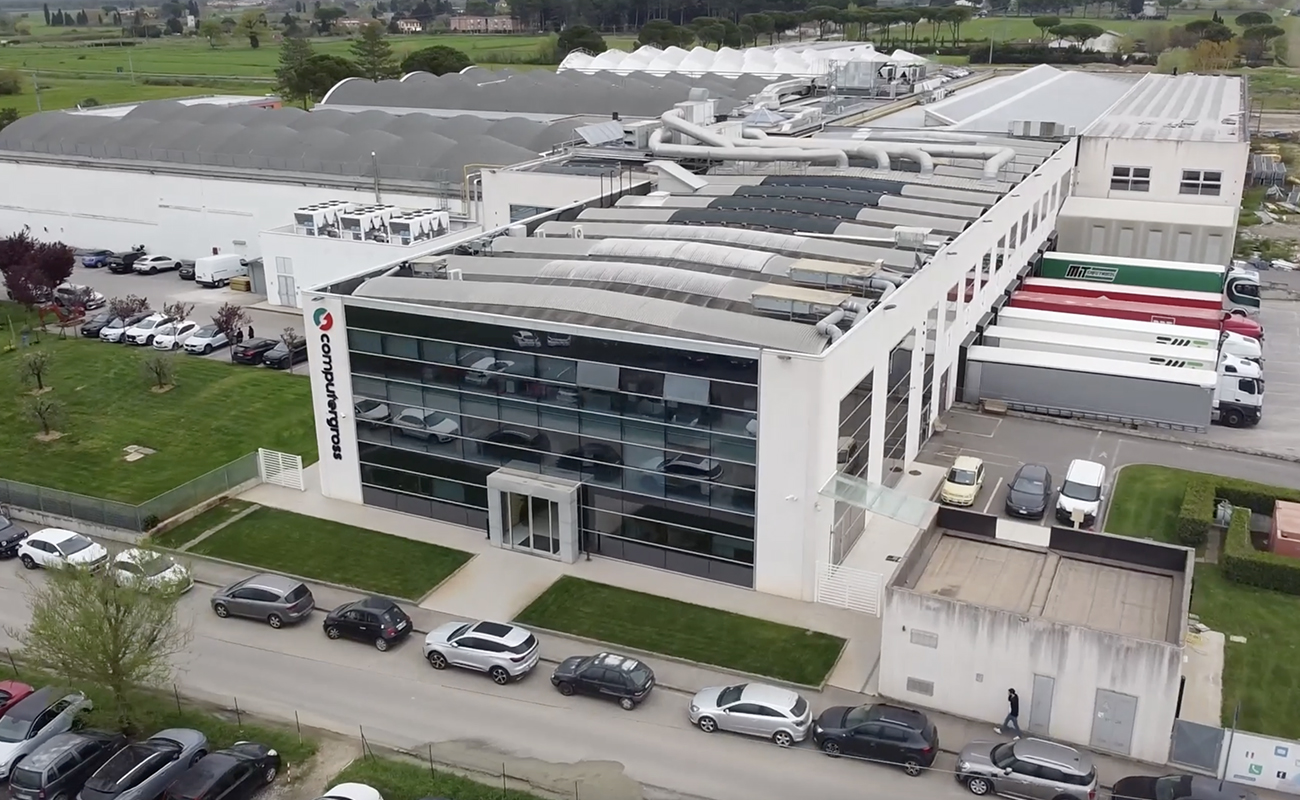
Computer Gross S.p.A., ottieni il massimo con i nostri servizi.
Con oltre 2 miliardi di fatturato annuo, Computer Gross eccelle nel panorama ICT per prodotti completi, servizi di qualità e valore aggiunto. microsoft-nextgen.computergross.it
