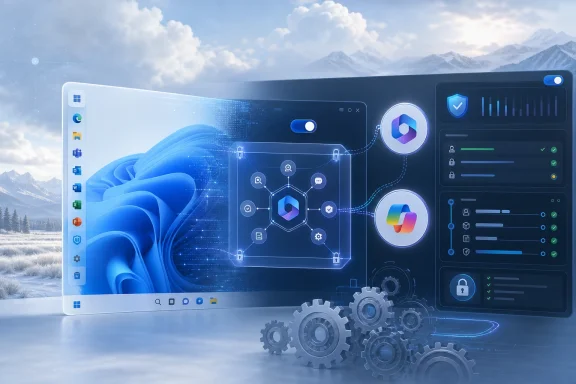
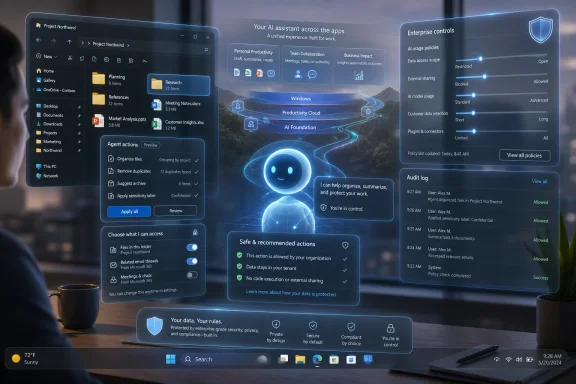
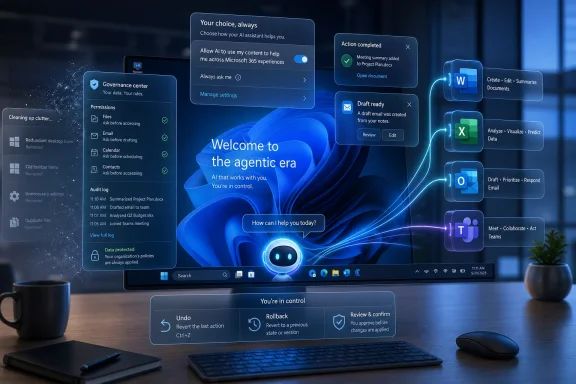
Yusuf Mehdi, Microsoft’s longtime consumer marketing chief and one of the most visible executives behind Windows, Bing, Surface, Xbox, and Copilot, is leaving the company after 35 years while staying through the next fiscal year to help steer Windows toward Microsoft’s agentic AI vision. That timing matters more than the departure itself. Mehdi is not exiting after a completed chapter; he is leaving while Microsoft is still trying to prove that its next Windows chapter should exist. The argument now facing Redmond is brutally simple: Windows cannot become the operating system for autonomous agents until it first becomes a better operating system for humans.
Executive departures are often dressed up as orderly transitions, and Mehdi’s appears to follow that pattern. He has been at Microsoft long enough to have touched several versions of the company: the Windows monopoly years, the browser wars, the Xbox gamble, the Bing fight, the Surface reinvention, the Windows 10 recovery, and now the Copilot era. Few executives can credibly claim a front-row seat across that much of consumer computing history.
But the language around his final year is revealing. Mehdi has said he plans to help “reimagine Windows for the agentic era,” grow Microsoft 365 services, and bring the company’s “One Copilot” vision to life. That is not a maintenance brief. It is a statement that Microsoft still sees AI agents not as optional accessories, but as the next organizing principle for the PC.
For Windows users, that lands differently than it might inside a Microsoft strategy deck. The PC has already endured years of nudges, ads, cloud-account prompts, Edge defaults, Teams integrations, Widgets panels, and Copilot experiments. Many users hear “reimagine Windows” and reasonably wonder whether the company has learned anything from the last round of reimagining.
That is the tension Mehdi leaves behind. His career is proof that Microsoft can catch, shape, and commercialize platform shifts. His final assignment is also proof that Windows remains a contested product inside its own user base.
That is a significant break from the traditional desktop model. Windows has historically been a system of explicit user commands: click this, open that, save here, approve there. Microsoft’s AI roadmap imagines a PC that can infer more, act more, and wait less.
There is a real productivity argument here. A trustworthy agent that can sort files, summarize a folder, prepare a spreadsheet, triage email attachments, or automate dull administrative chores would be useful. Sysadmins and power users have spent decades building scripts, macros, scheduled tasks, and management policies to make Windows do repetitive work with less human intervention.
The difference is that scripts are usually bounded by intent and visibility. AI agents introduce ambiguity. They may be powerful precisely because they operate across application boundaries, but that is also why they raise questions about consent, auditability, error recovery, and security.
Microsoft knows this, which is why its agentic work has been framed around contained workspaces, experimental toggles, and user transparency. The problem is not that Microsoft is unaware of the risk. The problem is that many users no longer grant Microsoft the benefit of the doubt when Windows asks for more trust.
That is why the backlash has been so sharp. Microsoft often talks about Copilot as a productivity surface. Many users experience it as a branding surface. The distinction matters because Windows is not a website or a phone app that people can casually ignore. It is the substrate under work, games, school, business operations, and personal archives.
The controversy over AI in Notepad, Photos, Snipping Tool, File Explorer, and other everyday surfaces reflects that deeper mistrust. A user who opens Notepad wants the fastest possible path between thought and text. A user taking a screenshot wants the tool to launch instantly, capture accurately, and get out of the way. If AI appears before performance, it feels like a tax.
Microsoft has reportedly scaled back or refined some of those AI insertions, and that retreat is notable. It suggests the company has discovered a boundary that enthusiasts saw immediately: intelligence is welcome when it removes friction, not when it adds another panel, upsell, memory footprint, or privacy prompt.
The lesson should be obvious. AI features in Windows need to be judged less by demo quality and more by whether they survive daily contact with impatient users.
Windows 11 has never lacked ideas. It has lacked the feeling of coherence that made some older releases seem dependable even when they were less capable. The operating system can feel modern in one corner and strangely unfinished in another. Settings keeps absorbing Control Panel functionality but has not fully replaced it. The shell has improved, but not always in ways that restore beloved capabilities quickly enough. The Start menu, taskbar, widgets, search, and recommendations have all carried the scent of competing corporate goals.
That matters because AI increases the surface area of trust. If a file operation fails, users blame the file operation. If an AI agent moves, edits, or summarizes the wrong thing, users blame the entire premise. A desktop that still struggles to communicate clearly about updates, defaults, background processes, and system resource use is not yet the ideal home for autonomous assistants.
Microsoft’s recent emphasis on performance and reliability is therefore not a concession to old-fashioned thinking. It is the only credible route to the future Mehdi describes. The company cannot ask users to delegate more if it has not first shown that the basic machinery is disciplined.
This is especially true for IT administrators. Enterprise Windows is governed by policy, compliance, repeatability, and risk management. Agentic features must fit into that world with controls that are boring, documented, reversible, and auditable. Anything less will be treated as a consumer experiment that accidentally wandered into managed fleets.
For many users, the most useful AI tools still run in the cloud. Local acceleration matters, but the line between “AI PC” and “PC that opens an AI service” remains blurry. Microsoft and its hardware partners have shipped capable machines, yet the everyday reasons to upgrade are still more conventional: battery life, display quality, thermals, keyboard feel, app compatibility, and price.
That creates a messaging challenge. If AI is the headline but performance is the purchase reason, Windows risks selling the future while users shop for the present. The same applies to memory and storage configurations. A machine marketed for AI workloads but constrained by ordinary RAM pressure invites skepticism, even if the specific workload mix is more nuanced than the spec-sheet argument suggests.
The broader PC market is also less forgiving than it was in the Windows 95 era. Apple’s silicon transition changed expectations around standby behavior, battery life, fan noise, and performance per watt. Linux desktops remain niche but increasingly credible for technical users. Chromebooks own parts of education and low-cost computing. Windows still dominates traditional PCs, but dominance is not the same thing as delight.
That is why Mehdi’s final-year pledge should be read as both ambition and warning. Microsoft can define the AI PC category only if Windows feels like the best place for AI to live. If it feels like the place where AI has been bolted on top of old annoyances, the category will belong to someone else’s narrative.
Microsoft has already framed agentic features with containment and consent, and that is the right starting point. But containment has to be more than a reassuring noun. Users and administrators need to understand what an agent can see, what it can modify, which identities it uses, how permissions are granted, how long access persists, and what logs exist after the fact.
Prompt injection also becomes more than a chatbot curiosity when an agent can act. A malicious document, webpage, email, or instruction could attempt to manipulate the assistant into doing something unintended. The old rule of “do not run untrusted code” becomes harder to explain when the risky object may be natural language interpreted by a model.
For consumer users, the danger is accidental damage, privacy leakage, or scams that become easier to execute. For enterprises, the danger is data exposure, policy bypass, regulatory failure, and an expanded attack surface that security teams did not ask for. Microsoft’s challenge is to make agentic Windows feel less like giving a bot the keys and more like assigning a tightly supervised junior operator.
That will require defaults that favor restraint. It will also require management tools that do not arrive after the consumer rollout. If Windows agents are going to matter in business, Group Policy, Intune, event logging, identity boundaries, data loss prevention, and compliance controls need to be part of the story from the beginning.
Microsoft’s security history is instructive here. The company learned during the Trustworthy Computing era that platform power without discipline becomes liability. Agentic Windows may need a similar cultural reset: not “AI everywhere,” but AI only where permission, visibility, and rollback are clear.
But Microsoft’s history with bundling cuts both ways. Integration can create convenience, and it can also create resentment. The more Copilot becomes the front door to Microsoft services, the more users will ask whether it exists to serve them or to route them deeper into Microsoft’s commercial ecosystem.
This is where Mehdi’s marketing legacy becomes relevant. Microsoft has always been good at turning platform position into distribution. Internet Explorer, Bing defaults, Office integration, Teams placement, Edge prompts, and Windows account flows all reflect the same corporate instinct: if Microsoft controls the surface, Microsoft can shape the path.
The AI era makes that instinct more powerful. An assistant that recommends, summarizes, drafts, schedules, shops, searches, and acts is not merely a feature. It is an influence layer. If it is trusted, it becomes a habit. If it is distrusted, it becomes the most sophisticated nagware ever shipped.
Microsoft’s task is to make One Copilot feel less like one funnel and more like one dependable interface. That means respecting third-party apps, user defaults, local workflows, and the many Windows customers who do not live entirely inside Microsoft 365. A Copilot that can only imagine the Microsoft way of doing things will not feel like an assistant. It will feel like a salesperson with system permissions.
Mehdi’s career maps onto that institutional memory. He helped sell Windows when the PC was the center of computing. He worked on Internet Explorer when the browser threatened to become the new platform. He helped build Bing when search became the gateway to the web. He championed Surface when Microsoft needed to prove Windows could have first-party hardware ambition. He became a leading face of Copilot when generative AI threatened to redraw the software map again.
That continuity explains the urgency. Microsoft does not see Copilot as a feature race. It sees Copilot as a claim on the next interface. If users begin asking agents to do things instead of opening apps, the company that owns the agent owns the relationship.
Windows is central to that ambition because it remains the most important general-purpose desktop platform. It sits between users and files, peripherals, applications, browsers, games, business systems, and local compute. If AI agents are going to become operating-layer actors, Windows is too valuable a place for Microsoft to treat cautiously.
Yet the same history also explains the risk. Microsoft’s biggest consumer missteps often come from seeing strategic inevitability before users see personal value. The company may be right that agents are coming. It can still be wrong about how aggressively Windows should push them.
The objection is not intelligence. It is loss of control. Users want tools that are fast, optional, explainable, and respectful of existing workflows. They object when features arrive as defaults before they have earned trust, or when they appear in system apps where simplicity was the main virtue.
This distinction should guide Microsoft’s next year. The company does not need to abandon agentic Windows. It needs to make the opt-in path so obviously useful that users choose it. The best version of Copilot Actions would spread because people see it save time, not because Microsoft found one more surface to place a button.
There is also a cultural dimension. Windows power users have long tolerated quirks because the platform rewarded tinkering. If AI reduces tinkering by hiding decisions behind a model, Microsoft must provide new forms of transparency. A great agent should not be a magic trick. It should be a visible chain of proposed actions that the user can inspect, approve, pause, and reverse.
That is the version of agentic Windows that could win skeptics. Not a PC that acts like it knows best, but a PC that can do tedious work while showing its work.
But great operating systems are defined as much by what they refuse to interrupt as by what they enable. The Windows desktop is valuable because it is a workspace. If every release turns that workspace into a rotating showcase for strategic priorities, users will keep looking for ways to strip it down.
Microsoft’s renewed attention to quality suggests that some inside the company understand the danger. Fixing driver reliability, reducing memory overhead, improving native app performance, refining the shell, and calming promotional surfaces are not glamorous goals. They are the work required to make Windows feel owned by the user again.
The agentic era should be built on that foundation. Agents should be modular. They should be governed by clear permission scopes. They should have kill switches that do not require registry archaeology. They should respect local accounts, non-Microsoft browsers, non-Microsoft productivity tools, and managed environments where AI may be disabled by policy.
Most importantly, Microsoft should resist the urge to equate availability with adoption. Putting Copilot everywhere is not the same as making Copilot indispensable. The company has one year of Mehdi’s transition period to show that it understands the difference.
Microsoft is right that the PC is changing, and Mehdi is probably right that autonomous agents will become part of mainstream computing. But Windows has survived for decades not because it was always elegant, but because it was useful, compatible, and broadly under the user’s command. If Microsoft wants Mehdi’s final chapter to be remembered as the moment Windows entered the AI era, it must make sure the operating system does not lose that bargain on the way there.
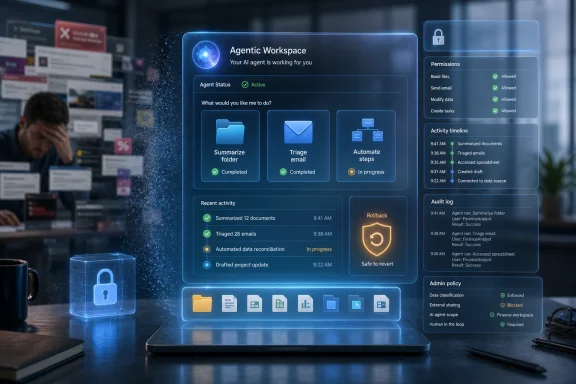 Mehdi’s Exit Turns an AI Strategy Into a Legacy Bet
Executive departures are often dressed up as orderly transitions, and Mehdi’s appears to follow that pattern. He has been at Microsoft long enough to have touched several versions of the company: the Windows monopoly years, the browser wars, the Xbox gamble, the Bing fight, the Surface reinvention, the Windows 10 recovery, and now the Copilot era. Few executives can credibly claim a front-row seat across that much of consumer computing history.But the language around his final year is revealing. Mehdi has said he plans to help “reimagine Windows for the agentic era,” grow Microsoft 365 services, and bring the company’s “One Copilot” vision to life. That is not a maintenance brief. It is a statement that Microsoft still sees AI agents not as optional accessories, but as the next organizing principle for the PC.
For Windows users, that lands differently than it might inside a Microsoft strategy deck. The PC has already endured years of nudges, ads, cloud-account prompts, Edge defaults, Teams integrations, Widgets panels, and Copilot experiments. Many users hear “reimagine Windows” and reasonably wonder whether the company has learned anything from the last round of reimagining.
That is the tension Mehdi leaves behind. His career is proof that Microsoft can catch, shape, and commercialize platform shifts. His final assignment is also proof that Windows remains a contested product inside its own user base.
Microsoft Wants the PC to Stop Waiting for Instructions
The phrase agentic OS sounds like conference-stage jargon, but Microsoft’s intent is fairly concrete. An agentic Windows is one where AI software can do more than answer questions in a chat box. It can inspect context, plan steps, interact with files, launch workflows, operate inside a contained workspace, and complete tasks while the user does something else.That is a significant break from the traditional desktop model. Windows has historically been a system of explicit user commands: click this, open that, save here, approve there. Microsoft’s AI roadmap imagines a PC that can infer more, act more, and wait less.
There is a real productivity argument here. A trustworthy agent that can sort files, summarize a folder, prepare a spreadsheet, triage email attachments, or automate dull administrative chores would be useful. Sysadmins and power users have spent decades building scripts, macros, scheduled tasks, and management policies to make Windows do repetitive work with less human intervention.
The difference is that scripts are usually bounded by intent and visibility. AI agents introduce ambiguity. They may be powerful precisely because they operate across application boundaries, but that is also why they raise questions about consent, auditability, error recovery, and security.
Microsoft knows this, which is why its agentic work has been framed around contained workspaces, experimental toggles, and user transparency. The problem is not that Microsoft is unaware of the risk. The problem is that many users no longer grant Microsoft the benefit of the doubt when Windows asks for more trust.
Copilot Became the Symbol of Windows Overreach
Copilot’s rough reception on Windows was not only about AI. It became a container for older frustrations with the operating system. Users who were already irritated by inconsistent settings pages, sluggish shell components, aggressive recommendations, and half-finished design migrations saw Copilot as another layer of corporate priority pasted over unresolved product debt.That is why the backlash has been so sharp. Microsoft often talks about Copilot as a productivity surface. Many users experience it as a branding surface. The distinction matters because Windows is not a website or a phone app that people can casually ignore. It is the substrate under work, games, school, business operations, and personal archives.
The controversy over AI in Notepad, Photos, Snipping Tool, File Explorer, and other everyday surfaces reflects that deeper mistrust. A user who opens Notepad wants the fastest possible path between thought and text. A user taking a screenshot wants the tool to launch instantly, capture accurately, and get out of the way. If AI appears before performance, it feels like a tax.
Microsoft has reportedly scaled back or refined some of those AI insertions, and that retreat is notable. It suggests the company has discovered a boundary that enthusiasts saw immediately: intelligence is welcome when it removes friction, not when it adds another panel, upsell, memory footprint, or privacy prompt.
The lesson should be obvious. AI features in Windows need to be judged less by demo quality and more by whether they survive daily contact with impatient users.
The Windows Quality Reset Is Not a Side Quest
The most important Windows story of 2026 may not be agentic computing at all. It may be Microsoft’s apparent recognition that Windows 11 needs a quality reset before the AI layer can earn legitimacy. Performance, reliability, driver quality, battery life, UI consistency, and calmer defaults are not nostalgic requests from cranky power users. They are prerequisites for platform ambition.Windows 11 has never lacked ideas. It has lacked the feeling of coherence that made some older releases seem dependable even when they were less capable. The operating system can feel modern in one corner and strangely unfinished in another. Settings keeps absorbing Control Panel functionality but has not fully replaced it. The shell has improved, but not always in ways that restore beloved capabilities quickly enough. The Start menu, taskbar, widgets, search, and recommendations have all carried the scent of competing corporate goals.
That matters because AI increases the surface area of trust. If a file operation fails, users blame the file operation. If an AI agent moves, edits, or summarizes the wrong thing, users blame the entire premise. A desktop that still struggles to communicate clearly about updates, defaults, background processes, and system resource use is not yet the ideal home for autonomous assistants.
Microsoft’s recent emphasis on performance and reliability is therefore not a concession to old-fashioned thinking. It is the only credible route to the future Mehdi describes. The company cannot ask users to delegate more if it has not first shown that the basic machinery is disciplined.
This is especially true for IT administrators. Enterprise Windows is governed by policy, compliance, repeatability, and risk management. Agentic features must fit into that world with controls that are boring, documented, reversible, and auditable. Anything less will be treated as a consumer experiment that accidentally wandered into managed fleets.
The AI PC Pitch Still Has a Hardware Problem
The Copilot+ PC program tried to give the AI era a hardware identity. Neural processing units, local models, better battery life, and premium laptops were supposed to make the AI PC feel like a new class of Windows machine. In practice, the story has been messier.For many users, the most useful AI tools still run in the cloud. Local acceleration matters, but the line between “AI PC” and “PC that opens an AI service” remains blurry. Microsoft and its hardware partners have shipped capable machines, yet the everyday reasons to upgrade are still more conventional: battery life, display quality, thermals, keyboard feel, app compatibility, and price.
That creates a messaging challenge. If AI is the headline but performance is the purchase reason, Windows risks selling the future while users shop for the present. The same applies to memory and storage configurations. A machine marketed for AI workloads but constrained by ordinary RAM pressure invites skepticism, even if the specific workload mix is more nuanced than the spec-sheet argument suggests.
The broader PC market is also less forgiving than it was in the Windows 95 era. Apple’s silicon transition changed expectations around standby behavior, battery life, fan noise, and performance per watt. Linux desktops remain niche but increasingly credible for technical users. Chromebooks own parts of education and low-cost computing. Windows still dominates traditional PCs, but dominance is not the same thing as delight.
That is why Mehdi’s final-year pledge should be read as both ambition and warning. Microsoft can define the AI PC category only if Windows feels like the best place for AI to live. If it feels like the place where AI has been bolted on top of old annoyances, the category will belong to someone else’s narrative.
Security Is the Argument Microsoft Cannot Hand-Wave
The most serious objections to agentic Windows are not aesthetic. They are security objections. An AI agent that can interact with local files and applications changes the threat model because the agent becomes a new kind of intermediary between user intent and system action.Microsoft has already framed agentic features with containment and consent, and that is the right starting point. But containment has to be more than a reassuring noun. Users and administrators need to understand what an agent can see, what it can modify, which identities it uses, how permissions are granted, how long access persists, and what logs exist after the fact.
Prompt injection also becomes more than a chatbot curiosity when an agent can act. A malicious document, webpage, email, or instruction could attempt to manipulate the assistant into doing something unintended. The old rule of “do not run untrusted code” becomes harder to explain when the risky object may be natural language interpreted by a model.
For consumer users, the danger is accidental damage, privacy leakage, or scams that become easier to execute. For enterprises, the danger is data exposure, policy bypass, regulatory failure, and an expanded attack surface that security teams did not ask for. Microsoft’s challenge is to make agentic Windows feel less like giving a bot the keys and more like assigning a tightly supervised junior operator.
That will require defaults that favor restraint. It will also require management tools that do not arrive after the consumer rollout. If Windows agents are going to matter in business, Group Policy, Intune, event logging, identity boundaries, data loss prevention, and compliance controls need to be part of the story from the beginning.
Microsoft’s security history is instructive here. The company learned during the Trustworthy Computing era that platform power without discipline becomes liability. Agentic Windows may need a similar cultural reset: not “AI everywhere,” but AI only where permission, visibility, and rollback are clear.
The One Copilot Vision Risks Becoming One More Microsoft Bundle
“One Copilot” is an elegant phrase because it promises coherence. One assistant across Windows, Microsoft 365, Edge, Bing, Teams, and the broader Microsoft account experience could reduce fragmentation. In theory, the user should not have to understand which Copilot they are using or which product boundary they have crossed.But Microsoft’s history with bundling cuts both ways. Integration can create convenience, and it can also create resentment. The more Copilot becomes the front door to Microsoft services, the more users will ask whether it exists to serve them or to route them deeper into Microsoft’s commercial ecosystem.
This is where Mehdi’s marketing legacy becomes relevant. Microsoft has always been good at turning platform position into distribution. Internet Explorer, Bing defaults, Office integration, Teams placement, Edge prompts, and Windows account flows all reflect the same corporate instinct: if Microsoft controls the surface, Microsoft can shape the path.
The AI era makes that instinct more powerful. An assistant that recommends, summarizes, drafts, schedules, shops, searches, and acts is not merely a feature. It is an influence layer. If it is trusted, it becomes a habit. If it is distrusted, it becomes the most sophisticated nagware ever shipped.
Microsoft’s task is to make One Copilot feel less like one funnel and more like one dependable interface. That means respecting third-party apps, user defaults, local workflows, and the many Windows customers who do not live entirely inside Microsoft 365. A Copilot that can only imagine the Microsoft way of doing things will not feel like an assistant. It will feel like a salesperson with system permissions.
Mehdi’s Career Explains Why Microsoft Keeps Making the Same Bet
It is easy to mock Microsoft’s AI zeal as another case of corporate overreach, but that misses why the company is so committed. Microsoft remembers what happens when it misses platform shifts. Search, mobile, social, and consumer web services all left scars. The company’s current AI posture is shaped by a determination not to watch another interface layer form above Windows and Office.Mehdi’s career maps onto that institutional memory. He helped sell Windows when the PC was the center of computing. He worked on Internet Explorer when the browser threatened to become the new platform. He helped build Bing when search became the gateway to the web. He championed Surface when Microsoft needed to prove Windows could have first-party hardware ambition. He became a leading face of Copilot when generative AI threatened to redraw the software map again.
That continuity explains the urgency. Microsoft does not see Copilot as a feature race. It sees Copilot as a claim on the next interface. If users begin asking agents to do things instead of opening apps, the company that owns the agent owns the relationship.
Windows is central to that ambition because it remains the most important general-purpose desktop platform. It sits between users and files, peripherals, applications, browsers, games, business systems, and local compute. If AI agents are going to become operating-layer actors, Windows is too valuable a place for Microsoft to treat cautiously.
Yet the same history also explains the risk. Microsoft’s biggest consumer missteps often come from seeing strategic inevitability before users see personal value. The company may be right that agents are coming. It can still be wrong about how aggressively Windows should push them.
Windows Users Are Not Anti-AI; They Are Anti-Clutter
The loudest criticism of Copilot in Windows is often caricatured as resistance to change. That is too convenient. Windows enthusiasts are not allergic to automation. They use PowerShell, AutoHotkey, winget, Remote Desktop, virtualization, package managers, launchers, scripts, macros, and third-party utilities precisely because they want the PC to do more.The objection is not intelligence. It is loss of control. Users want tools that are fast, optional, explainable, and respectful of existing workflows. They object when features arrive as defaults before they have earned trust, or when they appear in system apps where simplicity was the main virtue.
This distinction should guide Microsoft’s next year. The company does not need to abandon agentic Windows. It needs to make the opt-in path so obviously useful that users choose it. The best version of Copilot Actions would spread because people see it save time, not because Microsoft found one more surface to place a button.
There is also a cultural dimension. Windows power users have long tolerated quirks because the platform rewarded tinkering. If AI reduces tinkering by hiding decisions behind a model, Microsoft must provide new forms of transparency. A great agent should not be a magic trick. It should be a visible chain of proposed actions that the user can inspect, approve, pause, and reverse.
That is the version of agentic Windows that could win skeptics. Not a PC that acts like it knows best, but a PC that can do tedious work while showing its work.
The Real Test Will Be Whether Microsoft Can Say No
The hardest product discipline for Microsoft is restraint. The company has every incentive to put Copilot into more places, gather more usage, justify more AI infrastructure spending, and reassure investors that its AI bet is becoming a daily habit. Windows, with its massive installed base, is the obvious distribution engine.But great operating systems are defined as much by what they refuse to interrupt as by what they enable. The Windows desktop is valuable because it is a workspace. If every release turns that workspace into a rotating showcase for strategic priorities, users will keep looking for ways to strip it down.
Microsoft’s renewed attention to quality suggests that some inside the company understand the danger. Fixing driver reliability, reducing memory overhead, improving native app performance, refining the shell, and calming promotional surfaces are not glamorous goals. They are the work required to make Windows feel owned by the user again.
The agentic era should be built on that foundation. Agents should be modular. They should be governed by clear permission scopes. They should have kill switches that do not require registry archaeology. They should respect local accounts, non-Microsoft browsers, non-Microsoft productivity tools, and managed environments where AI may be disabled by policy.
Most importantly, Microsoft should resist the urge to equate availability with adoption. Putting Copilot everywhere is not the same as making Copilot indispensable. The company has one year of Mehdi’s transition period to show that it understands the difference.
The Windows Mehdi Leaves Behind Has One Job First
Mehdi’s departure gives Microsoft a symbolic deadline, but Windows users should judge the next year by concrete outcomes rather than farewell-note ambition.- Microsoft needs to make Windows 11 measurably faster, quieter, and more reliable before it asks users to delegate more tasks to AI agents.
- Copilot Actions and other agentic features need transparent permissions, visible activity histories, strong rollback options, and enterprise-grade controls from the start.
- AI integrations in core apps should remain optional unless they clearly improve the default task without slowing it down or adding clutter.
- The AI PC pitch needs to be supported by practical benefits users can feel, not only by branding, NPU specifications, or cloud-connected demos.
- One Copilot will succeed only if it behaves like a user agent rather than a Microsoft services funnel.
Microsoft is right that the PC is changing, and Mehdi is probably right that autonomous agents will become part of mainstream computing. But Windows has survived for decades not because it was always elegant, but because it was useful, compatible, and broadly under the user’s command. If Microsoft wants Mehdi’s final chapter to be remembered as the moment Windows entered the AI era, it must make sure the operating system does not lose that bargain on the way there.
References
- Primary source: Windows Latest
Published: Fri, 22 May 2026 14:08:13 GMT
Microsoft's Yusuf Mehdi pledges to reimagine Windows 11 for the AI era in his final year before leaving
Microsoft EVP Yusuf Mehdi plans to leave after 35 years, but says he will spend his final year pushing Windows 11 toward an agentic AI era. www.windowslatest.com
- Related coverage: tomsguide.com
Microsoft promises Windows 11 reset: new focus on performance, reliability and 'reducing unnecessary Copilot' AI | Tom's Guide
Microsoft is promising to fix Windows 11, here's how.www.tomsguide.com - Related coverage: winbuzzer.com
Microsoft Pledges Windows 11 Overhaul With Copilot Pullback, Movable Taskbar
Microsoft has pledged to restore vertical taskbar positioning, reduce Copilot integrations, and improve Windows 11 update quality after months of user backlash. winbuzzer.com
- Related coverage: windowscentral.com
I got an inside look at the plan to bring the soul back to Windows 11 — Microsoft’s bet on quality, community, and making the OS feel human again | Windows Central
From Ninja Cat to named owners — I learned how Microsoft is rebooting the Insider program to restore trust, but will it work?www.windowscentral.com - Official source: blogs.windows.com
Strengthening Windows trust and security through User Transparency and Consent
Today, Windows 11 powers over a billion devices and supports millions of apps across business, creativity, education, gaming and productivity. For decades, our commitment to openness and compatibility, in partnership with our global community of deveblogs.windows.com - Related coverage: businesstoday.in
Microsoft’s Yusuf Mehdi to exit after 35 years as company doubles down on AI - BusinessToday
Mehdi has shared an internal memo to employees announcing his departure after the next fiscal year.www.businesstoday.in
- Related coverage: pureinfotech.com
Microsoft pulls back Copilot plans to cut AI clutter across Windows 11 - Pureinfotech
Microsoft appears to cancel plans to add Copilot to Windows 11 notifications and Settings, signaling a quieter AI strategy for the operating system. pureinfotech.com
- Related coverage: goldesel.de
Microsoft zahlt 250 Mio. USD Vergleich bei Activision-Klage: Anleger s
Kurzüberblick
Microsoft geht bei der Activision-Übernahme rechtlich auf die Zielgerade: Das Unternehmen hat sich laut Gerichtsakten zu einem Vergleich über... goldesel.de
- Official source: microsoft.com
- Related coverage: techxplore.com
- Official source: cdn-dynmedia-1.microsoft.com
Microsoft: Case Study: How Windows 11 Pro helps Klöckner Pentaplast accelerate business success
PDF documentcdn-dynmedia-1.microsoft.com
- Related coverage: techspot.com
Microsoft explains how Windows 11 will become an agentic OS whether you like it or not | TechSpot
Windows president Pavan Davuluri recently described the future of Windows as an agentic operating system, where AI bots and large language models handle the user's commands on...www.techspot.com - Official source: support.microsoft.com
Experimental Agentic Features | Microsoft Support
Experimental Agentic Featuressupport.microsoft.com - Related coverage: allthings.how
Microsoft puts agentic Copilot at the center of Windows 11
New updates push voice-first control and task‑doing AI across settings and apps.allthings.how - Related coverage: windows.gadgethacks.com
Windows 11 Becomes AI-Powered 'Agentic OS' in 2025 Update << Windows Tips :: Gadget Hacks
Reviewed by: Y. Garcia Windows 11 is getting its biggest shakeup since launch, a pivot to what Microsoft calls an "agentic OS." This is not a sprinkle of AI... windows.gadgethacks.com
- Related coverage: axios.com
Microsoft Windows Copilot gets new features
The company moves to define the AI PC it first introduced in 2024.www.axios.com
- Related coverage: pcworld.com
Meet Copilot Actions, Windows 11's most revolutionary AI feature yet | PCWorld
Microsoft is preparing to send autonomous AI agents throughout your Windows PC, all as part of an initiative to redefine the Windows AI PC.www.pcworld.com - Official source: news.microsoft.com
Microsoft bringt mit Windows 11 KI auf jeden PC - Source EMEA
 news.microsoft.com
- Related coverage: techradar.com
Windows 11 users rebel as top Microsoft exec says operating system is 'evolving into an agentic OS' | TechRadar
Or alternatively, it's evolving into an OS that's driving people to macOS or Linux, if you listen to some of the angry feedbackwww.techradar.com - Related coverage: tomshardware.com
Microsoft's vision of "AI-native" Windows is becoming real, update introduces agents that pilfer through your files — Latest Windows 11 Insider build includes experimental AI agents toggle that can perform tasks for you in the background | Tom'
Microsoft states that agents read files in an isolated runtimewww.tomshardware.com - Related coverage: pcgamer.com
Apparently Windows 11 becoming 'agentic AI' means letting the bots rummage through some of your files | PC Gamer
Thanks, I guess.www.pcgamer.com - Official source: microsoft.ai
- Official source: adoption.microsoft.com