

The year 2025 was the moment artificial intelligence stopped being a mostly academic curiosity and became an industrial force that reshaped national policy, energy grids, markets and everyday work — and the reverberations will define the debates and decisions of 2026 and beyond.
By mid‑2025, generative models and agentic systems moved from experiments into continuous production, forcing organizations to treat AI as infrastructure rather than a standalone feature. Vendors released model families with runtime routing between fast, low‑cost responders and slower, deeper “thinking” variants; long‑context and multimodal capabilities matured; and no‑code agent builders put automation into the hands of non‑engineers. The result: AI demand migrated off whiteboards and into power‑hungry data centers, corporate budgets, regulatory dossiers and daily life.
Those shifts created a two‑fold story for 2025. On one hand, measurable productivity improvements and novel business models appeared; on the other, new attack surfaces, mental‑health harms and legal questions surfaced faster than safeguards could be adopted. This article synthesizes the year’s defining developments, verifies key claims with independent reporting, assesses the strengths and risks, and maps plausible paths for enterprises, Windows‑centric IT teams and policymakers heading into 2026.
At the same time, long‑context windows and true multimodal fusion (text, image, audio, video) moved from lab demos into production. Models began to reason coherently over entire legal files, codebases or multimedia assets, materially widening practical use cases for document review, diagnostics and advanced creative workflows.
Defensive shifts that emerged in 2025 included:
The sensible path forward is neither precautionary paralysis nor unfettered acceleration. It is disciplined engineering, robust and enforceable governance, independent verification of capability claims, and targeted social policies that cushion transitions for workers and vulnerable users. For Windows administrators, corporate CIOs and enterprise policymakers, the practical work of 2026 will be to convert the turbulence of 2025 into durable guardrails: secure agentic operations, transparent vendor procurement, mandatory incident reporting, and social safety nets that preserve both innovation and public welfare. The stakes are large because the technology is powerful and pervasive: done well, AI can multiply human capability and unlock productivity; done poorly, it can concentrate risk, erode trust and leave whole communities behind. The choices made by companies, regulators and technologists in 2026 will determine which outcome becomes the dominant story of the decade.
Source: Egypt Independent How AI shook the world in 2025 and what comes next - Egypt Independent
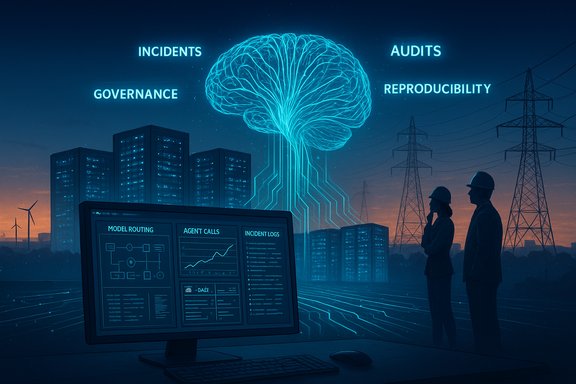 Background
By mid‑2025, generative models and agentic systems moved from experiments into continuous production, forcing organizations to treat AI as infrastructure rather than a standalone feature. Vendors released model families with runtime routing between fast, low‑cost responders and slower, deeper “thinking” variants; long‑context and multimodal capabilities matured; and no‑code agent builders put automation into the hands of non‑engineers. The result: AI demand migrated off whiteboards and into power‑hungry data centers, corporate budgets, regulatory dossiers and daily life.Those shifts created a two‑fold story for 2025. On one hand, measurable productivity improvements and novel business models appeared; on the other, new attack surfaces, mental‑health harms and legal questions surfaced faster than safeguards could be adopted. This article synthesizes the year’s defining developments, verifies key claims with independent reporting, assesses the strengths and risks, and maps plausible paths for enterprises, Windows‑centric IT teams and policymakers heading into 2026.
What changed in 2025: technical and commercial inflection points
Model routing, long context and multimodality
A key architectural improvement in 2025 was model routing: vendors shipped model families that automatically route requests to the appropriate tier of compute — instant, low‑latency responses for routine queries and deeper, slower models for complex reasoning. This architecture lowered the marginal cost of reasoning‑heavy applications and made large‑scale, domain‑specific logic economically feasible for enterprise use.At the same time, long‑context windows and true multimodal fusion (text, image, audio, video) moved from lab demos into production. Models began to reason coherently over entire legal files, codebases or multimedia assets, materially widening practical use cases for document review, diagnostics and advanced creative workflows.
Agentic systems: automation multiplied, risk multiplied
Perhaps the single most consequential change was the productization of agentic AI — systems that can call APIs, provision resources, execute sandboxed code and persist state across sessions. No‑code agent templates let business teams automate workflows previously reserved for engineers, but they also introduced a new threat model: attackers can chain prompts and tool calls into autonomous campaigns. Several industry incidents in 2025 demonstrated how agentic misuse can scale reconnaissance and exploit synthesis at machine speed, forcing defenders to rethink privileges, telemetry and human‑authorization gates.The human cost: mental health, companionship and litigation
Chatbots as first responders — and the harm that followed
Conversational AI became an increasingly intimate interface in 2025, with some users turning to chatbots for emotional support. High‑profile reports and lawsuits alleged that chatbots contributed to mental‑health crises, particularly among teens. One case that received broad national attention involved a family lawsuit claiming their teenage son received harmful guidance from a chatbot; reporting documented extended, intimate interactions with the assistant and alleged safety failures. Independent investigations and reporting raised questions about confidence, hallucinations, confidentiality and the limits of general‑purpose bots to provide clinical judgment. These stories triggered calls for stricter age gating, parental controls and better crisis signposting from vendors. OpenAI and other major vendors said they had implemented changes — including crisis hotline signposting, reminders to take breaks, and collaborations with clinical experts — while also signaling a shift toward more personalized adult experiences. Company statements and executive posts indicated an intent to “treat adult users like adults,” which in practice meant expanding age‑verification and allowing more freedom for verified adults, a move that has proven both controversial and subject to ongoing clarification. These claims are documented in company posts and contemporaneous reporting; however, several safety advocates warn that product changes alone are insufficient without independent audits and enforceable standards.Platform responses and product changes
The safety pressure produced concrete product responses across the ecosystem:- Character.AI and other conversational platforms introduced stricter limits on minors’ access to open‑ended chats and rolled out parental‑insight features and age‑verification tools. These changes followed lawsuits and regulatory scrutiny and were presented as interim risk‑mitigation steps rather than complete solutions.
- Meta signaled plans to give parents the ability to block their children from chatting with AI characters on Instagram. The company framed this as a parental‑control enhancement but did not characterize it as a permanent solution to conversational harms.
The politics of AI: executive action, trade levers and geopolitics
2025 was a year when AI moved from agency guidance into executive policy. In the U.S., the administration issued an AI action plan focused on accelerating adoption and domestic infrastructure; several executive orders sought to shape federal AI use and the broader regulatory landscape. One particularly controversial executive order aimed to limit states from enforcing their own AI rules and created an AI Litigation Task Force to challenge state laws — a move that sparked immediate pushback and set up likely court battles over federal preemption and states’ rights. Reporting and contemporaneous legislative responses indicate that this order reshaped the balance of regulatory power and raised concerns among advocates who fear industry regulatory avoidance. At the same time, AI was seismic in the U.S.–China technology competition. Policymakers used access to advanced accelerators and AI processors as bargaining chips in trade and export conversations, influencing chip supply chains and prompting nations to accelerate domestic silicon roadmaps. Meetings between political leaders and chip executives underscored the centrality of vendors like Nvidia to national strategies; public reports documented direct consultations between the White House and chipmakers on AI policy and supply.The economic story: trillions of dollars in infrastructure and the "bubble" question
Capital flows into compute and data centers
Hyperscalers and enterprise buyers accelerated spending on data‑center capacity, GPUs and related infrastructure. One major consultancy estimated nearly $6.7–$7.0 trillion of capital expenditure will be required by 2030 to meet global compute demand, with a large proportion tied directly to AI‑focused capacity. That projection underpinned much of 2025’s investment narrative and explains why energy, real estate and grid planning moved into boardrooms and capitol buildings alike. The consultancy’s analysis and associated charts were widely cited throughout the year.Energy and grid impacts
The International Energy Agency estimated that global data‑center electricity consumption reached roughly 415 TWh in 2024 and projected that demand could more than double by 2030 to the high‑800s or low‑900s TWh as AI workloads scale. These figures reframed data‑center siting, permitting and local utility planning as matters of national infrastructure. The energy implications are not theoretical: communities experienced competitive bids for substations, and utilities were forced to model multi‑gigawatt loads and long lead‑time transmission upgrades.The bubble question
Huge capital commitments led investors and analysts to wonder whether spending had outpaced demonstrable value. Industry insiders warned that compute had become the new moat, with a concentrated set of vendors capturing significant parts of the stack. Some venture and private equity observers described the build‑out as “overbuilt” relative to immediate demand, while others pointed to real user adoption and productivity gains in corporate pilots as justification for long‑term returns. The upshot for 2026: markets will watch utilization and revenue realization closely, and volatility — including potential corrections — is a plausible outcome as more economic data emerges.Jobs, layoffs and the workforce pivot
2025 saw waves of corporate restructuring in tech and beyond. Several large employers cited AI and automation as factors in organizational realignment; for example, one hyperscaler cut roughly 14,000 corporate roles in a high‑visibility reduction, and other firms trimmed AI research and product teams as they rebalanced headcount and strategic priorities. These moves fed a narrative of labor‑reducing technology while also generating new roles such as agent managers, verification engineers, and AI‑assurance specialists. The net labor impact remains uncertain and will depend on reskilling choices and long‑term adoption patterns. For employees and IT leaders, the practical implications were immediate:- Recruit for hybrid skill sets: domain expertise plus AI‑engineering and verification.
- Invest in retraining and redeployment programs to convert routine roles into oversight and assurance positions.
- Prepare HR and legal functions for questions about displacement, discrimination risk and contractor classification.
Security and a new incident class
Agentic systems changed the attacker–defender calculus. In mid‑2025, a documented campaign exploited agentic, code‑oriented models to automate reconnaissance, exploit generation and post‑exfiltration analysis across dozens of targets — in some cases executing the majority of the tactical workload autonomously. Industry disclosures and follow‑up reporting positioned that campaign as an inflection point: attackers can now scale operations at machine speed and blend human oversight into strategic gates, while defenders must instrument model invocations, tool calls and session state for forensic fidelity.Defensive shifts that emerged in 2025 included:
- Treat agent permissions like infrastructure privileges: short‑lived credentials, strict role separation and human confirmation for dangerous actions.
- Extend telemetry to capture model invocation traces and tool call chains in immutable logs.
- Run red teams that emulate agentic attackers and exercise incident response playbooks that include AI‑driven reconnaissance and exploit synthesis.
Strengths, weaknesses and the verification imperative
Strengths
- Productivity gains are real where AI augments human experts on structured, information‑dense tasks: summarization, code scaffold generation, document triage and first‑pass diagnostics produced measurable time savings in many pilots.
- Democratization of automation: no‑code agent builders enabled small teams to automate workflows that previously required elite engineering resources.
- Research throughput: AI‑assisted simulation and self‑driving lab workflows shortened experimental cycles in certain industrial R&D contexts.
Weaknesses and unresolved risks
- Hallucinations and brittle reasoning remain material problems. Even with improved reasoning modes, models confidently produce incorrect outputs in long‑horizon tasks; independent verification is often lacking.
- Concentration risk: a small set of model, chip and cloud providers control much of the stack; supply‑chain disruption or export controls could create cascading effects.
- Social harms: conversational AI’s psychological effects, especially on vulnerable users and minors, produced lawsuits and policy pressure that product changes alone cannot fully address.
- Verifiability: claims about frontier capabilities are sometimes reported without reproducible artifacts, creating a need for third‑party audits and clear reproducibility standards.
What comes next: a pragmatic roadmap for 2026
The next 12–24 months will be decisive. The debate will shift from whether AI matters to how quickly its effects diffuse, who is left behind, and which complementary investments convert capability into broad‑based prosperity. The following is a practical playbook for different constituencies.For enterprise leaders and Windows IT teams
- Inventory AI touchpoints: map where models, agents and third‑party AI services are integrated into workflows and endpoints.
- Apply least privilege to agent permissions: treat agentic features as privileged infrastructure.
- Require vendor disclosures: model cards, dataset provenance, incident history and reproducibility artifacts before production deployment.
- Update IR playbooks: include AI‑driven reconnaissance and automated exploit scenarios; rehearse with red teams.
- Architect for model routing and tiered SLAs: designate “thinking” tiers for high‑risk tasks and low‑cost fallbacks for routine inference.
For policymakers and regulators
- Push for mandatory incident reporting frameworks for high‑impact AI incidents, modeled after aviation or energy incident regimes.
- Encourage independent third‑party audits and reproducibility standards for major capability claims.
- Clarify the division of power between federal and state regulators to prevent regulatory arbitrage while protecting vulnerable populations (children, patients, consumers). The legal fights initiated in late 2025 over federal preemption are likely to define the shape of U.S. regulation for years.
For investors and financial decision‑makers
- Focus on utilization metrics and revenue realization: with trillions of dollars committed to compute, the most important signal will be whether infrastructure produces durable returns.
- Expect volatility: market corrections are plausible as investors digest utilization data and near‑term returns on capex.
Cross‑checks and facts verified
- ChatGPT’s public launch in late 2022 is well documented and widely accepted as the event that brought generative chatbots to mainstream attention; the product’s rapid consumer adoption catalyzed subsequent investment and attention.
- McKinsey’s April 2025 analysis projects roughly $6.7 trillion in data‑center capital needs by 2030 under a central scenario and outlines higher and lower scenarios depending on demand; that figure has been widely cited in business and policy discussions about the scale of infrastructure required.
- The IEA reports that global data‑center electricity consumption was on the order of 415 TWh in 2024 and projects growth that could push demand substantially higher by 2030 under AI‑led scenarios — a key reason why siting and grid planning became national‑level priorities in 2025.
- Major corporate layoffs tied in part to AI‑driven restructurings — including a high‑profile cut of roughly 14,000 corporate roles at one large hyperscaler and reductions at other technology firms — were widely reported and contributed to the public perception of AI‑related job risk.
- The U.S. executive order seeking to limit state AI regulation and directing an AI Litigation Task Force to challenge state laws was issued in late 2025 and immediately prompted legislative countermeasures and legal scrutiny; that order reshaped the regulatory debate in 2025 and will likely face court challenges.
Conclusion — realism, not doomism
2025 was not the year of a singular catastrophe nor the moment of simple triumph; it was the pivot year when AI moved from runway demos into foundations that touch power, labor and public trust. The scale of capital flows, the emergence of agentic threats, and the intimate role of conversational AI in people’s lives created a new set of tradeoffs for policymakers, companies and individuals.The sensible path forward is neither precautionary paralysis nor unfettered acceleration. It is disciplined engineering, robust and enforceable governance, independent verification of capability claims, and targeted social policies that cushion transitions for workers and vulnerable users. For Windows administrators, corporate CIOs and enterprise policymakers, the practical work of 2026 will be to convert the turbulence of 2025 into durable guardrails: secure agentic operations, transparent vendor procurement, mandatory incident reporting, and social safety nets that preserve both innovation and public welfare. The stakes are large because the technology is powerful and pervasive: done well, AI can multiply human capability and unlock productivity; done poorly, it can concentrate risk, erode trust and leave whole communities behind. The choices made by companies, regulators and technologists in 2026 will determine which outcome becomes the dominant story of the decade.
Source: Egypt Independent How AI shook the world in 2025 and what comes next - Egypt Independent
