

On May 20, 2026, at the Institut Latihan Memperkasa Ummah in Janda Baik, Pahang, Malaysian student leader Nik Alif Aiman Abdul Ariffahmi alleged that Senator Datuk Dr Azhar Ahmad struck him on the cheek during a university leadership programme after a conversation turned political. Police have since taken statements and opened an investigation, while the senator has denied assault and described the contact as a gesture of warmth. The legal process will decide the narrow facts. The wider civic question is already visible: a leadership programme became a lesson in how power behaves when it thinks the room will absorb the shock.
The reason this incident has travelled beyond campus politics is not simply that a young man says he was slapped by an older politician. Malaysia has no shortage of ugly political theatre, and public life has long produced moments where hierarchy disguises itself as wisdom. What makes Janda Baik linger is the setting: a programme built around leadership, student representation, and institutional formation.
Nik Alif Aiman was not a heckler at a rally. He was a student representative attending a formal programme, reportedly in the presence of university officers and fellow student leaders. If his account is accurate, he was placed in a public hierarchy, introduced by lineage, drawn into political commentary, and then physically humiliated in front of the very peers he was supposed to stand among as an elected student figure.
That sequence matters. Public office is not merely a job title; it is a performance of restraint under pressure. The test of a senator, minister, vice-chancellor, police chief, or board member is not how warmly he greets those who agree with him, but how he behaves when someone younger, less powerful, or politically inconvenient occupies the same room.
Azhar has rejected the allegation, saying there was no slap, no assault, and no rough conduct. That denial belongs in the record, and the police investigation must be allowed to do its work. But even the dispute over vocabulary — slap, touch, gesture, misunderstanding — reveals something deeply Malaysian about the politics of deference. When power touches the powerless, the first argument is often not about accountability. It is about interpretation.
That language can be noble. It can also be suffocating. Too often, youth leadership programmes in the region ask students to admire power before they are taught how to question it. They are told to be articulate but not disruptive, confident but not defiant, politically aware but not politically dangerous.
If a student leader can allegedly be struck or physically handled in such a setting, the programme’s real curriculum is exposed. It says that leadership belongs to those at the front of the hall, while students are there to receive, applaud, pose for photographs, and behave. It says that dignity flows downward only when the powerful feel generous.
That is not leadership development. It is etiquette training for obedience.
The uncomfortable fact is that student leaders are often invited into elite rooms as proof that institutions are listening to youth. Their presence decorates the programme. Their faces fill the photo album. But the moment they become inconvenient — by asking the wrong question, carrying the wrong surname, or representing a political tradition someone dislikes — the old reflex returns. The young must remember their place.
That fact explains why the story spread quickly. It does not explain why the story matters.
A grandson of Nik Aziz deserves dignity. So does a student whose grandfather was a rubber tapper, a clerk, a hawker, a cleaner, or no one remembered by public history. If outrage depends on pedigree, it is not outrage at injustice; it is merely the continuation of elite politics by emotional means.
This is the trap the country should avoid. The question is not whether the alleged victim came from a family too respected to be treated this way. The question is whether any student leader, in any public programme, should be subject to physical humiliation by an invited dignitary.
The answer has to be universal or it is useless. Public dignity cannot be hereditary. If the lesson from Janda Baik becomes “do not slap the grandson of a revered leader,” the country will have learned almost nothing. The lesson must be simpler and harder: do not use status, age, office, proximity to government, or institutional authority to intimidate those beneath you.
That is a morally lazy standard for public behaviour. Many abuses of power leave no visible mark. Humiliation often does its work precisely because it is public, sudden, and socially coded. A slap, if proven, is not merely pressure applied to skin. It is a message delivered through the body: I can do this to you here.
For a student leader, the injury is not only physical. It is reputational, emotional, and institutional. It is the forced conversion of a person from participant to spectacle. It is the knowledge that witnesses saw the moment and then had to decide whether the room’s hierarchy mattered more than the student’s dignity.
That is why the witness question is central. Reports have referred to several people being present, including senior university officers and student representatives. If true, the conduct of the room becomes part of the story. In public life, silence is rarely neutral. It is often the mechanism by which the powerful are allowed to move on.
That is a serious denial, and it should not be brushed aside simply because the allegation is politically explosive. The country does not need trial by social media. It needs a proper investigation that establishes what happened, who saw it, what any recording shows, and whether the conduct crossed a legal or disciplinary line.
But the denial also opens a broader question. Why do public figures so often assume physical familiarity with younger people in formal spaces? Why is a hand on the cheek, even when framed as affectionate, considered acceptable between a senior politician and a student leader who is not a child and not a family member in a private setting?
Power changes the meaning of gestures. A gesture that might be harmless between equals can become coercive when performed by a senior figure before an audience. The recipient may feel unable to object. The witnesses may feel unable to challenge it. The institution may later describe the moment in the gentlest possible terms because gentleness protects the hierarchy.
This is why public office requires distance. Not coldness, not arrogance, but restraint. The higher the office, the less right one has to presume intimacy.
If senior officers were present, the university should be able to answer basic questions. What was done immediately after the incident? Was the student asked whether he was safe? Was the invited speaker confronted or removed? Was an internal report prepared? Were witnesses instructed to preserve their accounts? Was the student offered counselling or formal support?
These are not legal technicalities. They are the ordinary obligations of institutions that claim to care about students.
Too many organisations treat controversy as a weather event. They wait for it to pass. They issue bland statements about cooperation, process, and harmony. They hope the news cycle moves on. But institutional maturity is measured by what happens in the first hour after a person with power allegedly mistreats someone with less of it.
The duty of care is not satisfied by embarrassment. It is satisfied by action.
Student representation is not ceremonial. At its best, it is a training ground for democratic habits — debate, accountability, coalition-building, dissent, negotiation, and courage under pressure. Those habits are fragile because universities are hierarchical environments. Administrators grade access. Politicians bring influence. Students learn quickly which opinions are safe.
That is why an alleged act of physical humiliation at a student leadership programme is so corrosive. It tells students that politics is not a contest of arguments but a ladder of intimidation. It tells them that proximity to power is less about civic education than survival etiquette.
No country should want that. A democracy that teaches its young leaders to swallow humiliation will later complain that its adult leaders lack courage. The pipeline begins somewhere.
The phrase “respect your elders” becomes dangerous when it is used to excuse the elder from respecting the younger. It becomes a shield for temper, entitlement, and the refusal to be contradicted. In politics, it becomes even more dangerous because age often travels with office, title, patronage, and networks of protection.
Nik Alif Aiman reportedly did not retaliate. If accurate, that restraint deserves notice. A young man who feels humiliated in public and still refuses to escalate has shown the kind of discipline that leadership programmes claim to cultivate.
But restraint by the weaker party must not be misread as consent. Politeness is not proof that nothing happened. Silence is not proof of acceptance. A refusal to strike back is not an invitation for the institution to downgrade the event into a misunderstanding.
The burden of restraint should fall heaviest on the person with the most power.
That is the usual Malaysian shortcut: turn the moral question into a partisan question and then answer only the partisan one. It is efficient, emotionally satisfying, and almost always destructive.
The better test is to reverse the actors. If a politician from a party one supports allegedly struck a student aligned with a party one dislikes, would the standard change? If so, the standard is not about dignity or law. It is about loyalty.
This matters because public accountability collapses when every incident is processed through tribal defence. The facts become secondary. The victim becomes useful only if politically convenient. The accused becomes innocent or guilty depending on the colour of the audience’s flag.
A functioning civic culture has to insist on something less theatrical and more demanding. It must say that some conduct is unacceptable regardless of party. That should not be a radical position.
The question is not whether every senator must be morally flawless. No institution can promise that. The question is whether the institution’s dignity is defended by denial and delay, or by a willingness to treat misconduct allegations as matters of public trust.
Public office does not make a person larger than accountability. It makes accountability more necessary.
If a senator is accused of assaulting or humiliating a student in a public programme, the relevant institutions should not require public fury before they speak clearly. The standard should be obvious: establish the facts, protect the complainant from retaliation, preserve evidence, cooperate with investigators, and apply consequences if misconduct is proven.
That is not political persecution. It is institutional hygiene.
This ritual is efficient because it gives everyone something. The public gets a performance of contrition. The institution gets closure. The accused gets a path back to normal life. The victim gets the burden of appearing gracious.
But an apology, if one is offered, cannot substitute for accountability. It can accompany accountability. It can humanise it. It can reduce bitterness. But it cannot replace a factual finding, a disciplinary decision, or a public standard.
In a case like Janda Baik, the distinction matters. If there was no assault, the senator deserves the clearing of his name through a credible process. If there was a slap, the student deserves more than a private apology and a request to let the matter rest. Either way, the country deserves clarity.
Ambiguity is where impunity grows.
Azhar has reportedly argued that the clip does not show the full context. That may be true. Short clips can distort sequence, tone, and intent. They can omit what was said before, what happened after, and how participants understood the interaction in the moment.
But “full context” cannot mean infinite escape. Context can explain why people were speaking. It can clarify whether there was anger, familiarity, confusion, or provocation. It cannot automatically transform unwanted physical contact by a senior figure into harmless warmth.
Investigators should examine the full recording if it exists, not merely the portion shared online. Witness statements should be compared. The student’s account, the senator’s account, and the conduct of those present should be tested against one another. That is how institutions avoid both mob justice and elite immunity.
The danger lies in choosing only one fear. Fear of social media excess should not become an excuse to ignore a complainant. Fear of elite impunity should not become an excuse to abandon process.
It is also wrong.
Political cultures are built from small permissions. The permission to shout at subordinates. The permission to humiliate students. The permission to treat official titles as personal armour. The permission to make younger people accept discomfort because challenging it would be rude.
These permissions accumulate. Eventually, they become the atmosphere of public life.
That is why Janda Baik matters beyond one student, one senator, one programme, or one circulating clip. It asks whether Malaysia’s institutions can still recognise a basic line: public authority must not be used to diminish personal dignity. If that line cannot be defended in a room full of witnesses, it will not be defended in quieter rooms where the vulnerable have even fewer allies.
The concrete lessons are already plain:
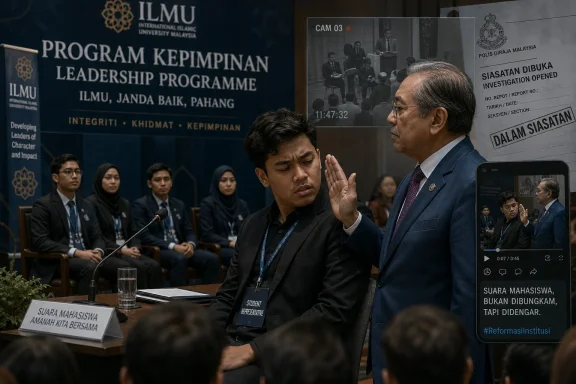 The Alleged Slap Became a Test of Public Office
The reason this incident has travelled beyond campus politics is not simply that a young man says he was slapped by an older politician. Malaysia has no shortage of ugly political theatre, and public life has long produced moments where hierarchy disguises itself as wisdom. What makes Janda Baik linger is the setting: a programme built around leadership, student representation, and institutional formation.Nik Alif Aiman was not a heckler at a rally. He was a student representative attending a formal programme, reportedly in the presence of university officers and fellow student leaders. If his account is accurate, he was placed in a public hierarchy, introduced by lineage, drawn into political commentary, and then physically humiliated in front of the very peers he was supposed to stand among as an elected student figure.
That sequence matters. Public office is not merely a job title; it is a performance of restraint under pressure. The test of a senator, minister, vice-chancellor, police chief, or board member is not how warmly he greets those who agree with him, but how he behaves when someone younger, less powerful, or politically inconvenient occupies the same room.
Azhar has rejected the allegation, saying there was no slap, no assault, and no rough conduct. That denial belongs in the record, and the police investigation must be allowed to do its work. But even the dispute over vocabulary — slap, touch, gesture, misunderstanding — reveals something deeply Malaysian about the politics of deference. When power touches the powerless, the first argument is often not about accountability. It is about interpretation.
A Leadership Programme Taught the Wrong Lesson
The alleged incident took place after a lecture session at a programme described in reports as Program Pemerkasaan Bangsa 2.0, held at ILMU in Janda Baik. Such programmes are supposed to create seriousness. They bring students into rooms with senior administrators, politicians, speakers, and institutional figures under the language of nation-building, character formation, and future leadership.That language can be noble. It can also be suffocating. Too often, youth leadership programmes in the region ask students to admire power before they are taught how to question it. They are told to be articulate but not disruptive, confident but not defiant, politically aware but not politically dangerous.
If a student leader can allegedly be struck or physically handled in such a setting, the programme’s real curriculum is exposed. It says that leadership belongs to those at the front of the hall, while students are there to receive, applaud, pose for photographs, and behave. It says that dignity flows downward only when the powerful feel generous.
That is not leadership development. It is etiquette training for obedience.
The uncomfortable fact is that student leaders are often invited into elite rooms as proof that institutions are listening to youth. Their presence decorates the programme. Their faces fill the photo album. But the moment they become inconvenient — by asking the wrong question, carrying the wrong surname, or representing a political tradition someone dislikes — the old reflex returns. The young must remember their place.
The Family Name Is Not the Moral Center
Much of the public attention has inevitably attached itself to Nik Alif Aiman’s lineage. He is the grandson of the late Tan Sri Nik Abdul Aziz Nik Mat, the former Kelantan menteri besar and one of the defining religious-political figures in modern Malaysian history. Reports say the conversation turned political after a university officer introduced him in those terms.That fact explains why the story spread quickly. It does not explain why the story matters.
A grandson of Nik Aziz deserves dignity. So does a student whose grandfather was a rubber tapper, a clerk, a hawker, a cleaner, or no one remembered by public history. If outrage depends on pedigree, it is not outrage at injustice; it is merely the continuation of elite politics by emotional means.
This is the trap the country should avoid. The question is not whether the alleged victim came from a family too respected to be treated this way. The question is whether any student leader, in any public programme, should be subject to physical humiliation by an invited dignitary.
The answer has to be universal or it is useless. Public dignity cannot be hereditary. If the lesson from Janda Baik becomes “do not slap the grandson of a revered leader,” the country will have learned almost nothing. The lesson must be simpler and harder: do not use status, age, office, proximity to government, or institutional authority to intimidate those beneath you.
The “No Injury” Defence Misses the Point
One of the most predictable responses to incidents like this is the shrinking of the event to its medical footprint. Was there swelling? Was there a bruise? Was there serious injury? Did the victim need treatment? If the answer is no, the implication follows: calm down.That is a morally lazy standard for public behaviour. Many abuses of power leave no visible mark. Humiliation often does its work precisely because it is public, sudden, and socially coded. A slap, if proven, is not merely pressure applied to skin. It is a message delivered through the body: I can do this to you here.
For a student leader, the injury is not only physical. It is reputational, emotional, and institutional. It is the forced conversion of a person from participant to spectacle. It is the knowledge that witnesses saw the moment and then had to decide whether the room’s hierarchy mattered more than the student’s dignity.
That is why the witness question is central. Reports have referred to several people being present, including senior university officers and student representatives. If true, the conduct of the room becomes part of the story. In public life, silence is rarely neutral. It is often the mechanism by which the powerful are allowed to move on.
The Senator’s Denial Raises a Deeper Institutional Question
Azhar’s reported position is that the encounter has been mischaracterised. He has said the interaction was friendly, that he touched the student’s cheek in warmth, and that a circulating video clip did not capture the full context. He has also urged the public not to spread unverified claims and reserved his legal rights.That is a serious denial, and it should not be brushed aside simply because the allegation is politically explosive. The country does not need trial by social media. It needs a proper investigation that establishes what happened, who saw it, what any recording shows, and whether the conduct crossed a legal or disciplinary line.
But the denial also opens a broader question. Why do public figures so often assume physical familiarity with younger people in formal spaces? Why is a hand on the cheek, even when framed as affectionate, considered acceptable between a senior politician and a student leader who is not a child and not a family member in a private setting?
Power changes the meaning of gestures. A gesture that might be harmless between equals can become coercive when performed by a senior figure before an audience. The recipient may feel unable to object. The witnesses may feel unable to challenge it. The institution may later describe the moment in the gentlest possible terms because gentleness protects the hierarchy.
This is why public office requires distance. Not coldness, not arrogance, but restraint. The higher the office, the less right one has to presume intimacy.
Universities Cannot Outsource Courage to the Police
The police investigation is necessary, but it should not become a convenient hiding place for everyone else. Universities and programme organisers have their own duties that do not wait for a charge sheet. They owe students safety, dignity, and clear institutional backing when something troubling happens under their supervision.If senior officers were present, the university should be able to answer basic questions. What was done immediately after the incident? Was the student asked whether he was safe? Was the invited speaker confronted or removed? Was an internal report prepared? Were witnesses instructed to preserve their accounts? Was the student offered counselling or formal support?
These are not legal technicalities. They are the ordinary obligations of institutions that claim to care about students.
Too many organisations treat controversy as a weather event. They wait for it to pass. They issue bland statements about cooperation, process, and harmony. They hope the news cycle moves on. But institutional maturity is measured by what happens in the first hour after a person with power allegedly mistreats someone with less of it.
The duty of care is not satisfied by embarrassment. It is satisfied by action.
Student Leaders Are Not Decorative Youth
There is a patronising way Malaysian public life talks about student leaders. They are praised as the nation’s future, invited to official functions, photographed beside dignitaries, and handed slogans about responsibility. But the praise often comes with an unspoken condition: they must not behave as if they are already citizens with a claim on the present.Student representation is not ceremonial. At its best, it is a training ground for democratic habits — debate, accountability, coalition-building, dissent, negotiation, and courage under pressure. Those habits are fragile because universities are hierarchical environments. Administrators grade access. Politicians bring influence. Students learn quickly which opinions are safe.
That is why an alleged act of physical humiliation at a student leadership programme is so corrosive. It tells students that politics is not a contest of arguments but a ladder of intimidation. It tells them that proximity to power is less about civic education than survival etiquette.
No country should want that. A democracy that teaches its young leaders to swallow humiliation will later complain that its adult leaders lack courage. The pipeline begins somewhere.
The Culture of “Respect Your Elders” Has Been Politically Weaponised
Respect for age is a deep and often beautiful part of Malaysian social life. It teaches humility, continuity, and gratitude. But like every virtue, it can be corrupted when converted into immunity.The phrase “respect your elders” becomes dangerous when it is used to excuse the elder from respecting the younger. It becomes a shield for temper, entitlement, and the refusal to be contradicted. In politics, it becomes even more dangerous because age often travels with office, title, patronage, and networks of protection.
Nik Alif Aiman reportedly did not retaliate. If accurate, that restraint deserves notice. A young man who feels humiliated in public and still refuses to escalate has shown the kind of discipline that leadership programmes claim to cultivate.
But restraint by the weaker party must not be misread as consent. Politeness is not proof that nothing happened. Silence is not proof of acceptance. A refusal to strike back is not an invitation for the institution to downgrade the event into a misunderstanding.
The burden of restraint should fall heaviest on the person with the most power.
Politics Turned a Human Moment Into a Tribal Signal
Because the alleged victim is tied by family to Nik Abdul Aziz and the senator is a political figure, the story was always going to be dragged into partisan lanes. Supporters and opponents will see what they want to see. Some will treat the allegation as proof of arrogance by one camp. Others will treat the complaint as political theatre.That is the usual Malaysian shortcut: turn the moral question into a partisan question and then answer only the partisan one. It is efficient, emotionally satisfying, and almost always destructive.
The better test is to reverse the actors. If a politician from a party one supports allegedly struck a student aligned with a party one dislikes, would the standard change? If so, the standard is not about dignity or law. It is about loyalty.
This matters because public accountability collapses when every incident is processed through tribal defence. The facts become secondary. The victim becomes useful only if politically convenient. The accused becomes innocent or guilty depending on the colour of the audience’s flag.
A functioning civic culture has to insist on something less theatrical and more demanding. It must say that some conduct is unacceptable regardless of party. That should not be a radical position.
The Dewan Negara Cannot Be Treated as Social Armor
A senatorship is a public responsibility, not a social elevation above ordinary standards. The Dewan Negara already struggles in the public imagination with the perception that appointed office can become a holding chamber for party loyalists, technocrats, and political veterans rather than a chamber of sober review. Incidents like this, if not handled seriously, worsen that perception.The question is not whether every senator must be morally flawless. No institution can promise that. The question is whether the institution’s dignity is defended by denial and delay, or by a willingness to treat misconduct allegations as matters of public trust.
Public office does not make a person larger than accountability. It makes accountability more necessary.
If a senator is accused of assaulting or humiliating a student in a public programme, the relevant institutions should not require public fury before they speak clearly. The standard should be obvious: establish the facts, protect the complainant from retaliation, preserve evidence, cooperate with investigators, and apply consequences if misconduct is proven.
That is not political persecution. It is institutional hygiene.
Apologies Are Not Accountability When They End the Story
Malaysia has developed a familiar ritual for public misconduct. First comes outrage. Then comes denial or clarification. Then, if pressure remains, comes regret — often carefully worded, sometimes passive, usually framed around hurt feelings rather than conduct. Finally comes the appeal to move on.This ritual is efficient because it gives everyone something. The public gets a performance of contrition. The institution gets closure. The accused gets a path back to normal life. The victim gets the burden of appearing gracious.
But an apology, if one is offered, cannot substitute for accountability. It can accompany accountability. It can humanise it. It can reduce bitterness. But it cannot replace a factual finding, a disciplinary decision, or a public standard.
In a case like Janda Baik, the distinction matters. If there was no assault, the senator deserves the clearing of his name through a credible process. If there was a slap, the student deserves more than a private apology and a request to let the matter rest. Either way, the country deserves clarity.
Ambiguity is where impunity grows.
The Viral Clip Is Not the Courtroom, but It Is Part of the Public Record
The reported circulation of a video clip has shaped the way the incident is being discussed. That is unavoidable. In modern public life, video has become both witness and weapon, evidence and provocation, context and context-destroyer.Azhar has reportedly argued that the clip does not show the full context. That may be true. Short clips can distort sequence, tone, and intent. They can omit what was said before, what happened after, and how participants understood the interaction in the moment.
But “full context” cannot mean infinite escape. Context can explain why people were speaking. It can clarify whether there was anger, familiarity, confusion, or provocation. It cannot automatically transform unwanted physical contact by a senior figure into harmless warmth.
Investigators should examine the full recording if it exists, not merely the portion shared online. Witness statements should be compared. The student’s account, the senator’s account, and the conduct of those present should be tested against one another. That is how institutions avoid both mob justice and elite immunity.
The danger lies in choosing only one fear. Fear of social media excess should not become an excuse to ignore a complainant. Fear of elite impunity should not become an excuse to abandon process.
Janda Baik Is a Small Incident Only If Power Learns Nothing
Some will insist this is being overblown. A country facing economic strain, education gaps, corruption anxieties, and geopolitical pressure should not spend days arguing about a disputed slap, they will say. It is a tempting argument because it sounds adult.It is also wrong.
Political cultures are built from small permissions. The permission to shout at subordinates. The permission to humiliate students. The permission to treat official titles as personal armour. The permission to make younger people accept discomfort because challenging it would be rude.
These permissions accumulate. Eventually, they become the atmosphere of public life.
That is why Janda Baik matters beyond one student, one senator, one programme, or one circulating clip. It asks whether Malaysia’s institutions can still recognise a basic line: public authority must not be used to diminish personal dignity. If that line cannot be defended in a room full of witnesses, it will not be defended in quieter rooms where the vulnerable have even fewer allies.
The Lesson Janda Baik Should Have Taught
The most useful way to read the episode is not as gossip, not as party ammunition, and not as a family drama. It is a stress test of civic seriousness. A young student leader made an allegation, a senator denied wrongdoing, police began investigating, and the public is now watching whether the institutions around them choose clarity or comfort.The concrete lessons are already plain:
- A student’s dignity should not depend on family name, political usefulness, or the public’s sympathy for his camp.
- A senator or any senior public figure should be held to a higher standard of restraint in formal programmes involving students.
- Universities must treat alleged misconduct by invited dignitaries as a duty-of-care issue, not merely a reputational inconvenience.
- Police investigations should establish the facts without allowing social media pressure or political status to determine the outcome.
- Public apologies, if they come, should not be used to avoid transparent findings and proportionate consequences.
References
- Primary source: Newswav
Published: 2026-06-08T02:50:14.984549
OPINION | A Senator's Slap and the Shame That Lingers at Janda Baik Leadership Programme - Newswav
Mihar Dias on Microsoft Copilot A Senator's Slap, and the Shame That Lingers at Janda Baik Leadership Programme By Mihar Dias June 2026 The incident at Janda Banewswav.com
- Related coverage: nst.com.my
- Related coverage: malaymail.com
Pahang police probe alleged senator slap involving Nik Aziz’s grandson at Janda Baik programme | Malay Mail
KUALA LUMPUR, June 2 — The investigation into a case involving the grandson of the late Kelantan menteri besar Tan Sri Nik Abdul Aziz Nik Mat, who allegedly claimed he was...www.malaymail.com - Related coverage: malay.news
Dakwa ditampar senator, cucu Nik Aziz lapor polis
Cucu kepada bekas Menteri Besar Kelantan, Allahyarham Tan Sri Nik Abdul Aziz Nik Mat mendakwa ditampar seorang senator ketika menghadiri program rasmi sebuah universiti di Institut Latihan Memperkasa Ummah (ILMU), Janda Baik, Pahang pada 20 Mei lalu. Menurut laporan Sinar Harian, Nik Alif Aiman...www.malay.news - Related coverage: focusmalaysia.my
