

Atos’ new Autonomous Data & AI Engineer, delivered on Microsoft Azure and powered by the Atos Polaris AI Platform, marks a clear move to productize “agentic” DataOps: prebuilt, interoperable AI agents that can ingest, transform and curate analytics-ready data across Azure Databricks and Snowflake on Azure, and that are being promoted as ready for marketplace deployment and live demonstration at Microsoft Ignite.
Atos introduced the Atos Polaris AI Platform earlier in 2025 as a system-of-agents framework designed to automate complex software-engineering and business workflows; Polaris provides prebuilt agents, a no-code Agent Studio, and AgentOps features for governance and lifecycle management. The Autonomous Data & AI Engineer is the first clearly productized DataOps solution Atos has packaged for Azure marketplaces, with specific offerings tied to Azure Databricks and Snowflake on Azure. This announcement comes as the larger cloud and agent ecosystem converges on shared interoperability and memory standards — notably the Model Context Protocol (MCP) and Agent-to-Agent (A2A) styles of interoperability — that make multi-agent workflows and tool discovery more feasible in enterprise environments. Major platform vendors and standards projects have signaled support for these approaches, which materially reduces integration friction for multi-vendor agent orchestration.
This announcement is notable for three reasons:
Source: The Manila Times Atos Announces the Availability of Autonomous Data & AI Engineer, an Agentic AI Solution on Microsoft Azure, Powered by the Atos Polaris AI Platform
 Background
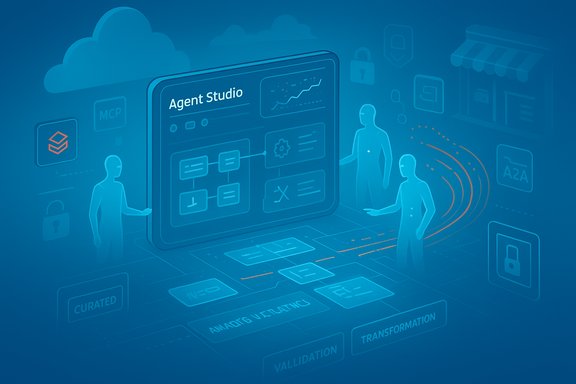
Atos introduced the Atos Polaris AI Platform earlier in 2025 as a system-of-agents framework designed to automate complex software-engineering and business workflows; Polaris provides prebuilt agents, a no-code Agent Studio, and AgentOps features for governance and lifecycle management. The Autonomous Data & AI Engineer is the first clearly productized DataOps solution Atos has packaged for Azure marketplaces, with specific offerings tied to Azure Databricks and Snowflake on Azure. This announcement comes as the larger cloud and agent ecosystem converges on shared interoperability and memory standards — notably the Model Context Protocol (MCP) and Agent-to-Agent (A2A) styles of interoperability — that make multi-agent workflows and tool discovery more feasible in enterprise environments. Major platform vendors and standards projects have signaled support for these approaches, which materially reduces integration friction for multi-vendor agent orchestration. What Atos is Shipping: Features and positioning
Core capabilities (vendor-stated)
- Autonomous ingestion of structured and unstructured data from external sources into Azure Databricks or Snowflake on Azure.
- Automated data quality checks, transformation rules, schema reconciliation and generation of curated data views ready for BI, analytics or model training.
- No-code Atos Polaris AI Agent Studio for composing, orchestrating and operating multi-agent DataOps flows accessible to both technical and non-technical users.
- Connectivity to Large Language Models (LLMs) and external tools using open agent standards such as MCP and Agent-to-Agent (A2A) protocols, enabling agents to discover and call guarded toolsets and to delegate tasks to specialized peers.
Vendor ROI claims — what to expect
Atos’ public materials claim:- Up to 60% reduction in development and deployment time for data operations.
- Up to 35% reduction in operational costs through DataOps agents that shorten average ticket-handling time.
Why this matters: the market context
Data engineering is a persistent bottleneck for analytics and model development. Manual schema work, ingestion plumbing, and quality gating create long lead times from source data to actionable insights. Solutions that safely automate predictable parts of that pipeline — ingestion, validation, transformation and curation — address a direct operational pain point.This announcement is notable for three reasons:
- It ties agentic automation directly to two of the most common enterprise analytics targets on Azure: Databricks and Snowflake. Integrations targeted at those platforms reduce the integration lift for many large organizations.
- It aligns Atos’ product with industry interoperability standards (MCP, A2A) that major platform vendors and open-source projects are adopting, which helps avoid brittle, point-to-point agent integrations.
- It packages agentic DataOps as a marketplace-ready offering, lowering procurement friction for Azure-first customers and enabling faster sandbox pilots.
How the plumbing likely works (technical sketch)
Atos’ published materials and marketplace listings indicate a small set of architectural building blocks you should expect in a typical deployment:- Connectors and ingestion adapters that write to Databricks tables or Snowflake schemas (likely using native connectors, JDBC, or Azure Data Factory connectors).
- Agent orchestration runtime (Atos Polaris) that schedules, composes and monitors agents and exposes a no-code Agent Studio for composition and approvals.
- LLM and tool adapters that use open standards like the Model Context Protocol (MCP) to let agents call guarded tools and retrieve context without brittle custom glue. MCP has been adopted and promoted across the industry as a standard for tool access and context handoff.
- Agent discovery and delegation using A2A-like patterns so specialized agents (ingest, QA, transform, curator) can coordinate and hand off tasks without tight coupling. A2A specifications and projects have been launched to support secure agent-to-agent communication and capability discovery.
Independent validation and standards cross-check
- Atos’ Polaris platform launch and the Autonomous Data & AI Engineer availability are documented in Atos’ press materials and marketplace listings. These vendor documents are the authoritative source for details about packaging, connectors and the no-code Agent Studio.
- The Model Context Protocol (MCP) is an industry-standard effort (initially popularized in projects associated with Anthropic and rapidly adopted across platforms) that provides a structured approach for agents to call tools and anchor context. MCP has received attention from major vendors as a “USB-C for AI apps” idea and is part of Microsoft’s agent strategy. Reporting from major outlets documents Microsoft’s explicit work to enable agents that interoperate via MCP-style tool onboarding.
- The Agent-to-Agent (A2A) protocol — an open specification for peer agent discovery, delegation, and task lifecycle management — has moved into the open-source and standards community with prominent projects and organizational sponsorship (e.g., Linux Foundation engagement) to support secure, cross-vendor agent communication. Microsoft and other major platforms have published SDKs, specifications and guidance for A2A usage in enterprise scenarios. These ecosystem signals support Atos’ decision to claim MCP and A2A compatibility for Polaris and its DataOps agents.
Strengths: Where Atos’ approach can add real value
- Faster pilots for Azure-first customers. Prebuilt Databricks and Snowflake packaging plus marketplace availability position Atos to reduce procurement friction and accelerate sandbox deployments.
- Standards orientation reduces integration risk. Support for MCP and A2A-style patterns increases portability and future-proofs agent workflows against vendor-specific lock-in.
- No-code orchestration for scale. A properly executed Agent Studio can enable domain teams to compose and iterate on workflows without constant engineering support, which helps scale agentic automation across lines of business.
- Built-in AgentOps and governance primitives. Polaris claims to include compliance, performance and cost-management features for agents; if implemented, these features are essential to operate many agents at enterprise scale.
Risks and red flags: governance, security and operational hazards
Vendor claims require measured validation
The headline ROI numbers (up to 60% development acceleration, up to 35% operational cost reduction) are vendor-provided and presented without underlying raw datasets, methodology or reproducible benchmarks in public materials. Validate these claims with instrumented pilots, measuring concrete KPIs such as time-to-ingest, false-positive/false-negative transformation rates, downstream model accuracy and incident frequency post-automation.Agentic attack surface: agent breaches and tool abuse
Agentic systems introduce new attack surfaces. Agents that can discover tools, act autonomously and delegate to other agents can be abused if:- agent identities are compromised;
- tool onboarding is lax or unauthenticated;
- delegation chains are not properly scoped and audited.
Silent data-change and downstream model damage
Automated transformations can silently degrade downstream dashboards, reports or ML models if changes are applied without rigorous tests, dry-runs, or rollbacks. Agents should operate in propose-only mode for non-idempotent operations until proven reliable. Maintain immutable action logs, store proposed changes as artifacts, and require human approval for high-impact writes.Compliance, data residency and regulated sectors
Regulated industries (finance, healthcare, public sector) must ensure agents respect data residency, classification and retention policies. Integration with Azure Policy, Purview and Entra identity is necessary but not sufficient — buyers should demand configuration evidence, red-team results and contractual protections before allowing agent-driven production changes.Vendor lock-in and portability
Even when using MCP/A2A, agent logic, prompts, and transformation rules may be implemented in vendor-specific formats. Insist on exportable agent definitions, artifact snapshotting, and provenance metadata that can be migrated or re-run outside of a single vendor runtime. This reduces long-term switching costs and enables reproducible audits.Practical guidance: an action plan for enterprise evaluation
- Scoping (Weeks 0–2)
- Select a single, high-value but contained use case with clearly defined KPIs (e.g., daily ingestion of N records, time-to-analytics baseline, expected downstream accuracy).
- Define rollback thresholds, approval gates and SLOs.
- Sandbox deployment (Weeks 2–4)
- Deploy the Atos solution in an isolated Azure subscription or sandbox tenant.
- Connect sample data sources to Databricks/Snowflake using prebuilt connectors; enable propose-only or dry-run modes.
- Validation & testing (Weeks 4–8)
- Run transformation dry-runs and unit tests. Measure schema drift, error rates and human oversight effort.
- Validate agent plans and save immutable artifacts for auditability.
- Shadow mode & human-in-loop (Weeks 8–12)
- Allow agents to propose but require manual approval before committing writes.
- Track false positives/false negatives and the ratio of approved vs. rejected proposals.
- Limited production (Months 3–6)
- Enable low-risk, idempotent automations with strict monitoring and automated rollback triggers.
- Integrate agent logs into SIEM/SOAR and run red-team adversarial prompt-injection tests.
- Scale & contract negotiation (Months 6+)
- Expand scope only after measurable gains and stable governance.
- Negotiate SLAs that cover agent-driven incidents, data-loss scenarios, and remediation responsibilities.
Security & governance checklist (minimum controls to demand)
- Treat agents as identity principals in Entra ID with least-privilege permissions and credential rotation.
- Immutable action logs: store agent plans, prompts, tool calls and outputs for reproducible audits.
- Shadow/propose-only modes and delivery gates for all writes to production systems.
- Rate limits, circuit-breakers and fail-safe behavior for long-running agent tasks.
- Red-team and adversarial testing for prompt-injection and tool-misuse scenarios.
- Integration with Azure Policy and Purview for classification-driven gating.
Procurement & contractual recommendations
- Require instrumented PoCs with exportable metrics and reproducible test runs — do not accept anecdotal ROI claims alone.
- Insist on agent definition export, artifact snapshotting and portability clauses to mitigate long-term lock-in.
- Define clear incident response SLAs for agent-driven incidents, including root-cause analysis and remediation timeframes.
- Ask for transparency on cost drivers: model selection, concurrency limits, state storage and long-term retention of agent memory.
The competitive landscape and alternatives
Atos’ move into agentic DataOps is consistent with a broader wave of integrators and platform providers packaging ready-made agent workflows for large customers. Alternatives include bespoke internal agent frameworks built on Copilot Studio, Azure AI Foundry or open-source agent runtimes. The decision factors for enterprise buyers will hinge on:- How much governance and auditability is prewired into the runtime.
- Portability of agent definitions and artifacts.
- The practical cost and performance of run-time LLMs and persistent agent state.
Atos’ advantage is marketplace packaging, long-standing Microsoft partnership and prebuilt connectors, but buyers must still test operational hardening, SLAs and demonstrable outcomes in their environments.
Final assessment: who should trial this now
- Early pilots: Azure-first organizations that already use Databricks or Snowflake and that have a clear, repeatable ingestion use case (e.g., daily feeds with predictable schema) are ideal candidates to trial Atos’ Autonomous Data & AI Engineer. The marketplace packaging lowers the friction to start a sandbox pilot.
- Proceed with caution: Highly regulated sectors (finance, healthcare, government) should insist on shadow/propose-only trials, independent audits and contractual protections because automated agent actions can have outsized compliance implications.
- Do not pilot without governance: Organizations lacking mature identity, policy and observability practices should not enable production writes by agents until they can prove auditability, human-in-loop gates and incident remediation flows.
Conclusion
Atos’ Autonomous Data & AI Engineer — powered by the Atos Polaris AI Platform and packaged for Azure Databricks and Snowflake on Azure — represents a pragmatic, standards-aligned step toward operational agentic DataOps. The product aligns with broader industry moves to standardize agent interoperability (MCP, A2A) and to embed agent governance primitives at the platform level, which makes Atos’ timing and technical posture sensible for Azure-focused enterprises. That said, the most important work is operational: buyers must validate vendor ROI claims with instrumented pilots, demand auditable action logs and human-in-loop modes, and design for the new security realities of agentic systems. When those controls are in place, agentic DataOps can genuinely reduce manual toil and accelerate time-to-insight — but the path to safe production is deliberate, measurable and governed.Source: The Manila Times Atos Announces the Availability of Autonomous Data & AI Engineer, an Agentic AI Solution on Microsoft Azure, Powered by the Atos Polaris AI Platform
