Copilot Checkout: PayPal and Microsoft Unify Discovery and Payment in Chat

  • Thread Author
PayPal and Microsoft have quietly collapsed discovery, decision and payment into a single conversational lane: Copilot Checkout lets U.S. shoppers find products, open a branded in‑chat checkout, and complete payment without leaving the Copilot interface — with PayPal powering inventory surfacing, branded and guest checkout, and card payments starting on Copilot.com.

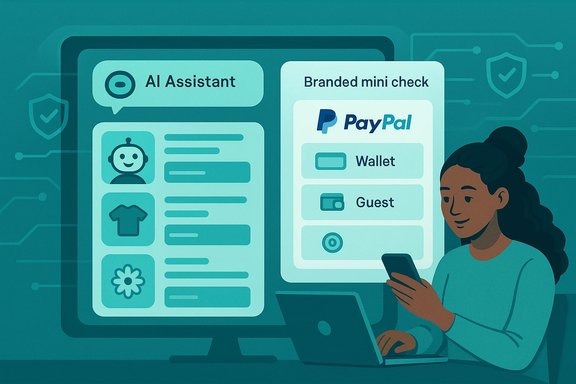
A person uses a laptop and phone to interact with an AI assistant and PayPal wallet options.Background​

Microsoft unveiled Copilot Checkout as part of a broader retail and “agentic commerce” push that turns AI assistants into not only advisers but transaction-capable platforms. The initial rollout is U.S.-first on Copilot.com and ships with payments and catalog plumbing provided by PayPal, Stripe, and Shopify to enable in‑chat purchases. Early merchant participation reported in initial coverage includes household retail names and marketplace sellers. This feature represents the industry’s rapid migration toward agentic commerce — the idea that AI agents should carry out full purchase flows on behalf of users — and it leans on several coordinated technical primitives: canonical catalog ingestion, conversational orchestration, and delegated/tokenized checkout. These building blocks are already being standardized through mechanisms such as the Agentic Commerce Protocol (ACP) and Shared Payment Tokens (SPTs).

What Copilot Checkout actually does​

The user experience — discover, decide, buy in one session​

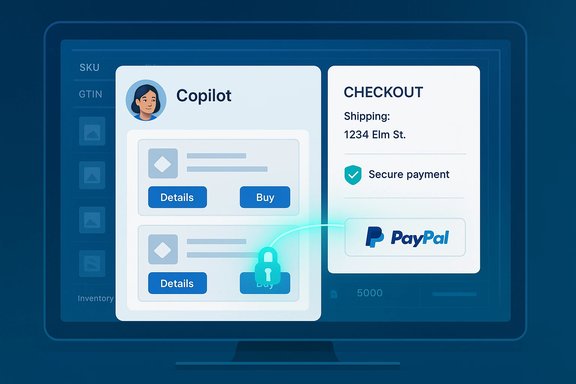
When a Copilot conversation becomes shopping‑ready, the assistant surfaces curated product cards that include a Details view and a Buy button. Choosing Buy opens a compact, branded checkout pane rendered inside Copilot where the user confirms shipping, picks a payment method, and completes the order without navigating to a merchant website. Microsoft positions Copilot as the front-end discovery and orchestration layer while payments and settlement are handled by partners like PayPal, Stripe or Shopify depending on merchant setup. Key UX points:
  • In‑chat product cards with images, price, and availability.
  • Inline Buy action that opens a branded mini‑checkout.
  • Payment flows are tokenized and delegated to payment processors (Copilot does not hold raw card data).
  • Merchant remains the merchant of record for fulfillment, taxes, returns and customer service.

Where PayPal fits in​

PayPal’s announced role is to:
  • Surface merchant inventory into Copilot using its store sync capability.
  • Power branded checkout UI and guest card acceptance inside Copilot.
  • Provide PayPal wallet funding options and, where eligible, apply buyer and seller protections to Copilot transactions.
PayPal frames its store sync as a one‑to‑many integration: a single merchant integration makes product catalogs discoverable across multiple AI shopping endpoints, reducing per‑platform engineering cost for sellers. That capability is central to PayPal’s agentic commerce strategy launched in 2025 and referenced again in the Copilot partnership announcement.

Technical anatomy — how this is implemented​

1) Canonical product data and catalog sync​

At the foundation are machine‑readable product feeds: SKUs, GTINs, images, inventory, pricing, shipping windows and metadata. Agents must reference canonical records to avoid hallucinations and to maintain provenance for recommendations and disputes. PayPal’s store sync and Microsoft’s Copilot Studio catalog templates are the mechanisms highlighted to automate ingestion and normalization of merchant feeds. Why canonical data matters:
  • Prevents AI from recommending unavailable or incorrect items.
  • Provides auditable links between a recommendation and the underlying SKU.
  • Enables consistent price/tax/shipping calculations for settlements.

2) Conversational orchestration and provenance​

Copilot’s runtime interprets user intent, asks clarifying questions (size, color, delivery timing), and maps each suggestion to a canonical SKU. Maintaining provenance — the auditable mapping between chat messages and product records — is critical for merchant operations, customer service and dispute resolution. Microsoft emphasizes that merchants remain the merchant of record, and Copilot surfaces the results while the merchant fulfills orders.

3) Delegated, tokenized checkout (ACP and SPTs)​

The checkout step uses delegated payment tokens to execute settlement without exposing raw card data to the conversational layer. The Agentic Commerce Protocol (ACP) and implementations such as Stripe’s Shared Payment Token (SPT) define how agents obtain short‑lived, scope‑limited tokens that merchants use to create a PaymentIntent and complete settlement. Stripe’s documentation and ACP specifications spell out the SPT lifecycle: issuance by the PSP, limited time/amount constraints, merchant consumption, and subsequent settlement/refund/chargeback handling by the merchant’s PSP. PayPal, Stripe and Microsoft describe similar delegated approaches for Copilot Checkout. Security guarantees of the delegated model:
  • Tokens are merchant-scoped, time-limited and amount-limited.
  • Sensitive card data remains inside the PSP’s vault, reducing PCI exposure for AI platforms.
  • Each transaction includes auditable exchanges and signatures to limit replay or misuse.

What the vendors claim — and how those claims check out​

Microsoft and PayPal present two headline performance claims: that journeys with Copilot produce 53% more purchases within 30 minutes and that conversion rates are 194% higher when shopping intent is present. These figures are explicitly drawn from Microsoft’s internal observational data, and PayPal’s announcement repeats them. Those numbers signal potential uplift but are vendor-sourced and have not been independently audited; treat them as directional, not definitive. Independent reporting (The Verge, Axios, Windows Central and several trade outlets) corroborates the launch, partner set (PayPal, Stripe, Shopify), the U.S.-first rollout on Copilot.com, and the merchant onboarding model (Shopify auto-enrollment after an opt-out window). These outlets confirm the architecture and partner roles at a high level while noting that vendor-provided performance metrics require third‑party validation.

Strengths — why this matters for merchants and shoppers​

  • Friction reduction at the point of intent. Collapsing discovery to checkout reduces abandonment caused by redirects, multi‑tab flows and manual address/payment entry.
  • One‑to‑many catalog distribution. PayPal’s store sync and similar tools lower integration costs for merchants wanting presence across multiple AI agents.
  • Familiar trust primitives. Offerings such as PayPal wallet, buyer protections and established fraud controls bring recognizable safeguards into an otherwise novel UX.
  • Standards-based security. ACP and SPT implementations provide a robust, auditable token model that minimizes AI surface exposure to raw payment credentials.
For merchants, the economics can be compelling: exposure to high‑intent shoppers inside Copilot, shorter conversion funnels and the potential to drive incremental revenue with limited engineering overhead if merchants adopt store sync or ACP-compatible endpoints. For platforms, embedding checkout captures more of the commerce value chain and establishes the platform as a durable distribution surface.

Risks and operational caveats — where the hard work begins​

Catalog fidelity and the risk of bad discovery​

Agentic commerce depends on canonical, up‑to‑date product data. If feeds are stale, incorrect, or incomplete, Copilot may present unavailable items or wrong prices — creating disputes, chargebacks and poor customer experiences. Merchants will need disciplined feed management, real‑time inventory syncing, and monitoring to prevent revenue leakage and reputational damage.

Fraud, dispute and liability complexity​

Delegated tokens reduce exposure to raw credentials but do not remove fraud risk. Rapid in‑chat purchases can enable new attack patterns (account takeover, SPT misuse, social engineering). Chargeback flows remain the merchant’s responsibility; merchants must negotiate SLAs and dispute mechanics with PSPs and platform partners. The cross‑party nature of agentic commerce complicates liability: who pays for an incorrectly fulfilled in‑chat purchase when the AI presented inaccurate information? Those governance details will be decided in contracts and in practice as volumes ramp.

Merchant consent and automatic enrollment​

Shopify’s planned auto‑enrollment (subject to an opt‑out window) can rapidly scale availability but raises consent and revenue‑share questions. Merchants who are auto‑enrolled must understand default terms, fee changes, data sharing, and revocation mechanics. Failure to provide clear opt‑out mechanics or transparent economic terms will provoke merchant pushback.

Regulatory, privacy, and antitrust considerations​

AI agents that mediate purchases raise regulatory eyebrows: disclosure obligations, unfair competition concerns, and data protection rules (e.g., how shopper data is used for personalization and potential resale) may attract regulator attention. Platforms and PSPs should be prepared for scrutiny about transparency, algorithmic bias in recommendations, and whether search neutrality is being replaced by monetized product placements.

Cross‑platform ecosystem and competition​

Copilot Checkout is one entry in a rapidly evolving market. OpenAI’s Instant Checkout (with PayPal and other partners), Google’s agentic commerce pilots, and Stripe’s Agentic Commerce Suite all compete to set standards and merchant expectations. The Agentic Commerce Protocol and its delegated payment specifications are shaping interoperability; Stripe’s Shared Payment Token is a reference implementation and ACP has growing adoption across PSPs and commerce platforms. This means:
  • Merchants can choose multiple PSP implementations but should prioritize compatibility to avoid fragmentation.
  • Platforms that support open protocols increase merchant appeal; closed ecosystems risk vendor lock‑in.

Practical checklist — what merchants should do now​

  • Validate catalog fidelity:
  • Audit your SKU/GTIN alignment, images, pricing and inventory lifecycles.
  • Pilot with a limited SKU set before broad exposure.
  • Test delegated checkout flows:
  • Work with your PSP (Stripe, PayPal, others) to test Shared Payment Tokens or equivalent.
  • Run staged fraud and settlement scenarios, including chargebacks.
  • Review contractual terms and SLAs:
  • Clarify liability for incorrect recommendations, returns, and chargebacks.
  • Negotiate settlement timing and dispute resolution processes.
  • Instrument provenance and observability:
  • Log mappings between Copilot recommendations and canonical SKUs.
  • Capture audit trails for each agent‑initiated transaction.
  • Communicate clearly to customers:
  • Ensure in‑checkout disclosures (price, shipping, returns, merchant identity) are unambiguous.
  • Encourage use of buyer‑protected payment methods where available.

Practical checklist — what consumers should do now​

  • Verify final price, shipping and return terms on the confirmation screen before completing purchase.
  • Prefer buyer‑protected methods (PayPal wallet) for early experiments with in‑chat checkout.
  • Control stored payment methods and review Copilot privacy settings.
  • Keep an eye on merchant identity and confirmation emails that include order details and fulfillment links.

Governance, standards and the path to scale​

The technical tools for agentic commerce are maturing: canonical feeds, delegated payment specs, tokenization and provenance logging can make in‑chat commerce auditable and secure. Widespread merchant adoption, however, will depend on three governance pillars:
  • Transparent contractual rules for liability and disputes.
  • Auditable provenance and observability tooling to resolve mismatches rapidly.
  • Fair enrollment practices and transparent economic terms for merchants (no surprise enrollments or unilateral fee changes).
Platforms that pair engineering scale with clear governance and measurable SLAs will capture durable value. Those that prioritize short‑term conversion gains without merchant protections risk rapid distrust and legal scrutiny.

Final analysis — pragmatic optimism with caution​

Copilot Checkout — and PayPal’s role within it — is a consequential step toward a future where AI assistants are transactional as well as advisory. The architecture aligns with emerging standards (ACP, SPT), the initial partner set gives the launch immediate scale, and PayPal’s store sync addresses a real merchant pain point: expensive, bespoke integrations to each AI surface. Yet the decisive challenges are operational and contractual, not technical. Catalog fidelity, dispute mechanics, fraud controls, merchant consent, and regulatory clarity will determine whether Copilot Checkout becomes a reliable, merchant‑friendly channel or a high‑volume experiment that produces confusing edge cases. Vendor‑reported uplift figures are promising but vendor‑sourced; independent validation and measured pilots will be necessary to make them actionable for business planning.
For merchants and platform teams, the sensible path is deliberate pilot programs, robust telemetry and legal clarity. For shoppers, the convenience is real — but early adoption should be paired with caution until dispute procedures and fulfilment reliability prove their mettle. When those pieces are in place, agentic commerce can deliver on a long‑promised value proposition: buying where you are thinking about a product, not where you must go to complete the purchase.

This integration signals a clear strategic bet by both Microsoft and PayPal: commerce will follow attention and context, moving from web pages into conversations. If merchants, platforms and regulators collaborate to set durable rules, Copilot Checkout could become a mainstream convenience; if not, the next phase of AI commerce will be fought in disputes, chargebacks and courtroom briefs rather than in shopping carts.
Source: innovation-village.com PayPal Integrates Microsoft Copilot for AI-Powered Shopping - Innovation Village | Technology, Product Reviews, Business
 

PayPal’s new role inside Microsoft Copilot marks a clear shift from standalone payment rails to deeply embedded, agent-driven commerce — shoppers can now search, compare, and complete purchases without ever leaving the Copilot conversational surface, with PayPal powering inventory surfacing, branded or guest checkout, and wallet and card payments as the first major payments partner to go live on Copilot.com.

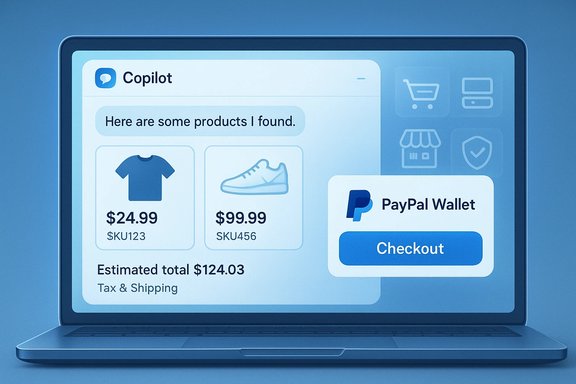
A laptop displays a Copilot shopping UI with product cards and a PayPal Checkout prompt.Background​

AI agents are evolving from helpful assistants into commerce enablers. The launch of Copilot Checkout is part of a broader industry push to make AI not just an information layer but a transactional platform where discovery, evaluation, and payment happen in a single conversational flow. Microsoft’s rollout on Copilot.com — backed by payments integrations from PayPal, Stripe and Shopify — is the first large-scale example of these capabilities being turned on for mainstream shoppers and merchants. PayPal has been actively preparing for agentic commerce since late 2025 by launching its agentic commerce services and store sync capabilities that let merchants publish product catalogs to AI surfaces without bespoke integrations. Those investments set the stage for the Copilot integration: PayPal’s store sync makes merchant inventory discoverable in Copilot and its delegated checkout tooling renders payments and buyer protections inside the chat experience.

What Copilot Checkout Actually Does​

A single, conversational shopping loop​

Copilot Checkout stitches three phases of the shopping journey together inside one conversational surface:
  • Discovery: Copilot surfaces curated results using context and intent rather than keyword-ranked web pages.
  • Decision: The assistant expands product cards with details, price estimates (tax and shipping) and brand information.
  • Payment: A single interaction triggers a delegated, tokenized checkout handled by PayPal (or competing rails where configured), letting users complete purchases as a branded or guest flow without leaving Copilot.
This flow is designed to reduce friction and drop-off between discovery and purchase — the exact point where conversions often fail on traditional multi-page web journeys. Microsoft says Copilot journeys see higher conversion metrics when shopping intent is present; these are company-provided performance signals intended to illustrate the value of reducing context switches.

How merchants appear inside Copilot​

Merchants that integrate via PayPal’s store sync or via platforms such as Shopify can have their product catalogs become shoppable in Copilot. Some merchants will be auto-enrolled through platform partners (Shopify merchants, for example, will be automatically enabled after an opt-out window), while others must apply to participate via payment partners such as PayPal or Stripe. The onboarding model is therefore a mix of automatic syndication and opt-in activation.

PayPal’s Role: More Than Just a Wallet​

PayPal’s announcement frames three core responsibilities inside Copilot Checkout:
  • Inventory surfacing via store sync: PayPal’s connector lets merchant catalogs be indexed and surfaced as canonical SKUs inside Copilot.
  • Checkout rendering: PayPal will provide branded checkout widgets and support guest card payments, while also offering PayPal Wallet as a funding option.
  • Trust and dispute support: Buyer and seller protections associated with PayPal are available for eligible purchases to reduce consumer friction and provide dispute-resolution pathways.
Those are significant because they move PayPal beyond card rails and into the discovery layer. PayPal positions this as a merchant-friendly way to syndicate product catalogs across multiple AI ecosystems through a single integration, reducing the need for hundreds of bespoke marketplace connectors.

Technical Architecture (High-Level)​

Delegated, tokenized checkout​

The technical pattern powering in-chat purchases is a delegated checkout model. When a user confirms a purchase inside Copilot:
  • Copilot requests a short-lived token or a delegated checkout session from the merchant’s payment provider.
  • Payment processing, PCI-sensitive operations, and settlement occur on the payment provider’s rails (PayPal, Stripe or the merchant’s own gateway).
  • Copilot retains only the minimum metadata necessary to display the purchase flow; settlement and fraud checks are handled by the payment provider.
This design reduces Copilot’s surface area for sensitive data exposure and preserves auditable handoffs between the agent and the payment processor, but it also concentrates trust in the payment providers and merchant order systems.

Store sync and canonical SKUs​

Store sync creates a canonical SKU record for each product that the agent can reference. That provenance is critical for later dispute resolution, returns, and inventory reconciliation because the conversational assistant must reliably map conversational recommendations back to an authoritative merchant record. PayPal’s store sync and “agent ready” tooling are designed to provide that mapping layer.

What This Means for Merchants​

Faster paths to purchase and higher intent moments​

Embedding checkout within the discovery experience shortens the purchase funnel. Merchants that participate can show up at the very moment a customer expresses purchase intent, rather than being one of many links a shopper might click through. Microsoft and PayPal argue that this leads to higher conversion rates and faster purchase decisions in scenarios where intent is present. Those claims come from internal trials and platform analytics and should be read as vendor-provided performance indicators.

New channels, but new operational work​

Merchants gain reach across Copilot’s conversational surfaces, but they must be prepared operationally:
  • Inventory must be accurate and synced in near real-time to avoid oversells.
  • Fulfillment systems must handle conversationally originated orders and map them to existing fulfillment flows.
  • Customer service and returns workflows should be ready for AI-originated transactions that may lack some of the context of web-originated orders.

Channels and enrollment models​

  • Shopify merchants will be automatically enrolled after an opt-out period, expanding the initial candidate pool substantially.
  • Merchants on PayPal or Stripe need to apply to be activated for Copilot Checkout.
  • Marketplaces like Etsy are participating to surface unique or handmade items to shoppers within Copilot.

Consumer Experience and Protections​

Seamless payments with familiar protections​

From the consumer side, the experience is designed to be friction-free: the PayPal wallet is available as a funding option and guest card payments are supported. PayPal emphasizes that buyer and seller protections attach to eligible transactions, bringing a familiar set of assurances to the in-chat purchase flow. Those protections may reduce hesitancy to complete purchases inside an AI surface.

Transparency and provenance​

One important user-experience requirement is provenance: shoppers must be able to see which merchant, SKU, price, tax and shipping rules were used. Copilot includes expand-to-details cards for product recommendations to surface this context — a design choice that supports both consumer confidence and later auditability if there are disputes.

Security, Privacy, and Regulatory Considerations​

Data flows and privacy boundaries​

The delegated checkout model mitigates exposure of raw payment data to Copilot, but other personal data will still flow across systems:
  • Conversational context, user preferences, and intent signals are processed by Microsoft’s AI to produce recommendations.
  • Merchant and payment providers will receive order and fulfillment metadata.
  • The integration increases the number of parties that may hold or process personal data related to a purchase, which raises questions about data retention, profiling, and cross-platform tracking.
Companies claim they’ll adhere to privacy and compliance obligations, but specifics — particularly on retention windows and cross-platform profiling — are not always public. These are areas merchants and privacy regulators will scrutinize.

Fraud, disputes and buyer protections​

Moving to agentic commerce doesn’t eliminate fraud risk — it shifts responsibilities. PayPal and payment processors will continue to handle fraud detection and dispute resolution, but the speed and conversational nature of purchases may create new abuse patterns (e.g., automated bots triggering high-velocity fraud inside conversational flows). Robust fraud detection, velocity limits, and clear provenance are essential defenses.

Regulatory scrutiny and competition concerns​

As AI platforms mediate commerce more directly, competition and consumer-protection regulators will watch for potential anti-competitive behavior, gatekeeping, and opaque ranking criteria. Automated enrollment of merchants via platforms like Shopify could raise questions about merchant consent and marketplace neutrality. Additionally, regulators may probe how consumer protections are disclosed and enforced in in-chat transactions. These are emerging legal frontiers that will evolve as usage grows.

How Copilot Checkout Fits Into the Broader AI-Commerce Race​

Multiple big players racing to own the AI-to-purchase moment​

Microsoft and PayPal’s move is not occurring in isolation. Google has been building buy buttons and a Universal Commerce Protocol (UCP) to standardize how agents interact with retail systems, and OpenAI previously partnered with PayPal for Instant Checkout in ChatGPT. The industry is converging on standards and protocols that make catalog syndication, delegated checkout, and post-purchase support more interoperable — but competing protocols and approaches could fragment the market in the short term.

Interoperability vs. platform lock-in​

PayPal emphasizes an open approach that supports multiple agentic protocols and AI platforms. In practice, the balance between interoperability and platform differentiation will determine whether merchants can reach buyers across many agents with a single integration, or become locked into a dominant agent’s ecosystem. The initial cross-platform play is promising, but commercial incentives and technical differences could produce walled gardens.

Risks and Trade-offs (Deep Dive)​

1. Increased impulse buying and consumer harm​

Embedding payment into discovery reduces friction — that’s beneficial for merchants but also raises the risk of impulse purchases. Without clear friction points like dedicated checkout pages or review stages, consumers may buy faster and later regret purchases. Platforms must ensure clear, accessible cancellation and return policies and transparent confirmation flows.

2. Oversimplified recommendations and algorithmic bias​

AI-curated recommendations depend on the model’s training and ranking criteria. If brand or promotional relationships influence what Copilot surfaces, consumers may receive skewed results that favor certain merchants. Merchants and consumer advocates should monitor ranking transparency and request mechanisms to contest misattributed recommendations.

3. Operational strain on merchants​

Sudden visibility inside Copilot could spike demand and strain fulfillment systems for small merchants, especially those auto-enrolled on platforms like Shopify. Merchants need throttling and inventory controls to prevent oversells. PayPal’s store sync reduces integration friction, but it does not eliminate the need for operational readiness.

4. Concentration of trust in payment providers​

Tokenized delegations minimize Copilot’s exposure to sensitive payment details but place significant trust in payment providers. If a payment partner experiences outages, entire conversational commerce flows may stall. Diversification of rails and robust fallback strategies are prudent for merchants and platforms.

Practical Recommendations​

For merchants​

  • Ensure catalog accuracy and real-time inventory sync to the agentic feed.
  • Test fulfillment capacity for sudden demand spikes and set inventory thresholds.
  • Review and, if necessary, update return and dispute workflows to account for conversational-origin orders.
  • Consider the user experience of brand agents and product cards — clear provenance reduces returns and disputes.
  • Evaluate opt-in vs. opt-out choices carefully if you’re on an auto-enrollment platform.

For consumers​

  • Confirm merchant identity and SKU provenance in the expanded product card before confirming payment.
  • Use buyer protections (PayPal wallet, card protections) if available for additional recourse.
  • Keep records of conversational receipts and confirmation metadata in case you need to dispute an order.

For platform operators and regulators​

  • Maintain transparent ranking disclosures and make it easy to verify provenance and price breakdowns.
  • Monitor fraud patterns unique to conversational commerce and require strong fraud-detection tooling from payment providers.
  • Clarify merchant consent models for auto-enrollment and provide simple opt-out workflows.

Early Signals and Market Reaction​

Initial merchant partners named in the launch — including Urban Outfitters, Anthropologie, Ashley Furniture, and Etsy sellers — indicate a mix of established retail and long-tail marketplace inventories will be discoverable inside Copilot. Early reporting suggests the experience is being phased into the U.S. market on Copilot.com, with more partners joining over January 2026. Multiple outlets have covered the feature launch and emphasize PayPal’s central role in surfacing inventory and powering checkout. These independent reports align with Microsoft and PayPal’s announcements, reinforcing the factual basis of the partnership and rollout plans.

Where This Could Lead​

The Copilot + PayPal integration is a major signal that AI assistants are expected to become full-service commerce endpoints. If shoppers adopt in-chat purchases at scale, we will see:
  • Deeper commerce integrations across content and productivity surfaces (e.g., in-browser, mobile, and device-level assistants).
  • More standardized agentic commerce protocols or competing interoperability frameworks.
  • New retail strategies optimized for agentic placements (brief, intent-driven listings rather than long-form product pages).
  • Increased regulatory attention on how ranking, enrollment, and consumer protections operate in agent-mediated commerce.

Caveats and Unverifiable Claims​

Some performance metrics cited in vendor announcements — such as percentage uplift in conversions or time-to-purchase improvements — are derived from internal testing or controlled pilots. These vendor-provided figures are useful directional signals, but they should be treated as provisional until independent third-party studies validate them at scale. Similarly, long-term claims about buyer protection parity or coverage across every eligible transaction depend on jurisdictional rules and the specific payment flows in use, so consumers and merchants should verify protections for each purchase.

Conclusion​

PayPal’s integration with Microsoft Copilot is a defining moment for agentic commerce: the companies tie PayPal’s wallet, store sync, and buyer protections to Copilot’s contextual discovery capabilities, creating a streamlined path from intent to transaction. The approach reduces friction and opens high-intent shopping moments for merchants, but it also raises new operational, privacy, and regulatory questions that will require careful governance and transparency.
For merchants, the opportunity is tangible but operational readiness is essential. For consumers, the convenience of in-chat checkout is compelling, but vigilance around provenance and protections is prudent. For regulators and platform operators, the new model demands clear standards for fairness, consent, and accountability as AI assistants move from search and discovery into full transactional authority.
This launch signals the next phase of online commerce: AI-first shopping where assistants do more than recommend — they complete the sale. The balance between convenience and control will determine whether agentic commerce becomes a trusted shopping channel or a source of new friction and scrutiny.

Source: Dawan Africa https://www.dawan.africa/news/paypa...es-to-power-seamless-shopping-inside-copilot/
 

Microsoft and PayPal have pushed the shopping cart inside the chat window: Copilot Checkout lets U.S. users discover, compare, and complete purchases entirely within Microsoft Copilot, with PayPal supplying inventory surfacing, branded checkout, guest payments and card acceptance to make in‑chat commerce possible.

Blue UI on a monitor showing a Copilot card with Details and Buy, plus a PayPal checkout.Background​

Microsoft announced Copilot Checkout as part of a broader push into agentic commerce — the idea that AI assistants should not only recommend products but also execute transactions on behalf of users. The feature is rolling out initially on Copilot.com in the U.S. and launches with multiple commerce and payments partners, including PayPal, Stripe and Shopify, plus early retail participants such as Urban Outfitters, Anthropologie, Ashley Furniture and selected Etsy sellers. PayPal’s corporate announcement states the vendor will power merchant inventory surfacing, branded checkout inside Copilot, guest checkout and credit card acceptance using its agentic commerce capabilities such as store sync and agent ready. PayPal frames these tools as a one‑to‑many synchronization path so a merchant can expose product catalogs to multiple AI shopping endpoints with a single integration. Industry coverage and independent reporting have echoed Microsoft’s technical framing: Copilot acts as the conversational discovery surface while payments and settlement are delegated to partner payment processors and the merchant’s own commerce stack. That arrangement preserves the merchant as the merchant of record and routes fulfillment, returns and taxes to the seller. Early technical and product writeups describe three coordinated layers beneath Copilot Checkout: canonical catalog ingestion, conversational orchestration, and delegated / tokenized checkout.

What Copilot Checkout is and why it matters​

Copilot Checkout collapses the classical e‑commerce funnel — discovery, consideration, checkout — into a single conversational session. Instead of surfacing links that send shoppers to merchant pages, Copilot returns curated product cards with Details and Buy actions; selecting Buy opens a compact, merchant‑branded checkout pane inside Copilot where the buyer confirms shipping, chooses payment and completes the order. Payments and fraud controls are executed by the merchant’s chosen payment provider via delegated, tokenized flows so the conversational layer does not retain raw card data. Why this matters now:
  • Consumers spend less time flipping between tabs, reducing the friction that drives cart abandonment.
  • Merchants gain a new distribution surface in a high‑intent moment — research and purchase happen in one place.
  • Platforms (Microsoft) gain a stronger role in the moment of purchase while trying to preserve merchant control of order mechanics.
  • Payment providers (PayPal, Stripe) become the trusted plumbing that enables secure settlement and buyer protections within AI experiences.

How it works: the technical anatomy​

Copilot Checkout is not a single monolithic service — it’s an orchestration of several technical primitives working together.

1. Canonical catalog ingestion and store sync​

At the foundation are machine‑readable product feeds: SKUs, GTINs, images, inventory counts, pricing, and shipping windows. Merchants must expose canonical product records so Copilot can reference verifiable items rather than hallucinated results. Microsoft provides catalog‑enrichment templates in Copilot Studio and PayPal offers store sync to map and distribute merchant catalogs to agentic endpoints. These feeds are critical to provenance, dispute resolution and accurate availability. Key characteristics:
  • Machine‑readable metadata (SKU, GTIN, images, dimensions, shipping rules).
  • Automated enrichment to extract attributes and correct messy merchant data.
  • One‑to‑many distribution: a single PayPal store sync can make a merchant visible across multiple AI shopping surfaces.

2. Conversational orchestration and provenance​

Copilot’s runtime interprets user intent, asks clarifying questions (size, color, delivery timeline) and maps each suggestion to a canonical SKU. Maintaining provenance — an auditable trail linking conversation prompts to the exact catalog record used — is essential for customer service, disputes and legal compliance. Microsoft emphasizes that Copilot acts as the front‑end discovery and orchestration layer while merchants continue to own pricing and fulfillment.

3. Delegated, tokenized checkout​

When the user confirms purchase, Copilot requests a short‑lived, scope‑limited payment token or checkout session from the payments provider. This token is used to execute settlement on the merchant’s or PSP’s systems without exposing raw card credentials to Copilot. The model mirrors the Agentic Commerce Protocol and Shared Payment Token concepts that have circulated across payments vendors and AI platforms. Tokenization reduces PCI footprint for the conversational surface and creates auditable single‑use credentials for each transaction. Security and data flow essentials:
  • Tokens are scope‑limited, time‑limited and tied to specific purchase intent.
  • PSPs (PayPal, Stripe) run authorization, fraud checks and deliver buyer/seller protections where eligible.
  • Merchants remain the merchant of record and handle settlement reconciliation, returns and support.

What PayPal brings to Copilot Checkout​

PayPal’s public brief lists three practical contributions it brings to Copilot Checkout:
  • Catalog synchronization (store sync) to make merchant inventories discoverable inside Copilot.
  • Branded checkout UI and guest card acceptance rendered inside Copilot’s checkout pane.
  • Multiple funding options, including PayPal wallet, plus buyer and seller protections on eligible transactions.
PayPal positions agentic commerce services as a merchant‑friendly integration that reduces per‑platform engineering work: one integration can enable discoverability across multiple AI surfaces. That makes PayPal both a payments provider and a catalog distribution intermediary for smaller merchants who lack engineering resources to build bespoke AI hooks.

Early performance claims — verify and caution​

PayPal and Microsoft cite internal performance signals that motivate Copilot Checkout:
  • Journeys with Copilot reportedly produce 53% more purchases within 30 minutes of interaction.
  • When shopping intent is present, Microsoft claims 194% higher conversion rates compared to journeys without Copilot.
These figures appear in vendor materials and have been repeated in press coverage. Independent reporting reproduces the numbers as vendor‑sourced metrics, but neither Microsoft nor PayPal has released a third‑party, peer‑reviewed study isolating variables such as merchant category, device type, user cohort, or geographic bias. Treat these uplift figures as directional vendor claims rather than universal guarantees. Merchants and analysts should plan controlled A/B pilots to measure the impact on their specific catalogs and audiences.

Merchant implications: operational, legal and commercial​

Copilot Checkout creates a compelling new distribution surface — but it also introduces operational challenges that sellers must address before flipping the switch.

Rapid benefits for merchants​

  • Immediate exposure in a high‑intent conversational surface without heavy front‑end engineering.
  • Reduced cart abandonment and faster purchase completion when agents convert intent into action.
  • Access to PayPal’s fraud detection, buyer/seller protections, and multiple payment methods inside Copilot.

Operational readiness checklist​

Merchants should verify the following before onboarding:
  • Canonical catalog feed accuracy (SKUs, stock levels, pricing, GTINs).
  • Shipping rules and tax configuration mapped correctly to avoid surprise estimates at checkout.
  • Order fulfillment SLAs and returns processes documented and tested for agent‑initiated orders.
  • Integration agreements and SLAs with PSPs and Microsoft covering refunds, chargebacks, and dispute escalation.
  • Fraud telemetry and reconciliation flows tested end‑to‑end.

Legal and commercial points to negotiate​

  • Clear contract language about merchant‑of‑record responsibilities, dispute handling and who pays for chargebacks.
  • Data usage and privacy agreements: which party stores buyer contact info, how long provenance logs persist, and how data is shared between Copilot, the PSP and the merchant.
  • Opt‑out vs opt‑in enrollment: Shopify merchants face automatic enrollment following an opt‑out window, which reduces friction but may require immediate operational readiness.

Security, privacy and consumer protections​

Embedding checkout inside an AI assistant raises a host of security and privacy questions. The architecture Microsoft and partners describe includes safeguards — but merchants and compliance teams must validate them.

Security model highlights​

  • Tokenized payments: Payment tokens or short‑lived sessions prevent Copilot from storing raw card PANs, reducing PCI exposure on the conversational surface.
  • Delegated settlement: PSPs handle authorization and fraud scoring, preserving proven risk engines in the loop.

Privacy and data governance issues​

  • Provenance logging: Copilot must record which SKU (and which feed) generated a recommendation for auditability. Merchants should confirm how long logs are retained and who can access them.
  • Customer data ownership: Determine whether customer emails, shipping addresses and order histories are shared with Microsoft and for what purposes (analytics, personalization, dispute resolution).
  • Consent and transparency: Agents must make it clear when a user is in a purchasable state, what the final merchant URL or confirmation is, and how buyer protections apply.

Buyer protections and dispute mechanics​

PayPal promises to extend buyer and seller protections to eligible Copilot transactions; however, merchants must confirm eligibility rules, limitations and the interplay between platform‑level protections and merchant return policies. Because these flows are new, expect initial operational friction in dispute triage until monitoring pathways mature.

Competitive and market impact​

Copilot Checkout arrives amid a broader industry race to own conversational commerce. OpenAI introduced Instant Checkout with Stripe in 2025; Google and other platforms are pursuing similar integrations. Platforms that enable in‑chat shopping could reframe search‑to‑purchase economics by capturing more of the conversion funnel. Key market dynamics to watch:
  • Platforms will compete on merchant reach and developer ergonomics for catalog syndication.
  • Payments providers that support agentic protocols and one‑to‑many store syncs can become the gateway between small merchants and multiple AI endpoints.
  • Large marketplaces (Amazon, Walmart) may respond by emphasizing anti‑disintermediation features or by partnering with AI platforms to maintain control over discovery and fulfillment.

Risks and open questions​

Agentic commerce is promising, but several structural risks remain:
  • Data fidelity and hallucinations: Even with canonical feeds, the AI layer must avoid recommending items that are out of stock or mispriced. Provenance and inventory synchronization must be flawless to prevent disputes.
  • Liability and dispute complexity: When a conversational assistant misstates a price or shipping estimate, the line between platform responsibility and merchant responsibility can blur. Contracts and operational SLAs must make dispute mechanics explicit.
  • Fraud and social engineering: Agents designed to nudge purchases could be exploited in social‑engineering attacks; robust fraud telemetry and human escalation are required.
  • Regulatory scrutiny: As AI agents handle more commerce, regulators will scrutinize advertising disclosures, dynamic pricing transparency and consumer protection enforcement across AI platforms.
  • Merchant readiness: Rapid auto‑enrollment (Shopify) risks exposing unprepared merchants to order surges or operational errors. Merchants need immediate visibility and controls.

Practical recommendations for merchants and IT teams​

To prepare for Copilot Checkout (and similar agentic commerce surfaces), merchants should adopt an AgentOps readiness plan:
  • Validate canonical product data
  • Confirm that SKUs, GTINs, images, inventory and shipping metadata are accurate and programmatically accessible.
  • Test delegated checkout flows
  • Run end‑to‑end tokenized payment tests with PSPs to verify settlement, refunds and chargebacks work as expected.
  • Strengthen fraud detection and monitoring
  • Integrate AI‑native fraud signals and ensure real‑time alerts for unusual conversion spikes.
  • Define dispute and escalation SLAs
  • Update contracts and operational playbooks to define who resolves price or availability mismatches and within what timeframe.
  • Review privacy and data-sharing agreements
  • Confirm what customer data flows to Microsoft, PayPal or other partners and ensure compliance with regional privacy laws.
  • Train customer service for AI‑originated orders
  • Equip CS teams with quick provenance lookups showing the conversation history tied to each order.
These steps will reduce integration friction and protect revenue when agentic shopping surfaces route buyers directly into merchant checkouts.

Strategic takeaways​

  • Copilot Checkout represents a meaningful evolution in how consumers will discover and buy online: conversational discovery plus integrated checkout shortens the conversion path and captures high‑intent moments.
  • PayPal’s store sync and agentic commerce services position the company as both a payments rail and a catalog distribution engine, lowering engineering barriers for merchants to reach AI surfaces.
  • Vendor uplift claims (53% and 194%) are compelling but vendor‑sourced; merchants should run controlled pilots to establish real ROI for their categories and audiences.
  • Operational and legal readiness — canonical feeds, clear SLAs, dispute mechanics and fraud controls — will determine whether Copilot Checkout becomes a durable channel or a short‑lived experiment.

Conclusion​

Copilot Checkout is a concrete step toward agentic commerce at scale: discovery, decision and payment now happen in one conversational surface, and PayPal is a central enabler for inventory surfacing, branded checkout and payment acceptance. The technical architecture Microsoft and partners describe — canonical product feeds, conversational provenance, and delegated tokenized checkout — aligns with industry best practices and reduces certain security exposures for the AI surface. However, the value unlocked by in‑chat checkout depends less on the novelty of the UI and more on operational discipline: accurate product data, robust fraud controls, ironclad dispute SLAs and clear data governance. Vendor claims about conversion uplifts are promising but should be treated as directional until independent verification and sector‑specific pilots are available. Merchants who prepare now — fixing catalogs, testing PSP flows, and updating customer support playbooks — will be best placed to capture the upside as conversational commerce migrates from experiment to expectation. For WindowsForum readers tracking the next evolution of e‑commerce, Copilot Checkout is a watershed moment worth watching: the agentic wave is here, and the decisions merchants and platform owners make in the first months of rollout will shape whether conversations become the default way people shop.
Source: Dawan Africa https://dawan.africa/news/paypal-an...es-to-power-seamless-shopping-inside-copilot/
 

Back
Top