

Elon Musk’s blunt public rebuke of Microsoft’s Windows marketing has become the latest flashpoint in a months‑long debate over the direction of the PC platform — and it’s doing exactly what high‑profile criticism always does: forcing technical claims, marketing promises, and product trade‑offs into the daylight where they can be tested. The confrontation began on X (formerly Twitter), where community fact‑checking and high‑visibility tech voices pushed back on Microsoft’s claim that its new Copilot+ machines are “the fastest, most intelligent Windows PCs ever,” and where Musk’s own complaints about forced Microsoft accounts and AI access rekindled older debates about control, privacy, and the expectations of power users. This piece summarizes the public record, verifies the technical and policy claims where possible, and separates marketing talk from engineering reality — while flagging unverified or ambiguous items for caution.
Microsoft launched the “Copilot+” PC initiative as part of a broader Windows AI push: hardware‑software bundles that integrate on‑device AI acceleration, new OS features like Windows Recall, and marketing positioning that emphasizes intelligence, responsiveness, and productivity. The Copilot+ launch arrived alongside aggressive promotional messaging that framed these Arm‑based devices as top‑tier in performance and intelligence.
That messaging provoked swift community reaction. On X, users and fact‑checkers added context to Microsoft’s posts, disputing the “fastest” claim and pointing out that high‑end Intel and AMD processors outclass the Snapdragon chips used in many early Copilot+ devices for raw compute and NPU throughput. The public exchange escalated when Elon Musk — a prolific and influential X user — publicly criticised Windows over enforced Microsoft account requirements and the platform’s AI data access model, amplifying the controversy into mainstream tech coverage.
Independent testing and community analysis have shown that:
Microsoft paused the full rollout of Recall after privacy concerns surfaced and reintroduced it under preview with additional security controls. That sequence reinforces the distinction between promised intelligence and deployed, secure intelligence; marketing that emphasizes AI magic before the privacy model is mature invites justified skepticism.
Key governance points:
Cautionary note: the material in that fragment is jurisdictionally specific and political. While it was supplied by the user, the reporting is localized and I could not independently corroborate the exact lines or legislative outcomes from the fragmentary text alone. When political budget items matter (debt write‑offs, caps on private medical payments), two verification steps are essential:
For Windows users and IT professionals the immediate takeaway is pragmatic: evaluate hardware decisions against your actual workloads, demand clear privacy and rollback options, and treat bold marketing claims as a starting point for technical due diligence — not a substitute for it. The incident also reinforces a broader governance imperative: the OS must offer discoverable, auditable controls that keep the user — not the marketer — in the loop. (If specific legislative or budgetary details from the BB.LV/inbox.lv fragment are needed for policy analysis, those items require direct confirmation from national parliamentary records or multiple independent local reports before conclusions can be drawn.
Source: Inbox.lv News feed at Inbox.lv -
 Background / Overview
Microsoft launched the “Copilot+” PC initiative as part of a broader Windows AI push: hardware‑software bundles that integrate on‑device AI acceleration, new OS features like Windows Recall, and marketing positioning that emphasizes intelligence, responsiveness, and productivity. The Copilot+ launch arrived alongside aggressive promotional messaging that framed these Arm‑based devices as top‑tier in performance and intelligence.That messaging provoked swift community reaction. On X, users and fact‑checkers added context to Microsoft’s posts, disputing the “fastest” claim and pointing out that high‑end Intel and AMD processors outclass the Snapdragon chips used in many early Copilot+ devices for raw compute and NPU throughput. The public exchange escalated when Elon Musk — a prolific and influential X user — publicly criticised Windows over enforced Microsoft account requirements and the platform’s AI data access model, amplifying the controversy into mainstream tech coverage.
What Elon Musk actually said — and where
Musk on account requirements and AI access
Elon Musk posted that his newly purchased Windows laptop “won’t let me use it unless I create a Microsoft account, which also means giving their AI access to my computer!” — a terse but consequential complaint that quickly attracted media attention. The tweet reflects a real user pain point: modern Windows setup flows increasingly nudge or require sign‑in with a Microsoft account, especially on consumer SKUs and some OEM configurations, and some users interpret those flows as a form of forced telemetry or service‑level coupling. This specific tweet and the surrounding exchange were reported and quoted by multiple outlets.Musk and the Copilot+ fact‑check
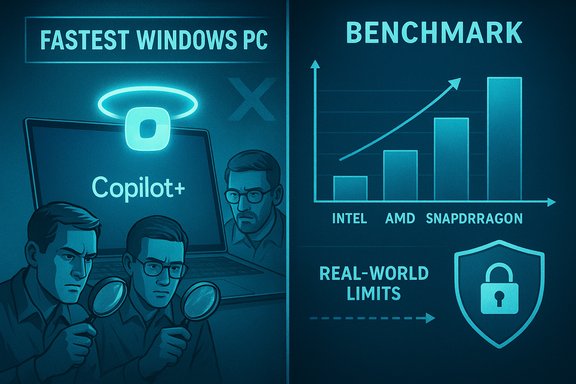
Separately, X users placed “community context” under Microsoft’s Copilot+ marketing post that said Copilot+ PCs are “the fastest, most intelligent Windows PCs ever.” The context pushed back: “These are not the fastest Windows PCs.” That blowback was not a single person’s opinion — it was amplified by many technical commenters and quickly made its way into reporting on the marketing misstep. Elon Musk’s participation in the conversation was less about a deep technical bench test and more about endorsing the community’s wider frustration with aggressive product messaging and account‑centric flows.The Copilot+ controversy: marketing claim versus technical reality
“Fastest” is a claim that depends on workload
Marketing statements like “the fastest” are inherently context‑dependent. Benchmarks and real‑world performance are determined by workload class: single‑thread CPU performance, multi‑threaded throughput, GPU‑accelerated workloads, neural processing unit (NPU) throughput, and emulator overhead for non‑native code all matter.Independent testing and community analysis have shown that:
- Desktop and high‑end laptop processors from Intel and AMD deliver far more raw compute for many workloads than the Snapdragon‑class SoCs used in the initial wave of Copilot+ devices. That difference is most visible in CPU‑bound tasks, gaming, and native x64 application throughput.
- NPU/TOPS figures used in marketing comparisons can be misleading; a given TOPS number on a neural accelerator is not a universal performance predictor without knowing memory bandwidth, precision, and the software stack. Yet several publications noted that the Snapdragon processors cited fall short of top‑end Intel/AMD AI silicon in NPU throughput metrics often quoted by vendors.
- Windows on Arm still relies on emulation layers (Prism) for many legacy x86/x64 apps; that emulation introduces overhead and compatibility caveats that affect perceived responsiveness for established applications.
Windows Recall and the “intelligence” promise
Microsoft’s product messaging tied Copilot+ machines to new OS features such as Windows Recall, which is intended to let users recover past activities via semantic queries. Privacy researchers and community watchdogs raised concerns when early implementations captured frequent snapshots of user activity — a model that, without adequate safeguards, risks exposing sensitive material such as passwords or private documents.Microsoft paused the full rollout of Recall after privacy concerns surfaced and reintroduced it under preview with additional security controls. That sequence reinforces the distinction between promised intelligence and deployed, secure intelligence; marketing that emphasizes AI magic before the privacy model is mature invites justified skepticism.
Verifying technical claims: what the numbers say
Technical claims in this debate often rely on NPU/TOPS metrics and CPU architecture comparisons. When evaluating these claims, the following verification steps are important:- Identify the exact silicon (e.g., Snapdragon X Elite vs. Intel Ultra AI Series).
- Compare like‑for‑like metrics — not just marketing blurbs — using publicly available microbenchmark and vendor specifications.
- Consider software stack differences (native vs. emulated code) and the impact of OS integration.
The account‑and‑privacy fault line
Elon Musk’s complaint about the requirement to sign into a Microsoft account highlights a broader UX and policy tension:- Windows setup flows increasingly steer consumers toward online accounts to enable sync, device linking, and cloud features.
- Enterprises and many advanced users prefer local accounts or domain join flows; they value deterministic, offline behavior and reduced telemetry exposure.
- The perception that a forced account equates to AI access or opaque telemetry is politically charged and often conflates different technical layers (account sign‑in vs. data collection policies vs. model access).
PR and marketing risks: why this blew up
- Aggressive superlatives ("fastest, most intelligent") framed an absolute claim that the community could quickly disprove in public.
- A high‑profile, user‑facing glitch (Windows Recall’s early privacy issues) created a trust deficit that heightened sensitivity to subsequent claims.
- Platform-native fact‑checking (X’s context boxes) elevated community corrections into a formal counter‑narrative.
- Influential voices (senior engineers, gaming luminaries, and high‑profile users such as Musk) amplified the friction into mainstream coverage.
Practical implications for Windows users and IT pros
For everyday users:- Don’t treat marketing as a technical spec. If you rely on heavy desktop apps or gaming, prioritize high‑end x86 systems over Arm‑first Copilot+ devices today.
- When setting up new PCs, check OEM setup options carefully. You can often create a local account via advanced setup flows or defer the Microsoft account sign‑in until later.
- Define target workloads (office productivity, developer tooling, creative apps, gaming).
- Use vendor benchmarks that mirror your workloads — CPU synthetic scores won’t predict multi‑app enterprise performance.
- Vet AI features and privacy settings for compliance and data‑handling policies before broad deployment.
- Press vendors for clear rollback and recovery plans; user‑facing regressions in recovery tools are an unacceptable risk in enterprise fleets.
Broader governance and privacy questions
Elon Musk’s critique is symptomatic of a deeper governance question: what is the operating system’s social contract with the user in an era when local devices are tightly integrated with cloud AI services?Key governance points:
- Consent and discoverability: Users must be able to find and control what the OS does with their data and how AI features operate on that data.
- Auditable telemetry: Enterprises need clear logs and explainable telemetry that are suitable for audits and compliance workflows.
- Opt‑out pathways: There must be clean, well‑documented paths to disable cloud‑tied features or use local alternatives.
Short detour: the “Budget Pie, Debt Write‑Offs, and Medical Services ‘for Our Own’” note — what was supplied and what can be verified
The user’s submission included a separate, shorter item about a coalition council meeting and budget amendments — a piece that appears to originate from BB.LV / inbox.lv reporting on national budget discussions and proposed restrictions around medical service payments. That item covers political and budget‑policy decisions (meetings scheduled after a national holiday, debates over debt write‑offs, and proposals about private payments for medical services).Cautionary note: the material in that fragment is jurisdictionally specific and political. While it was supplied by the user, the reporting is localized and I could not independently corroborate the exact lines or legislative outcomes from the fragmentary text alone. When political budget items matter (debt write‑offs, caps on private medical payments), two verification steps are essential:
- Consult the official government or parliamentary minutes for the specific country and date.
- Cross‑check reporting from independent national outlets or government press releases.
Strengths, weaknesses and risks: critical analysis
Strengths of Microsoft’s approach
- Integrating specialized on‑device AI into Windows is an important architectural evolution; on‑device models can deliver lower latency and reduced cloud cost.
- Copilot+ designs that prioritize power efficiency and new form factors offer compelling battery life and always‑connected experiences for certain mobile workflows.
Weaknesses and risks
- Overbroad marketing claims erode trust when community testing exposes gaps. The “fastest” messaging failed to anticipate straightforward community rebuttal.
- Aggressive setup flows that nudge or require Microsoft accounts create political and privacy backlash, especially among power users and privacy‑sensitive communities.
- Shipping advanced AI features before maturing privacy controls invites justified alarm and regulatory scrutiny. Windows Recall’s early issues are a case study in why staged rollouts and default‑off privacy‑preserving settings matter.
Business risks
- Reputational damage among enterprise customers and enthusiasts can translate into slower adoption cycles and greater procurement friction.
- Regulatory attention to embedded AI and telemetry could force product redesigns or new disclosure obligations in major markets.
Recommendations for Microsoft, OEMs, and enterprise buyers
For Microsoft and OEMs:- Anchor marketing in reproducible, workload‑specific benchmarks and avoid absolute superlatives.
- Surface clear, discoverable privacy controls and an “offline” or “Pro/Expert” setup path for power users and enterprise installs.
- Treat previews like beta software: enable staged rollouts, rigorous privacy testing, and explicit user consent dialogs for features that record or index user activity.
- Insist on clear SLAs for recovery and rollback behavior for updates and AI features.
- Pilot Copilot+ devices against representative workloads before large‑scale procurement.
- Demand telemetry ledgers and privacy export tools for auditing.
- If you value compatibility and raw performance, favour high‑end x86 hardware for now.
- For long battery life and lightweight AI features, consider Copilot+ options but test critical apps first.
Conclusion
Elon Musk’s public criticism is a high‑visibility symptom of deeper tensions: companies racing to integrate on‑device and cloud AI face hard engineering, privacy, and communication problems at once. The Copilot+ story illustrates how marketing, product maturity, and user expectations can collide in public. When marketing claims outpace verifiable performance data and when new AI features touch sensitive user data, a predictable pattern emerges: community fact‑checking fills the vacuum, critics amplify the error, and vendors must spend reputational capital repairing trust.For Windows users and IT professionals the immediate takeaway is pragmatic: evaluate hardware decisions against your actual workloads, demand clear privacy and rollback options, and treat bold marketing claims as a starting point for technical due diligence — not a substitute for it. The incident also reinforces a broader governance imperative: the OS must offer discoverable, auditable controls that keep the user — not the marketer — in the loop. (If specific legislative or budgetary details from the BB.LV/inbox.lv fragment are needed for policy analysis, those items require direct confirmation from national parliamentary records or multiple independent local reports before conclusions can be drawn.
Source: Inbox.lv News feed at Inbox.lv -
