

Microsoft’s advisory for CVE-2026-32071 is notable less for explosive exploit detail than for what it says about confidence. The entry frames the issue as a Windows Local Security Authority Subsystem Service (LSASS) denial-of-service vulnerability, and the surrounding language is meant to tell defenders how certain Microsoft is that the flaw exists and how credible the technical details are. That matters because LSASS sits at the center of Windows authentication, so even a DoS-only issue can become operationally serious when it affects logons, token issuance, or identity infrastructure. Microsoft’s own historical handling of LSASS DoS bugs has consistently treated service crash-and-reboot behavior as a real enterprise availability risk, not a mere nuisance SS is one of the most important processes in Windows because it enforces local security policy, handles authentication requests, and helps issue access tokens. When it fails, the effect is rarely isolated to a single application; it can ripple through sign-ins, remote access, policy enforcement, and in some cases the stability of the whole machine. That is why LSASS issues tend to attract outsized attention even when the headline impact is “only” denial of service. In enterprise environments, only availability damage can still mean outage, incident response, and service-level disruption.
Microsoft has a long history of describing LSASS vulnerabilities in operational terms that make the blast radius clear. In older advisories, the company explicitly noted that LSASS crashes could force a reboot or stop a system from responding, and that framing still shapes how administrators think about risk today . The pattern is conrttack surface that a real-world adversary can hit, defenders need to treat it as a priority even when no code execution is involved.
The interesting part of CVE-2026-32071 is the confidence metric itself. Microsoft’s Security Update Guide uses that measure to communicate how sure the vendor is that the vulnerability really exists and how solid the technical description is. In practice, that makes the entry more than just a label; it is a signal about the quality of the evidence. When Microsoft assigns a high-confidence rating, the community generally reads that as a stronger indicator that the issue is confirmed, reproducible, and worth immediate operational attention.
This advisory also fits a broader Microsoft pattern around denial-of-service flaws in identity components. LSASS and related Windows authentication services have repeatedly shown up in security bulletins because they are both foundational and exposed to complex parsing, protocol, and request-handling logic. That combination makes them attractive targets for bugs that may not yield full compromise but can still be used to disrupt business operations. In a domain controller environment, a DoS can be more damaging than it looks on paper because it can block authentication for a whole segment of the network.
At a market level, the CVE matters because it reinforces a familiar truth: identity infrastructure remains one of the highest-value attack surfaces in Windows. Security teams can harden browsers, mail clients, and file shares, but when the system’s authentication core is affected, the problem becomes architectural rather than incidental. That is why Microsoft’s confidence language should not be dismissed as metadata. It helps decide whether defenders should treat a flaw as a theoretical possibility or as a near-term operational problem.
The confidence metric is easy to overlook, but it is one of the most useful parts of Microsoft’s security communication. It speaks to the certainty that a vulnerability exists and the credibility of the associated technical details, which is especially important when public disclosure is sparse. A high-confidence score suggests Microsoft has enough evidence to stand behind the issue, even if the public write-up stays short.
That distinction matters because not all CVE entries are equally mature. Some describe confirmed flaws with a clear impact path, while others are more tentative and reflect partial technical understanding. For administrators, the difference can affect patch urgency, compensating controls, and how quickly the issue gets moved into the highest-priority queue. Confidence is not severity, but it often influences how much trust defenders place in the severity.
A confidence score also hints at attacker knowledge. When the technical details are solid, would-be attackers may have enough information to begin fuzzing, chaining, or weaponizing the bug more quickly. Even a DoS issue can become a scalable nuisance if the root cause is clear enough for repeated probing.
The practical takeaway is simple: when Microsoft is confident, defenders should assume the issue is real, actionable, and not just a paper exercise. That is especially true for LSASS, where even partial instability can have broad identity consequences.
Historically, Microsoft has issued LSASS advisories covering different failure modes, including elevation of privilege and denial of service. The common thread is that the component sits close to the boundary between user activity and privileged security operations. That means malformed input, special request sequences, or edge-case authentication handling can surface bugs that are hard to detect in normal testing.
This is especially serious for servers and domain controllers. On those systems, LSASS is not merely supporting logon dialogs; it is participating in core infrastructure duties. A crash can therefore impact not only the local host but also the wider environment that depends on it.
The deeper issue is that identity bugs are often underestimated because they do not steal data. In practice, availability is security when the service in question controls access to the rest of the environment. A temporary outage in LSASS can become an enterprise-wide incident if it affects enough hosts or enough privileged workflows.
The historical Microsoft language around LSASS DoS bugs has often described system reboot behavior, which is a good reminder that availability bugs can change the shape of an incident. A rebooting domain controller is not just a crash event; it is an outage plus recovery plus possible authentication backlog. That creates real business cost.
A DoS flaw can also force defenders into reactive mode. If the attack is repeatable, administrators may have to isolate hosts, disable services, or accelerate patching outside normal maintenance windows. That is disruptive by design, which is exactly why availability issues belong in urgent patch queues.
CVE-2026-32071 appears to follow that tradition. The title tells defenders where hints at how much of the technical story Microsoft is willing to stand behind. For a security team, that combination is enough to justify patch planning, especially when the affected system is part of identity infrastructure.
That is especially true in enterprises with domain controllers, RADIUS servers, privileged access workstations, and multi-factor authentication gateways that depend on healthy Windows identity services. A bug in LSASS may not affect every workstation equally, but the systems that matter most are often the ones where failure is least acceptable.
The confidence metric reinforces that urgency. If Microsoft says the flaw is real and the technical basis is credible, the risk becomes a patch-management problem rather than a speculative research note. That is a useful distinction in large environments, where security teams need to triage hundreds of items every month.
Even a short LSASS interruption can create a disproportionate workload. Helpdesk tickets spike, administrators scramble to restore access, and monitoring tools start reporting cascading login failures. In a tightly controlled environment, the remediation timeline can be measured in minutes for the incident and hours for the aftermath.
That is why patching priority should be based on role, not just on the CVE label. A workstation with LSASS exposure is important, but a domain controller with the same exposure is mission-critical. The difference is practical, not theoretical.
The enterprise concern is not simply that a service goes down once. It ier conditions could create a churn cycle: crash, restart, partial recovery, crash again. That pattern is often worse than a single outage, because it erodes confidence in the platform and creates time-consuming diagnosis.
Small businesses are often the most vulnerable to the indirect effects. They may not have redundancy, dedicated identity servers, or a mature incident playbook. If a workstation or small server used for shared access hits an LSASS issue, the business impact can feel outsized relative to the apparent technical category.
Consumers are less likely to be targeted by sophisticated LSASS exploitation, but they are not immune to instability. A vulnerability that causes repeated crashes is a quality-of-life issue at home and a continuity issue at work. In both settings, patching is still the right answer.
That is why advisories like CVE-2026-32071 matter beyond the data center. They remind everyone that Windows security architecture is shared infrastructure, even when the environment is small. A flaw in one component can still cause a broad user-visible failure.
For LSASS issues, the order of operations matters. Identity infrastructure should be handled before general endpoints, and the most business-critical servers should be validated before broad rollout. That is especially true when the advisory hints at strong confidence but offers limited technical detail, because the risk of waiting for “more information” is often greater than the risk of patching.
Microsoft’s historical LSASS guidance suggests these issues can be systemically disruptive when triggered . In other words, the right response is not just to install the fix, but to treat identity resilience as part of the patching project itself.
Microsoft also has an opportunity to reinforce trust by continuing to use precise, operationally relevant language in advisories like this one. LSASS is a critical trust boundary, so clarity matters. Strong vendor communication can reduce confusion, improve patch uptake, and help administrators explain urgency to management.
Another concern is the temptation to wait for third-party analysis before acting. That is understandable, but it can be dangerous when Microsoft’s own confidence signal suggests the vulnerability is real. In the world of Windows patching, delays often create more operational risk than they remove.
Finally, the lack of public technical depth can make it harder for defenders to judge exposure with precision. That is where the confidence metric helps, but it does not answer every question. Security teams still need to map affected builds, monitor for abnormal service behavior, and remain alert to future research that may clarify the attack path.
The second thing to watch is whether further technical analysis emerges from the security community. If researchers identify the trigger path, defenders may gain better insight into exposure conditions and detection opportunities. Until then, Microsoft’s confidence signal should carry substantial weight.
The most prudent interpretation today is that CVE-2026-32071 should be treated as a credible, operationally meaningful Windows security issue with a real possibility of enterprise disruption. Even without dramatic exploit theatrics, a confirmed LSASS DoS flaw deserves disciplined response, careful rollout, and close attention to identity resilience. In a Windows environment, availability of the authentication core is part of security itself, and that is why this advisory matters now.
Source: MSRC Security Update Guide - Microsoft Security Response Center
Microsoft has a long history of describing LSASS vulnerabilities in operational terms that make the blast radius clear. In older advisories, the company explicitly noted that LSASS crashes could force a reboot or stop a system from responding, and that framing still shapes how administrators think about risk today . The pattern is conrttack surface that a real-world adversary can hit, defenders need to treat it as a priority even when no code execution is involved.
The interesting part of CVE-2026-32071 is the confidence metric itself. Microsoft’s Security Update Guide uses that measure to communicate how sure the vendor is that the vulnerability really exists and how solid the technical description is. In practice, that makes the entry more than just a label; it is a signal about the quality of the evidence. When Microsoft assigns a high-confidence rating, the community generally reads that as a stronger indicator that the issue is confirmed, reproducible, and worth immediate operational attention.
This advisory also fits a broader Microsoft pattern around denial-of-service flaws in identity components. LSASS and related Windows authentication services have repeatedly shown up in security bulletins because they are both foundational and exposed to complex parsing, protocol, and request-handling logic. That combination makes them attractive targets for bugs that may not yield full compromise but can still be used to disrupt business operations. In a domain controller environment, a DoS can be more damaging than it looks on paper because it can block authentication for a whole segment of the network.
At a market level, the CVE matters because it reinforces a familiar truth: identity infrastructure remains one of the highest-value attack surfaces in Windows. Security teams can harden browsers, mail clients, and file shares, but when the system’s authentication core is affected, the problem becomes architectural rather than incidental. That is why Microsoft’s confidence language should not be dismissed as metadata. It helps decide whether defenders should treat a flaw as a theoretical possibility or as a near-term operational problem.
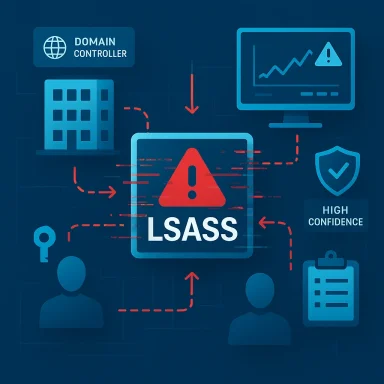 What Microsoft’s Confidence Metric Really Means
The confidence metric is easy to overlook, but it is one of the most useful parts of Microsoft’s security communication. It speaks to the certainty that a vulnerability exists and the credibility of the associated technical details, which is especially important when public disclosure is sparse. A high-confidence score suggests Microsoft has enough evidence to stand behind the issue, even if the public write-up stays short.That distinction matters because not all CVE entries are equally mature. Some describe confirmed flaws with a clear impact path, while others are more tentative and reflect partial technical understanding. For administrators, the difference can affect patch urgency, compensating controls, and how quickly the issue gets moved into the highest-priority queue. Confidence is not severity, but it often influences how much trust defenders place in the severity.
Why confidence matters to defenders
A confidence metric helps translate vendor knowledge into action. If Microsoft is confident the flaw exists, there is less reason to wait for third-party validation before planning remediation. That can be decisive in identity systems, where every day of delay increases exposure.A confidence score also hints at attacker knowledge. When the technical details are solid, would-be attackers may have enough information to begin fuzzing, chaining, or weaponizing the bug more quickly. Even a DoS issue can become a scalable nuisance if the root cause is clear enough for repeated probing.
- High confidence generally means a confirmed issue, not just a suspected one.
- It can justify faster patch prioritization.
- It often implies enough technical detail exists for researchers to study the flaw.
- It does not necessarily reveal whether exploitation is easy or hard.
- It should be read alongside impact, attack surface, and exposure.
The practical takeaway is simple: when Microsoft is confident, defenders should assume the issue is real, actionable, and not just a paper exercise. That is especially true for LSASS, where even partial instability can have broad identity consequences.
Why LSASS Vulnerabilities Keep Showing Up
LSASS is not just another Windows service. It is the process that underpins authentication, local security enforcement, and identity-related request handling across the operating system. That centrality makes it a natural target for both attackers and security research, because any weakness there can have system-wide consequences.Historically, Microsoft has issued LSASS advisories covering different failure modes, including elevation of privilege and denial of service. The common thread is that the component sits close to the boundary between user activity and privileged security operations. That means malformed input, special request sequences, or edge-case authentication handling can surface bugs that are hard to detect in normal testing.
The identity stack as an attack surface
The Windows identity stack is full of trusted pathways. Authentication requests often come from remote systems, domain members, service accounts, or software that assumes the platform will validate everything correctly. When a flaw exists in that layer, the impact can spread faster than in a typical desktop application.This is especially serious for servers and domain controllers. On those systems, LSASS is not merely supporting logon dialogs; it is participating in core infrastructure duties. A crash can therefore impact not only the local host but also the wider environment that depends on it.
- LSASS handles security-critical request paths.
- Authentication logic tends to be complex and stateful.
- Domain infrastructure magnifies the operational impact.
- A crash can trigger recovery actions or reboots.
- Repeated failures can create cascading service instability.
The deeper issue is that identity bugs are often underestimated because they do not steal data. In practice, availability is security when the service in question controls access to the rest of the environment. A temporary outage in LSASS can become an enterprise-wide incident if it affects enough hosts or enough privileged workflows.
Availability Bugs Are Not “Low Impact”
A denial-of-service flaw is sometimes treated as less important than remote code execution, but that is not how operations teams experience it. If LSASS crashes or becomes unavailable, users may be unable to log in, services may fail to start, and automated tasks may stall. In an Active Directory environment, the knock-on effects can be immediate and broad.The historical Microsoft language around LSASS DoS bugs has often described system reboot behavior, which is a good reminder that availability bugs can change the shape of an incident. A rebooting domain controller is not just a crash event; it is an outage plus recovery plus possible authentication backlog. That creates real business cost.
Operational consequences in the real world
The most obvious impact is interrupted authentication. But the second-order consequences can be worse: failed scheduled jobs, broken remote administration sessions, and helpdesk spikes that obscure the real cause. On a busy network, this can look like a random systems problem until someone traces it back to LSASS.A DoS flaw can also force defenders into reactive mode. If the attack is repeatable, administrators may have to isolate hosts, disable services, or accelerate patching outside normal maintenance windows. That is disruptive by design, which is exactly why availability issues belong in urgent patch queues.
- Authentication failures can spread across many dependent systems.
- Domain controllers are especially sensitive to LSASS instability.
- Reboots may restore service only temporarily.
- Repeated crashes can look like hardware or corruption issues.
- The remediation burden can exceed the technical severity label.
How Microsoft Typically Frames LSASS Risk
Microsoft’s security communications around LSASS have historically been direct about consequence, even when technical details are limited. Older bulletin language described LSASS flaws as causing crashes, automatic reboots, or denial-of-service conditions on vulnerable systems . That style is useful because it avoids the trap of making the issue sound academic.CVE-2026-32071 appears to follow that tradition. The title tells defenders where hints at how much of the technical story Microsoft is willing to stand behind. For a security team, that combination is enough to justify patch planning, especially when the affected system is part of identity infrastructure.
Severity versus urgency
Severity ratings tell you how bad a flaw can be. Urgency tells you how soon you need to deal with it. In Microsoft-land, LSASS defects often have a high urgency even when the raw severity score looks moderate because the component is so central to Windows security architecture.That is especially true in enterprises with domain controllers, RADIUS servers, privileged access workstations, and multi-factor authentication gateways that depend on healthy Windows identity services. A bug in LSASS may not affect every workstation equally, but the systems that matter most are often the ones where failure is least acceptable.
- Severity describes impact.
- Urgency describes operational priority.
- Identity components deserve extra caution.
- Domain controllers should be treated as high-value targets.
- Partial outages can still create major business disruption.
The confidence metric reinforces that urgency. If Microsoft says the flaw is real and the technical basis is credible, the risk becomes a patch-management problem rather than a speculative research note. That is a useful distinction in large environments, where security teams need to triage hundreds of items every month.
Enterprise Impact: Domain Controllers, Auth Services, and Recovery Costs
For enterprise IT, the most important question is not whether CVE-2026-32071 can crash LSASS in the abstract. It is whether the flaw can affect the systems that hold authentication together. If domain controllers, bastion hosts, or remote access gateways are in scope, the potential outage cost rises sharply.Even a short LSASS interruption can create a disproportionate workload. Helpdesk tickets spike, administrators scramble to restore access, and monitoring tools start reporting cascading login failures. In a tightly controlled environment, the remediation timeline can be measured in minutes for the incident and hours for the aftermath.
Why identity hosts are different
Identity hosts are not ordinary endpoints. They are the trust anchors for the rest of the environment, which means instability there has a multiplier effect. If a user cannot authenticate, that user cannot work; if a service account cannot obtain a token, an application may fail silently or start a chain of retries that adds load elsewhere.That is why patching priority should be based on role, not just on the CVE label. A workstation with LSASS exposure is important, but a domain controller with the same exposure is mission-critical. The difference is practical, not theoretical.
- Domain controllers should be prioritized first.
- Privileged access systems deserve the same treatment.
- Remote access and VPN support hosts can amplify the blast radius.
- Monitoring and backup authentication paths should be checked.
- Recovery procedures should be tested before rollout.
The enterprise concern is not simply that a service goes down once. It ier conditions could create a churn cycle: crash, restart, partial recovery, crash again. That pattern is often worse than a single outage, because it erodes confidence in the platform and creates time-consuming diagnosis.
Consumer and Small-Business Impact
On consumer systems, LSASS bugs usually look less dramatic than they do in enterprise environments, but they are still worth watching. A crash or reboot can interrupt login sessions, remote assistance, file sync, or gaming platforms that rely on Windows authentication services in the background. The user may simply see an unstable machine.Small businesses are often the most vulnerable to the indirect effects. They may not have redundancy, dedicated identity servers, or a mature incident playbook. If a workstation or small server used for shared access hits an LSASS issue, the business impact can feel outsized relative to the apparent technical category.
Why small environments feel the pain first
Small organizations tend to have fewer layers of resilience. They may rely on a handful of Windows systems for logon, file sharing, or line-of-business apps. A DoS bug that causes reboots can therefore interrupt the entire business day rather than just a segment of the network.Consumers are less likely to be targeted by sophisticated LSASS exploitation, but they are not immune to instability. A vulnerability that causes repeated crashes is a quality-of-life issue at home and a continuity issue at work. In both settings, patching is still the right answer.
- Reboots can interrupt active work and unsaved data.
- Remote help sessions may disconnect.
- Home lab and SMB servers can be disproportionately affected.
- Self-recovery is not guaranteed after a crash.
- Security updates are cheaper than downtime.
That is why advisories like CVE-2026-32071 matter beyond the data center. They remind everyone that Windows security architecture is shared infrastructure, even when the environment is small. A flaw in one component can still cause a broad user-visible failure.
Patch Strategy and Defensive Priorities
The first defensive move should be straightforward: apply Microsoft’s update once the relevant KB is available for the affected build. But patching alone is not the whole story. Teams should also decide how to stage deployment, what systems to prioritize, and how to monitor for recurring instability.For LSASS issues, the order of operations matters. Identity infrastructure should be handled before general endpoints, and the most business-critical servers should be validated before broad rollout. That is especially true when the advisory hints at strong confidence but offers limited technical detail, because the risk of waiting for “more information” is often greater than the risk of patching.
A sensible rollout sequence
- Identify the affected Windows builds and roles.
- Prioritize domain controllers, auth gateways, and admin hosts.
- Test the update on a representative non-production system.
- Monitor for login anomalies or unexpected reboots.
- Roll out to broader server and endpoint populations.
- Verify backup authentication and recovery paths after deployment.
- Inventory every Windows host that performs authentication-related duties.
- Confirm whether the issue touches supported and extended-support systems.
- Watch for signs of LSASS instability in event logs and uptime reports.
- Communicate maintenance windows to helpdesk and application owners.
- Keep rollback and recovery plans ready in case of regression.
Microsoft’s historical LSASS guidance suggests these issues can be systemically disruptive when triggered . In other words, the right response is not just to install the fix, but to treat identity resilience as part of the patching project itself.
Strengths and Opportunities
The strongest part of Microsoft’s disclosure framewives defenders a meaningful signal even when the public detail is thin. The confidence metric, the component name, and the impact category together create enough clarity for practical response. That helps security teams move faster than they could if they were waiting for a full exploit write-up.Microsoft also has an opportunity to reinforce trust by continuing to use precise, operationally relevant language in advisories like this one. LSASS is a critical trust boundary, so clarity matters. Strong vendor communication can reduce confusion, improve patch uptake, and help administrators explain urgency to management.
- Confidence signaling helps teams prioritize without waiting for external confirmation.
- LSASS focus makes the risk immediately understandable to Windows administrators.
- DoS-only framing is still operationally important for identity systems.
- Historical consistency in Microsoft advisories improves decision-making.
- Patch urgency can be justified even without exploit details.
- Enterprise teams can use the advisory to sharpen resilience planning.
- Small organizations get a clear warning that stability, not just confidentiality, is at stake.
Risks and Concerns
The main risk is that a denial-of-service classification may lead some defenders to under-prioritize the issue. That would be a mistake. If LSASS is involved, availability can translate directly into business interruption, login failures, and service disruption, especially on servers and identity anchors.Another concern is the temptation to wait for third-party analysis before acting. That is understandable, but it can be dangerous when Microsoft’s own confidence signal suggests the vulnerability is real. In the world of Windows patching, delays often create more operational risk than they remove.
- Under-prioritization because the issue is “only DoS.”
- Patch delays while waiting for more technical detail.
- Identity outages if rollout is done without testing.
- Misleading symptoms that obscure LSASS as the root cause.
- Broad blast radius on domain controllers and auth services.
- Helpdesk overload if repeated crashes affect users.
- False sense of safety if only endpoint fleets are updated.
Finally, the lack of public technical depth can make it harder for defenders to judge exposure with precision. That is where the confidence metric helps, but it does not answer every question. Security teams still need to map affected builds, monitor for abnormal service behavior, and remain alert to future research that may clarify the attack path.
Looking Ahead
The next important milestone will be Microsoft’s concrete remediation guidance for affected builds. Once the applicable KBs and rollout notes are clear, administrators can move from prioritization to execution. The real test will be whether organizations treat the issue as an identity reliability problem, not just another monthly update.The second thing to watch is whether further technical analysis emerges from the security community. If researchers identify the trigger path, defenders may gain better insight into exposure conditions and detection opportunities. Until then, Microsoft’s confidence signal should carry substantial weight.
- Patch availability for each supported Windows release.
- Whether domain controller guidance differs from workstation guidance.
- Any evidence of exploitation in the wild.
- New details about the vulnerability trigger or root cause.
- Event log patterns that may help detection and triage.
- Follow-on advisories if Microsoft revises the entry.
The most prudent interpretation today is that CVE-2026-32071 should be treated as a credible, operationally meaningful Windows security issue with a real possibility of enterprise disruption. Even without dramatic exploit theatrics, a confirmed LSASS DoS flaw deserves disciplined response, careful rollout, and close attention to identity resilience. In a Windows environment, availability of the authentication core is part of security itself, and that is why this advisory matters now.
Source: MSRC Security Update Guide - Microsoft Security Response Center
Last edited:
