

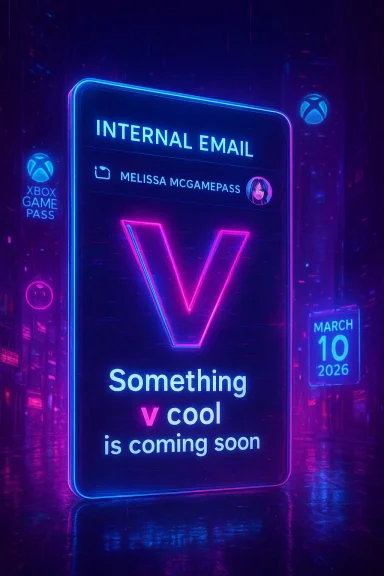
Xbox Game Pass’s latest wink — a mock internal email from the fictional “Melissa McGamepass” — wasn’t subtle: the message bolded a single letter and captioned the post “Something v cool is coming soon…”, and within 24–48 hours the hint turned into confirmation. CD PROJEKT RED’s Cyberpunk 2077 will join Xbox Game Pass on March 10, 2026 for Game Pass Premium and Ultimate subscribers on Xbox consoles, marking one of the service’s highest-profile third‑party pickups in recent memory. What started as a light, meme-friendly tease became a textbook example of modern games marketing: a playful social post that both surfaced community theories and drove attention to an already‑big title at the precise moment Microsoft wanted to maximize impact.
Cyberpunk 2077 launched in December 2020 amid heavy hype — and an equally heavy backlash due to severe performance problems on last‑generation consoles. That rocky start was well chronicled and had tangible consequences for the developer and platform partners. Over the subsequent years, CD PROJEKT invested heavily in patches, technical overhauls, and a major content expansion, Phantom Liberty, which arrived alongside the 2.0 update and reshaped core systems.
The result of that long rebuild has been dramatic: Cyberpunk 2077’s lifecycle has flipped from cautionary tale to comeback story. By late 2025 the title had cleared a major commercial milestone — selling more than 35 million copies — and the game’s reputation among many players improved substantially thanks to the cumulative effect of updates, DLC, platform releases, and inclusion in subscription services. Now, with the Game Pass addition in March 2026, Xbox is making Cyberpunk one of its marquee catalog additions, leveraging a playful social tease to amplify the announcement.
Why the approach is effective:
Key confirmed points:
Why the 35 million figure matters:
That said, the move is not risk‑free: technical parity across hardware, clear tier communications, and measured expectations about monetization matter. If Microsoft and CD PROJEKT keep the Game Pass build polished and communicate clearly with players, this could be one of the smoother examples of subscription placement — a win for the platform, the publisher, and the millions of players who’ve been waiting to dive (or return) to Night City under better circumstances.
Source: Windows Central Whoa, Xbox may be teasing Cyberpunk 2077 coming to Game Pass
 Background / Overview
Cyberpunk 2077 launched in December 2020 amid heavy hype — and an equally heavy backlash due to severe performance problems on last‑generation consoles. That rocky start was well chronicled and had tangible consequences for the developer and platform partners. Over the subsequent years, CD PROJEKT invested heavily in patches, technical overhauls, and a major content expansion, Phantom Liberty, which arrived alongside the 2.0 update and reshaped core systems.The result of that long rebuild has been dramatic: Cyberpunk 2077’s lifecycle has flipped from cautionary tale to comeback story. By late 2025 the title had cleared a major commercial milestone — selling more than 35 million copies — and the game’s reputation among many players improved substantially thanks to the cumulative effect of updates, DLC, platform releases, and inclusion in subscription services. Now, with the Game Pass addition in March 2026, Xbox is making Cyberpunk one of its marquee catalog additions, leveraging a playful social tease to amplify the announcement.
How the tease worked: Melissa McGamepass and modern social marketing
Marketing teams in gaming have learned to weaponize small, shareable moments. Microsoft’s “Melissa McGamepass” persona is a recurring gag from Xbox Game Pass’s social feed: faux leaked internal emails that read like staff notes, stuffed with Easter eggs and in‑jokes aimed at the gaming community. That pattern set expectations — when Melissa’s “email” mentioned “a v good one” with a bolded V, the community immediately connected the letter to Cyberpunk’s protagonist, V.Why the approach is effective:
- It creates a mini‑puzzle. Fans love to decode teases, and the V clue was small enough to be ambiguous but pointed enough to ignite speculation.
- It leverages FOMO. Teasers create a ticking curiosity; communities swarm, create memes, and push the story into mainstream outlets.
- It’s low-cost engagement. A single clever image or line can generate outsized press and social sharing compared with conventional ads.
What Microsoft and CD PROJEKT confirmed
On March 3, 2026, CD PROJEKT announced that Cyberpunk 2077 would join Xbox Game Pass Premium and Ultimate tiers on March 10, 2026 for Xbox Series X|S and Xbox One consoles. The company highlighted that the version of the game arriving on Game Pass includes every major update released since launch, along with the improvements and content that have reshaped the title since 2020.Key confirmed points:
- Cyberpunk 2077 will be available on Xbox Game Pass Premium and Ultimate starting March 10, 2026.
- The console versions will include post‑launch updates and content up to the latest shipped builds.
- The Game Pass addition is positioned as a high‑value catalog entry for Xbox’s upper subscription tiers.
Why this matters for Xbox Game Pass and subscribers
Cyberpunk 2077 is not a niche indie — it’s a high‑profile RPG with significant brand recognition, a large install base, and a reputation that’s been substantially repaired. Adding it to Game Pass does several things for Microsoft:- Immediate subscriber value: Game Pass’s pitch is breadth and depth. Putting a high‑production AAA RPG into the library boosts perceived value, especially for Premium/Ultimate subscribers who pay more for cloud and other benefits.
- Catalog differentiation: Day‑one first‑party titles and big third‑party entries are competitive advantages; Cyberpunk is a marquee third‑party win that complements Xbox exclusives.
- Fresh engagement windows: Titles that join subscription catalogs often see renewed player activity, guiding players to other Microsoft services (cloud saves, achievements, Game Pass quests) and potentially driving hardware upgrades.
CD PROJEKT’s commercial turnaround: numbers and context
The Cyberpunk title’s commercial story is one of recovery. After the troubled 2020 release and subsequent platform fallout, CD PROJEKT committed to an extended patching and quality‑improvement campaign. That work culminated with the 2.0 rework and Phantom Liberty expansion, both of which were received far more positively than the initial release. By late 2025, Cyberpunk had passed the 35‑million units sold threshold — a mark that reflects both initial purchases and continued catalog sales, platform launches, and inclusion in third‑party subscription programs.Why the 35 million figure matters:
- It demonstrates long tail demand. Despite the rough launch, Cyberpunk continued to attract buyers over multiple years, signaling that the game’s world, storytelling, and gameplay resonated once the technical barriers were removed.
- It strengthens the IP for future projects. That sales base underpins the long‑promised Cyberpunk sequel and helps CD PROJEKT fund concurrent work like The Witcher 4.
- It changes how publishers view subscription placement. Games with large installed bases and stable public perception are attractive candidates for subscription windows because they drive engagement without necessarily cannibalizing new full‑price sales for the publisher’s upcoming titles.
Benefits for players and the wider ecosystem
- Lower barrier to entry: New players can experience a massive single‑player RPG without an upfront purchase, which is especially useful for those on the fence.
- Technical parity: The Game Pass console builds include all post‑launch improvements, meaning the version available to subscribers should reflect the game’s improved state rather than its 2020 condition.
- Cross‑promotion: Xbox’s Game Pass ecosystem encourages players to sample other games in the catalog, potentially increasing playtime across titles and giving smaller games the opportunity to be discovered by Cyberpunk players.
Commercial and strategic implications for CD PROJEKT
Putting Cyberpunk on Game Pass is more than a goodwill gesture: it’s a strategic revenue and marketing decision for CD PROJEKT.- Licensing revenue vs. direct sales: While Game Pass inclusion typically means licensing revenue from Microsoft rather than direct retail sales, the predictable income stream and exposure can be valuable, especially late in a title’s lifecycle.
- Renewed engagement and DLC uptake: Free access can drive interest in paid expansions, cosmetics, and future content, or simply refresh the active user base prior to major new releases like a sequel.
- Brand rehabilitation: After a famously troubled launch, CD PROJEKT still benefits from more players experiencing the improved game; every positive Game Pass playthrough is a brand touchpoint.
Risks, unanswered questions, and what to watch
No major move is without downside. Here are the realistic risks and open items to track now that Cyberpunk is on Game Pass:- Perception vs. performance mismatch: Some players still remember the original launch problems. If any Game Pass player encounters regressions or platform‑specific issues (for example, with Xbox One performance), community backlash could resurface quickly. Microsoft and CD PROJEKT will want to ensure the Game Pass builds are stable across targeted hardware.
- Monetization expectations: Game Pass exposure sometimes reduces immediate full‑price purchases; however, it can increase long‑term DLC and merch interest. Publishers must weigh guaranteed licensing fees against potential lost retail revenue.
- Platform tier confusion: Game Pass has multiple tiers (Ultimate, Premium, PC Game Pass), and availability can vary by platform. Clear communication about which tiers and which platforms are supported is essential to avoid customer confusion and complaints.
- Sequels and future windows: Will the Cyberpunk sequel follow a similar path — delayed full‑price launch vs. subscription window? Game Pass placements can complicate launch strategies for sequels and remasters, especially when a publisher wants to preserve full‑price launch momentum.
- Community churn: Game Pass additions often spike player activity, but retention varies. If new players don't find the game appealing, short‑term engagement could translate into low long‑term retention — a purely reputational risk more than a commercial one.
What this says about Xbox’s Game Pass strategy
Microsoft continues to treat Game Pass as a multi‑pronged growth lever: day‑one first‑party releases, strategic third‑party additions, and tiered placement that nudges users toward higher subscription levels. Cyberpunk’s arrival is illustrative:- It reinforces tier segmentation. Placing Cyberpunk on Premium/Ultimate — rather than the basic tiers — preserves perceived exclusivity and incentivizes upgrades.
- It demonstrates flexible sourcing. Microsoft isn’t limited to first‑party offerings; well‑timed third‑party deals remain central to keeping the catalog fresh.
- It shows marketing sophistication. The Melissa McGamepass campaign is a low‑cost, high‑engagement method for converting social teasing into official retention gains.
Practical advice for players
If you’re an Xbox Game Pass subscriber or considering it, here’s what to do next:- Check your tier and platform. Make sure you’re subscribed to Game Pass Premium or Ultimate to access the version described in the official announcements.
- Backup saves if you already own the game. If you’re switching between ownership and subscription versions, verify where your saves live (cloud vs. local) to avoid losing progress.
- Give the post‑launch version a fair try. The version available on Game Pass includes years of patches and the Phantom Liberty content — that matters a lot compared with the original 2020 release.
- Manage expectations on hardware. If you’re on Xbox One, expect some differences versus Series X|S; options like Performance Mode vs. Quality Mode may affect your experience.
- Use Game Pass as a trial. If you enjoy Cyberpunk, consider whether you want to keep it via subscription, buy permanently, or revisit later — Game Pass gives that choice with relatively low friction.
Bigger picture: subscription windows and the future of big AAA games
Cyberpunk’s Game Pass placement is a data point in a broader industry trend: AAA titles are increasingly viewed not only as boxed goods but as long‑running services that can move in and out of subscription catalogs. The strategy helps publishers:- Extend the title’s active life.
- Grow new audiences who were resistant to full‑price purchases.
- Create marketing moments that reframe older games as “new to you.”
Conclusion
The Melissa McGamepass tease and the subsequent confirmation that Cyberpunk 2077 is joining Xbox Game Pass on March 10, 2026 is more than a clever social moment — it’s an inflection point for how large AAA games can be reintroduced to new audiences. For players, it’s a chance to experience a game that has been significantly improved since its rough debut without the upfront cost. For CD PROJEKT, it’s both a revenue and reputation play that leverages the studio’s years of remediation work. For Microsoft, Cyberpunk is a validation of a Game Pass strategy that mixes first‑party freshness with high‑value third‑party catalog wins.That said, the move is not risk‑free: technical parity across hardware, clear tier communications, and measured expectations about monetization matter. If Microsoft and CD PROJEKT keep the Game Pass build polished and communicate clearly with players, this could be one of the smoother examples of subscription placement — a win for the platform, the publisher, and the millions of players who’ve been waiting to dive (or return) to Night City under better circumstances.
Source: Windows Central Whoa, Xbox may be teasing Cyberpunk 2077 coming to Game Pass
