

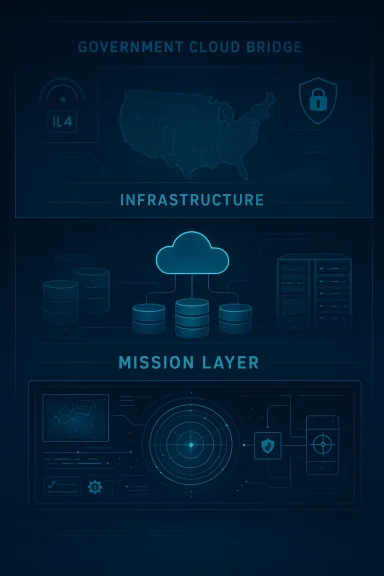
Defense artificial intelligence is moving from analyst chatter into a real procurement theme, and that shift helps explain why Wedbush’s Dan Ives is now framing Palantir, Oracle, and Microsoft as the core trio to watch. The argument is simple, but consequential: Palantir is already embedded at the mission layer, Oracle is supplying the cloud plumbing, and Microsoft is widening its grip on enterprise and classified-cloud workloads. If that stack keeps maturing, defense AI stops looking like a one-off pilot cycle and starts looking like a durable budget category. That is the kind of thesis Wall Street likes to chase, but it is also the kind of thesis that can reshape how the Pentagon buys software, infrastructure, and intelligence tooling for years.
The latest round of optimism around defense AI did not appear out of nowhere. It is the product of several overlapping trends: the Pentagon’s push for faster digital modernization, the maturation of large language models, the rise of cloud-first procurement, and a geopolitical backdrop that has made real-time intelligence, logistics, and decision support feel more urgent than ever. Over the last few years, defense agencies have moved from asking whether AI belongs in national security to asking how quickly it can be deployed without breaking security, compliance, and mission reliability.
That evolution matters because the defense market behaves differently from consumer software or even standard enterprise IT. Adoption cycles are longer, certification requirements are tighter, and the vendors that win are often the ones that can survive the slow grind of accreditation, security reviews, and classified deployment constraints. In that environment, a company that can show operational relevance has an edge over a company that merely has a flashy demo.
Palantir was built for that world. Its earliest success came from intelligence and defense use cases, and its platforms were designed around messy, high-stakes workflows rather than clean software abstractions. Oracle and Microsoft, by contrast, entered defense AI from a broader enterprise and infrastructure angle, but both now have meaningful public-sector footprints that make them natural beneficiaries if AI becomes an embedded spending line instead of a discretionary experiment.
The timing also lines up with broader federal policy shifts. The White House and OMB have repeatedly signaled support for AI use across federal agencies, while the Department of Defense has highlighted AI, command-and-control modernization, and experimentation as important budget priorities. That does not mean every line item will go to the same winners, but it does indicate that the market is no longer debating whether AI funding exists. It is debating which layer of the stack captures it.
One reason investors are paying attention is that the numbers are getting hard to ignore. Palantir’s government business remains a central pillar, Oracle’s cloud infrastructure business is still compounding rapidly, and Microsoft continues to post strong Azure growth while expanding its government cloud capabilities. Those are the ingredients of a multi-layer defense AI ecosystem, not a single-vendor story.
His framing also fits the way modern military software is actually consumed. A defense agency does not usually buy “AI” in the abstract. It buys workflow tools, secure cloud capacity, model hosting, classified deployment environments, analytics, data integration, and mission-specific applications. That means the spend can be fragmented across vendors while still following a common strategic thesis.
The biggest implication is that investors may be underestimating the persistence of the spending cycle. If the Pentagon views AI as essential to operational readiness, the budget line may resemble other recurring modernization programs rather than a short-lived experimentation fund. That is a materially different model from the hype cycles that hit many commercial AI names in prior years.
The most recent results reinforce that positioning. Palantir reported $570 million in U.S. Government revenue in Q4 2025, up 66% year over year, and its broader Q4 revenue reached $1.407 billion, up 70% year over year. The company’s own materials also show that 2025 revenue totaled $4.5 billion, with 54% from government customers, underscoring how central the public sector remains to the story.
That kind of growth is why the market continues to assign Palantir a premium multiple, even when skeptics complain that the valuation is too rich. A high multiple only becomes a problem if the company fails to sustain the narrative. For now, the narrative is being supported by the business itself, though the stock’s swings suggest investors are still debating how much future success is already priced in.
It also helps that Palantir’s platform story is operational rather than theoretical. Defense users care about whether software helps them make decisions, reduce friction, and act faster under uncertainty. Palantir’s pitch has always been that it converts data into operational advantage, and that message is now better aligned than ever with the AI era.
Still, the company is not without risk. The valuation leaves little room for execution missteps, and any slowdown in government deal flow could pressure the stock disproportionately. The business may be strong, but the market has already decided that Palantir is a special case.
Oracle’s latest reported results show cloud infrastructure revenue up 84% year over year to $4.888 billion in the quarter highlighted in the market coverage, and the company has also been reporting a swelling backlog of committed demand. Oracle’s own fiscal 2025 fourth-quarter materials showed cloud infrastructure revenue of $3.0 billion, up 52%, and remaining performance obligations of $138 billion, which signals very strong demand momentum even if the exact quarter-to-quarter comparison differs from the summary in the article.
That distinction matters. Market commentary often compresses timing and fiscal periods, but the underlying message is consistent: Oracle’s cloud business is scaling fast, and the company is becoming more central to AI hosting economics. In a defense context, that creates opportunity where secure, high-capacity, and controlled cloud deployments are required.
The company also benefits from the broader reality that AI workloads are data-intensive and infrastructure-hungry. The more enterprises and agencies want to run models close to protected data, the more valuable the cloud provider becomes. Oracle is well positioned to benefit from that pattern, even if it rarely gets the same spotlight as the consumer-facing AI names.
Microsoft’s latest quarter showed Azure and other cloud services revenue up 39% year over year, a powerful signal that demand remains strong. The company’s earnings materials also highlight massive commercial RPO growth and continued investment in AI infrastructure, which is exactly the kind of substrate that defense AI workloads rely on. Separately, Microsoft has documented Azure OpenAI authorization for DoD environments, including IL4 and IL5, which reinforces its role in the government AI stack.
What makes Microsoft especially relevant is that it does not need to win defense AI on the basis of one product. It can win through the combination of Azure, developer tools, identity, productivity software, security, and model access. That breadth makes it a platform play rather than a single-feature bet.
Microsoft has also been explicit about its partnership with Palantir. The two companies announced in 2024 that Palantir would deploy products including Foundry, Gotham, Apollo, and AIP into Microsoft Azure Government and classified environments, while also using Azure OpenAI in secret and top-secret settings. That partnership is important because it shows these companies can be complements as much as competitors.
The deeper strategic insight is that Microsoft wins when defense customers want a broad, familiar, and scalable enterprise environment. It is not always the “first mover” in mission software, but it often becomes the default backbone once adoption widens.
Official budget materials support the idea that AI remains a priority. The Department of Defense’s FY 2025 budget request included $1.8 billion for artificial intelligence, alongside broader investments in command-and-control, experimentation, and modernization. More recent government policy updates also continue to emphasize federal AI adoption and governance.
The significance is that defense AI is no longer just a technology story. It is a procurement story, a strategy story, and an industrial-policy story. Once AI funding is embedded in those frameworks, the spending can persist through budget cycles even when economic sentiment changes.
The other important point is that the government often standardizes around a small set of trusted platforms. That creates concentration risk for buyers, but it creates scale for vendors that make the cut. If Palantir, Microsoft, and Oracle remain inside the trusted circle, their economics could compound for much longer than many investors expect.
That interdependence changes how the market should think about dominance. A given defense program may use Palantir for operational analytics, Microsoft for cloud and model delivery, and Oracle for infrastructure or database hosting. In other words, the same program can generate revenue for multiple vendors without requiring a single winner.
This is also why comparisons based solely on market cap or valuation can be misleading. The more important issue is whether each company occupies a distinct and necessary layer. If so, defense AI can support a broader ecosystem than the market’s usual winner-take-most narratives.
Oracle’s presence in the ecosystem is less about flashy product integration and more about strategic capacity. When AI demand drives cloud consumption, the winners are not always the companies with the loudest brand. They are the ones with the infrastructure that agencies can actually use.
That creates a split between business momentum and investor expectations. Palantir can post extraordinary growth and still face valuation skepticism. Oracle can show accelerating cloud demand and still be discounted because it is no longer viewed as a glamorous growth name. Microsoft can appear comparatively expensive or conservative depending on whether the market is focused on AI optionality or mature software durability.
The danger for investors is assuming that strong business results automatically translate into good stock performance. In AI, the market frequently prices in the future before the revenue fully arrives. That is why narrative leadership often shifts faster than operational leadership.
Oracle and Microsoft may offer a different profile. Oracle is benefiting from a re-rating as cloud demand accelerates, while Microsoft is supported by a far broader institutional base and a more diversified revenue mix. That makes both companies less vulnerable to pure sentiment swings than Palantir, even if they may not deliver the same headline-grabbing percentage growth.
For enterprise buyers, the biggest lesson is that the defense stack may become a preview of the future. If agencies can operationalize AI safely inside classified or regulated environments, then banks, insurers, healthcare systems, and industrial firms will want similar architectures. That is why Microsoft and Oracle matter so much: they translate defense requirements into broader cloud adoption.
Consumers are further downstream, but they still matter indirectly. If the companies building defense AI also dominate enterprise AI, their research, model access, and cloud investments can spill over into the tools ordinary users eventually consume. The defense market may therefore act as an accelerator for broader AI capability.
A second thing to watch is whether the Pentagon and other agencies standardize around a narrower set of AI platforms. If that happens, the winners could enjoy unusually durable relationships. If not, the market may stay more fragmented, with more vendors taking smaller slices of the same budget pool.
In the end, Ives’ thesis is powerful because it reframes defense AI as a layered market with real spending power, real policy support, and real operational need. That does not guarantee straight-line gains for the stocks involved, but it does explain why the names at the center of the stack keep coming up together. If defense AI truly becomes a permanent feature of modern warfare and national security planning, the companies most likely to benefit are the ones already woven into the fabric of how governments buy, secure, and deploy technology.
Source: AOL.com Wedbush’s Ives: Palantir, Oracle, Microsoft to dominate defense AI integration
 Background
The latest round of optimism around defense AI did not appear out of nowhere. It is the product of several overlapping trends: the Pentagon’s push for faster digital modernization, the maturation of large language models, the rise of cloud-first procurement, and a geopolitical backdrop that has made real-time intelligence, logistics, and decision support feel more urgent than ever. Over the last few years, defense agencies have moved from asking whether AI belongs in national security to asking how quickly it can be deployed without breaking security, compliance, and mission reliability.That evolution matters because the defense market behaves differently from consumer software or even standard enterprise IT. Adoption cycles are longer, certification requirements are tighter, and the vendors that win are often the ones that can survive the slow grind of accreditation, security reviews, and classified deployment constraints. In that environment, a company that can show operational relevance has an edge over a company that merely has a flashy demo.
Palantir was built for that world. Its earliest success came from intelligence and defense use cases, and its platforms were designed around messy, high-stakes workflows rather than clean software abstractions. Oracle and Microsoft, by contrast, entered defense AI from a broader enterprise and infrastructure angle, but both now have meaningful public-sector footprints that make them natural beneficiaries if AI becomes an embedded spending line instead of a discretionary experiment.
The timing also lines up with broader federal policy shifts. The White House and OMB have repeatedly signaled support for AI use across federal agencies, while the Department of Defense has highlighted AI, command-and-control modernization, and experimentation as important budget priorities. That does not mean every line item will go to the same winners, but it does indicate that the market is no longer debating whether AI funding exists. It is debating which layer of the stack captures it.
One reason investors are paying attention is that the numbers are getting hard to ignore. Palantir’s government business remains a central pillar, Oracle’s cloud infrastructure business is still compounding rapidly, and Microsoft continues to post strong Azure growth while expanding its government cloud capabilities. Those are the ingredients of a multi-layer defense AI ecosystem, not a single-vendor story.
Why Ives’ Call Matters
Dan Ives’ comments resonate because he is not just naming companies; he is identifying a stack architecture for defense AI spending. That matters more than a simple stock recommendation. If the market begins to think in layers—software, infrastructure, and enterprise integration—then multiple names can benefit from the same theme without directly cannibalizing one another.His framing also fits the way modern military software is actually consumed. A defense agency does not usually buy “AI” in the abstract. It buys workflow tools, secure cloud capacity, model hosting, classified deployment environments, analytics, data integration, and mission-specific applications. That means the spend can be fragmented across vendors while still following a common strategic thesis.
The biggest implication is that investors may be underestimating the persistence of the spending cycle. If the Pentagon views AI as essential to operational readiness, the budget line may resemble other recurring modernization programs rather than a short-lived experimentation fund. That is a materially different model from the hype cycles that hit many commercial AI names in prior years.
A Stack, Not a Winner-Take-All Race
The most useful way to read Ives’ thesis is to see it as a division of labor. Palantir provides the mission software layer, Oracle offers the cloud and database backbone, and Microsoft connects the public-sector cloud estate with broader enterprise AI adoption. That does not eliminate competition, but it does create multiple lanes for value capture.- Palantir tends to win where trust, workflow depth, and mission utility matter most.
- Oracle tends to win where infrastructure scale and AI hosting economics matter most.
- Microsoft tends to win where government cloud, enterprise relationships, and model access converge.
- The defense AI market may therefore look less like a tournament and more like a layered ecosystem.
- That layered structure could support multiple winners over time.
Palantir: The First Mover Advantage
Palantir remains the most obvious beneficiary in the defense AI stack because it was designed from the start to solve government and intelligence problems. Its Gotham platform and related tools are already embedded in sensitive workflows, which means the company does not have to prove that it can operate in the mission environment. It has already done the hard part: earning trust.The most recent results reinforce that positioning. Palantir reported $570 million in U.S. Government revenue in Q4 2025, up 66% year over year, and its broader Q4 revenue reached $1.407 billion, up 70% year over year. The company’s own materials also show that 2025 revenue totaled $4.5 billion, with 54% from government customers, underscoring how central the public sector remains to the story.
That kind of growth is why the market continues to assign Palantir a premium multiple, even when skeptics complain that the valuation is too rich. A high multiple only becomes a problem if the company fails to sustain the narrative. For now, the narrative is being supported by the business itself, though the stock’s swings suggest investors are still debating how much future success is already priced in.
Why Government Customers Are Different
Government software contracts are often sticky once embedded, but they are also hard won. Palantir’s advantage is not just product quality; it is the accumulated trust that comes from living inside defense and intelligence workflows. That creates a moat that is harder to replicate than a generic AI demo or a broad enterprise license.It also helps that Palantir’s platform story is operational rather than theoretical. Defense users care about whether software helps them make decisions, reduce friction, and act faster under uncertainty. Palantir’s pitch has always been that it converts data into operational advantage, and that message is now better aligned than ever with the AI era.
Still, the company is not without risk. The valuation leaves little room for execution missteps, and any slowdown in government deal flow could pressure the stock disproportionately. The business may be strong, but the market has already decided that Palantir is a special case.
Oracle: Infrastructure for the AI Backplane
Oracle may not be the first name retail investors associate with defense AI, but that may be precisely why it matters. The company is increasingly relevant as a cloud and data infrastructure provider, and defense AI cannot scale without secure hosting, database performance, and enterprise-grade integration. In a world where model access matters, the plumbing matters too.Oracle’s latest reported results show cloud infrastructure revenue up 84% year over year to $4.888 billion in the quarter highlighted in the market coverage, and the company has also been reporting a swelling backlog of committed demand. Oracle’s own fiscal 2025 fourth-quarter materials showed cloud infrastructure revenue of $3.0 billion, up 52%, and remaining performance obligations of $138 billion, which signals very strong demand momentum even if the exact quarter-to-quarter comparison differs from the summary in the article.
That distinction matters. Market commentary often compresses timing and fiscal periods, but the underlying message is consistent: Oracle’s cloud business is scaling fast, and the company is becoming more central to AI hosting economics. In a defense context, that creates opportunity where secure, high-capacity, and controlled cloud deployments are required.
Why Oracle Fits the Defense AI Layer
Oracle’s appeal in defense AI is not built on hype; it is built on capacity and architecture. Government customers need environments that can support sensitive workloads while meeting performance and security demands. Oracle’s cloud stack, especially where databases and AI workloads converge, gives it a practical role in that equation.The company also benefits from the broader reality that AI workloads are data-intensive and infrastructure-hungry. The more enterprises and agencies want to run models close to protected data, the more valuable the cloud provider becomes. Oracle is well positioned to benefit from that pattern, even if it rarely gets the same spotlight as the consumer-facing AI names.
- Oracle’s cloud is increasingly relevant to AI hosting.
- Its databases remain a major strength in mission-critical environments.
- Government and regulated workloads favor secure, controlled infrastructure.
- Rising backlog suggests demand is not merely speculative.
- Defense AI may reward the infrastructure layer more than the headline layer.
Microsoft: The Enterprise and Government Bridge
Microsoft may be the most strategically underappreciated name in the defense AI stack because it sits at the junction of enterprise IT, government cloud, and model deployment. Azure already has scale, and the company has spent years building pathways into government, defense, and classified environments. That gives it a reach that pure-play AI vendors cannot easily duplicate.Microsoft’s latest quarter showed Azure and other cloud services revenue up 39% year over year, a powerful signal that demand remains strong. The company’s earnings materials also highlight massive commercial RPO growth and continued investment in AI infrastructure, which is exactly the kind of substrate that defense AI workloads rely on. Separately, Microsoft has documented Azure OpenAI authorization for DoD environments, including IL4 and IL5, which reinforces its role in the government AI stack.
What makes Microsoft especially relevant is that it does not need to win defense AI on the basis of one product. It can win through the combination of Azure, developer tools, identity, productivity software, security, and model access. That breadth makes it a platform play rather than a single-feature bet.
Classified Cloud as a Strategic Moat
The biggest advantage Microsoft has in defense AI may be its government cloud footprint. Authorization and accreditation are not glamorous, but they are decisive. Once a vendor becomes a trusted environment for sensitive workloads, it can serve as the default path for future deployments.Microsoft has also been explicit about its partnership with Palantir. The two companies announced in 2024 that Palantir would deploy products including Foundry, Gotham, Apollo, and AIP into Microsoft Azure Government and classified environments, while also using Azure OpenAI in secret and top-secret settings. That partnership is important because it shows these companies can be complements as much as competitors.
The deeper strategic insight is that Microsoft wins when defense customers want a broad, familiar, and scalable enterprise environment. It is not always the “first mover” in mission software, but it often becomes the default backbone once adoption widens.
The Defense AI Budget Is Maturing
One of the strongest elements of the bullish thesis is that defense AI spending appears to be becoming structural rather than experimental. That does not mean every dollar is guaranteed, but it does mean AI is increasingly being discussed in the same breath as readiness, modernization, and strategic deterrence. That is a more durable framing than temporary innovation pilots.Official budget materials support the idea that AI remains a priority. The Department of Defense’s FY 2025 budget request included $1.8 billion for artificial intelligence, alongside broader investments in command-and-control, experimentation, and modernization. More recent government policy updates also continue to emphasize federal AI adoption and governance.
The significance is that defense AI is no longer just a technology story. It is a procurement story, a strategy story, and an industrial-policy story. Once AI funding is embedded in those frameworks, the spending can persist through budget cycles even when economic sentiment changes.
From Pilot Projects to Procurement Lines
A pilot can be canceled. A budget line is harder to unwind. That is the distinction investors should keep in mind when evaluating the defense AI opportunity set. If AI becomes a permanent feature of military planning, acquisition, and intelligence operations, the vendors serving that need gain a recurring revenue tailwind.The other important point is that the government often standardizes around a small set of trusted platforms. That creates concentration risk for buyers, but it creates scale for vendors that make the cut. If Palantir, Microsoft, and Oracle remain inside the trusted circle, their economics could compound for much longer than many investors expect.
Competition and Collaboration
The interesting twist in this story is that the companies are not pure rivals. They overlap, but they also interlock. Palantir and Microsoft already have an official partnership in classified environments, which suggests the defense AI market may produce alliances as often as zero-sum competition. Oracle, meanwhile, benefits when AI demand expands the need for cloud and data infrastructure, regardless of who owns the top-layer software.That interdependence changes how the market should think about dominance. A given defense program may use Palantir for operational analytics, Microsoft for cloud and model delivery, and Oracle for infrastructure or database hosting. In other words, the same program can generate revenue for multiple vendors without requiring a single winner.
This is also why comparisons based solely on market cap or valuation can be misleading. The more important issue is whether each company occupies a distinct and necessary layer. If so, defense AI can support a broader ecosystem than the market’s usual winner-take-most narratives.
The Role of Ecosystem Partnerships
The Palantir-Microsoft partnership is especially instructive because it shows how secure government AI could be deployed in practice. Palantir brings the workflow engine and operational intelligence. Microsoft brings the cloud, the LLM layer, and the government infrastructure required to deliver at scale. That is not a coincidence; it is a sign of how enterprise AI adoption works in regulated environments.Oracle’s presence in the ecosystem is less about flashy product integration and more about strategic capacity. When AI demand drives cloud consumption, the winners are not always the companies with the loudest brand. They are the ones with the infrastructure that agencies can actually use.
- Partnerships can be more important than pure competition.
- Layered deployment lets multiple vendors monetize the same program.
- Trusted environments reduce switching and integration friction.
- Government users often prefer proven stacks over novelty.
- Defense AI ecosystems may be broader than headline stock narratives suggest.
Valuation, Sentiment, and Investor Psychology
The market is not just reacting to fundamentals; it is reacting to a narrative about scarcity. Investors worry about missing the next major AI platform winner, and that fear can push multiples to levels that imply years of flawless execution. Palantir is the clearest example, but Microsoft and Oracle also trade partly on their ability to capture the next wave of AI demand.That creates a split between business momentum and investor expectations. Palantir can post extraordinary growth and still face valuation skepticism. Oracle can show accelerating cloud demand and still be discounted because it is no longer viewed as a glamorous growth name. Microsoft can appear comparatively expensive or conservative depending on whether the market is focused on AI optionality or mature software durability.
The danger for investors is assuming that strong business results automatically translate into good stock performance. In AI, the market frequently prices in the future before the revenue fully arrives. That is why narrative leadership often shifts faster than operational leadership.
Why Multiples Matter So Much Here
The valuation debate is especially intense around Palantir because the company has become a symbolic AI name as much as a financial one. When a stock becomes a proxy for a theme, sentiment can diverge sharply from fundamentals. That can produce both outsized upside and abrupt drawdowns.Oracle and Microsoft may offer a different profile. Oracle is benefiting from a re-rating as cloud demand accelerates, while Microsoft is supported by a far broader institutional base and a more diversified revenue mix. That makes both companies less vulnerable to pure sentiment swings than Palantir, even if they may not deliver the same headline-grabbing percentage growth.
Consumer, Enterprise, and Government Impact
Defense AI is often discussed as a government-only story, but that would miss the spillover effects. Technologies hardened for national security environments frequently migrate into the enterprise and then into consumer applications. Secure model deployment, data governance, workflow automation, and operational analytics all have obvious commercial value once they prove themselves in high-stakes settings.For enterprise buyers, the biggest lesson is that the defense stack may become a preview of the future. If agencies can operationalize AI safely inside classified or regulated environments, then banks, insurers, healthcare systems, and industrial firms will want similar architectures. That is why Microsoft and Oracle matter so much: they translate defense requirements into broader cloud adoption.
Consumers are further downstream, but they still matter indirectly. If the companies building defense AI also dominate enterprise AI, their research, model access, and cloud investments can spill over into the tools ordinary users eventually consume. The defense market may therefore act as an accelerator for broader AI capability.
What Changes Outside the Pentagon
The most important spillover is not military hardware. It is software discipline. Defense customers force vendors to improve security, traceability, reliability, and governance. Those traits then become more attractive to enterprise customers that need responsible AI rather than just fast AI.- Government demand can validate enterprise-grade AI architectures.
- Security requirements often improve commercial product quality.
- Cloud scale built for defense can lower costs elsewhere.
- Compliance features developed for public-sector use can broaden addressable markets.
- Mission software often becomes a reference point for other regulated industries.
Strengths and Opportunities
The bull case for Palantir, Oracle, and Microsoft rests on more than enthusiasm for AI. It rests on the fact that each company already occupies a credible role in the defense ecosystem, and each role maps to a different revenue driver. That gives the trade a broader foundation than a simple momentum story, and it makes the thesis more resilient if one layer slows.- Palantir has a real first-mover advantage in mission software.
- Oracle is seeing powerful cloud infrastructure demand.
- Microsoft combines enterprise scale with government-cloud credibility.
- The defense AI theme has budgetary support, not just market hype.
- Classified and regulated environments create stickier relationships.
- Partnerships can widen the total market rather than divide it.
- The whole stack may benefit from structural modernization spending.
Risks and Concerns
The bullish defense AI narrative is compelling, but it is not frictionless. These companies still face execution risk, valuation risk, procurement risk, and policy risk. Investors who treat the theme as guaranteed may be overlooking how slowly government budgets can move, how often programs are delayed, and how quickly sentiment can reverse when expectations get ahead of delivery.- Palantir’s valuation leaves little margin for error.
- Oracle’s cloud growth must keep translating into durable profitability.
- Microsoft faces heavy capital spending tied to AI infrastructure.
- Defense procurement can be slow, political, and subject to reprioritization.
- Security approvals can delay deployments even when the technology is ready.
- Competition from other hyperscalers and integrators remains real.
- Theme fatigue could hit the group if investors rotate out of AI.
Looking Ahead
The next phase of this story will depend on whether defense AI becomes visible in actual contract awards, not just in budget language and management commentary. Investors will want to see more evidence that agencies are moving from experimentation to operational deployment. They will also watch whether the same vendors continue appearing across multiple layers of the stack, which would reinforce the idea that the market is consolidating around trusted providers.A second thing to watch is whether the Pentagon and other agencies standardize around a narrower set of AI platforms. If that happens, the winners could enjoy unusually durable relationships. If not, the market may stay more fragmented, with more vendors taking smaller slices of the same budget pool.
Key Catalysts Ahead
- New defense and intelligence contract announcements.
- Additional government-cloud accreditation milestones.
- Quarterly evidence that AI demand is translating into revenue.
- Commentary from agency leaders about operational AI adoption.
- Any signs of broader federal procurement standardization.
In the end, Ives’ thesis is powerful because it reframes defense AI as a layered market with real spending power, real policy support, and real operational need. That does not guarantee straight-line gains for the stocks involved, but it does explain why the names at the center of the stack keep coming up together. If defense AI truly becomes a permanent feature of modern warfare and national security planning, the companies most likely to benefit are the ones already woven into the fabric of how governments buy, secure, and deploy technology.
Source: AOL.com Wedbush’s Ives: Palantir, Oracle, Microsoft to dominate defense AI integration
Last edited:
