

Samsung enters its July 22 Galaxy Unpacked event with an unusual combination of advantages and vulnerabilities: it has more experience building foldable phones than any mainstream rival, yet the category it helped create is becoming harder to control. The Galaxy Z Fold 8 generation is expected to address long-running complaints about screen proportions, display creasing, durability, cameras, battery life, and software, but incremental refinement may no longer be enough. With Motorola and Google attacking Samsung’s Android leadership and Apple widely expected to enter the foldable market, Samsung must prove that seven years of commercial experience have produced more than a thinner hinge and another round of Galaxy AI features.
Samsung’s foldable journey began publicly with the original Galaxy Fold in 2019, a daring device whose troubled launch immediately exposed the engineering difficulty of putting a flexible OLED panel into a consumer product. Early review units suffered display failures, prompting Samsung to delay the release, reinforce vulnerable areas, and rethink how the protective display layer was presented to users.
That embarrassing start could have ended the project. Instead, Samsung treated the first Fold as a prototype sold at retail and spent subsequent generations improving hinge protection, water resistance, multitasking, display materials, and industrial design.
Samsung also separated the category into two distinct products. The Galaxy Z Fold became a premium phone-tablet hybrid aimed at productivity, while the Galaxy Z Flip offered a fashionable clamshell design at a lower and more approachable price.
That strategy made Samsung synonymous with foldables in many Western markets. For several years, buying a folding phone in the United States effectively meant choosing between Samsung’s large Fold and small Flip.
The phones improved, but familiar complaints remained. The external display felt unusually narrow, the internal crease was clearly visible, charging speeds lagged behind some Android rivals, and the cameras often failed to match Samsung’s less expensive Galaxy S Ultra models.
The Galaxy Z Fold 7 represented a more substantial attempt to modernize the formula, particularly through reductions in thickness and weight. Even so, buyers continued to ask why a device commanding an ultra-premium price should require compromises in battery capacity, photography, stylus integration, or long-term repairability.
Chinese manufacturers have demonstrated thinner bodies, larger batteries, faster charging, and less visible creases. Motorola has made clamshell foldables more competitive in North America, while Google has used the Pixel line to promote wider book-style designs and tightly integrated Android software.
Market forecasts have projected strong foldable growth during 2026, with Apple’s anticipated entry serving as a major catalyst. Those forecasts remain projections rather than guaranteed sales, but they illustrate how much demand could be waiting outside the current Android-focused audience.
Samsung therefore faces pressure from two directions. It must defend existing customers from increasingly capable Android rivals while preparing for a competitor with an enormous installed base, extensive retail support, and unmatched influence over accessory developers and application makers.
Typing on the cover keyboard could feel cramped. Websites, messaging apps, camera controls, and social feeds often appeared compressed compared with their presentation on a conventional smartphone.
Foldables spend much of their lives closed. Users frequently want to reply to a message, check a notification, take a photo, approve a login, or look at a map without unfolding the device.
A wider outer screen would remove friction from those interactions. The best foldable should function as a complete phone when closed and reveal additional capability when opened, rather than making the external screen feel like an inconvenient preview panel.
Samsung must therefore pair physical redesign with intelligent software. Applications need to adapt fluidly across folded, partially folded, and fully open states without losing context or placing controls in awkward positions.
A wider Fold could also strengthen Samsung’s connection to Windows. Microsoft 365, Outlook, Teams, OneDrive, Phone Link, and remote desktop tools all benefit from a larger canvas, provided Samsung and application developers optimize their interfaces rather than merely stretching phone layouts.
At premium prices, perception matters almost as much as functionality. A visible groove reminds buyers that the display is mechanically stressed every time the device opens and closes.
The timing is significant. Samsung revealed the display technology before introducing the devices themselves, signaling that crease reduction and structural durability will be central to its sales pitch.
A titanium-based layer does not automatically guarantee an invisible crease or immunity from damage. Real-world performance will depend on the complete display stack, including the ultra-thin glass, protective layers, adhesives, hinge geometry, environmental sealing, and the radius through which the panel bends.
Samsung should be judged on more than launch-day photographs. Reviewers need to observe whether the crease deepens over weeks of use and whether cold temperatures, dust, pressure, or repeated folding affect the display.
The practical sequence is straightforward:
Samsung has often responded through processor efficiency and software optimization rather than dramatically increasing battery size. That approach can produce respectable endurance, but it leaves little margin for demanding workloads.
Galaxy AI features add another variable. On-device language models, image processing, transcription, translation, summarization, and generative editing can impose sustained demand on the processor, neural accelerator, memory, and display.
Samsung cannot promote the Fold as a pocket workstation while equipping it with endurance designed around light phone usage. All-day battery life should mean a full day of unfolded productivity, not merely survival under conservative settings.
That conservatism may help manage heat and battery longevity, but buyers reasonably expect an expensive foldable to recover meaningful runtime during a short break. Samsung could improve the experience through better thermal management, smarter charging profiles, more efficient wireless charging, and clearer battery-health controls.
The ideal solution would combine a larger or denser battery with faster charging and long-term protection. Simply increasing wattage without controlling heat would exchange one weakness for another.
It is harder to justify from a consumer perspective. A buyer spending more on a Fold than on an Ultra may still receive weaker zoom, smaller sensors, or less versatile camera hardware.
Samsung has several ways to improve the situation:
Overreliance on generative editing may also create trust problems. Users increasingly need to distinguish between an enhanced photograph and an image substantially altered by software.
A premium Fold should begin with strong optical hardware and use AI as a controlled enhancement layer. It should not use AI terminology to disguise a limited camera system.
Some Fold models support an S Pen on the internal display, but the stylus is not integrated into the chassis. Carrying it typically requires a special case that adds bulk to a device already larger than a conventional phone.
The engineering obstacles are substantial. An internal silo consumes space that could otherwise hold battery cells, cooling components, cameras, or structural reinforcement. The flexible display also needs protection against concentrated pressure from the pen tip.
Even so, Samsung should present a coherent plan. It could integrate a smaller stylus, create a magnetic attachment system, include the pen with premium models, or develop a case that adds minimal thickness while protecting both phone and accessory.
A user could handwrite notes on the Fold, convert them to text, synchronize them to a Windows PC, and continue editing with a full keyboard. The technology largely exists; what is missing is a frictionless hardware package and consistent cross-device workflow.
Samsung should market this capability with concrete examples rather than generic claims about creativity. Foldables become easier to justify when they eliminate specific steps from real work.
Software experience is harder to replicate. Samsung has spent years refining Multi Window, taskbars, drag-and-drop behavior, app continuity, Flex Mode, floating windows, DeX, and integration with Windows.
Yet flexibility can become complexity. Window controls, edge panels, gestures, taskbars, pop-up views, and per-app settings create a learning curve that ordinary buyers may never climb.
Samsung should simplify the path from basic use to advanced multitasking. A new owner should be able to discover valuable features through contextual suggestions rather than lengthy tutorials or hidden settings.
Useful improvements would include:
For example, the phone could summarize a document in one pane while keeping the original visible in another. It could translate a conversation while displaying notes, extract tasks from a meeting, compare products across browser tabs, or organize files dragged from email into a project workspace.
These workflows would demonstrate why a folding display matters. Merely placing the same chatbot available on a conventional Galaxy phone onto a larger screen does not establish a competitive advantage.
The Fold provides an opportunity to turn that partnership into a clearer platform story. Rather than presenting the phone as a miniature tablet competing with Windows, Samsung can position it as the most capable mobile extension of a Windows PC.
A stronger Galaxy Fold and Windows workflow could allow users to:
Samsung Knox gives the company a credible foundation. The Fold can appeal to executives, healthcare personnel, field engineers, sales teams, and other users who benefit from a larger mobile workspace but do not always want to open a laptop.
The business case improves if Samsung reduces downtime and uncertainty. Advance replacement programs, standardized cases, extended warranties, transparent repair pricing, and long software support can matter more to an enterprise than a marginal benchmark victory.
Reports suggest Samsung may divide the next Fold generation into more than one book-style model, potentially including a wider standard device and a higher-end Ultra version. Such a strategy would let the company address different preferences, but it could also make the product line confusing and push the most desirable features beyond reach.
The danger is artificial limitation. If Samsung withholds basic improvements such as a reduced crease, capable telephoto camera, useful memory configuration, or anti-reflective display simply to justify the Ultra, the standard model may look poor beside both rivals and discounted previous-generation devices.
Pricing must reflect total ownership cost. Consumers consider not only the purchase price but also cases, insurance, screen replacement, trade-in value, financing, and the likelihood that the phone will remain reliable for several years.
High trade-in values favor people already inside the premium upgrade cycle. A new foldable buyer may still face a daunting price, particularly if the customer wants accidental-damage coverage.
Samsung needs a credible entry path. That could involve retaining an older model at a lower price, developing a Fold FE, offering stronger financing, or bundling meaningful protection rather than accessories that buyers may not need.
The strongest consumer argument is consolidation. A Fold can replace some of the tasks handled by a small tablet, e-reader, portable monitor, or notebook, while remaining available in a pocket.
Flip buyers face a different equation. Clamshell devices emphasize portability, style, quick interactions, and camera flexibility rather than desktop-like productivity.
Samsung must avoid treating the Fold and Flip as the same product in two sizes. They address different buyers and require separate software priorities, battery targets, camera strategies, and pricing logic.
That concern affects resale value and purchasing behavior even when failure rates are acceptable. Flexible screens look vulnerable, replacement costs can be high, and stories about damaged protectors or hinge problems travel quickly through online communities.
Samsung can counter this through evidence rather than slogans. Detailed testing standards, longer coverage for the folding display, easier service access, and predictable repair pricing would build more trust than another dramatic hinge animation.
The Fold is particularly relevant for roles requiring mobility, secure communication, document review, and rapid data entry. However, enterprise deployment requires Samsung to prove that the device is a tool rather than an executive status symbol.
Repairability remains the weak point. A conventional phone with a damaged screen can often be replaced or repaired through familiar channels, while foldable repairs may take longer and cost more.
Samsung should offer enterprise-specific service-level agreements for Fold deployments. Rapid replacement, data migration assistance, standardized spare-device pools, and published part availability would reduce operational risk.
It will not replace Windows PCs for complex spreadsheets, software development, content production, or sustained keyboard work. Its value lies in delaying or avoiding the need to open a laptop for short, context-sensitive tasks.
That distinction is important. Samsung should not claim that the Fold makes PCs obsolete; it should demonstrate how the Fold makes a Windows-centered workflow more continuous.
Second, has Samsung meaningfully reduced the crease without weakening the display? Reflections, touch sensation, hinge behavior, and long-term testing will matter more than controlled promotional images.
Third, has battery life improved under realistic unfolded use? Testing should include multitasking, video calls, navigation, photography, AI processing, and cellular data rather than simple video playback.
Fourth, are the cameras competitive with other phones at the same price? An expensive Fold should not depend on its unique shape to excuse ordinary imaging hardware.
Fifth, does the software exploit the format? Samsung must demonstrate workflows that are faster, clearer, or more capable because the phone folds.
Long-term reviews will be especially important. Flexible display protectors, hinge contamination, frame wear, battery degradation, and software consistency cannot be fully evaluated during a short preview period.
The competitive response will also matter. Google, Motorola, and Chinese manufacturers will continue refining their own designs, while Apple’s anticipated entry could bring new application investment and consumer attention to the category.
Samsung does not need to produce a literally flawless foldable on July 22; no device with moving parts, flexible materials, and competing engineering priorities can meet that standard. It does, however, need to show that it understands the difference between refinement and complacency. If the next Galaxy Z Fold combines ordinary-phone comfort, a flatter and more durable display, stronger endurance, flagship cameras, useful stylus support, and genuinely integrated Windows productivity, Samsung can turn its years of experience into a durable advantage. If it delivers another expensive collection of incremental changes, the company may discover that creating the foldable market was easier than retaining ownership of it.
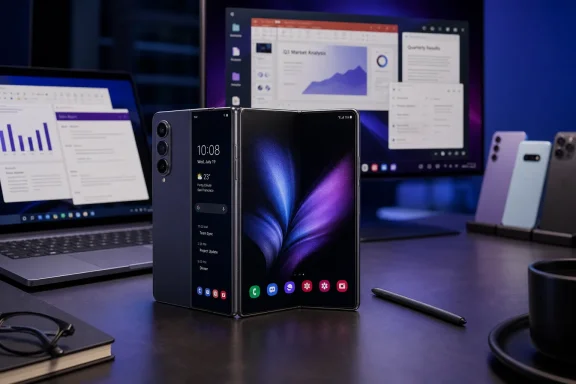 Background
Samsung’s foldable journey began publicly with the original Galaxy Fold in 2019, a daring device whose troubled launch immediately exposed the engineering difficulty of putting a flexible OLED panel into a consumer product. Early review units suffered display failures, prompting Samsung to delay the release, reinforce vulnerable areas, and rethink how the protective display layer was presented to users.That embarrassing start could have ended the project. Instead, Samsung treated the first Fold as a prototype sold at retail and spent subsequent generations improving hinge protection, water resistance, multitasking, display materials, and industrial design.
From experiment to established product line
The Galaxy Z Fold 2 corrected many of the original model’s most obvious flaws, including its tiny external display and inelegant hinge. Later models added stronger aluminum frames, improved under-display camera technology, stylus support, better task management, and progressively slimmer bodies.Samsung also separated the category into two distinct products. The Galaxy Z Fold became a premium phone-tablet hybrid aimed at productivity, while the Galaxy Z Flip offered a fashionable clamshell design at a lower and more approachable price.
That strategy made Samsung synonymous with foldables in many Western markets. For several years, buying a folding phone in the United States effectively meant choosing between Samsung’s large Fold and small Flip.
Refinement brought diminishing returns
Samsung’s early lead eventually created a different problem. Once the company had established a workable design, annual changes became increasingly conservative, particularly from the Galaxy Z Fold 3 through the Z Fold 6 period.The phones improved, but familiar complaints remained. The external display felt unusually narrow, the internal crease was clearly visible, charging speeds lagged behind some Android rivals, and the cameras often failed to match Samsung’s less expensive Galaxy S Ultra models.
The Galaxy Z Fold 7 represented a more substantial attempt to modernize the formula, particularly through reductions in thickness and weight. Even so, buyers continued to ask why a device commanding an ultra-premium price should require compromises in battery capacity, photography, stylus integration, or long-term repairability.
Samsung’s Foldable Lead Is No Longer Secure
Samsung still possesses formidable engineering, distribution, marketing, and support advantages. However, foldable leadership can no longer be measured simply by whether a company ships devices globally.Chinese manufacturers have demonstrated thinner bodies, larger batteries, faster charging, and less visible creases. Motorola has made clamshell foldables more competitive in North America, while Google has used the Pixel line to promote wider book-style designs and tightly integrated Android software.
Competition is attacking from several directions
Samsung is not facing one direct substitute. It faces multiple competitors targeting different weaknesses:- Motorola is challenging the Galaxy Z Flip with large external displays, recognizable branding, and aggressive promotions.
- Google is challenging the Galaxy Z Fold through a wider phone-like cover screen, computational photography, and control over Android’s underlying large-screen features.
- Chinese brands are setting hardware benchmarks in thinness, battery technology, charging speed, and hinge design, even when their availability remains limited in the United States.
- Conventional flagship phones remain powerful alternatives because they cost less, have fewer durability concerns, and often offer better cameras and battery life.
- Apple’s expected foldable could redefine consumer expectations even if it does not lead the category in raw specifications.
Apple changes the calculation before shipping anything
Apple does not need to introduce the thinnest, cheapest, or most technically adventurous foldable to disrupt Samsung. It needs to convince iPhone users that folding hardware is finally mature enough to trust.Market forecasts have projected strong foldable growth during 2026, with Apple’s anticipated entry serving as a major catalyst. Those forecasts remain projections rather than guaranteed sales, but they illustrate how much demand could be waiting outside the current Android-focused audience.
Samsung therefore faces pressure from two directions. It must defend existing customers from increasingly capable Android rivals while preparing for a competitor with an enormous installed base, extensive retail support, and unmatched influence over accessory developers and application makers.
The First Essential Update: A Better Shape
The narrow external display has been one of the Galaxy Z Fold family’s most persistent design compromises. Samsung originally favored a tall, slim body because it was easier to hold when closed and produced a tablet-like canvas when opened, but that decision made routine phone tasks less comfortable.Typing on the cover keyboard could feel cramped. Websites, messaging apps, camera controls, and social feeds often appeared compressed compared with their presentation on a conventional smartphone.
A wider cover screen could transform daily use
Reports ahead of Unpacked point to a wider Galaxy Z Fold design, potentially giving the closed device proportions closer to an ordinary flagship phone. If accurate, that would be more consequential than a small processor upgrade or another reduction in millimeters.Foldables spend much of their lives closed. Users frequently want to reply to a message, check a notification, take a photo, approve a login, or look at a map without unfolding the device.
A wider outer screen would remove friction from those interactions. The best foldable should function as a complete phone when closed and reveal additional capability when opened, rather than making the external screen feel like an inconvenient preview panel.
The internal display must also use its space intelligently
Changing the outer proportions naturally changes the shape of the internal display. A wider, more square canvas can improve side-by-side multitasking, document viewing, photo editing, and desktop-style web browsing, but it can also produce larger black bars in widescreen video.Samsung must therefore pair physical redesign with intelligent software. Applications need to adapt fluidly across folded, partially folded, and fully open states without losing context or placing controls in awkward positions.
A wider Fold could also strengthen Samsung’s connection to Windows. Microsoft 365, Outlook, Teams, OneDrive, Phone Link, and remote desktop tools all benefit from a larger canvas, provided Samsung and application developers optimize their interfaces rather than merely stretching phone layouts.
The Second Essential Update: Minimize the Crease
The central crease has become the most recognizable visual compromise of folding phones. It does not usually prevent normal use, and owners often stop noticing it when viewing the screen head-on, but it remains visible under reflections and tangible when a finger crosses the center.At premium prices, perception matters almost as much as functionality. A visible groove reminds buyers that the display is mechanically stressed every time the device opens and closes.
Flex Titanium is Samsung’s engineering answer
Samsung has announced Flex Titanium technology for its next generation of Galaxy foldables. The company describes a display structure incorporating a titanium-alloy component intended to improve strength while supporting a thinner, flatter folding panel.The timing is significant. Samsung revealed the display technology before introducing the devices themselves, signaling that crease reduction and structural durability will be central to its sales pitch.
A titanium-based layer does not automatically guarantee an invisible crease or immunity from damage. Real-world performance will depend on the complete display stack, including the ultra-thin glass, protective layers, adhesives, hinge geometry, environmental sealing, and the radius through which the panel bends.
Visual improvement must not weaken durability
There is an engineering tension between making a foldable panel look flatter and allowing it to survive repeated bending. A manufacturer can reduce the apparent crease by altering how the screen curves inside the hinge, but doing so may affect thickness, hinge complexity, pressure distribution, or resistance to contamination.Samsung should be judged on more than launch-day photographs. Reviewers need to observe whether the crease deepens over weeks of use and whether cold temperatures, dust, pressure, or repeated folding affect the display.
The practical sequence is straightforward:
- The display should appear flatter when viewed from normal angles.
- The hinge should open consistently and hold intermediate positions.
- The screen protector should remain firmly attached over time.
- The panel should survive normal pressure without developing dead pixels or lines.
- Replacement costs and warranty terms should be clearly communicated.
The Third Essential Update: Stronger Battery Life and Charging
Battery capacity has long been constrained by foldable engineering. Two thin halves must accommodate a hinge, dual displays, multiple camera modules, speakers, antennas, cooling hardware, and enough structural reinforcement to survive thousands of folds.Samsung has often responded through processor efficiency and software optimization rather than dramatically increasing battery size. That approach can produce respectable endurance, but it leaves little margin for demanding workloads.
Large screens encourage heavy workloads
A Fold owner is more likely than a typical phone user to run several applications, watch extended video, edit documents, join video conferences, use a hotspot, or navigate while keeping additional information visible. These are exactly the tasks that consume significant power.Galaxy AI features add another variable. On-device language models, image processing, transcription, translation, summarization, and generative editing can impose sustained demand on the processor, neural accelerator, memory, and display.
Samsung cannot promote the Fold as a pocket workstation while equipping it with endurance designed around light phone usage. All-day battery life should mean a full day of unfolded productivity, not merely survival under conservative settings.
Charging speed is part of the premium experience
Even if physical limits prevent a major capacity increase, faster and more efficient charging could reduce the inconvenience. Samsung has historically taken a cautious approach compared with manufacturers offering much higher wired charging rates.That conservatism may help manage heat and battery longevity, but buyers reasonably expect an expensive foldable to recover meaningful runtime during a short break. Samsung could improve the experience through better thermal management, smarter charging profiles, more efficient wireless charging, and clearer battery-health controls.
The ideal solution would combine a larger or denser battery with faster charging and long-term protection. Simply increasing wattage without controlling heat would exchange one weakness for another.
The Fourth Essential Update: Cameras Worthy of the Price
Foldable cameras have improved considerably, but Samsung has often positioned the Fold below the Galaxy S Ultra in photographic capability. That hierarchy makes sense from an engineering perspective because advanced camera sensors and periscope lenses occupy valuable internal volume.It is harder to justify from a consumer perspective. A buyer spending more on a Fold than on an Ultra may still receive weaker zoom, smaller sensors, or less versatile camera hardware.
The Fold should not require a photography compromise
The camera is one of the most frequently used parts of any smartphone. Foldable buyers should not have to choose between a larger display and flagship-grade imaging, particularly when the open screen is excellent for reviewing and editing photographs.Samsung has several ways to improve the situation:
- It can use a higher-resolution main sensor with better low-light performance.
- It can strengthen optical zoom rather than relying heavily on digital cropping.
- It can improve the under-display internal camera, which has historically prioritized concealment over image quality.
- It can use the external cameras for high-quality selfies while providing better framing controls on the cover display.
- It can improve video stabilization, thermal endurance, and microphone processing for professional recording.
Computational photography cannot replace all hardware
Samsung’s image processing and AI tools can sharpen details, reduce noise, remove distractions, adjust framing, and generate missing visual information. These capabilities are useful, but software cannot fully recover light or optical detail that the sensor and lens never captured.Overreliance on generative editing may also create trust problems. Users increasingly need to distinguish between an enhanced photograph and an image substantially altered by software.
A premium Fold should begin with strong optical hardware and use AI as a controlled enhancement layer. It should not use AI terminology to disguise a limited camera system.
The Fifth Essential Update: Restore a Serious Stylus Strategy
Samsung established the Galaxy Note as the defining stylus smartphone, then moved many Note features into the Galaxy S Ultra and Fold families. The Fold’s large internal display appears ideal for handwriting, diagrams, annotation, signatures, and precise editing, yet stylus support has remained incomplete.Some Fold models support an S Pen on the internal display, but the stylus is not integrated into the chassis. Carrying it typically requires a special case that adds bulk to a device already larger than a conventional phone.
The missing S Pen slot matters
An integrated S Pen would make the Fold more credible as a productivity machine. The stylus would always be present, charged if necessary, and available without attaching an awkward accessory.The engineering obstacles are substantial. An internal silo consumes space that could otherwise hold battery cells, cooling components, cameras, or structural reinforcement. The flexible display also needs protection against concentrated pressure from the pen tip.
Even so, Samsung should present a coherent plan. It could integrate a smaller stylus, create a magnetic attachment system, include the pen with premium models, or develop a case that adds minimal thickness while protecting both phone and accessory.
Windows users are a natural audience
For WindowsForum readers, stylus integration is more than a nostalgic Galaxy Note feature. A Fold paired with OneNote, Microsoft 365, Samsung Notes synchronization, cloud storage, and Windows clipboard sharing could become a practical capture device for meetings and field work.A user could handwrite notes on the Fold, convert them to text, synchronize them to a Windows PC, and continue editing with a full keyboard. The technology largely exists; what is missing is a frictionless hardware package and consistent cross-device workflow.
Samsung should market this capability with concrete examples rather than generic claims about creativity. Foldables become easier to justify when they eliminate specific steps from real work.
Software Is Samsung’s Most Defensible Advantage
Hardware differences can be copied surprisingly quickly. A thinner body, wider screen, stronger hinge, or larger battery may provide a temporary lead, but competitors can adopt similar components in the following product cycle.Software experience is harder to replicate. Samsung has spent years refining Multi Window, taskbars, drag-and-drop behavior, app continuity, Flex Mode, floating windows, DeX, and integration with Windows.
Multitasking must feel intentional
The Fold’s value becomes clearest when it displays more than one application. Users can keep email beside a browser, copy information from a document into a message, watch a call while referencing notes, or monitor a dashboard while responding in Teams.Yet flexibility can become complexity. Window controls, edge panels, gestures, taskbars, pop-up views, and per-app settings create a learning curve that ordinary buyers may never climb.
Samsung should simplify the path from basic use to advanced multitasking. A new owner should be able to discover valuable features through contextual suggestions rather than lengthy tutorials or hidden settings.
Useful improvements would include:
- Saved workspace groups that reopen several applications in the same arrangement.
- Better external-monitor continuity when moving between the Fold, DeX, and a Windows PC.
- Clearer drag-and-drop indicators showing where content can be placed.
- Per-app layout controls that explain compatibility in plain language.
- More reliable state restoration after folding, unfolding, or connecting accessories.
Galaxy AI needs foldable-specific purpose
AI summaries and image-editing tools are available across many devices. To make Galaxy AI meaningful on a Fold, Samsung must connect the technology to the larger display and multitasking model.For example, the phone could summarize a document in one pane while keeping the original visible in another. It could translate a conversation while displaying notes, extract tasks from a meeting, compare products across browser tabs, or organize files dragged from email into a project workspace.
These workflows would demonstrate why a folding display matters. Merely placing the same chatbot available on a conventional Galaxy phone onto a larger screen does not establish a competitive advantage.
The Windows Connection Could Become a Major Selling Point
Samsung has maintained one of the closest Android partnerships with Microsoft. Galaxy devices have often received deep integration with Phone Link, Link to Windows, OneDrive, Microsoft 365, Outlook, and other services used by PC owners.The Fold provides an opportunity to turn that partnership into a clearer platform story. Rather than presenting the phone as a miniature tablet competing with Windows, Samsung can position it as the most capable mobile extension of a Windows PC.
Continuity should go beyond notifications
Phone Link already allows supported Android phones to expose messages, notifications, photographs, calls, and applications on Windows. However, the overall experience can still feel like a collection of individual features rather than a seamless computing environment.A stronger Galaxy Fold and Windows workflow could allow users to:
- Begin reading or editing a document on the Fold.
- Resume at the same position on a Windows PC.
- Move copied text, images, and files between devices without manual uploads.
- Use the Fold as a touch controller, webcam, scanner, or secondary display.
- Return to the mobile layout with the workspace intact.
Enterprise buyers need manageability
Corporate adoption depends on more than clever multitasking. IT departments need predictable security updates, mobile-device management support, identity integration, repair programs, accessory availability, and stable behavior across operating-system upgrades.Samsung Knox gives the company a credible foundation. The Fold can appeal to executives, healthcare personnel, field engineers, sales teams, and other users who benefit from a larger mobile workspace but do not always want to open a laptop.
The business case improves if Samsung reduces downtime and uncertainty. Advance replacement programs, standardized cases, extended warranties, transparent repair pricing, and long software support can matter more to an enterprise than a marginal benchmark victory.
Price, Variants, and the Danger of an Ultra Tier
Foldables have always carried premium prices because flexible displays, complex hinges, low production volumes, and expensive repair logistics increase costs. Nevertheless, the psychological barrier becomes more difficult to overcome when conventional flagships already provide excellent performance.Reports suggest Samsung may divide the next Fold generation into more than one book-style model, potentially including a wider standard device and a higher-end Ultra version. Such a strategy would let the company address different preferences, but it could also make the product line confusing and push the most desirable features beyond reach.
Segmentation can clarify or frustrate
A well-designed two-model strategy could work if each device has a distinct purpose. The standard Fold could prioritize practical proportions and value, while the Ultra could offer stronger cameras, displays, materials, performance, storage, or stylus capability.The danger is artificial limitation. If Samsung withholds basic improvements such as a reduced crease, capable telephoto camera, useful memory configuration, or anti-reflective display simply to justify the Ultra, the standard model may look poor beside both rivals and discounted previous-generation devices.
Pricing must reflect total ownership cost. Consumers consider not only the purchase price but also cases, insurance, screen replacement, trade-in value, financing, and the likelihood that the phone will remain reliable for several years.
Trade-ins cannot hide the real price forever
Samsung has frequently used aggressive trade-in offers and launch promotions to reduce the apparent cost of foldables. These incentives can be valuable, especially for loyal customers upgrading from an older Fold, but they do not solve the underlying affordability problem.High trade-in values favor people already inside the premium upgrade cycle. A new foldable buyer may still face a daunting price, particularly if the customer wants accidental-damage coverage.
Samsung needs a credible entry path. That could involve retaining an older model at a lower price, developing a Fold FE, offering stronger financing, or bundling meaningful protection rather than accessories that buyers may not need.
Consumer Impact
For consumers, the next Galaxy foldables will be judged by how often the folding mechanism provides practical value. Novelty may attract attention in a store, but long-term satisfaction depends on comfort, reliability, battery life, camera quality, and application behavior.The strongest consumer argument is consolidation. A Fold can replace some of the tasks handled by a small tablet, e-reader, portable monitor, or notebook, while remaining available in a pocket.
The upgrade case differs by generation
Owners of older Fold models may see a substantial improvement if Samsung delivers a wider body, flatter display, lower weight, stronger cameras, and better battery management. For Galaxy Z Fold 6 or Z Fold 7 users, the calculation will be more demanding unless the new hardware changes daily usability.Flip buyers face a different equation. Clamshell devices emphasize portability, style, quick interactions, and camera flexibility rather than desktop-like productivity.
Samsung must avoid treating the Fold and Flip as the same product in two sizes. They address different buyers and require separate software priorities, battery targets, camera strategies, and pricing logic.
Durability remains the deciding hesitation
Many potential buyers no longer doubt that foldables work. They doubt whether a foldable will work reliably for three, four, or five years.That concern affects resale value and purchasing behavior even when failure rates are acceptable. Flexible screens look vulnerable, replacement costs can be high, and stories about damaged protectors or hinge problems travel quickly through online communities.
Samsung can counter this through evidence rather than slogans. Detailed testing standards, longer coverage for the folding display, easier service access, and predictable repair pricing would build more trust than another dramatic hinge animation.
Enterprise Impact
Foldables may remain a small portion of the total smartphone market, but their enterprise value can exceed their shipment volume. A device that prevents an employee from carrying a tablet or opening a laptop during short tasks may generate measurable productivity gains.The Fold is particularly relevant for roles requiring mobility, secure communication, document review, and rapid data entry. However, enterprise deployment requires Samsung to prove that the device is a tool rather than an executive status symbol.
Security and support are as important as hardware
Samsung’s long update commitments and Knox security platform support the enterprise case. IT administrators can manage devices, enforce policies, separate work and personal data, and integrate mobile authentication into broader identity systems.Repairability remains the weak point. A conventional phone with a damaged screen can often be replaced or repaired through familiar channels, while foldable repairs may take longer and cost more.
Samsung should offer enterprise-specific service-level agreements for Fold deployments. Rapid replacement, data migration assistance, standardized spare-device pools, and published part availability would reduce operational risk.
A portable endpoint for hybrid work
The Fold can occupy a useful position between phone and PC. It can handle urgent document edits, remote desktop sessions, dashboard monitoring, secure messaging, and video calls without requiring employees to carry a second device.It will not replace Windows PCs for complex spreadsheets, software development, content production, or sustained keyboard work. Its value lies in delaying or avoiding the need to open a laptop for short, context-sensitive tasks.
That distinction is important. Samsung should not claim that the Fold makes PCs obsolete; it should demonstrate how the Fold makes a Windows-centered workflow more continuous.
Strengths and Opportunities
Samsung approaches this launch with assets that newer foldable manufacturers cannot easily reproduce. Its opportunity is to combine those assets into a package that feels mature rather than merely familiar.- Samsung has seven years of commercial foldable experience. That history has produced valuable knowledge about hinges, flexible displays, software behavior, repair patterns, and user expectations.
- Its global distribution remains a major advantage. Customers can see Galaxy foldables in carrier stores, electronics retailers, and Samsung locations instead of importing unsupported hardware.
- The company controls key display technology. Samsung’s expertise in OLED manufacturing gives it influence over one of the most critical and expensive foldable components.
- Galaxy software is already designed for large screens. Multi Window, DeX, taskbar features, S Pen support, and application continuity provide a stronger foundation than a basic enlarged Android interface.
- Microsoft integration can differentiate the Fold for Windows users. Better continuity with Windows could create a productivity story that Apple and Android competitors cannot reproduce in exactly the same way.
- A wider form factor could remove the line’s most persistent usability complaint. If Samsung makes the closed Fold feel like a normal flagship, the device becomes easier to recommend.
- Apple’s expected arrival could expand the entire market. More consumer awareness may benefit Samsung by normalizing foldables and encouraging developers to improve adaptive applications.
- Multiple Fold variants could broaden the audience. A practical standard model and uncompromised Ultra could succeed if pricing and feature separation remain reasonable.
Risks and Concerns
Samsung’s greatest risk is not that the next Fold will be bad. It is that the device will be impressive in isolation but insufficiently ambitious for a rapidly changing market.- Higher prices could neutralize hardware improvements. Consumers may admire a better Fold while deciding that a conventional flagship and tablet offer more value.
- An Ultra model could make the standard Fold look deliberately limited. Essential cameras, memory, display treatments, or accessories should not become luxury-tier exclusives.
- Battery improvements may lag behind performance demands. Larger displays and AI workloads can erase efficiency gains if capacity and charging remain conservative.
- Crease reduction could introduce unproven durability trade-offs. A flatter launch-day screen must remain reliable after months of folding.
- Repair costs may continue to deter cautious buyers. Long support periods mean less if physical damage makes an older device uneconomical to fix.
- Application support remains inconsistent. Samsung can optimize its interface, but third-party developers must also design for changing aspect ratios and multitasking.
- AI features could become distracting or subscription-dependent. Buyers need enduring device improvements rather than temporary cloud services used to decorate a launch presentation.
- Apple could reset expectations around ecosystem continuity. Samsung’s hardware lead will matter less if Apple provides a more coherent experience across phone, tablet, watch, headset, and computer.
What to Watch Next
Samsung’s Galaxy Unpacked event is scheduled for Wednesday, July 22, 2026, at 9 a.m. Eastern Time in London. The presentation should clarify which rumored devices and features are real, but the most important answers will emerge after reviewers and customers spend time with the hardware.Five questions should define the launch
First, does the new Fold feel like a normal phone when closed? External display dimensions and aspect ratios matter, but typing comfort and one-handed use will provide the real answer.Second, has Samsung meaningfully reduced the crease without weakening the display? Reflections, touch sensation, hinge behavior, and long-term testing will matter more than controlled promotional images.
Third, has battery life improved under realistic unfolded use? Testing should include multitasking, video calls, navigation, photography, AI processing, and cellular data rather than simple video playback.
Fourth, are the cameras competitive with other phones at the same price? An expensive Fold should not depend on its unique shape to excuse ordinary imaging hardware.
Fifth, does the software exploit the format? Samsung must demonstrate workflows that are faster, clearer, or more capable because the phone folds.
Specifications will not tell the whole story
Thickness, weight, processor model, megapixels, brightness, and battery capacity are important, but foldable quality is unusually dependent on interaction design. Small details such as where the fingerprint sensor sits, how easily the phone opens, whether the taskbar remains consistent, and how apps respond during rotation can determine daily satisfaction.Long-term reviews will be especially important. Flexible display protectors, hinge contamination, frame wear, battery degradation, and software consistency cannot be fully evaluated during a short preview period.
The competitive response will also matter. Google, Motorola, and Chinese manufacturers will continue refining their own designs, while Apple’s anticipated entry could bring new application investment and consumer attention to the category.
Samsung does not need to produce a literally flawless foldable on July 22; no device with moving parts, flexible materials, and competing engineering priorities can meet that standard. It does, however, need to show that it understands the difference between refinement and complacency. If the next Galaxy Z Fold combines ordinary-phone comfort, a flatter and more durable display, stronger endurance, flagship cameras, useful stylus support, and genuinely integrated Windows productivity, Samsung can turn its years of experience into a durable advantage. If it delivers another expensive collection of incremental changes, the company may discover that creating the foldable market was easier than retaining ownership of it.
References
- Primary source: PCMag
Published: 2026-07-20T15:57:58+00:00
Loading…
www.pcmag.com - Independent coverage: CNET
Published: 2026-07-20T22:34:38+00:00
Loading…
www.cnet.com - Related coverage: tomsguide.com
Loading…
www.tomsguide.com - Related coverage: digitalcameraworld.com
Loading…
www.digitalcameraworld.com - Related coverage: appleinsider.com
Loading…
appleinsider.com - Related coverage: techrepublic.com
Loading…
www.techrepublic.com