

IBM Cloud Bare Metal Servers have been presented in a new market-oriented explainer as infrastructure for data-heavy enterprise workloads, but the item does not appear to announce a new product launch, platform update, or pricing change. The accompanying suggestion that the service is driving IBM’s share price is unsupported by the material published on July 13.
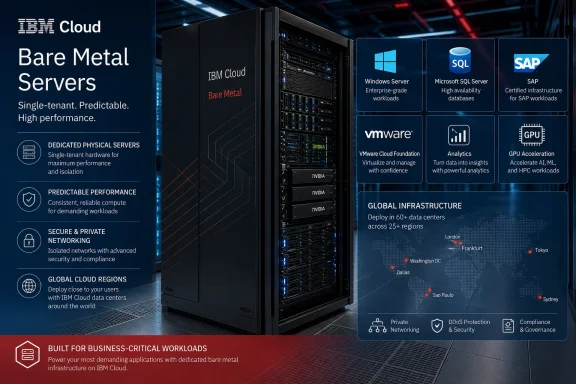
IBM’s own documentation describes Bare Metal Servers as single-tenant physical systems rented on hourly or monthly terms, rather than virtual machines sharing a host with other customers. The service is established IBM Cloud infrastructure, aimed at customers that need predictable CPU, memory, storage, or licensing characteristics for workloads such as databases, SAP deployments, analytics, and VMware estates.
The original item, published by Ad-Hoc News, reads more like a general product profile than a report of a new IBM announcement. It cites broad capabilities including Intel and AMD systems, GPU options, API-based provisioning, Windows Server support, and deployment across multiple IBM Cloud locations.
Those claims broadly match IBM’s current product documentation. IBM lists customizable bare-metal configurations, NVIDIA GPU options on selected systems, private-network connectivity, and support for SAP-certified and VMware-oriented deployments. IBM also offers one-year contract terms for eligible servers, alongside standard hourly or monthly provisioning options.
However, exact hardware, operating-system images, availability zones, and billing terms vary by server family and data center. IBM’s documentation lists several generations of Intel Xeon and AMD EPYC hardware; some profiles and specialized configurations are limited to particular regions or require sales engagement.
Potential use cases include:
The useful news here is simply that IBM Cloud’s dedicated-server portfolio remains available and actively documented, not that a newly introduced server line has changed the company’s market outlook.
Admins considering the platform should validate region, hardware profile, Windows licensing, and contract eligibility in IBM Cloud before treating published headline specifications or pricing as deployable configurations.
IBM’s own documentation describes Bare Metal Servers as single-tenant physical systems rented on hourly or monthly terms, rather than virtual machines sharing a host with other customers. The service is established IBM Cloud infrastructure, aimed at customers that need predictable CPU, memory, storage, or licensing characteristics for workloads such as databases, SAP deployments, analytics, and VMware estates.
 Existing service, not a fresh release
The original item, published by Ad-Hoc News, reads more like a general product profile than a report of a new IBM announcement. It cites broad capabilities including Intel and AMD systems, GPU options, API-based provisioning, Windows Server support, and deployment across multiple IBM Cloud locations.Those claims broadly match IBM’s current product documentation. IBM lists customizable bare-metal configurations, NVIDIA GPU options on selected systems, private-network connectivity, and support for SAP-certified and VMware-oriented deployments. IBM also offers one-year contract terms for eligible servers, alongside standard hourly or monthly provisioning options.
However, exact hardware, operating-system images, availability zones, and billing terms vary by server family and data center. IBM’s documentation lists several generations of Intel Xeon and AMD EPYC hardware; some profiles and specialized configurations are limited to particular regions or require sales engagement.
Practical relevance for Windows shops
For Windows Server administrators, bare metal remains useful where virtual-machine tenancy is not acceptable or where software licensing, latency consistency, large RAM footprints, or hardware-specific requirements complicate a conventional cloud VM deployment.Potential use cases include:
- SQL Server systems requiring dedicated capacity or tightly controlled performance.
- VMware private-cloud hosts running on customer-managed hardware.
- Legacy enterprise applications that cannot readily be containerized or re-architected.
- Analytics and inference workloads using attached GPUs.
Stock claim lacks evidence
IBM has scheduled its second-quarter 2026 financial-results announcement for July 22, according to the company’s investor-relations calendar. Until then, there is no disclosed earnings event tying demand for a long-standing bare-metal offering to IBM’s stock performance.The useful news here is simply that IBM Cloud’s dedicated-server portfolio remains available and actively documented, not that a newly introduced server line has changed the company’s market outlook.
Admins considering the platform should validate region, hardware profile, Windows licensing, and contract eligibility in IBM Cloud before treating published headline specifications or pricing as deployable configurations.
References
- Primary source: ad-hoc-news.de
Published: 2026-07-13T10:53:31+00:00
IBM Cloud Bare Metal Servers by IBM - steady infrastructure for data-heavy workloads
IBM Cloud Bare Metal Servers offer dedicated hardware with up to 2 TB RAM and flexible billing for enterprise cloud deployments. This product is driving the price of International Business Machines stock (ISIN US4592001014).www.ad-hoc-news.de - Related coverage: cloud.ibm.com
IBM Cloud Docs
Find documentation, API & SDK references, tutorials, FAQs, and more resources for IBM Cloud products and services. cloud.ibm.com
- Related coverage: ibm.com
Pricing - IBM Cloud Bare Metal Servers
Check IBM Bare Metal Server pricing. You’ll find plenty of bare metal server billing options from which to choose, including hourly, monthly and reserved. www.ibm.com