

Microsoft and NVIDIA used Microsoft Ignite to show how close the industry has moved from “AI as a feature” to AI as infrastructure: new Azure VM families and Rack‑scale Blackwell systems, Omniverse on Azure, agent orchestration with Microsoft Agent 365 integrated with NVIDIA NeMo tooling, and database‑level RAG integrations that bring GPUs to enterprise data — all presented as parts of a single, end‑to‑end commercial and technical stack.
Microsoft framed Ignite 2025 around the idea of the “Frontier Firm” — organizations that rearchitect workflows to be AI‑native, embed agents as first‑class workers, and treat compute, models, and governance as an integrated engineering problem. The message was clear: to operate at scale, enterprises need tightly coupled hardware, software, and governance primitives — and Microsoft paired that narrative with deep technical tie‑ins to NVIDIA’s Blackwell platform and model/service integrations.
Concurrently, an expanded commercial alignment involving Anthropic, NVIDIA, and Microsoft dominated headlines at Ignite. Public reporting and vendor statements described a coordinated multi‑year set of commitments: Anthropic’s large Azure compute purchases (often quoted as ~$30 billion total with options toward gigawatt‑scale capacity) and announced investment commitments from NVIDIA and Microsoft were presented as structural moves to secure compute supply and model distribution inside Azure. Treat the headline numbers as contractual, staged commitments rather than simple one‑time cash transfers; multiple independent summaries emphasize these are “up to” commitments tied to capacity, milestones and co‑engineering.
However, the real test will be execution: measured performance improvements in representative enterprise workloads, transparent cost and energy accounting, and robust governance mechanisms that operationalize identity and observability at agent scale. Many of the most eye‑catching numbers at Ignite are vendor‑forward targets and staged commitments; treating them as fixed realities without independent validation would be imprudent.
For CIOs and IT leaders, the imperative is pragmatic: pilot early, demand transparent benchmarks and contractual protections, and bake governance into the agent lifecycle from day one. When vendors promise gigawatt‑scale compute or per‑token efficiency, treat those as planning hypotheses to be validated with real workloads. Doing so will turn Ignite’s architectural vision into dependable production value rather than an aspirational roadmap.
Source: VentureBeat https://venturebeat.com/infrastruct...osoft-and-nvidia-are-redefining-the-ai-stack/
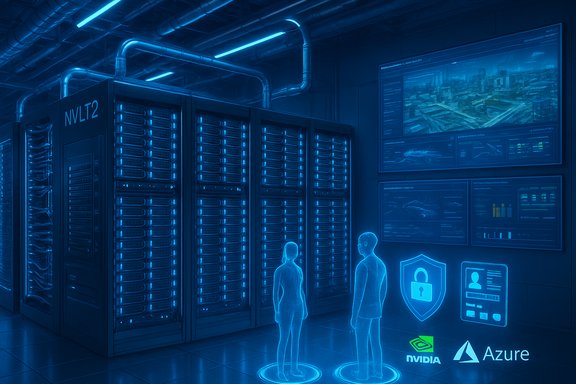 Background / Overview
Microsoft framed Ignite 2025 around the idea of the “Frontier Firm” — organizations that rearchitect workflows to be AI‑native, embed agents as first‑class workers, and treat compute, models, and governance as an integrated engineering problem. The message was clear: to operate at scale, enterprises need tightly coupled hardware, software, and governance primitives — and Microsoft paired that narrative with deep technical tie‑ins to NVIDIA’s Blackwell platform and model/service integrations.Concurrently, an expanded commercial alignment involving Anthropic, NVIDIA, and Microsoft dominated headlines at Ignite. Public reporting and vendor statements described a coordinated multi‑year set of commitments: Anthropic’s large Azure compute purchases (often quoted as ~$30 billion total with options toward gigawatt‑scale capacity) and announced investment commitments from NVIDIA and Microsoft were presented as structural moves to secure compute supply and model distribution inside Azure. Treat the headline numbers as contractual, staged commitments rather than simple one‑time cash transfers; multiple independent summaries emphasize these are “up to” commitments tied to capacity, milestones and co‑engineering.
What Microsoft and NVIDIA actually announced at Ignite
Infrastructure: Blackwell on Azure, new VM families, and Fairwater scale design
- Microsoft previewed new Azure VM options and server SKUs that expose NVIDIA’s Blackwell‑era GPUs, including workstation/server RTX PRO 6000 Blackwell SKUs for edge and developer workflows and NC‑style families for converged AI/visual compute.
- Azure’s cloud and Fairwater datacenter program were described as rack‑first, scale‑oriented campuses optimized for GPU‑dense AI workloads. The NVL72 rack reference design — tightly coupling up to 72 Blackwell GPUs with Grace‑class host CPUs and NVLink/NVSwitch fabric — was highlighted as a building block for both training and inference domains. Vendor materials discussed pooled fast memory per NVL72 rack (tens of terabytes in certain GB300 configurations) and intra‑rack fabrics that minimize cross‑node synchronization overhead.
- Microsoft positioned these rack and network choices to improve tokens‑per‑second for large models and to simplify large‑model partitioning, reducing the traditional overheads of cross‑node sharding. Those benefits are technical and material for training and large‑context inference.
Software and developer integrations: Omniverse, NeMo, NIM microservices
- NVIDIA Omniverse libraries and workflows were announced as available on Azure, enabling digital twin, simulation, and 3D rendering workloads that can run from edge to cloud. Omniverse plus Azure Local and edge offerings were positioned as a unified path for industrial digital twins and real‑time simulation. Joint sessions (including partners such as Ansys) demonstrated how Omniverse on Azure accelerates time‑to‑insight for manufacturing scenarios.
- NVIDIA NeMo tooling and Nemotron model families were presented as first‑order citizens inside Microsoft’s Foundry/Agent ecosystem. Nemotron and Cosmos models were framed as powering enterprise‑grade agents and physical AI, respectively, with NVIDIA NIM microservices providing a secure container-like microservice for model inference and RAG workflows.
Agentic AI and governance: Microsoft Agent 365 + NVIDIA NeMo Agent Toolkit
- Microsoft publicly previewed Agent 365, a tenant-level control plane for agent fleets that provides identity, lifecycle, observability, and policy enforcement — essentially treating agents like production services with Entra agent IDs, RBAC controls, and telemetry for forensic reconstruction.
- NVIDIA announced integrations between the NeMo Agent Toolkit and Microsoft Agent 365, enabling developers to build compliant, secure, and tailored agents across Microsoft 365 apps (Outlook, Teams, Word, SharePoint). Microsoft Foundry will also offer Nemotron models as secure NIM microservices to power these agents.
Data services: SQL Server 2025 + GPU‑accelerated RAG
- A headline technical integration is SQL Server 2025 connecting directly to NVIDIA Nemotron RAG models deployed as NIM microservices. This reduces the friction of bringing AI to enterprise data by enabling GPU‑accelerated retrieval and inference close to the database, with the promise of preserving data sovereignty and simplifying pipelines. The integration was framed as a way to avoid classic CPU‑bound bottlenecks and make RAG workflows performant both in Azure and on‑prem with Azure Local.
Technical verification and cross‑checks
Several load‑bearing claims were repeated across vendor briefings and independent reporting; where possible these were cross‑checked across multiple summaries in the available material:- Anthropic compute commitments and investment figures: multiple independent reports and vendor summaries coalesced around Anthropic committing roughly $30 billion of Azure compute purchases and optional scale to up to one gigawatt of contracted NVIDIA‑powered capacity, while NVIDIA and Microsoft were reported to commit up to $10 billion and $5 billion respectively in investments or capital support. These numbers appear repeatedly in the public coverage, but they should be treated as staged, contractual commitments rather than single‑day cash transfers.
- NVL72 / rack‑as‑accelerator claims: technical descriptions of NVL72 racks with up to 72 Blackwell GPUs and pooled terabytes‑scale memory per rack are present in multiple technical briefs and partner materials. These descriptions are consistent across vendor messages and public previews, but exact per‑rack memory and bandwidth numbers vary by configuration and should be validated against official Azure VM or product spec pages for procurement decisions.
- Performance and cost reduction claims (e.g., materially lower per‑token costs): these are presented as vendor claims and should be validated with third‑party benchmarks or pilot tests. Microsoft and NVIDIA showed examples and case studies, but independent performance audits are not yet widely published in the available material. Treat vendor ROI projections as directional until validated.
Why enterprises should care — benefits and use cases
The Microsoft + NVIDIA messaging at Ignite focuses on real, practical benefits for enterprise IT and line‑of‑business teams:- Right‑sized acceleration for converged workloads. New Azure NC/ND/NCv6 families (and server‑grade RTX PRO 6000 Blackwell SKUs) aim to let organizations run both visual compute and agentic AI workloads without juggling separate clouds or toolchains. This matters for digital twins, 3D simulation, and interactive creator workflows.
- Faster time to production for agents. By combining NeMo models, Agent 365 governance, and Foundry deployment paths, organizations get a shorter runbook for moving from prototype to IT‑approved, compliant agents in Microsoft 365 surfaces. That lowers friction for enterprise automation and knowledge work augmentation.
- Data locality and sovereignty. Integrations like SQL Server 2025 + NIM microservices permit GPU‑accelerated RAG where the data already lives — on‑premises or in Azure Local — reducing data movement, exposure risk, and latency for enterprise‑sensitive workloads.
- Unified simulation to production pipeline. Omniverse on Azure, combined with Azure Local edge deployment, gives manufacturers and industrial operators a consistent chain from high‑fidelity simulation to production monitoring and control. This is critical for digital twins, robotics simulation, and real‑time operational insights.
Risks, tradeoffs, and governance considerations
The announcements are powerful — but they come with material tradeoffs and operational risks that IT leaders must plan for.Vendor concentration and circular economics
Microsoft’s multi‑model strategy is expanding, but the Anthropic–NVIDIA–Microsoft alignment illustrates a broader industry pattern: model builders, cloud providers, and silicon vendors are entering interdependent commercial arrangements that lock capacity, distribution and engineering into multi‑year loops. That improves predictability, but concentrates strategic power among a few players and creates complex financial feedback loops. Enterprises must factor vendor concentration into procurement and exit planning.Cost control and opaque TCO assumptions
Vendor claims about improved per‑token cost, energy efficiency, and throughput are compelling, but they depend heavily on workload shape, utilization patterns, and contractual terms. Third‑party benchmarking and controlled pilot projects are essential to validate cost assumptions. Pay attention to:- Sustained utilization thresholds that justify high‑density rack pricing
- Network and storage egress costs for hybrid deployments
- Licensing implications when models are offered as managed microservices vs. bring‑your‑own‑model deployments
Security and compliance
Agent 365 and Foundry IQ aim to provide identity, observability, and permissioned retrieval, which are essential steps. However:- Agent lifecycles and tool‑call telemetry introduce new attack surfaces and audit needs.
- Database‑to‑model integrations (e.g., SQL Server 2025 → NIM microservices) must ensure cryptographic boundaries and enterprise HSM practices to avoid data leakage.
- Regulatory boundaries (data residency, sectoral compliance) still require careful contractual and architectural controls when moving inference between on‑prem and cloud microservice endpoints.
Environmental and operational scale
Gigawatt‑scale compute is not simply a procurement exercise — it demands long‑term utility contracts, cooling strategies (often liquid cooling), and facility redesign. The promise of scale must be matched to sustainability and facilities planning. Enterprises should insist on transparent operational metrics and energy accounting for large deployments.Practical guidance: how to approach these platforms as a Windows/IT leader
- Start with targeted pilots that reflect production workload mix:
- Choose 2–3 representative workloads (RAG queries over sensitive data, a medium‑sized agent deployment in Teams, and a digital twin simulation) and run side‑by‑side tests on Azure NCv6 preview SKUs and your existing environment.
- Measure latency, cost per inference, and failure modes.
- Validate governance end‑to‑end:
- Require Agent 365 governance tests (identity binding, telemetry capture, quarantine flows).
- Run red‑team scenarios to evaluate how agents can be exploited or misused.
- Insist on procurement clarity:
- Ask vendors to publish sample TCOs aligned to your workload utilization curves.
- Negotiate portability and egress protections if adopting NIM microservices for high‑sensitivity data.
- Operationalize observability:
- Create incident playbooks that include agent lifecycle events.
- Integrate model telemetry (retrieval traces, prompts, decision logs) into existing SIEM/SOAR tools.
- Plan for hybrid and edge resiliency:
- Use Azure Local and edge‑deployed RTX Blackwell SKUs for latency‑critical and data‑sovereign scenarios.
- Keep a fallback plan for CPU‑based inference if GPU capacity is constrained.
- Evaluate environmental impacts:
- Require carbon and power usage metrics for any major capacity commitments and include them in procurement scoring.
Developer and technical takeaways
- For teams building agentic workflows: NeMo Agent Toolkit + Agent 365 represent a pragmatic path to integrate multimodal reasoning into Microsoft 365 surfaces. Teams should prototype with NIM microservices to assess latency and cost.
- For data platform teams: SQL Server 2025 integrations with NIM microservices remove multiple layers of ETL for RAG — but they also centralize responsibility for model access control to DBAs and security teams. Plan for role separation and auditability.
- For simulation and manufacturing teams: Omniverse on Azure plus Azure Local creates a consistent simulation chain for digital twins, but fidelity claims must be validated against real‑world measurements and constrained by cost/fidelity tradeoffs.
The strategic picture — synthesis and final assessment
Microsoft and NVIDIA’s Ignite collaboration presents a credible, coherent full‑stack approach: from rack‑scale Blackwell hardware through cloud VM families and microservice model delivery to agent runtime and governance. For enterprises invested in Microsoft ecosystems, the combined story reduces integration friction and offers compelling paths to deploy agentic AI, digital twins, and GPU‑accelerated RAG closer to where data and users live.However, the real test will be execution: measured performance improvements in representative enterprise workloads, transparent cost and energy accounting, and robust governance mechanisms that operationalize identity and observability at agent scale. Many of the most eye‑catching numbers at Ignite are vendor‑forward targets and staged commitments; treating them as fixed realities without independent validation would be imprudent.
Conclusion
Ignite 2025 made the long‑anticipated transition visible: AI is no longer only about APIs and models, it’s about integrated industrial capacity — racks, fabrics, microservices, and governance stitched together into an enterprise platform. Microsoft and NVIDIA’s announcements accelerate that integration and give enterprise architects a clearer set of tools to build agentic, simulation‑driven, and data‑centric AI systems.For CIOs and IT leaders, the imperative is pragmatic: pilot early, demand transparent benchmarks and contractual protections, and bake governance into the agent lifecycle from day one. When vendors promise gigawatt‑scale compute or per‑token efficiency, treat those as planning hypotheses to be validated with real workloads. Doing so will turn Ignite’s architectural vision into dependable production value rather than an aspirational roadmap.
Source: VentureBeat https://venturebeat.com/infrastruct...osoft-and-nvidia-are-redefining-the-ai-stack/
