• Thread Author
Infosys’ new AI Agent for energy operations is a purposeful step toward industrializing agentic AI across drilling, production and field operations — promising faster analysis of well logs, automated report generation, and predictive alerts while leaning on Infosys’ Topaz and Cobalt portfolios and Microsoft’s Copilot/Foundry stack to deliver the models, runtime and cloud plumbing needed for production deployments.

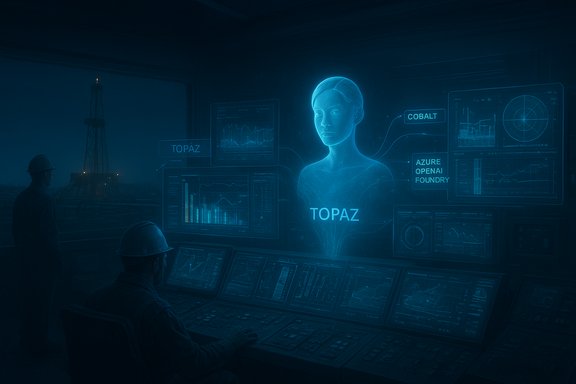
A neon holographic humanoid stands in a high-tech control room with screens as oil rigs glow outside at sunset.Background / Overview​

Infosys announced an energy‑sector AI assistant that it says combines Infosys Topaz (its AI‑first product family), Infosys Cobalt cloud services, and Microsoft’s AI and cloud capabilities — specifically Copilot Studio, Azure OpenAI via Azure AI Foundry, and OpenAI’s GPT‑4o — to convert real‑time instrumentation, well logs, images and tabular reports into conversational, actionable insights for operations teams. The vendor positions the Agent as a productivity and safety tool that automates routine reporting, surfaces early warnings, and reduces non‑productive time (NPT) in drilling and well operations.
Infosys frames this as an “AI‑first” operational assistant that can be embedded into control‑room workflows and field apps. The company emphasises three practical outcomes: faster access to critical operational information, automated generation of routine technical reports, and predictive alerts that give engineers time to re‑plan tasks and avoid delays or safety incidents. The announcement was rolled out in the context of industry events and multiple Infosys product launches (Topaz Fabric, Agentic AI Foundry) and is consistent with broader energy‑industry activity around agentic AI and Copilot‑style assistants.

What Infosys says the Agent does — a technical summary​

The vendor’s public description lists several capabilities that map to well‑understood industrial use cases:
  • Multimodal ingestion: ability to read and reason over well logs, images, plots, tables and streaming telemetry.
  • Conversational interface: natural‑language queries (via Copilot‑style chat) that return summaries, recommendations, and next‑step actions.
  • Report automation: auto‑drafting of operational reports, pre‑filled templates, and compliance summaries.
  • Predictive insights and early warnings: anomaly detection and prescriptive recommendations to avoid downtime.
  • Integration with cloud and edge: hybrid operation where heavy model inference and orchestration run on Azure (Foundry/Foundry Models) while low‑latency alerts run at the edge.
Those capabilities are consistent with the architecture Microsoft advertises for Azure AI Foundry and Copilot Studio — a platform that supports multimodal models (GPT‑4o and siblings), connectors to enterprise knowledge stores and governed agent runtimes suitable for industrial scenarios.

Verifying the claims: what’s confirmed, and what’s company‑reported​

Key load‑bearing claims in the announcement fall into two categories: (A) the technology stack used, and (B) efficiency / operational impact claims.
  • Technology stack: Infosys’ use of Topaz and Cobalt as enabling platforms is consistent with the company’s recent product rollouts (Topaz Fabric and the Agentic AI Foundry) and with multiple Infosys press releases and event materials showing Topaz as an AI agent and orchestration layer and Cobalt as its cloud‑migration/managed‑services brand. Microsoft’s Azure AI Foundry and Copilot Studio are public products that explicitly support multimodal models and enterprise agent runtimes; Foundry’s documentation lists GPT‑4o and other high‑capability models as candidates for production agents. These technical building blocks and the claimed vendor collaboration are independently verifiable in vendor documentation and recent announcements.
  • Operational impact and numbers: statements about specific productivity gains (for example, reduced NPT, exact hours saved per month, or immediate safety outcomes) are typically derived from company pilot metrics and are company‑reported. Public materials and forum analyses show similar claims are common in vendor announcements, but these figures must be treated as directional until independently audited or validated by customer case studies with transparent methodology. Where exact numeric impact is claimed, those are flagged as company metrics pending third‑party verification.
In short: the architectural claims are corroborated by both Infosys and Microsoft product pages and public press releases; the quantified operational benefits are plausible and typical of vendor messaging but remain company‑reported and therefore should be interpreted cautiously.

The technology anatomy — how the pieces fit together​

Infosys Topaz and Agentic AI Foundry​

Infosys markets Topaz as an AI‑first fabric that hosts reusable agents, tools and connectors; the Agentic AI Foundry — a Topaz subcomponent — is designed to accelerate creation, testing and lifecycle management of domain agents across IT, operations and business systems. The Foundry’s stated goals include prebuilt domain agents, governance templates, and an agent catalog for rapid deployment. These components address a consistent enterprise need: operationalizing agentic AI while preserving governance and explainability.

Infosys Cobalt​

Infosys Cobalt is a cloud services portfolio meant to standardize cloud migrations, managed services, and industry accelerators. In practice, Cobalt supplies the cloud templates, security baseline and managed service model that enterprises will use to host and operationalize agents at scale. For energy customers, that means approved cloud patterns for telemetry ingestion, identity & access, and secure connectivity to OT/SCADA systems.

Microsoft Copilot Studio, Azure AI Foundry, and models​

Microsoft’s Copilot Studio offers low‑code agent creation and strong M365 integration for knowledge‑work copilots. Azure AI Foundry and its agent runtime address higher‑complexity, regulated, or multi‑agent scenarios — the sort of production‑grade runtime the energy industry needs for safety‑critical workflows. Azure documentation explicitly supports multimodal Foundry models, connectors to Fabric/SharePoint and grounding with enterprise knowledge, all central to reliable agentic behaviour in operations. Microsoft’s platform also supports OpenAI models (GPT‑4o family) and other third‑party models, providing flexibility in model selection and hosting.

Core architecture (likely practical blueprint)​

  • Data ingestion layer
  • SCADA, telemetry, well logs, images and lab reports ingested into a governed lakehouse or knowledge graph.
  • Contextualization & grounding
  • Enterprise knowledge (engineering manuals, procedures) plus a retrieval layer (vector search) to ground model outputs.
  • Model/agent runtime
  • Azure AI Foundry hosts the agent fabric, model routing (GPT‑4o or equivalent), and multi‑agent orchestration.
  • Edge & low‑latency inference
  • On‑site inference engines for time‑sensitive alarms and safety loops.
  • Governance & MLOps
  • Model versioning, explainability logs, audit trails, human‑in‑the‑loop gates and rollback mechanisms.
This practical blueprint maps to other vendor deployments and industry analyses of agentic AI in energy, indicating Infosys’ announced Agent aligns with current best practice blueprints.

Use cases and real‑world value propositions​

The most immediate—and realistic—use cases for an energy operations Agent are:
  • Predictive maintenance and early fault detection: fusing vibration/temperature telemetry with historical failure data to surface actionable maintenance tickets before failures occur.
  • Well‑construction assistance: summarising historical offset wells, auto‑populating models for casing and BHA, and generating risk matrices for drilling teams.
  • Automated reporting and compliance: generating daily drilling reports, safety narratives, and regulatory compliance summaries from multimodal inputs.
  • Emissions detection and flare monitoring: cross‑correlating sensor and imagery inputs to detect anomalies and issue operator alerts.
  • Decision support in the control room: surfacing ranked scenarios, confidence metrics, and recommended mitigation steps for operator evaluation.
These are practical upgrades to existing workflows — they are not miraculous replacements for domain experts, but they can materially shorten analysis cycles and reduce routine cognitive load for engineers. Forum analyses and contemporaneous pilots across the industry show similar patterns of early benefit when agents are carefully constrained and integrated with human review.

Strengths and strategic opportunities​

  • Scale + ecosystems: combining a systems integrator (Infosys) with a hyperscaler (Microsoft) reduces integration friction and speeds time to production for regulated environments.
  • Hybrid capabilities: the stack supports a hybrid cloud/edge model that’s necessary for latency‑sensitive industrial controls.
  • Domain packaging: Infosys’ prebuilt agents and energy accelerators shorten the engineering effort to reach production‑grade pilots.
  • Multimodal grounding: support for GPT‑4o / Foundry models enables richer handling of images, logs and voice data — critical for realistic field use.
From a commercial angle, the offering fits the “energy‑for‑AI / AI‑for‑energy” narrative: hyperscalers need low‑carbon, reliable energy for GPU‑heavy workloads, while energy companies get investment, automation and higher margin services by selling bundled power and digital services. That positioning can unlock new commercial constructs (bundled PPAs plus digital services) and strategic capital flows.

Risks, governance and unanswered questions​

While the potential is real, several material risks and open questions must be addressed before agentic AI touches safety‑critical systems:
  • Safety & control: the core safety question is what the agent is allowed to do autonomously. Public announcements emphasize co‑development and governance, but operational thresholds (which decisions are automated vs. recommended), rollback processes, and exhaustive validation regimes are not public. Any agent that interfaces with OT/SCADA requires deterministic, verifiable constraints and redundant human sign‑offs before action execution. Unverifiable claim flag: the public materials do not detail these safety governance specifics.
  • Model hallucination and provenance: generative models can produce plausible but incorrect answers. Industrial deployments need strong grounding, deterministic checks and provenance trails for every recommendation. Incorrect guidance in engineering contexts can lead to costly and dangerous outcomes.
  • Data governance, privacy and sovereignty: well logs, subsurface models and field telemetry are highly sensitive. Hybrid architectures must combine strong RBAC, encryption, and data residency controls — and operators must vet what data leaves the site or cloud tenancy.
  • Cybersecurity: new agent layers and connectors increase attack surface. Rigorous threat modelling, zero‑trust architectures, signed agent identities and runbooks for incident response are essential.
  • Liability and compliance: who is responsible if an AI‑based recommendation leads to an incident? Clear legal and contractual frameworks are required, including audit trails, “who approved” logs, and shared responsibilities between vendor, operator and cloud provider.
  • Enabled emissions: improving extraction efficiency can increase production volumes and therefore total emissions even if intensity drops. Technology roadmaps should embed sustainability KPIs to avoid adverse climate outcomes.

Practical implementation advice for energy operators and IT leaders​

  • Start with bounded pilots
  • Choose use cases with high value and limited safety risk (reports, summaries, predictive maintenance) before agentic control loops are considered.
  • Require explainability and provenance
  • All agent outputs should include data lineage, supporting documents and a confidence score; insist on deterministic rule checks for engineering recommendations.
  • Harden data engineering and MLOps
  • Standardize schemas, labels and model‑validation pipelines; emphasize retraining and drift detection for telemetry models.
  • Define human‑in‑the‑loop gates
  • Create explicit sign‑off policies for any recommendation that could materially affect operations; codify who can accept or reject an agent’s suggestion.
  • Security by design
  • Adopt zero‑trust network segmentation between OT and agent endpoints; require private virtual networks and encrypted secrets management for cloud connectors.
  • Negotiate SLAs and liability clauses
  • Ensure contracts address incident response, audit access, and indemnities around agent outputs that impact safety or compliance.
  • Monitor for “enabled emissions”
  • Align agent objectives with corporate decarbonization targets to ensure optimization doesn’t unintentionally increase absolute emissions.

How this fits the broader industry picture​

Infosys’ Agent announcement mirrors a clear industry pattern: vendors and operators are moving from generative‑AI proofs of concept to agentic production efforts that aim to automate multi‑step workflows. Microsoft — via Copilot Studio and Azure AI Foundry — is actively positioning its platform as the enterprise agent runtime, and many SI/ISV partners are building domain‑specific agent libraries. Academic and market reporting confirm industry adoption is accelerating, with the caveat that large‑scale production demands robust governance and MLOps disciplines. This trend is symbiotic: energy companies gain operational levers and potential decarbonization benefits, while cloud providers secure predictable demand for compute and the chance to sell long‑term energy procurement solutions. The strategic play becomes an end‑to‑end stack: power supply + compute + software + services.

Independent corroboration and model details​

  • Infosys’ product rollouts: Infosys has publicly documented Topaz and the Agentic AI Foundry in recent announcements and event materials (including ADIPEC participation), which supports the claim that Infosys is packaging agent services for energy customers.
  • Microsoft platform capabilities: Azure AI Foundry and Copilot Studio are publicly documented and support multimodal models (GPT‑4o family and other Foundry Models), grounding, connectors and enterprise security primitives — matching the infrastructure claims in the announcement.
  • Model family: GPT‑4o (marketed as ChatGPT‑4o/GPT‑4o) is widely reported and documented as a multimodal OpenAI model capable of text, audio and images; Foundry and Azure OpenAI integrations commonly list GPT‑4o as an option for multimodal agent use cases. Use of GPT‑4o / equivalent multimodal models is consistent with the technical description in the announcement, though the exact model variant deployed in any customer instance will depend on procurement, latency and cost trade‑offs.
These independent sources confirm the feasibility and the vendor choices described in the announcement; they do not, however, independently verify the specific productivity or safety figures quoted by any single pilot — those remain company‑reported until validated by customer case studies or third‑party audits.

Conclusion — measured optimism​

Infosys’ energy Agent is a credible, infrastructure‑forward effort to move agentic AI into commercial energy operations. Architecturally, the stack — Topaz + Cobalt + Azure AI Foundry/Copilot + multimodal OpenAI models — is sensible and consistent with industry best practice for hybrid cloud/edge, governed agent runtimes and multimodal reasoning.
The pragmatic path forward is incremental: begin with high‑value, low‑risk pilots (report automation, decision support), require thorough governance and explainability, and phase in increasingly autonomous capabilities only after exhaustive validation. The commercial logic — pairing digital services with energy procurement as part of an “energy‑for‑AI” strategy — is strong, but operators must remain vigilant about safety, liability and sustainability trade‑offs.
Readers should treat numeric impact claims reported in vendor announcements as directional until independent audits or customer case studies publish transparent methodologies and outcomes. For IT and operations leaders, the immediate task is not only to test these new agents, but to build the data, governance, and security foundations that turn promising pilots into safe, auditable, business‑critical systems.

Source: The Globe and Mail Infosys Develops AI Agent to Enhance Operations in the Energy Sector

 

Infosys’ new AI Agent for the energy sector marks a concrete step from marketing talk to operational automation: the solution stitches together Infosys Topaz, Infosys Cobalt, and Microsoft’s Copilot Studio and Azure OpenAI Foundry models (including legacy ChatGPT‑4o capabilities) to convert field and engineering data into conversational, actionable insights aimed at improving safety, reducing non‑productive time (NPT), and speeding decisions on wells and assets.

Blue holographic female figure labeled TOPAZ dominates a high-tech offshore control room.Background​

The energy industry — especially oil & gas upstream operations — is a data‑rich, decision‑heavy environment where delays and errors carry high human and economic costs. Companies have long sought ways to reduce latency between data generation (well logs, images, sensor streams) and practical action (rerouting, staging maintenance, or aborting risky operations). Infosys’ announcement places an “AI Agent” into that operational loop, promising to parse unstructured and multimodal inputs and deliver predictive warnings, automated reporting, and prescriptive recommendations to field and control‑room personnel. This initiative was presented alongside Infosys’ ADIPEC participation and broader energy portfolio, where the company is positioning Topaz and Cobalt as the software and cloud accelerators for an “AI‑first” enterprise transformation. Infosys’ corporate scale and reach underpin their claim to deliver large‑scale deployments: the company reported roughly 323,578 employees and operations across 59 countries as of March 31, 2025 — a baseline that matters when customers evaluate execution risk for global rollouts.

What Infosys is claiming — the product pitch in plain language​

  • The AI Agent ingests field documentation — well logs, images, plots, and tabular reports — then summarizes findings, generates or automates routine reports, and surfaces early warnings for conditions that historically lead to NPT or safety incidents.
  • It offers a conversational interface (chat and voice) so engineers and supervisors can ask natural‑language questions and get immediate, context‑aware answers.
  • It combines predictive analytics and rule‑based checks to anticipate issues and recommend work sequences that minimize delays.
  • The solution is built on Infosys’ own agent infrastructure (Topaz), cloud accelerators and compliance frameworks (Cobalt), and Microsoft’s Copilot Studio plus Azure OpenAI Foundry models for large‑model inference and multimodal understanding.
These are operational claims with direct business consequences — improved safety, better wellbore quality, and reductions in NPT. But the announcement, as presented, does not publish independent performance metrics (for example: measured % reduction of NPT, mean time to detect a hazard, or validated accuracy rates for multimodal interpretation). Where numbers were provided in prior joint announcements and case studies, they tend to be context‑specific and vary across customers. Always treat headline claims without raw measurement data as vendor promises rather than proven outcomes.

Technical architecture — how the pieces fit together​

Infosys Topaz: the agent fabric​

Infosys describes Topaz as an “AI‑first” development and runtime environment for agentic applications — essentially the orchestration, prompt engineering, observability, and lifecycle tooling that convert a large model into a repeatable enterprise assistant. Topaz is positioned as the layer that manages agents in production, including security controls, model routing, and audit trails. This mirrors the industry shift from one‑off LLM demos to orchestrated agent platforms that need operational controls and governance.

Infosys Cobalt: cloud‑native enablers​

Infosys Cobalt provides cloud accelerators, platform services, and prebuilt integrations (data lakes, connectors, domain templates) to speed regulated workloads onto reliable cloud patterns. In energy, where data residency, telemetry ingestion, and legacy SCADA/PI integrations are common, a hardened cloud blueprint is a necessary deliverable rather than an optional convenience. Infosys has repeatedly marketed Cobalt as that enterprise cloud scaffolding.

Microsoft Copilot Studio and Azure AI Foundry models​

The agent leverages Microsoft Copilot Studio for agent creation and orchestration and Azure AI Foundry / Azure OpenAI models for the actual multimodal inference, transcription, and reasoning workloads. Microsoft’s Foundry model catalog includes multimodal and audio models (for transcription/voice), large context models for long‑horizon engineering documents, and specialized tooling for model routing and governance. Microsoft’s partner ecosystem examples show how Copilot Studio and Foundry are being used by energy customers to create domain specific assistants and to integrate with enterprise compliance and observability services. The practical upshot: Topaz handles agent orchestration and domain logic; Cobalt handles cloud deployment, data plumbing and compliance; Copilot Studio and Azure Foundry supply the LLMs and multimodal capabilities. This hybrid stack is designed to give customers control over the full lifecycle — from ingestion to operational decisioning.

Real‑world use cases and workflows​

Drilling and well operations​

The most explicit use case Infosys highlighted is drilling support: parsing drilling logs, pressure charts, and downhole images to identify trends that precede common failure modes (e.g., kicked wells, stuck pipe, or cementing issues). The agent would surface a prioritized list of anomalies and suggest standard mitigations or escalation paths, enabling teams to act faster and with greater situational awareness. ADIPEC demos and Infosys literature show this “Drilling AI Agent” as a showcase scenario.

Predictive maintenance and asset health​

By continuously analyzing telemetry and historical failure patterns, the agent can recommend scheduled interventions and highlight components at elevated risk. Microsoft and partner showcases reveal comparable deployments where agents reduce time to diagnosis and automate routine reconciliations between field reports and maintenance backlogs. These examples aren’t identical to Infosys’ Drilling AI use case but indicate the general efficacy of agents for predictive workflows.

Reporting and compliance automation​

A core productivity promise is automation of recurring reports and regulatory filings. The agent can convert raw logs, sensor dumps, and manual notes into structured incident summaries and compliance submissions — freeing engineering staff from repetitive documentation tasks and ensuring consistent audit trails.

Verifying the claims — what independent evidence shows​

  • Infosys is actively marketing both Topaz and Cobalt and presented energy‑focused agent demos at ADIPEC 2025; that positioning is visible on their event and press materials.
  • Microsoft’s Azure AI Foundry and Copilot Studio are explicit production platforms for enterprise agents and multimodal models; Azure documentation confirms support for audio, image, and long‑context models needed for engineering data processing. These platform capabilities are consistent with the building blocks Infosys references.
  • Infosys’ corporate scale and geographic footprint (323,578 employees; operations in 59 countries) are documented in its SEC 20‑F filing, supporting the company’s claim that it can staff and manage large enterprise rollouts.
  • Industry reporting and partner case studies show that Copilot Studio + Azure services are already being used by utilities and energy firms to build assistants that reduce handling times and automate routine decisions — lending credibility to the claim that similar architectures can deliver measurable operational improvements when implemented correctly. However, vendor case studies vary by customer, scope, and baseline; outcomes are rarely identical or transferable without significant integration work.
These cross‑references validate that the technology building blocks exist and that the vendor team can plausibly assemble them into a working product. What remains unproven in the public domain is objective, third‑party measured performance data for Infosys’ specific energy deployments — for example, line‑by‑line validation showing X% reduction in NPT across Y wells over Z months. The absence of such public, peer‑verified metrics means customers will need to insist on site pilots with clear KPIs and auditability before counting on promised gains.

Strengths: what this approach gets right​

  • End‑to‑end integration: Combining Topaz (agent fabric), Cobalt (cloud platform), and Microsoft’s models addresses the three most common failure points in enterprise AI projects: orchestration, cloud readiness, and model inference.
  • Multimodal capabilities: Energy operations require image, audio, time series, and document understanding — Foundry’s multimodal and audio models are explicitly designed for these inputs. That reduces the need for point solutions and fragile ETL chains.
  • Enterprise governance and controls: Using Microsoft’s platform components enables integration with Purview and built‑in PII detection to help manage data privacy and compliance requirements that are endemic in regulated industries. The Microsoft Cloud Blog and Azure docs document common patterns for adding Purview and telemetry to Copilot‑based solutions.
  • Operational focus: The agent framing — conversational assistants connected to live data — aligns with how field engineers actually work, lowering the friction to adoption compared to purely back‑office analytics.

Risks, limitations, and unanswered questions​

  • Lack of published, independent metrics: The announcement omits verifiable performance numbers (e.g., specific NPT reductions, false positive/negative rates for early warnings). Customers should require measurable pilot KPIs and transparent audit logs. Treat vendor claims as directional until proven in your environment.
  • Model hallucination and safety: LLMs can produce plausible but incorrect answers; in safety‑critical workflows that risk is nontrivial. The agent must be instrumented with guardrails, uncertainty estimates, and human‑in‑the‑loop checks for high‑risk recommendations. Azure docs and enterprise guidance emphasize model‑routing, PII filters, and observability — but implementing those correctly is nontrivial.
  • Data quality and integration complexity: Field operations produce noisy and heterogeneous data. Achieving robust performance will require careful schema alignment, sensor calibration, and normalization pipelines — not just a plug‑and‑play LLM.
  • Regulatory and liability exposure: Where AI recommendations affect physical operations, legal liability and regulatory compliance become central. Operators must define governance boundaries clearly and maintain human accountability for critical actions.
  • Talent and change management: Infosys’ scale can deliver engineering resources, but customers must budget for organizational change — training, new operational procedures, and retraining staff to act on agent outputs rather than raw documents.
  • Data residency and security: Some energy operators require strict data residency and cannot allow data egress to third‑party clouds. Infosys + Microsoft can support Data Zones and enterprise controls, but that requires upfront architecture decisions and sometimes bespoke contracts.

Practical checklist for energy operators considering an agent deployment​

  • Define narrow, measurable pilot KPIs (e.g., reduce NPT by X% on a selected rig; reduce mean time to detect a kick by Y minutes).
  • Insist on end‑to‑end data contracts and schema definitions for sensor feeds, well logs, and images before model training or fine‑tuning begins.
  • Require conservative human‑in‑the‑loop gates for any recommendation that triggers an operational change. Classify actions by risk and apply different automation tiers.
  • Validate the agent’s multimodal interpretation with historical incidents: run the agent blind against archived events to measure recall, precision, and false‑alarm rates.
  • Implement telemetry and audit logging (who asked what, when, which model produced the answer, and whether the recommendation was acted upon).
  • Confirm data residency options and encryption-at-rest and in‑transit; involve legal and compliance teams early.
  • Plan for continuous model validation and retraining cadence; as field conditions drift, model performance will degrade without maintenance.
  • Negotiate service levels and clear playbooks for incident escalation, rollback, and human overrides.

Business and market implications​

Infosys’ move reflects a broader market dynamic: large systems integrators and cloud providers are turning generic LLM capability into domain‑specific “agent stacks” targeted at industry verticals. The benefits for energy operators are clear — faster access to insights from historically siloed datasets, fewer manual reporting hours, and earlier detection of conditions that cause delays or safety incidents. Microsoft’s platform strategy to host multiple model families and provide tooling for agent lifecycle management accelerates partner delivery, while Infosys’ domain templates and cloud blueprints reduce implementation risk. These combined forces are accelerating adoption but also raising the bar for competition: local integrators and other majors (TCS, Accenture, local cloud partners) are pursuing similar integrations using Copilot Studio and Azure Foundry or competing clouds. Customers should compare vendor offerings not only on feature lists but on evidence: pilot results, compliance readiness, and long‑term support commitments.

Implementation scenarios and cost considerations​

Deployments will typically follow three phases:
  • Proof of value (PoV) — small dataset, narrow KPI, few users.
  • Pilot at scale — longer horizon, more wells/sites, integration with ticketing and control systems.
  • Production rollout — enterprise governance, SLAs, dedicated model monitoring and retraining teams.
Cost drivers include model inference compute (multimodal models and long contexts are expensive), data ingestion and storage, integration engineering, and governance tooling. While vendors may promise rapid time‑to‑value, production reliability and compliance are where the bulk of engineering effort typically concentrates.
For organizations subject to strict regulatory oversight, expect additional costs for compliance audits, specialized data zones, and contractual assurances about data processing locales and retention.

Responsible AI and governance — what to demand contractually​

  • Auditability: Every recommendation must be traceable to the model version, input data, and the chain of reasoning or rule that produced it.
  • Uncertainty indicators: Model outputs should include confidence scores or explicit caveats for ambiguous cases.
  • Human override and escalation: Define operational thresholds where human approval is mandatory before acting.
  • Privacy and PII controls: Use content filters and data minimization to ensure no sensitive personal or contractual data is inadvertently exposed.
  • Continuous monitoring: Operational metrics and drift detection must be in place to trigger retraining and red‑teaming cycles. Microsoft’s Purview and Azure Foundry tooling offer components to build these controls — but they must be assembled and enforced.

Final assessment: realistic optimism with guarded diligence​

Infosys’ AI Agent for energy is a credible, practical implementation of the agentic AI trend: it leverages proven cloud and model building blocks and repackages them with domain templates and orchestration to make agent deployments tractable for large energy operators. The partnership with Microsoft gives the solution access to enterprise models, multimodal capabilities, and governance toolchains that are essential for regulated industries. However, the absence of independently audited, public performance data means the announcement should be viewed as a vendor roadmap rather than definitive proof of outcomes. Energy companies evaluating the offering should insist on transparent pilot metrics, robust governance, human‑in‑the‑loop safeguards, and contractual clarity around liability and data residency. When those safeguards are in place, agentic AI can unlock genuine productivity and safety gains — but the path from pilot to reliable production is operationally demanding and requires disciplined measurement.
Infosys brings the scale, Microsoft provides the models and platform, and the industry brings the appetite for automation. The next 12–18 months will show whether these collaborations produce repeatable, auditable improvements on rigs and in control rooms — or whether the real work remains the heavy lift: cleaning data, designing workflows, and carving out precise boundaries where AI amplifies human judgment without replacing the essential responsibility of engineers and operations teams.

Source: The Globe and Mail Infosys Develops AI Agent to Enhance Operations in the Energy Sector
 

Microsoft has quietly stood up a new MAI Superintelligence Team under the leadership of Mustafa Suleyman with a stated mission to build what the company calls “humanist superintelligence”—high‑capability, domain‑specialist AI designed to deliver superhuman results in targeted fields such as medical diagnostics while being explicitly contained, auditable, and aligned to human wellbeing.

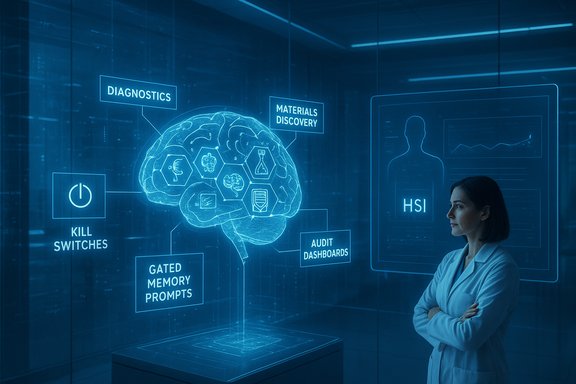
Scientist analyzes a holographic brain diagram with diagnostics and dashboards in a high-tech lab.Background / Overview​

Microsoft’s announcement is both strategic and philosophical: rather than join an unconstrained race toward an all‑purpose artificial general intelligence (AGI), the company says it will pursue domain‑specialist systems that exceed human performance on clearly defined scientific and clinical problems, while embedding safety, governance, and human oversight into engineering and deployment. This new MAI Superintelligence Team sits inside Microsoft AI and is led by Mustafa Suleyman, who has a high profile in the industry as a DeepMind co‑founder and later founder of Inflection AI before joining Microsoft. Microsoft has also announced Karén (Karen) Simonyan as the team’s chief scientist and indicated the group will combine existing Microsoft model researchers with external hires. Why this matters for Windows and enterprise users: Microsoft operates at colossal scale across Windows, Microsoft 365, Azure cloud services and Copilot experiences. Building in‑house, high‑capability, auditable models gives Microsoft product‑level control over latency, cost, data governance and regulatory compliance—factors that matter for regulated industries like healthcare and finance. The MAI team is the company’s bid to own a safer, verifiable path to frontier AI while preserving commercial optionality.

What Microsoft publicly announced​

  • Formation of the MAI Superintelligence Team inside Microsoft AI, reporting to Mustafa Suleyman.
  • Public adoption of the term “Humanist Superintelligence” (HSI) to describe the aspirational product family: systems that are problem‑oriented, domain‑specific, containable and aligned to human values.
  • An early focus on medical diagnostics and other scientifically measurable domains (materials, battery chemistry, molecule discovery, fusion), with the expressed goal of accelerating discoveries that improve human health and energy systems.
  • Karén Simonyan named as Chief Scientist, and hiring plans to recruit top model researchers worldwide.
These are not small, feature‑level projects; Microsoft frames MAI as a multi‑year, heavily resourced research and engineering program designed to produce auditable, deployable models suitable for regulated markets.

Technical approach: domain specialists, containment, and auditable design​

Microsoft’s public framing emphasizes several engineering tradeoffs that will shape MAI’s architecture and product choices:
  • Domain‑specialist models over open‑ended generalists. The team will optimise for superhuman performance on narrowly specified tasks—for example, early cancer detection from imaging or accelerated materials discovery—rather than trying to build a single system that solves all tasks. This mirrors successful precedents where constraining the problem produced breakthrough results.
  • Containability and runtime controls. Microsoft says HSI systems will be designed with explicit containment mechanisms: kill switches, throttles, runtime audits, and the ability to restrict or take systems offline if necessary. These controls are framed as non‑negotiable product elements.
  • Explainability and human‑interpretable reasoning artifacts. Rather than returning inscrutable model outputs, MAI models are intended to produce traceable decision paths and human‑interpretable explanations to support clinical and regulatory validation. Microsoft acknowledges this may cost some raw performance in exchange for accountability.
  • Orchestration across a model ecosystem. Microsoft plans to use a mix of models—its own MAI models and partner/third‑party models (including existing OpenAI integrations where appropriate)—routing each task to the model that best matches privacy, latency, cost and governance requirements. This orchestration gives customers and product designers more nuanced control.

Medical superintelligence: potential, timeline, and caveats​

Microsoft has explicitly singled out medical diagnostics as an initial target area for HSI, arguing that a superhuman diagnostic system could detect preventable disease earlier and extend healthy life years. In public remarks, Mustafa Suleyman said Microsoft has a “line of sight to medical superintelligence in the next two to three years.” Why this is plausible
  • The combination of multimodal reasoning, scalable biomedical datasets, improved imaging analysis, and prior breakthroughs (AlphaFold for protein structure) make targeted, high‑accuracy diagnostic models a tractable engineering challenge—if the models are trained and validated on sufficiently diverse, high‑quality clinical data and subjected to robust external validation.
Why the timeline is ambitious and must be treated skeptically
  • Clinical deployment requires far more than strong internal test results: peer‑reviewed studies, independent replication, prospective clinical trials, and regulatory approvals (FDA, EMA, and equivalent national bodies) are the real gating factors before systems can be used in routine care. Microsoft’s reported “line of sight” to a two‑to‑three‑year window should be understood as an internal engineering projection, not a guarantee of regulated clinical availability. Independent validation remains essential.
  • Performance claims that models “outperform groups of doctors” are notable but must be publicly documented with full methodology and datasets to be scientifically credible. Until peer‑reviewed evidence is published, such claims are provisional.
What the company says the technology would deliver
  • Earlier detection and prevention, improved diagnostic consistency, and decision support that reduces missed diagnoses and speeds up treatment. Suleyman framed these advances as capable of increasing life expectancy and giving people “more healthy years” if the systems work as intended.
Key operational requirements for medical HSI
  • Carefully curated and audited clinical datasets with provenance and diversity guarantees.
  • Independent external validation and peer‑review publication of methods and results.
  • Regulatory engagement and compliance for each jurisdiction where the system might be used.
  • Clear human‑in‑the‑loop workflows with explicit responsibility and liability rules.
  • Explainability and traceability for clinical audit and malpractice considerations.

Safety, governance and the “humanist” framing​

“Humanist Superintelligence” is as much a governance stance as a technical roadmap. Microsoft explicitly ties capability to containment, arguing that pursuing domain‑specialist superintelligence reduces existential risk while delivering measurable societal benefit. That framing introduces three practical governance commitments:
  • Human oversight and non‑autonomy by default: systems should not be allowed to set their own goals or iterate on unchecked, unsupervised self‑improvement.
  • Auditable systems engineering: datasets, training procedures, evaluation protocols and red‑team results should be inspectable by qualified external parties if necessary. Microsoft positions this as necessary to gain trust in regulated domains.
  • Product defaults that reduce anthropomorphism: options like memory off by default, persona gating, and explicit labeling are emphasized to avoid the social and legal harms of systems that appear sentient. Mustafa Suleyman has previously warned about the “psychosis risk” of systems that seem conscious; MAI’s product defaults are an applied response to that concern.
These commitments are meaningful on paper, but the industry’s track record shows that rhetoric must be matched by transparent, verifiable practice: published evaluations, independent audits, and clear regulatory pathways. Microsoft’s announcement sets expectations, but the proof will be in how these governance principles are enforced and audited.

Strategic implications for Microsoft, its customers, and Windows users​

  • For Microsoft: Building first‑party MAI models gives the company strategic optionality in cloud compute, IP control, and product integration. It reduces dependence on any single external provider for frontier capabilities and aligns product defaults across Windows and Microsoft 365. This is a substantial shift in corporate posture and resource allocation.
  • For enterprise customers: MAI promises contractible guarantees—on‑premises or sovereign cloud hosting, auditable model provenance, and legal assurances—that are valuable for healthcare systems, insurers, and governments. These enterprises will demand proof—audits, certifications, and regulatory clearances—before adoption.
  • For Windows consumers: the immediate effect is indirect but material—Microsoft’s safety defaults and UX decisions for Copilot and Windows could be shaped by MAI’s governance norms, potentially changing how memory, personalization, and assistant behaviors are exposed to end users.

Competitive landscape and market positioning​

Microsoft’s move arrives amid similar initiatives from other major labs and platforms—Meta, Anthropic, Google DeepMind, and several startups have publicly framed their own “superintelligence” or frontier AI efforts. Microsoft’s distinguishing points are:
  • A humanist, domain‑specialist narrative that foregrounds containment and alignment as product constraints.
  • The strategic integration with Microsoft’s vast product footprint—Windows, Office, Azure and enterprise agreements—giving it practical distribution and compliance advantages.
  • A hybrid stance toward partnering with other labs (including continued working relationships with OpenAI) while building first‑party capabilities to regain operational control when necessary.
In short, MAI is Microsoft’s attempt to shape the rules of the frontier‑AI game: combine high capability with auditable governance and product discipline at planetary scale.

Verification checklist: what’s corroborated and what remains unverified​

What is corroborated
  • Formation of the MAI Superintelligence Team and Mustafa Suleyman’s role are widely reported and visible in Microsoft’s public communications.
  • Public framing as “humanist superintelligence” and initial focus areas (medical diagnostics, materials, molecules) have been stated by Microsoft and reported by multiple outlets.
  • Karén Simonyan’s association with the team as a scientific lead is publicly noted.
What remains unverified / provisional
  • Internal performance claims that models have “outperformed groups of doctors” or are near for clinical readiness have not, at the time of announcement, been accompanied by peer‑reviewed publications, open datasets, or independent replication studies. These claims must be treated as provisional until independent evidence is published.
  • Exact budgets, headcount, and multi‑year timelines for MAI remain undisclosed; the company has said it will invest heavily but has not released dollar amounts or definitive milestones. This is typical for R&D programs but is material for evaluating feasibility.
  • Regulatory pathways and prospective approval timetables are unspecified; healthcare deployments will require jurisdiction‑by‑jurisdiction approvals that could extend development timelines significantly.
Where Microsoft should be judged
  • Publication of independent, peer‑reviewed evaluations and dataset provenance.
  • Transparent safety and red‑team reports with reproducible metrics.
  • Clear regulatory engagement plans and evidence of meaningful third‑party audits.
  • Concrete product safety defaults implemented across Copilot and Windows ecosystems.

Hiring, compute and capital: practical enablers​

Microsoft has signalled a global recruitment push for top AI scientists and engineers and plans substantial compute investments to train MAI‑class models. To sustain a program targeting superhuman domain specialists, Microsoft will need:
  • Access to large, specialized GPU/accelerator clusters and the operational expertise to manage continuous model training.
  • Investments in curated domain datasets (medical imaging, genomics, materials data) with strong provenance and privacy protections.
  • Multidisciplinary teams bridging model research, clinical collaborators, regulatory affairs, ethics, and product engineering.
The company’s scale and cloud footprint make these investments feasible, but sustained commitment over multiple years will be required to transform research prototypes into regulated, trustworthy products.

What to watch next (concrete milestones and timelines)​

  • Publication of peer‑reviewed papers or preprints documenting MAI model performance in medical tasks.
  • Release of technical safety and red‑team reports describing containment mechanisms and failure modes.
  • Announcements of clinical trials, FDA Breakthrough Device Designations, or CE markings for diagnostic tools powered by MAI systems.
  • Evidence of independent audits and third‑party verification of datasets and model behavior.
  • Product integrations with clear safety defaults (memory off by default; opt‑in features for persistent personalization; transparent labeling of AI‑generated diagnostics).
If Microsoft meets these milestones with transparent documentation, the MAI effort could be a major step toward safe, high‑impact domain AI. If these items remain opaque, the initiative risks being perceived as strategic positioning rather than substantive governance‑forward engineering.

Critical analysis: strengths, opportunities and risks​

Strengths and opportunities
  • Microsoft’s scale and enterprise distribution channels are a major advantage for moving regulated AI into real‑world use cases—if the company follows through on auditability and safety. Producing domain‑specialist systems that demonstrably improve outcomes in healthcare or energy could yield enormous societal benefits.
  • The humanist framing is an operationally useful constraint: prioritising containment, explainability, and human oversight can make high‑capability models practically adoptable in regulated settings. This posture may set useful industry norms.
Risks and failure modes
  • Governance gap risk: public commitments mean little without independent verification. If Microsoft fails to publish robust evidence, or if audits are limited to company contractors, public trust will erode.
  • Regulatory and legal friction: the healthcare regulatory pathway is slow and jurisdictionally complex; rushed deployments or overclaiming capabilities could lead to litigation and regulatory setbacks.
  • Concentration risk: as a major platform provider, Microsoft’s design defaults could become de facto norms. If those defaults are poorly chosen, harmful design patterns could be widely adopted before consequences are understood.
  • Talent market dynamics: competition for top AI researchers is intense and costly. The ability to recruit and retain top talent at scale is nontrivial and could influence timelines materially.

Conclusion​

Microsoft’s MAI Superintelligence Team announcement is a consequential, high‑stakes statement of intent: build specialist systems with superhuman capabilities in domains like medical diagnostics while committing to containment, explainability, and human oversight. The company’s humanist framing narrows the debate from speculative fears about runaway AGI to operational questions about how to build auditable, clinically credible systems and how to govern them responsibly at scale. The announcement is backed by credible leadership and the practical resources of one of the world’s largest technology platforms, but the program’s success will be judged on concrete, verifiable milestones: peer‑reviewed evidence, independent audits, regulatory approvals, and robust safety defaults embedded in product experiences. Until those appear, claims—especially around timelines such as the reported “two‑to‑three‑year” line‑of‑sight for medical superintelligence—should be treated as ambitious projections rather than certainties.
For technologists, clinicians, and enterprise decision‑makers, the next year will be decisive: watch for published evaluations, regulatory engagements, and transparent safety reporting. If Microsoft delivers on both capability and verifiable governance, MAI could reshape how advanced AI is adopted in healthcare and other regulated domains; if it fails to make its methods auditable and reproducible, the initiative risks becoming another corporate vision without the proof needed to earn public trust.
Source: Storyboard18 Microsoft forms Superintelligence team to develop AI that extends human life
 

For many women in India’s tech workforce, artificial intelligence arrived as both promise and peril: a powerful productivity accelerator that can boost individual output and visibility, and at the same time a structural force that risks hollowing out the very entry points and career ladders that produce future leaders. A recent profile in Forbes India — grounded in a Nasscom–BCG study and amplified by other reporting — captures this tension through the lived experience of mid‑career professionals who are racing to stack AI certifications and learn Copilot workflows even as enterprises redesign roles around automation.

An older woman mentors a younger colleague at a laptop amid AI holographic displays in a high-tech office.Background / Overview​

The arrival of large language models and enterprise copilots has accelerated AI adoption inside corporations worldwide. Vendors and CIOs promise time savings, faster decision cycles, and the automation of repetitive knowledge‑work tasks. Microsoft’s 2025 Work Trend Index describes whole “Frontier Firms” reorganizing around human–agent collaboration and reports deep penetration of Copilot features across enterprise productivity stacks. Those shifts are measurable and fast; at the same time, early empirical work suggests the consequences are unevenly distributed across age, experience and gender. In India the debate is particularly acute. Women already face a steep “leaky pipeline” in tech: while female representation in entry‑level roles can be substantial, the share narrows sharply at senior levels. Against that backdrop, a Nasscom–BCG report — widely reported across Indian outlets — found very high interest and uptake of generative AI (GenAI) among women, but also significant readiness gaps and structural shortfalls that could deepen inequalities if employers do not act deliberately. The report’s headline: roughly 90 percent of surveyed women consider GenAI crucial for career growth, yet only about a third feel fully prepared to use it effectively. In Indian senior roles the survey found a lower adoption rate for women versus men, reversing a global pattern where senior women often lead adoption.

The data: what we actually know​

Numbers matter because they shape narratives and policy. The most salient findings from recent reports and studies are:
  • High expressed importance of GenAI for career progression: surveys from Nasscom–BCG show ~90% of women in the workforce view GenAI as critical for career advancement, yet only ~35% feel fully prepared by their employers.
  • Adoption differences by seniority and geography: in India the Nasscom–BCG survey reported senior women’s GenAI adoption lagging male peers (reported as 79% for senior women vs. 88% for senior men in one summary), while global senior women often showed equal or higher adoption rates in the same study cohorts. These India‑specific reversals are troubling because senior roles drive hiring, promotion and policy.
  • Gendered composition of AI talent: the Nasscom–BCG summary and related analyses show male professionals outnumber female professionals in AI/GenAI roles by a large margin (figures like “~46% more men in AI/GenAI roles in India” have been reported in industry briefs). This imbalance widens at higher levels of management.
  • Early‑career displacement trends: an independent, large‑scale payroll analysis led by Stanford researchers using ADP data found substantial declines in employment for early‑career workers (ages ~22–25) in occupations with high AI exposure — with declines in the low‑teens percentage range since late 2022. That analysis suggests automation is not only reshaping tasks but also reducing entry‑level hiring, which threatens the pipeline that eventually feeds senior leadership.
These are the load‑bearing facts: adoption is real and fast; women perceive GenAI as consequential; women report being less prepared; AI exposure correlates with a drop in entry‑level hiring; AI talent pools are currently male‑skewed. Each of these findings has been observed across multiple reports and outlets, though precise percentages vary by survey methodology and timeframe.

How AI could widen the gender gap — the mechanisms​

AI does not operate in a vacuum. The technologies interact with existing workplace structures, educational pipelines, and social norms. Several mechanisms explain why AI adoption can exacerbate gender inequality in tech:

1) Job polarization and the erosion of entry points​

AI systems are especially good at automating routine, codified, language‑based tasks — drafting emails, summarizing reports, routine customer service interactions, and boilerplate code generation. Those are precisely the on‑ramp tasks that many early‑career employees use to accumulate experience and demonstrate value. If companies automate these tasks without redesigning junior roles to preserve learning opportunities, fewer entry positions will be available. The Stanford–ADP payroll analysis documents this dynamic empirically.

2) Access and readiness gaps​

Women in many markets report being eager to adopt AI but less prepared or less supported by employers. Surveys carried out in India indicate a strong willingness among women to upskill — but employers are not uniformly delivering training or access to enterprise AI environments. That produces an adoption gap in practice: those with access and time to experiment gain early advantages in productivity and visibility, creating a virtuous loop for them and a vicious loop for those excluded.

3) Promotion and role redesign bias​

When roles are reframed around “agent‑management” or judgment tasks, managers decide which staff are moved into higher‑value, AI‑augmented responsibilities. If promotion patterns follow existing informal networks or biases, women are at risk of being overlooked, particularly where human managerial discretion is high and diversity policies are weak. Corporate pilots that optimize for short‑term throughput — not long‑term skill development — further skew outcomes. Enterprise reports and governance guides warn that without human‑in‑the‑loop safeguards, AI can accelerate biased decision cycles.

4) Concentration of AI tools in larger firms and centers​

Large firms and “Frontier Firms” buy Copilot licenses, train cohorts, and build internal agent platforms; small and mid‑sized enterprises (SMEs) often lag. Because many women work in smaller companies or localized service hubs, this concentration can reduce opportunities for equitable skill building across the ecosystem unless governments or industry groups intervene. Microsoft’s Work Trend Index highlights the concentration of Copilot and agent adoption among leading firms.

5) Algorithmic bias and representational harms​

When models are trained on historical data that under‑represents women in leadership or technical roles, outputs can reinforce stereotypes — for instance, image or hiring‑support tools that default to male leaders. High‑profile demonstrations have shown that generative systems often reproduce business‑leadership stereotypes unless explicitly guided otherwise; these representational failures have reputational and operational consequences for firms seeking to build inclusive brands. Internal audits and external studies indicate this is a systemic problem of dataset composition and model priors.

Case studies and concrete examples​

  • The Nasscom–BCG report (launched at the Nasscom Global Inclusion Summit) found women see GenAI as critical but feel less prepared; it also documented that the AI talent pool in India skews male — with sizable gaps at senior levels. Reporting across Business Standard, Economic Times and YourStory captured the same core findings, underscoring broad media corroboration.
  • Microsoft’s enterprise rollout of Copilot and the broader Work Trend Index capture the corporate-side shift: companies are building agent stores, enabling Copilot in productivity apps, and creating roles for “agent managers.” These developments signal serious structural changes in how work is assigned and measured. The rapid corporate adoption documented by Microsoft suggests the pace of change may outstrip corporate reskilling programs in many firms.
  • The Stanford–ADP payroll analysis gives an empirical lock: entry‑level hires for AI‑exposed occupations (including junior developers and customer service representatives) have declined materially since generative AI’s mainstream adoption. That matters because those lost on‑the‑job training opportunities are how many professionals — men and women — historically gained the experience needed to move into leadership. Without deliberate remediation, the long‑term leadership pipeline will shrink.
  • Corporate anecdotes and internal forums reveal a practical worry: automation of “grunt” tasks often leaves managers with the same strategic problems but fewer opportunities to mentor juniors. In some enterprises the immediate productivity gains produce incentives to “do more with less,” reducing headcount in roles that used to be training grounds. Uploaded community threads and corporate analyses captured these operational realities and propose human‑in‑the‑loop and reskilling as mitigations.

Strengths of the emerging AI‑driven workplace​

It is important to acknowledge the real benefits that AI can deliver if governed correctly. Those strengths include:
  • Substantial productivity gains on routine tasks, enabling higher output per employee and freeing time for complex, strategic work.
  • New categories of high‑value roles — AI ops, agent management, model auditors, and data stewardship — that can lift total demand for technical and managerial talent when created equitably.
  • Accessibility and inclusion potential: properly designed AI assistants can lower technical barriers for non‑technical employees, enabling them to produce higher‑quality deliverables faster. This is a potential equalizer for women and other under‑represented groups if training is widely available.

The risks that demand urgent attention​

Left unaddressed, AI adoption will likely exacerbate systemic inequities. The principal risks are:
  • Pipeline shrinkage: fewer entry roles → less on‑the‑job training → a narrower leadership pool in future years. Empirical payroll analysis supports this risk.
  • Uneven access to training and tooling: companies that fail to provide enterprise AI instances, protected training environments, and time for learning will create a two‑tier workforce. Surveys show many women do not feel adequately prepared by their employers.
  • Amplified bias: dataset and model biases can produce outputs that erase or mischaracterize women in leadership and technical roles, eroding trust and creating reputational risks. Audits of image and language models reveal systematic representational bias if not remediated.
  • Short‑term cost rationales overruling long‑term talent strategy: when boards and CFOs focus on immediate productivity gains, they may underinvest in the long runway of reskilling and apprenticeship that sustains competitiveness. Industry advisories stress that governance and reskilling are prerequisites for durable gains.

What employers should do now — a practical playbook​

Companies that want to realize AI’s productivity benefits while preventing a widening gender gap should pursue an integrated, evidence‑based strategy. Practical steps include:
  • Map tasks to AI exposure
  • Inventory tasks for every role and label which tasks are automatable, augmentable, or human‑critical.
  • Design role blueprints that preserve training tasks for juniors or create alternative on‑the‑job learning experiences.
  • Provide equitable access to safe AI sandboxes
  • Offer enterprise AI instances (not public consumer tools) with data protections.
  • Fund structured learning time and micro‑credentials tied to promotion criteria so upskilling is not an unpaid side project.
  • Rebuild performance and promotion metrics
  • Reward AI supervision skills (prompt design, validation, auditability) and human‑in‑the‑loop oversight rather than raw speed.
  • Make advancement contingent on demonstration of AI governance competence where relevant.
  • Create new junior pathways and apprenticeships
  • Where automation compresses tasks, replace lost on‑the‑job hours with paid apprenticeships, rotational programs, and mentorship sequences that explicitly build tacit knowledge. Governments and industry consortia can co‑fund scale.
  • Audit models and curate datasets
  • Establish continuous bias‑testing protocols and require representation metrics for models used in HR, marketing, or product design.
  • Maintain remediation workflows and human review thresholds for outputs that affect reputations or hiring.
  • Track outcomes with data
  • Measure hiring by age, gender and promotion rates before and after automation rollouts; publish anonymized dashboards to detect divergence early.
  • Partner with education and policy
  • Co‑design curricula with universities and training providers to align micro‑credentials with employer needs.
  • Advocate for public funding to scale access in less‑served regions and for small firms.

Policy levers and ecosystem responsibilities​

Policy makers, industry bodies and educational institutions have essential roles:
  • Industry consortia (like NASSCOM) should expand initiatives that certify AI fluency and target under‑represented groups for funded seats. The Nasscom–BCG report’s recommendations emphasize structured career pathways and mentorship as priorities; scaling those recommendations requires public‑private collaboration.
  • Regulators can require transparency for AI systems used in hiring and promotion, mandate human oversight where automated decisions materially affect careers, and fund apprenticeship programs that replace lost entry‑level opportunities. Early EU measures on platform work and algorithmic oversight model some of these approaches for the workplace more broadly.
  • Educational institutions must embed AI literacy and critical verification skills into curricula, not just technical model-building skills. Research shows gender gaps in adoption narrow sharply when technology education is made broadly available; targeted interventions at the college and vocational level pay dividends over time.

A caution on interpretation and what remains uncertain​

Three important caveats deserve emphasis:
  • Survey limitations: many of the headline numbers come from voluntary surveys with differing samples and timings. Adoption percentages can vary by industry, firm size, and access to enterprise tools. Cross‑report comparisons should account for methodology differences.
  • Causation vs correlation: the Stanford–ADP analysis is the strongest causal evidence to date linking AI exposure with reduced hiring at the entry level, but the result is context‑dependent and subject to further study across countries and firm types. More replication is essential to understand long‑run dynamics.
  • Heterogeneity across sectors and countries: AI’s impact is not uniform. Some sectors (healthcare, manufacturing, skilled trades) remain relatively insulated in the near term; others (content, code, customer service) face rapid transformation. Interventions need to be sectorally tailored.
Where claims about specific percentages or forecasts appear in public reporting but lack publicly released underlying data, treat them as provisional and subject to verification from the original reports. Industry press coverage often summarizes larger briefings; for rigorous decisions, firms should consult original report appendices or contact the authors.

Bottom line: a design choice, not destiny​

AI adoption is not destiny for the gender gap; it is a design choice. The same tools that can accelerate exclusion can — if governed with intentionality and resources — become instruments of inclusion. That requires shifting from a convenience mindset to a strategic talent mindset: measure outcomes, invest in accessible learning, redesign roles so they preserve the apprenticeship function of work, and audit models for fairness.
For Indian tech — and for firms worldwide — the imperative is immediate. The data show both the opportunity and the risk: women understand the stakes and are motivated to learn, yet too many lack the employer support and ready access they need. Corporate leaders who treat AI as a long‑term capability, not just a one‑quarter productivity lever, will preserve and expand the leadership pipeline. Those who do not risk amplifying an already persistent gender gap into an entrenched structural disadvantage.
AI can either widen the gap or help close it. The choice rests with executives, HR leaders, educators, and policy makers who decide whether to build systems that scale opportunity or systems that automate it away.
Source: Forbes India Is AI widening the gender gap in the tech industry?
 

Latham & Watkins’ decision to pack more than 400 first‑year associates into a mandatory, two‑day “AI Academy” in Washington, D.C., was not a training retreat — it was a declaration that artificial intelligence is now a core firm capability, not an optional add‑on.

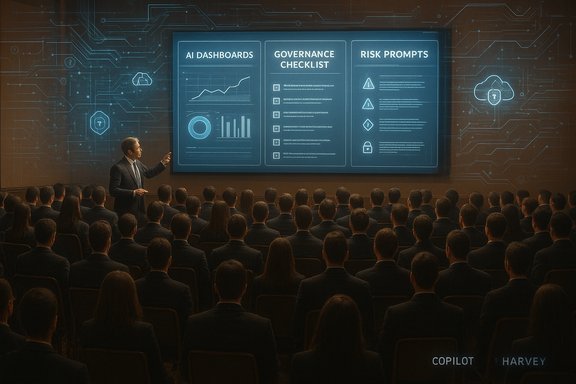
A presenter in a suit explains AI dashboards to a large audience in a high-tech conference room.Background / Overview​

The legal profession is undergoing a rapid operational shift: high‑volume, routine tasks that once formed the backbone of junior lawyer training — legal research, citation checks, first drafts, and contract triage — are precisely the kinds of work generative AI is built to accelerate. That dynamic has pushed large firms to choose between disciplined adoption and competitive obsolescence. Latham’s weekend academy is the most visible example yet of Big Law translating that choice into a systematic program aimed at entry‑level lawyers. Latham’s move comes against a backdrop of extraordinary commercial momentum at the firm and across legal tech. The firm reported record revenue in recent reporting, crossing the $7 billion mark as it expanded on deal work and global activity — a scale that gives its technology choices market influence. At the same time, the legal sector’s rush to automation has collided with hard professional constraints: courts have sanctioned filings that contained AI‑generated fabrications, and vendors’ contractual practices remain uneven. The emerging playbook for responsible deployment stresses governed pilots, enforceable procurement terms, auditable logs, and mandatory human verification — a menu Latham appears to be embracing through training, executive sponsorship, and structured, role‑based learning.

What happened at Latham’s AI Academy​

An intensive, mandatory primer for first‑year associates​

Over a two‑day program in Washington, D.C., more than 400 first‑year associates were walked through the tools, risks, and workflows that the firm intends to make standard operating procedure. The curriculum mixed partner‑led case demos with breakout sessions for junior litigators and corporate associates, and included external voices such as Meta’s privacy counsel to ground discussions about data protection and cross‑border risks. The firm showcased commercial tools already in practice at the partner level — including Harvey, a legal‑focused AI startup backed by major investors, and Microsoft 365 Copilot — while stressing that every output from those systems requires human review before it becomes client work product. The messaging was unambiguous: adopt and master these tools, or risk being outpaced by colleagues and clients who demand faster, cheaper, and defensible work.

Why the firm made it mandatory​

Latham framed the Academy as an investment in associate capability rather than a cost‑cutting program. Partners described AI as a “generational opportunity” that can free junior lawyers to do more strategic, interesting work — if the firm invests in training, verification, and ongoing supervision. That framing mirrors an adoption playbook many large firms and in‑house legal teams are following: combine executive mandate with measurable training and governance.

Verified facts and cross‑checks​

  • Latham held a mandatory, two‑day AI training for more than 400 first‑year associates. This account was published by a major outlet covering the event.
  • The firm reported record revenue, crossing roughly $7 billion in the most recent public reporting — positioning Latham among the highest‑grossing U.S. firms. This figure is independently corroborated by financial press coverage.
  • The program highlighted use of Harvey (a startup that has publicly disclosed large venture rounds and customer traction) and Microsoft Copilot as exemplar tools; both companies’ commercial positions are documented in the business press and vendor materials. Note that some startup milestone claims (ARR, valuation multiples) are often self‑reported by private companies and should be treated with caution until audited financials are available.
  • A high‑profile courtroom incident earlier this year involved an expert citation allegedly generated or formatted by Anthropic’s Claude that could not be located by plaintiffs; the episode has been reported by multiple outlets and underscores the real risk of AI hallucinations in litigation contexts.
Where numbers or corporate claims depend on private company reporting or press releases (for example, ARR or valuation milestones for private legal‑tech startups), treat those items as directional until corroborated by audited filings or regulatory disclosures.

The Anthropic/Claude warning: why the courtroom error matters​

This spring, a federal hearing flagged an expert’s citation that pointed to an article that does not exist. The plaintiffs alleged the expert — and the team using Claude — relied on AI to draft or format references that included a fabricated title and authors. The judge ordered clarification and the episode sparked renewed warnings inside firms: any AI‑assisted authority must be human‑verified before filing. That incident is not an outlier. Regulatory and judicial responses over the past two years have repeatedly penalized filings that relied on unverified AI outputs. The operational consequence is simple and immediate: humans must verify every citation, statutory citation, and material factual claim that an AI tool proposes. Doing so increases cost and process complexity and changes how delegation and supervision operate in large practices.

What firms are learning — a practical playbook​

The legal sector’s most resilient adopters have converged on a pragmatic recipe that Latham’s Academy echoes. The key pillars are:
  • Executive sponsorship and measurable targets to ensure resources and accountability.
  • Narrow, high‑value, low‑risk pilots (transcript summarization, contract clause extraction, first‑draft memos).
  • Cross‑functional governance teams (partners, IT, security, procurement, knowledge managers).
  • Procurement demands: SOC/ISO attestations, exportable logs of prompts and outputs, explicit no‑retrain or opt‑in rules, deletion guarantees, and incident‑response SLAs.
  • Mandatory human‑in‑the‑loop verification, role‑based competency gates, and ongoing QA.
These items are operationally concrete: they generate auditable logs, create contractual leverage with vendors, and map AI usage to professional duties of competence and confidentiality that bar associations and courts are increasingly focused on.

Technical controls that matter in a Windows / Microsoft 365 environment​

For firms already embedded in the Microsoft ecosystem, specific tenant and endpoint controls materially reduce leakage risk while improving auditability. Critical technical measures include:
  • Tenant grounding for Copilot and enterprise integrations so that prompts and responses stay within the organization’s Purview and audit boundaries.
  • Conditional Access and Multi‑Factor Authentication to control who can invoke AI features on matter data.
  • Endpoint Data Loss Prevention (DLP) to detect/policy manage paste actions into public model endpoints.
  • Centralized logging of prompts, responses, model version, user IDs and timestamps — surfaced into SIEM and eDiscovery pipelines.
  • Admin controls to opt out of model‑training on tenant data by default; Microsoft’s enterprise guidance states that Copilot does not use customer content to train foundation models unless the tenant explicitly opts in.
Those technical guardrails do not replace contractual and process controls, but they are necessary complements: they produce the telemetry lawyers and risk officers need to investigate incidents and meet discovery obligations.

The talent paradox: training as protection or pretext?​

Latham’s framing — train associates to use AI so they can do higher‑value work — is persuasive, but it must be read against workplace economics. Automation of routine drafting reduces the marginal time required to produce the same billable outputs. Without careful redesign of training and evaluation metrics, firms risk:
  • Deskilling juniors by removing the repetitive redline and drafting experiences where lawyers learn legal reasoning.
  • Creating perverse incentives if productivity gains are captured by partners (higher profit per partner) rather than invested in reskilling or meaningful mentorship.
  • Driving shadow AI use where strict governance is absent — forcing staff to use consumer tools with higher data‑leak risk.
Responsible firms mitigate these risks through structured rotational training that pairs AI‑assisted tasks with supervised analytical assignments, micro‑certifications for verification competence, and redesigned performance metrics that reward quality‑adjusted outcomes rather than raw throughput. Latham’s longitudinal training plan and planned virtual AI Academy suggest the firm recognizes those obligations.

The client pressure dynamic​

Corporate clients and in‑house counsel are increasingly asking firms for AI roadmaps and demonstrable efficiencies. Where clients demand speed and lower margins, firms face a choice: automate with governed controls or lose work to cheaper alternatives. That client pressure is the proximate driver behind mandatory training at firms like Latham. The signal to associates was clear: clients expect AI‑enhanced delivery, and the firm will equip them to meet that expectation. At scale this leads to two conflicting forces: firms will invest in tools to remain competitive, but they must also defend against regulatory exposures, client confidentiality issues, and the professional duty to supervise. Firms that fail to pair adoption with procurement rigor and human verification risk reputational and legal harm.

Vendor realities and startup claims — what to trust​

Legal‑tech vendors and startups (e.g., Harvey) have attracted major capital infusions and rapid commercial traction. Press coverage documents Harvey’s fundraising and growth metrics, and firms are piloting these offerings to accelerate research and drafting. But buyers must treat vendor claims with skepticism until contractual guarantees and technical attestations exist:
  • Valuation and ARR figures for private startups are useful market signals but often rest on investor‑led announcements rather than audited reporting. Treat them as directional.
  • Procurement should insist on exportable logs, no‑retrain clauses for matter data, deletion guarantees, and current SOC/ISO attestations. If vendors refuse these protections, restrict their use to non‑sensitive workflows.
These procurement non‑negotiables are now considered baseline for legal deployments. Firms that accept consumer‑grade, non‑auditable integrations risk creating eDiscovery blind spots and client confidentiality exposures that can be irreversible.

Practical steps firms should adopt now​

  • Run short, redacted pilots (4–8 weeks) with tightly defined KPIs: time to first draft, edit burden, verification time, and error rate.
  • Build a cross‑functional governance committee (partners, practice leads, IT, procurement, security) with documented role definitions and escalation paths.
  • Embed mandatory human‑in‑the‑loop checklists for any output that will be filed or provided to a client; require competency proof for signatories.
  • Require vendor contract redlines: no‑retrain/no‑use clauses, exportable logs (prompts/responses, model version, timestamps), SOC 2/ISO attestation, deletion and egress guarantees, and defined incident response SLAs.
  • Configure tenant and endpoint controls (Conditional Access, Endpoint DLP, Purview retention, centralized logging) before enabling matter access for copilots.
These are practical, measurable steps that preserve both the efficiency advantages of AI and the profession’s duties of competence and confidentiality.

Notable strengths of Latham’s approach​

  • Proactive upskilling: Mandatory, role‑based training gets everyone on the same baseline and reduces shadow AI adoption.
  • Executive sponsorship: A top‑down mandate paired with rolling skills programs signals resource commitment and scalability.
  • Public acknowledgement of risk: By foregrounding the Anthropic/Claude episode in training, the firm models how to treat hallucinations as operational hazards, not abstract worries.

Risks and remaining blind spots​

  • Verification burden and supervision costs: Mandatory human sign‑offs increase per‑matter cost and can negate some AI efficiency gains if not properly streamlined and measured.
  • Deskilling and training quality: If firms rely on AI to create first drafts without redesigning supervision and mentorship, junior lawyers may lose out on core learning. Latham’s longer‑term training programs attempt to address this, but real remediation requires sustained investment and redesigned evaluation metrics.
  • Vendor and model risk: Startups’ growth metrics are often headline‑driven. Firms must insist on contractual protections and independent attestations; absence of these guarantees should limit matter access.
  • Regulatory evolution: Bar guidance, court sanctions, and national AI regulation are still evolving. Firms should expect to update policies and vendor terms as legal standards solidify. Treat current practices as provisional and subject to regulatory change.
Where any claim could materially affect client confidentiality, litigation exposure, or market competition, treat it as provisional until verified with contract language, audit logs, or independent regulatory guidance.

Conclusion — what Latham’s Academy signals for Windows‑centric legal teams​

Latham & Watkins’ AI Academy is emblematic of a larger pivot in Big Law: firms with the scale to invest in training, governance, and procurement will embed AI tools into everyday practice — but only if they can make those tools defensible under professional duties and client expectations. The balance is delicate: firms must win measurable efficiency without relinquishing auditability, confidentiality, or the formative learning experiences junior lawyers require.
For Windows and Microsoft 365‑centric legal teams, the technical contours are clear: tenant grounding, Purview‑based logging, Conditional Access and Endpoint DLP are practical building blocks that make Copilot‑style deployments tenable — but they remain complements to, not substitutes for, strong procurement, mandatory human verification, and ongoing competency programs. Latham’s program is a useful early case study in how a large firm can align incentives, technology, and training to accelerate responsibly. The real test will be sustainment: whether the firm’s ongoing curricula, contractual rigour, and QA telemetry turn weekend enthusiasm into durable, audit‑ready practice that preserves both clients’ interests and the profession’s standards.
Bold steps have been taken; the profession’s response must be equally rigorous.

Source: Business Insider Big Law firm Latham & Watkins issued this warning to junior lawyers embracing AI
 

Back
Top