Apple’s iPhone 18 Pro rumor cycle has entered a more consequential phase, with competing launch-date predictions now centering on
September 8 or September 9, 2026, while purported hardware disclosures point to a variable-aperture main camera, a Sony IMX905-class sensor, an A20 Pro processor manufactured on a 2-nanometer node, and potentially the largest battery Apple has installed in an iPhone. The emerging picture is of a Pro generation focused less on cosmetic reinvention than on imaging control, sustained performance, and premium differentiation, but none of the leaked specifications—or the exact event date—has been confirmed by Apple.
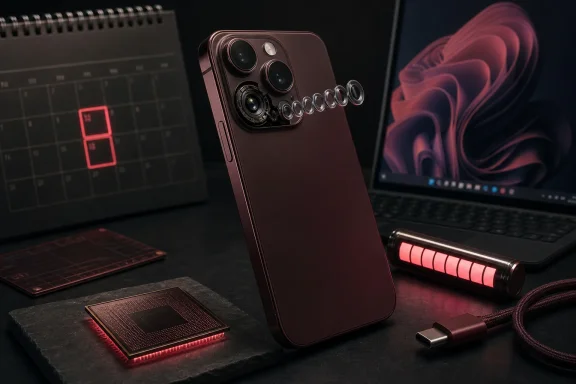 Background
Apple’s modern iPhone launch machine is built around predictability. The company can change materials, processors, camera systems, product names, and even the composition of the lineup, but its flagship release calendar has remained remarkably consistent since the iPhone moved from summer launches to a fall schedule.
How September became iPhone month
The original iPhone was introduced in January 2007 and released in June. The iPhone 3G, iPhone 3GS, and iPhone 4 also arrived during the middle of their respective years, reflecting an earlier Apple calendar in which the company’s Worldwide Developers Conference often served as the stage for major mobile hardware announcements.
That changed with the iPhone 4S in October 2011. From 2012 onward, Apple settled into an early-to-mid-September event window, usually opening preorders within days and beginning retail availability the following week.
The major exception was 2020, when pandemic-related disruption pushed Apple’s iPhone announcement into October after a September event devoted to other products. That episode demonstrated that Apple’s schedule is highly disciplined but not immune to manufacturing and logistical realities.
Why Apple values a repeatable calendar
A September release gives Apple a full quarter of holiday sales while also aligning the new iPhone with its annual operating-system updates. Carriers, retailers, accessory manufacturers, application developers, and enterprise IT departments can plan around a timetable that changes very little from year to year.
This predictability also turns the launch itself into a global commercial ritual. Apple does not need to tell customers that a new flagship is coming each fall; the market already expects it, allowing the company to concentrate its messaging on why this particular generation deserves an upgrade.
The September 8 Versus September 9 Question
The latest reporting does not establish an official launch date. Instead, it offers two closely related predictions based on Apple’s historical behavior and the unusual placement of Labor Day in 2026.
Why September 9 looks plausible
Labor Day falls on Monday, September 7, 2026. Apple generally avoids holding its event before the holiday or on the Tuesday immediately after it, since employees, invited guests, partners, and journalists need time to travel following the long weekend.
The calendar matches 2015, when Labor Day also fell on September 7 and Apple held its iPhone keynote on Wednesday, September 9. That historical parallel supports the argument that
Wednesday, September 9, 2026, is the most logical date.
Apple has also consistently avoided September 11 for its keynote. That effectively eliminates the Friday of the same week, leaving September 8, September 9, or a later date as the realistic options.
Why September 8 cannot be dismissed
Separate reporting has identified
Tuesday, September 8, as the leading possibility, with September 9 presented as the runner-up. Tuesdays have traditionally been Apple’s preferred day for major product events, even though the company has occasionally shifted to Wednesday when a U.S. holiday complicates the week.
That makes the current situation less definitive than headlines claiming the release date has been “revealed” might suggest. The responsible conclusion is that Apple’s event is likely to take place on September 8 or September 9, with the precise date remaining unconfirmed until invitations are distributed.
The likely launch sequence
If Apple follows its established pattern, the rollout could proceed as follows:
- Apple would announce the iPhone 18 Pro lineup on September 8 or September 9.
- Preorders would probably begin on Friday, September 11.
- iOS 27 would likely reach compatible iPhones during the following week.
- Independent reviews could appear around September 15 or September 16.
- Retail availability would most likely begin on Friday, September 18.
These dates form a credible working schedule, not a confirmed itinerary. Production conditions, software readiness, regulatory issues, or the introduction of an entirely new form factor could still alter individual milestones.
A Potentially Different iPhone Lineup
The iPhone 18 generation may be unusual because Apple is reportedly considering a split release strategy. Under that model, the premium devices would arrive in September 2026, while standard iPhone 18 models could be held until spring 2027.
Pro models may lead the cycle
The September event is expected to revolve around the iPhone 18 Pro and iPhone 18 Pro Max. Concentrating the initial launch on premium devices would allow Apple to direct early demand toward its highest-margin products while giving the standard models a separate marketing window.
Such a strategy would also reduce the number of devices competing for attention during a single keynote. Apple’s current product portfolio has become crowded, particularly when new watches, audio products, accessories, and operating systems share the stage with several iPhone variants.
The foldable wildcard
Apple’s first foldable iPhone is also widely rumored for the 2026 premium cycle. Names such as
iPhone Fold and
iPhone Ultra remain speculative, and Apple could choose entirely different branding.
A foldable would complicate the launch calendar because a new chassis, hinge, display stack, and application behavior introduce manufacturing risks that conventional iPhones do not face. Apple could announce the device alongside the iPhone 18 Pro but release it later, echoing the staggered strategy used for the iPhone X in 2017.
A delayed foldable would not necessarily signal failure. It could instead reflect Apple’s preference to reveal the broader direction of the lineup while giving suppliers more time to produce sufficient quantities of a technically demanding product.
The Variable-Aperture Camera Explained
The most significant hardware rumor concerns the main rear camera. Reports suggest Apple is preparing a variable-aperture system that would physically adjust the size of the lens opening rather than relying entirely on computational photography to simulate different capture characteristics.
What an aperture actually controls
A camera aperture regulates how much light reaches the image sensor. A wider opening admits more light, which can improve low-light exposure and create a shallower depth of field, while a narrower opening reduces incoming light and can keep more of the scene acceptably sharp.
Current iPhones use fixed physical apertures for each camera module. The Camera app can simulate background separation through Portrait mode, but that effect depends heavily on depth estimation, subject segmentation, and software-generated blur.
A variable aperture would give the imaging pipeline another physical control. Instead of treating every scene through the same lens opening and compensating afterward, the phone could adapt the optical system before the image reaches the sensor.
Why the feature matters on a phone
Smartphones face an unavoidable conflict between low-light performance and optical flexibility. A large fixed aperture helps in dark environments, but it can produce less natural results in bright conditions or when a photographer wants more of the frame in focus.
Apple could use a variable aperture to address several scenarios:
- Bright outdoor photographs could retain detail without relying as heavily on extremely fast shutter speeds or electronic processing.
- Group shots could benefit from greater depth of field, reducing the risk that people on different focal planes appear soft.
- Close-up photography could gain more predictable focus behavior when the subject occupies a narrow depth range.
- Low-light scenes could continue using a wider opening to collect as much light as possible.
- Video exposure transitions could become more sophisticated if Apple allows the aperture to change smoothly during recording.
The practical value will depend on how many aperture positions Apple provides. A simple two-stage mechanism would offer less creative control than a continuously adjustable system, but it would also be thinner, more durable, and easier to calibrate.
Computational photography will remain central
Variable aperture should not be interpreted as Apple abandoning computational imaging. The physical mechanism would become another input to the Photonic Engine, Smart HDR, Night mode, portrait processing, stabilization, and machine-learning systems.
Apple’s likely objective is to combine optical flexibility with its existing software stack. That approach could produce more natural depth, cleaner highlights, and better scene consistency without asking mainstream users to understand traditional camera settings.
The Rumored Sony IMX905 Sensor
The leaked camera information also refers to a Sony IMX905 main sensor. The model number has circulated alongside claims that the sensor would retain a pixel pitch similar to the current generation while enabling the new aperture system.
Sensor names require caution
Apple rarely markets iPhone cameras by supplier part number. Even when Sony provides the underlying image sensor, Apple typically describes the camera through resolution, focal length, aperture, stabilization, and software capabilities.
A leaked sensor identifier can also refer to prototype hardware, an internal variation, or a customized component that differs from a publicly documented Sony product. The IMX905 designation should therefore be treated as an unverified technical clue rather than a final retail specification.
A targeted upgrade is more believable than a total rebuild
The current rumor suggests Apple may replace or substantially revise the primary camera while retaining broadly similar telephoto, ultra-wide, LiDAR, and front-facing hardware. That would make the iPhone 18 Pro an imaging-focused release without requiring every sensor to change at once.
This strategy would be consistent with Apple’s normal engineering cadence. Camera modules compete for internal volume, thermal headroom, processing capacity, and bill-of-materials budget, so improving one critical component can be more practical than rebuilding the entire array annually.
The primary camera also handles a disproportionate share of everyday photography. It usually offers the strongest low-light performance, the most reliable stabilization, and the best video quality, making it the logical place to invest in a major optical change.
What image quality could improve
A new sensor and variable aperture could affect more than headline resolution. Potential improvements include lower read noise, faster sensor scanning, more accurate autofocus, better highlight retention, reduced motion artifacts, and more stable video exposure.
However, none of those benefits follows automatically from a new part number. Apple’s lens design, image signal processor, calibration, thermal management, and software tuning will determine whether the camera produces visibly better results.
A20 Pro and the Move to 2 Nanometers
The iPhone 18 Pro is expected to introduce Apple’s A20 Pro system-on-chip, reportedly manufactured using TSMC’s 2-nanometer-class technology. If accurate, this would represent a more meaningful semiconductor transition than a routine annual speed increase.
Why process-node changes matter
Smaller and more advanced manufacturing processes can improve transistor density, energy efficiency, and performance, although the nanometer label no longer corresponds directly to a single physical transistor dimension. The value lies in the process architecture and the electrical characteristics it enables.
TSMC’s 2-nanometer generation introduces gate-all-around nanosheet transistors, replacing the FinFET approach used across several earlier mobile chip generations. This architecture offers tighter control over current flow and can improve efficiency at low voltages—an important property for battery-powered devices.
For Apple, the principal opportunity is not simply to post a higher benchmark score. A more efficient chip could sustain demanding workloads longer, reduce heat, and allocate more compute capacity to camera processing and on-device artificial intelligence.
Performance will be constrained by thermals
A smartphone cannot exploit desktop-class performance indefinitely because it lacks active cooling and has limited surface area for dissipating heat. Peak benchmark results matter less than how long the processor can maintain performance before reducing clock speeds.
A20 Pro gains could therefore appear in several forms:
- Faster image processing could shorten the delay between capture and final photo generation.
- More efficient graphics could support complex games without draining the battery as quickly.
- On-device AI models could run with lower latency and less dependence on cloud processing.
- Video encoding could become faster while producing less heat during long recording sessions.
- Background tasks could consume less energy, improving standby time even when peak performance is unchanged.
The balance Apple chooses will matter. The company could spend most of the efficiency improvement on longer battery life, convert it into higher sustained performance, or divide it between the two.
Advanced packaging may be equally important
Reports about the A20 family have also raised the possibility of more advanced packaging and tighter integration between the processor and memory. Packaging affects communication speed, physical footprint, power consumption, and heat distribution, making it increasingly important as transistor-level improvements become harder to achieve.
For users, the distinction between a process-node gain and a packaging gain is largely academic. Both can produce a device that responds faster, runs cooler, and performs more work within the same power envelope.
Battery Capacity and Endurance
One of the more eye-catching claims is that the largest iPhone 18 Pro model could carry a battery near 5,500mAh. That would be unusually large by iPhone standards and could make battery endurance a defining feature of the Pro Max.
Capacity is only part of the equation
Milliamp-hour ratings provide a rough indication of stored charge, but they do not directly determine real-world runtime across devices with different voltages, displays, processors, modems, and software behavior. Watt-hours offer a more complete comparison, and Apple often emphasizes usage time rather than raw capacity.
A larger battery would nevertheless provide more energy if other factors remained comparable. Combined with a 2-nanometer processor, it could improve endurance during video recording, navigation, gaming, hotspot use, and AI-intensive tasks.
The physical trade-offs could be substantial
Battery growth requires space. Apple would need to create that volume through a thicker body, more efficient internal packaging, denser battery chemistry, smaller logic-board components, or some combination of those changes.
Rumors that the next Pro Max could become thicker or heavier are therefore plausible, but they remain unconfirmed. Apple must also leave room for the camera mechanism, stabilization hardware, speakers, haptics, wireless charging components, and thermal structures.
A 5,500mAh claim should be treated cautiously until regulatory filings or reliable hardware documentation appear. It is specific enough to attract attention but may describe a prototype, an approximate design target, or a misunderstanding of combined cell capacity.
Charging becomes more important
A larger battery can increase charging time unless Apple raises wired or wireless power limits. Faster charging, however, creates additional heat and can accelerate battery degradation if not carefully controlled.
Apple is likely to prioritize predictable battery health and thermal safety over competing for the highest advertised wattage. Even so, users would reasonably expect charging improvements if the company substantially increases capacity.
Design Changes and the Smaller Dynamic Island
The iPhone 18 Pro may retain the recognizable shape of recent models while making the front display less visually intrusive. Rumors point to a smaller Dynamic Island, potentially enabled by moving some Face ID components beneath the screen.
Under-display components are difficult
Face ID depends on infrared emitters, sensors, and precise depth mapping. Placing those components beneath active display pixels can reduce the amount or quality of light passing through the panel, creating challenges for reliability and security.
Apple is unlikely to accept a meaningful reduction in authentication accuracy merely to shrink a cutout. Any under-display implementation would need to work in varied lighting, support secure payments, and maintain the low false-acceptance rate expected of Face ID.
The most believable near-term outcome is a reduced Dynamic Island rather than a completely uninterrupted display. Apple could hide selected components while retaining a visible opening for the front camera or other elements that are not yet ready to operate beneath the panel.
Dark Cherry and the annual color cycle
A finish reportedly called
Dark Cherry has emerged in the rumor stream. Apple often uses a distinctive Pro color to create visual separation from the previous generation, although preproduction names and shades can change before launch.
Color leaks are among the least consequential specifications, but they play an outsized marketing role. A recognizable finish gives buyers an immediate way to signal that they own the newest model, especially when the underlying industrial design changes only modestly.
Cases will obscure much of that distinction for many customers. Even so, color remains an inexpensive method for Apple to refresh the product’s retail identity without redesigning the enclosure.
Implications for Windows Users
The iPhone 18 Pro will be an Apple product, but a significant number of buyers will use it alongside a Windows 11 PC rather than a Mac. Camera improvements, larger files, and deeper on-device intelligence make that cross-platform relationship increasingly important.
Phone Link narrows the basic communication gap
Microsoft’s Phone Link supports iPhones for calls, messages, contacts, and notifications over Bluetooth. Windows 11 also increasingly surfaces connected-phone functions through the Start menu, including status information and file-sharing options.
The integration remains less comprehensive than the Android experience. Windows cannot reproduce the full continuity model available between an iPhone and a Mac, and some messaging behavior remains constrained by Apple’s platform architecture.
For mixed-device users, the distinction matters more than processor benchmarks. An iPhone 18 Pro may be an exceptional camera and communications device, but workflow friction can quickly outweigh hardware advantages when files, messages, and application state do not move cleanly to the PC.
iCloud for Windows remains essential
Apple’s iCloud software allows Windows users to access iCloud Photos, iCloud Drive content, passwords, and other synchronized data. Photos can appear in File Explorer and Microsoft Photos, reducing the need to manually connect the iPhone for routine transfers.
Users should understand that this is synchronization, not merely one-way copying. Deleting or changing synchronized content on a Windows PC can affect the same library across other connected devices, depending on the application version and configuration.
A more advanced iPhone camera could generate larger photo and video libraries, increasing storage consumption and network traffic. Anyone considering the iPhone 18 Pro primarily for imaging should review both local disk capacity and their iCloud storage plan.
USB-C remains the professional route
The current Pro generation supports high-speed USB data transfer and direct recording to compatible external storage. If the iPhone 18 Pro retains or improves those capabilities, USB-C will remain the most efficient bridge into Windows-based editing workflows.
Professional video formats can consume enormous amounts of storage. Cloud synchronization is convenient for selected clips and everyday photographs, but direct transfer to an SSD or workstation is often faster and more predictable for high-bitrate footage.
Windows users should also verify application support for Apple’s professional codecs and color workflows. A file may transfer successfully yet still require suitable editing software, hardware acceleration, storage throughput, and display calibration to use effectively.
Consumer and Enterprise Impact
The iPhone 18 Pro’s rumored changes would affect consumers and businesses differently. Consumers are likely to focus on camera quality and battery life, while enterprises will examine support periods, device management, security, repair costs, and application compatibility.
The consumer upgrade calculation
Owners of older iPhones could see a meaningful improvement if variable aperture, a new sensor, and a larger battery all reach production. Those moving from an iPhone 14 Pro or earlier would also accumulate several generations of display, connectivity, processor, and camera advances.
The case will be weaker for iPhone 17 Pro owners. A single upgraded camera and a faster processor may not justify another premium purchase unless the user regularly shoots professional video, depends on maximum endurance, or can benefit from a generous trade-in offer.
Consumers should therefore judge the device by outcomes rather than specifications. Better portraits, fewer blurred group photos, cooler gaming, and longer battery life matter; sensor model numbers and process labels matter only when they produce those improvements.
Enterprise deployment considerations
Businesses rarely refresh entire fleets because of one camera feature. They care more about predictable availability, long-term operating-system support, security updates, mobile-device-management compatibility, and total cost of ownership.
A staggered iPhone lineup could complicate purchasing. Organizations that traditionally compare the standard and Pro models during one annual procurement window may need to choose between buying premium devices in fall 2026 and waiting for less expensive models in 2027.
A larger battery and more efficient processor could still provide measurable enterprise value. Field workers, mobile creators, executives, and employees who rely on hotspot connectivity may benefit from longer shifts between charges and more consistent performance under sustained use.
Competitive Implications
Apple would not be the first smartphone manufacturer to use variable aperture. The feature has appeared in selected Android flagships, though implementations have differed in complexity, reliability, and practical photographic value.
Apple enters late but at scale
Apple often waits until a technology can be integrated across hardware, software, services, manufacturing, and developer tools. That delay can look conservative, but it also means an Apple implementation may reach tens of millions of users and influence how competitors market similar capabilities.
If the Camera app manages aperture automatically, most buyers may never select an f-number themselves. Apple could still expose manual control to professional applications, allowing developers to build more sophisticated photography and video tools.
The competitive threat to Samsung, Google, Xiaomi, Vivo, and other manufacturers would come from integration rather than novelty. Apple does not need to invent variable aperture; it needs to make the feature consistently useful.
Camera hardware is becoming a premium separator
Smartphone processors already provide more than enough speed for common tasks. That pushes manufacturers toward cameras, battery endurance, displays, AI services, satellite connectivity, and unconventional form factors to justify premium pricing.
The iPhone 18 Pro rumors fit that environment. Apple appears to be concentrating expensive hardware on the areas customers can experience directly, while allowing less visible components of the camera system to carry over.
A foldable iPhone would intensify the competition further. It would place Apple in a category that Android manufacturers have spent years refining, but Apple’s entry could also validate foldables for customers who have remained cautious.
Strengths and Opportunities
If the principal rumors prove accurate, the iPhone 18 Pro could deliver a more coherent upgrade than its familiar exterior initially suggests.
- Variable aperture could improve real optical control. The camera could adapt to bright scenes, low light, group photography, close subjects, and video without depending entirely on simulated depth effects.
- A20 Pro could prioritize efficiency over spectacle. A 2-nanometer-class processor may produce its most valuable gains through reduced power consumption, lower heat, and stronger sustained performance.
- A larger battery could address a universal complaint. Buyers understand longer runtime immediately, making endurance easier to market than abstract processor improvements.
- A focused main-camera upgrade could improve the photographs people take most often. Apple does not need to replace every sensor if the primary module delivers better results across common conditions.
- A smaller Dynamic Island could modernize the display without compromising Face ID. Even a partial reduction would create a visible distinction from previous models.
- USB-C and Windows integration create opportunities beyond the Mac ecosystem. High-speed transfer, external recording, Phone Link, and iCloud for Windows make the Pro models relevant to mixed-platform households and businesses.
- A premium-only fall launch could strengthen Apple’s high-end position. Separating Pro and standard releases would give each tier more attention, although the strategy also carries pricing and consumer-choice risks.
Risks and Concerns
The rumor package is attractive, but each major claim carries technical, commercial, or practical uncertainty.
- The event date remains unconfirmed. September 8 and September 9 are both credible, and treating either as official would overstate what is currently known.
- A variable aperture introduces moving parts. The mechanism must survive drops, vibration, dust exposure, temperature changes, and years of repeated operation without calibration drift.
- Camera benefits may be subtle in automatic mode. If software already produces strong results, mainstream users may notice less improvement than photography enthusiasts expect.
- A bigger camera and battery could increase weight. Apple risks making the Pro Max uncomfortable for customers who already consider large flagship phones too heavy.
- A 2-nanometer chip could raise manufacturing costs. Early leading-edge silicon is expensive, and those costs may contribute to higher device prices or tighter availability.
- Large professional files can burden Windows workflows. Users may need additional storage, codec support, faster external drives, and more capable editing hardware.
- Under-display Face ID could affect reliability if introduced prematurely. Apple must preserve security and recognition performance rather than pursuing an uninterrupted screen at any cost.
- A split launch could confuse buyers. Customers may postpone purchases if they are uncertain whether a cheaper, smaller, or otherwise preferable iPhone will arrive only months later.
- The foldable could face first-generation compromises. Thickness, crease visibility, durability, battery life, application behavior, and price remain major questions for any folding device.
What to Watch Next
Apple’s formal invitation will settle the event-date debate, but several earlier signals could clarify the broader hardware story. Regulatory records, accessory production, developer documentation, carrier preparations, and supply-chain reporting often become more specific as mass production accelerates.
The most important confirmations
The next useful disclosures will not be additional color names or recycled renders. The market needs credible answers to several practical questions:
- Will variable aperture appear on both Pro models, or only on the Pro Max?
- How many physical aperture settings will the camera support?
- Will third-party camera applications receive manual control through Apple’s APIs?
- Does the A20 Pro use TSMC’s initial 2-nanometer process or a related variant?
- Will battery capacity rise substantially, and what will that do to thickness and weight?
- Will USB transfer speeds increase beyond the current Pro implementation?
- Which Face ID components, if any, will move beneath the display?
- Will the foldable ship in September, arrive later, or remain a future project?
Pricing will be equally important. Premium components, leading-edge silicon, additional camera mechanics, and more advanced displays all create upward pressure, particularly if Apple positions a foldable above the Pro Max.
What Windows users should verify before buying
Windows users should wait for final specifications and independent testing before designing workflows around the device. The most important checks will be codec compatibility, sustained USB transfer performance, external recording support, file sizes, iCloud behavior, and any improvements Microsoft makes to Phone Link.
Creative professionals should also test rather than assume. A technically impressive camera is only as valuable as the complete path from capture to backup, editing, review, export, and archival storage.
Looking Ahead
The iPhone 18 Pro is shaping up as a test of whether Apple can turn traditional camera mechanics and next-generation silicon into improvements that ordinary buyers can recognize. Variable aperture has the potential to deliver more natural photography, while the A20 Pro and a larger battery could strengthen the less glamorous qualities—heat management, consistency, and endurance—that determine how satisfying a phone remains after the launch excitement fades.
The September calendar is easier to predict than the final product. Apple will very likely hold its premium iPhone event in the first half of the month, but
September 8 and September 9, 2026, remain competing possibilities, and the expected September 18 retail date is still an informed projection rather than a commitment. Until Apple confirms the schedule and hardware, the most credible view is not that the iPhone 18 Pro has been fully revealed, but that its probable priorities are becoming clear: better optical control, more efficient processing, longer runtime, and a stronger attempt to distinguish the Pro tier in an increasingly competitive flagship market.
References
- Primary source: Free Press Journal
Published: 2026-07-21T03:36:20+00:00
Apple’s iPhone 18 Pro series may debut on September 9, according to an analysis based on the company’s past launch patterns. Leaks suggest the flagship could feature an A20 Pro chip, variable aperture camera, larger 5,500mAh battery and a smaller Dynamic Island. Apple has not confirmed the...
www.freepressjournal.in
- Independent coverage: International Business Times Australia
Published: 2026-07-21T04:17:04+00:00
Apple is expected to unveil the iPhone 18 Pro on September 9, following its consistent September keynote pattern. The analysis predicts a staggered release, including a potential foldable iPhone.
www.ibtimes.com.au
- Related coverage: tomsguide.com
The upcoming iPhone 18 Pro and Pro Max are shaping up to be absolute powerhouses with big upgrades that could land them in an all-time best list.
www.tomsguide.com
- Related coverage: forbes.com
Apple's WWDC 2026 schedule mirrors last year's rollout, offering fresh clues about when the iPhone 18 Pro, iPhone 18 Pro Max and rumored foldable iPhone could launch.
www.forbes.com
- Related coverage: macrumors.com
The most likely date for the debut of Apple's new iPhone 18 Pro models and highly anticipated foldable iPhone is September 8, 2026, according to Bloomberg's Mark Gurman. Gurman hedged his bets, however, by saying that the premium iPhone models could be unveiled on September 9, since...
www.macrumors.com
- Related coverage: macworld.com
Find out when Apple is likely to hold its next event, plus the latest rumors, expected launch dates, and upcoming products.
www.macworld.com


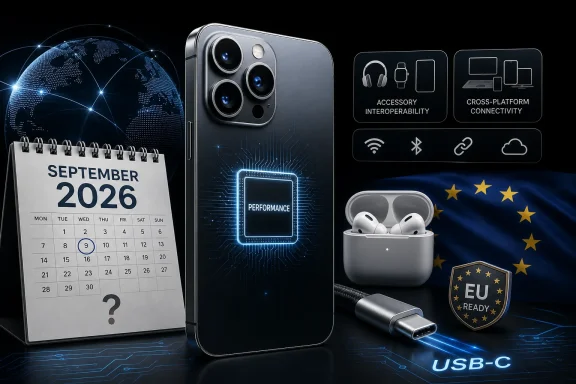 A likely split iPhone schedule
www.techadvisor.com

