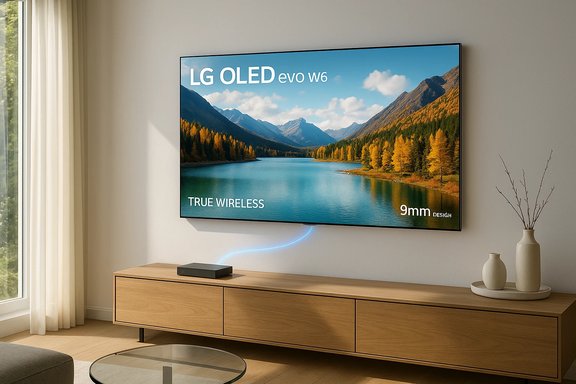
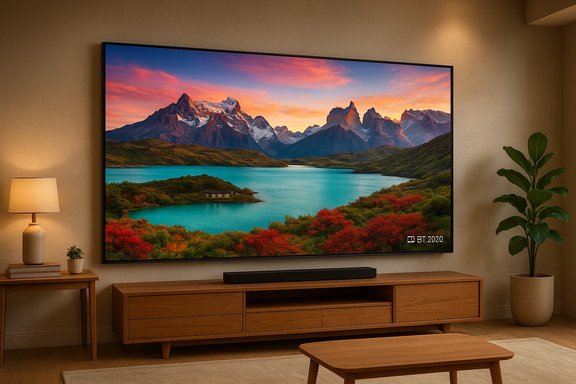
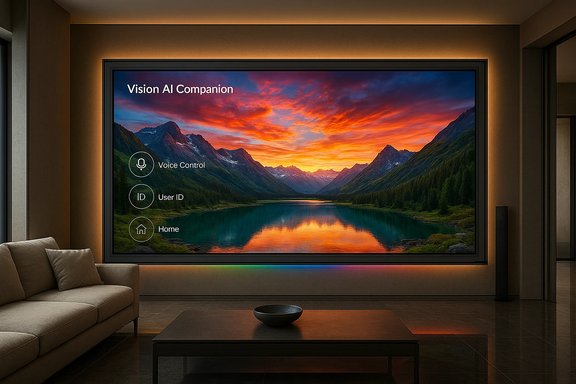
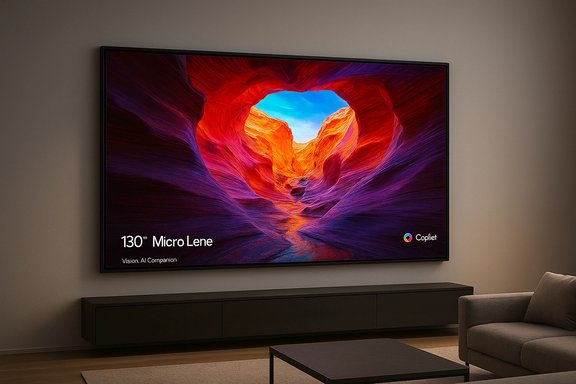
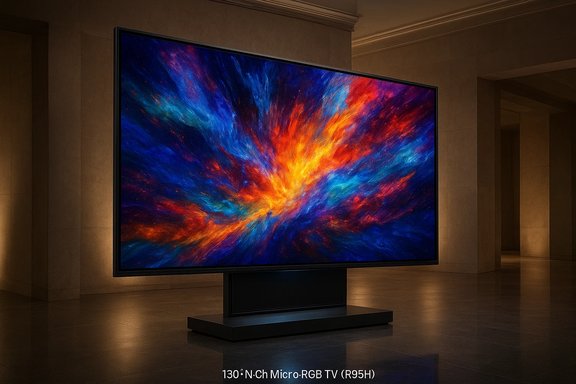
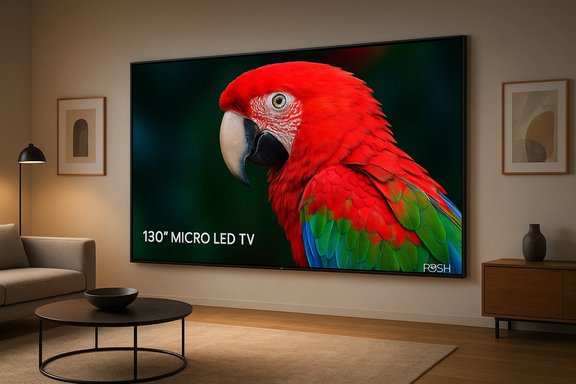
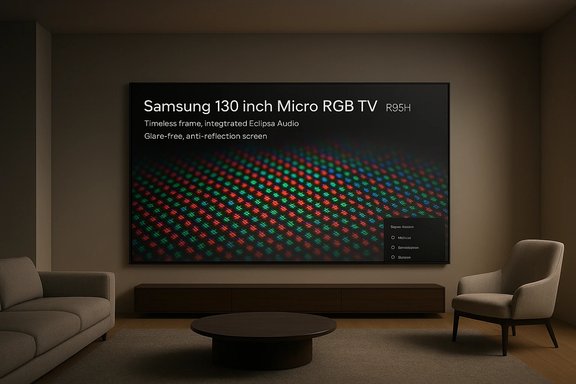
Samsung has formally introduced what it calls the world’s first 130‑inch Micro RGB TV — the R95H — at CES 2026, positioning a vast new flagship around a radical backlight architecture, a refreshed “Timeless Frame” gallery aesthetic, and an expanded suite of AI picture and sound features intended to move high‑end LCD performance closer to the color volume benefits of self‑emissive displays.
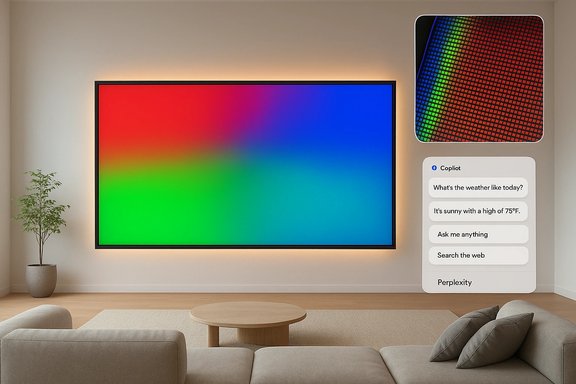
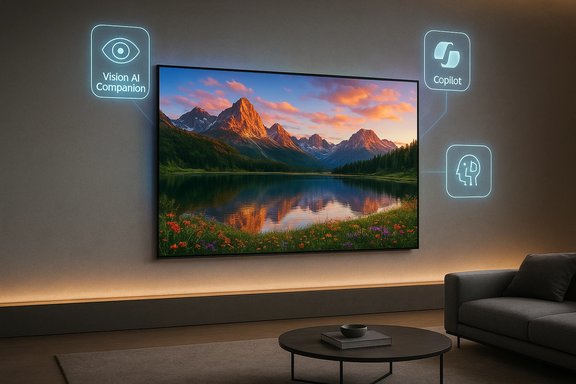
Samsung’s R95H announcement is the headline act in a broader strategy to commercialize Micro RGB backlighting at living‑room sizes. The company says the 130‑inch model uses arrays of microscopic red, green and blue LEDs in the backlight plane, paired with an AI‑driven Micro RGB image pipeline (Micro RGB AI Engine Pro, Micro RGB Color Booster Pro, Micro RGB HDR Pro) and a certified color platform Samsung calls Micro RGB Precision Color 100 (VDE‑verified 100% BT.2020 coverage). The set also introduces a gallery‑style Timeless Frame design and integrated audio systems tuned to the panel scale. Samsung’s press materials present the launch as both a design statement and a technical pivot: Micro RGB is framed as a way to achieve higher color volume and very high sustained brightness while remaining compatible with established LCD manufacturing flows — unlike tiled self‑emissive microLED walls. That positioning ties into Samsung’s broader Vision AI Companion features (on‑device vision, Copilot/Perplexity retrieval, Live Translate, and dedicated sports/audio modes) and new HDR / audio integrations such as HDR10+ ADVANCED and Eclipsa Audio.
However, early Micro RGB implementations are expected to be premium. Tiny RGB emitters, dense addressing electronics, and the yield complexity that comes with micro‑manufacturing raise costs. Historical precedents suggest initial SKUs carry significant premiums; trickle‑down to affordable sizes will determine real consumer adoption speed. Samsung’s press materials do not publish global retail pricing at announcement; regionally staggered MSRPs and staged preorders are likely.
Conversely, if the implementation leans too heavily on marketing claims while leaving haloing, tone‑mapping, or firmware instability unresolved, Micro RGB will be remembered as an ambitious but imperfect transitional architecture that buyers paid a premium to evaluate. The next steps to move from promise to practical benefit are straightforward: independent lab validation, transparent firmware release notes and responsible privacy/telemetry disclosures.
The immediate takeaway for WindowsForum readers: the Samsung R95H and the Micro RGB family are an important signal that display engineering is entering a new phase where sub‑millimeter emitter control, advanced AI engines, and design integration determine flagship differentiation. Approach early reviews and show‑floor demos armed with the objective tests above, and treat vendor claims — however audacious — as starting points for verification rather than purchase justification on their own.
Source: Bleeding Cool News Samsung Unveils World’s First 130-Inch Micro RGB TV For CES 2026
Source: samsung.com https://news.samsung.com/global/sam...ng-next-generation-color-and-bold-new-design/
 Background / Overview
Samsung’s R95H announcement is the headline act in a broader strategy to commercialize Micro RGB backlighting at living‑room sizes. The company says the 130‑inch model uses arrays of microscopic red, green and blue LEDs in the backlight plane, paired with an AI‑driven Micro RGB image pipeline (Micro RGB AI Engine Pro, Micro RGB Color Booster Pro, Micro RGB HDR Pro) and a certified color platform Samsung calls Micro RGB Precision Color 100 (VDE‑verified 100% BT.2020 coverage). The set also introduces a gallery‑style Timeless Frame design and integrated audio systems tuned to the panel scale. Samsung’s press materials present the launch as both a design statement and a technical pivot: Micro RGB is framed as a way to achieve higher color volume and very high sustained brightness while remaining compatible with established LCD manufacturing flows — unlike tiled self‑emissive microLED walls. That positioning ties into Samsung’s broader Vision AI Companion features (on‑device vision, Copilot/Perplexity retrieval, Live Translate, and dedicated sports/audio modes) and new HDR / audio integrations such as HDR10+ ADVANCED and Eclipsa Audio. What Micro RGB actually is — a technical primer
Micro RGB vs. Mini‑LED vs. microLED
Micro RGB is a hybrid architecture that replaces the more traditional white (or blue) LED backlight + quantum dot / filter stack with micro‑scale red, green and blue emitters in the backlight plane. This differs from:- Mini‑LED: lots of white LEDs (or blue LEDs with QD layers) with zonal local dimming.
- microLED (self‑emissive): tiny RGB microLEDs acting as independent pixels (no LCD layer).
- Micro RGB: microscopic RGB emitters as a backlight beneath an LCD stack that still uses liquid crystals for modulation.
The key hardware claims Samsung has made
- 130‑inch R95H flagship introduced at CES 2026, framed as the world’s first 130‑inch Micro RGB TV.
- Sub‑100 μm emitters: Samsung advertises “sub‑100 micrometer” RGB emitters for Micro RGB; this claim is central to how the company explains the improved locality of control. Independent lab verification of emitter pitch/density and addressing scheme is still required to quantify the effect in practice.
- Micro RGB Precision Color 100 — VDE‑verified 100% BT.2020: Samsung states VDE verification for the 100% BT.2020 color container on the Micro RGB platform, a headline technical milestone that signals very wide color capability on paper. Buyers should note that BT.2020 is a very broad container and most consumer content today is not authored to fully exploit it.
- Advanced processing: Micro RGB AI Engine Pro plus specialized subfeatures for upscaling, HDR tone mapping and color control. Effective driving firmware is crucial to realize the hardware’s potential.
Design and fit‑and‑finish: the Timeless Frame and integrated audio
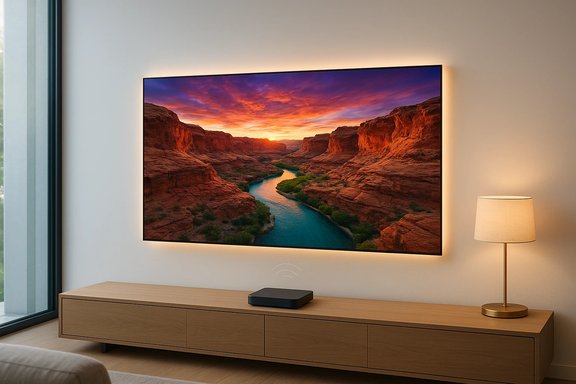
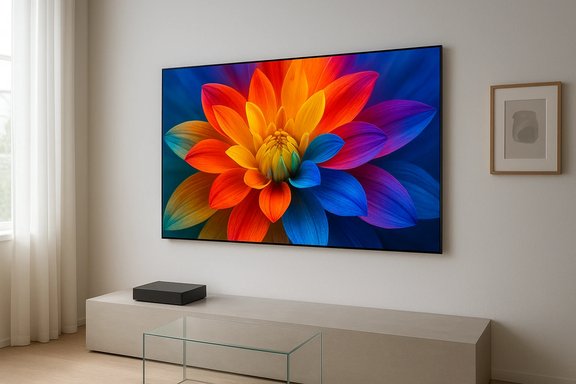
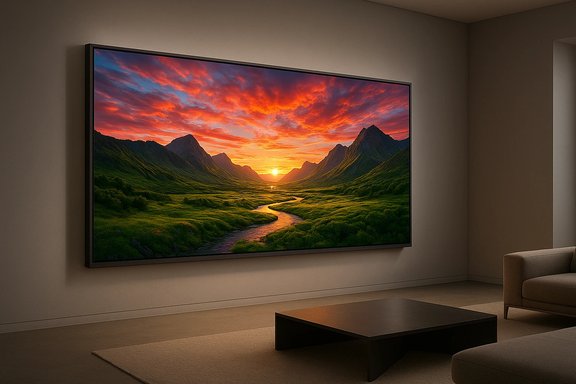
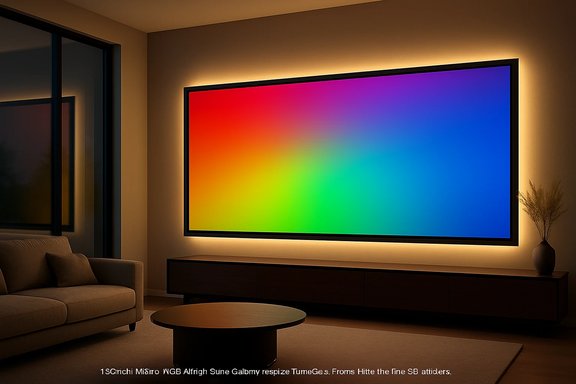
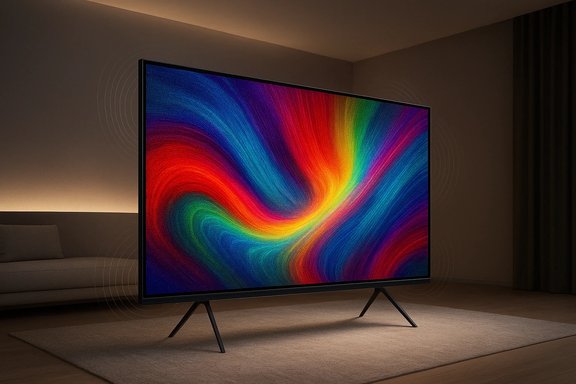
Samsung is making the 130‑inch R95H as much an interior design statement as a display product. The LED array sits behind a refined Timeless Frame that’s intended to make the screen read as a gallery‑style “window” rather than a conventional TV, and audio is integrated into the frame to maintain coherence between picture scale and soundstage. The set also includes Samsung’s Glare Free coating to reduce reflections on an ultra‑large surface. Audio has been treated as a first‑class concern: the R95H supports Eclipsa Audio, Dolby Atmos and features like AI Sound Controller Pro, and Samsung highlights Q‑Symphony compatibility for deeper soundstage integration with ecosystem speakers. For very large displays, speaker design and room acoustics are as consequential as the panel itself; Samsung’s move to tune audio to the frame is sensible but must be validated in room measurements and listening tests.Processing, AI and the role of firmware
Micro RGB flips more of the burden for picture quality onto software than many previous display advances. Samsung packages Micro RGB with a suite of image engines — Micro RGB AI Engine Pro, Micro RGB Color Booster Pro, Micro RGB HDR Pro — and the company explicitly markets on‑device perceptual features alongside cloud agents inside Vision AI Companion. That pairing is a double‑edged sword:- Benefits: AI engines can perform per‑frame tone mapping, correct local emitter variability, manage temporal behavior and preserve creative intent while exploiting greater color volume. These functions are the difference between a neat prototype and a consistently excellent product.
- Risks: aggressive tone mapping, poor temporal filtering, or over‑enthusiastic color boosting can produce visual artifacts, color shifts at different brightness levels, or “AI hallucinations” in motion. Firmware tuning quality and update longevity will determine whether Micro RGB’s benefits hold up across content, apps and firmware revisions.
Color claims, standards and the content ecosystem
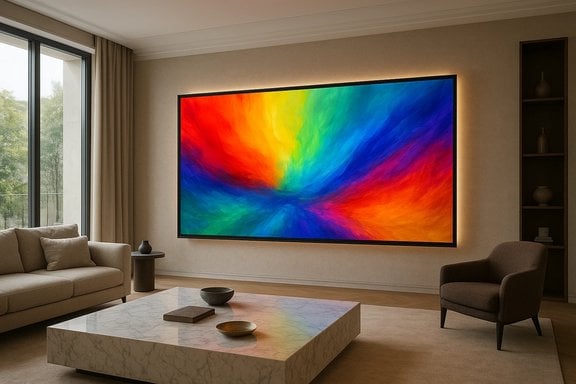
Samsung’s VDE‑verified 100% BT.2020 claim is audacious and meaningful on paper: BT.2020 defines a much larger theoretical color container than DCI‑P3. If a consumer display genuinely reproduces the published BT.2020 primaries across brightness, that points to remarkable color volume potential. However, the practical value today is constrained by several realities:- Most streaming, broadcast and Blu‑ray content is mastered in DCI‑P3 (or narrower) and not authored to fully leverage BT.2020.
- HDR standards are splintering: HDR10+, Dolby Vision 2, vendor tone mapping, and the newly promoted HDR10+ ADVANCED all present inconsistent tone‑mapping environments. This makes cross‑app behavior unpredictable until studios and streaming services converge on workflows for very wide color media.
What to test on the show floor or in early reviews
When evaluating Micro RGB demos — at Samsung’s CES exhibits or in early review units — separate spectacle from measurable performance. Prioritise these checks:- Verify color gamut coverage using standardized test patches (BT.2020, DCI‑P3, Adobe RGB) and examine delta‑E and greyscale tracking across multiple luminance points.
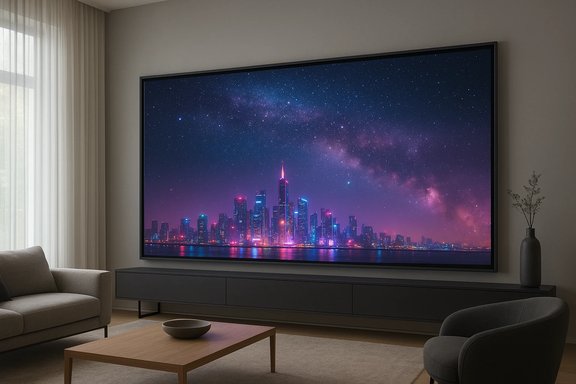
- Watch real HDR scenes with small specular highlights (night city, star fields) and check for haloing/blooming around highlights. Micro RGB promises finer locality; verify whether algorithms suppress artifacts without crushing shadow detail.
- Measure peak nit performance for small highlights and sustained brightness for large scenes. Distinguish between specular peaks and sustained panel output.
- Test motion handling and temporal stability with low‑bitrate streaming and camera pans to look for stutter, temporal artifacts or upscaler “hallucination” effects.
- Confirm HDR format behavior across physical sources and apps (HDR10+, Dolby Vision variants, Ultra HD Blu‑ray) and compare creative intent preservation with Filmmaker Mode or equivalent profiles.
- Probe privacy settings for Vision AI features and ask specifically which functions require cloud calls, how voice/image snippets are retained, and whether data can be deleted.
Market implications and pricing reality
Samsung’s decision to bring Micro RGB to an enormous 130‑inch flagship — alongside the previously announced 55–115‑inch expansion for 2026 — signals a serious bet that RGB backlighting can become a mainstream premium category. If Micro RGB delivers measurable gains, premium TV tiers could split into three clear choices: OLED for absolute blacks and emissive pixels, Micro RGB for color‑centric, high‑brightness displays, and Mini‑LED/QNED for price/performance balance.However, early Micro RGB implementations are expected to be premium. Tiny RGB emitters, dense addressing electronics, and the yield complexity that comes with micro‑manufacturing raise costs. Historical precedents suggest initial SKUs carry significant premiums; trickle‑down to affordable sizes will determine real consumer adoption speed. Samsung’s press materials do not publish global retail pricing at announcement; regionally staggered MSRPs and staged preorders are likely.
Strengths — what Samsung gets right
- Color ambition: The Micro RGB approach tackles color volume at a hardware level rather than just relying on software saturation boosts. When matched with good driving algorithms, this can materially improve saturated hues and highlight rendition.
- Scale and design: A 130‑inch gallery design with integrated audio acknowledges that very large displays are as much furniture and interior statement as electronics. Samsung’s Timeless Frame and Glare Free coating are logical design responses to that reality.
- Processing and platform: Bundling Micro RGB with a robust AI engine and a multi‑year update promise positions the product as a living platform rather than a static TV purchase — provided firmware quality and update cadence live up to the promise.
- Third‑party verification: Citing a VDE verification for 100% BT.2020 coverage demonstrates Samsung is attempting to back its headline claims with independent tests rather than pure marketing. That reduces—but does not remove—the need for further lab validation.
Risks and unknowns — where scrutiny matters
- Still an LCD stack: Because Micro RGB remains an LCD architecture, absolute black levels and the risk of haloing remain real trade‑offs versus emissive OLED/microLED. The question is how close Micro RGB can approach OLED contrast without losing brightness advantages.
- Algorithmic dependence: The hardware’s promise depends heavily on tone mapping, micro‑dimming, temporal filtering and color management. Poor tuning could lead to color shifts, crushed shadows or temporal artifacts. Firmware matters as much as panel hardware here.
- Content readiness and standards fragmentation: Widespread benefits from BT.2020 require content and distribution pipelines to adopt wider mastering targets — a multi‑year process. HDR format fragmentation (HDR10+, Dolby Vision 2, HDR10+ ADVANCED) complicates consistent experience across apps.
- Yield and price pressure: Manufacturing dense RGB emitter arrays at scale is nontrivial; early prices will reflect yield and complexity premiums. That could limit adoption to affluent early adopters and commercial installations initially.
- Privacy & cloud dependencies: Vision AI Companion’s hybrid edge/cloud architecture adds convenience but raises practical questions about telemetry, data retention, and local control — all points that buyers should verify on release units.
Verification status and claims that need third‑party confirmation
Samsung’s public claims can be verified only with independent lab work and longer‑term usage:- The sub‑100 μm emitter pitch and the effective addressable emitter count per square inch — these are central engineering metrics that are not fully specified in consumer press material and need instrumented confirmation.
- Real‑world BT.2020 performance across brightness: VDE verification of color primaries is meaningful, but reviewers should measure delta‑E, color volume at multiple luminance levels, and greyscale tracking to confirm practical performance.
- Haloing and black‑level behavior under mixed scenes: Objective measurement of local contrast, blooming metrics and temporal stability will determine whether Micro RGB strikes a usable trade‑off versus OLED.
- HDR format handling and tone mapping fidelity across apps and physical sources: Confirm how the R95H handles Dolby Vision variants, HDR10+/HDR10+ ADVANCED and Ultra HD Blu‑ray content.
A practical checklist for WindowsForum readers and prosumers
- On the CES show floor (or in first‑look reviews), confirm the vendor’s measurement patches and ask for raw delta‑E / color‑volume numbers.
- Run night‑scene HDR tests and look closely for haloing around small highlights. Compare with an OLED or top Mini‑LED reference.
- Verify HDR behavior across Netflix, Prime Video, AppleTV+, and Ultra HD Blu‑ray to detect inconsistent tone mapping.
- Stress test motion with low bitrate streams and fast pans to check for temporal artifacts from AI upscalers.
- Inspect privacy controls for Vision AI Companion: ask which features use cloud agents, whether voice/image data can be deleted, and how group profiles are isolated.
- Demand clarity on firmware/update promises and calibration options (3D LUT support, service menus, professional profiles).
Final assessment — why this matters for the TV market
Samsung’s 130‑inch Micro RGB R95H is a consequential product announcement because it crystallizes a multi‑vendor trend: the industry is experimenting with direct RGB backlighting as a way to combine high brightness and wider color volume in large‑format displays while still leveraging LCD manufacturing scale. If Micro RGB proves out in independent testing and Samsung delivers durable firmware updates and clear privacy controls, the technology could create a third, hybrid premium category distinct from OLED and high‑end Mini‑LED. That would reshape how studios, streaming services and pro colorists think about mastering targets and could push consumer expectation toward higher color volume in living‑room displays.Conversely, if the implementation leans too heavily on marketing claims while leaving haloing, tone‑mapping, or firmware instability unresolved, Micro RGB will be remembered as an ambitious but imperfect transitional architecture that buyers paid a premium to evaluate. The next steps to move from promise to practical benefit are straightforward: independent lab validation, transparent firmware release notes and responsible privacy/telemetry disclosures.
The immediate takeaway for WindowsForum readers: the Samsung R95H and the Micro RGB family are an important signal that display engineering is entering a new phase where sub‑millimeter emitter control, advanced AI engines, and design integration determine flagship differentiation. Approach early reviews and show‑floor demos armed with the objective tests above, and treat vendor claims — however audacious — as starting points for verification rather than purchase justification on their own.
Source: Bleeding Cool News Samsung Unveils World’s First 130-Inch Micro RGB TV For CES 2026
Source: samsung.com https://news.samsung.com/global/sam...ng-next-generation-color-and-bold-new-design/