

Samsung is making one of its boldest picture-quality bets in years: ahead of The First Look media event and CES 2026, the company has sharpened its Micro RGB pitch — tiny, independently driven red, green and blue LEDs tucked into the backlight that Samsung says measure sub‑100 μm — and expanded the lineup into mainstream sizes that could make this new backlight architecture an industry focal point in 2026.
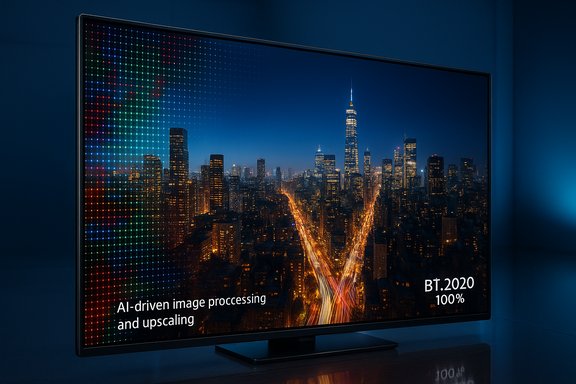
Samsung traces the line from its 1975 Econo TV through decades of LCD, LED and QLED innovation to its current push into Micro RGB, and it frames the move as the next step in a long-running quest for improved color fidelity and brightness control. The company points to its long run at the top of the TV market as context for the investment: Samsung has led global TV sales for nearly two decades, a streak industry reports put at 19 consecutive years through 2024. Technically and commercially, Micro RGB sits between the current high‑brightness LCD/Mini‑LED world and the self‑emissive microLED/OLED category. Samsung’s public brief for the 2026 Micro RGB expansion describes arrays of microscopic RGB emitters, advanced AI-driven picture engines (Micro RGB AI Engine Pro, 4K AI Upscaling Pro), and wide color ambitions — including a claim of VDE‑verified coverage of the BT.2020 color container. The company will put those claims on display at The First Look on January 4 and across CES 2026 exhibitions that follow.
Source: samsung.com https://news.samsung.com/ca/ces-202...g-to-push-boundaries-of-tv-at-the-first-look/
 Background / Overview
Samsung traces the line from its 1975 Econo TV through decades of LCD, LED and QLED innovation to its current push into Micro RGB, and it frames the move as the next step in a long-running quest for improved color fidelity and brightness control. The company points to its long run at the top of the TV market as context for the investment: Samsung has led global TV sales for nearly two decades, a streak industry reports put at 19 consecutive years through 2024. Technically and commercially, Micro RGB sits between the current high‑brightness LCD/Mini‑LED world and the self‑emissive microLED/OLED category. Samsung’s public brief for the 2026 Micro RGB expansion describes arrays of microscopic RGB emitters, advanced AI-driven picture engines (Micro RGB AI Engine Pro, 4K AI Upscaling Pro), and wide color ambitions — including a claim of VDE‑verified coverage of the BT.2020 color container. The company will put those claims on display at The First Look on January 4 and across CES 2026 exhibitions that follow. What Samsung is announcing (the concrete claims)
Samsung’s 2026 Micro RGB announcements are concise and focused on three public claims you can measure or evaluate:- Micro RGB hardware: arrays of sub‑100 μm red, green and blue LEDs as a backlight to an LCD stack, enabling more precise color and local light control than white/blue LED + quantum-dot filters.
- Expanded sizes and SKUs: Samsung says Micro RGB will be offered in six size classes — 55, 65, 75, 85, 100 and 115 inches — bringing the tech to rooms where consumers actually live rather than only ultra‑large installations.
- Processing and verification: Micro RGB AI Engine Pro and Micro RGB Precision Color 100 (VDE‑verified 100% BT.2020 coverage per Samsung) with an upgraded Vision AI Companion that bundles on‑device perceptual features and cloud agents for search and translation.
Technical deep dive: how Micro RGB works — and what that really means
Micro RGB vs. Mini‑LED and microLED
Micro RGB is not the same as self‑emissive microLED. Instead, it rethinks the backlight inside an LCD panel:- Traditional LCD: white (or blue) LED backlight → quantum dots / colour filters → liquid crystal modulation. Control is zonal (hundreds to thousands of dimming zones), not sub‑pixel.
- Mini‑LED: smaller white LEDs and far more zones, improving local dimming and peak brightness.
- Micro RGB: arrays of tiny red, green and blue LEDs that each emit their own colour and are addressed at a much finer grain (Samsung advertises sub‑100 μm emitters). This lets the backlight itself provide colour mixing and highly local luminance control, while the LCD layer still handles polarization and contrast.
The role of image engines and AI
Samsung pairs Micro RGB with purpose-built processing: the published materials name a Micro RGB AI Engine Pro and features like Micro RGB Color Booster Pro and Micro RGB HDR Pro. Those engines are intended to run frame‑by‑frame optimization, per‑scene tone‑mapping and micro‑dimming control to suppress artifacts and maximize colour volume. Processing matters more here than with simpler backlights — advanced AI-driven compensation will be required to manage local contrast, tiny emitter variability and temporal stability (flicker or interaction with motion). Samsung’s press materials make those algorithmic commitments explicit; independent reviews will have to confirm how effective they are in practice.Color claims and standards — what “100% BT.2020” actually signifies
Samsung has stated that the Micro RGB Precision Color 100 platform achieves 100% of the BT.2020 container and that that result has been independently verified (VDE is named in global announcements). Achieving BT.2020 coverage is a headline-making technical milestone because BT.2020 defines a much larger theoretical colour volume than the commonly used DCI‑P3. However, there are important real‑world caveats:- BT.2020 is a wide container used by industry workflows; almost no consumer streaming content today is authored to fully use BT.2020 colour volume. The short‑term benefit for most viewers is richer DCI‑P3 rendering and more accurate saturated highlights rather than immediate, universal gains tied to BT.2020 media.
- Certification matters: VDE or Intertek verification that follows listed measurement protocols reduces the credible‑claims gap versus vendor self‑reporting. Samsung’s announcements specifically reference such third‑party verification. Buyers should still look for independent lab reports (DisplayMate, RTINGS, independent review labs) that show delta‑E, greyscale tracking and colour volume across brightness levels.
What Samsung will show at The First Look & CES 2026
Samsung’s The First Look is scheduled for January 4, 2026 (two days before the CES floor opens) with extended showings throughout CES. The company has already positioned Micro RGB as a centrepiece of its CES presence and plans to demonstrate the expanded 55–115‑inch lineup, Vision AI Companion upgrades and accompanying audio features like Eclipsa Audio and Dolby Atmos support. Expect staged demos with curated content that highlights saturated colours and ultra‑bright highlights — exactly the scenes where Micro RGB should shine — but also seek out measured demos that use standardized test patterns.Strengths: where Micro RGB could genuinely move the needle
- Higher color volume and vivid HDR highlights. Direct RGB emitters let the backlight contribute to colour rather than merely supplying white light that is filtered later; that has clear theoretical advantages for saturated hues and bright specular highlights.
- Scalability to living‑room sizes. Samsung’s move to 55–115 inch classes is significant: it shifts Micro RGB from a novelty in giant single installations to a viable living‑room option.
- Finer local control without abandoning LCD supply chains. Micro RGB leverages existing LCD manufacturing with a different backlight approach, which can preserve economies of scale compared with fully self‑emissive microLED tiling.
- Third‑party verification and an AI processing stack. VDE verification (Samsung’s statement) and explicitly named AI engines indicate that Samsung is attempting to avoid the “spec only” trap. Independent lab tests will be decisive, but the company has signalled awareness of the technical challenges.
Risks and unknowns — where buyers and reviewers should be cautious
- It's still an LCD stack. Micro RGB improves many aspects of backlight control, but it does not make the screen self‑emissive. Absolute black levels and the potential for haloing around small highlights remain concerns until independent tests confirm the degree of improvement. Trusted reviews will be essential to quantify how close Micro RGB comes to OLED black levels without sacrificing the high‑brightness advantage.
- Algorithmic dependence. The improved hardware must be matched with excellent driving and tone‑mapping algorithms. Poor tuning can produce over‑aggressive tone mapping, colour shifts at different brightness levels, or temporal artifacts in motion. The AI engine is an advantage only when well‑designed.
- Content mismatch and standard fragmentation. While manufacturers tout BT.2020 capability, consumer content rarely exploits that container. Meanwhile HDR standards continue to splinter (HDR10+, Dolby Vision 2, vendor tone‑mapping). Consumers could face inconsistent HDR behaviour across apps and devices as standards and studio support evolve.
- Price and yield. Early Micro RGB implementations will be premium. Tiny RGB emitters and their addressing hardware raise yield concerns and cost; Samsung’s initial 115‑inch demo was positioned at a high price tier and the company expects trickle‑down to smaller sizes to moderate cost over time.
- Privacy and cloud dependencies. The upgraded Vision AI Companion mixes on‑device perception (translate, actor recognition) with cloud agents for deeper reasoning. Consumers need clear, accessible controls for what data is sent to cloud partners and how long it’s retained. Samsung’s hybrid edge + cloud architecture helps latency‑sensitive features but leaves unanswered telemetry questions that should be asked at the CES demos.
How to evaluate Micro RGB on the show floor and in reviews
When you see Micro RGB demos, demand both spectacle and metrics. The following checklist separates marketing theatre from measurable performance:- Verify color gamut coverage with standardized patches: BT.2020, DCI‑P3 and Adobe RGB. Check delta‑E numbers and greyscale tracking across brightness levels.
- Watch real HDR scenes with small highlights (night city, star fields) to inspect haloing/blooming. Compare with OLED and high‑end Mini‑LED.
- Measure peak nit performance on small specular highlights and remain mindful of sustained brightness versus specular peaks.
- Test upscaling and motion handling: use low‑bitrate streaming content and camera pans to look for temporal artifacts or “AI hallucinations.”
- Confirm HDR format behaviour across services (Netflix, Prime, Ultra HD Blu‑ray) — note whether Dolby Vision 2 or HDR10+ are handled natively and how tone mapping behaves.
- Probe privacy settings: ask which Vision AI features require cloud calls, how voice/image snippets are handled, and whether user data can be deleted or processed only locally.
- Evaluate audio features and synchronization (Eclipsa Audio, Dolby Atmos, Q‑Symphony) in real content to ensure lip‑sync and latency are acceptable.
Market implications — why Micro RGB matters beyond a single launch
Micro RGB represents a potential re‑segmentation of premium displays. If the technology delivers as promised, the premium tier could split into three credible categories:- OLED: perfect blacks and emissive pixels.
- Micro RGB / RGB‑backlit LCDs: colour‑centric, high‑brightness displays that aim to combine OLED‑class colour volume with LCD brightness advantages.
- High‑end Mini‑LED/QNED: pragmatic brightness + dimming balance focused on price/performance.
Practical buying guidance and timeline
- Public demos: Samsung’s The First Look is January 4, 2026, at Wynn Las Vegas; CES runs immediately after. Expect hands‑on demos there and follow‑up independent lab reports in the weeks after.
- Availability: Samsung says Micro RGB 2026 models will be launched across six sizes (55–115 inches) and is planning global rollouts in 2026; region availability and prices will be staged and may vary by market. Preorders and shipping windows typically follow CES demonstrations.
- Who should consider early adoption: colour‑critical viewers, prosumers and enthusiasts who prioritize maximum color fidelity and are prepared to pay premium prices for early hardware. Calibrators and studios may find the color volume especially attractive once independent verification shows real‑world stability.
- Who should wait: mainstream buyers who prioritize value or those sensitive to absolute black levels (OLED remains the stronger option for absolute black). Waiting for second‑wave models and independent lab reviews will likely yield better pricing and more mature firmware.
Final assessment: important strengths — and why verification matters
Samsung’s Micro RGB push is technically credible and strategically sensible: it leverages the company’s scale, image processing IP and channel reach to make an advanced backlight architecture available across actual living‑room sizes. The company’s VDE/third‑party verification claims, the explicit AI processing stack and the expanded size range remove some of the “prototype only” ambiguity and make Micro RGB a legitimate contender for the premium category. Still, the decisive factors will be independent, instrumented measurements and real‑world viewing behavior. Areas to watch closely in professional lab tests and long‑term reviews:- True black level and halo control against OLED and best Mini‑LED TVs.
- Temporal stability under real‑world motion and low‑bitrate streaming.
- Firmware-driven tone mapping: can the AI engine preserve creative intent (Filmmaker Mode) while leveraging the hardware’s color advantages?
- Privacy, data governance and software update longevity for AI features on the TV.
Quick checklist for WindowsForum readers attending CES or reading first reviews
- Confirm Samsung’s published specs on Micro RGB (sub‑100 μm LED claim and size SKUs) against demo behavior.
- Ask for measured BT.2020 / DCI‑P3 / Adobe RGB coverage reports and delta‑E numbers.
- Run HDR scenes with small highlights, and compare with an OLED reference to evaluate black level and blooming.
- Probe privacy and cloud fallbacks for Vision AI Companion (what’s local vs cloud).
- Watch for independent lab coverage (DisplayMate, Rtings, third‑party AV labs) before making a high‑investment purchase.
Source: samsung.com https://news.samsung.com/ca/ces-202...g-to-push-boundaries-of-tv-at-the-first-look/
