

Microsoft has acquired Seattle startup Osmos and folded its team and technology into the engineering organization behind Microsoft Fabric, a move positioned to accelerate what Microsoft calls “autonomous data engineering” by embedding agentic AI directly into the Fabric data stack.
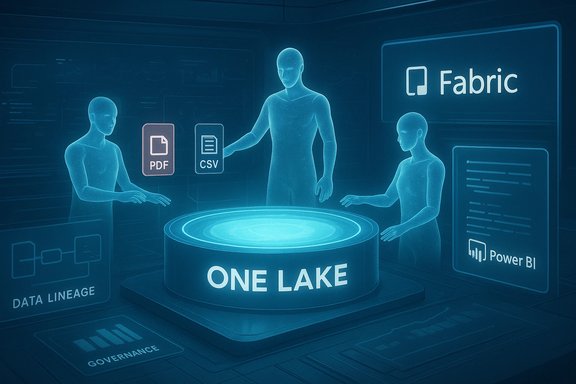
Microsoft Fabric is the company’s unified data and analytics platform that brings together data engineering, data science, real-time analytics, and business intelligence under a single roof centered on OneLake. Launched in 2023 and matured with ongoing feature releases since, Fabric is Microsoft’s strategic vehicle for making data operations more accessible across the enterprise by combining Power BI, Azure Synapse, and data integration services into a platform designed for AI-era workflows.
Osmos, founded in 2019 and based in Seattle, built a suite of tools focused on automating data ingestion, cleansing, and transformation. The startup raised a Series A round of about $13 million in 2021 led by Lightspeed with participation from CRV, Pear, and SV Angel. Its product portfolio evolved from embeddable uploaders and no-code pipelines toward agentic AI capabilities — tools that can act autonomously on ambiguous inputs to produce engineering-grade outputs such as normalized datasets and production-ready PySpark code.
The acquisition folds Osmos’ team — a small engineering group that public profiles indicate numbers in the low tens — into Microsoft’s Fabric engineering organization. Microsoft describes the strategic intent as accelerating the delivery of AI-driven data engineering that reduces the heavy manual burden data teams face when turning raw inputs into analytics- and AI-ready assets.
Osmos’ recent product strategy had already leaned heavily on Microsoft technologies: the company built Fabric-native features (an AI Data Wrangler and an AI Data Engineer) and participated in Microsoft’s startup and partner programs. Microsoft’s stated objective is to deliver those autonomous data engineering capabilities directly within Fabric so customers can prepare, govern, and activate data without leaving the platform where their analytics and AI workloads live.
Key technical promises from this integration include:
However, the acquisition underscores important trade-offs. Native automation inside Fabric raises legitimate concerns about vendor lock-in, operational transparency, compliance, and the governance of AI-driven transformations. Enterprises should approach adoption with a pragmatic migration plan, strong governance, and conservative pilots that emphasize verifiability and rollback safety.
In short: this deal accelerates a future where data engineering becomes more autonomous and more tightly coupled to major cloud platforms. That future promises significant productivity gains — but it also makes the choices that enterprises make about platform standardization, data governance, and supplier dependence more consequential than ever.
Source: GeekWire Microsoft acquires data analytics Seattle startup Osmos to fuel push into ‘autonomous data engineering’
 Background
Microsoft Fabric is the company’s unified data and analytics platform that brings together data engineering, data science, real-time analytics, and business intelligence under a single roof centered on OneLake. Launched in 2023 and matured with ongoing feature releases since, Fabric is Microsoft’s strategic vehicle for making data operations more accessible across the enterprise by combining Power BI, Azure Synapse, and data integration services into a platform designed for AI-era workflows.Osmos, founded in 2019 and based in Seattle, built a suite of tools focused on automating data ingestion, cleansing, and transformation. The startup raised a Series A round of about $13 million in 2021 led by Lightspeed with participation from CRV, Pear, and SV Angel. Its product portfolio evolved from embeddable uploaders and no-code pipelines toward agentic AI capabilities — tools that can act autonomously on ambiguous inputs to produce engineering-grade outputs such as normalized datasets and production-ready PySpark code.
The acquisition folds Osmos’ team — a small engineering group that public profiles indicate numbers in the low tens — into Microsoft’s Fabric engineering organization. Microsoft describes the strategic intent as accelerating the delivery of AI-driven data engineering that reduces the heavy manual burden data teams face when turning raw inputs into analytics- and AI-ready assets.
What Microsoft and Osmos are promising
Microsoft frames this move as an integration of agentic AI into Fabric to automate routine, error-prone steps of the data lifecycle: ingestion, cleanup, schema reconciliation, mapping, transformation, and the generation of production artifacts. Osmos’ product family — which included Uploaders, Pipelines, Datasets and agents for platforms such as Databricks and Fabric — will be integrated into Fabric over time.Osmos’ recent product strategy had already leaned heavily on Microsoft technologies: the company built Fabric-native features (an AI Data Wrangler and an AI Data Engineer) and participated in Microsoft’s startup and partner programs. Microsoft’s stated objective is to deliver those autonomous data engineering capabilities directly within Fabric so customers can prepare, govern, and activate data without leaving the platform where their analytics and AI workloads live.
Key technical promises from this integration include:
- Agentic AI for ingestion and transformation — autonomous agents that reason over messy inputs (PDFs, inconsistent CSVs, export dumps) and transform them into normalized, structured datasets.
- Production-grade code generation — automated generation of PySpark notebooks and validated code artifacts to scale and operationalize data engineering work.
- Tighter OneLake integration — producing analytics- and AI-ready assets stored directly in Fabric’s single data lake to reduce duplication and improve discoverability.
- Lower operational overhead — shifting teams from manual ETL and repetitive cleaning tasks to supervisory roles where humans guide and validate agent output.
- Native governance and security enforcement — leveraging Fabric’s enterprise controls to ensure data access, lineage, and auditing are preserved even when AI agents perform transformations.
What actually changes for customers
For organizations using Microsoft Fabric today, the Osmos acquisition signals three practical shifts.- Product placement and access
- Osmos’ features are likely to become available as built-in Fabric workloads or services, meaning customers will access automated ingestion and wrangling directly from the Fabric console and OneLake experience rather than via a third-party integration.
- Migration and sunsetting of standalone Osmos offerings
- The deal announcement indicates a roadmap to fold Osmos functionality into Fabric. Some reporting states Osmos will wind down its standalone products and begin sunsetting certain offerings as integration proceeds. That means customers currently using Osmos as an external tool should expect a migration path and timeline — though the precise schedule and migration terms will be important to verify directly with vendor communications.
- Consolidation of operational flows
- Work that previously required cross-platform orchestration (e.g., uploading external partner files, then routing them through an external transformation pipeline and finally landing results in Fabric) can be consolidated into single Fabric-native flows. This reduces friction, but it also concentrates control and dependency on a single vendor stack.
Why Microsoft did this: strategic logic
Several strategic imperatives explain Microsoft’s move.- Fabric’s value increases when more of the data lifecycle is executed inside the platform. Automated ingestion and transformation are high-friction steps that, if solved natively, raise the switching cost for customers and the stickiness of the platform.
- Agentic AI for data engineering is a capability that differentiates cloud data platforms. Vendors are racing to provide higher levels of automation because the biggest cost in analytics and machine learning projects remains data preparation and plumbing.
- Osmos had invested in agentic features and Fabric-native connectors already; acquiring the team accelerates Microsoft’s roadmap, avoids lengthy reengineering efforts, and brings IP and talent in-house.
- Embedding Osmos reduces integration complexity with Fabric’s governance, security, and billing models — a direct go-to-market benefit for Microsoft as it offers Fabric to enterprises seeking consolidated procurement and support.
Strengths and immediate benefits
- Faster time to analytics: By automating ingestion and cleaning, organizations can reduce the elapsed time from data arrival to usable analytics assets. This is one of the most tangible ROI levers for Fabric customers.
- Closer alignment with governance: When ingestion and transformation execute inside OneLake and Fabric workspaces, governance tools such as access controls, lineage, and auditing can be consistently enforced across the whole lifecycle.
- Reduced engineering toil: Replacing repetitive, manual ETL work with agentic automation allows skilled engineers to focus on architecture, model building, and business logic instead of mundane cleanup.
- Production-ready outputs: The ability to auto-generate tested PySpark notebooks and validated pipelines reduces human error while speeding deployments.
- Simplified vendor ecosystem: For teams standardizing on Microsoft for cloud, analytics, and productivity software, having a single, integrated provider reduces procurement overhead and simplifies operational support.
Risks, open questions, and potential downsides
While the acquisition promises clear benefits, it introduces a set of technical, commercial, and governance risks that organizations must weigh.- Vendor lock-in risk: Integrating Osmos’ capabilities into Fabric strengthens the case for staying inside Microsoft’s ecosystem. For customers who value multi-cloud or best-of-breed heterogeneity, native Fabric-only automation may increase lock-in and reduce future flexibility.
- Sunsetting and migration pain: Customers currently using Osmos externally should carefully review migration plans. Reports indicate standalone offerings will wind down as integration proceeds; organizations will need timelines, export paths, and continuity guarantees to avoid disruption.
- Model behavior and data correctness: Agentic systems that reason over messy inputs risk incorrect assumptions, schema mismatches, and transformation errors. Enterprises need rigorous validation, explainability, and rollback capabilities to keep automated agents from introducing bad data into analytics pipelines.
- Security and data privacy concerns: Autonomous AI agents operating on sensitive, regulated data introduce additional threat surface. Enterprises must ensure that agent logic does not leak PII or protected information into models or logs — and that no unapproved external model endpoints are used.
- Auditability and compliance: For regulated industries, every automated transformation must be auditable. Organizations must confirm that lineage, transformation steps, versioning, and approvals are captured and exportable for audit.
- Dependence on large language models: Many agentic systems are layered on LLMs. That introduces risks related to hallucinations, unpredictable behavior, and dependency on the underlying model provider’s availability, pricing, and policies.
- Workforce and process impacts: Automating routine tasks can displace work patterns in data teams. Companies must plan for re-skilling and clear role definitions (human-as-supervisor vs. human-in-the-loop) to avoid operational confusion.
- Performance at scale: Agentic AI that works well on single-file scenarios may struggle with enterprise-scale throughput and complex cross-file relationships unless it is engineered for batch throughput and fault tolerance.
How this fits the competitive landscape
The Osmos acquisition is part of a broader trend: major cloud and data platform vendors are integrating more advanced AI into core data workflows. Competitors and partners alike are moving toward agentic automation in data operations.- Platform vendors and systems integrators are layering AI agents across data engineering functions to shorten time-to-value.
- Data movement and ETL vendors, as well as managed service providers, are advancing generative-AI features to automate schema mapping and pipeline scaffolding.
- Service providers are packaging agentic AI as part of managed data operations offerings.
Practical guidance for IT leaders and data teams
For teams running Fabric or evaluating the platform, the Osmos acquisition creates both opportunity and immediate action items.- Inventory current Osmos usage and dependencies
- List all current pipelines, uploaders, embedded agents, and integration points. Identify business-critical flows that would be impacted by product sunsetting or migration.
- Request explicit migration and support SLAs
- If you’re using standalone Osmos products, secure written migration timelines, data export options, and continuity guarantees. Clarify what will be free vs. billed under Fabric consumption models.
- Pilot agentic automation with safety controls
- Conduct a phased pilot on low-risk datasets. Verify outputs with automated and manual tests, measure error rates, and validate lineage capture.
- Strengthen governance and observability
- Ensure Fabric’s lineage, access control, and auditing features are enabled. Instrument end-to-end pipelines with checks that can detect and rollback incorrect agent transformations.
- Define human oversight processes
- Establish explicit approval gates and monitoring roles. Decide which outcomes require human sign-off and which can be auto-committed.
- Quantify ROI and re-skill staff
- Evaluate the time savings on data prep tasks versus the cost of Fabric consumption and potential migration. Create re-skilling plans for engineers to move into higher-value roles.
- Plan for contingency and exit
- Maintain exportable, versioned copies of critical datasets and pipeline definitions to preserve portability. Keep a measurable fallback path in case vendor lock-in concerns become operational constraints.
Technical considerations for architects
- Data lineage must be preserved at every transformation stage. Ensure generated notebooks and transformation steps are versioned, readable, and reproducible.
- Validate generated PySpark and code artifacts with unit tests and data checks before deploying to production clusters.
- Ensure the agent’s operation respects tenant-level policies, and that no external LLM traffic exposes sensitive data.
- Monitor compute and storage costs closely; automated agents that re-process large volumes of files can consume significant compute and storage resources if not tightly controlled.
- Consider applying differential privacy, tokenization, or field-level masking for regulated data before passing inputs to any generative model.
Bigger picture: what this signals about the industry
The Osmos acquisition is one more data point in a larger pattern: platform vendors are moving beyond helper features to autonomous systems that execute multi-step data engineering tasks. The shift is driven by three converging forces:- Generative and agentic AI capabilities have matured enough to tackle complex, multi-step tasks.
- Enterprises are still spending the bulk of their analytics budgets on data preparation, creating a ripe market for automation.
- Platform consolidation continues as vendors seek to own increasing portions of the data lifecycle to deliver integrated, AI-ready experiences.
Where caution is needed: unverified or evolving details
Some details reported after the acquisition announcement remain subject to verification and clarifications from the parties involved. For example:- Public reporting indicates Osmos will wind down standalone offerings and that certain products will begin sunsetting at a specified date early in the migration timeline. The exact timelines, customer transition terms, and support commitments should be confirmed directly with official vendor communications and by reviewing contractual notices.
- Team size estimates for Osmos vary across public profiles and tracking services. Headcount figures are small by enterprise acquisition standards, but precise numbers may differ between recruiting profiles and investor reporting.
- Pricing and billing implications of integrated Osmos functionality within Fabric (consumption vs. bundled licensing) will be determined by Microsoft’s product packaging and should be evaluated by customers before migration.
Final assessment
The acquisition of Osmos by Microsoft is a logical strategic move to strengthen Microsoft Fabric’s native capabilities around data ingestion, cleaning, and transformation through agentic automation. For organizations that have standardized on Microsoft technologies, this can be a net gain: faster onboarding of external data, built-in governance, and reduced manual toil.However, the acquisition underscores important trade-offs. Native automation inside Fabric raises legitimate concerns about vendor lock-in, operational transparency, compliance, and the governance of AI-driven transformations. Enterprises should approach adoption with a pragmatic migration plan, strong governance, and conservative pilots that emphasize verifiability and rollback safety.
In short: this deal accelerates a future where data engineering becomes more autonomous and more tightly coupled to major cloud platforms. That future promises significant productivity gains — but it also makes the choices that enterprises make about platform standardization, data governance, and supplier dependence more consequential than ever.
Source: GeekWire Microsoft acquires data analytics Seattle startup Osmos to fuel push into ‘autonomous data engineering’
