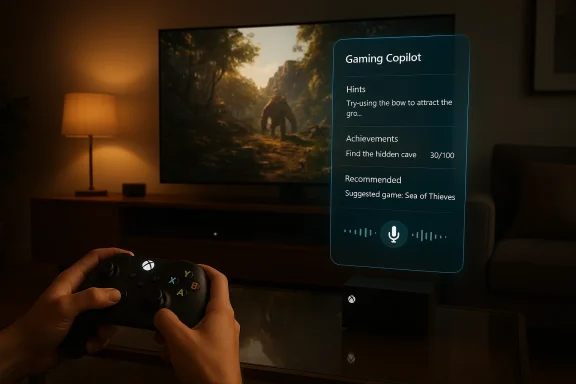
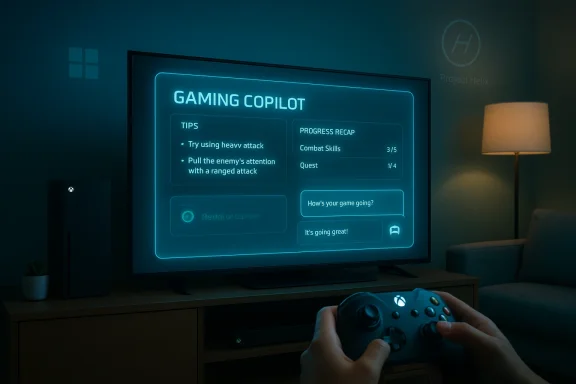
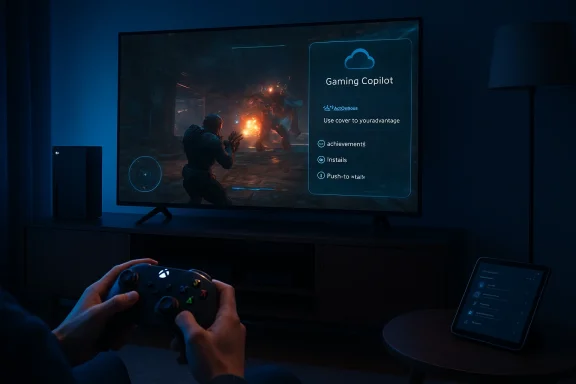
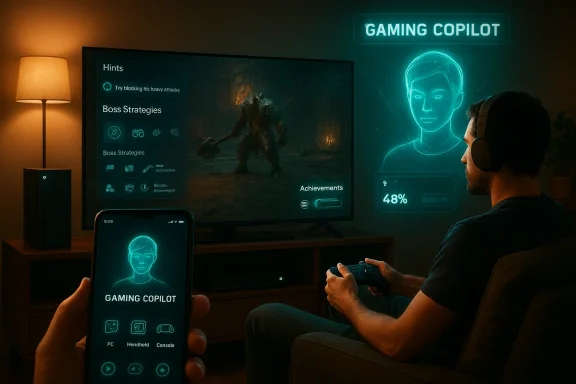
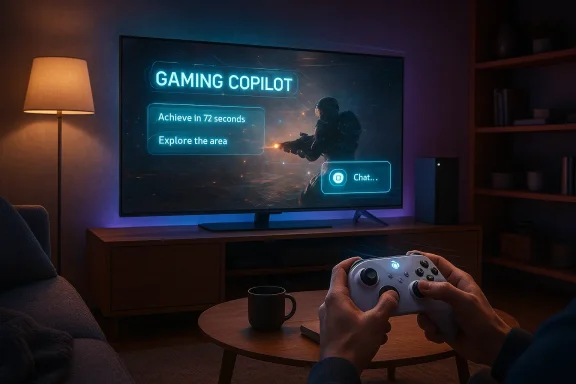
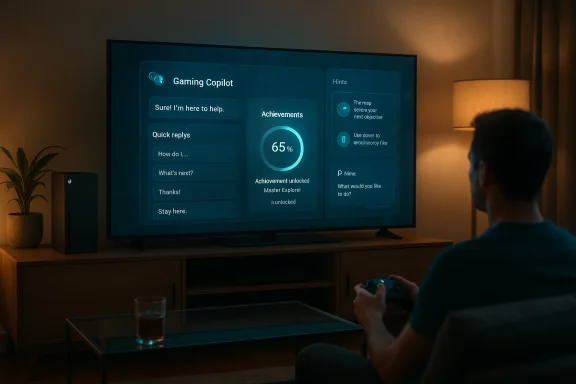
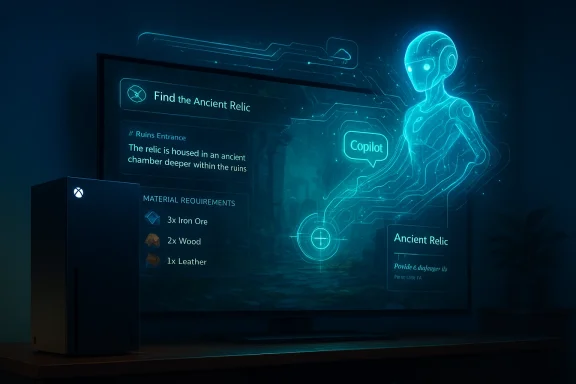
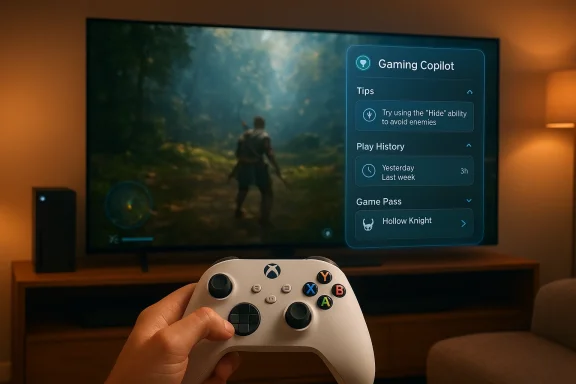
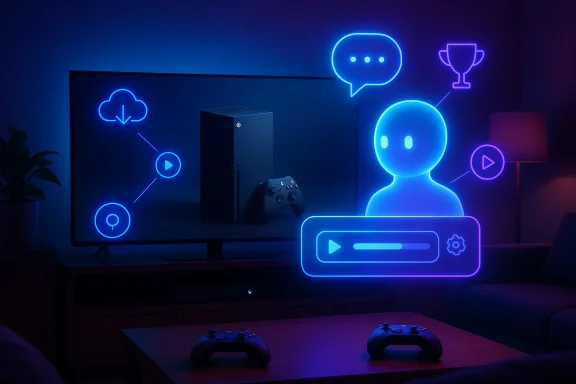
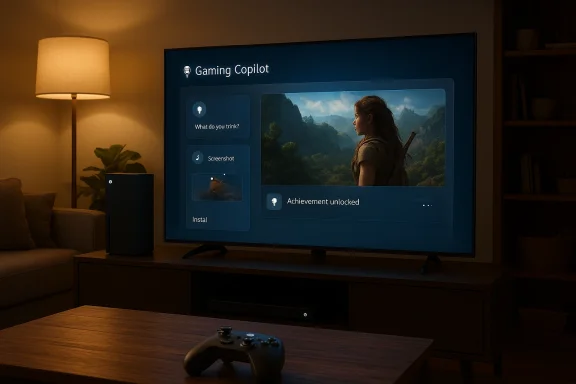
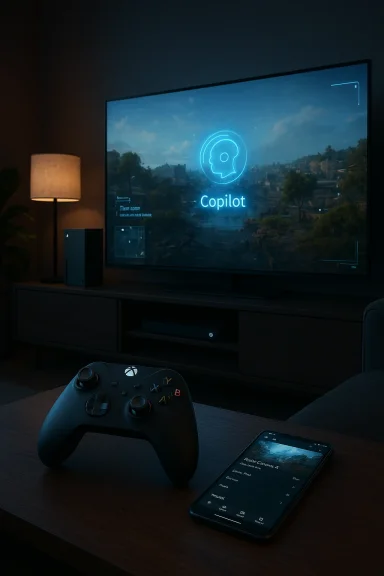
Microsoft’s Gaming Copilot — the AI assistant Microsoft has been testing inside Xbox Game Bar and on mobile — is officially headed to Xbox Series X|S consoles later this year, the company confirmed during its GDC 2026 presentation. What began as a Windows-centered beta and mobile preview is now being positioned as a cross-platform gaming sidekick that will live on console hardware for the first time, promising recommendations, contextual in-game help, and personalized coaching. The announcement marks a significant step in Microsoft’s plan to fold Copilot-style AI into the everyday player experience across Windows, mobile, handhelds, and now consoles — but it also raises a raft of technical, privacy, and design questions that Microsoft and developers will need to answer before this becomes a seamless, welcome feature on living-room hardware.
Gaming Copilot started life as an Xbox-led experiment to bring the Microsoft Copilot concept into gaming: an AI assistant that understands your play history, the game on screen, and your account context to deliver in-the-moment guidance. The public beta has been available on Windows via the Xbox Game Bar and rolled out to the Xbox mobile app and a handful of handheld Windows devices during 2025, where it provides features like game recommendations, strategy tips, and contextual help that can use active screenshots when the Copilot overlay is invoked.
At the GDC Festival of Gaming session led by Microsoft’s Gaming AI team, Xbox representatives framed their work as a cautious, player-first approach: refine interactions, respect gameplay flow, and ensure AI-driven assistance meaningfully improves the experience. During that session Microsoft’s team indicated the next logical step is bringing Gaming Copilot to the current generation of consoles later in 2026. That shift would place Copilot directly on Xbox Series X|S hardware, expanding availability to millions more players and bringing console-specific UX and platform integration challenges to the fore.
Key privacy considerations Microsoft must handle for a console launch:
Sony’s own patent filings describing a “ghost assistance” system (a ghost character trained on footage to model how to play a section) demonstrate that the whole industry is exploring AI-assisted gameplay. That parallelism increases the likelihood that we’ll see some form of assisted, demonstrative gameplay in the future.
But the move also brings critical challenges. Consoles require a controller-first UX, stricter performance guarantees, developer partnership, and iron-clad privacy and data-handling promises. Patents hint at ambitious future features — cloud helpers, ghost play, and proactive assistance — but patents can overpromise; they are design options, not guarantees. The console user experience will hinge on Microsoft’s ability to deliver tangible benefits without introducing intrusive behavior, privacy surprises, or an uneven competitive landscape.
For players, the sensible stance is cautious curiosity: test the feature when it arrives in the Insider rings, scrutinize the privacy and data defaults, and hold platform and developer partners to clear standards for attribution and fair play. For Microsoft, the test is trust: make Copilot helpful, transparent, and optional, and it will be a win for players and creators alike. Fail on any of these fronts, and Copilot could reinforce the worst fears about in-game AI — intrusive, inaccurate, or unfair assistance that ultimately hurts the player experience.
The console Copilot is coming — and with it, a new chapter in the relationship between game, player, and platform. How Microsoft, developers, and the community choose to shape that chapter will determine whether Gaming Copilot becomes a beloved helper or another feature that divides players.
Source: GamingBolt Gaming Copilot is Coming to Xbox Series X/S in 2026
 Background / Overview
Gaming Copilot started life as an Xbox-led experiment to bring the Microsoft Copilot concept into gaming: an AI assistant that understands your play history, the game on screen, and your account context to deliver in-the-moment guidance. The public beta has been available on Windows via the Xbox Game Bar and rolled out to the Xbox mobile app and a handful of handheld Windows devices during 2025, where it provides features like game recommendations, strategy tips, and contextual help that can use active screenshots when the Copilot overlay is invoked.At the GDC Festival of Gaming session led by Microsoft’s Gaming AI team, Xbox representatives framed their work as a cautious, player-first approach: refine interactions, respect gameplay flow, and ensure AI-driven assistance meaningfully improves the experience. During that session Microsoft’s team indicated the next logical step is bringing Gaming Copilot to the current generation of consoles later in 2026. That shift would place Copilot directly on Xbox Series X|S hardware, expanding availability to millions more players and bringing console-specific UX and platform integration challenges to the fore.
What Gaming Copilot Does Today
Core capabilities in the current beta
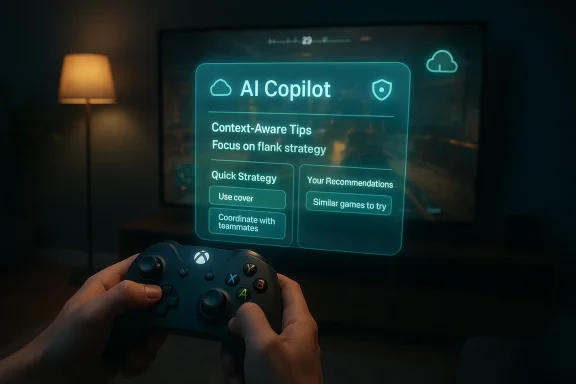
- Context-aware advice: Copilot can answer questions about what’s happening in a game while it’s running — for example, pointing out missed items or strategy adjustments based on a screenshot or session context when the feature is active.
- Personalized recommendations: It suggests new games based on play history, favorite genres, and critical reception; it can also surface Game Pass renewal reminders and account-centric details.
- Strategy and coaching: Copilot offers quick strategy guides, in-game tips, and personalized coaching aimed at helping players improve specific skills or navigate tricky encounters.
- Convenience tasks: From reinstalling a game the AI thinks you were playing to reminding you where you left off, Copilot aims to remove friction between the player and their games.
Interaction model
The current Windows/mobile model is designed to be intentionally unobtrusive: Copilot is an overlay or widget you summon rather than a persistent assistant that interrupts gameplay. It pulls context from available signals — active window, recent account activity, and optionally screenshots taken while Copilot is actively used — to respond more helpfully. Microsoft has emphasized opt-in-style control in messaging around the beta.Why Console Matters: The Strategic Case
Bringing Gaming Copilot to Xbox Series X|S is not just about porting software; it’s a strategic pivot with multiple implications.- It extends Microsoft’s Copilot ecosystem across the places players already spend most of their time: living-room consoles.
- Consoles are a curated environment where platform-level features can be standardized, enabling deeper integration with achievements, Game Pass, social features, and controller-based UX.
- Microsoft has an economic incentive: tighter Copilot integration could increase Game Pass engagement and retention by reducing friction for discovering, re-installing, and resuming games.
- For players, consoles represent a different use case than PC: longer play sessions, shared-screen local play, and controller-first interfaces. Copilot’s success on consoles will rest on how well it adapts to those realities.
Technical and UX Challenges of Bringing Copilot to Xbox Series X|S
Putting an AI assistant on a console is deceptively complex. Microsoft faces several engineering and product design constraints it must solve to get this right.Overlay and input model
Consoles typically favor minimal overlays to preserve an uninterrupted TV experience. Game Bar on Windows is built for quick overlays and keyboard/mouse input; consoles demand a controller-first interface that is readable at distance on large screens. Microsoft will need to rework Copilot’s UI for:- Controller navigation and voice input.
- Clear visual presentation on TVs and projectors.
- Non-intrusive triggers that don’t accidentally interrupt local multiplayer or livestreams.
Performance and latency
In-game assistance that analyzes live gameplay must do so without introducing lag or framerate drops. On consoles this is especially sensitive: players expect consistent performance. Microsoft can mitigate this by:- Offloading heavy inference to cloud infrastructure.
- Caching model outputs locally for frequent queries.
- Using lightweight on-device models for simple tasks and cloud models for heavier reasoning.
Integration with achievements, saves, and state
Consoles rely on strict rules for achievements, trophies, and save-state integrity. If Copilot performs assisted actions — like showing exact controller inputs, or in a more extreme case, a cloud helper playing a segment — Microsoft must ensure:- Proper attribution of achievements.
- Clear player consent before any helper modifies a save state.
- Robust safeguards to prevent exploitation in competitive or leaderboard contexts.
Offline and single-player scenarios
A console-bound Copilot must gracefully handle offline sessions. Players expect games to work without indefinite online requirements. The assistant should degrade features intelligently when network access or cloud services are unavailable.Privacy, Data Use, and the ‘Screenshots’ Debate
One of the louder controversies around Gaming Copilot has revolved around how Copilot collects context from gameplay. Microsoft’s public guidance for the beta states that Copilot uses screenshots captured when the assistant is actively invoked to better understand the game state, and that those captures are not used for model training by default. But players and privacy advocates raised concerns after early reports suggested unexpected captures or unclear defaults.Key privacy considerations Microsoft must handle for a console launch:
- Explicit consent and clear defaults: Players should explicitly enable or disable in-game context captures. Opt-out or complicated removal flows breed distrust.
- Transparency about data use: If screenshots, telemetry, or account activity are used for personalization, the company must disclose whether that data feeds model training, is stored, or is ephemeral.
- Parental controls and age gating: Console environments often host minors. Copilot must respect age restrictions and prevent inappropriate content or interactions.
- Local vs cloud processing choices: The more processing occurs in the cloud, the greater the privacy surface. Local-only modes (with reduced features) could provide users with safer, privacy-respecting options.
The Patent Signals: Where Copilot Could Go Next
Recent patent filings unearthed in the industry suggest Microsoft has been exploring sophisticated help sessions that go beyond chat-based guidance.- Descriptions in the filings point to cloud-based helper sessions, where either an AI or another player could be connected into a saved game state to demonstrate solutions or take temporary control. That’s a different, more interactive model than the current Copilot overlay.
- Patents indicate automatic detection of optimal trigger points for help — where the system might proactively suggest assistance when a player repeatedly fails a challenge.
- There’s an explicit focus on versatility across genres: racing helpers could recommend optimal driving lines, while action-adventure helpers might demonstrate complex input sequences.
Sony’s own patent filings describing a “ghost assistance” system (a ghost character trained on footage to model how to play a section) demonstrate that the whole industry is exploring AI-assisted gameplay. That parallelism increases the likelihood that we’ll see some form of assisted, demonstrative gameplay in the future.
Developer and Publisher Considerations
Game creators are central stakeholders in Copilot’s evolution. If Copilot becomes a platform-level helper on Xbox consoles, developers will want:- APIs and opt-in controls so they can decide how Copilot interacts with their game (e.g., whether Copilot can alter game state, show walkthroughs, or offer step-by-step input).
- Monetization and attribution mechanisms for guide creators whose content Copilot may surface.
- Tools to protect competitive integrity for multiplayer titles: administrators will expect Copilot to be neutral and not provide unfair help in online matches.
- Quality controls so Copilot’s tips don’t propagate stale, incorrect, or exploitative advice.
Player Benefits — Where Copilot Can Shine
If executed thoughtfully, Copilot on console offers real, tangible benefits:- Lower friction for discovery: Faster reinstallation, resuming play, and relevant Game Pass recommendations tailored to your habits could save time and surface games you’ll actually enjoy.
- Improved accessibility: Players with disabilities might use Copilot for adaptive input suggestions, alternative strategies, or to remap controls more effectively.
- Learning and practice: Coaching for skill growth — from racing lines to combat tips — could make games less frustrating for newcomers and help veterans refine technique.
- Contextual troubleshooting: Faster solutions for technical problems or setup tasks will reduce support calls and improve player satisfaction.
Risks, Abuse Vectors, and Competitive Concerns
With great assistance comes great potential for misuse. Key risks include:- Cheating and competitive imbalance: If Copilot can actively change game state or share optimal inputs, it could be abused in ranked or speedrunning contexts unless strictly limited.
- Privacy creep: Poor defaults or opaque data collection could erode trust and invite regulatory scrutiny, particularly in jurisdictions with strong data-protection laws.
- Content provenance and monetization tensions: If Copilot surfaces third-party guides without compensation or attribution, creators will push back.
- Performance and reliability: Cloud dependency for crucial assistance could leave players stranded during outages, creating a worse experience than no Copilot at all.
- Toxicity and misuse of human helpers: If systems permit human helpers to connect into sessions, Microsoft must guard against harassment, fraud, and age-inappropriate interactions.
What To Expect in Microsoft’s Console Launch (Realistic Timeline and Feature Parity)
Microsoft’s public messaging frames the console launch as a 2026 objective with “coming later this year” language. Based on the current beta footprint and technical complexity, a few realistic expectations:- Phased rollout: Expect Copilot on consoles to arrive in stages — initial UI/UX and mobile-parity features first (recommendations, chat, context-aware tips), followed later by deeper in-game overlays or cloud-assist mechanisms.
- Feature parity limits: Some PC-only conveniences (keyboard shortcuts, advanced overlays) will be adapted or reduced for console. Early console Copilot will likely prioritize voice/gesture-friendly interactions and account-level recommendations.
- Xbox Insider preview: Microsoft typically opens console feature testing to Xbox Insiders before broad release. Expect a fast-follower approach where platform bugs and privacy UX are iterated publicly.
- Developer opt-in: Microsoft will likely provide developers with toggles to control Copilot’s reach inside their games, at least for the initial releases.
Recommendations for Microsoft (and What Players Should Watch For)
To maximize benefits and minimize harm, Microsoft should prioritize:- Explicit opt-in and easy opt-out: Players must be able to control Copilot’s data access and screenshot capture with clear, one-click toggles.
- Transparent privacy documentation: Plain-language explanations of what is captured, how long it’s stored, and whether anything feeds model training.
- Developer-facing controls: Simple APIs that let creators define allowed Copilot behaviors per title to protect competitive integrity.
- Third-party content attribution: Mechanisms that allow Copilot to surface, credit, and potentially compensate guide authors whose work it uses.
- Local processing mode: A privacy-first option with reduced capabilities for users who cannot or will not send gameplay context to the cloud.
- Age-appropriate filters and moderation: Strong protections when minors are present, including vetted human helper flows or limited AI responses.
How This Could Affect the Broader Industry
Microsoft’s embrace of in-game AI assistance on consoles will accelerate a market-wide response. Expect:- Platform competition: Other console makers are already exploring similar patents and features; we’ll see competing assistant systems emerge.
- Game design shifts: Developers may design systems with assistance hooks (help checkpoints, segmented state saves) to allow safe, supported interactions with helpers.
- New creator economies: If Copilot aggregates and surfaces third-party guides at scale, a new monetization model for guide creators could arise — or friction if it doesn’t.
- Regulatory attention: As platforms collect more gameplay context and potentially connect humans for help sessions, regulators may probe data protection, COPPA-style protections for minors, and fair-competition implications in esports.
Final Analysis: Promise Tempered by Complexity
The console launch of Gaming Copilot is a natural next step in Microsoft’s Copilot strategy, and it has meaningful upside: smoother game discovery, faster troubleshooting, and accessible, contextual help on the platform most people use for big-screen play. Microsoft’s public language about caution and responsible design is encouraging, and the company’s existing Windows and mobile beta gives it real-world usage data to iterate from.But the move also brings critical challenges. Consoles require a controller-first UX, stricter performance guarantees, developer partnership, and iron-clad privacy and data-handling promises. Patents hint at ambitious future features — cloud helpers, ghost play, and proactive assistance — but patents can overpromise; they are design options, not guarantees. The console user experience will hinge on Microsoft’s ability to deliver tangible benefits without introducing intrusive behavior, privacy surprises, or an uneven competitive landscape.
For players, the sensible stance is cautious curiosity: test the feature when it arrives in the Insider rings, scrutinize the privacy and data defaults, and hold platform and developer partners to clear standards for attribution and fair play. For Microsoft, the test is trust: make Copilot helpful, transparent, and optional, and it will be a win for players and creators alike. Fail on any of these fronts, and Copilot could reinforce the worst fears about in-game AI — intrusive, inaccurate, or unfair assistance that ultimately hurts the player experience.
The console Copilot is coming — and with it, a new chapter in the relationship between game, player, and platform. How Microsoft, developers, and the community choose to shape that chapter will determine whether Gaming Copilot becomes a beloved helper or another feature that divides players.
Source: GamingBolt Gaming Copilot is Coming to Xbox Series X/S in 2026