

Microsoft has reportedly ended development of Gaming Copilot for Xbox Series X and Series S and will wind down the feature in the Xbox mobile app in 2026, reversing a plan that would have brought AI game assistance directly onto consoles later this year. The decision is less a quirky anti-AI gesture than a hard reset of Xbox’s priorities under new leadership. For a brand that has spent years trying to explain whether it is a console, a service, an app, or a strategy, killing Copilot is the clearest signal yet that Xbox is trying to sound like Xbox again.
That matters because Gaming Copilot was never just a chatbot bolted onto a dashboard. It was a symbol of Microsoft’s broader conviction that every surface should eventually become a Copilot surface, from Windows to Office to phones to games. Xbox pulling back says something sharper: the gaming division has apparently decided that the next fight is not won by making players talk to another assistant, but by making them believe the platform still understands why they bought an Xbox in the first place.
Gaming Copilot was pitched as a companion for players who wanted instant help with boss fights, quests, crafting systems, achievements, and recommendations. In theory, the idea was sensible enough. Games are increasingly enormous, wikis are often polluted by search spam, and the modern RPG can make a player feel like they need a second monitor just to remember where the blacksmith, the herb vendor, and the vaguely cursed swamp dungeon are located.
But that theoretical use case collided with a cultural problem Microsoft never quite solved: gamers did not ask for an AI layer between themselves and their games. They asked for stable frame rates, cheaper subscriptions, better first-party cadence, clearer ownership rights, less dashboard clutter, and a reason to care about Xbox hardware after years of mixed messaging. Dropping Gaming Copilot does not magically fix those issues, but it does acknowledge the hierarchy of grievances.
The reaction from many players has been less “how dare they cancel this?” and more “finally, someone read the room.” That should worry Microsoft as much as it pleases the company. When a product cancellation becomes a brand win, it means the product had come to represent executive drift rather than customer value.
The decision also lands at a moment when “AI fatigue” has moved from tech-worker grumbling into mainstream consumer skepticism. The average player is not necessarily opposed to machine learning in games; procedural animation, upscaling, accessibility tools, anti-cheat systems, and matchmaking can all use sophisticated technology without demanding applause. What players resent is the feeling that a company is smuggling a boardroom mandate into their leisure time and then calling it innovation.
Games are different. The point of a game is not always efficiency. Sometimes the point is friction, discovery, failure, mastery, and the little private triumph of figuring out what the designer was trying to hide from you.
That is why Gaming Copilot was always walking a tightrope. If it gave vague advice, it would feel worse than a wiki. If it gave precise advice, it could become a spoiler engine. If it watched gameplay too closely, it would raise privacy and data-use questions. If it stayed too detached, it would fail to justify its place inside the Xbox experience.
The best version of Gaming Copilot might have been genuinely helpful for accessibility, onboarding, and players who bounce off complex systems. A smart assistant that can explain a game mechanic in plain language or remind a returning player what they were doing after six weeks away is not a ridiculous idea. But good ideas still need timing, trust, and a product environment where users believe the company’s priorities are aligned with theirs.
Xbox did not have that luxury. The brand had already spent years asking its audience to accept pivots: cloud-first rhetoric, cross-platform releases, “everything is an Xbox” messaging, Game Pass price hikes, acquisition integration, and uncertainty about console identity. Into that fog, Gaming Copilot arrived not as a helpful sidekick, but as another signal that Microsoft was more excited about Microsoft than about Xbox.
That interpretation is probably too generous in places. No executive at Microsoft gets to run a nostalgia project detached from revenue targets. Xbox still has to justify Game Pass economics, Activision Blizzard integration, hardware investment, cloud infrastructure, Windows gaming ambitions, and a publishing strategy that increasingly treats rival consoles as customers rather than enemies.
Still, subtraction can be strategy. Dropping the Microsoft Gaming emphasis in favor of Xbox branding, revisiting Game Pass pricing, and backing away from a console Copilot launch all point in the same direction. Sharma appears to be betting that Xbox’s next phase requires less conceptual maximalism and more visible responsiveness.
That is why the “fan favorite” label has attached so quickly, even if it is premature. Gamers are not necessarily reacting to a detailed business plan. They are reacting to the spectacle of an Xbox executive saying, in effect, no, we do not need to do that. After years in which the company often seemed unable to resist adding another layer, platform, tier, or acronym, restraint feels almost radical.
That boundary is important. Consoles are not PCs with friendlier plastic. They are living-room appliances built around low-friction entertainment, predictable interfaces, controller-first navigation, and a sense of immersion. Every extra surface has to earn its place because the user is often sitting ten feet away, holding a gamepad, and trying not to think about software at all.
Copilot, as a brand, carries productivity baggage. It evokes enterprise dashboards, Outlook summaries, Teams meetings, Windows sidebars, and subscription upsells. That is not automatically fatal for gaming, but it creates a tonal mismatch. The fantasy of Xbox is not “my console will optimize my workflow.” The fantasy is “I will press a button and play.”
Microsoft could have tried to rebrand the assistant, hide the Copilot name, or make it purely optional. But the more invisible it became, the harder it would be to justify as a flagship AI initiative. The more visible it became, the more it risked becoming a symbol of corporate intrusion. That is the product trap Xbox appears to have escaped by canceling the console rollout before it became another dashboard argument.
Gaming Copilot entered that atmosphere carrying all the wrong associations. Even if Microsoft’s implementation was benign, the category itself had become loaded. Players worried about spoilers, surveillance, hallucinated advice, degraded support channels, and the creeping replacement of community knowledge with machine-generated answers.
There is also a labor dimension that gaming audiences understand more keenly than executives sometimes expect. The industry has endured layoffs, studio closures, outsourcing debates, unionization fights, and anxiety over generative AI’s effect on art, writing, QA, localization, and support roles. An AI helper on Xbox may be technically separate from those concerns, but emotionally it sits in the same bucket.
That is why cheering the cancellation is not necessarily irrational. For many players, it is a small victory against a larger sense that entertainment platforms are becoming less human, less owned, and less fun. Killing one assistant will not reverse that trend, but it gives the audience a rare example of pushback working.
That quieter future is more plausible because games already depend on invisible systems. Players do not object to technology making downloads smarter, frame pacing smoother, captions richer, or parental controls easier to manage. They object when the platform asks them to celebrate a feature that feels designed for a keynote rather than a couch.
A more thoughtful Xbox AI strategy would start from player intent. If someone asks for help, offer help. If someone is stuck, preserve the choice between a nudge and a spoiler. If someone wants accessibility support, make it powerful and private. If someone does not want AI anywhere near their game session, make that preference obvious and durable.
The failure of Gaming Copilot on console, then, is not proof that AI has no place in gaming. It is proof that AI cannot be treated as a universal interface layer. Games have their own grammar, their own rituals, and their own sacred spaces. Microsoft forgot that, and Xbox now appears to be correcting course before the mistake reached the living room.
That uncertainty makes every new initiative harder to sell. A feature that might be welcomed from a confident platform can be rejected from a wobbly one. When players believe the basics are handled, they tolerate experiments. When they believe the basics are neglected, experiments look like distractions.
This is where Sharma’s apparent reset has real strategic value. Reducing Game Pass friction, restoring Xbox as the public-facing brand, and cutting a poorly timed AI rollout all tell the same audience: we heard you. That message is not enough by itself, but it is the necessary first step after years of muddled signals.
The company still has to prove that Xbox hardware has a future worth buying into. It still has to show that its first-party studios can deliver consistently. It still has to explain how Game Pass can be affordable, profitable, and attractive to developers. And it still has to navigate the contradiction between wanting Xbox everywhere and needing Xbox consoles to feel special.
But brands are not built only from strategic truths. They are built from emotional ones. For millions of people, Xbox still means the thing under the TV, the controller in the hand, the friends list that lit up after school, the Halo lobby, the Forza garage, the Gears co-op run, the achievement pop, the dashboard sound, the ritual of turning on a console and disappearing for a while.
The “everything is an Xbox” idea may have been defensible as a distribution slogan, but it risked flattening that emotional value. If everything is an Xbox, then maybe nothing is. That is a dangerous message for a company that still needs people to care about the dedicated device.
Gaming Copilot intensified the risk because it made the console feel less like a refuge from computing and more like another endpoint in Microsoft’s software estate. The living room has always been hostile territory for productivity metaphors. The couch is where people go to avoid Copilot, not where they necessarily want to meet its gaming cousin.
Xbox players have lived through enough dashboard redesigns to understand this instinctively. They know that “optional” features have a way of becoming promoted features, then default features, then unavoidable fixtures of the interface. They have seen homescreens become storefronts and storefronts become billboards.
So when Microsoft reportedly stops work on Copilot for consoles, players do not hear only “one feature is canceled.” They hear “one more thing will not be added to the dashboard.” In 2026, that counts as mercy.
There is also a delicious reversal in the optics. For much of the past decade, gamers have been told that resistance to platform changes is reactionary, that the audience will adapt, and that the strategic future is obvious to executives long before it is obvious to customers. Here, the customers appear to have won before the rollout hardened into inevitability.
The next test is whether Xbox can turn this goodwill into a coherent platform identity. Is the console still the flagship experience, or one access point among many? Is Game Pass a premium buffet, a rotating sampler, or the default economic engine for the brand? Are Xbox exclusives truly gone as a category, or does Microsoft still believe certain experiences should define its own hardware first?
Those questions cannot be answered by killing AI features. They require products, policies, pricing, and games. They require Microsoft to decide which customers it is willing to disappoint, because every strategy disappoints someone.
If Xbox tries to be a console loyalist brand, a third-party mega-publisher, a cloud platform, a Windows gaming shell, a subscription utility, and an AI showcase all at once, it will keep producing contradictions. The Copilot decision is encouraging precisely because it suggests someone inside the company is willing to choose. Now the choices need to get harder.
Source: extremetech.com Fan-Favourite Xbox CEO Brings is Killing Copilot for Xbox – and Gamers Are in Awe
That matters because Gaming Copilot was never just a chatbot bolted onto a dashboard. It was a symbol of Microsoft’s broader conviction that every surface should eventually become a Copilot surface, from Windows to Office to phones to games. Xbox pulling back says something sharper: the gaming division has apparently decided that the next fight is not won by making players talk to another assistant, but by making them believe the platform still understands why they bought an Xbox in the first place.
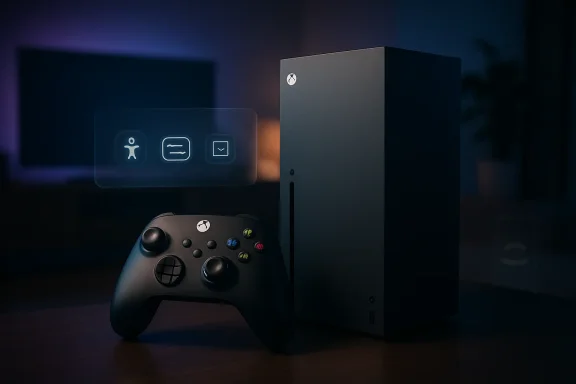 Xbox Chooses the Controller Over the Chatbot
Gaming Copilot was pitched as a companion for players who wanted instant help with boss fights, quests, crafting systems, achievements, and recommendations. In theory, the idea was sensible enough. Games are increasingly enormous, wikis are often polluted by search spam, and the modern RPG can make a player feel like they need a second monitor just to remember where the blacksmith, the herb vendor, and the vaguely cursed swamp dungeon are located.But that theoretical use case collided with a cultural problem Microsoft never quite solved: gamers did not ask for an AI layer between themselves and their games. They asked for stable frame rates, cheaper subscriptions, better first-party cadence, clearer ownership rights, less dashboard clutter, and a reason to care about Xbox hardware after years of mixed messaging. Dropping Gaming Copilot does not magically fix those issues, but it does acknowledge the hierarchy of grievances.
The reaction from many players has been less “how dare they cancel this?” and more “finally, someone read the room.” That should worry Microsoft as much as it pleases the company. When a product cancellation becomes a brand win, it means the product had come to represent executive drift rather than customer value.
The decision also lands at a moment when “AI fatigue” has moved from tech-worker grumbling into mainstream consumer skepticism. The average player is not necessarily opposed to machine learning in games; procedural animation, upscaling, accessibility tools, anti-cheat systems, and matchmaking can all use sophisticated technology without demanding applause. What players resent is the feeling that a company is smuggling a boardroom mandate into their leisure time and then calling it innovation.
Copilot Was the Wrong Mascot for a Wounded Brand
Microsoft’s Copilot push has been relentless across its software portfolio. In productivity software, the pitch is straightforward: summarize the meeting, draft the email, query the spreadsheet, rewrite the deck. Whether users love it or not, the conceptual fit is obvious because office work is already mediated by documents, prompts, inboxes, and search boxes.Games are different. The point of a game is not always efficiency. Sometimes the point is friction, discovery, failure, mastery, and the little private triumph of figuring out what the designer was trying to hide from you.
That is why Gaming Copilot was always walking a tightrope. If it gave vague advice, it would feel worse than a wiki. If it gave precise advice, it could become a spoiler engine. If it watched gameplay too closely, it would raise privacy and data-use questions. If it stayed too detached, it would fail to justify its place inside the Xbox experience.
The best version of Gaming Copilot might have been genuinely helpful for accessibility, onboarding, and players who bounce off complex systems. A smart assistant that can explain a game mechanic in plain language or remind a returning player what they were doing after six weeks away is not a ridiculous idea. But good ideas still need timing, trust, and a product environment where users believe the company’s priorities are aligned with theirs.
Xbox did not have that luxury. The brand had already spent years asking its audience to accept pivots: cloud-first rhetoric, cross-platform releases, “everything is an Xbox” messaging, Game Pass price hikes, acquisition integration, and uncertainty about console identity. Into that fog, Gaming Copilot arrived not as a helpful sidekick, but as another signal that Microsoft was more excited about Microsoft than about Xbox.
Asha Sharma’s Early Xbox Era Is Being Defined by Subtraction
The reported decision to wind down Copilot fits a broader pattern under new Xbox leadership: fewer slogans, fewer abstractions, fewer features that require a strategy memo to defend. Asha Sharma’s early moves have been interpreted by many players as an attempt to reverse the brand sprawl that made Xbox feel less like a gaming platform and more like a Microsoft growth thesis wearing a headset.That interpretation is probably too generous in places. No executive at Microsoft gets to run a nostalgia project detached from revenue targets. Xbox still has to justify Game Pass economics, Activision Blizzard integration, hardware investment, cloud infrastructure, Windows gaming ambitions, and a publishing strategy that increasingly treats rival consoles as customers rather than enemies.
Still, subtraction can be strategy. Dropping the Microsoft Gaming emphasis in favor of Xbox branding, revisiting Game Pass pricing, and backing away from a console Copilot launch all point in the same direction. Sharma appears to be betting that Xbox’s next phase requires less conceptual maximalism and more visible responsiveness.
That is why the “fan favorite” label has attached so quickly, even if it is premature. Gamers are not necessarily reacting to a detailed business plan. They are reacting to the spectacle of an Xbox executive saying, in effect, no, we do not need to do that. After years in which the company often seemed unable to resist adding another layer, platform, tier, or acronym, restraint feels almost radical.
Microsoft’s AI Strategy Hits Its First Real Console Wall
The cancellation should not be mistaken for a retreat from AI across Microsoft. Copilot remains central to Windows, Microsoft 365, developer tools, enterprise offerings, and the company’s investor story. Xbox is not declaring independence from Redmond’s AI ambitions; it is carving out a boundary where the generic Copilot playbook appears to have failed the product test.That boundary is important. Consoles are not PCs with friendlier plastic. They are living-room appliances built around low-friction entertainment, predictable interfaces, controller-first navigation, and a sense of immersion. Every extra surface has to earn its place because the user is often sitting ten feet away, holding a gamepad, and trying not to think about software at all.
Copilot, as a brand, carries productivity baggage. It evokes enterprise dashboards, Outlook summaries, Teams meetings, Windows sidebars, and subscription upsells. That is not automatically fatal for gaming, but it creates a tonal mismatch. The fantasy of Xbox is not “my console will optimize my workflow.” The fantasy is “I will press a button and play.”
Microsoft could have tried to rebrand the assistant, hide the Copilot name, or make it purely optional. But the more invisible it became, the harder it would be to justify as a flagship AI initiative. The more visible it became, the more it risked becoming a symbol of corporate intrusion. That is the product trap Xbox appears to have escaped by canceling the console rollout before it became another dashboard argument.
The Backlash Was Never Only About AI
It is tempting to frame the response as simple Copilot hatred, but the anger runs deeper than that. Players have watched the games industry spend years chasing trends that often seemed disconnected from what made games enjoyable. NFTs, metaverse rhetoric, live-service overload, algorithmic storefronts, battle passes, and AI-generated content all trained audiences to suspect that “the future of gaming” usually means a new way to monetize or manage them.Gaming Copilot entered that atmosphere carrying all the wrong associations. Even if Microsoft’s implementation was benign, the category itself had become loaded. Players worried about spoilers, surveillance, hallucinated advice, degraded support channels, and the creeping replacement of community knowledge with machine-generated answers.
There is also a labor dimension that gaming audiences understand more keenly than executives sometimes expect. The industry has endured layoffs, studio closures, outsourcing debates, unionization fights, and anxiety over generative AI’s effect on art, writing, QA, localization, and support roles. An AI helper on Xbox may be technically separate from those concerns, but emotionally it sits in the same bucket.
That is why cheering the cancellation is not necessarily irrational. For many players, it is a small victory against a larger sense that entertainment platforms are becoming less human, less owned, and less fun. Killing one assistant will not reverse that trend, but it gives the audience a rare example of pushback working.
Xbox’s Real AI Future Will Be Quieter
The irony is that Xbox will almost certainly continue using AI and machine learning in ways players never notice. The best gaming applications are likely to be infrastructural rather than conversational. They will improve moderation, accessibility, localization, testing, matchmaking, content discovery, upscaling, developer tooling, and support triage without demanding a branded button on the home screen.That quieter future is more plausible because games already depend on invisible systems. Players do not object to technology making downloads smarter, frame pacing smoother, captions richer, or parental controls easier to manage. They object when the platform asks them to celebrate a feature that feels designed for a keynote rather than a couch.
A more thoughtful Xbox AI strategy would start from player intent. If someone asks for help, offer help. If someone is stuck, preserve the choice between a nudge and a spoiler. If someone wants accessibility support, make it powerful and private. If someone does not want AI anywhere near their game session, make that preference obvious and durable.
The failure of Gaming Copilot on console, then, is not proof that AI has no place in gaming. It is proof that AI cannot be treated as a universal interface layer. Games have their own grammar, their own rituals, and their own sacred spaces. Microsoft forgot that, and Xbox now appears to be correcting course before the mistake reached the living room.
Game Pass, Hardware, and the Trust Deficit
The bigger story is that Xbox’s trust deficit has become the central product problem. Game Pass remains one of the most important subscription services in gaming, but its value proposition has been strained by price changes, catalog churn, and questions about day-one releases. Hardware remains powerful and capable, but the brand’s cross-platform strategy has made some console owners wonder whether they are still the center of the Xbox universe.That uncertainty makes every new initiative harder to sell. A feature that might be welcomed from a confident platform can be rejected from a wobbly one. When players believe the basics are handled, they tolerate experiments. When they believe the basics are neglected, experiments look like distractions.
This is where Sharma’s apparent reset has real strategic value. Reducing Game Pass friction, restoring Xbox as the public-facing brand, and cutting a poorly timed AI rollout all tell the same audience: we heard you. That message is not enough by itself, but it is the necessary first step after years of muddled signals.
The company still has to prove that Xbox hardware has a future worth buying into. It still has to show that its first-party studios can deliver consistently. It still has to explain how Game Pass can be affordable, profitable, and attractive to developers. And it still has to navigate the contradiction between wanting Xbox everywhere and needing Xbox consoles to feel special.
The Console Is Still a Promise, Not Just a Box
For years, Microsoft has argued that Xbox is not merely a console. Strategically, that was true. Xbox is a network, a store, a subscription, a cloud service, a publisher, a Windows gaming layer, and an identity system that follows players across devices.But brands are not built only from strategic truths. They are built from emotional ones. For millions of people, Xbox still means the thing under the TV, the controller in the hand, the friends list that lit up after school, the Halo lobby, the Forza garage, the Gears co-op run, the achievement pop, the dashboard sound, the ritual of turning on a console and disappearing for a while.
The “everything is an Xbox” idea may have been defensible as a distribution slogan, but it risked flattening that emotional value. If everything is an Xbox, then maybe nothing is. That is a dangerous message for a company that still needs people to care about the dedicated device.
Gaming Copilot intensified the risk because it made the console feel less like a refuge from computing and more like another endpoint in Microsoft’s software estate. The living room has always been hostile territory for productivity metaphors. The couch is where people go to avoid Copilot, not where they necessarily want to meet its gaming cousin.
Why Gamers Are Cheering a Cancellation
The celebration around the cancellation tells us something uncomfortable about modern platform stewardship. Companies often treat feature growth as inherently positive, but mature platforms can become worse by accretion. Every tab, prompt, assistant, recommendation module, and notification adds cognitive weight.Xbox players have lived through enough dashboard redesigns to understand this instinctively. They know that “optional” features have a way of becoming promoted features, then default features, then unavoidable fixtures of the interface. They have seen homescreens become storefronts and storefronts become billboards.
So when Microsoft reportedly stops work on Copilot for consoles, players do not hear only “one feature is canceled.” They hear “one more thing will not be added to the dashboard.” In 2026, that counts as mercy.
There is also a delicious reversal in the optics. For much of the past decade, gamers have been told that resistance to platform changes is reactionary, that the audience will adapt, and that the strategic future is obvious to executives long before it is obvious to customers. Here, the customers appear to have won before the rollout hardened into inevitability.
The Hard Part Begins After the Easy Applause
Canceling Gaming Copilot is popular because it is a negative act. It removes a potential annoyance, avoids a fight, and gives Xbox leadership a quick credibility boost. But subtraction is easier than construction.The next test is whether Xbox can turn this goodwill into a coherent platform identity. Is the console still the flagship experience, or one access point among many? Is Game Pass a premium buffet, a rotating sampler, or the default economic engine for the brand? Are Xbox exclusives truly gone as a category, or does Microsoft still believe certain experiences should define its own hardware first?
Those questions cannot be answered by killing AI features. They require products, policies, pricing, and games. They require Microsoft to decide which customers it is willing to disappoint, because every strategy disappoints someone.
If Xbox tries to be a console loyalist brand, a third-party mega-publisher, a cloud platform, a Windows gaming shell, a subscription utility, and an AI showcase all at once, it will keep producing contradictions. The Copilot decision is encouraging precisely because it suggests someone inside the company is willing to choose. Now the choices need to get harder.
The Dashboard Just Got a Little Less Crowded
The Copilot reversal is not the whole Xbox reset, but it is a useful snapshot of where the platform seems to be heading. The decision matters because it connects product taste, brand repair, and Microsoft’s AI ambitions in one highly visible retreat.- Microsoft has reportedly stopped work on bringing Gaming Copilot to Xbox Series X and Series S after previously planning a console rollout in 2026.
- The Xbox mobile app version of Gaming Copilot is reportedly being wound down rather than expanded into a broader console experience.
- The move does not signal a Microsoft-wide retreat from Copilot, which remains central to Windows, Microsoft 365, and the company’s broader AI strategy.
- The cancellation fits a wider Xbox reset that has included renewed emphasis on the Xbox brand and a more player-sensitive approach to Game Pass pricing.
- The strongest lesson is that gaming AI has to serve the play experience quietly and specifically, not arrive as a generic corporate assistant with a controller-friendly coat of paint.
Source: extremetech.com Fan-Favourite Xbox CEO Brings is Killing Copilot for Xbox – and Gamers Are in Awe
