

Microsoft’s reported offer to cut or eliminate Windows Phone licensing fees for HTC represented one of the most candid – and revealing – attempts by Redmond to bend the rules of mobile platform economics in order to expand Windows Phone’s footprint.
In the early 2010s Microsoft was fighting two linked problems: a tiny mobile market share and a limited roster of committed hardware partners. Windows Phone had traction in pockets, but the platform depended heavily on one large partner. The business model for OEMs included a per-device licensing or commercial arrangement that, by industry accounts at the time, added a non-trivial line-item to handset economics. Meanwhile, HTC – an early and important Windows Phone partner that also produced leading Android devices such as the HTC One – was slipping into its first serious quarterly loss and looking for ways to regain footing.
The combination of Microsoft’s strategic urgency and HTC’s financial stress created an opening for an aggressive commercial play: persuade a recognized Android OEM to ship Windows Phone as an option on its existing hardware, and make the economics so attractive that hesitancy disappears.
Potential upsides for HTC:
At the same time, the episode reaffirmed that marketplace dynamics are multi-dimensional. Economic incentives alone rarely break the inertia of a dominant ecosystem unless matched by developer support, carrier partnerships, and a compelling, differentiated user experience.
For HTC, the proposal would have been a tactical lifeline but not a panacea; for Microsoft, the idea exposed the tension between short-term commercial incentives and the enduring work of building an attractive, sustainable platform. The broader lesson is that in mobile, installed base, developer economics, and consistent user value remain the ultimate currencies—concessions buy attention, but only deep product and ecosystem investment buys lasting market share.
Source: Ubergizmo Microsoft Eager To Cut/Eliminate Windows Phone Licensing Fees For HTC – Ubergizmo
 Background
In the early 2010s Microsoft was fighting two linked problems: a tiny mobile market share and a limited roster of committed hardware partners. Windows Phone had traction in pockets, but the platform depended heavily on one large partner. The business model for OEMs included a per-device licensing or commercial arrangement that, by industry accounts at the time, added a non-trivial line-item to handset economics. Meanwhile, HTC – an early and important Windows Phone partner that also produced leading Android devices such as the HTC One – was slipping into its first serious quarterly loss and looking for ways to regain footing.The combination of Microsoft’s strategic urgency and HTC’s financial stress created an opening for an aggressive commercial play: persuade a recognized Android OEM to ship Windows Phone as an option on its existing hardware, and make the economics so attractive that hesitancy disappears.
What was reported
- Reports originating from industry coverage in October 2013 described high-level, private talks in which Microsoft executives explored ways to get Windows Phone onto more handsets.
- The most salient detail was that Microsoft’s operating-systems leadership was willing to discuss cutting or even eliminating the per-device licensing fee for Windows Phone in negotiations with HTC to make the proposal attractive.
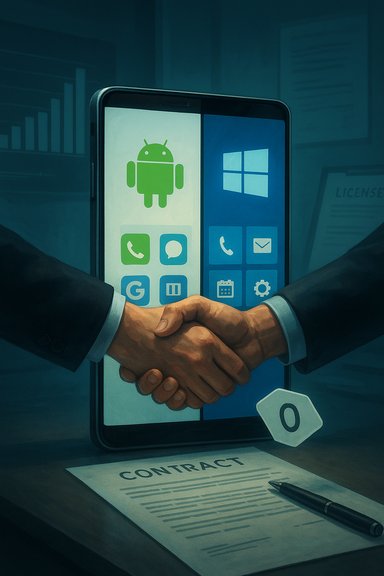
- The concept discussed went beyond a normal OEM deal: Microsoft was reportedly asking HTC to consider offering Windows Phone as a second option on Android-based handsets – in practical terms, a dual‑software approach on the same hardware platform.
Why that mattered then
- The Microsoft proposal signaled a potential paradigm shift in how Microsoft would trade the Windows Phone OS to handset makers: from a paid license toward selective subsidization or free licensing for strategic partners.
- For HTC, facing its first major net loss and an operating loss in the quarter prior, the idea of free Windows Phone licenses would have been attractive on cost grounds alone.
- For Microsoft, temporarily foregoing per-unit revenue could be rationalized as a customer-acquisition expense to seed usage of a lagging mobile ecosystem.
Microsoft’s licensing landscape: context and economics
Understanding the reported offer requires some context about how Microsoft historically monetized mobile and mobile-adjacent IP:- Microsoft had an established pattern of monetizing mobile through patent and licensing agreements. Industry analysis and contemporaneous reporting suggested Microsoft was already extracting license or royalty revenue from Android device makers.
- Published analyses at the time estimated per-device royalties in a wide range depending on the agreement and the OEM – figures quoted in open coverage ranged from low single digits to the low tens of dollars per unit.
- Separately, Windows Phone license economics for OEMs were widely reported as materially above zero; some OEM comments placed the effective per-device cost for Windows Phone in the tens of dollars range, though exact terms varied by partner and by region.
Technical feasibility and engineering challenges
Shipping two operating systems or enabling a “Windows option” on primarily Android hardware is far from trivial. The technical and logistical barriers include:- Bootloader and firmware complexity. Dual‑booting a smartphone requires platform-level partitioning, bootloader changes, and careful management of device firmware. Many carriers and manufacturers lock bootloaders for security, warranty, and certification reasons.
- Driver support and hardware enablement. Each OS needs device drivers and firmware that match radio, camera, display, sensors and power-management subsystems. Sharing hardware between Android and Windows Phone is not simply a matter of swapping images; OEMs must validate drivers and maintain them across updates.
- Certification and services integration. Devices that carry Google Mobile Services (GMS) and associated certification are subject to agreements and compliance steps. Adding a second OS complicates support and distribution of official Android/GMS builds and could create friction with carriers or app partners.
- User experience and update complexity. Supporting updates, warranty claims, and a consistent ecosystem experience becomes much harder with multiple OS images on the same hardware.
- Carrier relationships. Carriers are a gatekeeper for many markets. They evaluate device reliability, handset return rates, and integration with network features; a dual-OS device could raise concerns about support costs.
Strategic drivers behind Microsoft’s thinking
Why would Microsoft contemplate such a radical concession? Four strategic drivers stand out:- Installed base is king. For any platform competing with Android and iOS, increasing the number of active users is the single most important factor to attract developers and lock in services usage.
- Nokia dependency. Microsoft was moving closer to Nokia (the acquisition announcement had happened in early September 2013), which raised questions about whether external OEMs would continue investing in Windows Phone if Nokia/Microsoft would dominate the platform’s hardware narrative.
- Patent revenue vs. platform growth. Microsoft’s existing monetization from Android-related patent arrangements provided a revenue stream that could be deployed strategically as a marketing or go‑to‑market subsidy to build native demand for Windows Phone devices and Microsoft services.
- Control of the user relationship. Getting Windows Phone on more handsets, even as an option, increased Microsoft’s opportunity to push Bing, Office, and other cloud services – longer-term revenue sources that could exceed short-term licensing income.
HTC’s position — risks and potential upsides
HTC faced a difficult market dynamic in 2013: margin pressure, competition from low-cost OEMs, and a high-end war dominated by a single competitor. The reported Microsoft approach presented HTC with options and trade-offs.Potential upsides for HTC:
- Lower incremental cost for offering Windows Phone could reduce price pressure on a mid‑range or even high-end variant.
- Differentiation and marketing: having a Windows option might attract specific enterprise or consumer segments that valued Microsoft services.
- Inventory and channel leverage: hardware commonality could allow HTC to amortize R&D and leverage one hardware platform for two OS SKUs.
- Divided marketing and channel confusion. Selling two OS experiences from the same device line risks cannibalizing sales, confusing carriers, and complicating store‑level training.
- Increased support and development cost. Even if the OS license were free, engineering, QA, and update costs would still be borne by HTC.
- Potential backlash from partners. Aligning with Microsoft so overtly could affect HTC’s relationships with Google, carriers, and other platform stakeholders.
- No guarantee of success. Free or discounted licensing only addresses one axis of adoption; app ecosystem depth and consumer perceptions were still decisive.
Broader market consequences and countermeasures
If Microsoft had moved aggressively to waive licensing fees for large OEMs, several industry effects would follow:- Pressure on Google and Apple. Offering free OS licenses could change how OEMs evaluate platform economics, particularly at the low end. However, Google’s leverage through GMS and the app ecosystem would remain a powerful counterforce.
- Fragmentation and developer calculus. More Windows phones in the wild could make Windows Phone more attractive to developers, but only if developers saw user numbers convert to revenue or engagement.
- OEM bargaining dynamics. OEMs often negotiate subsidies, marketing support, and joint go‑to‑market funding. Microsoft offering free licenses would simply be one lever among many in OEM negotiations.
- Regulatory and contractual complexity. Any program that waives fees selectively could draw scrutiny over fairness and long-run competitive effects, particularly when Microsoft was moving to acquire a major OEM.
What actually followed (short and medium term)
- Microsoft completed the acquisition of Nokia’s Devices & Services business in 2014 and integrated Nokia’s phone teams into Microsoft’s hardware efforts.
- Microsoft later adopted a more flexible licensing posture in select low-cost markets, enabling certain OEMs to ship Windows Phone without a per-unit license fee as part of broader go‑to‑market packages.
- Despite those moves, Microsoft’s mobile hardware strategy faced increasing headwinds; by 2015 Microsoft recorded a substantial impairment tied to its phone hardware business and reorganized that unit.
Strategic analysis: strengths and potential pitfalls of Microsoft’s move
Strengths of the fee-waive idea- Rapid installed‑base growth potential. Free licenses reduce one direct cost barrier for OEMs and make Windows Phone more price-competitive in entry-level and mid-market segments.
- Flexible commercial tool. Licensing concessions can be carved into larger GTM packages (marketing dollars, co‑branding, services commitments), allowing Microsoft to tailor arrangements for different partners and geographies.
- Signals commitment. Such concessions signal to carriers, developers, and consumers that Microsoft was serious about platform growth.
- Subsidy sustainability. Waiving per-unit fees moves the cost to Microsoft’s marketing and services spend; long-term ROI is uncertain.
- Operational overhead. OEMs must still build and maintain Windows Phone builds; the engineering and support cost can negate the value of a waived license.
- Ecosystem mismatch. Developers choose platforms based on reachable audience and monetization prospects. A short-term surge in devices without meaningful app- or services-monetization won’t flip developer priorities.
- Strategic misalignment. Microsoft acquiring an OEM (Nokia) and simultaneously subsidizing competitor OEMs creates an awkward competitive dynamic that can erode partner trust.
Lessons for OEMs, platform owners, and enterprise buyers
For OEMs:- Evaluate total cost of ownership, not just per-device licensing. Engineering, testing, OTA support, and updates can dominate costs even when software licensing is free.
- Consider channel and carrier friction: new OS options complicate distribution and after-sales support.
- Pricing is only one lever; ecosystem investment (developer tools, store economics, predicable roadmap) matters more.
- Short-term subsidies must be accompanied by a sustainable business model that captures value from services and differentiated features.
- Hardware choices based on vendor bundling should weigh long-term update commitments and security patching policies.
- Beware of devices that appear cheaper today but carry higher operational burdens over device lifecycle.
What the episode revealed about platform competition
The reported negotiations highlighted a fundamental truth about platform competition: when a platform provider has limited natural adoption, it will use commercial levers to spur growth. Microsoft’s willingness to waive license fees underscored how vital scale is in mobile ecosystems, and how commoditized hardware can make software distribution the decisive battleground.At the same time, the episode reaffirmed that marketplace dynamics are multi-dimensional. Economic incentives alone rarely break the inertia of a dominant ecosystem unless matched by developer support, carrier partnerships, and a compelling, differentiated user experience.
Conclusion
Microsoft’s reported offer to cut or eliminate Windows Phone licensing fees for HTC was an unambiguous sign of urgency—and creativity—in Redmond’s mobile playbook. The maneuver made strategic sense as a market‑seeding tactic: it substituted short-term licensing revenue for the chance of long-term ecosystem gains. But the complexity of handset engineering, the realities of carrier and developer ecosystems, and the challenge of sustaining subsidized models meant that fee concessions were at best one tool among many.For HTC, the proposal would have been a tactical lifeline but not a panacea; for Microsoft, the idea exposed the tension between short-term commercial incentives and the enduring work of building an attractive, sustainable platform. The broader lesson is that in mobile, installed base, developer economics, and consistent user value remain the ultimate currencies—concessions buy attention, but only deep product and ecosystem investment buys lasting market share.
Source: Ubergizmo Microsoft Eager To Cut/Eliminate Windows Phone Licensing Fees For HTC – Ubergizmo
