Microsoft’s Layoff Calendar Now Has a Fiscal-Year Rhythm
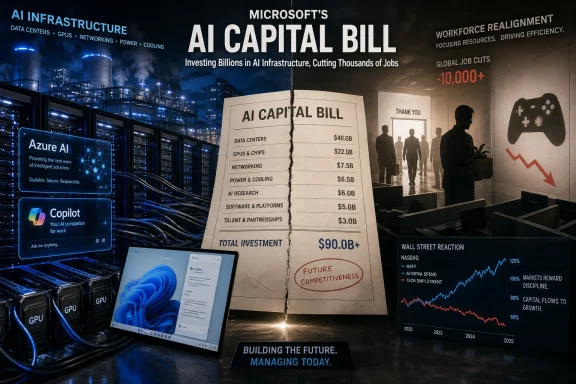
The reported cuts are striking less because they are unprecedented than because they feel increasingly procedural. Microsoft has spent the last several years presenting itself as the enterprise operating system for the AI era, and that ambition carries a capital bill large enough to reshape the company around it. Layoffs once looked like emergency responses to downturns; now they look like annual portfolio maintenance.
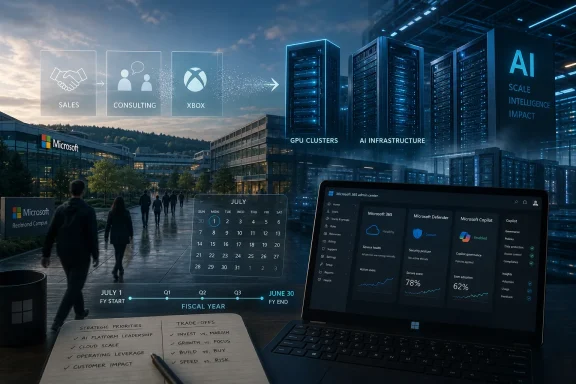
This is why the phrase “less than 2.5 percent” does so much work. It sounds small, especially for a company of Microsoft’s scale, but it translates into thousands of livelihoods and another signal to every division that the old hierarchy of protected businesses is changing. Sales, consulting, and Xbox are not side projects. They are the connective tissue between Microsoft’s products, customers, and consumer ambitions.
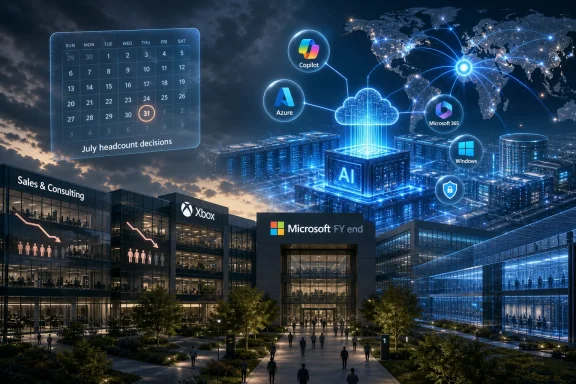
The reported timing also matters. A cut announced just after the fiscal year closes lets Microsoft reset budgets, realign performance expectations, and enter the new year with a leaner expense base. For Wall Street, that reads as discipline. For employees, it reads as a reminder that record strategic relevance does not guarantee job security.
The company has already gone through large reductions in recent years, including major rounds in 2025. Those cuts were not confined to speculative projects or obvious underperformers; they touched engineering, gaming, and management layers. The pattern suggests a Microsoft that is not retreating from ambition, but becoming more ruthless about which workers are deemed necessary to fund it.
AI Is Not Replacing Every Job, But It Is Repricing Them
The lazy version of this story is that AI is taking jobs at Microsoft. The more accurate version is that AI is changing the internal price of every job at Microsoft. When a company commits to massive data-center expansion, specialized chips, cloud capacity, and AI product integration across Office, Windows, GitHub, security, and Azure, every other operating expense starts competing against that buildout.
That does not mean a sales representative or consultant is being directly replaced by Copilot. It means the return profile of that role is being compared against AI infrastructure, platform engineering, and cloud capacity in a company where the next decade’s growth story is increasingly concentrated in those areas. The spreadsheet does not need to say “AI automation” for AI to be the force behind the decision.
This distinction matters for IT pros because Microsoft’s workforce shape often foreshadows its product shape. If the company reduces consulting and sales roles while expanding AI and cloud investment, customers should expect more self-service motions, more partner-led delivery, more automated support, and more pressure to adopt standardized cloud and AI packages. The human layer around Microsoft’s enterprise stack may become thinner even as the stack itself becomes more expensive and complex.
For administrators, that can cut both ways. A more automated Microsoft might deliver better telemetry, faster deployment tooling, and tighter security integration. But it can also mean fewer people available to explain licensing changes, fewer specialist contacts for messy migrations, and more reliance on documentation, portals, AI assistants, and third-party partners when something goes sideways.
Sales and Consulting Are Where Strategy Becomes Friction
The reported focus on sales and consulting is not incidental. These are the teams that translate Microsoft’s sprawling portfolio into actual enterprise adoption. They help customers understand why they need E5, why Copilot should be rolled out to a department rather than a pilot group, why Azure should host the next workload, and why legacy contracts should become cloud commitments.
Cutting in those areas suggests Microsoft believes parts of that work can be simplified, automated, consolidated, or pushed outward. In mature enterprise accounts, the company may assume that the cloud relationship is already sticky enough to need fewer hands. In smaller accounts, it may assume that digital sales motions and partners can carry more of the load.
But there is risk in treating customer-facing labor as a removable layer. Microsoft’s product stack has become notoriously intricate. Between Microsoft 365 licensing, Azure consumption, security bundles, identity management, endpoint management, Windows servicing, Copilot eligibility, data governance, and compliance requirements, the modern Microsoft account is not a simple subscription. It is an operating model.
That complexity is manageable when customers have knowledgeable humans helping them navigate it. It becomes frustrating when the answer is a portal, a chatbot, or a partner ecosystem of uneven quality. If Microsoft pares back the very people who reduce friction, it may save money while increasing the hidden cost of adoption for customers.
Xbox Is No Longer Immune to Microsoft’s Enterprise Logic
The reported inclusion of Xbox gives the story a different emotional charge. Sales and consulting cuts sound corporate; Xbox cuts sound cultural. Microsoft’s gaming business is where the company still has a consumer identity, a brand relationship built not around productivity or compliance but around loyalty, entertainment, and habit.
Yet Xbox has spent the last few years looking less like a traditional console business and more like another Microsoft platform being forced to justify itself. The Activision Blizzard acquisition expanded Microsoft’s gaming empire, but it also raised the stakes for efficiency. Game Pass became a strategic bet, cloud gaming remained a long-term promise, and hardware margins continued to face the brutal economics of component costs and subsidized consoles.
The result is a division under pressure from multiple directions. Console prices have risen. Subscription pricing has been adjusted and rethought. Exclusive strategy has softened as more Xbox titles move across platforms. Studios and support teams have already endured cuts. The old console-war framing no longer explains what Microsoft is doing.
Microsoft increasingly appears to view Xbox not as a walled garden to be defended at all costs, but as a content, services, and distribution business that must fit into the company’s broader capital discipline. That may be rational. It may even be necessary. But it changes what Xbox fans thought they were buying into.
For WindowsForum readers, Xbox’s fate is not just gaming gossip. It is a consumer-facing example of the same strategic pressure seen across Microsoft: hardware is expensive, cloud is central, AI is sucking up capital, and businesses that cannot show durable platform leverage are being reworked.
The 228,000-Person Microsoft Is Being Remixed, Not Simply Reduced
Microsoft’s headcount figure is important because it prevents overstatement. A workforce of about 228,000 people can absorb a reduction of less than 2.5 percent without becoming a smaller company in the ordinary sense. Microsoft remains huge, profitable, and central to enterprise computing.
But headcount totals can conceal dramatic internal change. A company can keep roughly the same number of employees while swapping out skill sets, geographies, seniority bands, and business priorities. The Microsoft that emerges from repeated layoff rounds may have fewer people in traditional customer engagement, more in AI infrastructure, fewer middle managers, more platform engineers, fewer gaming support roles, and more people tied to cloud-scale operations.
That is the real story behind recurring cuts. Microsoft is not behaving like a company in decline. It is behaving like a company with more opportunities than it can fund comfortably, even at its scale. AI has made the opportunity map larger, but it has also made capital allocation harsher.
The uncomfortable consequence is that strong companies can still be unstable employers. In previous tech cycles, layoffs were often explained by weak demand or failed bets. In the current cycle, they are increasingly explained by stronger demand elsewhere inside the same company. Workers are not only competing with rivals or automation; they are competing with the capital requirements of the next strategic platform.
The AI Boom Is Becoming a Management System
Microsoft’s public AI story is expansive and optimistic. Copilot is pitched as a productivity layer across work. Azure AI is positioned as infrastructure for developers and enterprises. Windows is being nudged toward an AI-assisted future, whether through local neural processing units, Recall-style features, or deeper cloud-connected intelligence. GitHub, security, Dynamics, and Power Platform all become more valuable if Microsoft can persuade customers that AI is now a default interface.
Inside the company, however, AI is also a management system. It creates a new hierarchy of importance. Projects close to compute, model integration, cloud consumption, developer workflows, and enterprise AI adoption move upward. Work that looks less directly tied to those priorities becomes more vulnerable.
This is not unique to Microsoft. Big Tech’s AI race has created a strange split-screen economy in which companies can post enormous revenues, spend historic sums on infrastructure, and still reduce thousands of jobs. The same executive presentation can celebrate demand for AI services and justify cuts in functions that no longer fit the investment model.
The danger is that “AI transformation” becomes a universal solvent for accountability. Every layoff can be narrated as strategic, every reorganization as modernization, every reduction as focus. Some of that will be true. Some of it will be ordinary cost-cutting dressed in futuristic language.
For Microsoft, the test will be whether customers see better products and clearer support, not just more Copilot buttons. If the workforce remix produces tools that genuinely reduce administrative burden, improve security outcomes, and make cloud operations easier, the strategy will look coherent. If it produces licensing confusion, support gaps, and half-finished AI features, the cuts will look less like focus and more like extraction.
Enterprise Customers Should Read Layoffs as Product Signals
Layoffs are usually covered as labor news or market news, but enterprise customers should read them as product signals. When a vendor reduces staff in consulting or sales, it changes how customers will encounter the product. When it trims gaming, it changes the odds of certain projects surviving. When it protects AI investment above other categories, it tells administrators where the roadmap will lean.
Microsoft customers should expect the company to keep pushing AI into the default enterprise bundle. Copilot will not remain a novelty add-on forever; it is too central to the company’s growth story. Azure AI services will be tied more tightly to data platforms, developer tooling, and security offerings. Windows will increasingly be discussed not merely as an operating system, but as an endpoint in a broader AI-managed environment.
The practical implication is that IT departments need to prepare for Microsoft’s future even if they are not ready to buy all of it. Data governance, identity hygiene, retention policies, endpoint compliance, and licensing visibility become more important when AI features are layered across the tenant. Copilot deployments are not just user-experience projects; they are permissions audits with a productivity interface.
At the same time, customers should be skeptical of assuming that vendor enthusiasm equals customer readiness. Many organizations still struggle with basic Microsoft 365 governance, stale groups, overshared SharePoint libraries, inconsistent sensitivity labels, and shadow IT. Adding AI search and summarization on top of that mess can amplify risk rather than reduce work.
If Microsoft is cutting some of the humans who help customers navigate that complexity, the burden shifts back to internal IT. That is not necessarily fatal, but it should shape budgets. The cost of Microsoft’s AI era may show up not only in subscription line items, but in the extra planning, training, remediation, and governance work required to use it safely.
The Shock Is Smaller Than the Pattern
The user-facing shock of “5,500 jobs” is real. But the broader pattern is more revealing than any single round. Microsoft has moved from pandemic-era hiring and acquisition expansion into a period of constant pruning. The company is not pausing AI investment to preserve jobs; it is cutting jobs to protect the investment thesis.
That may be exactly what shareholders want. Microsoft’s leadership is under pressure to prove that AI spending will convert into revenue, margins, and durable platform control. The company’s partnership and infrastructure commitments have created expectations that cannot be met with vague demos forever. Eventually, AI must become not just impressive, but economically dominant.
The layoffs therefore expose a tension inside Microsoft’s current story. AI is sold as a tool that will make workers more productive, but the corporate response to that promise is often to employ fewer workers in areas judged less central. Efficiency gains may be real, but they are not evenly distributed. Productivity, in corporate practice, often means the same revenue with fewer people attached.
This is the part of the story employees understand before customers do. A company can tell users that AI is an assistant and tell investors that AI is leverage. Both can be true, but the second meaning tends to drive budgets. When leverage arrives, headcount becomes negotiable.
Windows Users Will Feel This Indirectly Before They Feel It Directly
Most Windows users will not notice a layoff round the week it happens. Their PCs will boot. Microsoft 365 will open. Xbox consoles will still connect. Azure regions will still run. Patch Tuesday will still arrive with its usual blend of relief and dread.
But indirect effects accumulate. Support experiences can become more automated. Product cycles can become more aggressively aligned with AI messaging. Features that do not serve the new strategic narrative may languish. Communities and power users may find that feedback channels feel thinner, especially when reductions hit teams adjacent to product marketing, account management, or customer success.
Windows itself sits in the middle of this shift. Microsoft wants the PC to matter again in the AI era, but the company’s strongest revenue engines are cloud services and enterprise subscriptions. That creates a tension between local computing and cloud-mediated intelligence. The more Microsoft spends on AI infrastructure, the more it needs users and businesses to consume AI services that justify that spend.
For enthusiasts, this means the next few years of Windows will be shaped by more than interface design or hardware requirements. The operating system will increasingly be a delivery surface for Microsoft’s AI and cloud strategy. Whether that feels useful or intrusive will depend on execution, transparency, and the degree of control Microsoft leaves in the hands of administrators and users.
For sysadmins, the lesson is even more practical. Assume AI features will keep arriving. Assume licensing will keep changing. Assume Microsoft’s support and sales models will keep shifting toward scale. Build internal competence accordingly.
The Human Cost Sits Behind the Strategy Deck
It is easy in a business analysis to turn layoffs into abstractions: percentages, cost structures, capital allocation, strategic focus. But a reduction of more than 5,000 roles, if the reports prove accurate, is not an abstraction to the people affected. It is severance, immigration stress, lost health coverage, disrupted teams, abandoned projects, and career plans suddenly rewritten.
That human cost is worth stating plainly because Microsoft is not a distressed company. These are not cuts made by a firm fighting for survival. They are cuts made by one of the most powerful technology companies in the world as it reallocates resources toward a future it believes will be larger and more profitable.
That distinction does not make the decisions irrational. Companies exist to allocate capital, and Microsoft’s leadership has an obligation to keep the business competitive. But it does make the social bargain more brittle. When highly profitable companies normalize repeated layoffs, employees learn to treat corporate mission language as weather, not shelter.
The effect ripples beyond Microsoft. Smaller companies imitate Big Tech’s language. Recruiters adjust expectations. Workers become more cautious. Entire specialties begin to wonder whether they are strategic or merely useful. In the AI era, that question has become unusually urgent.
Redmond’s New Math Leaves Fewer Safe Corners
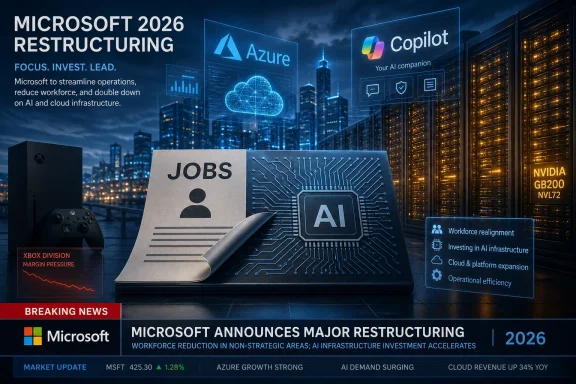
The immediate facts are still reported, not officially confirmed: Microsoft is expected to cut thousands of jobs, likely below 2.5 percent of its workforce, with sales, consulting, and Xbox among the affected areas. Until Microsoft announces details, exact numbers and team-level impacts remain uncertain. But the direction is clear enough to draw conclusions.
- Microsoft’s reported cuts are better understood as strategic reallocation than classic downturn layoffs.
- Sales and consulting reductions would likely push more customer engagement toward automation, partners, and self-service channels.
- Xbox’s inclusion shows that Microsoft’s gaming business is being judged by platform economics, not nostalgia or console-war sentiment.
- AI spending is reshaping internal priorities even where AI is not directly replacing a specific worker.
- Windows and Microsoft 365 administrators should expect more AI integration, more licensing complexity, and more responsibility for governance.
- The company’s strength makes the layoffs more revealing, not less, because they show what Microsoft is willing to sacrifice while profitable.
The reported layoffs are not the end of Microsoft’s AI transformation; they are one of the clearest signs of how that transformation will be paid for. The company is betting that a leaner mix of people, heavier infrastructure spending, and deeper AI integration will produce the next durable platform shift. For Windows users and IT departments, the question now is not whether Microsoft will keep moving in that direction, but how much control, support, and clarity it will leave behind as it does.
Update: Microsoft reportedly pairs layoffs with 6,000-person AI consulting push (July 4, 2026)
Ad-hoc-news now reports that Microsoft’s expected layoff round is being paired with a major client-facing AI deployment: a new “Microsoft Frontier Company” unit that would send roughly 6,000 engineers directly into customer environments to build custom AI systems around company data and workflows.
According to the report, the effort is backed by a $2.5 billion investment and led by Rodrigo Kede Lima, with early partners said to include Unilever and Land O’Lakes. The practical shift is important: rather than simply selling Copilot licenses or Azure AI capacity, Microsoft appears to be moving toward embedded AI implementation teams for large enterprise customers that want measurable returns from AI projects.
That development sharpens the meaning of the reported cuts in sales and consulting. If accurate, Microsoft is not merely thinning customer-facing roles; it is replacing parts of the traditional sales-and-services model with a more specialized AI engineering motion aimed at enterprise transformation work.
For Windows and Microsoft 365 admins, the impact is likely indirect but significant. Large customers may get deeper hands-on AI help, while smaller organizations could still face more self-service portals, partner-led guidance, and automated support. The split suggests Microsoft’s AI era may bring more white-glove engineering attention for strategic accounts, but less traditional human coverage elsewhere.
Update: Microsoft confirms about 4,800 cuts, says roles are not being replaced by AI (July 6, 2026)
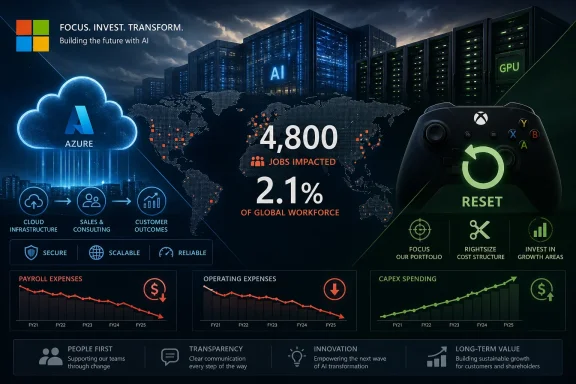
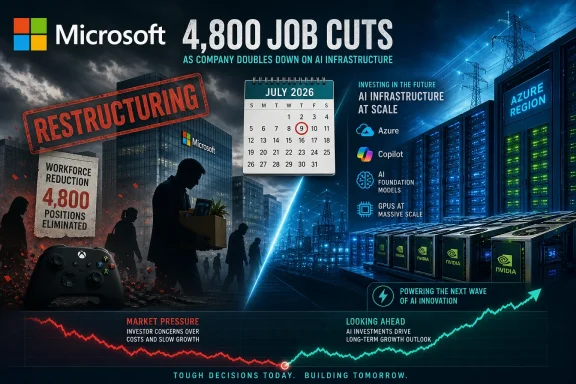
Reuters now reports that Microsoft has announced roughly 4,800 job cuts, equal to about 2.1% of its workforce, as it restructures parts of its commercial and Xbox businesses. That is below the earlier reported ceiling of less than 2.5% and slightly under the commonly cited 5,500-job estimate.
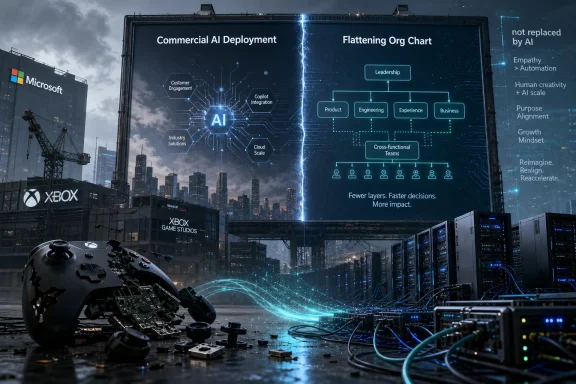
In an employee memo cited by Reuters, Chief People Officer Amy Coleman said the eliminated roles “are not being replaced by AI,” while also acknowledging that AI is changing how work gets done by automating some routine tasks. That distinction matters: Microsoft is framing the layoffs as resource realignment rather than direct AI substitution, even as AI spending remains the strategic pressure behind the cuts.
The update also adds more detail around Xbox. Reuters reports that Microsoft’s gaming division is being restructured after internal concerns about declining margins, heavy platform and content investment, hardware subsidies, and weaker console economics. The report says Microsoft is considering options for Xbox including a potential spinoff or restructuring as a wholly owned subsidiary, citing The Information.
For Windows, Microsoft 365, and Azure customers, the practical read is unchanged but sharper: Microsoft is cutting confirmed headcount while preserving its AI infrastructure push. Admins should expect continued pressure toward AI-led product packaging, more automated support and sales motions, and possible further changes in Xbox and consumer hardware strategy as Microsoft reallocates capital toward cloud and AI returns.
Update: Voluntary retirements reportedly reduced Microsoft layoff total (July 6, 2026)
Windows Central adds that Microsoft’s final 4,800-role reduction was lowered by more than 30% after eligible employees accepted voluntary retirement packages. That detail helps explain why the confirmed total landed below earlier expectations of roughly 5,500 cuts.
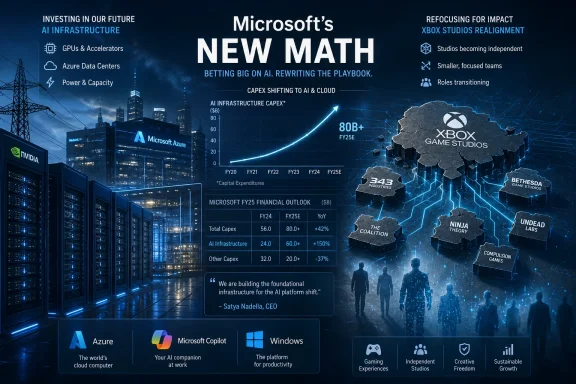
The report also says the vast majority of eliminated roles came from Xbox and gaming-related divisions, describing it as the largest single staff reduction in Xbox history. Other cuts were concentrated mainly in Microsoft’s Commercial business.
Amy Coleman’s employee letter, published on Microsoft’s official blog, again stresses that the eliminated roles are not being replaced by AI. However, she also says AI is changing daily work, automating some tasks, and increasing the need for employees to keep developing new skills, including AI-related skills.
For Windows and Microsoft 365 admins, the practical signal is that Microsoft is treating AI fluency as a workforce baseline while continuing to reduce headcount in businesses under margin pressure. For Xbox users and developers, the update makes clear that gaming absorbed the brunt of this round, not merely a symbolic share.
"AI is changing how work gets done": Microsoft insists 4,800 layoffs aren't because of AI, but points to a shifting workforce | Windows Central
Update: Report adds market pressure and AI capex context to Microsoft cuts (July 7, 2026)
Komersant Ukrainian, citing Reuters, adds that Microsoft’s layoffs are being framed against a tougher financial backdrop: the company’s shares reportedly fell nearly 23% in the first half of 2026, its weakest first-half performance since 2022.
The report also says Microsoft had earlier offered voluntary separation packages to about 7% of its U.S. workforce, or nearly 9,000 employees, before the final layoff figure settled around 4,800 roles. That further supports the picture that voluntary exits helped reduce the number of involuntary cuts.
The new detail for IT readers is the scale of the investment pressure: Komersant says Microsoft’s 2026 capital spending could reach $190 billion, driven by Azure data-center expansion and AI infrastructure. That helps explain why even a highly profitable Microsoft is cutting headcount while continuing to fund cloud and AI buildout.
For Windows, Microsoft 365, Azure, and Xbox customers, the practical takeaway is that Microsoft’s cost discipline is being applied around the edges of the business while AI infrastructure remains protected. Expect the company to keep pushing AI-led products and cloud consumption even as support, sales, gaming, and consulting structures continue to shift.
References
- Microsoft has announced widespread layoffs: what’s happening Комерсант Український · 2026-07-07T03:30:11.719891
- With 5,000 Layoffs and a 6,000-Strong Engineering Unit, Microsoft Puts AI Strategy into High Gear Ad-hoc-news.de · 2026-07-04T01:33:13.105496
- Microsoft cuts 4,800 jobs, says AI is changing how work gets done Windows Central · 2026-07-06T15:02:09.887071