

Microsoft’s latest quarter was, on paper, everything a mega-cap tech company could want: double‑digit revenue growth, record profits, and a cloud business that just crossed a new milestone — yet the market’s reaction was a gut punch that erased hundreds of billions in value in a single session. The disconnect between headline beats and the share‑price shock reveals not that Microsoft’s AI bet is wrong, but that investors are wrestling with a new calculus around capital intensity, timing of AI monetization, and where Azure’s late‑cycle growth trajectory actually goes from here. This matters because the sell‑off turned what had been the market’s favorite AI proxy into, for many strategists, the highest‑conviction pick among the big-cap growth names — with price targets implying far more upside than the recent drop reflects. Below I unpack the quarter, the market’s response, what Street forecasts imply about Microsoft’s value a year from now, and why those expectations should matter to investors and Windows users alike.
Microsoft reported fiscal second‑quarter results that beat consensus on revenue and earnings, while management disclosed record capital spending to fuel AI infrastructure and reiterated that Azure remains supply‑constrained. Those three datapoints — a strong beat, record capex, and constrained Azure capacity — are the triad that explains both the rally of the last year and the sudden, volatile re‑rating in late January 2026. The company’s public figures show a very large, very real AI opportunity, but also a short, painful stretch where investment will precede returns at hyperscale.
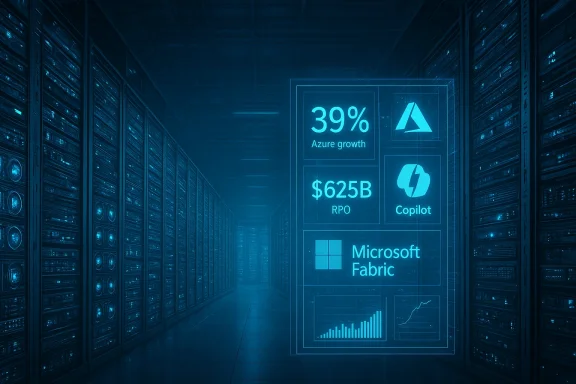
Even so, investors parsed the composition: Productivity & Business Processes (M365, Copilot, Dynamics, LinkedIn) remains a cash cow, while Intelligent Cloud — where Azure lives — is the obvious multiple‑expansion engine. Azure’s reported growth of ~39% year‑over‑year is spectacular for a business the size of Microsoft’s cloud, but it was fractionally slower than the previous quarter’s ~40% and slightly softer than what some market “whispers” had implied. In a market pricing in nearly heroic acceleration from AI, tiny percentage points in a growth rate get amplified.
Reported intraday and after‑hours moves vary depending on the session, but th: headlines cited single‑day market‑cap hits measured in the low hundreds of billions as shares plunged after hours following the results. That volatility reflected a crowded trade in which marginal news becomes hyper‑reactive.
Why do analysts stay bullish? The reasons are consistent across notes:
Source: AOL.com What Wall Street Thinks Microsoft Will Be Worth 1 Year From Now. Here's Why It Matters.
 Background / Overview
Microsoft reported fiscal second‑quarter results that beat consensus on revenue and earnings, while management disclosed record capital spending to fuel AI infrastructure and reiterated that Azure remains supply‑constrained. Those three datapoints — a strong beat, record capex, and constrained Azure capacity — are the triad that explains both the rally of the last year and the sudden, volatile re‑rating in late January 2026. The company’s public figures show a very large, very real AI opportunity, but also a short, painful stretch where investment will precede returns at hyperscale.- Total revenue: $81.3 billion, up roughly 17% year‑over‑year.
- Net income (GAAP): ~$38.5 billion; adjusted EPS on the reported basis also materially beat consensus.
- Microsoft Cloud (quarterly) surpassed $50 billion for the first time, up about 26% year‑over‑year; Azure and other cloud services grew ~39% in the period.
- Capital expenditures: $37.5 billion for the quarter (a roughly 66% increase year‑over‑year), with management saying roughly two‑thirds of that was on short‑lived assets such as GPUs/CPUs.
What the quarter actually delivered
1) Revenue, margins, and the cloud milestone
Microsoft’s top line of $81.3 billion was a clear beat and shows the company’s core enterprise franchise still accelerating overall revenue. The Microsoft Cloud segment — the primary engine for future growth — crossed the $50 billion quarterly mark for the first time, underscoring that AI‑driven consumption is now a material, not optional, business line. Those numbers matter because they confirm both demand and monetization levers that analysts have modeled for years.Even so, investors parsed the composition: Productivity & Business Processes (M365, Copilot, Dynamics, LinkedIn) remains a cash cow, while Intelligent Cloud — where Azure lives — is the obvious multiple‑expansion engine. Azure’s reported growth of ~39% year‑over‑year is spectacular for a business the size of Microsoft’s cloud, but it was fractionally slower than the previous quarter’s ~40% and slightly softer than what some market “whispers” had implied. In a market pricing in nearly heroic acceleration from AI, tiny percentage points in a growth rate get amplified.
2) CapEx — the new gating metric
Almost immediately after the beat came the capex line: $37.5 billion in a single quarter, with management saying roughly two‑thirds of that was spent on short‑lived compute — GPUs and CPUs — to meet explosive AI demand. That level of capex is unprecedented for Microsoft and was the proximate cause of investor panic: if growth is slowing even a hair while capex explodes, cash flow and margin expansion are at risk in the near term. Management attempted to frame this as intentional and disciplined — capacity is fungible across first‑party AI products (Copilot, GitHub Copilot), OpenAI commitments, and Azure customers — but markets reacted to the perceived mismatch in timing between investment and monetization.3) Contract backlog and concentration: the RPO question
Microsoft also disclosed a commercial remaining performance obligation (RPO) of about $625 billion — a massive, multiyear contracted backlog. Management estimated that roughly 45% of that balance relates to OpenAI commitments, which quickly raised concentration risk questions for investors (how much of Microsoft’s future cloud revenue is tied to a single partner?). That said, the rest of the RPO grew robustly and the figure in aggregate provides material revenue visibility over the medium term. The RPO figure helps explain why many analysts remain bullish despite near‑term margin pressure.Why the market sold off — and why the sell‑off doesn’t mean the growth story is broken
There are two simultaneous narratives at play in the market’s reaction.- Narrative A (short term, price sensitive): Microsoft’s capex surge and a slight deceleration in Azure growth mean investors must accept a period where margins are compressed and free cash flow trails, producing a valuation reset. If capital is being deployed faster than it’s monetized, multiple compression is logical for near‑term returns.
- Narrative B (strategic, long term): Microsoft is building capacity — and optionality — at a scale that few competitors can match. Supply constraints, not demand weakness, explain Azure’s brief deceleration; when that capacity comes online, the company’s monetization and pricing power could re‑accelerate. That upside is what keeps sell‑side analysts largely bullish.
Reported intraday and after‑hours moves vary depending on the session, but th: headlines cited single‑day market‑cap hits measured in the low hundreds of billions as shares plunged after hours following the results. That volatility reflected a crowded trade in which marginal news becomes hyper‑reactive.
What Wall Street thinks — the one‑year price‑target picture
Despite the market’s immediate reaction, the sell‑side stayed broadly constructive. Aggregators and individual firms converged on a view that the next twelve months still hold large upside for Microsoft — in many cases the highest among the so‑called “Magnificent Seven.” Two independent data sets illustrate the point:- Analyst aggregators like TipRanks show a “Strong Buy” consensus on Microsoft with an average target in the low‑to‑mid $600s. That implies roughly 25–35% upside from pre‑sell‑off levels and even more from the depressed post‑sell‑off price.
- Market commentary and firm notes cited in the public press show a clustering of price targets between roughly $600 and $675, with some high‑conviction shops putting MSFT at $625 and above. Wedbush, for example, has been one of the firms vocal about a $625 target premised on an AI inflection narrative.
Why do analysts stay bullish? The reasons are consistent across notes:
- The scale of contracted revenue and bookings gives multi‑year visibility (RPO = $625B).
- Copilot seat growth and Fabric run‑rate indicate non‑infrastructure AI monetization is scaling fast (Copilot paid seats of 15M; Fabric near a $2B ARR).
- Microsoft’s balance sheet and unique platform integration (Windows, Office, Azure, GitHub, security) provide cross‑sell and ARPU upside not easily replicated by hyperscale peers.
Cross‑checking the key claims (the hard facts)
To be precise and verifiable, I cross‑checked the most load‑bearing figures reported during the quarter across multiple independent outlets and the earnings transcript:- Revenue and Azure growth: $81.3B total revenue; Azure/other cloud services +39% (Intelligent Cloud $32.9B, +29%). These numbers appear in the company’s earnings call transcript and are reported widely across outlets.
- Capital expenditures: $37.5B for the quarter, ~66% year‑over‑year increase versus the prior year quarter; management said roughly two‑thirds of that CapEx was on short‑lived assets (GPUs/CPUs). That allocation was reiterated on the call and covered by independent reporters.
- Commercial RPO: $625B, with about ~45% estimated attributable to OpenAI commitments — a company disclosure that analysts immediately flagged for concentration risk.
- Analyst consensus and median price targets: aggregator datasets and multiple sell‑side notes show median/average price targets clustered in the low‑to‑mid $600s, with strong buy consensus across a large majority of analysts. TipRanks and MarketBeat/aggregator summaries capture this aggregation.
The upsides investors are pricing in — and the key risks
Analysts’ high targets imply scenarios where Microsoft’s AI investments pay off in one or more of these ways:- Scale becomes revenue‑accretive quickly: higher ARPU and consumption from Copilot suites, GitHub monetization, and Fabric/Foundry deployments accelerate MSFT’s top line beyond current consensus.
- Capacity constraints resolve in the next 6–12 months as Microsoft brings online custom accelerators and broader GPU supply, enabling Azure growth to re‑accelerate and cloud gross margins to recover.
- Contracted backlog (RPO) converts steadily into recognized revenue over the next 24–36 months, providing earnings visibility that supports multiple expansion.
- Timing risk: If hardware delivery and efficient utilization lag, Microsoft could face prolonged margin compression as capex sits on the balance sheet before producing incremental cash flow.
- Concentration risk: Heavy reliance on a single partner (OpenAI) for a sizeable part of contracted backlog raises the specter of churn or renegotiation risk, regulatory entanglements, or simply slower recognition pattern than assumed.
- Competitive and pricing pressure: AWS, Google Cloud, and specialized model hosts are aggressively investing in offer economics and differentiated go‑to‑market motions; price competition or superior performance elsewhere could blunt Microsoft’s ability to extract better pricing for AI workloads.
How to read the analyst price‑target map (a practical guide)
If you’re trying to interpret what a $625 median target or a $650 high target means for your portfolio, consider this short checklist:- Know the baseline: determine your entry price and compare it to both the pre‑earnings and post‑earnings trading ranges. Many targets were set when MSFT traded substantially higher than the immediate post‑earnings price, which magnifies the implied upside.
- Understand the scenario baked into each target: some shops use conservative margins and slower capex payback; others build more aggressive Copilot and Fabric monetization curves. Higher targets generally assume faster ARPU pickup and improved utilization.
- Watch guidance pivot points: Microsoft’s own Q3 and FY guidance on Azure growth and capex cadence are the most important short‑term inflection points for re‑rating. If guidance shows capex normalizing or Azure growth re‑accelerating, the market could re‑price to the bullish band quickly.
What this means for WindowsForum readers and everyday investors
- For long‑term investors: the quarter reinforces Microsoft’s strategic positioning in AI and cloud while underscoring a patience requirement. If you believe the multi‑year thesis — Copilot turns Office into a higher‑ARPU business; Azure becomes the dominant inference and hosting layer — then the current pullback may be a disciplined buying opportunity to accrue shares at lower valuations. Analysts’ median targets in the low‑to‑mid $600s reflect that multi‑year optimism.
- For traders and momentum investors: the risk is execution and sentiment. Short‑term swings will continue until capex visibility improves and Azure’s growth path stabilizes. Use protective sizing and defined loss rules; the options market is currently pricing elevated event risk.
- For Windows and IT customers: Microsoft’s heavy AI investment will continue to show up in product roadmaps — faster AI features in Windows, Office, Teams, and developer tools. That means more powerful capabilities, but also a deeper dependency on cloud services and potentially more SaaS/consumption pricing dynamics. Expect enterprise contracts and pricing tiers to evolve as Microsoft seeks to capture incremental value.
Bottom line: Why the one‑year price targets matter — and why to treat them with context
Analysts’ one‑year targets around the low‑to‑mid $600s aren’t magical; they are scenario outputs reflecting a collective belief that Microsoft’s AI investments and product hooks will deliver strong top‑line expansion and ultimately restore margins once capacity constraints ease. Those targets matter because they:- Reveal the expectation gap between markets (short‑term trading) and the sell‑side (multi‑quarter cash‑flow modeling).
- Explain why a dramatic day of selling doesn’t necessarily flip the long‑term buy/sell consensus — many analysts left “buy” ratings intact even while trimming targets.
- Provide a benchmark for investors deciding whether to act on a pullback: targets imply a menu of outcomes — from conservative base cases (modest upside) to bull cases (sustained re‑rating if AI monetization accelerates).
Actionable checklist for readers (short, tactical)
- If you’re a long‑term investor who owns MSFT: reassess position sizing against your time horizon and the company’s new capex cadence; consider averaging in on weakness but retain a long‑term view that tolerates 12–24 months of investment before full payback.
- If you’re a short‑term trader: respect volatility. Put protection in place, and be cautious around guidance windows where gamma and implied volatility spike.
- If you’re a Windows/IT buyer: expect faster product evolution and deeper cloud integration. Revisit licensing and migration plans with an eye on Copilot and Fabric integrations that could materially change TCO in multi‑year procurements.
Conclusion
Microsoft’s most recent quarter is a classic example of the market reacting not to headline beats but to the inferred tempo of future cash flows: record revenue and earnings are impressive, but an unprecedented capex cadence and a momentary easing in Azure growth forced investors to choose between patience and certainty. Wall Street’s one‑year price targets — clustered in the low‑to‑mid $600s by many aggregators — show that analysts still believe the payback for Microsoft’s AI investments will be meaningful. The sell‑off was less a verdict on strategy than a re‑calibration of timing and risk premia. For investors, the key is to decide which narrative — faster monetization at scale, or a drawn‑out capex payback — fits their portfolio horizon and risk tolerance. Either way, Microsoft’s move from software vendor to AI‑scale platform has entered its most consequential phase: the billion‑dollar question is no longer whether the technology works, but how quickly the economics follow.Source: AOL.com What Wall Street Thinks Microsoft Will Be Worth 1 Year From Now. Here's Why It Matters.
