

Obsidian Entertainment is reportedly prioritizing a new Fallout game led by Fallout: New Vegas director Josh Sawyer, while a planned Avowed sequel and other unannounced Obsidian projects have reportedly been shelved so the studio can concentrate on Fallout and a smaller set of continuing commitments.
That is the direct answer behind the latest Xbox RPG shake-up. The exciting part is obvious: Obsidian may be returning to Fallout with the creative lead most closely associated with New Vegas. The cost is just as important: Microsoft appears to be narrowing Obsidian’s slate after Xbox layoffs, with Avowed’s next chapter reportedly sacrificed before it could become the series-defining sequel many players hoped for.
This is not simply “Obsidian is making Fallout again.” It is a story about what Microsoft appears willing to pause, cancel, or de-emphasize to get another Fallout project moving sooner than Bethesda Game Studios’ next mainline entry. For players, that means the report should be treated as promising but early: a new Obsidian-led Fallout is reportedly in motion, but almost everything that would define the finished game remains unconfirmed.
The practical takeaway is simple: expectations should stay low until Microsoft, Bethesda, or Obsidian confirms the project publicly.
There is no confirmed release window. There is no confirmed title. There is no confirmation that this is Fallout 5, New Vegas 2, or any other specific label. There is also no confirmed co-development model explaining exactly how Bethesda and Obsidian would divide responsibility.
What the reporting supports is narrower but still significant: Obsidian is reportedly prioritizing a new Fallout game, Josh Sawyer is reportedly leading the effort, and other planned Obsidian projects have been canceled or shelved to make room for that priority.
For players, that means three things.
First, do not expect an imminent launch. If the project has only recently become the studio’s central priority, it is safer to think in terms of early development and changing plans rather than a game close to release.
Second, do not assume the internet shorthand is accurate. “New Vegas 2” will be the phrase many fans reach for, but the available facts do not confirm a direct sequel, a specific setting, a particular engine, a platform list, or a traditional mainline Fallout structure.
Third, the most meaningful news is not the title of the game, because there is not one yet. The meaningful news is that Microsoft is reportedly putting one of its strongest RPG studios behind one of its biggest RPG franchises while cutting back on other Obsidian work.
That would be major news even in a normal week. It lands differently because it follows Microsoft’s mass Xbox layoffs, which reportedly cut a substantial portion of Obsidian’s workforce. A studio known for juggling ambitious role-playing games, survival projects, expansions, and smaller creative bets is now reportedly being asked to concentrate around the one franchise many fans have wanted it to revisit for years.
This is not a shutdown story. It is more revealing than that. Obsidian is still active, and some of its existing work is reportedly continuing. But the version of Obsidian Microsoft appears to be prioritizing is narrower: Fallout moves to the front, the Avowed sequel is shelved, other planned projects disappear from the slate, and continuing support for The Outer Worlds 2 and Grounded 2 remains in place.
The business logic is not hard to understand. Bethesda Game Studios, the primary steward of Fallout, has other major RPG commitments. Fallout remains one of Microsoft’s most recognizable role-playing brands. Obsidian has direct Fallout history through New Vegas. The Amazon adaptation has also kept Fallout in mainstream conversation, making the lack of a near-term major game more noticeable.
So the concrete implication is this: Microsoft appears to be using Obsidian to reduce the wait for more Fallout. The cost is less room, at least for now, for an Avowed sequel and unnamed Obsidian projects that do not carry the same franchise weight.
Fallout is the project Obsidian’s other ideas now have to compete against.
That history matters, but it should not overwhelm the actual news. The point is not that New Vegas can simply be recreated by assigning the right name to a new project. The point is that Sawyer’s involvement gives the report a specific creative association. Fans who remember New Vegas are not just asking for more post-apocalyptic content. They are asking for Fallout with sharper factional tension, more reactive quest design, and choices that visibly change how the world responds.
Bethesda’s modern Fallout games turned the wasteland into a vast first-person open-world RPG space. Fallout 76 pushed the series into an online multiplayer model. Fallout Shelter moved the brand into a smaller management format. New Vegas became something else in the public memory: the Fallout game people cite when they want the series to emphasize role-playing consequences, ideological conflict, and messy political tradeoffs.
That is why Sawyer’s reported role is more than a staffing note. It tells players what kind of hope this report activates. It does not confirm the game’s structure, scale, tone, or setting, but it explains why “Obsidian Fallout” still carries unusual weight.
Bloomberg’s reporting adds an important wrinkle: Sawyer had previously been working on an RPG described as structurally and thematically similar to Fallout, but not part of the franchise. That makes the pivot sound less like a game appearing from nowhere and more like Microsoft taking an existing Obsidian direction and aligning it with a stronger franchise.
That could work. If Obsidian already had a role-playing framework that overlapped with Fallout’s themes, bringing it under the Fallout banner could give the project a clearer identity and a larger audience. It also shows the tradeoff of studio ownership under a major platform holder. A distinctive Obsidian idea can be redirected toward a corporate priority when the company decides the safer brand is worth more than the original pitch.
That does not mean the resulting game will be worse. It may become stronger under the Fallout name. But it does mean players should understand the report as both a creative opportunity and a strategic reallocation.
Avowed’s position was always complicated. It belonged to the Pillars of Eternity universe, but it was not Pillars of Eternity III. It translated an isometric RPG setting into a first-person action RPG format, trying to make Obsidian’s dense fantasy world legible to a broader audience. That made it creatively valuable, but commercially harder to explain than a new Fallout game.
A sequel would have been the obvious chance to sharpen Avowed’s identity. Many RPG series become clearer in their second entry, after the first game establishes the toolchain, combat language, art direction, world rules, and audience expectations. The second game can build on that foundation rather than spending so much effort proving the premise.
That is what makes the reported cancellation notable. The available reporting does not establish that the Avowed sequel was failing creatively or technically. The cleaner reading is that it lost priority to Fallout.
Some work connected to the shelved Avowed sequel may reportedly continue in limited form, with hope that the project could be revived later. That is not the same as a full greenlight. It means Avowed appears to be in limbo: not necessarily erased, but not commanding the resources needed for full production.
For fans of the Pillars universe, the message is sobering. Avowed may not have been rejected because it lacked promise. It may simply have been less urgent to Microsoft than Fallout.
The work reportedly moving forward includes the new Fallout project, The Outer Worlds 2 DLC, and Grounded 2 content. That suggests Microsoft is not abandoning all of Obsidian’s current commitments. Existing support plans with visible audiences still matter.
The work reportedly stopped or shelved includes the Avowed sequel and other planned projects that have not been publicly named in the supplied reporting. That means the biggest damage appears to fall on the middle of Obsidian’s slate: sequels and unannounced bets that needed time, staffing, and executive confidence before becoming public products.
The unknowns are broader. We do not know the Fallout game’s title, scope, structure, release window, platforms, engine, setting, or relationship to previous Fallout entries. We do not know whether Bethesda is deeply co-developing the game or providing support, review, franchise guidance, technology help, or some other form of involvement. We do not know whether any elements of Sawyer’s previously reported non-Fallout RPG will survive intact inside the new project.
That distinction matters because it keeps the report from becoming more certain than it is. The confirmed shape is not “New Vegas 2 is coming.” The careful version is: Obsidian is reportedly prioritizing a new Fallout game led by Josh Sawyer, while other Obsidian work has been canceled or shelved.
That is already big news. It does not need to be inflated.
That means Fallout rises because it is a known brand with obvious demand. The Outer Worlds 2 DLC and Grounded 2 content continue because they are tied to existing products and communities. The Avowed sequel falls because, even if it had creative potential, it was still a newer branch of a fantasy universe that needed more time to establish itself. Other unnamed projects fall because they were less visible and easier to remove before public expectations formed.
This is not abstract “portfolio math.” For players, it has concrete effects.
If you were waiting for Avowed to grow into a larger series, that path now looks uncertain. If you were hoping Obsidian would keep spreading itself across fantasy RPGs, science-fiction RPGs, survival games, smaller authored projects, and experimental ideas, the slate now looks tighter. If you mainly wanted more Fallout from the studio that made New Vegas, this is the closest Microsoft has come to making that dream sound real.
The tradeoff is variety. Obsidian has long been valuable because it could occupy several lanes at once: dense RPG writing, reactive quests, smaller narrative experiments, survival systems, party-driven adventures, and worlds that did not always fit the safest AAA categories. A Fallout project led by Sawyer could become a major PC and Xbox RPG event. But if getting there means fewer Obsidian worlds and fewer mid-sized sequels, the studio’s future becomes easier to market and less varied.
That is the tension Microsoft now owns. It can give players the Fallout pairing they have asked about for years, but it must also prove that doing so does not reduce Obsidian to a support structure for bigger brands.
Even with that caution, the concern is real. RPGs are built by teams: quest designers, writers, tools programmers, technical artists, combat designers, producers, QA staff, audio developers, localization specialists, accessibility specialists, and many others. A well-known director can set tone and make key decisions, but the kind of reactive role-playing people associate with New Vegas depends on a wide base of production labor.
The counterargument is that canceled projects free up people. If Obsidian is no longer spreading teams across an Avowed sequel and other unannounced work, remaining staff can consolidate around Fallout, The Outer Worlds 2 DLC, and Grounded 2 content. That may be the internal logic.
But consolidation after layoffs is not the same as focus without disruption. Layoffs can damage morale, remove experience, interrupt pipelines, and make remaining developers inherit changed priorities overnight. A team can become more concentrated on paper while still dealing with the practical cost of losing colleagues, canceling work, and rebuilding plans.
For players, that matters because RPG quality is cumulative. Branching quests require design time. Reactive worlds require writing time. Faction systems require testing. Skill checks, alternate quest paths, and long-tail consequences require engineering and QA support. If Microsoft wants an Obsidian Fallout that evokes what fans loved about New Vegas, it has to fund the invisible work behind that reputation.
The headline may be Sawyer. The reality will be the team.
That would be less urgent if Fallout were quiet. It is not. The television adaptation brought the series back into mainstream conversation and introduced the wasteland to a wider audience. That attention makes the absence of a near-term major game feel more costly for Microsoft.
This is where Obsidian becomes the obvious candidate. It has a history with Fallout, a reputation for choice-driven RPG design, and, reportedly, a Sawyer-led project that already overlapped with Fallout in structure and theme. If Bethesda is not positioned to deliver the next Fallout game soon, Microsoft can look to the studio that made the most famous non-Bethesda modern Fallout.
That echoes the old arrangement in broad terms. New Vegas existed because Obsidian partnered with Bethesda on a Fallout game between major Bethesda releases. The new project appears to rhyme with that setup: Bethesda’s calendar is occupied, Fallout demand remains high, and Obsidian is again the studio with the clearest franchise connection.
The difference is ownership and pressure. In 2010, Obsidian was an external partner working with Bethesda. Now it is inside Microsoft’s Xbox portfolio, subject to the same restructuring logic that reportedly canceled other projects and reduced staff. The old New Vegas story was about a specialist studio getting a shot. The new story is about a platform holder redirecting an acquired studio toward a larger and safer franchise priority.
That does not make the project cynical by default. It does make the conditions different.
That table is the clearest portrait of the current Xbox philosophy. Existing commitments with live or expected audiences continue. The biggest IP gets priority. The middle layer — the ambitious sequel, the unannounced project, the bet that needs time to mature — is where resources appear to be tightening.
For Windows PC players, that matters because Obsidian has been one of Microsoft’s most natural PC RPG assets. Its games tend to support long-tail discussion, systems debate, save-file experimentation, and mod-minded communities. A new Fallout from Obsidian could become a major PC RPG moment.
But if the cost is fewer Obsidian worlds, fewer mid-sized experiments, and fewer sequels to Microsoft-owned RPG universes, the first-party library becomes more predictable even as the tentpoles get bigger.
There is a Game Pass implication as well, though the reporting does not specify distribution plans for the new Fallout game. Microsoft’s subscription strategy benefits from recognizable franchises that can anchor major marketing beats. Fallout does that more easily than Avowed. But Game Pass also needs texture: games that keep different kinds of players engaged between the biggest releases. If Xbox leans too hard toward only the largest names, it risks making its first-party output feel less varied.
2010 — Obsidian released Fallout: New Vegas, developed in partnership with Bethesda and directed by Josh Sawyer.
2011 — The Elder Scrolls V: Skyrim arrived after New Vegas in Bethesda’s broader RPG release calendar.
Avowed era — Obsidian expanded the Pillars of Eternity universe into a first-person action RPG with Avowed.
Current reporting — Obsidian is reportedly prioritizing a new Fallout game led by Josh Sawyer, while a planned Avowed sequel and other unnamed projects have reportedly been shelved or canceled.
Continuing work — The Outer Worlds 2 DLC and Grounded 2 content are reportedly still moving forward.
But nostalgia can flatten reality. Fallout: New Vegas was not simply beloved because Obsidian’s logo was on it. It worked for many players because it had a specific design philosophy: strong factions, morally compromised institutions, skill checks that mattered, quests with multiple resolutions, and a world where political consequences were more than set dressing.
It was also the product of constraints, timing, and a particular team culture that cannot be recreated just by assigning a franchise to the right studio.
The new game, if it happens as reported, will face expectations New Vegas never had. It will arrive under Microsoft’s first-party scrutiny, with Bethesda’s IP stewardship involved in some capacity, and after layoffs that have already framed the project as both opportunity and sacrifice.
If it feels too much like Bethesda’s Fallout, some fans will say Obsidian was restrained. If it leans too heavily on New Vegas nostalgia, others may question whether it has its own identity. If it is smaller, it may be called underfunded. If it is enormous, it may lose the density that helped New Vegas work.
That is the challenge Microsoft is creating for itself. The company can use nostalgia to make a practical franchise decision feel like a creative homecoming, but delivering on that promise requires more than the right names. It requires enough time, enough staff, enough authority, and enough willingness to let Obsidian build the kind of choice-driven RPG players associate with its Fallout legacy.
The most hopeful read is that Sawyer’s previously reported non-Fallout RPG gave Obsidian a thematic and structural foundation that can become something sharper under the Fallout banner. The more cautious read is that an original Obsidian project has been redirected because known brands are safer. Both readings can be true at once.
At the same time, the reason this report is exciting is that Obsidian’s Fallout identity is different from Bethesda’s. New Vegas is remembered not because it simply replicated Fallout 3, but because it pushed that modern framework toward Obsidian’s strengths. The factional structure was more overt. The wasteland felt like a contested political space rather than only a map of locations.
If Bethesda directly co-develops the new game, the project may benefit from deeper Fallout infrastructure and institutional knowledge. If Bethesda provides support rather than co-development, Obsidian may have more room to define the experience. The source reporting does not establish which model is true, and that remains one of the most important unresolved points.
The ideal arrangement would be a clear division of authority. Bethesda guards the IP and assists where its knowledge is needed. Obsidian owns the player-facing RPG design. Microsoft funds the time, staffing, and scope required to make branching role-playing meaningful.
Anything less clear risks producing a game that carries the right names without fully capturing the design values players expect from the pairing.
This is especially important because Fallout is no longer only a game franchise moving from one release to the next. The television adaptation has widened the audience, and the next major Fallout game will speak to players who may know the world from different entry points. That makes brand stewardship important, but it also makes creative clarity more valuable.
A new Fallout from Obsidian needs to know whether it is serving nostalgia, expanding the setting, filling a release-calendar gap, or building a distinct RPG identity inside Bethesda’s universe. The best version would do more than one of those things at once.
The biggest mistake would be treating every rumor as a missing detail from an already-announced game. Right now, most of the project’s shape is blank. That blank space will be filled by speculation unless Microsoft fills it first.
Communities should expect fake titles, invented maps, supposed platform lists, engine claims, and “New Vegas 2” branding to circulate quickly. None of that should be treated as reliable unless it comes from official statements or reporting with clear sourcing.
The confirmed practical stance is cautious interest.
But the sacrifice is real. A planned Avowed sequel is reportedly off the main track. Other unnamed Obsidian projects have reportedly been canceled. The studio is moving forward after layoffs. The Outer Worlds 2 DLC and Grounded 2 content may continue, but the broader message is that Fallout now sits above the rest of Obsidian’s slate.
That can be good news for Fallout fans and bad news for players who valued Obsidian’s range. It can be a smart use of Microsoft’s studio ownership and a warning sign about how quickly distinctive projects can lose oxygen when a larger franchise needs attention. It can be a creative homecoming and a corporate consolidation at the same time.
The next step belongs to Microsoft. If the company wants players to believe this is more than a familiar logo attached to a safer bet, it needs to clarify the project without overpromising it. Confirm what Obsidian is making. Explain Bethesda’s role. Give Sawyer’s team room to define the game on its own terms. Most importantly, give the studio enough time and staffing to build the kind of reactive RPG that made this pairing matter in the first place.
Until then, the cleanest reading is also the most careful one: Obsidian is reportedly back on Fallout, Avowed’s sequel has reportedly been pushed aside, and the dream of another New Vegas-style moment is alive — but not yet confirmed in the form fans are already imagining.
That is the direct answer behind the latest Xbox RPG shake-up. The exciting part is obvious: Obsidian may be returning to Fallout with the creative lead most closely associated with New Vegas. The cost is just as important: Microsoft appears to be narrowing Obsidian’s slate after Xbox layoffs, with Avowed’s next chapter reportedly sacrificed before it could become the series-defining sequel many players hoped for.
This is not simply “Obsidian is making Fallout again.” It is a story about what Microsoft appears willing to pause, cancel, or de-emphasize to get another Fallout project moving sooner than Bethesda Game Studios’ next mainline entry. For players, that means the report should be treated as promising but early: a new Obsidian-led Fallout is reportedly in motion, but almost everything that would define the finished game remains unconfirmed.
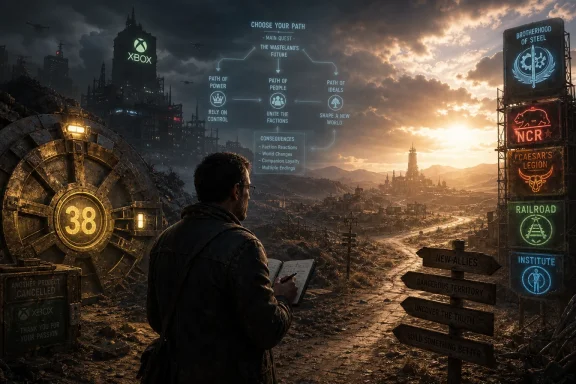 What This Means for Players
The practical takeaway is simple: expectations should stay low until Microsoft, Bethesda, or Obsidian confirms the project publicly.There is no confirmed release window. There is no confirmed title. There is no confirmation that this is Fallout 5, New Vegas 2, or any other specific label. There is also no confirmed co-development model explaining exactly how Bethesda and Obsidian would divide responsibility.
What the reporting supports is narrower but still significant: Obsidian is reportedly prioritizing a new Fallout game, Josh Sawyer is reportedly leading the effort, and other planned Obsidian projects have been canceled or shelved to make room for that priority.
For players, that means three things.
First, do not expect an imminent launch. If the project has only recently become the studio’s central priority, it is safer to think in terms of early development and changing plans rather than a game close to release.
Second, do not assume the internet shorthand is accurate. “New Vegas 2” will be the phrase many fans reach for, but the available facts do not confirm a direct sequel, a specific setting, a particular engine, a platform list, or a traditional mainline Fallout structure.
Third, the most meaningful news is not the title of the game, because there is not one yet. The meaningful news is that Microsoft is reportedly putting one of its strongest RPG studios behind one of its biggest RPG franchises while cutting back on other Obsidian work.
Microsoft Finally Says the Quiet Part Out Loud
The new Fallout project comes from reporting by Bloomberg, with Windows Central saying it can corroborate the story with its own sources. The basic shape is stark: Obsidian, the Irvine-based RPG studio Microsoft owns through Xbox, has canceled multiple planned projects so it can focus on a new Fallout title. The canceled slate reportedly includes a sequel to Avowed, the action RPG set in the Pillars of Eternity universe.That would be major news even in a normal week. It lands differently because it follows Microsoft’s mass Xbox layoffs, which reportedly cut a substantial portion of Obsidian’s workforce. A studio known for juggling ambitious role-playing games, survival projects, expansions, and smaller creative bets is now reportedly being asked to concentrate around the one franchise many fans have wanted it to revisit for years.
This is not a shutdown story. It is more revealing than that. Obsidian is still active, and some of its existing work is reportedly continuing. But the version of Obsidian Microsoft appears to be prioritizing is narrower: Fallout moves to the front, the Avowed sequel is shelved, other planned projects disappear from the slate, and continuing support for The Outer Worlds 2 and Grounded 2 remains in place.
The business logic is not hard to understand. Bethesda Game Studios, the primary steward of Fallout, has other major RPG commitments. Fallout remains one of Microsoft’s most recognizable role-playing brands. Obsidian has direct Fallout history through New Vegas. The Amazon adaptation has also kept Fallout in mainstream conversation, making the lack of a near-term major game more noticeable.
So the concrete implication is this: Microsoft appears to be using Obsidian to reduce the wait for more Fallout. The cost is less room, at least for now, for an Avowed sequel and unnamed Obsidian projects that do not carry the same franchise weight.
Fallout is the project Obsidian’s other ideas now have to compete against.
The New Vegas Connection Is the Reason This Report Matters
Josh Sawyer leading the new Fallout team is the detail that will define the public reaction. Sawyer was the game director of Fallout: New Vegas, Obsidian’s 2010 RPG developed in partnership with Bethesda. For many Fallout fans, New Vegas remains a benchmark because it leaned heavily into factions, branching quests, political conflict, and player choice.That history matters, but it should not overwhelm the actual news. The point is not that New Vegas can simply be recreated by assigning the right name to a new project. The point is that Sawyer’s involvement gives the report a specific creative association. Fans who remember New Vegas are not just asking for more post-apocalyptic content. They are asking for Fallout with sharper factional tension, more reactive quest design, and choices that visibly change how the world responds.
Bethesda’s modern Fallout games turned the wasteland into a vast first-person open-world RPG space. Fallout 76 pushed the series into an online multiplayer model. Fallout Shelter moved the brand into a smaller management format. New Vegas became something else in the public memory: the Fallout game people cite when they want the series to emphasize role-playing consequences, ideological conflict, and messy political tradeoffs.
That is why Sawyer’s reported role is more than a staffing note. It tells players what kind of hope this report activates. It does not confirm the game’s structure, scale, tone, or setting, but it explains why “Obsidian Fallout” still carries unusual weight.
Bloomberg’s reporting adds an important wrinkle: Sawyer had previously been working on an RPG described as structurally and thematically similar to Fallout, but not part of the franchise. That makes the pivot sound less like a game appearing from nowhere and more like Microsoft taking an existing Obsidian direction and aligning it with a stronger franchise.
That could work. If Obsidian already had a role-playing framework that overlapped with Fallout’s themes, bringing it under the Fallout banner could give the project a clearer identity and a larger audience. It also shows the tradeoff of studio ownership under a major platform holder. A distinctive Obsidian idea can be redirected toward a corporate priority when the company decides the safer brand is worth more than the original pitch.
That does not mean the resulting game will be worse. It may become stronger under the Fallout name. But it does mean players should understand the report as both a creative opportunity and a strategic reallocation.
Avowed Becomes the Sacrifice Xbox Can Explain
The most immediate casualty is the reported Avowed sequel. Windows Central says multiple planned Obsidian projects were canceled to prioritize the Fallout title, including a sequel to Avowed. Bloomberg’s reporting frames the cancellation as part of a wider Xbox shift toward major franchises.Avowed’s position was always complicated. It belonged to the Pillars of Eternity universe, but it was not Pillars of Eternity III. It translated an isometric RPG setting into a first-person action RPG format, trying to make Obsidian’s dense fantasy world legible to a broader audience. That made it creatively valuable, but commercially harder to explain than a new Fallout game.
A sequel would have been the obvious chance to sharpen Avowed’s identity. Many RPG series become clearer in their second entry, after the first game establishes the toolchain, combat language, art direction, world rules, and audience expectations. The second game can build on that foundation rather than spending so much effort proving the premise.
That is what makes the reported cancellation notable. The available reporting does not establish that the Avowed sequel was failing creatively or technically. The cleaner reading is that it lost priority to Fallout.
Some work connected to the shelved Avowed sequel may reportedly continue in limited form, with hope that the project could be revived later. That is not the same as a full greenlight. It means Avowed appears to be in limbo: not necessarily erased, but not commanding the resources needed for full production.
For fans of the Pillars universe, the message is sobering. Avowed may not have been rejected because it lacked promise. It may simply have been less urgent to Microsoft than Fallout.
What Continues, What Stops, and What Is Still Unknown
The clearest way to understand the reported change is to separate the slate into three categories: what is moving forward, what is paused or canceled, and what remains unknown.The work reportedly moving forward includes the new Fallout project, The Outer Worlds 2 DLC, and Grounded 2 content. That suggests Microsoft is not abandoning all of Obsidian’s current commitments. Existing support plans with visible audiences still matter.
The work reportedly stopped or shelved includes the Avowed sequel and other planned projects that have not been publicly named in the supplied reporting. That means the biggest damage appears to fall on the middle of Obsidian’s slate: sequels and unannounced bets that needed time, staffing, and executive confidence before becoming public products.
The unknowns are broader. We do not know the Fallout game’s title, scope, structure, release window, platforms, engine, setting, or relationship to previous Fallout entries. We do not know whether Bethesda is deeply co-developing the game or providing support, review, franchise guidance, technology help, or some other form of involvement. We do not know whether any elements of Sawyer’s previously reported non-Fallout RPG will survive intact inside the new project.
That distinction matters because it keeps the report from becoming more certain than it is. The confirmed shape is not “New Vegas 2 is coming.” The careful version is: Obsidian is reportedly prioritizing a new Fallout game led by Josh Sawyer, while other Obsidian work has been canceled or shelved.
That is already big news. It does not need to be inflated.
One Strong Read on Microsoft’s Strategy
The strongest synthesis is this: Microsoft appears to be concentrating Obsidian around projects with clearer franchise value and existing audience demand, while reducing support for projects that require more patience to prove themselves.That means Fallout rises because it is a known brand with obvious demand. The Outer Worlds 2 DLC and Grounded 2 content continue because they are tied to existing products and communities. The Avowed sequel falls because, even if it had creative potential, it was still a newer branch of a fantasy universe that needed more time to establish itself. Other unnamed projects fall because they were less visible and easier to remove before public expectations formed.
This is not abstract “portfolio math.” For players, it has concrete effects.
If you were waiting for Avowed to grow into a larger series, that path now looks uncertain. If you were hoping Obsidian would keep spreading itself across fantasy RPGs, science-fiction RPGs, survival games, smaller authored projects, and experimental ideas, the slate now looks tighter. If you mainly wanted more Fallout from the studio that made New Vegas, this is the closest Microsoft has come to making that dream sound real.
The tradeoff is variety. Obsidian has long been valuable because it could occupy several lanes at once: dense RPG writing, reactive quests, smaller narrative experiments, survival systems, party-driven adventures, and worlds that did not always fit the safest AAA categories. A Fallout project led by Sawyer could become a major PC and Xbox RPG event. But if getting there means fewer Obsidian worlds and fewer mid-sized sequels, the studio’s future becomes easier to market and less varied.
That is the tension Microsoft now owns. It can give players the Fallout pairing they have asked about for years, but it must also prove that doing so does not reduce Obsidian to a support structure for bigger brands.
The Workforce Cut Is Not Background Noise
It is impossible to separate the Fallout news from the layoffs without turning the story into simple fan service. Obsidian reportedly faced major staff reductions as part of Microsoft’s Xbox layoffs. The exact composition of those cuts has not been confirmed in the supplied facts, so it is safer not to make claims about which roles or seniority levels were affected.Even with that caution, the concern is real. RPGs are built by teams: quest designers, writers, tools programmers, technical artists, combat designers, producers, QA staff, audio developers, localization specialists, accessibility specialists, and many others. A well-known director can set tone and make key decisions, but the kind of reactive role-playing people associate with New Vegas depends on a wide base of production labor.
The counterargument is that canceled projects free up people. If Obsidian is no longer spreading teams across an Avowed sequel and other unannounced work, remaining staff can consolidate around Fallout, The Outer Worlds 2 DLC, and Grounded 2 content. That may be the internal logic.
But consolidation after layoffs is not the same as focus without disruption. Layoffs can damage morale, remove experience, interrupt pipelines, and make remaining developers inherit changed priorities overnight. A team can become more concentrated on paper while still dealing with the practical cost of losing colleagues, canceling work, and rebuilding plans.
For players, that matters because RPG quality is cumulative. Branching quests require design time. Reactive worlds require writing time. Faction systems require testing. Skill checks, alternate quest paths, and long-tail consequences require engineering and QA support. If Microsoft wants an Obsidian Fallout that evokes what fans loved about New Vegas, it has to fund the invisible work behind that reputation.
The headline may be Sawyer. The reality will be the team.
Microsoft’s Fallout Problem Was Always a Calendar Problem
Bethesda’s Fallout stewardship created a scheduling problem Microsoft eventually had to address. Bethesda Game Studios has finite capacity, and its major RPG calendar has left Fallout waiting behind other priorities. The reporting describes Fallout 5 as not arriving soon.That would be less urgent if Fallout were quiet. It is not. The television adaptation brought the series back into mainstream conversation and introduced the wasteland to a wider audience. That attention makes the absence of a near-term major game feel more costly for Microsoft.
This is where Obsidian becomes the obvious candidate. It has a history with Fallout, a reputation for choice-driven RPG design, and, reportedly, a Sawyer-led project that already overlapped with Fallout in structure and theme. If Bethesda is not positioned to deliver the next Fallout game soon, Microsoft can look to the studio that made the most famous non-Bethesda modern Fallout.
That echoes the old arrangement in broad terms. New Vegas existed because Obsidian partnered with Bethesda on a Fallout game between major Bethesda releases. The new project appears to rhyme with that setup: Bethesda’s calendar is occupied, Fallout demand remains high, and Obsidian is again the studio with the clearest franchise connection.
The difference is ownership and pressure. In 2010, Obsidian was an external partner working with Bethesda. Now it is inside Microsoft’s Xbox portfolio, subject to the same restructuring logic that reportedly canceled other projects and reduced staff. The old New Vegas story was about a specialist studio getting a shot. The new story is about a platform holder redirecting an acquired studio toward a larger and safer franchise priority.
That does not make the project cynical by default. It does make the conditions different.
The Project Slate Now Has Winners, Losers, and Ghosts
The available reporting lets us sketch Obsidian’s near-term slate in blunt terms. Fallout is rising. Avowed’s sequel is shelved. The Outer Worlds 2 DLC and Grounded 2 content continue. Other planned projects have been canceled, but remain unnamed in the supplied source material.| Obsidian project or workstream | Reported status | What it means for players |
|---|---|---|
| New Fallout game | Prioritized, reportedly led by Josh Sawyer | The most important new Obsidian effort is now tied to Microsoft’s biggest post-apocalyptic RPG brand |
| Avowed sequel | Reportedly shelved or canceled, with limited work possibly continuing in hope of revival | The Pillars of Eternity action-RPG branch is no longer a clear production priority |
| Other planned projects | Reportedly canceled | Unannounced Obsidian ideas are being cleared before players ever see them |
| The Outer Worlds 2 DLC | Reportedly continuing | Existing sci-fi RPG support plans remain active |
| Grounded 2 content | Reportedly continuing | Ongoing survival-game support remains part of the studio’s near-term work |
For Windows PC players, that matters because Obsidian has been one of Microsoft’s most natural PC RPG assets. Its games tend to support long-tail discussion, systems debate, save-file experimentation, and mod-minded communities. A new Fallout from Obsidian could become a major PC RPG moment.
But if the cost is fewer Obsidian worlds, fewer mid-sized experiments, and fewer sequels to Microsoft-owned RPG universes, the first-party library becomes more predictable even as the tentpoles get bigger.
There is a Game Pass implication as well, though the reporting does not specify distribution plans for the new Fallout game. Microsoft’s subscription strategy benefits from recognizable franchises that can anchor major marketing beats. Fallout does that more easily than Avowed. But Game Pass also needs texture: games that keep different kinds of players engaged between the biggest releases. If Xbox leans too hard toward only the largest names, it risks making its first-party output feel less varied.
Timeline
2008 — Bethesda Game Studios released Fallout 3, establishing Bethesda’s modern first-person open-world approach to the Fallout franchise.2010 — Obsidian released Fallout: New Vegas, developed in partnership with Bethesda and directed by Josh Sawyer.
2011 — The Elder Scrolls V: Skyrim arrived after New Vegas in Bethesda’s broader RPG release calendar.
Avowed era — Obsidian expanded the Pillars of Eternity universe into a first-person action RPG with Avowed.
Current reporting — Obsidian is reportedly prioritizing a new Fallout game led by Josh Sawyer, while a planned Avowed sequel and other unnamed projects have reportedly been shelved or canceled.
Continuing work — The Outer Worlds 2 DLC and Grounded 2 content are reportedly still moving forward.
New Vegas Nostalgia Is Useful, Dangerous, and Not Enough
The fan response will be predictable because the pitch is built to trigger it. “Obsidian is making Fallout again” is one of the few phrases in modern games that can cut through platform arguments, subscription fatigue, and general AAA skepticism. Add Josh Sawyer, and the report becomes a test of whether Microsoft can use its studio ownership in a way that feels obvious to players.But nostalgia can flatten reality. Fallout: New Vegas was not simply beloved because Obsidian’s logo was on it. It worked for many players because it had a specific design philosophy: strong factions, morally compromised institutions, skill checks that mattered, quests with multiple resolutions, and a world where political consequences were more than set dressing.
It was also the product of constraints, timing, and a particular team culture that cannot be recreated just by assigning a franchise to the right studio.
The new game, if it happens as reported, will face expectations New Vegas never had. It will arrive under Microsoft’s first-party scrutiny, with Bethesda’s IP stewardship involved in some capacity, and after layoffs that have already framed the project as both opportunity and sacrifice.
If it feels too much like Bethesda’s Fallout, some fans will say Obsidian was restrained. If it leans too heavily on New Vegas nostalgia, others may question whether it has its own identity. If it is smaller, it may be called underfunded. If it is enormous, it may lose the density that helped New Vegas work.
That is the challenge Microsoft is creating for itself. The company can use nostalgia to make a practical franchise decision feel like a creative homecoming, but delivering on that promise requires more than the right names. It requires enough time, enough staff, enough authority, and enough willingness to let Obsidian build the kind of choice-driven RPG players associate with its Fallout legacy.
The most hopeful read is that Sawyer’s previously reported non-Fallout RPG gave Obsidian a thematic and structural foundation that can become something sharper under the Fallout banner. The more cautious read is that an original Obsidian project has been redirected because known brands are safer. Both readings can be true at once.
Bethesda’s Role Will Decide Whether This Feels Like a Collaboration or a License
Bethesda’s involvement is essential and delicate. As Fallout’s steward, Bethesda has reason to protect continuity, brand standards, and long-term positioning. It also has its own modern Fallout lineage through Fallout 3, Fallout 4, Fallout 76, and Fallout Shelter. No major Fallout project can ignore that history.At the same time, the reason this report is exciting is that Obsidian’s Fallout identity is different from Bethesda’s. New Vegas is remembered not because it simply replicated Fallout 3, but because it pushed that modern framework toward Obsidian’s strengths. The factional structure was more overt. The wasteland felt like a contested political space rather than only a map of locations.
If Bethesda directly co-develops the new game, the project may benefit from deeper Fallout infrastructure and institutional knowledge. If Bethesda provides support rather than co-development, Obsidian may have more room to define the experience. The source reporting does not establish which model is true, and that remains one of the most important unresolved points.
The ideal arrangement would be a clear division of authority. Bethesda guards the IP and assists where its knowledge is needed. Obsidian owns the player-facing RPG design. Microsoft funds the time, staffing, and scope required to make branching role-playing meaningful.
Anything less clear risks producing a game that carries the right names without fully capturing the design values players expect from the pairing.
This is especially important because Fallout is no longer only a game franchise moving from one release to the next. The television adaptation has widened the audience, and the next major Fallout game will speak to players who may know the world from different entry points. That makes brand stewardship important, but it also makes creative clarity more valuable.
A new Fallout from Obsidian needs to know whether it is serving nostalgia, expanding the setting, filling a release-calendar gap, or building a distinct RPG identity inside Bethesda’s universe. The best version would do more than one of those things at once.
Admin Checklist: What to Watch Next
For players, admins, and community moderators trying to separate real news from rumor inflation, the next phase should be judged by a few clear signals.| Question to watch | Why it matters |
|---|---|
| Does Microsoft confirm the project? | Until there is official confirmation, the report remains sourced journalism rather than an announced game |
| Does the project get a title? | A title would clarify whether this is positioned as a spinoff, sequel, mainline entry, or something else |
| Is Josh Sawyer’s role publicly defined? | “Leading” can mean different things depending on production structure and studio organization |
| What is Bethesda’s role? | Co-development, support, oversight, and franchise consultation would each imply different creative dynamics |
| Is there a release window? | Without one, players should assume the game is not near launch |
| What happens to Avowed? | Any future mention of revival, staffing, or cancellation would clarify whether the sequel is paused or effectively gone |
| Do The Outer Worlds 2 DLC and Grounded 2 plans stay intact? | Continued support would show whether Obsidian can maintain existing commitments while Fallout ramps up |
Communities should expect fake titles, invented maps, supposed platform lists, engine claims, and “New Vegas 2” branding to circulate quickly. None of that should be treated as reliable unless it comes from official statements or reporting with clear sourcing.
The confirmed practical stance is cautious interest.
The Forward-Looking Close
The reported Obsidian Fallout project is the kind of decision that makes immediate sense and still deserves scrutiny. Microsoft owns Fallout. Microsoft owns Obsidian. Obsidian made New Vegas. Josh Sawyer is reportedly leading the new effort. Bethesda’s own Fallout calendar appears distant. From a player’s-eye view, the pairing is so obvious that the larger question is why it took this long.But the sacrifice is real. A planned Avowed sequel is reportedly off the main track. Other unnamed Obsidian projects have reportedly been canceled. The studio is moving forward after layoffs. The Outer Worlds 2 DLC and Grounded 2 content may continue, but the broader message is that Fallout now sits above the rest of Obsidian’s slate.
That can be good news for Fallout fans and bad news for players who valued Obsidian’s range. It can be a smart use of Microsoft’s studio ownership and a warning sign about how quickly distinctive projects can lose oxygen when a larger franchise needs attention. It can be a creative homecoming and a corporate consolidation at the same time.
The next step belongs to Microsoft. If the company wants players to believe this is more than a familiar logo attached to a safer bet, it needs to clarify the project without overpromising it. Confirm what Obsidian is making. Explain Bethesda’s role. Give Sawyer’s team room to define the game on its own terms. Most importantly, give the studio enough time and staffing to build the kind of reactive RPG that made this pairing matter in the first place.
Until then, the cleanest reading is also the most careful one: Obsidian is reportedly back on Fallout, Avowed’s sequel has reportedly been pushed aside, and the dream of another New Vegas-style moment is alive — but not yet confirmed in the form fans are already imagining.
References
- Primary source: Windows Central
Published: 2026-07-08T18:52:07.467150
Xbox's RPG studio Obsidian is making a new Fallout game with Bethesda and Fallout: New Vegas' game director — and it's canceled an Avowed sequel to do it | Windows Central
The Fallout: New Vegas dev is making a new game in the series for Microsoft and Xbox.www.windowscentral.com - Related coverage: gamesradar.com
Obsidian reportedly safe from Xbox studio closures despite fears the RPG powerhouse was in negotiations to avoid shutdown | GamesRadar+
The iconic dev behind Fallout: New Vegas, Grounded, Star Wars: KOTOR 2, and morewww.gamesradar.com - Related coverage: tomshardware.com
Microsoft 'resets' Xbox by cutting 3,200 jobs this year, divesting five game studios — firm cites 'margins that are 3-10x lower than comparable platform and publishing businesses' | Tom's Hardware
1,600 jobs will be eliminated today, the rest throughout FY27www.tomshardware.com - Related coverage: gamespot.com
Xbox Kills Obsidian's Avowed Sequel In The Wake Of Layoffs - Report - GameSpot
According to new reporting, the sequel was progressing well and on track to be announced within the year.www.gamespot.com - Related coverage: forbes.com
New ‘Fallout’ Game Reportedly Coming From Obsidian, ‘Avowed 2’ Cancelled
Obsidian has reportedly cancelled a sequel to Avowed, and will instead work on a new Fallout game under the direction of Fallout New Vegas’ Josh Sawyer.www.forbes.com - Related coverage: notebookcheck.net
Xbox reset hits Obsidian, as development shifts to new Fallout game with Avowed 2’s cancellation - Notebookcheck News
Obsidian Entertainment is a subsidiary of Xbox and has also been affected by the major reshuffling. The studio has shifted focus from developing Avowed 2 and is now working on a new Fallout game. www.notebookcheck.net
- Related coverage: purexbox.com
- Related coverage: digitaltrends.com
Xbox reportedly cancels Avowed sequel to make room for a new Fallout game from the New Vegas director - Digital Trends
Bloomberg reports that Obsidian Entertainment has shifted development to a new Fallout game led by Fallout: New Vegas director Josh Sawyer, while the planned Avowed sequel has been cancelled.www.digitaltrends.com - Related coverage: dexerto.com
Xbox to focus on new Fallout game after Obsidian layoffs cancel Avowed sequel - Dexerto
Microsoft’s Xbox division has reportedly canceled multiple projects at Obsidian Entertainment, including a planned sequel to Avowed.www.dexerto.com - Related coverage: pcgamer.com
Obsidian is reportedly making a new Fallout game headed by Josh Sawyer after Microsoft pulled the plug on an Avowed sequel | PC Gamer
25% of the studio's workforce was let go in the sweeping Xbox layoffs, and multiple games in development were cancelled.www.pcgamer.com - Related coverage: destructoid.com
Obsidian Entertainment, leveled by Xbox layoffs, reportedly begins work on new Fallout game – Destructoid
Back to the wasteland?www.destructoid.com - Related coverage: beebom.com
Obsidian Reportedly Shifts Focus to New Fallout Game As Xbox Cancels Avowed 2 | Beebom
A new report has revealed that a new Fallout game, directed by New Vegas director Josh Sawyer, is in the works at Obsidian Entertainment.beebom.com - Related coverage: engadget.com
Microsoft Reportedly Cancels Avowed Sequel As Obsidian Focuses On A Fallout Game
The Fallout: New Vegas developer has not escaped Microsoft's Xbox layoffs unscathed.www.engadget.com - Related coverage: as.com
Obsidian, padres de Fallout: New Vegas y Avowed, entre los estudios que negocian con Xbox para evitar un cierre dramático - Meristation
Obsidian Entertainment (Fallout: New Vegas, Avowed, The Outer Worlds) se une a la larga lista de estudios que negocian con Xbox para evitar echar el cierre.as.com - Related coverage: cinemablend.com
Fallout Is Back For Season 3, And That Means New Disgusting Makeup Pics From Walton Goggins | Cinemablend
Prime Video's hit Fallout adaptation is coming back for Season 3, and Walton Goggins couldn't wait to share more disgusting makeup pictures online.www.cinemablend.com - Related coverage: aboutamazon.com
'Fallout' Season 3 is coming to Prime Video: Everything you need to know
Here's what you need to know about the 'Fallout' Season 3 cast, plot, release date, and more. www.aboutamazon.com
- Related coverage: upi.com
'Fallout' Season 3 adds 3 to cast, begins filming this month - UPI.com
Prime Video announced Thursday that three new cast members will join "Fallout" Season 3, which begins shooting in Los Angeles this month.www.upi.com - Related coverage: obsidian.net

Obsidian | The Outer Worlds 2
As a daring and most likely good-looking Earth Directorate agent, you must uncover the source of devastating rifts threatening to destroy all of humanity. Your investigation leads to Arcadia, home of skip drive technology, where...
www.obsidian.net
- Related coverage: fallout.bethesda.net
Fallout 4: Anniversary Edition | Welcome Home
From Bethesda Game Studios and winner of over 200 ‘Best Of’ awards, including the DICE and BAFTA Game of the Year, Fallout 4: Anniversary Edition includes the base game, all six official expansions and more than 150 Creation Club items in one definitive bundle.fallout.bethesda.net - Related coverage: gematsu.com
Fallout 76 - Gematsu
Fallout 76 is a multiplayer action role-playing video game developed by Bethesda Game Studios and published by Bethesda Softworks. About Bethesda Game Studios…www.gematsu.com - Related coverage: techradar.com
Fallout season 3: everything we know so far about the hit Prime Video show's next chapter | TechRadar
Fallout season 3 was announced in May 2025 – and this is everything we know about the Amazon TV show's next entry.www.techradar.com - Related coverage: support.obsidian.net
- Related coverage: shortlist.com
Fallout season 3 is filming much sooner than expected | Shortlist
Amazon’s post-apocalyptic hit isn’t wasting any timewww.shortlist.com - Related coverage: fortune.com
Xbox's CEO on 3,200 layoffs, four studios cut, and her warning that 'we spread ourselves too thin' | Fortune
Asha Sharma unveiled sweeping changes at the Microsoft unit Monday, including downsizing that will impact 20% of staff.fortune.com
