

AI is reshaping enterprise operations — and the security choices organizations make today will determine whether that transformation is durable or brittle. Microsoft’s January 22, 2026 security blog frames a clear thesis: when security is built as an integrated, platform-first capability across identity, data, devices, and cloud, it becomes a strategic enabler of AI-driven innovation rather than an operational drag.
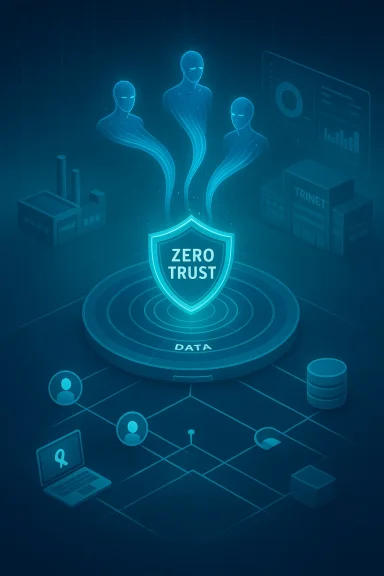
As enterprises adopt generative AI, agentic assistants, and cloud-native services, attackers are adapting at the same pace. The attack surface now includes not just user endpoints and servers, but model prompts, agent lifecycles, and cross-service data flows. Microsoft’s narrative — illustrated by customer deployments at Ford, Icertis, and TriNet — argues that a unified security fabric built on Zero Trust, identity-first controls, and AI-augmented detection and response is the practical path to securing AI transformation. This is not a hypothetical: Ford, Icertis, and TriNet each migrated from fragmented, point-tool stacks to consolidated Microsoft security platforms and reported measurable operational benefits — faster detection, fewer incidents, and cost savings tied to tool consolidation. Those cases are presented as concrete examples of what an integrated security approach looks like in practice.
Source: Microsoft Microsoft Security success stories: Why integrated security is the foundation of AI transformation | Microsoft Security Blog
 Background / Overview
As enterprises adopt generative AI, agentic assistants, and cloud-native services, attackers are adapting at the same pace. The attack surface now includes not just user endpoints and servers, but model prompts, agent lifecycles, and cross-service data flows. Microsoft’s narrative — illustrated by customer deployments at Ford, Icertis, and TriNet — argues that a unified security fabric built on Zero Trust, identity-first controls, and AI-augmented detection and response is the practical path to securing AI transformation. This is not a hypothetical: Ford, Icertis, and TriNet each migrated from fragmented, point-tool stacks to consolidated Microsoft security platforms and reported measurable operational benefits — faster detection, fewer incidents, and cost savings tied to tool consolidation. Those cases are presented as concrete examples of what an integrated security approach looks like in practice. Why integrated security matters now
Security is now a board-level business risk and a business enabler. The drivers are simple and urgent:- The scale and autonomy of AI agents create new data-exfiltration and prompt-injection threats.
- Hybrid and multi-cloud estates create telemetry fragmentation that increases mean time to detect (MTTD) and mean time to respond (MTTR).
- Talent shortages and alert fatigue force organizations to automate and consolidate to remain effective.
Customer spotlights: what Ford, Icertis, and TriNet actually did
Ford: embedding security into a global manufacturing footprint
Ford’s challenge was classic large-manufacturer complexity: hundreds of custom tools, distributed manufacturing systems, and a hybrid on‑prem + cloud infrastructure. The company centralized around a Microsoft security stack — Microsoft Defender, Microsoft Sentinel, Microsoft Purview, and Microsoft Entra — and adopted Zero Trust principles to make every access decision context-aware and continuous. The result, Ford reports, was measurable reduction in vulnerabilities, centralized detection, and a faster, more consistent SOC process. Key elements of Ford’s approach:- Consolidate endpoint and cloud telemetry into a single SOC ingestion point.
- Apply automated playbooks to accelerate containment and remediation.
- Use Purview for automated classification and governance across sensitive corporate data.
Icertis: securing generative AI for contract intelligence
Icertis built generative AI features — the Vera platform powered by Azure OpenAI — directly into its product. That innovation introduced AI-specific threats (prompt injection, model hallucination, exposed PII) on top of the usual cloud-security challenges across hundreds of subscriptions. Icertis’ solution was to deploy Microsoft Defender for Cloud, Microsoft Sentinel, Microsoft Purview, Entra, and Security Copilot, and to apply Zero Trust controls and AI-aware posture management. They report a 50% drop in SOC incidents, up to 80% faster triage, and mean time to resolution falling to 25 minutes. What Icertis emphasizes:- Defender for Cloud as a CNAPP (cloud native application protection platform) to handle AI workload posture.
- Purview to automate classification and governance of contract data across regions.
- Security Copilot agents to compress investigation workflows and produce human-readable timelines.
TriNet: consolidating into Microsoft 365 E5 to reduce cost and complexity
TriNet’s driver was vendor sprawl — multiple point solutions, diverse consoles, and high operational overhead. The company migrated to Microsoft 365 E5 (including Defender XDR, Purview, Entra, Sentinel, and Microsoft 365 Copilot) and reports improved Secure Score, blocked spear-phishing attempts targeting executives, and significant savings via tool consolidation. TriNet highlights automation (Azure Logic Apps playbooks), centralized logging, and passwordless/conditional access as critical levers. Operational wins TriNet reports:- Reduced alert fatigue through centralized monitoring and automation.
- Faster incident handling and prevention of executive account takeovers via phish-resistant MFA and conditional access.
- Quantified cost savings when factoring license consolidation and reduced third-party renewals.
What these stories have in common: a repeatable playbook
Across the three customer stories, a clear, repeatable approach emerges:- Assess legacy estate and identify telemetry silos and control gaps.
- Adopt Zero Trust as the strategic control plane (identity, least privilege, conditional access).
- Consolidate telemetry into a unified SIEM/XDR stack for correlation (Sentinel + Defender family).
- Apply data governance (Purview) to classify and control sensitive flows.
- Automate triage and response with orchestration engines and AI agents (Security Copilot).
- Measure outcomes (MTTD/MTTR, incident volume, Secure Score, cost per incident) and iterate.
Critical analysis — strengths, gaps, and operational realities
Strengths: why the integrated story has traction
- Single pane of glass: Centralized telemetry and correlation dramatically reduce the context-switching that wastes analyst time, a real operational win for SOC teams.
- Identity-first enforcement: Zero Trust moves the security conversation from "perimeter" to "who and what can access data," which is better aligned with cloud and agentic AI models. This approach is consistent with NIST SP 800-207 guidance.
- AI as force multiplier: Security Copilot and agentic automation accelerate triage, produce structured incident timelines, and recommend containment steps — all of which scale lean teams effectively. Third-party reporting and practitioner accounts confirm the promise of AI-assisted SOC workflows.
- Regulatory and compliance alignment: Using a unified platform simplifies evidence collection, policy enforcement, and cross-border data governance — an important operational benefit for regulated firms.
Risks and limitations: what leaders must not overlook
- Vendor lock-in and single-supplier risk: Consolidation reduces overhead but increases dependency on a single vendor’s roadmap, SLAs, and pricing. Teams must weigh operational gains against strategic flexibility.
- Automation without observability: If playbooks and agents execute high-impact actions (e.g., credential revocation, mass quarantines), organizations must retain human-in-the-loop controls and robust auditing to avoid outages or business disruption.
- Agentic AI attack surfaces: Agents and generative AI open new threat vectors — prompt injection, model hallucinations, and agent supply-chain compromises. Governance tools like an agent registry (Agent 365) and Entra Agent ID help, but enterprise processes must evolve to manage agent lifecycles securely. Microsoft and practitioners have emphasized agent governance, but this remains an emerging operational discipline.
- Overstated customer metrics risk: Customer success stories often highlight best-case metrics. Independent verification or third-party audits of outcome claims (e.g., 50% incident reduction, 80% triage time reduction) are rare, so readers should treat single-case figures as indicative rather than guaranteed. Benchmark pilots and internal KPIs are essential before assuming identical results.
How to plan and operationalize a platform-first security program
Practical roadmap (prioritized)
- Map your telemetry estate and identify the top 10 data sources that drive visibility for critical assets.
- Define a Zero Trust baseline (passwordless where possible, conditional access, least privilege role approvals).
- Consolidate logging and alerts into a central analytics plane (SIEM/XDR), and instrument data retention and access controls.
- Run a bounded pilot that leverages automation for low-risk playbooks (phishing triage, URL blocking).
- Measure pilot KPIs: MTTD, MTTR, incident volume, analyst time per alert, cost per incident.
- Expand automation iteratively, adding human review gates for high-impact actions.
Governance and people considerations
- Create an agent lifecycle policy: build, register, approve, monitor, retire.
- Train SOC analysts on AI-augmented workflows and on interpreting Copilot outputs.
- Maintain a change-control board for automated playbooks that can modify access or take containment actions.
Technology choices to evaluate
- SIEM/XDR convergence (Sentinel + Defender family) or best-of-breed alternatives — evaluate data ingestion costs, retention, and analytics fidelity.
- CNAPP capabilities for AI workloads (Defender for Cloud).
- DLP and classification for AI prompts and model inputs (Purview).
- Identity governance and agent identities (Entra / Entra Agent ID).
Measuring success — what metrics matter
Focus on outcomes that align security with business goals:- Mean Time To Detect (MTTD) and Mean Time To Respond (MTTR).
- Incident volume normalized to attack surface (incidents per 1,000 assets).
- Secure Score or an equivalent maturity metric.
- Cost savings from vendor consolidation (total cost of ownership for security tooling).
- Business continuity metrics (production downtime avoided; incident-driven SLA breaches).
Signal check: what independent sources confirm (and where caution is warranted)
- Zero Trust is a validated architectural model: NIST SP 800-207 provides practical definitions and adoption guidance that align with the customers’ strategic choices.
- Analyst and vendor-commissioned TEI studies report that integrated SIEM/XDR and automation improve MTTD/MTTR and produce measurable savings — corroborating the operational claims made in the customer stories while also emphasizing variable outcomes depending on maturity.
- Industry coverage and practitioner reporting confirm Microsoft’s push to embed agentic controls and to include Security Copilot capabilities more broadly (Agent 365, no-code agent builders, Copilot agents for Defender/Entra/Purview). These sources validate the technical direction but also spotlight operational questions about governance and lifecycle management.
Executive checklist for leaders deciding on an integrated security platform
- Prioritize identity and Zero Trust as the first strategic investments.
- Run a six-to-12-week pilot that consolidates your most critical telemetry sources.
- Require measurable KPIs up front (MTTD/MTTR baselines, analyst hours saved, alert reduction).
- Build automation with human oversight and audit trails for every playbook.
- Insist on an agent governance policy before deploying agentic copilots at scale.
- Budget for migration and decommissioning costs when consolidating toolchains.
Conclusion
The Microsoft customer stories from Ford, Icertis, and TriNet show a simple but consequential truth: when security is designed as a platform rather than a patchwork of point tools, it becomes an accelerator for AI-driven business change rather than a bottleneck. The combination of Zero Trust, integrated telemetry, data governance, and AI-assisted automation can shorten detection and response cycles, reduce incident volumes, and lower operational cost — but only if organizations pair technology consolidation with disciplined governance, measurable pilots, and staff enablement. For security and IT leaders, the pragmatic next step is clear: map your controls to business risk, run small, measurable pilots that consolidate telemetry and test AI-assisted playbooks, and bake agent governance into every AI rollout. That sequence — not vendor hype — is what will determine whether security becomes the foundation for resilient AI transformation or the Achilles’ heel that undermines it.Source: Microsoft Microsoft Security success stories: Why integrated security is the foundation of AI transformation | Microsoft Security Blog
