Project Helix: Microsoft's Next Xbox SoC Blurring Console and PC with AI Rendering

  • Thread Author
Microsoft says its next-generation console platform, codenamed Project Helix, will begin reaching developers as alpha hardware in 2027, and it will bring a new full‑screen “Xbox mode” to Windows 11 as soon as April — announcements that together mark the clearest signal yet that Microsoft is positioning its next Xbox as a hybrid console‑PC platform built around a custom AMD system‑on‑chip and a rendering stack heavy on ray/path tracing, machine learning, and tighter Windows integration.

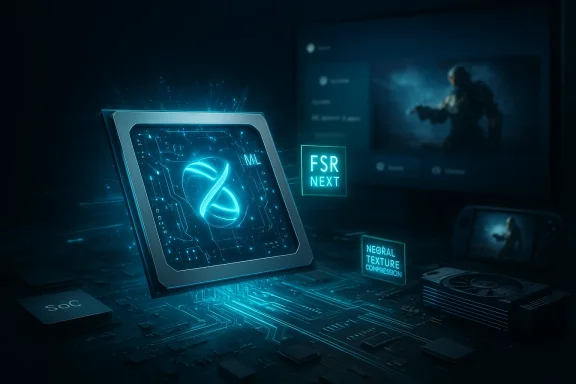
A futuristic blue AI/ML microchip on a circuit board with neon-lit labels.Background / Overview​

Project Helix was the headline item in Microsoft Gaming’s developer‑facing presentations at the Xbox Developer Summit during GDC 2026. Xbox’s next‑generation lead framed Helix not as a minor incremental refresh, but as a platform intended to “play your Xbox console and PC games” and to deliver what the company describes as an order of magnitude uplift in ray tracing performance and a new era of ML‑assisted rendering and frame generation. Microsoft also confirmed Helix is being built in close partnership with AMD and that early alpha hardware will be made available to studios starting in 2027. At the same time, Microsoft is rolling the Xbox full‑screen experience out to Windows 11 — rebranded as Xbox mode — starting in April and initially targeting select markets and devices, building on the early debut of the mode on ROG Xbox Ally handhelds.
These two moves — shipping developer kits for a new console architecture, and baking a console‑style full‑screen, controller‑focused mode into Windows — are linked in Microsoft’s messaging. The company is pitching a more unified development story across Xbox console, Windows PC, and handheld devices, with a single Game Development Kit (GDK) and shared platform technologies intended to reduce friction for studios targeting both PC and Xbox ecosystems.

What Microsoft announced at GDC 2026​

Project Helix: the core claims​

  • Helix is powered by a custom AMD system‑on‑chip (SoC) co‑designed with Microsoft for next‑generation DirectX and AMD’s FSR upscaling technology.
  • The hardware will support path tracing alongside significantly improved ray tracing performance — Microsoft described this as “an order of magnitude” improvement versus current generation capabilities.
  • The platform integrates machine learning directly into graphics and compute pipelines, including next‑generation FSR (branded internally as FSR Next) and ML Multi‑Frame Generation for upscaling and frame synthesis.
  • Other architecture highlights called out at the summit included neural texture compression / deep texture compression, GPU directed work graph execution, next‑gen ray regeneration techniques, and DirectStorage with Zstd compression.
  • Alpha versions of Project Helix hardware (developer kits) are planned to begin shipping to studios in 2027.

Xbox mode for Windows 11​

  • Microsoft will start rolling Xbox mode to Windows 11 in April, starting in specific markets and devices.
  • Xbox mode is described as a controller‑optimized, full‑screen Xbox experience on Windows that preserves the openness of the platform while reducing background services and desktop overhead for gaming.
  • The full‑screen mode first appeared on the ROG Xbox Ally handhelds; Microsoft plans a broader rollout to other Windows handhelds and PCs.

Why this matters: strategic context​

Microsoft’s twin announcements are important for three interlocking reasons.
First, Helix signals Microsoft’s ambition to erase — or at least blur — the boundary between console and PC. By explicitly saying Helix will run both Xbox console titles and PC games, Microsoft is doubling down on a cross‑platform play that aims to make the company’s first‑party ecosystem native to both Windows and Xbox hardware.
Second, the technical road map Microsoft sketched — custom SoC, path tracing, ML upscaling/frame generation, neural compression — maps onto industry trends that AMD and other partners have been pursuing. If Microsoft can deliver meaningful hardware gains in ray/path tracing and combine those with ML upscaling and frame generation, it could raise visual fidelity and perceived performance in a way that’s attractive to developers and players alike.
Third, integrating a console‑style experience directly into Windows via Xbox mode is a platform play. It reduces friction for players who want a living‑room, controller‑first experience while preserving the openness (and revenue diversity) of PC storefronts. For developers, a more consistent runtime and tooling across Windows and Xbox could eliminate duplicate engineering work and shorten the time it takes to ship titles across both platforms.

Technical dive: what’s new (and what’s still vague)​

Custom AMD SoC and rendering pipeline​

Microsoft says Helix uses a custom AMD SoC designed with a new generation of DirectX and FSR. That combination suggests Microsoft is again working closely with AMD on GPU‑level IP (compute, ray tracing engines, ML accelerators) tuned to Microsoft’s pipeline — similar in spirit to prior console partnerships but explicitly focused on ML and next‑gen ray tracing.
What Microsoft made explicit:
  • Support for path tracing and more capable ray tracing cores.
  • A rendering stack that includes FSR Next (an evolution of AMD’s spatial/temporal upscalers) plus ML‑based multi‑frame generation for frame synthesis.
  • A set of engine primitives such as ray regeneration, GPU directed work graphs, and neural/deep texture compression.
What remains unsaid or unverified:
  • Microsoft’s “order of magnitude” claim for ray tracing is emphatic but qualitative. Microsoft did not publish performance charts or raw specs at GDC, so the exact scaling (e.g., TFLOPs, RT‑TFLOPs, RT cores count, dedicated ML hardware specs) is not publicly verifiable yet.
  • How work will be divided between dedicated ray/path tracing silicon, programmable compute, and ML accelerators is not detailed.
  • The power, thermals, and die‑area tradeoffs that will determine retail performance and cost remain unknown.
These gaps are significant. The claim of an “order of magnitude” increase in ray tracing could mean many things in practice: more RT hardware, smarter hybrid raster/RT algorithms, or offloading certain tasks to ML. Until independent benchmarks or at least detailed silicon specs are available, that claim should be treated as Microsoft’s design intent rather than an empirically proven fact.

Machine learning in the render loop​

Microsoft is explicit about putting intelligence into the graphics and compute pipeline. The named technologies — FSR Next and ML Multi‑Frame Generation — indicate two applications of ML:
  • Upscaling / reconstruction: Using neural networks to upscale lower internal resolutions with fewer artifacts at higher perceived detail, a familiar approach in modern engines.
  • Frame generation: Synthesizing intermediate frames using ML to multiply output frame rate without linearly increasing GPU load (similar in principle to what some PC tools and TVs do today).
The promise: higher effective frame rates and higher perceived fidelity without matching GPU compute increases. The risk: ML frame generation has latency, artifact, and motion‑consistency challenges, and quality varies wildly with model design, training data, and the integration between compositor, GPU, and display stack.

Compression, streaming, and DirectStorage​

Microsoft’s mention of neural texture compression and DirectStorage + Zstd aligns with the broader industry focus on reducing I/O bottlenecks and maximizing usable memory bandwidth. If Helix’s toolchain includes genuinely better texture compression schemes that are fast to decode on‑chip, developers could ship larger, higher‑quality texture sets without a linear increase in storage and memory pressure. That directly helps the move toward denser, more immersive worlds.

Xbox mode on Windows 11: what to expect​

Xbox mode is Microsoft’s attempt to offer a console‑like, controller‑first experience inside Windows without stripping users of openness. Practically, the mode:
  • Boots to a full‑screen Xbox UI that prioritizes controller navigation, library browsing, and a simplified launcher experience.
  • Reduces background Windows services and shell overhead to lower memory and CPU usage when gaming.
  • Preserves access to other PC storefronts and the Game Bar, according to Microsoft’s messaging.
This is a pragmatic move for handheld Windows PCs and living‑room PCs, where users expect a console‑style UI and low overhead. It also helps Microsoft position Windows handhelds (like the ROG Xbox Ally) as first‑class Xbox devices.
However, the rollout strategy matters. Microsoft plans a phased rollout in April to select markets; earlier previews and leaks have shown Xbox mode running on devices with Windows 11 25H2 Release Preview builds. OEM cooperation and driver support will determine how smoothly this lands across the fragmented Windows hardware base.

Strengths and opportunities​

  • Unified developer platform: A single GDK and shared runtime across Xbox and Windows could reduce porting cost and help studios optimize once for multiple targets.
  • Visual leap potential: If Helix delivers materially better RT/path tracing performance plus ML upscaling and framegen, developers will have new levers for visual fidelity and framerate headroom.
  • Handheld and living‑room synergy: Xbox mode for Windows 11 improves the cross‑device user experience and helps Microsoft compete with console UI paradigms in the PC space.
  • Game preservation and catalog leverage: Microsoft’s promise to roll out “new ways to play iconic games” during its 25th anniversary hints at renewed backwards‑compatibility or remaster efforts that leverage Helix tech for older titles.
  • Partnered silicon: Co‑design with AMD can yield optimized silicon and software stacks faster than a one‑off in‑house design.

Risks, unknowns, and practical concerns​

  • Marketing language vs. measurable gains: Phrases like “order of magnitude» are powerful headlines, but without published specs or benchmarks they remain marketing claims. Independent testing is required to substantiate performance uplifts.
  • Timeline ambiguity: Alpha dev kits in 2027 are an important milestone, but they do not equate to a retail release date. Historically, the gap between dev kits and launch can range from months to years, and a 2027 dev cycle implies the earliest reasonable retail windows are likely late 2027 or 2028.
  • Supply chain and cost: Advanced SoC designs, increased silicon complexity for RT/ML accelerators, and the use of higher‑bandwidth memory or specialized encoders could push costs up. Microsoft will need to balance retail price against performance expectations.
  • Developer adoption: New rendering primitives and ML workflows require time to adopt. Smaller studios may prioritize current‑gen consoles and PC markets rather than invest early in Helix‑specific features until the install base scales.
  • Quality and latency of ML frame generation: While frame synthesis can improve perceived framerate, it can also introduce tearing, ghosting, or motion artifacts if not carefully tuned. VR and competitive multiplayer titles will be particularly sensitive to input‑to‑display latency and perceived smoothness.
  • Windows fragmentation risks: Xbox mode must integrate with drivers, overlays, and third‑party launchers. Fragmentation in how different OEMs implement the mode or how storefront overlays interact could produce inconsistent user experiences.
  • Monetization and platform openness: Microsoft’s emphasis on Windows openness is important, but any deeper integration between Xbox mode and Microsoft services could raise questions about discoverability bias or preferential treatment for Microsoft storefronts and Game Pass titles.
  • Unverifiable technical claims: Several named features (neural texture compression, GPU directed work graph execution) are promising but lack published implementation details. Until Microsoft or partners publish technical papers or SDK docs, these are developer promises rather than proven capabilities.

What developers should do now: a practical checklist​

  • Study the unified GDK plans and pipeline changes. Start assessing how existing rendering pipelines map to the new primitives Microsoft discussed. Look for Microsoft’s follow‑up SDK documentation and early dev kit notes once available.
  • Prototype ML‑assisted workflows. Invest time in experimenting with ML upscaling and frame synthesis on PC hardware to understand quality tradeoffs and artifact modes before Helix dev kits arrive.
  • Optimize for streaming and compressed assets. Prepare textures and assets with a view to higher‑efficiency compression and streaming; design systems that can gracefully scale quality based on available memory and I/O.
  • Plan for multiple execution targets. Maintain platform‑agnostic game logic while isolating renderer layers so you can quickly adopt Helix‑specific features without a full rewrite.
  • Engage with Microsoft early. If you’re targeting Helix, plan to join preview programs and provide feedback on the dev kits once they ship.

What gamers and PC buyers should expect​

  • Don’t expect retail Helix consoles immediately after dev kits ship. Developer hardware in 2027 suggests consumer product timing will lag; a realistic expectation is late‑2027 or 2028 for a full retail launch, contingent on manufacturing and software readiness.
  • Xbox mode arriving in April is a near‑term change that will affect handheld and living‑room PC experiences. Expect a controller‑first UI and reduced desktop overhead when enabled, but also anticipate teething issues as the feature rolls out across different OEM hardware.
  • If you are shopping for a gaming handheld or Windows PC, consider how important a console‑style full‑screen experience is to you. Early adopters of devices like the ROG Xbox Ally will be first to try Xbox mode, but broader availability will depend on OEM updates and Microsoft’s staged rollout.
  • Visual improvements from Helix (if delivered) are likely to be most visible in titles that invest in path tracing and heavy lighting simulation; older titles may benefit indirectly through upscaling and enhanced post‑process pipelines.

Competitive implications: Playstation, Valve, and PC GPU makers​

Microsoft’s Helix ambitions reshape the competitive map. Sony, AMD, and Nvidia are simultaneously pushing their own solutions for ray tracing, ML upscalers, and hardware acceleration. A few strategic observations:
  • Microsoft’s tight AMD collaboration may parallel Sony’s own AMD partnership for its next console generation, creating a dynamic where AMD’s architecture underpins multiple major consoles.
  • Valve and other PC‑first actors continue to push modular hardware and open PC ecosystems; Microsoft’s Helix could accelerate hybrid console‑PC convergence but will have to compete on price, software library, and compatibility.
  • GPU makers will be watching whether ML‑centric rendering primitives and compression techniques become mainstream — a shift like that favors those who offer both the hardware primitives and the ML toolchain integration.

Hold the headlines: what to verify when technical details are released​

When Microsoft and AMD publish deeper technical documents, press kits, or when independent testing by hardware reviewers becomes available, look for verification of these concrete items:
  • Measured ray tracing and path tracing performance (benchmarks vs. current consoles and high‑end PC GPUs).
  • Details of the SoC: GPU compute units, RT core counts, dedicated ML accelerators (or inference units), memory bandwidth, and memory type.
  • Power draw and thermal envelope in retail hardware versus dev kits.
  • Quality and latency metrics for ML Multi‑Frame Generation — particularly how it handles fast motion, complex particle effects, and multiplayer input latency.
  • The practical impact of neural texture compression on memory footprint and streaming performance.
  • Developer feedback from studios that receive alpha dev kits in 2027, including how easy it is to adopt the new primitives and how much engineering effort is required.
Until these verifications exist, treat the GDC announcements as a directional roadmap and Microsoft’s engineering intent rather than a final performance guarantee.

Final analysis: ambition matched to caution​

Project Helix is the clearest statement yet that Microsoft intends to blur console and PC boundaries and to center future visual advancements on a combination of ray/path tracing plus machine learning. The potential upside is compelling: more realistic lighting, more immersive worlds, and higher perceived frame rates without pushing power budgets impossibly high.
But the path forward is littered with practical questions. Marketing claims — especially around “orders of magnitude” — need independent verification. The timeline implied by alpha dev kits in 2027 gives developers time to prepare, but it also implies a multi‑year rollout that will test supply chains, SDK maturity, and developer buy‑in. Xbox mode’s April rollout to Windows 11 is a more immediate step and a useful bridge to Helix’s broader vision, but its real value will depend on consistent implementation across a very fragmented Windows hardware ecosystem.
For Windows and Xbox enthusiasts, the takeaway is simple: Microsoft has set an ambitious technical agenda and a coherent strategic narrative. Now the industry — third‑party studios, OEMs, AMD, and independent reviewers — must validate whether Helix’s promise will translate into measurable, widely available gains for players. Until then, treat the GDC announcements as an exciting blueprint, and plan development and purchasing decisions around the realistic pace of hardware and software delivery rather than headline claims alone.

Conclusion
Project Helix and Xbox mode together sketch a future where Microsoft treats console and PC as two faces of the same platform. If the company and its partners deliver on the promises of custom silicon, ML‑assisted rendering, and a unified development stack, the result could be a meaningful generational shift in how games look and run. The prudent stance for developers, reviewers, and players alike is to prepare for the possibilities, demand verifiable benchmarks and technical disclosures, and watch the alpha dev kit program in 2027 for the first concrete evidence that Helix’s ambition can be realized in silicon and software.

Source: Gematsu Project Helix alpha development kits to ship in 2027; Xbox mode coming to Windows 11 in April
 

Microsoft’s roadmap for the next generation of Xbox hardware and Windows gaming just took a distinctly cross‑platform turn: Microsoft confirmed that Project Helix — the codename for its next Xbox platform — will not reach developers as alpha hardware until 2027, and the company will begin rolling a console‑style “Xbox Mode” into Windows 11 as soon as April, alongside a suite of developer‑facing tools such as Advanced Shader Delivery and new DirectX/ML features designed to blur the line between PC and console development.

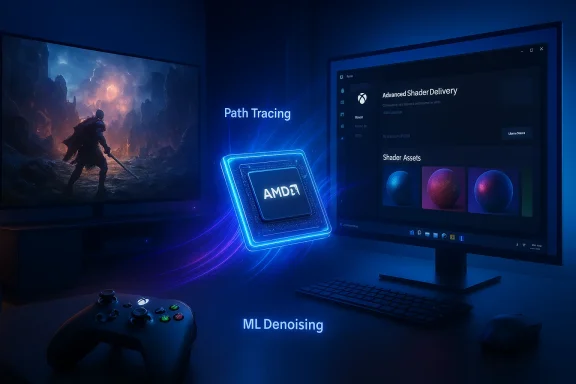
Futuristic gaming setup showcasing AMD tech: path tracing, ML denoising, and shader delivery.Background​

Microsoft used the Game Developers Conference (GDC) 2026 stage to articulate a cross‑stack vision that ties its next console, Windows 11, the Xbox PC app, and new developer tooling into a single ecosystem. The company positioned Project Helix as a more PC‑native generation — driven by a custom AMD semi‑custom SoC, heavily optimized for path tracing and machine‑learning assisted rendering — while promising developer alpha kits to begin shipping in 2027.
At the same time, the console‑style experience first trialed on purpose‑built handheld hardware (notably the ROG Xbox Ally) will expand into Windows 11 as a formalized “Xbox Mode” — a full‑screen, controller‑first session posture that boots or overlays the Xbox PC app to give players a living‑room friendly UI and a simplified runtime environment for gaming. Microsoft pitched this as a way to reduce desktop overhead, ship precompiled shader assets to players, and make PC devices behave more like dedicated gaming hardware when users want that experience.

What Microsoft actually announced (clear facts)​

  • Microsoft confirmed that alpha development kits for Project Helix will be sent to developers starting in 2027. That timeline was stated publicly during Microsoft’s GDC presentation and has been repeated by several outlets.
  • Project Helix is described as a custom AMD‑based system‑on‑chip platform focused on improving ray/path tracing performance and leveraging machine learning for rendering tasks. Microsoft framed the platform as able to “play Xbox and PC games” — in other words, a hybrid targeting both Xbox and Windows ecosystems.
  • The Xbox “Full Screen Experience” has been rebranded internally as Xbox Mode, and Microsoft said it will begin rolling to eligible Windows 11 PCs in April (a staged rollout and preview are expected first). The experience will support console‑style interactions and deas Advanced Shader Delivery (ASD) and tighter DirectX integration.
  • AMD publicly signalled that a semi‑custom SoC for Microsoft’s next Xbox is progressing with readiness to “support launch in 2027,” lending independent weight to Microsoft’s timetable.
These are the load‑bearing facts that anchor Microsoft’s messaging: a multi‑year development window for hardware, a near‑term expansion of console UX on PCs, and a cross‑platform developer story that emphasizes shipping precompiled assets and ML‑assisted rendering.

Technical deep dive: what Project Helix and Xbox Mode mean for rendering, shaders, and storage​

Project Helix: a rendering and silicon pivot​

Microsoft and its partners framed Project Helix around three technical pillars:
  • Path tracing and ray tracing at scale. Microsoft emphasised a major uplift in ray/path tracing performance compared with the current Xbox Series generation, signaling a push to make production‑level global illumination and physically‑based lighting more feasible in mainstream console titles.
  • Machine learning as a rendering tool. Microsoft repeatedly referenced ML‑based techniques to improve frame rates, perform temporal upscaling, and assist in denoising/lighting approximations — approaches that follow the industry trend toward hybrid raster/ML pipelines.
  • Custom AMD semi‑custom SoC. The console will be powered by a bespoke AMD chip, continuing the longstanding Xbox‑AMD partnership; AMD executives publicly said the semi‑custom SoC development is on a schedule that can support a 2027 launch window.
Taken together, this architecture suggests Microsoft is betting that the next generational leap won’t be a simple increase in raster throughput, but a rebalancing toward real‑time path tracing plus ML augmentation. That has clear implications for shader pipelines, memory subsystem design, and developer workflows.

Xbox Mode and Advanced Shader Delivery (ASD)​

Xbox Mode is more than a UI: it’s the consumer manifestation of a cross‑platform runtime that lets Microsoft control how games are presented on Windows without forcing players to leave the OS ecosystem. Key components include:
  • Advanced Shader Delivery (ASD): a console‑style mechanism for shipping precompiled, platform‑targeted shader binaries to users rather than relying entirely on JIT compile on first run. This reduces stutter, cuts down startup hitching, and aligns PC shipping with the deterministic shader behavior consoles enjoy. Microsoft first demonstrated ASD on the ROG Xbox Ally hardware and intends to make it available more broadly to developers.
  • Tighter DirectX tooling and DirectStorage evolution: Microsoft is extending its DirectX and storage APIs to better support streaming of large assets, lower CPU overhead for I/O decompression, and the distribution of platform‑specific assets. Expect new diagnostic and shipping workflows targeting shader fairnes.
For developers this means rethinking asset pipelines: deliver device‑specific shader payloads, validate shader permutations earlier, and test with ASD and the Helix dev kits when they arrive. The goal is to make PC games start fast and run more predictably — but that requires studios to adopt new packaging and QA disciplines.

Timeline and what to expect in 2026–2028​

  • April 2026 (near term): Staged rollout/preview of Xbox Mode for Windows 11 devices begins, targeting Insiders and eligible OEM hardware first; Advanced Shader Delivery enters broader trials for developers.
  • 2027: Microsoft to ship alpha Project Helix developer kits to studios; alpha hardware is intended to give developers a platform to experiment with path tracing/ML features and to begin early optimization.
  • 2027–2028: If alpha kits ship in 2027, a conservative estimate would place a retail launch window in late 2027 or 2028, depending on Microsoft’s hardware readiness, supply chain conditions, and developer ramp. Historically, consoles get developer kits months to a year before retail release; Microsoft’s explicit “alpha in 2027” comment is an intentionally early signal but not a guaranteed retail date.
This cadence reflects Microsoft’s public framing: near‑term investment in a console‑like PC experience, and a more distant hardware deliverable intended to secure significant generational gains.

Why Microsoft is doing this: strategic logic​

  • Unify the Xbox and Windows ecosystems. By making Windows 11 an official first‑class host for an Xbox experience, Microsoft reduces friction between PC and console markets and creates a single developer target that can span both. This tight integration is a commercial play to drive Game Pass adoption and cross‑sell between store ecosystems.
  • Control the user experience on PC. ASD and Xbox Mode give Microsoft ways to standardize the end‑user experience: fewer hitches, consistent shader behavior, and a living‑room friendly UI for controller users. That helps developers deliver a console‑like quality bar on a diverse set of PC hardware.
  • Force a technical reset where it matters. With path tracing and ML increasingly central to visual fidelity, Microsoft is trying to create an environment where these features ship broadly without the “first run” pain that has historically plagued PC ports. That’s a technical and economic edge: better fidelity with lower QA costs in aggregate.

Strengths and opportunities (what’s promising)​

  • Reduced friction for players. A polished, full‑screen Xbox Mode tuned for controller play and precompiled assets will make PC gaming feel more like console gaming for users who want that. That’s especially valuable for liv on laptops and handheld PCs.
  • Deterministic shaders and improved performance. ASD promises to reduce the worst forms of shader compile stutter, a perennial complaint in PC gaming, and makes the running‑time experience steadier. Studios that adopt ASD early could ship a smoother experience with less post‑launch optimization overhead.
  • A clearer development target. Project Helix’s emphasis on ML + path tracing gives developers a firm architectural target: optimize for hybrid rendering pipelines, instrument ML paths, and plan for precompiled renderer assets. Studios can begin that work once alpha kits land.
  • AMD partnership continuity. A semi‑custom AMD SoC provides continuity with previous generations and enables optimizations at silicon level — important for advanced features like dedicated ray tracing and ML accelerators. AMD’s public comments that the SoC is ready to “support launch in 2027” add credence.

Risks, tradeoffs, and open questions​

Microsoft’s push is bold — and it creates several technical, commercial, and ecosystem risks that developers and analysts should track.

1. Timing and developer ramp​

Shipping alpha kits in 2027 does not guarantee a retail launch in 2027. The gap between alpha hardware and shipping silicon can be long; developers need realistic expectations about when they’ll get stable hardware and when optimizations will pay off. Historically, late dev kit distribution has compressed launch windows and created performance problems.

2. Platform fragmentation and distribution choices​

ASD and Xbox Mode can improve experience, but they also introduce platform‑specific build artifacts and shipping pipelines. Developers may face fragmentation if they must produce Desktop‑native, Xbox Mode, and Helix‑targeted assets, increasing QA burden and storage/CI complexity. Smaller studios could struggle with this added packaging overhead.

3. User control, privacy, and openness​

A full‑screen Xbox Mode that overlays the OS and invites shipping precompiled binaries raises questions about user control. Will players be able to opt out of ASD downloads? How will third‑party storefronts interact with precompiled assets? Microsoft’s answers will determine whether Xbox Mode is seen as convenient or controlling. These policy questions are not fully answered by the technical previews.

4. Anti‑cheat, security, and DRM complexity​

Shipping precompiled shaders and tighter system integration can complicate anti‑cheat and DRM workflows. Ensuring transparency and maintaining security across Windows’ diverse hardware base will be a non‑trivial engineering challenge. Developers, platform security teams, and anti‑cheat vendors must coordinate early.

5. Supply chain and economic risk​

Even with AMD’s positive signal, global semiconductor supply and memory markets remain volatile. Delays or component shortages could push retail timelines into 2028 or later, making the 2027 developer kit timeline a soft target rather than a hard launch promise. Analysts are already flagging Project Helix as high‑stakes for Microsoft’s hardware business.pers should do now (practical steps)
  • Inventory current shader build and packaging systems. Identify how shaders are built, compressed, and shipped today and where precompiled delivery could slot in.
  • Start experimenting with ML‑assisted denoising and temporal upscalers now — these techniques will be first‑class on Helix. Integrate permissive ML inference paths so that when dev kits arrive you won’t start from scratch.
  • Adopt DirectStorage‑friendly asset layouts and fast decompression pipelines. Train QA to look for streaming artifacts that affect path tracing and large texture loads.
  • Plan for multiple shipping targets. Build CI workflows that can compile and validate shader permutations for both existing PC GPU classes and the upcoming Helix profile.
  • Engage with Microsoft’s dev programs and Insiders early to get access to Xbox Mode previews and ASD trials; early adopters will shape best practices.

Business and competitive implications​

Projecplatform play as it is a hardware one. Microsoft’s approach tries to fuse the strengths of PC gaming (modularity, high‑end performance scalability) with console advantages (deterministic runtime, curated useressful, Microsoft can:
  • Strengthen Game Pass as a ubiquitous play surface spanning consoles and Windows PCs.
  • Drive a new developer economics model where shipping deterministic assets reduces post‑launch support costs.
  • Create a hardware anchor that differentiates Xbox as an integrated Microsoft platform rather than just a console brand.
Competitors will watch closely: PlayStation has historically optimized for developer ergonomics and middleware; Valve and PC storefronts will evaluate whether Microsoft’s new posture helps or hurts the open PC market. The risk for Microsoft is appearing to lock PC gaming into an Xbox‑centric delivery model that marginalizes other storefronts, which could provoke pushback from developers and platform partners.

Quick Q&A (clear answers to common reader questions)​

  • Will Project Helix play PC games? Microsoft says yes: the platform is presented as able to run both Xbox and PC games, blurring release targets.
  • When will dev kits arrive? Microsoft announced alpha dev kits begin going to studios in 2027. Multiple outlets repeated that wording after GDC.
  • Is retail hardware coming in 2027? Microsoft has not confirmed a retail launch date; alpha dev kits in 2027 suggest retail could be late‑2027 or 2028, but that is speculative and contingent on supply and polish.
  • What is Xbox Mode for Windows 11? A full‑screen, controller‑first session posture that boots into the Xbox PC app, reduces desktop overhead, and supports features like ASD to improve game startup and runtime consistency. Microsoft plans a staged rollout in April.

My assessment — measured verdict​

Microsoft’s twin announcements form a coherent, if ambitious, strategy: push PC gaming to adopt console‑style determinism while building a fundamentally more capable console that leverages PC‑class hardware innovations. The near‑term release of Xbox Mode for Windows 11 is low risk and high reward: players who prefer a living‑room UX get an immediate benefit, and developers gain a new distribution channel for precompiled assets.
Project Helix is the riskiest piece. Shipping alpha dev kits in 2027 is a clear and useful signal to studios, but the path from alpha to retail is unpredictable. If Microsoft nails the SDK and partner timelines, Helix could set a new baseline for real‑time path tracing and ML rendering in consumer consoles. If it slips or hardware choices underdeliver, the strategic gamble becomes costly for Microsoft’s hardware credibility and for studios that bet heavily on Helix‑specific features. AMD’s comment that its semi‑custom SoC is “ready to support launch in 2027” is helpful, but not determinative of a retail date.

Final recommendations for stakeholders​

  • Developers: Prepare now. Audit shader and asset pipelines, engage with ASD previews, and plan CI that can target both PC and Helix shader profiles. Early investments in ML upscaling and denoising will pay off.
  • OEMs and hardware partners: Validate Windows 11 Xbox Mode UX across laptops, desktops, and handhelds. Optimize thermal and power profiles for a console‑style foreground session.
  • Enterprises and IT managers: If you manage shared devices or labs used for development, expect a potential influx of new dev kit hardware in 2027 and plan procurement and compliance workflows accordingly.
  • Consumers and enthusiasts: Try Xbox Mode when it lands in Windows 11 in April to evaluate whether the console‑style UX suits your setup. Keep expectations measured about Helix retail timing; alpha kits are an early developer milestone, not a consumer launch date.

Microsoft’s announcements at GDC 2026 stitch together a credible technical vision: a future where consoles are more PC‑native and Windows is more console‑friendly. The near‑term Xbox Mode rollout will give everyday players and developers an immediate taste of that vision in April. The longer, more consequential test will be Project Helix itself: whether Microsoft and its partners can deliver a hardware platform that justifies rearchitecting renderers around path tracing and ML, and whether the ecosystem adopts the more deterministic, console‑like shipping model Microsoft is proposing. For now, developers should treat 2027 as the year to begin Helix‑specific development — and everyone else should watch closely as Microsoft tries to rewrite the playbook for how consoles and PCs converge.

Source: TechPowerUp Xbox Confirms Helix Dev Kits To Land End 2027, Xbox Mode Arrives in Windows 11 in April
 

Microsoft's Xbox team used the Game Developers Conference (GDC) stage to deliver one of the clearest signals yet that the next console generation will be a long, deliberate transition — and one tightly bound to the Windows PC ecosystem. At GDC 2026 Xbox executives confirmed that early "alpha" Project Helix hardware will start going to developers in 2027, and that a rebranded, full‑screen, controller‑first "Xbox Mode" will begin rolling out to Windows 11 PCs in April. Those twin announcements — a developer‑first hardware timeline plus deeper Windows integration — set the tone for a strategy that treats the next Xbox as part console, part PC platform, and part software services play.

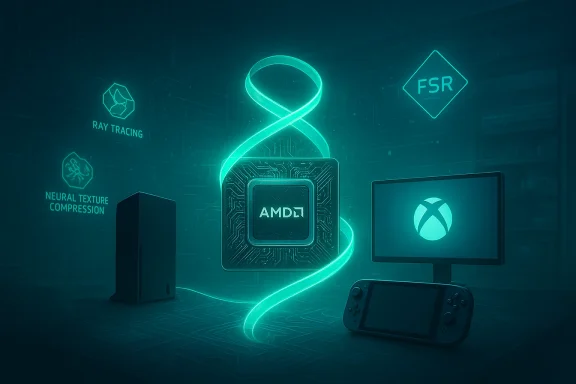
A neon AMD processor centerpiece glowing with ray tracing and FSR, beside a PC, Xbox monitor, and handheld console.Background: why GDC mattered this year​

Microsoft framed the GDC 2026 presentation as an explicit developer outreach — not a consumer launch roadmap. Jason Ronald, Xbox’s vice‑president of next generation, delivered a technical‑first keynote that doubled as a platform pitch: Project Helix will run both Xbox console titles and PC games, it uses a custom AMD system‑on‑chip, and it is being co‑designed alongside a new generation of graphics tooling including a next‑generation FidelityFX stack (branded by AMD executives as "FSR Diamond" in early posts). That technical emphasis fits GDC’s audience — the studio engineers and middleware partners who will actually convert prototype hardware into playable games.
Microsoft also used the moment to bind that hardware narrative to Windows itself. An earlier experiment with a handheld reference device — the ROG Xbox Ally — introduced a console‑style, full‑screen experience for Windows devices; at GDC Xbox said that same experience will be rolled into Windows 11 as Xbox Mode, starting in April in select markets. The message was clear: Xbox’s future hardware and software investments are meant to deliver a consistent play surface across handhelds, PCs, and living‑room boxes.

What Microsoft announced (concrete points)​

  • Alpha developer hardware for Project Helix will be distributed beginning in 2027; Microsoft referred to these units as "alpha versions," which industry press and attendees interpret as dev kits.
  • Project Helix will be powered by a custom AMD SoC and co‑designed with next‑generation graphics APIs and AMD’s FidelityFX roadmap. Microsoft positioned hardware, API, and tooling as a single stack for studios.
  • The platform will emphasize a quantum‑leap in real‑time ray tracing and simulation — described by Xbox as “an order of magnitude” improvement in ray‑tracing performance and capability, and the inclusion of full path tracing in future titles.
  • AMD and Xbox referenced a new generation FidelityFX variant — reported publicly as FSR Diamond or FSR Next — that bundles ML‑assisted upscaling, multi‑frame generation, neural texture compression, and ray‑regeneration features designed for Helix. AMD executives publicly posted about a deep co‑engineering effort.
  • Windows 11 will receive Xbox Mode, a full‑screen, controller‑optimized UI drawn from the Xbox Full‑Screen Experience first seen on handhelds, with a rollout starting in April for select markets. Microsoft described this as part of the company’s push to make Windows a great OS for games.

Technical deep dive: what "Helix" actually promises​

Custom AMD SoC and co‑engineering​

Project Helix is explicitly a co‑designed product: Microsoft confirmed it is working with AMD on a custom system‑on‑chip that stitches together GPU, CPU, and a dedicated neural processing unit (NPU) designed to accelerate ML tasks tied to rendering. On paper, this lets Microsoft move some rendering workloads from brute‑force rasterization and software RT into dedicated, deterministic ML inference that runs on on‑die NPU silicon. The result, if executed well, can substantially cut the raw GPU cycles required for high‑fidelity scenes while adding machine learning‑driven reconstruction and frame synthesis.
  • Key hardware ambitions Microsoft highlighted:
  • Path tracing support at console scale.
  • Ray regeneration techniques for RT and path tracing to reduce sampling overhead.
  • Neural texture compression to shrink GPU memory and streaming costs.
  • ML multi‑frame generation to synthesize frames or fill motion data using learned models.
Those are not trivial engineering feats; each depends on tightly integrated silicon, highly optimized drivers, and new tooling for asset preparation and runtime orchestration. Microsoft’s timeline — dev kits in 2027 — aligns with AMD’s public messaging about next‑gen RDNA architecture and NPU‑centric features coming later in the decade.

FSR Diamond / FSR Next: what it means for rendering​

AMD’s public messaging (through executives) has christened the next FidelityFX generation — used as the company’s marketing designation for ML upscaling and frame‑generation tech — as FSR Diamond in early posts tied to the Helix reveal. The stack is described as combining:
  • ML‑based spatial and temporal upscaling (higher‑quality reconstruction).
  • Multi‑frame generation (using ML to synthesize motion frames or infer intermediate frames).
  • Ray regeneration and assisting path tracing workloads.
  • Native integration with the Xbox GDK for platform‑level optimizations.
That suite would flip more of the fidelity/performance tradeoff toward software reconstruction and AI‑assisted rendering. It’s the same technical direction we see across the industry: frame synthesis and neural upscaling aim to give developers a way to hit target frame rates while delivering near‑native resolution visuals. But ML reconstruction is not free; it involves added latency, perceptual artifacts, and heavy reliance on robust ML inference pipelines and driver stability.

New DirectX and asset tooling​

Microsoft signaled a push for a "next generation of DirectX" and improved asset/streaming tooling — including DirectStorage updates with Zstandard compression and a developer focus on shader precompilation and advanced shader delivery. These changes are intent on reducing stutter, shipping shaders in precompiled bundles, and ensuring complex rendering effects are practical on a console‑scale platform that also runs PC titles. The intent is to make the same game binary practical across PC and Helix hardware with minimal porting friction.

Xbox Mode: Windows 11 as a console​

What Xbox Mode is​

Xbox Mode takes the full‑screen, controller‑first UI tested on the ROG Xbox Ally handheld and makes it available to Windows 11. The experience is intended to:
  • Provide a familiar console interface for browsing and launching games.
  • Optimize background services and resource scheduling for a game‑first experience.
  • Integrate with Game Bar, Xbox app features, and controller navigation.
  • Support seamless switching between productivity and play while preserving Windows openness.
Microsoft plans to begin rolling Xbox Mode out to select markets in April, with a broader push afterward. For PC manufacturers and OEMs, this is a path to sell machines that "feel like consoles" when docked or used in a living‑room setup.

Why this matters​

If Xbox Mode works as advertised, Microsoft will have created a consistent UX layer that makes moving between PC, handheld, and console feel less disruptive. For consumers, that removes some friction when buying titles across platforms; for developers, it promises a larger, unified target for UI/UX testing and input mapping. For Windows itself, it tightens the integration between the OS and Xbox services, further blurring the historic lines between "console" and "PC."

Developer and ecosystem implications​

Unified GDK and "build once" rhetoric​

Microsoft’s public pitch centers on a single Game Development Kit that lets studios compile once and target both PC and Project Helix — an attractive proposition for studios that want to ship with one codebase and a consistent feature set. That GDK unification should reduce porting effort, accelerate cross‑platform QA, and enable platform features (like FSR Diamond) to be enabled across builds. However, "compile once" remains aspirational until real tooling, test suites, and driver stability land in dev kits.

Timeline: dev kits ≠ retail consoles​

Alpha dev kits in 2027 are a blunt, public signal but should not be read as a retail launch date. Historically, console manufacturers hand dev kits to studios months (or in some cases more than a year) before the consumer product ships, and the step from alpha prototype hardware to a finalized SKU includes yield improvements, price optimization, certification, and publisher content readiness. Microsoft acknowledged the developer‑first cadence: the GDC talk was directed at studios, not consumers. In industry coverage, analysts and outlets have pointed out that a 2027 start for dev hardware pushes a realistic retail window toward 2028 or later. That lag is a crucial planning input for studios and partners.

Platform reach and cross‑store access​

Microsoft emphasized that Helix is designed to play both console and PC games and supports titles outside the Xbox storefront, a potential boon for devs concerned about discoverability and revenue splits. Xbox also notes the current Xbox Play Anywhere catalog and long‑term compatibility philosophy, which suggests the company will favor a broad reach strategy that keeps developers’ options open. Still, deeper platform integration (FSR Diamond native optimizations, GDK hooks) creates a subtle incentive to target the Microsoft stack more directly. That can be a net positive for studios that plan multi‑platform launches, but it raises questions about how features will be exposed on rival hardware or legacy GPUs.

Critical analysis: the strengths and the risks​

Strengths and strategic clarity​

  • Developer‑first pragmatism. Announcing alpha dev kits for 2027 and prioritizing GDC attendees shows Microsoft understands that studios — not marketing — determine platform success. By giving developers time and tooling, Microsoft reduces the chance of painful launch compatibility issues.
  • Hardware‑software co‑design. The co‑engineering approach with AMD and explicit NPU integration is modern, and it aligns with how the broader industry (mobile, console, cloud) is shifting: specialized accelerators yield better performance per watt for ML workloads. If Microsoft and AMD can deliver low‑latency, deterministic ML inference at console scale, Helix could enable visuals and simulation not feasible on raw rasterization alone.
  • Windows convergence. Bringing Xbox Mode to Windows 11 creates a consistent, discoverable experience for Xbox services across a massive install base — a distribution and network effect advantage that is hard to match.

Risks, unknowns, and potential downsides​

  • Marketing hyperbole vs. engineering reality. Phrases like an “order of magnitude” increase in ray tracing performance are attention‑grabbing but vague. An order‑of‑magnitude uplift could mean many things: improved sample efficiency via ML reconstruction, significantly faster RT hardware, or a combination. Each approach has trade‑offs (latency, artifacts, compatibility), and until Microsoft releases microbenchmarks or concrete architectural details, the phrase is best read as aspirational. Media coverage and the Xbox Wire post used similar language, which is standard for early‑stage platform reveals, but engineers and buyers should treat it cautiously.
  • FSR Diamond exclusivity and fragmentation risk. AMD’s early marketing language suggests FSR Diamond may be natively optimized for Project Helix. That raises the risk of feature exclusivity or limited parity on non‑AMD hardware, which could fragment the PC install base or force developers to maintain separate rendering paths. If FSR Diamond leverages specific NPU or RDNA‑family hardware features, older or competing GPUs may not support parity, complicating cross‑platform releases. Industry reporting has already flagged that as a concern.
  • Price and memory economics. Rumors and early analysis point toward a high‑end hardware target (speculation around large unified memory pools and premium SoC costs). Unless memory market conditions ease, a Helix SKU that achieves its ambitions could carry a premium price, narrowing early adoption and affecting first‑party attach rates. Multiple outlets flagged the potential for a high retail price and the related risk that dev kits may not translate into widespread consumer uptake if costs are prohibitive.
  • Tooling and driver maturity. ML‑heavy pipelines, new DirectX features, and integrated FSR tooling require rock‑solid drivers and stable runtime support. The transition from "alpha" dev kits to a polished shipping platform historically surfaces shader bugs, runtime instability, and driver regressions. Those are solvable given time, but they cost studios schedule and budget. Microsoft’s focus on advanced shader delivery and shader precompilation aims to mitigate that, but it's a long technical road.
  • Regulatory and ecosystem questions. Deeper blending of Xbox and Windows raises regulatory and partner scrutiny. If Xbox Mode and Helix‑optimized features become a path to cheaper distribution or premium platform placement on Windows, incumbents and regulators may ask whether Microsoft is tilting the platform toward its services. That conversation is more political than technical, but it will matter for OEM partnerships and storefront competition.

What this means for developers and gamers — practical guidance​

  • Developers should budget time to evaluate ML‑based reconstruction workflows early. The tradeoffs between artifact risk and performance gains are subtle and content‑dependent.
  • If you’re a studio building high‑fidelity, simulation‑heavy games, plan to request Helix dev hardware as soon as Microsoft’s alpha program opens — early access will reveal whether Helix’s NPU/FSR Diamond stack materially eases the path to target fidelity.
  • PC studios and publishers must watch FSR Diamond’s SDK terms: if optimizations are tightly coupled to Project Helix, consider parallel rendering fallbacks for legacy GPUs to reach the broadest market.
  • Windows PC owners who prefer a console‑like UI can expect Xbox Mode to arrive in April for select markets. Enthusiasts running Insider builds or those with handheld Xbox‑branded hardware should test early and prepare to report driver or overlay issues to Microsoft and OEMs.

Wider market implications​

  • Sony and AMD dynamics. AMD is co‑engineering with multiple console partners; the Helix partnership is another sign that console vendors will continue to rely on AMD for integrated GPU/NPU silicon. That keeps the console hardware conversation tightly coupled to AMD’s product roadmap and foundry timelines.
  • PC GPU vendors and generational support. If FSR Diamond leans on NPU features or RDNA5‑class functionality, NVIDIA and Intel will need to respond with competing ML stacks or optimized drivers, or risk a bifurcated game feature set. That competition could be healthy — pushing better cross‑vendor support — or it could manifest as fragmentation and developer overhead.
  • Game Pass and services. A Helix hardware platform plus Windows integration strengthens Microsoft’s narrative around a single subscription and storefront strategy across device types. If executed, that could solidify Game Pass’s value proposition and increase cross‑platform monetization opportunities. But only if pricing and hardware availability make Helix a mainstream target.

Where to watch next​

  • Developer outreach: Microsoft will provide more developer guidance as alpha hardware ships in 2027; studios should monitor Xbox dev channels and the Xbox Wire posts for batching and qualification details.
  • AMD disclosures: watch AMD executive channels and technical deep dives for concrete specs on FSR Diamond, NPU capability, and RDNA next‑gen features. Those details will determine how portable the new FidelityFX features are to PC GPUs.
  • Windows rollout: Xbox Mode begins appearing in Windows 11 in April — early markets and OEM experiences will provide a pulse check on the consumer UX and compatibility with non‑Xbox storefronts.

Conclusion​

Project Helix and the Xbox Mode announcement together sketch a coherent strategy: Microsoft is building a next‑generation platform where console hardware, PC software, and cloud services are increasingly integrated at the silicon and API layer. The emphasis on developer tooling and early hardware deliveries is the right move for a technically ambitious platform; it buys time for the complex engineering problems that underlie ML‑assisted rendering and broad backward compatibility.
But the devil will be in the details — the NPU architecture, the fidelity and latency of ML frame synthesis, the openness of FSR Diamond’s tooling outside the Xbox ecosystem, and the price point Microsoft chooses for retail hardware. Those are the variables that will determine whether Helix represents a meaningful generational leap or a costly experiment that arrives for too small a segment of players.
For now, developers and enthusiasts should treat the 2027 alpha timeline as a developer‑centric milestone and the April Windows 11 Xbox Mode rollout as the first consumer‑facing proof point of Microsoft's cross‑platform vision. Over the next 12–24 months expect clarity on silicon specifications, SDK terms, and concrete performance claims — and prepare for a technical ecosystem that leans heavily on ML‑assisted rendering and tighter hardware‑software co‑design than any prior console cycle.

Source: TechPowerUp Xbox Confirms Helix Dev Kits To Land End 2027, Xbox Mode Arrives in Windows 11 in April | TechPowerUp}
 

Back
Top