

Microsoft unveiled Project Solara at Build 2026 on June 2 as a chip-to-cloud platform for “agent-first” devices, alongside concept badge and desk hardware meant to move Microsoft 365 Copilot-style agents beyond conventional Windows PCs. The announcement is not simply another AI feature drop; it is Microsoft sketching a post-app computing model while still relying on Windows, Azure, identity, and management plumbing to make it believable. The interesting part is not the badge or the desk puck by themselves. It is Microsoft’s attempt to turn agents from software assistants into a reason for new hardware categories.
For three decades, the PC has trained users to think in rectangles. You open Outlook to read mail, Excel to analyze numbers, Teams to talk to colleagues, a browser to find context, and a file picker to stitch the mess together. Even when cloud services blurred the boundaries, the dominant metaphor remained the same: a person navigates software, and software waits for instructions.
Project Solara is Microsoft’s argument that this pattern is running out of road. The company now wants agents to become the primary interface layer, not just a sidebar bolted onto Word or a chatbot pinned to the taskbar. In Microsoft’s framing, the next device does not need to be a general-purpose screen with a hundred apps; it can be a specialized endpoint where an agent listens, sees, summarizes, authenticates, and hands work off to the rest of the Microsoft stack.
That distinction matters because Microsoft has already spent the last several years embedding Copilot into existing products. The company has put AI “beside” applications and “inside” applications. Solara is the more aggressive third move: the agent operates across applications, devices, and services, while the hardware becomes a context sensor and interaction surface.
This is why the announcement feels both futuristic and very Microsoft. The pitch is wrapped in ambient computing language, but the architecture is classic Redmond: identity, policy, cloud state, device management, partner silicon, and enterprise workflows. The new interface may be voice, vision, touch, and glanceable cards, but the business model still runs through Microsoft 365, Azure, Windows 365, GitHub, and Foundry.
That is an ambitious set of users, and it immediately exposes both the promise and the risk of agent-first hardware. A badge could be genuinely useful where laptops are awkward and phones are socially or operationally clumsy. A nurse checking priorities between rooms, a retail worker asking for inventory context, or a manager capturing an impromptu hallway discussion all fit the agent-first story better than the traditional desktop metaphor.
But a badge with a camera and microphone is also a governance object before it is a gadget. In hospitals, stores, warehouses, schools, and offices, “ambient” capture is never just a convenience feature. It touches consent, retention, transcription accuracy, labor monitoring, data loss prevention, and the simple human discomfort of being near a device that may be listening for a machine’s benefit.
Microsoft seems aware of this, at least in product-design terms. The concept includes fingerprint authentication and privacy controls, and the company is tying Solara to enterprise-grade identity rather than pitching it as a consumer toy. Still, the real test will not be whether the badge can record a meeting or surface a Priority Agent card. The test will be whether organizations can prove to workers, customers, patients, and regulators that the device is not a surveillance shortcut with Copilot branding.
That last detail is where the strategy becomes clearer. Solara is not just about inventing new gadgets; it is about creating lightweight endpoints for Microsoft’s cloud PC and agent ecosystem. A desk device that turns into a Windows 365 terminal is easier to imagine in offices, call centers, hoteling desks, secure environments, and shared workspaces than a wearable camera badge clipped to everyone’s shirt.
It also gives Microsoft a way to sidestep the hardest problem in new device categories: persuading buyers that the device deserves to exist. A small agent-first desk companion does not need to replace a PC on day one. It can begin as an authenticated Copilot surface, a Teams and calendar assistant, a presence-aware notification device, or a Windows 365 access point. If it fails to become the next major interface, it can still be useful as a managed enterprise endpoint.
That is the most plausible version of Solara in the near term. Not a revolution where PCs disappear, but a gradual thickening of the Microsoft endpoint universe. The PC remains the workhorse, Windows 365 becomes the roaming desktop, and Solara devices become specialized access points for agent-mediated work.
That ambition is rational. Agents need context, permissions, memory, tool access, and policy enforcement. A standalone device that cannot safely reach corporate data is little more than a voice recorder with a model attached. A device that can reach corporate data without proper governance is a breach waiting for a procurement signature.
The chip-to-cloud language is also a warning label for IT departments. Solara devices will not be evaluated like keyboards or webcams. They will sit closer to the trust boundary, because their entire purpose is to perceive context and act across systems. If the device can invoke agents, access calendars, summarize meetings, trigger workflows, and hand off to Windows 365, then it belongs in the same risk conversation as laptops, phones, privileged apps, and collaboration platforms.
This is where Microsoft has an advantage over most AI hardware startups. It already owns the identity layer for many enterprises through Entra ID. It owns management reach through Intune. It owns the productivity surface through Microsoft 365. It owns a cloud PC story through Windows 365 and a developer/agent platform through GitHub and Microsoft Foundry. Solara is not starting from zero; it is an attempt to bind those assets into a hardware reference architecture.
That device is not Solara hardware in the badge-and-desk sense, but it is part of the same worldview. If agents are going to become an interface layer, developers need a way to build, test, fine-tune, and run them locally without turning every iteration into a cloud invoice. Microsoft is trying to solve both sides of the equation: new endpoints for users, and new local AI workstations for the people building the agent software.
The Surface RTX Spark Dev Box also highlights a tension in Microsoft’s AI strategy. On one hand, the company is deeply invested in Azure as the place where large-scale AI runs. On the other hand, agent experiences cannot feel fast, private, or resilient if every interaction depends on a distant cloud model. Local inference, local prototyping, and edge execution are becoming strategic necessities, not nice-to-have developer perks.
For Windows enthusiasts, this is the more immediately tangible part of Build’s agent story. A new class of Windows machines with NVIDIA Grace and Blackwell-derived architecture, large unified memory, and CUDA-friendly local workflows could change how AI developers treat Windows on Arm and Windows workstations generally. It is also a reminder that “AI PC” is splitting into tiers: consumer Copilot+ PCs for everyday acceleration, and heavier developer boxes for people building the agents and models those users will eventually invoke.
That idea fits Microsoft’s broader Build 2026 announcements. Microsoft Foundry is being positioned as the place to build, deploy, observe, and improve agents. GitHub Copilot is expanding from code completion into command-line, agentic, and workflow territory. Windows AI APIs are being extended beyond the narrowest Copilot+ PC definition. Microsoft 365 Copilot is gaining more specialized agents such as Researcher, Facilitator, and Priority Agent.
The pattern is hard to miss. Microsoft wants agents to become programmable units of work, deployable across Microsoft 365, Teams, Windows, GitHub, Foundry, and eventually new hardware endpoints. Project Solara is the device expression of that stack. It is not the whole platform; it is the place where the platform becomes physically present.
This is also why Microsoft is talking about third-party agents and open architecture. A Solara device that only runs Microsoft’s own assistants would be an accessory. A Solara platform that lets partners build controlled, domain-specific agents for healthcare, retail, weather, logistics, field service, and customer support could become an ecosystem. The announced pilots with companies such as CVS Health, Best Buy, Target, Levi’s, and AccuWeather are best understood as Microsoft probing those verticals rather than claiming the category is ready.
Today, users still translate goals into app navigation. “Prepare me for my next meeting” becomes opening Outlook, Teams, OneNote, SharePoint, a CRM system, and perhaps a browser. In an agent-first model, that same goal becomes a command to an entity that already has permissioned access to those systems and can return a prepared state: summary, risks, documents, action items, and perhaps suggested replies.
That is powerful, but it changes what software vendors compete on. If the user spends less time inside an app’s interface, the app becomes more of a service endpoint, data source, or tool provider for agents. The front door shifts from the application icon to the agent invocation.
For Microsoft, this is strategically attractive because it already controls many of the front doors inside enterprise computing. For independent software vendors, it is more complicated. Being deeply integrated into Microsoft’s agent fabric could increase usage, but it could also make the app’s own interface less visible. The most valuable real estate may become the permissioned tool call rather than the dashboard.
Every agent-first device raises a chain of operational questions. Who can enroll it? What data can it access? What happens when an employee loses it? Are recordings stored locally, in Microsoft 365, in Azure, or not at all? Can administrators disable cameras by policy? Can agents be restricted by role, location, network, or data sensitivity label? How are prompts, tool calls, and outputs logged? Can a user challenge or correct an agent’s memory?
Microsoft has answers to some of the surrounding infrastructure questions because its enterprise stack already handles pieces of them. But the agent layer introduces new failure modes. A normal app may expose data when a user opens it; an agent may combine data across systems, infer relationships, and act on the user’s behalf. That makes permissions harder to reason about and audit.
This is why Solara’s success depends less on natural language magic than on administrative clarity. Enterprises do not merely need agents that can do things. They need agents that can be limited, supervised, explained, revoked, patched, and investigated. If Microsoft can make that governance feel familiar through Entra, Intune, Microsoft 365, Defender, and Purview-style controls, Solara has a chance. If not, the devices will remain interesting demos with uncomfortable risk profiles.
Microsoft is not trying to beat the phone on day one. Instead, it is looking for places where the phone is not ideal and where corporate identity gives an agent more useful context than a consumer assistant can safely access. That makes the workplace the natural first battleground.
Still, a broader question remains: if agent-first devices succeed at work, do they eventually come home? A kitchen display, a family logistics badge, a car companion, or a travel device all fit the ambient agent concept. But Microsoft’s consumer hardware record is uneven, and the company’s strongest AI distribution today is through work accounts, Windows, Edge, and Microsoft 365 subscriptions.
The more likely path is that Solara stays enterprise-first for a long time, with consumer spillover happening indirectly through Windows PCs and Copilot surfaces. That would not be a failure. Microsoft has built enormous businesses by making enterprise infrastructure feel inevitable before consumers fully understand what changed.
But dismissing Solara as vaporware would miss the strategic continuity. Microsoft has been moving toward agent-first computing across Copilot, Windows, GitHub, Foundry, and Microsoft 365. The company is also pushing local AI hardware through Copilot+ PCs and the new RTX Spark developer machines. Solara is the connective tissue between those efforts: a way to imagine agents as the reason for devices, not just features inside software.
The challenge is that Microsoft is trying to create a category while the underlying social contract is still unsettled. People may want agents to reduce drudgery, summarize noise, and coordinate work. They may not want cameras, microphones, and corporate AI systems embedded more deeply into physical spaces. The same device that helps a nurse move faster could make a workplace feel more monitored. The same desk assistant that reduces friction could become another endpoint demanding policy review.
That ambiguity does not make Solara less important. It makes it more important to scrutinize now, while the category is still being shaped by reference designs and pilots rather than locked-in procurement cycles.
The strongest version of Microsoft’s argument is that agents need dedicated contexts. A general-purpose PC is powerful because it can do almost anything, but that flexibility also creates friction. Specialized devices can be useful when they remove the need to stop, open, search, switch, and manage. Solara is an attempt to make that specialization cheaper for hardware partners and safer for enterprises.
The weakest version is that Microsoft is overextending the Copilot brand into yet another layer of devices before users have fully accepted the last one. Many organizations are still measuring the productivity value of Microsoft 365 Copilot, still building governance around AI-generated content, and still deciding where local AI belongs in their endpoint strategy. Asking them to evaluate agent-first hardware at the same time is a lot.
That is why the pilot phase is crucial. CVS Health, Best Buy, Target, Levi’s, AccuWeather, and Microsoft’s own internal users are not just early adopters; they are the stress test for whether this platform solves real problems outside a controlled demo. Their feedback will determine whether Solara becomes a reference architecture for a new device ecosystem or a fascinating Build-era footnote.
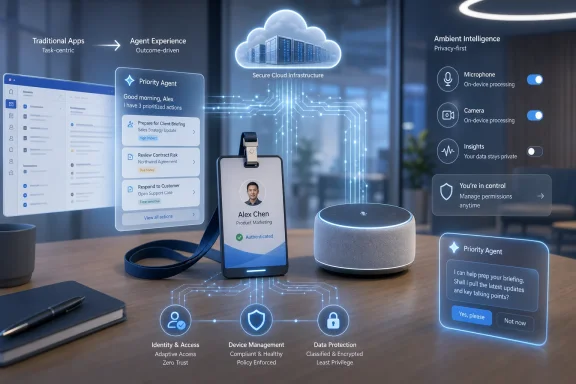 Microsoft Is Trying to Move the Center of Gravity Away From the App Window
For three decades, the PC has trained users to think in rectangles. You open Outlook to read mail, Excel to analyze numbers, Teams to talk to colleagues, a browser to find context, and a file picker to stitch the mess together. Even when cloud services blurred the boundaries, the dominant metaphor remained the same: a person navigates software, and software waits for instructions.Project Solara is Microsoft’s argument that this pattern is running out of road. The company now wants agents to become the primary interface layer, not just a sidebar bolted onto Word or a chatbot pinned to the taskbar. In Microsoft’s framing, the next device does not need to be a general-purpose screen with a hundred apps; it can be a specialized endpoint where an agent listens, sees, summarizes, authenticates, and hands work off to the rest of the Microsoft stack.
That distinction matters because Microsoft has already spent the last several years embedding Copilot into existing products. The company has put AI “beside” applications and “inside” applications. Solara is the more aggressive third move: the agent operates across applications, devices, and services, while the hardware becomes a context sensor and interaction surface.
This is why the announcement feels both futuristic and very Microsoft. The pitch is wrapped in ambient computing language, but the architecture is classic Redmond: identity, policy, cloud state, device management, partner silicon, and enterprise workflows. The new interface may be voice, vision, touch, and glanceable cards, but the business model still runs through Microsoft 365, Azure, Windows 365, GitHub, and Foundry.
The Badge Is the Provocation, Not the Product
The wearable badge concept is the device that will attract the most attention, partly because it is the most visibly different from a PC and partly because it revives a familiar Silicon Valley dream: a small always-available AI companion clipped to the body. Microsoft’s version includes a touchscreen, camera, microphone array, speaker, fingerprint authentication, wireless connectivity, and Qualcomm wearable silicon. It is pitched for information workers, nurses, frontline staff, and people moving through meetings or physical workspaces.That is an ambitious set of users, and it immediately exposes both the promise and the risk of agent-first hardware. A badge could be genuinely useful where laptops are awkward and phones are socially or operationally clumsy. A nurse checking priorities between rooms, a retail worker asking for inventory context, or a manager capturing an impromptu hallway discussion all fit the agent-first story better than the traditional desktop metaphor.
But a badge with a camera and microphone is also a governance object before it is a gadget. In hospitals, stores, warehouses, schools, and offices, “ambient” capture is never just a convenience feature. It touches consent, retention, transcription accuracy, labor monitoring, data loss prevention, and the simple human discomfort of being near a device that may be listening for a machine’s benefit.
Microsoft seems aware of this, at least in product-design terms. The concept includes fingerprint authentication and privacy controls, and the company is tying Solara to enterprise-grade identity rather than pitching it as a consumer toy. Still, the real test will not be whether the badge can record a meeting or surface a Priority Agent card. The test will be whether organizations can prove to workers, customers, patients, and regulators that the device is not a surveillance shortcut with Copilot branding.
The Desk Device Shows the Safer Path Into the Enterprise
The desk concept is less flashy, but probably more important. Microsoft describes it as a compact companion with a touchscreen, face authentication, privacy buttons, microphone controls, far-field microphones, speaker, UWB presence sensing, USB-C ports, Wi-Fi, Bluetooth, and MediaTek IoT silicon. It can operate on its own, pair with a Windows PC, or become a Windows 365 client when connected to an external display.That last detail is where the strategy becomes clearer. Solara is not just about inventing new gadgets; it is about creating lightweight endpoints for Microsoft’s cloud PC and agent ecosystem. A desk device that turns into a Windows 365 terminal is easier to imagine in offices, call centers, hoteling desks, secure environments, and shared workspaces than a wearable camera badge clipped to everyone’s shirt.
It also gives Microsoft a way to sidestep the hardest problem in new device categories: persuading buyers that the device deserves to exist. A small agent-first desk companion does not need to replace a PC on day one. It can begin as an authenticated Copilot surface, a Teams and calendar assistant, a presence-aware notification device, or a Windows 365 access point. If it fails to become the next major interface, it can still be useful as a managed enterprise endpoint.
That is the most plausible version of Solara in the near term. Not a revolution where PCs disappear, but a gradual thickening of the Microsoft endpoint universe. The PC remains the workhorse, Windows 365 becomes the roaming desktop, and Solara devices become specialized access points for agent-mediated work.
Chip-to-Cloud Is a Strategy and a Warning Label
Microsoft’s phrase “chip-to-cloud” is doing a lot of work here. At one level, it means Solara spans silicon, device firmware, operating system behavior, cloud state, and AI services. At another level, it means Microsoft does not want agent-first devices to become a chaotic peripheral market where every vendor ships a clever gadget with its own app, identity model, security posture, and cloud bill.That ambition is rational. Agents need context, permissions, memory, tool access, and policy enforcement. A standalone device that cannot safely reach corporate data is little more than a voice recorder with a model attached. A device that can reach corporate data without proper governance is a breach waiting for a procurement signature.
The chip-to-cloud language is also a warning label for IT departments. Solara devices will not be evaluated like keyboards or webcams. They will sit closer to the trust boundary, because their entire purpose is to perceive context and act across systems. If the device can invoke agents, access calendars, summarize meetings, trigger workflows, and hand off to Windows 365, then it belongs in the same risk conversation as laptops, phones, privileged apps, and collaboration platforms.
This is where Microsoft has an advantage over most AI hardware startups. It already owns the identity layer for many enterprises through Entra ID. It owns management reach through Intune. It owns the productivity surface through Microsoft 365. It owns a cloud PC story through Windows 365 and a developer/agent platform through GitHub and Microsoft Foundry. Solara is not starting from zero; it is an attempt to bind those assets into a hardware reference architecture.
Surface RTX Spark Dev Box Is the Builder’s Side of the Same Bet
Project Solara did not arrive alone. Microsoft also used Build 2026 to introduce the Surface RTX Spark Dev Box, a compact Windows 11 Pro developer machine powered by NVIDIA RTX Spark silicon. Microsoft says the box offers up to one petaflop of AI compute, 128GB of unified memory, support for large local models, WSL2 with GPU passthrough and CUDA support, and a developer-tuned Windows image with tools such as VS Code, GitHub Copilot, Git, Python, and Node.js.That device is not Solara hardware in the badge-and-desk sense, but it is part of the same worldview. If agents are going to become an interface layer, developers need a way to build, test, fine-tune, and run them locally without turning every iteration into a cloud invoice. Microsoft is trying to solve both sides of the equation: new endpoints for users, and new local AI workstations for the people building the agent software.
The Surface RTX Spark Dev Box also highlights a tension in Microsoft’s AI strategy. On one hand, the company is deeply invested in Azure as the place where large-scale AI runs. On the other hand, agent experiences cannot feel fast, private, or resilient if every interaction depends on a distant cloud model. Local inference, local prototyping, and edge execution are becoming strategic necessities, not nice-to-have developer perks.
For Windows enthusiasts, this is the more immediately tangible part of Build’s agent story. A new class of Windows machines with NVIDIA Grace and Blackwell-derived architecture, large unified memory, and CUDA-friendly local workflows could change how AI developers treat Windows on Arm and Windows workstations generally. It is also a reminder that “AI PC” is splitting into tiers: consumer Copilot+ PCs for everyday acceleration, and heavier developer boxes for people building the agents and models those users will eventually invoke.
Microsoft’s Agent Stack Is Becoming an Operating System in Everything but Name
The most revealing thing about Project Solara is that Microsoft keeps circling the idea of the operating system without fully using the term in the traditional way. The company describes Solara as a platform where the operating system is effectively stretched between device and cloud. In practice, that means state, identity, agent behavior, and application access are not confined to a single piece of hardware.That idea fits Microsoft’s broader Build 2026 announcements. Microsoft Foundry is being positioned as the place to build, deploy, observe, and improve agents. GitHub Copilot is expanding from code completion into command-line, agentic, and workflow territory. Windows AI APIs are being extended beyond the narrowest Copilot+ PC definition. Microsoft 365 Copilot is gaining more specialized agents such as Researcher, Facilitator, and Priority Agent.
The pattern is hard to miss. Microsoft wants agents to become programmable units of work, deployable across Microsoft 365, Teams, Windows, GitHub, Foundry, and eventually new hardware endpoints. Project Solara is the device expression of that stack. It is not the whole platform; it is the place where the platform becomes physically present.
This is also why Microsoft is talking about third-party agents and open architecture. A Solara device that only runs Microsoft’s own assistants would be an accessory. A Solara platform that lets partners build controlled, domain-specific agents for healthcare, retail, weather, logistics, field service, and customer support could become an ecosystem. The announced pilots with companies such as CVS Health, Best Buy, Target, Levi’s, and AccuWeather are best understood as Microsoft probing those verticals rather than claiming the category is ready.
The App Model Will Not Die, but It May Lose Status
It is tempting to frame agent-first devices as an app killer. That is too simple. Apps will not disappear any more than mainframes, PCs, or phones disappeared when the next layer arrived. The more likely outcome is that apps lose their privileged status as the default unit of user intent.Today, users still translate goals into app navigation. “Prepare me for my next meeting” becomes opening Outlook, Teams, OneNote, SharePoint, a CRM system, and perhaps a browser. In an agent-first model, that same goal becomes a command to an entity that already has permissioned access to those systems and can return a prepared state: summary, risks, documents, action items, and perhaps suggested replies.
That is powerful, but it changes what software vendors compete on. If the user spends less time inside an app’s interface, the app becomes more of a service endpoint, data source, or tool provider for agents. The front door shifts from the application icon to the agent invocation.
For Microsoft, this is strategically attractive because it already controls many of the front doors inside enterprise computing. For independent software vendors, it is more complicated. Being deeply integrated into Microsoft’s agent fabric could increase usage, but it could also make the app’s own interface less visible. The most valuable real estate may become the permissioned tool call rather than the dashboard.
IT Departments Will Ask the Boring Questions First, and They Should
The most serious Solara conversations will not start with whether the badge looks cool. They will start with procurement, compliance, identity, device lifecycle, network controls, and incident response. That may sound dull, but it is where this category will either become real or remain a keynote prop.Every agent-first device raises a chain of operational questions. Who can enroll it? What data can it access? What happens when an employee loses it? Are recordings stored locally, in Microsoft 365, in Azure, or not at all? Can administrators disable cameras by policy? Can agents be restricted by role, location, network, or data sensitivity label? How are prompts, tool calls, and outputs logged? Can a user challenge or correct an agent’s memory?
Microsoft has answers to some of the surrounding infrastructure questions because its enterprise stack already handles pieces of them. But the agent layer introduces new failure modes. A normal app may expose data when a user opens it; an agent may combine data across systems, infer relationships, and act on the user’s behalf. That makes permissions harder to reason about and audit.
This is why Solara’s success depends less on natural language magic than on administrative clarity. Enterprises do not merely need agents that can do things. They need agents that can be limited, supervised, explained, revoked, patched, and investigated. If Microsoft can make that governance feel familiar through Entra, Intune, Microsoft 365, Defender, and Purview-style controls, Solara has a chance. If not, the devices will remain interesting demos with uncomfortable risk profiles.
The Consumer Story Is Still Missing
For all the futurism, Project Solara is conspicuously enterprise-shaped. The announced concepts are aimed at workers, desks, meetings, frontline environments, and Microsoft 365 workflows. That is probably wise. Consumer AI hardware has already shown how difficult it is to sell a standalone assistant device when smartphones are ubiquitous, app ecosystems are mature, and trust is fragile.Microsoft is not trying to beat the phone on day one. Instead, it is looking for places where the phone is not ideal and where corporate identity gives an agent more useful context than a consumer assistant can safely access. That makes the workplace the natural first battleground.
Still, a broader question remains: if agent-first devices succeed at work, do they eventually come home? A kitchen display, a family logistics badge, a car companion, or a travel device all fit the ambient agent concept. But Microsoft’s consumer hardware record is uneven, and the company’s strongest AI distribution today is through work accounts, Windows, Edge, and Microsoft 365 subscriptions.
The more likely path is that Solara stays enterprise-first for a long time, with consumer spillover happening indirectly through Windows PCs and Copilot surfaces. That would not be a failure. Microsoft has built enormous businesses by making enterprise infrastructure feel inevitable before consumers fully understand what changed.
The Hardware Is Early; the Direction Is Not
Microsoft is being careful to describe the Solara devices as concepts and reference designs, not finished mass-market products. That caveat matters. Concept hardware often exists to attract partners, test workflows, pressure competitors, and give developers a target. It does not guarantee a shipping badge or desk companion with the exact features shown at Build.But dismissing Solara as vaporware would miss the strategic continuity. Microsoft has been moving toward agent-first computing across Copilot, Windows, GitHub, Foundry, and Microsoft 365. The company is also pushing local AI hardware through Copilot+ PCs and the new RTX Spark developer machines. Solara is the connective tissue between those efforts: a way to imagine agents as the reason for devices, not just features inside software.
The challenge is that Microsoft is trying to create a category while the underlying social contract is still unsettled. People may want agents to reduce drudgery, summarize noise, and coordinate work. They may not want cameras, microphones, and corporate AI systems embedded more deeply into physical spaces. The same device that helps a nurse move faster could make a workplace feel more monitored. The same desk assistant that reduces friction could become another endpoint demanding policy review.
That ambiguity does not make Solara less important. It makes it more important to scrutinize now, while the category is still being shaped by reference designs and pilots rather than locked-in procurement cycles.
The Real Solara Test Will Happen Far From the Keynote Stage
Project Solara will live or die in mundane workflows, not keynote demos. If a badge helps a retail worker answer a customer accurately without leaving the floor, that matters. If a desk device lets a contractor securely access a Windows 365 environment and hand off agent tasks without a full laptop setup, that matters. If a healthcare pilot proves that ambient assistance can work without creating unacceptable privacy and compliance exposure, that matters most of all.The strongest version of Microsoft’s argument is that agents need dedicated contexts. A general-purpose PC is powerful because it can do almost anything, but that flexibility also creates friction. Specialized devices can be useful when they remove the need to stop, open, search, switch, and manage. Solara is an attempt to make that specialization cheaper for hardware partners and safer for enterprises.
The weakest version is that Microsoft is overextending the Copilot brand into yet another layer of devices before users have fully accepted the last one. Many organizations are still measuring the productivity value of Microsoft 365 Copilot, still building governance around AI-generated content, and still deciding where local AI belongs in their endpoint strategy. Asking them to evaluate agent-first hardware at the same time is a lot.
That is why the pilot phase is crucial. CVS Health, Best Buy, Target, Levi’s, AccuWeather, and Microsoft’s own internal users are not just early adopters; they are the stress test for whether this platform solves real problems outside a controlled demo. Their feedback will determine whether Solara becomes a reference architecture for a new device ecosystem or a fascinating Build-era footnote.
The Agent-First Future Comes With Receipts
The practical read on Project Solara is narrower than the marketing and more consequential than the skeptics might allow. Microsoft is not announcing the death of Windows PCs. It is preparing for a world where Windows PCs, cloud PCs, AI workstations, badges, desk companions, and other specialized endpoints all become surfaces for the same agent layer.- Project Solara is a platform bet, not a single product launch, and the badge and desk devices are reference concepts designed to seed partner hardware.
- Microsoft’s strongest advantage is its existing enterprise stack, because agent-first devices need identity, management, security, compliance, and cloud state as much as they need clever hardware.
- The Surface RTX Spark Dev Box gives developers a local AI workstation story that complements Solara’s endpoint ambitions.
- The wearable badge is the riskiest concept because its usefulness depends on camera and microphone access in environments where privacy and consent are highly sensitive.
- The desk device may be the more realistic first enterprise endpoint because it can double as a Windows 365 access point and companion to existing PCs.
- The near-term impact for Windows users is not fewer PCs, but more specialized devices orbiting Windows, Microsoft 365, and Azure.
References
- Primary source: Windows Report
Published: 2026-06-02T18:12:13.339643
- Related coverage: tomshardware.com

Microsoft Surface Laptop Ultra weilds Nvidia's RTX Spark superchip with 128GB of RAM, 20 Arm CPU cores, and a Blackwell GPU — 15-inch mini-LED PixelSense Ultra display rounds out the powerful package
Microsoft + Nvidia = Mivida?www.tomshardware.com
- Related coverage: axios.com

Microsoft debuts Nvidia-powered Microsoft Surface Ultra laptop
Microsoft is trying again to redefine the PC for the AI era.www.axios.com
- Related coverage: windowscentral.com
- Official source: microsoft.com
- Official source: commandline.microsoft.com

Composing a new platform for agent-first devices - Command Line
New interaction technology enables new types of computers. Learn more about Microsoft’s Project Solara. commandline.microsoft.com
- Official source: blogs.windows.com
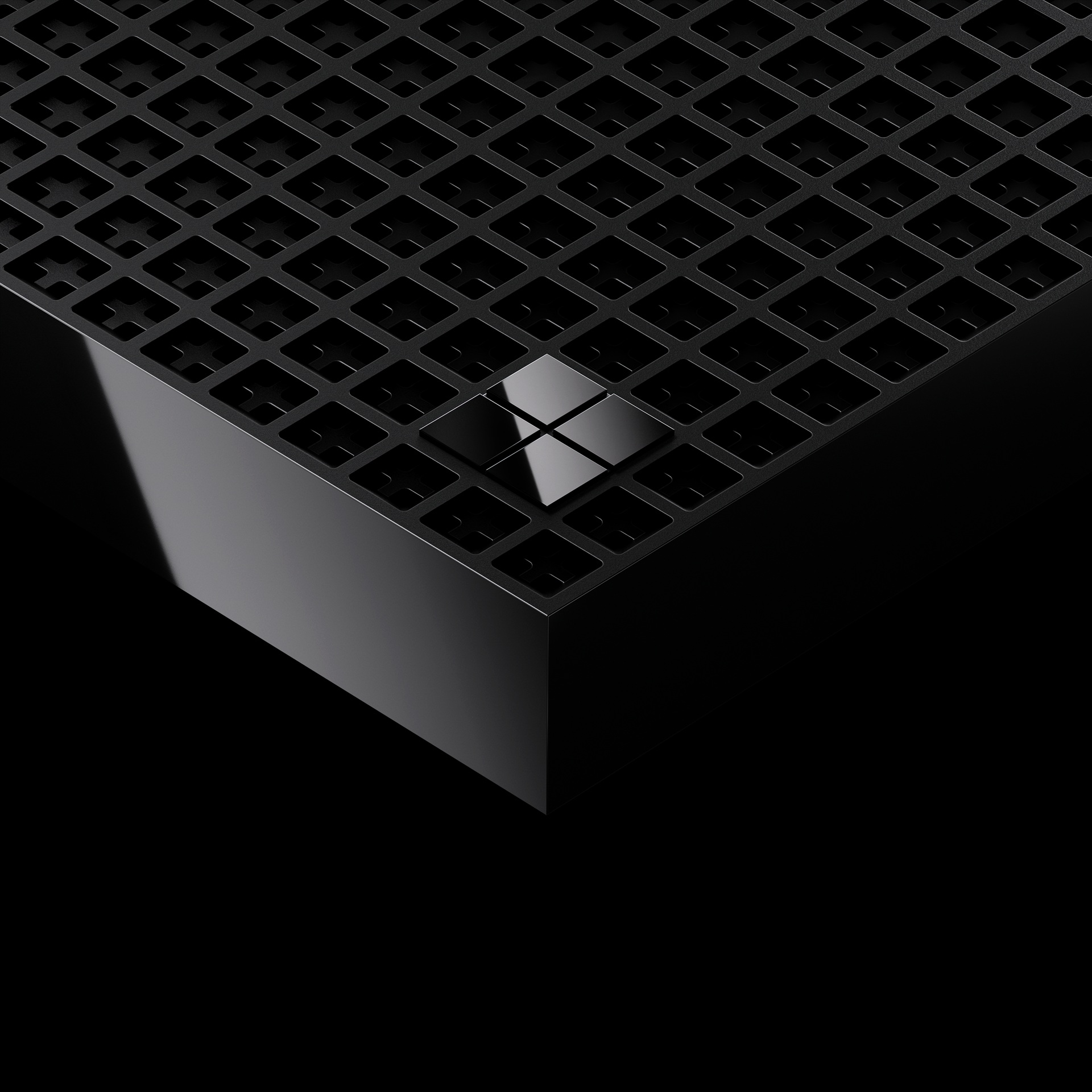
Building the next generation of devices for developers: Surface RTX Spark Dev Box
Software developers are some of the most ambitious makers we serve. They push devices harder, ask more of their tools and expect their environment to help define the pace of modern software creation. Development today means longer runnin blogs.windows.com
- Official source: news.microsoft.com

Microsoft Build Live
The home for real-time coverage of the news as it is announced from Microsoft Build, June 2-3, 2026. news.microsoft.com
- Related coverage: thenextweb.com

Microsoft unveils Project Solara: an OS for agent-first devices
Microsoft's Project Solara is a new platform for devices that run AI agents instead of apps. Two concept designs, a badge and desk device, are piloting with Best Buy, CVS, Levi's, and Target. thenextweb.com
- Related coverage: nvidianews.nvidia.com

NVIDIA and Microsoft Reinvent Windows PCs for the Age of Personal AI
NVIDIA today unveiled NVIDIA RTX Spark™, a new superchip that reinvents Windows PCs for the era of personal AI agents — offering a new class of computer that moves from tool to teammate.nvidianews.nvidia.com
- Related coverage: thewincentral.com
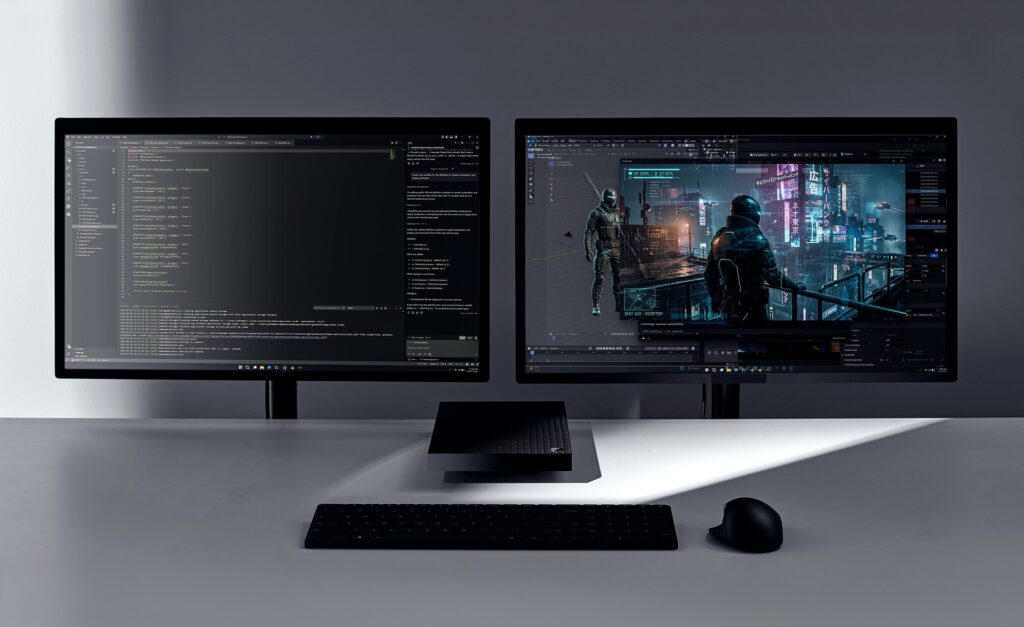
Microsoft Surface RTX Spark Dev Box Debuts at Build 2026 - WinCentral
Microsoft unveils the Surface RTX Spark Dev Box, a compact AI-powered developer PC built for local AI models, agents, and Windows development. - Read in Latest News on WinCentral thewincentral.com
- Official source: devblogs.microsoft.com

Build and run agents at scale with Microsoft Foundry at Build 2026 | Microsoft Foundry Blog
Learn how Microsoft Foundry helps developers build, deploy, and operate production-ready agents with Agent Framework, Toolboxes, hosted agents, Microsoft 365 distribution, observability, and agent optimization. devblogs.microsoft.com
- Official source: cdn.techcommunity.microsoft.com
