

The JerryRigEverything teardown of the ROG Xbox Ally X makes short work of any illusions that a $1,000 handheld is automatically invulnerable to everyday wear — and it should be required viewing for anyone who plans to toss this device in a bag without protection. The visual evidence is stark: the exterior surfaces and exposed controls are largely plastic, the display is fixed to the frame, and several user-serviceable concessions (an M.2 slot, removable thumbstick modules) sit alongside fragile points that can be easily nicked or scratched. The practical takeaway is simple and unavoidable: if an owner values resale, resale appearance, or long-term reliability, a protective case and a screen-covering accessory are not optional extras — they are necessity.
The ROG Xbox Ally X is the high-end handheld born of a collaboration between ASUS Republic of Gamers and Microsoft, positioned as a premium Windows 11 gaming handheld built on AMD silicon. Key specifications that define the platform include the AMD Ryzen AI Z2 Extreme processor, 24 GB LPDDR5X memory, a 1 TB M.2 2280 SSD, and a 7-inch FHD (1080p) IPS display running at 120 Hz with variable refresh support. The device ships with an 80 Wh battery and weighs roughly 715 grams — specifications that put it squarely in a performance-first class of handhelds.
The JerryRigEverything teardown — and the coverage it prompted — reignited a debate about design trade-offs: how far can manufacturers push premium pricing before the choice of materials undermines perceived value? The Ally X’s combination of high-end internal components and a largely plastic exterior makes that question especially salient.
At launch pricing, the Ally X sits in the premium tier for handhelds. The decision to rely on plastic for most exposed surfaces is a financial trade-off: it helps keep manufacturing complexity and weight down while allocating budget to the processor, display hardware and battery. For the manufacturer, it’s a defensible engineering trade; for the purchaser paying top-tier money, it’s an uncomfortable mismatch between price and perceived materials quality.
Key points in the pricing discussion:
Key features of the Killswitch ecosystem for the Ally X include:
Why the Killswitch approach matters:
The broader impact is likely to include:
The responsible path for new owners is straightforward: treat the device as a high-performance portable with the fragility profile of a premium portable — protect the exterior, shield the screen, and plan for possible thumbstick replacements down the line. Accessories such as the Killswitch present a strongly pragmatic defense against the most likely and most visible failure modes shown in the teardown.
From a manufacturer perspective, the Ally X’s design choices will be scrutinized by buyers who have new expectations around the premium handheld price point. For consumers, the guidance is equally clear: a case is not optional for protecting both the cosmetic and functional value of the device. The small up-front investment in protection is likely to be far less than the cost, hassle, and frustration of remedying cosmetic damage or stick-related issues later.
The ROG Xbox Ally X delivers a compelling blend of performance and portability, but the teardown turns the conversation from “what it can run” to “how long it will remain pristine.” That pivot matters a lot when the device sits near the top of the price ladder. Shield the hardware, protect the screen, and plan for future maintenance — those steps convert a powerful handheld into a practical long-term purchase.
Source: Windows Central https://www.windowscentral.com/hard...t-discounted-its-killswitch-ultimate-upgrade/
 Background
The ROG Xbox Ally X is the high-end handheld born of a collaboration between ASUS Republic of Gamers and Microsoft, positioned as a premium Windows 11 gaming handheld built on AMD silicon. Key specifications that define the platform include the AMD Ryzen AI Z2 Extreme processor, 24 GB LPDDR5X memory, a 1 TB M.2 2280 SSD, and a 7-inch FHD (1080p) IPS display running at 120 Hz with variable refresh support. The device ships with an 80 Wh battery and weighs roughly 715 grams — specifications that put it squarely in a performance-first class of handhelds.The JerryRigEverything teardown — and the coverage it prompted — reignited a debate about design trade-offs: how far can manufacturers push premium pricing before the choice of materials undermines perceived value? The Ally X’s combination of high-end internal components and a largely plastic exterior makes that question especially salient.
What the teardown revealed
Exterior materials and build
- The Xbox Ally X uses plastic for most exposed surfaces: buttons, D-pad, bezels around ports, and the majority of the case. The grips and external finish have a rubberized or textured coating in some trims, but the substrate remains molded plastic.
- The display itself is protected with Corning Gorilla Glass Victus and a factory-applied anti-reflective layer, which improves scratch resistance versus untreated glass but does not make the device immune to gouges or chips if dropped on an edge.
- Port surrounds, the microSD slot and the fingerprint-capable power button all sit in plastic apertures, which are easier to scuff and show wear than metal chassis alternatives.
Internal layout and thermals
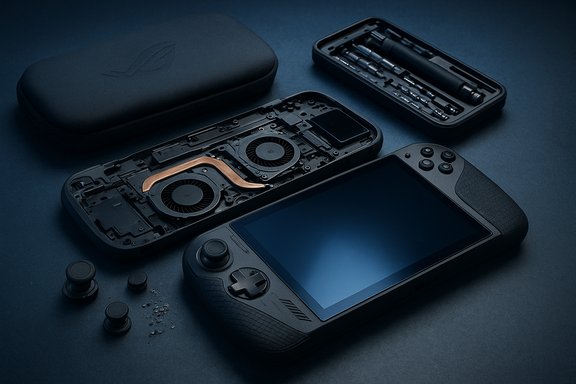
- The internal layout follows a tried-and-true handheld-PC architecture: dual turbine-style fans, a heat sink and heatpipe assembly, and thermal paste over the CPU/GPU package to drive heat into the cooling hardware.
- The motherboard is compact but thoughtfully arranged, with an accessible M.2 2280 slot for storage upgrades and modularity for the thumbsticks and some peripheral components.
- Battery capacity comes in at 80 Wh, which is respectable for a high-performance handheld and balances peak performance bursts with reasonably extended sessions when power management is tuned.
Controls and serviceability
- The device uses standard potentiometer-style thumbstick modules, which historically are more susceptible to analog drift than Hall-effect solutions. Importantly, the thumbsticks are modular and removable, which opens a path to replacement or aftermarket Hall-effect upgrades in the long term.
- Triggers are listed as Hall-effect devices in official specs, yet the thumbsticks themselves are traditional modules — a mixed approach that trims manufacturing cost but leaves a well-known long-term fault vector (stick drift) unaddressed natively.
- Many connectors and the SSD are replaceable with minimal disassembly — in practical terms, the Ally X rates better for repairability and user upgrades than some sealed consumer electronics, but the availability of official parts or aftermarket replacements will determine how valuable that theoretical serviceability is.
Fragility highlights
- The display is glued/secured to the frame in a way that makes screen replacement non-trivial; if the glass breaks, extraction and replacement appear to be beyond simple home-repair without specialized tools.
- Exposed plastic surfaces are prone to scratches and scuffs that are cosmetic but impactful for a device at this price point.
- Small apertures and port surrounds can collect grime; repeated insertion/removal of accessories could exacerbate visible wear.
Why these findings matter — beyond internet dramatics
Teardown videos are designed to be entertaining, but the findings have concrete consumer implications:- The first-run cosmetic condition is often a strong determinant of resale value. Cosmetic wear that appears within weeks under normal use can rapidly erode perceived value for those intending to resell or trade devices.
- Stick drift remains one of the most common warranty headaches for handhelds. While modular sticks reduce repair complexity, the presence of potentiometer modules means the problem remains a probable long-term risk.
- Fixed displays or glued glass significantly raise the cost and complexity of repairs for cracked screens — and screen damage is one of the most likely accidental mishaps for a handheld carried in a bag.
The price/materials trade-off: where Asus and Microsoft drew the line
The Ally X's internal hardware firmly targets high-end portable PC gaming: a large battery, a top-bin AMD Ryzen AI Z2 Extreme chip, 24 GB RAM and a 1 TB SSD are not components typically found in budget handhelds. That level of internal investment leads to a high MSRP.At launch pricing, the Ally X sits in the premium tier for handhelds. The decision to rely on plastic for most exposed surfaces is a financial trade-off: it helps keep manufacturing complexity and weight down while allocating budget to the processor, display hardware and battery. For the manufacturer, it’s a defensible engineering trade; for the purchaser paying top-tier money, it’s an uncomfortable mismatch between price and perceived materials quality.
Key points in the pricing discussion:
- Premium internal components and performance goals justify a high build cost.
- A metal or mixed-metal external chassis would raise production costs and likely the retail price.
- For consumers, expectations for premium materials at near-$1,000 retail prices mean cosmetic durability is a legitimate buyer concern.
Repairability and upgrade path — the good news
There are several honest positives in the Ally X design that mitigate some of the long-term risks:- The M.2 2280 SSD is user-replaceable, enabling storage upgrades or replacements without major surgery.
- Thumbstick modules are physically removable, which makes stick replacement feasible without needing to replace entire boards.
- Disassembly typically requires basic tools (Philips screwdrivers); many parts are modular once the back cover is removed.
The dbrand Killswitch: what it does and why it’s relevant
In direct response to the cosmetic vulnerability shown in the teardown, a leading accessory maker offers an off-the-shelf mitigation: the dbrand Killswitch for the ROG Xbox Ally X.Key features of the Killswitch ecosystem for the Ally X include:
- A rubberized protective case that wraps the device and covers most exposed plastic surfaces.
- An integrated kickstand and grip improvements to make handling more secure.
- A Travel Cover option that protects the sticks and screen when transporting the device, reducing the risk of stick damage and scratches.
- A kit configuration that bundles the case with skins, stick grips, and screen protectors, making a full-protection package possible.
Why the Killswitch approach matters:
- It directly addresses the most visible vulnerability — surface scratches and scuffs — while improving grip and reducing the likelihood of accidental drops.
- The Travel Cover reduces mechanical stress on thumbsticks during transit, addressing a documented failure mode for handheld controllers.
- Bundled screen protectors and stick guards provide essential coverage for two of the most expensive single-component repairs (screen replacement and stick replacement).
Alternatives and complementary protections
A robust ownership strategy for the ROG Xbox Ally X should include multiple layers of protection:- Heavy-duty hardshell travel cases for checked luggage or backpacks with multiple-point protection.
- Tempered glass or high-quality polymer screen protectors to guard against impact and deep scratches.
- Silicone or rubberized outer shells that add grip and a buffer against edge impacts.
- Third-party thumbstick covers and short-form insurance or extended warranty that covers accidental damage.
Practical recommendations for new owners
- Install a screen protector immediately after unboxing to prevent minor scratches that are otherwise all but guaranteed when the device is carried in a bag.
- Add a rubberized protective shell or a full Killswitch-style case to protect the exposed plastic surfaces and ports.
- Use a padded travel case for transit — the combination of case and cover dramatically reduces the likelihood of both screen and stick damage.
- Keep the device clean: dust and grit in ports and around the sticks accelerate wear.
- Calibrate sticks and monitor for drift. If drift appears, document behavior and check warranty/replacement options; modular thumbsticks make a swap possible if parts are available.
- Consider extended accidental damage coverage if the device will be used as a daily carry.
Risks and unanswered questions
- Warranty and parts availability: the presence of modular parts is valuable only if replacement parts are available through ASUS or reliable third parties. Owners should verify warranty terms for third-party repairs and replacements.
- Long-term stick drift: potentiometer sticks remain a known reliability risk. The industry trend is toward Hall-effect modules; owners should monitor the aftermarket for Hall-effect replacements that are confirmed compatible.
- Screen-replacement complexity: a glued display increases repair costs if cracked. Owners should budget for possible expensive repairs if the screen is damaged.
- Cosmetic depreciation: visible scuffs and scratches may reduce resale value significantly; protection is the cheapest way to preserve value.
How this affects the market and consumer expectations
The Ally X teardown surfaces a tension that will shape the handheld PC market going forward: consumers expect premium materials at premium prices, but manufacturers must balance that expectation against cost, weight, and thermal design constraints. The Ally X’s internal specification sheet reads like a flagship PC condensed into handheld form; its exterior choices read like a thoughtful weight-and-cost optimization.The broader impact is likely to include:
- A growth in the accessory market (cases, covers, travel kits) targeted specifically at premium handheld owners.
- Increased demand for reliable third-party replacement parts and modular upgrades (Hall-effect thumbsticks, stronger screen adhesives, etc..
- A continued emphasis by manufacturers on repairability features as a differentiator in the premium handheld space.
Final analysis: buy with protection, but buy with eyes open
The ROG Xbox Ally X is a remarkable piece of engineering when judged strictly by internal hardware: among the most powerful handheld PCs available, with a serious battery and a premium screen experience. But the JerryRigEverything teardown makes clear that high internal performance does not equal rugged external durability. For a device priced at the high end of the market, the use of plastic on visible external surfaces and potentiometer thumbsticks are two choices that materially affect the ownership story.The responsible path for new owners is straightforward: treat the device as a high-performance portable with the fragility profile of a premium portable — protect the exterior, shield the screen, and plan for possible thumbstick replacements down the line. Accessories such as the Killswitch present a strongly pragmatic defense against the most likely and most visible failure modes shown in the teardown.
From a manufacturer perspective, the Ally X’s design choices will be scrutinized by buyers who have new expectations around the premium handheld price point. For consumers, the guidance is equally clear: a case is not optional for protecting both the cosmetic and functional value of the device. The small up-front investment in protection is likely to be far less than the cost, hassle, and frustration of remedying cosmetic damage or stick-related issues later.
The ROG Xbox Ally X delivers a compelling blend of performance and portability, but the teardown turns the conversation from “what it can run” to “how long it will remain pristine.” That pivot matters a lot when the device sits near the top of the price ladder. Shield the hardware, protect the screen, and plan for future maintenance — those steps convert a powerful handheld into a practical long-term purchase.
Source: Windows Central https://www.windowscentral.com/hard...t-discounted-its-killswitch-ultimate-upgrade/
