

Rubrik’s Agent Cloud now offers native integration with Microsoft Copilot Studio, delivering a single-pane control plane to discover, monitor, govern, and — uniquely — rewind actions taken by enterprise AI agents, and the offering is available to select customers in limited early access following Rubrik’s October 22, 2025 announcement and the earlier Agent Rewind reveal in August 2025.
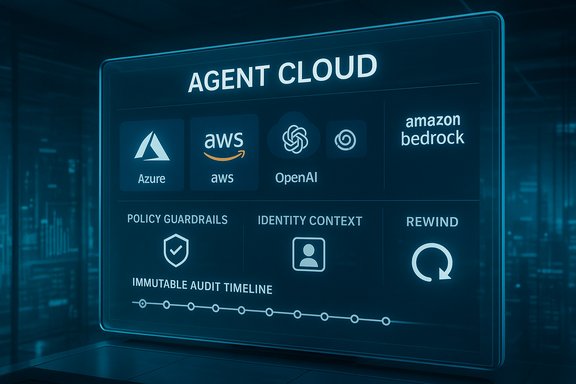
Rubrik has expanded its product portfolio for enterprise AI operations with Rubrik Agent Cloud, a platform the company positions as an enterprise-grade control layer for agentic AI. The product promises three core capabilities: Agent Monitor (discovery and observability), Agent Govern (policy and runtime enforcement), and Agent Remediate (ability to undo unwanted agent-driven changes). The integration specifically calls out support for agent builders and runtime environments including Microsoft Copilot Studio, OpenAI, and Amazon Bedrock, plus agents running in cloud infrastructure from Azure and AWS. The Agent Remediate capability is anchored by Agent Rewind, introduced by Rubrik in August 2025 after the company’s acquisition of Predibase; Agent Rewind ties into Rubrik Security Cloud to perform selective, time-based rollback of changes agents make to files, databases, configurations, and other enterprise artifacts.
Microsoft’s Copilot Studio is Microsoft’s low-code/no-code environment for authoring and publishing Copilot agents to Microsoft 365, Teams, and other channels. Copilot Studio supports tools and connectors to external systems, tenant knowledge sources, and custom actions — meaning Copilot-built agents can access data and execute changes on behalf of users when properly authorized. Copilot Studio also adds complexity and attack surface because agents can call external tools and require authentication and tokenized access to corporate resources.
Rubrik’s announcement frames the Copilot Studio integration as part of a broader strategy to provide enterprises with visibility, policy controls, and recoverability across heterogeneous agent builders and cloud platforms. The product is in limited early access and Rubrik cautions that not all features are generally available as of the initial launch.
However, buyers must temper vendor promises with realistic validation. The offering is in limited early access; organizations should treat it initially as a managed experiment rather than a turn-key, production-ready safety net for mission-critical agent automation. Practical adoption requires:
Rubrik’s offering is an important step toward operationalizing agentic AI safely. For organizations evaluating Copilot Studio and other agent platforms, the practical question isn’t only whether you can deploy agents — it’s whether you can operate them with the visibility, policies, and recoverability that keep business risk acceptable. Rubrik Agent Cloud aims to answer that question; the burden is on each enterprise to rigorously test that answer in their own environment before scaling agent automation across critical systems.
Source: MarketScreener https://www.marketscreener.com/news...th-microsoft-copilot-studio-ce7d5edbd080f324/
 Background
Rubrik has expanded its product portfolio for enterprise AI operations with Rubrik Agent Cloud, a platform the company positions as an enterprise-grade control layer for agentic AI. The product promises three core capabilities: Agent Monitor (discovery and observability), Agent Govern (policy and runtime enforcement), and Agent Remediate (ability to undo unwanted agent-driven changes). The integration specifically calls out support for agent builders and runtime environments including Microsoft Copilot Studio, OpenAI, and Amazon Bedrock, plus agents running in cloud infrastructure from Azure and AWS. The Agent Remediate capability is anchored by Agent Rewind, introduced by Rubrik in August 2025 after the company’s acquisition of Predibase; Agent Rewind ties into Rubrik Security Cloud to perform selective, time-based rollback of changes agents make to files, databases, configurations, and other enterprise artifacts.Microsoft’s Copilot Studio is Microsoft’s low-code/no-code environment for authoring and publishing Copilot agents to Microsoft 365, Teams, and other channels. Copilot Studio supports tools and connectors to external systems, tenant knowledge sources, and custom actions — meaning Copilot-built agents can access data and execute changes on behalf of users when properly authorized. Copilot Studio also adds complexity and attack surface because agents can call external tools and require authentication and tokenized access to corporate resources.
Rubrik’s announcement frames the Copilot Studio integration as part of a broader strategy to provide enterprises with visibility, policy controls, and recoverability across heterogeneous agent builders and cloud platforms. The product is in limited early access and Rubrik cautions that not all features are generally available as of the initial launch.
What the integration does — feature-by-feature breakdown
Agent discovery and cataloging
- Auto-discovery across platforms: Rubrik Agent Cloud discovers agents running in cloud infrastructure (Azure, AWS) and platform services (Microsoft 365, Agentforce, etc.. For Copilot Studio this means agents authored and published via Copilot Studio can be surfaced automatically in Rubrik’s registry.
- Single pane of glass: Discovered agents are registered in a unified inventory so security, IT ops, and business teams can see what’s running, who owns it, and what data or tools the agent is permitted to access.
Continuous monitoring and immutable audit trails
- Activity tracing: The platform captures agent actions — from prompt to tool calls and downstream data access — and maintains an immutable timeline of events to support forensic analysis and compliance.
- Context enrichment: Audit data includes the identity context (who or what triggered the agent), the data context (what assets the agent touched), and application context (what tools or connectors were invoked).
Governance at runtime
- Policy enforcement: Teams can define guardrails to stop destructive behavior, restrict access to specific data or tools, or define allowed action sets for an agent.
- Identity integration: The integration is designed to work with enterprise identity systems to ensure decisions are tied to authenticated principals and to help enforce least-privilege models.
- Performance and behavior tracking: Rubrik tracks agent usage and evaluates actions against expected prompt outcomes and SLAs, allowing teams to tune or restrict agents that underperform or behave unexpectedly.
Remediation and “rewind”
- Agent Rewind: This capability, powered by technology acquired with Predibase, promises precise time-and-blast-radius rollback of agent-induced changes — files, database records, repository commits, and configurations — without downtime or data loss according to vendor materials.
- Selective undo: Rubrik emphasizes selective rollback so that organizations can revert only the unwanted changes from an agent while keeping legitimate changes intact.
Why this matters for enterprises
Enterprises are moving from pilot projects to fleet-scale deployments of AI agents for tasks such as IT automation, finance reconciliation, incident response, HR automation, and knowledge work augmentation. That move amplifies both the business value and the operational risk.- Speed and scale: Agentic AI can automate sequences of high-impact actions — that acceleration increases business velocity but also increases the speed at which errors or malicious activities can cause damage.
- Visibility gap: Many organizations lack a centralized way to see and correlate agent activities across multiple agent builders and clouds. The integration addresses that gap by bringing Copilot Studio agents into a unified operational view.
- Regulatory and compliance posture: Immutable audit trails that tie actions to identity and data lineage help enterprises meet governance requirements in regulated industries.
- Recoverability and resilience: A tested, granular rollback mechanism changes the security posture from “detect and respond” to “recover and contain” — a valuable shift for incident response planning.
Independent verification and factual checks
The Rubrik Agent Cloud and its Copilot Studio integration are covered in Rubrik’s official product materials and press releases (Oct 22, 2025) and in multiple independent trade and industry news outlets that reported on the launch and the Copilot Studio connection. The Agent Rewind product was publicly announced in August 2025 and aligns with Rubrik’s acquisition of Predibase earlier in 2025, which Rubrik has cited as the technical foundation for AI infrastructure and rewind capabilities. Microsoft’s documentation for Copilot Studio documents agent creation, tool integration, and connector tooling — confirming that Copilot agents can call external tools and access tenant knowledge. Product availability statements from Rubrik and reporting from independent outlets make clear that the offering is in limited early access and that not all features are generally available at launch. Marketing claims such as “industry’s only solution to rewind agent mistakes” are vendor positioning and should be treated as marketing language rather than objectively proven market fact.Strengths and practical benefits
- Unified observability for agent fleets: Enterprises gain a centralized inventory and live map of agents across builders and clouds, reducing blind spots that lead to misconfiguration and unseen lateral effects.
- Contextual, immutable audit trails: Capturing prompts, plan steps, tool use, and data access provides the forensic breadcrumbs security and compliance teams require.
- Policy and identity integration: By linking agent actions to identity and enforcing runtime guardrails, organizations can implement least-privilege and role-based constraints on agent capabilities.
- Operational recoverability: The ability to selectively revert agent actions — rather than resorting to broad restores or long incident response cycles — shortens mean time to remediation and limits business impact.
- Cross-platform support: Coverage for Copilot Studio, OpenAI, and Amazon Bedrock reduces the friction of hybrid AI stacks and enables consistent governance wherever agents are built.
Key risks, gaps, and cautionary points
1. Marketing vs reality
- Vendor statements such as “industry’s only solution” or promises of “no downtime” are aspirational and context-dependent. Enterprises must perform technical validation under their own production conditions before relying on the feature set for critical SLAs.
2. Early access limitations
- The product is in limited early access. That means key integrations, scale characteristics, or edge-case behaviors may not yet be fully hardened or covered by service-level commitments.
3. Complexity of agent actions
- AI agents can interact with external systems in unexpected ways. Rewinding complex business actions (e.g., multi-step transactions, cross-system state changes, external third-party interactions) may require application-specific logic or manual reconciliation after a rollback.
4. Security and trust boundaries
- Agents built in Copilot Studio can leverage tenant connectors and tools that require OAuth tokens and service principals. Recent security research has exposed attack techniques that abuse agent tooling and token consent flows; such threats make agent vetting, strict connector consent, and runtime enforcement essential.
5. Data residency and compliance nuance
- Immutable audit trails and rollbacks must adhere to regulatory and data residency requirements. Organizations operating across jurisdictions should validate whether audit and rewind operations touch data in ways that have legal implications.
6. Integration and operational friction
- To be effective, Agent Cloud must be integrated with identity providers, SIEMs, and backup/recovery operations. Enterprises should expect integration work and orchestration testing to ensure policies and rewind actions operate reliably.
Technical considerations and implementation checklist
For IT teams evaluating Rubrik Agent Cloud with Copilot Studio integration, the following checklist converts marketing claims into practical validation steps:- Inventory & discovery validation
- Confirm that Copilot Studio agents in your tenant appear in Rubrik’s agent registry.
- Verify that agents deployed to Microsoft 365, Teams, and other channels show expected metadata (owner, creation time, permissions).
- Audit trail and forensic exercises
- Trigger a set of representative agent actions across systems and confirm the audit trail captures prompts, tool calls, and identity context end-to-end.
- Validate immutability controls (e.g., append-only logs, tamper-resistance, retention policies aligned with compliance needs).
- Policy enforcement and guardrails
- Create runtime policies restricting sensitive operations (e.g., disabling agent write access to production databases).
- Test policy enforcement under failure modes and ensure policies run at appropriate enforcement points (pre-execution, runtime interrupt, post-execution alerting).
- Rewind testing
- Run controlled experiments to create changes the agent would make (files, DB updates, config edits).
- Execute Agent Rewind in a non-production environment to validate rollback fidelity, residual artifacts, and collateral effects.
- Measure time-to-rewind and impact on system throughput to understand operational windows and constraints.
- Identity and token lifecycle
- Review which identities agents run as (maker, system, or designer) and how credentials/tokens are provisioned.
- Enforce least-privilege, require conditional access/MFA for maker accounts, and implement short-lived tokens where possible.
- Incident response and playbooks
- Update incident response playbooks to include agent-specific scenarios: discovery of rogue agent, token compromise, prompted hallucination causing destructive actions.
- Define escalation paths and decision criteria for when to rewind vs. when to remediate manually.
- Integration with security telemetry
- Stream agent audit events into SIEM and XDR tools.
- Configure alerts for anomalous agent behavior (sudden spike in destructive calls, access to sensitive repositories, or unexpected tool invocation patterns).
- Legal and compliance alignment
- Map rewind operations to regulatory controls: can rollback affect retention or eDiscovery holds? Validate how rewinds interact with legal preservation.
Operational playbook: Adoption steps for enterprise IT
- Start small with low-risk agents
- Pilot with agents performing read-only tasks or in sandboxes. Validate observability and governance before moving to write-capable agents.
- Define an agent governance council
- Include security, legal, application owners, and business sponsors. Define approval processes for agents entering production.
- Mandate connectors and actions review
- Require code reviews and connector audits for any tool or custom action added to Copilot Studio agents.
- Establish telemetry and KPIs
- Track metrics such as number of agents, incidents prevented by policies, number of rewinds executed, and mean time to recover after an agent incident.
- Implement a staged rollout
- Gradually increase agent responsibilities while tightening policy, monitoring, and remediation playbooks at each stage.
- Keep human-in-the-loop thresholds
- For destructive actions, configure agents to require maker approval or multi-party confirmation rather than fully autonomous execution where business risk is high.
Threat scenarios and mitigations
- Token-theft and malicious agent injection: Adopt strict consent and connector policies, revoke suspicious tokens quickly, and use conditional access policies and device posture checks to limit misuse.
- Agent hallucination causing data corruption: Apply pre-execution policy checks and sandbox testing for prompt changes; record and validate outcomes before allowing writes to production.
- Supply-chain compromise of agent models or connectors: Validate provenance of third-party connectors and models, keep a whitelist of approved models/providers, and monitor for unexpected model switches.
- Rewind misuse or accidental rollbacks: Restrict who can execute rewinds and require dual authorization for high-impact rollback actions.
Market context and strategic implications
Rubrik’s move follows broader industry momentum where data protection vendors are positioning themselves as both guardians and enablers for enterprise AI. The Predibase acquisition and the launch of Agent Rewind highlight an attempt to combine AI infrastructure and recoverability into a product narrative that sells safety alongside acceleration.- For CISOs and data protection leaders: This integration reframes backup and recovery as an active control in the AI stack, not just a safety net for human error.
- For line-of-business and application owners: The promise of safe, auditable agent automation lowers the barrier to adopting agentic workflows — provided governance and integration are robust.
- For competitors and platform providers: Rubrik’s cross-platform approach forces a conversation about standardizing agent observability APIs, audit schemas, and rewind semantics across cloud and agent builder ecosystems.
Final analysis and practical guidance
Rubrik Agent Cloud’s integration with Microsoft Copilot Studio is a strategically sensible response to a clear enterprise pain point: how to run fleets of AI agents at scale without multiplying operational and compliance risk. The combined capabilities — discovery, immutable auditing, runtime governance, and selective rewind — address the full lifecycle of agentic activity, mapping directly to needs raised by security, compliance, and IT operations teams.However, buyers must temper vendor promises with realistic validation. The offering is in limited early access; organizations should treat it initially as a managed experiment rather than a turn-key, production-ready safety net for mission-critical agent automation. Practical adoption requires:
- Rigorous validation of discovery and audit fidelity in your environment;
- End-to-end rehearsals of rewind operations to expose edge cases with cross-system transactions;
- Tight identity and token management to guard agent consent and connector use;
- Updated incident response and legal playbooks that incorporate agent-specific scenarios.
Rubrik’s offering is an important step toward operationalizing agentic AI safely. For organizations evaluating Copilot Studio and other agent platforms, the practical question isn’t only whether you can deploy agents — it’s whether you can operate them with the visibility, policies, and recoverability that keep business risk acceptable. Rubrik Agent Cloud aims to answer that question; the burden is on each enterprise to rigorously test that answer in their own environment before scaling agent automation across critical systems.
Source: MarketScreener https://www.marketscreener.com/news...th-microsoft-copilot-studio-ce7d5edbd080f324/
