

Samsung’s 2026 refresh of The Frame and The Frame Pro is a sharper move than it first appears. On paper, the headline additions are easy to summarize: DLG 240Hz support, an upgraded anti-glare coating, a new 55-inch Frame Pro, and seven years of OS updates for both models. In practice, those changes push Samsung’s art TV line closer to a more serious blend of living-room decor, gaming display, and long-lived smart platform than the category has offered before. The most interesting part is not that Samsung added features, but that it is continuing to blur the line between design object and high-performance TV in ways competitors will have to answer. The Notebookcheck report highlights those upgrades and notes that Samsung has not yet revealed pricing or availability details, leaving the market to infer where these models will sit in the premium stack.
The Frame has always lived in a strange but commercially powerful space. It is a television that tries hard not to look like one, built for buyers who care as much about interior design as panel technology. Samsung’s art-TV formula has been successful because it sells a lifestyle: slim hardware, interchangeable bezels, matte-like finish behavior, and a presentation that makes the screen feel like framed artwork instead of a black rectangle on the wall. The 2026 update keeps that basic identity intact, but Samsung is clearly trying to remove the compromises that used to keep The Frame in the “nice idea” category rather than the “best-in-class” one.
The Frame Pro is the more technically ambitious sibling, and that matters because Samsung has long used “Pro” branding to signal that the product is not only about appearance. According to the report, the Pro retains its Neo QLED 4K panel and Wireless One Connect Box, but now gets an upgraded Glare Free treatment and added eARC support on the rear micro-HDMI port, so a soundbar can be integrated without giving up the low-latency gaming path. That is a subtle but important refinement: Samsung is trying to preserve the clean installation story while making the TV more practical for enthusiasts who expect modern audio and gaming flexibility.
The more unexpected part is the move to DLG 240Hz support on both The Frame and The Frame Pro. Samsung’s earlier 144Hz gaming positioning already pushed these art TVs beyond pure décor status. With DLG 240Hz, the company is signaling that the category can now speak directly to PC gamers who want high refresh rates without abandoning an aesthetic-first setup. The tradeoff, as Notebookcheck notes, is that the higher refresh mode comes at a lower resolution, which is a familiar compromise in dual-line or bandwidth-limited gaming implementations.
The software story is equally important. Samsung says both sets will ship with an upgraded One UI Tizen OS and receive seven years of OS updates. That is a meaningful commitment for a premium TV line, especially one marketed on design and permanence rather than rapid upgrade cycles. In a market where smart-TV platforms can become stale long before the panel wears out, long support windows are increasingly part of the value proposition, not just a nice extra.
The 2026 Frame family suggests Samsung understands this better than before. The upgraded anti-glare layer is not just a spec-sheet win; it is central to the emotional promise of the category. A framed artwork-style display should read clearly from across a room, under daylight, and in the sort of mixed lighting that makes typical glossy TVs difficult to live with. By extending that treatment to both models, Samsung is trying to reduce the need for buyers to choose between aesthetics and actual usability.
The report says Samsung is applying the upgraded coating to both The Frame and The Frame Pro. That is a smart move because it preserves the visual consistency of the family. It also helps Samsung defend the category against cheaper alternatives that may imitate the bezel-first design language without matching the reflection handling. In premium home environments, especially bright living rooms and open-plan interiors, that reflection behavior may matter more than peak brightness numbers.
The shift also fits into a broader trend in premium TVs: manufacturers are trying to defeat reflections not only with coatings, but with industrial design that changes the way the panel interacts with the room. Samsung’s approach has always been part hardware, part lifestyle branding, and part psychological framing. The upgraded finish helps keep the screen readable without forcing buyers to reorient lamps, curtains, or furniture around the TV. That is a real convenience advantage, not marketing fluff.
This is also where Samsung can quietly differentiate against rivals. Many TV brands can claim high brightness and excellent contrast, but fewer can make a wall-mounted screen look unobtrusive under normal household lighting. If Samsung’s updated anti-glare layer is as effective as the company implies, it strengthens the most defensible reason to buy The Frame rather than a conventional QLED or OLED set.
The caveat is important. The report says that using the 240Hz mode results in lower resolution, which means this is a feature for specific gaming scenarios rather than a blanket upgrade. That is still valuable, because enthusiasts often appreciate options even when those options involve tradeoffs. In living rooms where The Frame is used for both design and occasional gaming, DLG 240Hz could be a useful “best of both worlds” setting for competitive titles.
The micro-HDMI port’s updated eARC support is also more significant than it may seem. It gives users a cleaner path to soundbar integration while preserving the low-latency connection path that gamers care about. That reduces one of the hidden frictions in premium wall-mounted setups, where convenience often ends the moment audio hardware enters the picture. Samsung is making the Pro model feel like a more complete system rather than a display with optional extras bolted on.
For PC users, the implication is straightforward: Samsung wants The Frame Pro to be a respectable living-room gaming station, not just a “good enough” panel with art mode. That matters in a market where many buyers now use one display for entertainment, console play, desktop gaming, and streaming. If the refresh-rate implementation is solid, the TV could appeal to a broader audience than the product’s elegant exterior suggests.
The Wireless One Connect Box on The Frame Pro remains one of the line’s best ideas. It keeps the display cleaner and gives the install a more gallery-like appearance. It also reinforces Samsung’s larger strategy of making the premium living room look less like a stack of electronics and more like a curated space. That aesthetic advantage is hard to quantify, but easy to understand once you see a clutter-free wall installation in person.
On the bezel side, Samsung is expanding customization with both first-party options like Sand Gold Metal and Modern Teak and third-party designs made by Deco TV Frames. That keeps the product anchored in the idea that the television should behave like framed art even when it is switched off. It also creates room for upsell without forcing the core TV hardware to become visually overdesigned.
The installation story is where The Frame continues to separate itself from conventional premium TVs. Most televisions can be mounted. Very few are designed from the beginning to minimize visual noise once mounted. Samsung’s upgrades here are not flashy, but they reinforce the one thing the product cannot lose: the illusion that the TV belongs in the room as an object, not as a machine.
The upgraded One UI Tizen OS should also help unify the user experience across Samsung’s 2026 lineup. Even when buyers are mostly interested in a single TV’s hardware, the menu system, app support, and smart-home integrations shape long-term satisfaction. A polished UI matters more in an art TV than in many other categories because the device is designed to be seen and used casually throughout the day, not just during movie nights.
This also has a competitive dimension. The smart-TV market is no longer just about image quality. It is about whether the platform remains useful after the novelty fades. By promising a long support window, Samsung is competing not only against LG and Sony on display quality, but against the broader idea that smart TVs age quickly in software terms.
The AI angle, while not as prominently detailed in the excerpt as the display features, is still part of Samsung’s broader 2026 push. In today’s TV market, AI features are often used as glue between image processing, recommendations, and home control. The risk is that AI becomes a buzzword rather than a benefit. The opportunity is that a well-executed platform can make a premium TV feel more personalized without getting in the way of its core function.
That said, Samsung is still framing the product around domestic use. The customizable bezels, art-mode identity, and wall-first industrial design all point to the home. The fact that Samsung is now layering in gaming features and longer software support shows that it wants the TV to remain relevant across the entire household rather than becoming a single-purpose decorative screen.
The Frame Pro, meanwhile, is the version for users who want the cleaner installation and more technically ambitious feature set. Its Wireless One Connect Box and eARC integration make it more suitable for users who care about both aesthetics and external audio. That combination could also appeal to higher-end real-estate and hospitality projects where hidden cabling and polished presentation are part of the brief.
Samsung’s broader strategy is obvious: if the company can make a lifestyle TV feel technically credible, it can capture buyers who would otherwise drift toward a standard Neo QLED or OLED set for the sake of performance. The Frame 2026 is a reminder that premium TV competition is now fought on design language, software support, and living-room compatibility just as much as on raw picture quality.
The broader market should pay attention because this is where premium TV competition is moving: not toward bigger spec numbers alone, but toward products that fit modern rooms, modern gaming habits, and modern expectations about software longevity. Samsung is trying to make The Frame feel like a permanent installation rather than a yearly upgrade cycle. If the company has judged the market correctly, that may matter more than any single spec bump.
Source: Notebookcheck Samsung The Frame (Pro) 2026 brings DLG 240Hz support and upgraded anti-glare technology
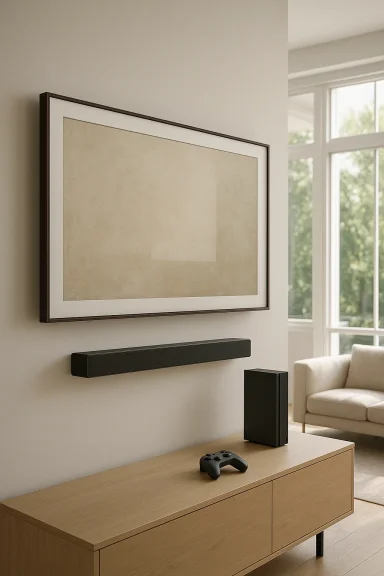 Overview
The Frame has always lived in a strange but commercially powerful space. It is a television that tries hard not to look like one, built for buyers who care as much about interior design as panel technology. Samsung’s art-TV formula has been successful because it sells a lifestyle: slim hardware, interchangeable bezels, matte-like finish behavior, and a presentation that makes the screen feel like framed artwork instead of a black rectangle on the wall. The 2026 update keeps that basic identity intact, but Samsung is clearly trying to remove the compromises that used to keep The Frame in the “nice idea” category rather than the “best-in-class” one.The Frame Pro is the more technically ambitious sibling, and that matters because Samsung has long used “Pro” branding to signal that the product is not only about appearance. According to the report, the Pro retains its Neo QLED 4K panel and Wireless One Connect Box, but now gets an upgraded Glare Free treatment and added eARC support on the rear micro-HDMI port, so a soundbar can be integrated without giving up the low-latency gaming path. That is a subtle but important refinement: Samsung is trying to preserve the clean installation story while making the TV more practical for enthusiasts who expect modern audio and gaming flexibility.
The more unexpected part is the move to DLG 240Hz support on both The Frame and The Frame Pro. Samsung’s earlier 144Hz gaming positioning already pushed these art TVs beyond pure décor status. With DLG 240Hz, the company is signaling that the category can now speak directly to PC gamers who want high refresh rates without abandoning an aesthetic-first setup. The tradeoff, as Notebookcheck notes, is that the higher refresh mode comes at a lower resolution, which is a familiar compromise in dual-line or bandwidth-limited gaming implementations.
The software story is equally important. Samsung says both sets will ship with an upgraded One UI Tizen OS and receive seven years of OS updates. That is a meaningful commitment for a premium TV line, especially one marketed on design and permanence rather than rapid upgrade cycles. In a market where smart-TV platforms can become stale long before the panel wears out, long support windows are increasingly part of the value proposition, not just a nice extra.
What Samsung Is Really Selling
Samsung is not merely selling a TV that can hang on a wall. It is selling a TV that is supposed to disappear into the room until it is needed, then reappear as a gaming display, movie screen, or art frame. That multi-role identity is exactly why anti-glare and cable management matter so much. If the screen still looks like a mirror in a bright room, the art-TV pitch collapses. If cable access is awkward, the wall-mount fantasy becomes a maintenance headache.The 2026 Frame family suggests Samsung understands this better than before. The upgraded anti-glare layer is not just a spec-sheet win; it is central to the emotional promise of the category. A framed artwork-style display should read clearly from across a room, under daylight, and in the sort of mixed lighting that makes typical glossy TVs difficult to live with. By extending that treatment to both models, Samsung is trying to reduce the need for buyers to choose between aesthetics and actual usability.
- Design identity remains the product’s main attraction.
- Gaming features are now strong enough to matter to enthusiast buyers.
- Long software support increases the value of a premium purchase.
- Anti-glare improvements are critical to the art-TV promise.
- Cable and audio flexibility make the setup less compromise-heavy.
The Anti-Glare Upgrade
Anti-glare is one of those features that sounds modest until you live with it. In an art TV, it is arguably one of the most important technologies in the entire product. Samsung’s upgraded Glare Free treatment is designed to reduce reflections and make artworks appear more realistic, which matters because the whole point of The Frame is that it should look convincing when displaying static art or photography. If the screen throws bright room reflections back at the viewer, the illusion breaks immediately.The report says Samsung is applying the upgraded coating to both The Frame and The Frame Pro. That is a smart move because it preserves the visual consistency of the family. It also helps Samsung defend the category against cheaper alternatives that may imitate the bezel-first design language without matching the reflection handling. In premium home environments, especially bright living rooms and open-plan interiors, that reflection behavior may matter more than peak brightness numbers.
Why It Matters More Than Peak Specs
TV buyers often focus on resolution, refresh rate, and HDR labels because those are easy to market. But for a wall-mounted art display, the real-world viewing experience is shaped by ambient light control. A display that performs beautifully in a dark demo room can disappoint in the exact rooms where The Frame is most likely to be installed. Samsung’s anti-glare upgrade is, therefore, not a cosmetic polish; it is a foundational improvement to the product’s use case.The shift also fits into a broader trend in premium TVs: manufacturers are trying to defeat reflections not only with coatings, but with industrial design that changes the way the panel interacts with the room. Samsung’s approach has always been part hardware, part lifestyle branding, and part psychological framing. The upgraded finish helps keep the screen readable without forcing buyers to reorient lamps, curtains, or furniture around the TV. That is a real convenience advantage, not marketing fluff.
This is also where Samsung can quietly differentiate against rivals. Many TV brands can claim high brightness and excellent contrast, but fewer can make a wall-mounted screen look unobtrusive under normal household lighting. If Samsung’s updated anti-glare layer is as effective as the company implies, it strengthens the most defensible reason to buy The Frame rather than a conventional QLED or OLED set.
- Better daytime visibility in bright rooms.
- Stronger art realism for static images and photos.
- Fewer reflections in open-plan homes.
- A more convincing “looks like decor” effect.
- Greater practical value than many raw spec upgrades.
Gaming and DLG 240Hz
The Frame family has never been a pure gaming TV, but Samsung has been steadily nudging it in that direction. The addition of DLG 240Hz is the clearest sign yet that the company wants the art-TV segment to appeal to a more technically demanding audience. A higher refresh rate is not just about numbers; it affects motion smoothness, cursor responsiveness, and the overall feel of the display when paired with a capable PC.The caveat is important. The report says that using the 240Hz mode results in lower resolution, which means this is a feature for specific gaming scenarios rather than a blanket upgrade. That is still valuable, because enthusiasts often appreciate options even when those options involve tradeoffs. In living rooms where The Frame is used for both design and occasional gaming, DLG 240Hz could be a useful “best of both worlds” setting for competitive titles.
The Pro Model’s Gaming Position
The Frame Pro keeps Motion Xcelerator 144Hz, which already suggests a gaming profile above the ordinary lifestyle TV. Adding DLG 240Hz gives Samsung a ladder of options: 144Hz for balanced everyday play, 240Hz for select PC gaming cases, and the broader art-TV experience the line is built around. That layered approach is clever because it avoids forcing the buyer to think of the TV as a compromised gaming monitor.The micro-HDMI port’s updated eARC support is also more significant than it may seem. It gives users a cleaner path to soundbar integration while preserving the low-latency connection path that gamers care about. That reduces one of the hidden frictions in premium wall-mounted setups, where convenience often ends the moment audio hardware enters the picture. Samsung is making the Pro model feel like a more complete system rather than a display with optional extras bolted on.
For PC users, the implication is straightforward: Samsung wants The Frame Pro to be a respectable living-room gaming station, not just a “good enough” panel with art mode. That matters in a market where many buyers now use one display for entertainment, console play, desktop gaming, and streaming. If the refresh-rate implementation is solid, the TV could appeal to a broader audience than the product’s elegant exterior suggests.
- 144Hz remains the practical gaming baseline on the Pro.
- 240Hz DLG is an enthusiast feature for compatible PCs.
- eARC over micro-HDMI makes audio setups cleaner.
- Lower resolution at 240Hz is the obvious tradeoff.
- The line is now more appealing to multi-use households.
Design and Installation Refinements
Samsung’s decision to keep the Frame slim while adding back stoppers for easier cable connection and disconnection is a good example of incremental product design done properly. Anyone who has ever tried to manage a wall-mounted TV knows that the “beautiful on the wall” pitch can break down during the smallest maintenance task. If users no longer need to pull the TV off the wall just to manage cables, that removes a surprisingly large amount of stress from ownership.The Wireless One Connect Box on The Frame Pro remains one of the line’s best ideas. It keeps the display cleaner and gives the install a more gallery-like appearance. It also reinforces Samsung’s larger strategy of making the premium living room look less like a stack of electronics and more like a curated space. That aesthetic advantage is hard to quantify, but easy to understand once you see a clutter-free wall installation in person.
The New Size and Bezel Ecosystem
Samsung also says the Frame Pro 2026 will be sold in a 55-inch version, while The Frame itself will come in 55-, 65-, 75-, and 85-inch sizes. That matters because size availability often determines whether a TV can fit into mainstream apartments and smaller living rooms, not just showpiece homes. The added 55-inch Pro gives Samsung a more accessible entry point into the premium, wireless-lifestyle tier.On the bezel side, Samsung is expanding customization with both first-party options like Sand Gold Metal and Modern Teak and third-party designs made by Deco TV Frames. That keeps the product anchored in the idea that the television should behave like framed art even when it is switched off. It also creates room for upsell without forcing the core TV hardware to become visually overdesigned.
The installation story is where The Frame continues to separate itself from conventional premium TVs. Most televisions can be mounted. Very few are designed from the beginning to minimize visual noise once mounted. Samsung’s upgrades here are not flashy, but they reinforce the one thing the product cannot lose: the illusion that the TV belongs in the room as an object, not as a machine.
- Back stoppers simplify cable work.
- Wireless One Connect reduces visual clutter.
- New bezel choices strengthen the decor angle.
- The 55-inch Pro broadens the lineup’s reach.
- Wall-mounted usability is clearly a priority.
Software, AI, and Support Longevity
One of the quietest but most important details in Samsung’s announcement is the support policy. Seven years of OS updates is a major commitment in TV land, where smart-platform longevity has often lagged behind panel durability. If a premium art TV is meant to stay on a wall for years, software support needs to keep pace with the lifespan of the hardware. Samsung’s promise helps reduce the fear that the OS will feel obsolete long before the screen itself does.The upgraded One UI Tizen OS should also help unify the user experience across Samsung’s 2026 lineup. Even when buyers are mostly interested in a single TV’s hardware, the menu system, app support, and smart-home integrations shape long-term satisfaction. A polished UI matters more in an art TV than in many other categories because the device is designed to be seen and used casually throughout the day, not just during movie nights.
Why OS Updates Matter in TVs
A television without long support can become frustrating in a way that is harder to ignore than on a speaker or appliance. Streaming apps change, smart-home services evolve, and user expectations rise. Seven years of updates suggests Samsung understands that premium buyers increasingly expect longevity, not only features at launch.This also has a competitive dimension. The smart-TV market is no longer just about image quality. It is about whether the platform remains useful after the novelty fades. By promising a long support window, Samsung is competing not only against LG and Sony on display quality, but against the broader idea that smart TVs age quickly in software terms.
The AI angle, while not as prominently detailed in the excerpt as the display features, is still part of Samsung’s broader 2026 push. In today’s TV market, AI features are often used as glue between image processing, recommendations, and home control. The risk is that AI becomes a buzzword rather than a benefit. The opportunity is that a well-executed platform can make a premium TV feel more personalized without getting in the way of its core function.
- Seven-year updates strengthen the ownership case.
- One UI Tizen should improve consistency and familiarity.
- Smart-TV longevity is now a core premium feature.
- AI features only matter if they are useful and not intrusive.
- Platform quality is as important as panel quality.
Consumer and Enterprise Implications
The Frame line is mostly a consumer product, but its implications reach beyond the average living room. For households, the 2026 upgrades make the TV easier to live with, better to game on, and more convincing as décor. For designers, real-estate stagers, hospitality buyers, and boutique commercial spaces, the improvements to glare handling and cable management could make the set more attractive for installations where visual cleanliness matters.That said, Samsung is still framing the product around domestic use. The customizable bezels, art-mode identity, and wall-first industrial design all point to the home. The fact that Samsung is now layering in gaming features and longer software support shows that it wants the TV to remain relevant across the entire household rather than becoming a single-purpose decorative screen.
Where the Frame Fits Best
The best buyers for The Frame 2026 are likely to be people who want a television that can disappear when not in use. That includes apartment dwellers, style-conscious homeowners, and families that dislike the visual dominance of a big black slab in a main room. The new gaming and support features simply make the compromise less severe for those buyers.The Frame Pro, meanwhile, is the version for users who want the cleaner installation and more technically ambitious feature set. Its Wireless One Connect Box and eARC integration make it more suitable for users who care about both aesthetics and external audio. That combination could also appeal to higher-end real-estate and hospitality projects where hidden cabling and polished presentation are part of the brief.
Samsung’s broader strategy is obvious: if the company can make a lifestyle TV feel technically credible, it can capture buyers who would otherwise drift toward a standard Neo QLED or OLED set for the sake of performance. The Frame 2026 is a reminder that premium TV competition is now fought on design language, software support, and living-room compatibility just as much as on raw picture quality.
- Home use remains the primary audience.
- Design-conscious buyers get the strongest value.
- Gamers are now a more credible secondary audience.
- Hospitality and staging use cases may benefit from the cleaner install.
- The product is becoming harder to dismiss as “just decor.”
Strengths and Opportunities
Samsung’s 2026 The Frame strategy looks stronger because it reduces the number of reasons to choose something else. The company is not abandoning the art-TV concept; it is improving the parts that used to feel like compromises. The result is a product family that can be both visually elegant and technically competitive, which is exactly where the premium market is headed.- Better anti-glare makes the art experience more convincing.
- DLG 240Hz adds genuine enthusiast appeal.
- Seven years of OS updates improve long-term value.
- Wireless One Connect keeps installs clean and modern.
- eARC support solves a common audio integration pain point.
- New bezel options reinforce the décor-first identity.
- 55-inch Frame Pro gives Samsung a more flexible premium entry point.
Risks and Concerns
Samsung still faces the classic risk that lifestyle products can become too clever for their own good. If buyers focus on the art framing and ignore the gaming compromises or pricing, the product can feel over-engineered. Likewise, features like DLG 240Hz only matter if they work smoothly in the real world and do not confuse shoppers who may already be weighing OLED alternatives.- Pricing is still unknown, which makes value hard to judge.
- Lower resolution at 240Hz may confuse or disappoint some buyers.
- Lifestyle branding can mask meaningful hardware tradeoffs.
- Competitors may counter with brighter or more aggressively priced models.
- Software promises are only valuable if Samsung maintains them consistently.
- Some buyers may still prefer OLED’s inherent contrast over design-led LCD solutions.
- Premium features could push the price into a zone where expectations become unforgiving.
Looking Ahead
The real test for Samsung’s 2026 Frame family will not be the launch slide deck; it will be how the TVs feel after a year on the wall. If the upgraded anti-glare coating genuinely improves art viewing in bright rooms and if the software promise holds, Samsung will have strengthened one of its most distinctive product lines without losing the core charm that made it successful. That is a difficult balance, and a rare one to get right.The broader market should pay attention because this is where premium TV competition is moving: not toward bigger spec numbers alone, but toward products that fit modern rooms, modern gaming habits, and modern expectations about software longevity. Samsung is trying to make The Frame feel like a permanent installation rather than a yearly upgrade cycle. If the company has judged the market correctly, that may matter more than any single spec bump.
- Final pricing and regional availability
- Real-world testing of Glare Free performance
- How well DLG 240Hz behaves on compatible PCs
- Whether the One UI Tizen update is materially better
- How Samsung positions The Frame against its own Neo QLED and OLED models
Source: Notebookcheck Samsung The Frame (Pro) 2026 brings DLG 240Hz support and upgraded anti-glare technology
Last edited:
