

Silent Hill: Townfall is scheduled to launch on September 24, 2026, for PlayStation 5, Steam, and Epic Games Store, with Standard and Deluxe editions, pre-order CRTV cosmetics, and a Digital Deluxe package that adds 48 hours of early access. Konami is selling this as both a new branch of Silent Hill and a carefully packaged autumn horror event. The useful question is not merely which edition contains which bonus, but what those bonuses say about how the revived franchise is being positioned. Townfall looks less like a side curiosity and more like Konami’s attempt to turn Silent Hill into an annualized prestige horror label.
The headline detail is simple: Silent Hill: Townfall comes in two main digital editions. The Standard Edition includes the game, while the Deluxe Edition adds a bonus application and Simon’s alternate outfit. On PlayStation Store in the United States, the Standard Edition is listed at $49.99 and the Deluxe Edition at $59.99.
That $10 difference is not enormous by modern premium-game standards, but it is doing familiar work. Konami is separating players who only want the story from players who want to be inside the launch moment. The Deluxe Edition’s 48-hour early access window turns a horror game into a calendar event, especially for streamers, lore hunters, and fans who do not want spoilers landing before they have even installed the game.
The platform story is just as important. Konami lists Townfall for PS5, Steam, and Epic Games Store, but there is no Xbox or Switch version in the current launch lineup. In practical terms, that makes PS5 the console home at release, while PC players are included from day one.
That arrangement fits the current Silent Hill revival. Silent Hill 2’s remake leaned on PlayStation and PC first, Silent Hill f broadened the series’ geography and tone, and Townfall now appears designed to prove the brand can support a smaller, stranger, first-person project without losing the commercial machinery of a major release.
This is not being sold as a mainline numbered sequel, and that matters. Townfall is part of the franchise, but it is also pitched as a standalone story with its own setting, tools, and perspective. That gives Konami room to invoke the Silent Hill mood without forcing every corridor to lead back to the same American town.
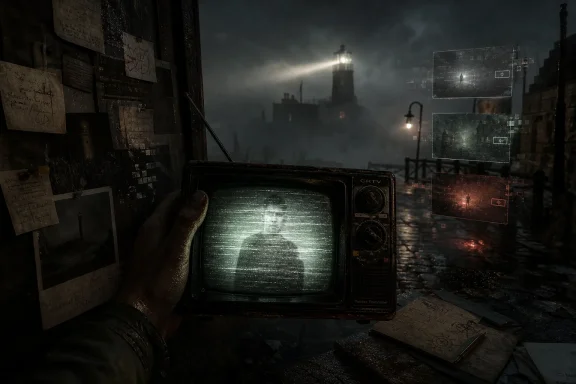
The Standard Edition also gets the pre-order cosmetics. Those bonuses alter the appearance of the CRTV, the pocket television device that appears to replace the classic radio as the player’s signal-bearing dread machine. For players who care about the game rather than launch-week decoration, the Standard Edition looks like the least compromised purchase.
There is a useful restraint here. Konami has not split off story chapters, puzzle content, or major gameplay systems into a higher-priced version. At least from the currently listed edition breakdown, the base game is the game.
The 48-hour early access window is the most consequential item. Horror games are unusually vulnerable to spoiler pressure because the unknown is part of the design. Once endings, monster reveals, puzzle solutions, and late-game twists flood YouTube thumbnails and social feeds, the experience changes for everyone who waits.
That makes early access more than a convenience. It becomes a kind of spoiler insurance. Players buying Deluxe are not only paying for cosmetics; they are paying to be in the room before the room starts talking.
There is a reasonable argument that this is cynical. Early access tied to premium editions can make the official release date feel slightly fictional, because the loudest players are already inside the game two days earlier. But it is also the direction the industry has chosen: publishers increasingly monetize the opening hours of attention, not just the software itself.
For Townfall, that strategy is especially potent. A first-person Silent Hill built around fragments, signals, and multiple endings is exactly the sort of game whose mysteries will be dissected immediately. Konami knows the first 48 hours are valuable because the audience has taught publishers that they are.
Still, the choice of object is telling. Silent Hill’s radio is one of the series’ most recognizable pieces of sensory design: static as warning, sound as dread, technology as a nervous system. Townfall’s CRTV updates that idea through analog video, asking players to tune unstable signals for threats, clues, and story fragments.
By making the CRTV the pre-order cosmetic object, Konami is implicitly saying the device is central. This is not a random charm on a backpack. It is likely the interface through which much of Townfall’s atmosphere and puzzle language will be delivered.
The Rusted style sounds tonally obvious: corrosion, decay, old electronics, a familiar horror palette. The Beach Edition is stranger, almost comically out of place, and that may be the point. Silent Hill has always had room for tonal dissonance, joke endings, and uncanny objects that feel silly until the game decides they are not.
Pre-order cosmetics are not worth buying a game early on their own. But because these bonuses attach to the CRTV, they function as a small preview of how much the new device may carry the game’s identity.
The split is familiar. Digital buyers get early access and convenience. Physical collectors get an object. Everyone gets nudged toward buying before reviews land.
The SteelBook also signals that Konami still sees Silent Hill as a shelf-worthy brand. That may sound quaint, but for horror fans it matters. This is a genre built around artifacts: tapes, photographs, letters, radios, televisions, locks, keys, and boxes that should probably stay closed.
A SteelBook will not change how Townfall plays, but it does align with the franchise’s material culture. Silent Hill has always been about haunted objects as much as haunted places. The retail collectible is marketing, yes, but it is marketing that understands the audience’s appetite for physical unease.
For U.S. players, the key caveat is availability. The SteelBook language is region- and retailer-specific, so buyers should not assume every physical pre-order everywhere includes it. The safest reading is that the standard digital bonuses are broad, while the SteelBook is a limited retail incentive.
The recommended spec jumps to a Ryzen 7 5700X or Intel i7-9700K, 32GB of RAM, and an RTX 3080 or Radeon RX 7800 XT. That target is high settings at 4K and 30 frames per second using balanced upscaling through DLSS, FSR, or TSR. Both tiers require DirectX 12 and 75GB of storage.
For WindowsForum readers, the Windows 11 requirement is the part to underline. Konami is not listing Windows 10 as supported in the published PC requirements. That does not guarantee the game will never run on Windows 10, but it does mean Windows 11 is the stated supported baseline.
The 4K recommended target is also modest in one sense and demanding in another. It aims at 30fps rather than 60fps, and it assumes upscaling. That tells PC players not to read “RTX 3080” as a brute-force native 4K promise.
The better interpretation is that Townfall is targeting dense atmosphere, post-processing, lighting, and environmental detail over high refresh-rate spectacle. That fits the genre, but it also means players on older midrange cards should be prepared to adjust expectations early.
This also changes the value of early access. A third-person action game can survive broad mechanical spoilers because the pleasure often sits in execution. A first-person psychological horror game is more exposed. If the audience learns too much too soon, the architecture of fear starts to weaken.
Konami’s own description emphasizes exploration, evasion, limited weapons, CRTV-guided signals, narrative puzzles, and multiple endings. That combination makes Townfall sound closer to a dread engine than a combat showcase, even though the listing mentions melee and firearms. The point appears to be tension management rather than empowerment.
The edition choice therefore depends on temperament. If you are the kind of player who wants to experience the first wave of theories, endings, and screenshots in real time, the Deluxe Edition has obvious appeal. If you are immune to launch noise or can stay offline for two days, the Standard Edition is the rational purchase.
This is the awkward truth behind modern horror marketing: publishers are not only selling content, they are selling protection from the internet’s metabolism.
That strategy has upside. For years, Silent Hill was more absence than franchise, a name kept alive by fan argument, remake rumors, and the long shadow of P.T. A steady release cadence turns the brand back into something active rather than archival.
The risk is dilution. Silent Hill works best when it feels particular: a personal nightmare made geographic. If the brand becomes a yearly content lane, the fog can become a logo rather than a threat.
Townfall may be the project that tests whether Konami can avoid that. Screen Burn Interactive, formerly No Code, has a track record with tense, systems-driven narrative horror and sci-fi unease. Observation and Stories Untold were not blockbuster templates; they were experiments in interface, perspective, and atmosphere.
That makes Townfall a useful bet. It lets Konami expand Silent Hill without asking every game to imitate Silent Hill 2. The editions and bonuses may be conventional, but the game underneath appears designed to stretch the franchise’s grammar.
Publishers are increasingly terrified of the calendar. A game can be strong and still suffer if it launches into a wall of better-funded, better-known, or simply louder competitors. Early access becomes a way to carve out a small private window before the pile-on begins.
For players, that creates a different problem. Buying everything at launch is expensive, and playing everything at launch is impossible. The edition breakdown should therefore be read less as a command to pre-order and more as a map of urgency.
If Townfall is your primary September game, the Deluxe Edition’s early access may feel worthwhile. If it is one of several games you intend to sample, the Standard Edition is the healthier choice. If you are waiting on performance impressions, especially on PC, patience remains the best edition.
This is where the industry’s launch-week psychology collides with the player’s backlog reality. Publishers want commitment before uncertainty. Players benefit from waiting until uncertainty clears.
Silent Hill: Townfall’s editions are not the nightmare; they are the industry around the nightmare, neatly divided into base access, cosmetic identity, collector bait, and paid proximity to release day. The more interesting story is that Konami now seems confident enough in Silent Hill to let a Scottish first-person spin-off carry a September launch, PC requirements, premium early access, and the expectations of a revived franchise. If Townfall can make its CRTV as iconic for a new generation as radio static was for the old one, the edition debate will fade quickly — and the real question will be how far Konami is willing to let Silent Hill wander next.
 Konami Turns a Small Horror Game Into a Platform Strategy
The headline detail is simple: Silent Hill: Townfall comes in two main digital editions. The Standard Edition includes the game, while the Deluxe Edition adds a bonus application and Simon’s alternate outfit. On PlayStation Store in the United States, the Standard Edition is listed at $49.99 and the Deluxe Edition at $59.99.That $10 difference is not enormous by modern premium-game standards, but it is doing familiar work. Konami is separating players who only want the story from players who want to be inside the launch moment. The Deluxe Edition’s 48-hour early access window turns a horror game into a calendar event, especially for streamers, lore hunters, and fans who do not want spoilers landing before they have even installed the game.
The platform story is just as important. Konami lists Townfall for PS5, Steam, and Epic Games Store, but there is no Xbox or Switch version in the current launch lineup. In practical terms, that makes PS5 the console home at release, while PC players are included from day one.
That arrangement fits the current Silent Hill revival. Silent Hill 2’s remake leaned on PlayStation and PC first, Silent Hill f broadened the series’ geography and tone, and Townfall now appears designed to prove the brand can support a smaller, stranger, first-person project without losing the commercial machinery of a major release.
The Standard Edition Is the Cleanest Way Into the Fog
The Standard Edition is the easy recommendation for most players. It contains Silent Hill: Townfall itself, which is the core proposition: a full-length, self-contained psychological horror game set on the Scottish island of St. Amelia in 1996. The protagonist, Simon Ordell, returns to the island to “put things right,” a phrase that practically arrives pre-soaked in Silent Hill guilt.This is not being sold as a mainline numbered sequel, and that matters. Townfall is part of the franchise, but it is also pitched as a standalone story with its own setting, tools, and perspective. That gives Konami room to invoke the Silent Hill mood without forcing every corridor to lead back to the same American town.
The Standard Edition also gets the pre-order cosmetics. Those bonuses alter the appearance of the CRTV, the pocket television device that appears to replace the classic radio as the player’s signal-bearing dread machine. For players who care about the game rather than launch-week decoration, the Standard Edition looks like the least compromised purchase.
There is a useful restraint here. Konami has not split off story chapters, puzzle content, or major gameplay systems into a higher-priced version. At least from the currently listed edition breakdown, the base game is the game.
The Deluxe Edition Sells Time, Not Just Trinkets
The Deluxe Edition is more revealing because its real product is not an outfit. It is priority access. The package includes the game, a bonus application, Simon’s alternate outfit, and — depending on storefront wording and region — the broader Digital Deluxe bundle of extras such as soundtrack and artbook material.The 48-hour early access window is the most consequential item. Horror games are unusually vulnerable to spoiler pressure because the unknown is part of the design. Once endings, monster reveals, puzzle solutions, and late-game twists flood YouTube thumbnails and social feeds, the experience changes for everyone who waits.
That makes early access more than a convenience. It becomes a kind of spoiler insurance. Players buying Deluxe are not only paying for cosmetics; they are paying to be in the room before the room starts talking.
There is a reasonable argument that this is cynical. Early access tied to premium editions can make the official release date feel slightly fictional, because the loudest players are already inside the game two days earlier. But it is also the direction the industry has chosen: publishers increasingly monetize the opening hours of attention, not just the software itself.
For Townfall, that strategy is especially potent. A first-person Silent Hill built around fragments, signals, and multiple endings is exactly the sort of game whose mysteries will be dissected immediately. Konami knows the first 48 hours are valuable because the audience has taught publishers that they are.
The Pre-Order Bonuses Are Small, But the CRTV Is Not
The listed pre-order bonuses are CRTV Style: Rusted and CRTV Style: Beach Edition. These are cosmetics for the CRTV’s appearance, not new weapons, levels, or apparent story branches. That should keep expectations grounded.Still, the choice of object is telling. Silent Hill’s radio is one of the series’ most recognizable pieces of sensory design: static as warning, sound as dread, technology as a nervous system. Townfall’s CRTV updates that idea through analog video, asking players to tune unstable signals for threats, clues, and story fragments.
By making the CRTV the pre-order cosmetic object, Konami is implicitly saying the device is central. This is not a random charm on a backpack. It is likely the interface through which much of Townfall’s atmosphere and puzzle language will be delivered.
The Rusted style sounds tonally obvious: corrosion, decay, old electronics, a familiar horror palette. The Beach Edition is stranger, almost comically out of place, and that may be the point. Silent Hill has always had room for tonal dissonance, joke endings, and uncanny objects that feel silly until the game decides they are not.
Pre-order cosmetics are not worth buying a game early on their own. But because these bonuses attach to the CRTV, they function as a small preview of how much the new device may carry the game’s identity.
The SteelBook Is the Old Retail Game Refusing to Die
Konami’s physical pre-order incentive complicates the picture. In selected EMEA markets, pre-purchasing the physical edition through specific retailers can include an exclusive Silent Hill: Townfall SteelBook while supplies last. That is a very traditional collector’s hook attached to a game whose Deluxe Edition is digital-first.The split is familiar. Digital buyers get early access and convenience. Physical collectors get an object. Everyone gets nudged toward buying before reviews land.
The SteelBook also signals that Konami still sees Silent Hill as a shelf-worthy brand. That may sound quaint, but for horror fans it matters. This is a genre built around artifacts: tapes, photographs, letters, radios, televisions, locks, keys, and boxes that should probably stay closed.
A SteelBook will not change how Townfall plays, but it does align with the franchise’s material culture. Silent Hill has always been about haunted objects as much as haunted places. The retail collectible is marketing, yes, but it is marketing that understands the audience’s appetite for physical unease.
For U.S. players, the key caveat is availability. The SteelBook language is region- and retailer-specific, so buyers should not assume every physical pre-order everywhere includes it. The safest reading is that the standard digital bonuses are broad, while the SteelBook is a limited retail incentive.
PC Players Get In on Day One, But the Requirements Draw a Line
Townfall’s PC requirements are not absurd, but they are not lightweight. The minimum spec calls for Windows 11 64-bit, a Ryzen 5 3600 or Intel i7-8700K, 16GB of RAM, and either an RTX 2060 Super or Radeon RX 6600. That target is for low settings at 1080p and 30 frames per second.The recommended spec jumps to a Ryzen 7 5700X or Intel i7-9700K, 32GB of RAM, and an RTX 3080 or Radeon RX 7800 XT. That target is high settings at 4K and 30 frames per second using balanced upscaling through DLSS, FSR, or TSR. Both tiers require DirectX 12 and 75GB of storage.
For WindowsForum readers, the Windows 11 requirement is the part to underline. Konami is not listing Windows 10 as supported in the published PC requirements. That does not guarantee the game will never run on Windows 10, but it does mean Windows 11 is the stated supported baseline.
The 4K recommended target is also modest in one sense and demanding in another. It aims at 30fps rather than 60fps, and it assumes upscaling. That tells PC players not to read “RTX 3080” as a brute-force native 4K promise.
The better interpretation is that Townfall is targeting dense atmosphere, post-processing, lighting, and environmental detail over high refresh-rate spectacle. That fits the genre, but it also means players on older midrange cards should be prepared to adjust expectations early.
First-Person Silent Hill Changes the Edition Math
Townfall is billed as the first full-length Silent Hill game presented in first person. That is not just a camera choice. It changes how the game can scare, how it can hide information, and how much it can rely on spatial intimacy rather than fixed framing or over-the-shoulder combat.This also changes the value of early access. A third-person action game can survive broad mechanical spoilers because the pleasure often sits in execution. A first-person psychological horror game is more exposed. If the audience learns too much too soon, the architecture of fear starts to weaken.
Konami’s own description emphasizes exploration, evasion, limited weapons, CRTV-guided signals, narrative puzzles, and multiple endings. That combination makes Townfall sound closer to a dread engine than a combat showcase, even though the listing mentions melee and firearms. The point appears to be tension management rather than empowerment.
The edition choice therefore depends on temperament. If you are the kind of player who wants to experience the first wave of theories, endings, and screenshots in real time, the Deluxe Edition has obvious appeal. If you are immune to launch noise or can stay offline for two days, the Standard Edition is the rational purchase.
This is the awkward truth behind modern horror marketing: publishers are not only selling content, they are selling protection from the internet’s metabolism.
Silent Hill’s New Annual Rhythm Comes Into Focus
Konami’s release timing is not accidental. Silent Hill 2 arrived in 2024, Silent Hill f followed in 2025, and Townfall is now dated for September 24, 2026. The company is clearly trying to make autumn feel like Silent Hill season again.That strategy has upside. For years, Silent Hill was more absence than franchise, a name kept alive by fan argument, remake rumors, and the long shadow of P.T. A steady release cadence turns the brand back into something active rather than archival.
The risk is dilution. Silent Hill works best when it feels particular: a personal nightmare made geographic. If the brand becomes a yearly content lane, the fog can become a logo rather than a threat.
Townfall may be the project that tests whether Konami can avoid that. Screen Burn Interactive, formerly No Code, has a track record with tense, systems-driven narrative horror and sci-fi unease. Observation and Stories Untold were not blockbuster templates; they were experiments in interface, perspective, and atmosphere.
That makes Townfall a useful bet. It lets Konami expand Silent Hill without asking every game to imitate Silent Hill 2. The editions and bonuses may be conventional, but the game underneath appears designed to stretch the franchise’s grammar.
September Is Becoming a Horror of Its Own
The release date lands in what is shaping up to be a crowded September 2026. Townfall is not arriving in a vacuum; it is entering a month already packed with major games and attention-hungry releases. That makes the pre-order and Deluxe strategy easier to understand.Publishers are increasingly terrified of the calendar. A game can be strong and still suffer if it launches into a wall of better-funded, better-known, or simply louder competitors. Early access becomes a way to carve out a small private window before the pile-on begins.
For players, that creates a different problem. Buying everything at launch is expensive, and playing everything at launch is impossible. The edition breakdown should therefore be read less as a command to pre-order and more as a map of urgency.
If Townfall is your primary September game, the Deluxe Edition’s early access may feel worthwhile. If it is one of several games you intend to sample, the Standard Edition is the healthier choice. If you are waiting on performance impressions, especially on PC, patience remains the best edition.
This is where the industry’s launch-week psychology collides with the player’s backlog reality. Publishers want commitment before uncertainty. Players benefit from waiting until uncertainty clears.
The Fog Clears Around the Purchase Decision
The practical answer is mercifully simple, even if the marketing around it is not. Townfall’s editions separate cleanly between base-game access and launch-week extras, with no sign that essential story content is locked behind the Deluxe tier.- The Standard Edition includes Silent Hill: Townfall and is the best fit for players who only want the complete game.
- The Deluxe Edition adds bonus material, Simon’s alternate outfit, and the most important perk: 48 hours of early access.
- Pre-ordering grants CRTV Style: Rusted and CRTV Style: Beach Edition, which are cosmetic skins for the game’s pocket television device.
- PS5 is the only listed console platform at launch, while PC players can buy through Steam or Epic Games Store.
- PC players should treat Windows 11, 16GB of RAM, an RTX 2060 Super-class GPU, and SSD-class expectations as the practical entry point.
- Physical collectors should check retailer and region details carefully, because the SteelBook incentive is limited and not universal.
Silent Hill: Townfall’s editions are not the nightmare; they are the industry around the nightmare, neatly divided into base access, cosmetic identity, collector bait, and paid proximity to release day. The more interesting story is that Konami now seems confident enough in Silent Hill to let a Scottish first-person spin-off carry a September launch, PC requirements, premium early access, and the expectations of a revived franchise. If Townfall can make its CRTV as iconic for a new generation as radio static was for the old one, the edition debate will fade quickly — and the real question will be how far Konami is willing to let Silent Hill wander next.
References
- Primary source: Dot Esports
Published: 2026-06-06T12:10:35.754415
All Silent Hill Townfall editions and pre-order bonuses explained
Silent Hill: Townfall arrives September 24, 2026. Have a look at its various editions, what they offer, as well as pre-order items.dotesports.com - Related coverage: gamesradar.com
Silent Hill: Townfall – Everything you need to know about the next Silent Hill game | GamesRadar+
Silent Hill: Townfall is officially coming out this year, and we've gathered everything you need to know before it launches.www.gamesradar.com - Related coverage: blog.playstation.com
Silent Hill: Townfall launches September 24 on PS5 – PlayStation.Blog
More on the horror’s narrative driven puzzles, characters, and PS5 features as pre-orders go live.blog.playstation.com - Related coverage: playstation.com
Silent Hill: Townfall - PS5 Games | PlayStation (US)
Buy Silent Hill: Townfall on PlayStation Store. A full-length, self-contained psychological horror set against the cold, isolated backdrop of Scotland, 1996.www.playstation.com
- Related coverage: silent-hill-townfall.wiki
Silent Hill Townfall Wiki - Release, CRTV & Endings
Silent Hill Townfall Wiki covers release date, platforms, editions, St. Amelia story notes, CRTV mechanics, combat, puzzles, and endings.www.silent-hill-townfall.wiki - Related coverage: blog.ja.playstation.com
PS5® 『SILENT HILL: Townfall』9月24日(木)発売決定! 本日予約受付開始 – PlayStation.Blog 日本語
新キャラクターや謎解き要素、PS5ならではの体験を紹介blog.ja.playstation.com
- Related coverage: konami.com
SILENT HILL: Townfall Official Website
www.konami.com
- Related coverage: blog.latam.playstation.com
Silent Hill: Townfall llega a PS5 el 24 de septiembre – PlayStation.Blog LATAM
Descubre más sobre sus acertijos narrativos, personajes y funciones para PS5 ahora que las reservas están disponibles.blog.latam.playstation.com - Related coverage: store.steampowered.com
Förbeställ SILENT HILL: Townfall på Steam
Simon Ordell återvänder till ett ösamhälle för att ”ställa saker till rätta” och hamnar i en värld där han tvingas smyga, slåss och lösa förbryllande gåtor som långsamt avslöjar sanningen om St. Amelia.store.steampowered.com
- Related coverage: monstervine.com
Silent Hill: Townfall Launches September 24 on PS5, Pre-Orders Now Live - MonsterVine
Silent Hill: Townfall launches September 24 on PS5 with narrative-driven puzzles, DualSense features, new characters, and Standard and Deluxe editions.monstervine.com - Related coverage: techradar.com
Silent Hill: Townfall looks set to be a PS5 console exclusive — Xbox and Switch 2 are absent from official listings | TechRadar
Silent Hill: Townfall looks like it won't be coming to Xbox or Switch 2 — not at launch at the very least.www.techradar.com - Related coverage: 3djuegos.com
Silent Hill Townfall: Estos son los requisitos mínimos y recomendados - PC
Silent Hill: Townfall, descubre los requisitos mínimos y recomendados del juego. Este es el PC que necesitas para jugar a Silent Hill Townfall.www.3djuegos.com - Related coverage: instant-gaming.com
Kup Silent Hill: Townfall - PC (Steam) - Europe & USA & Canada
Pre-order Silent Hill: Townfall - PC (Steam) taniej w Instant Gaming, miejscu, w którym możesz kupić swoje gry w najlepszej cenie!www.instant-gaming.com
- Related coverage: vandal.elespanol.com
Silent Hill Townfall: Requisitos mínimos y recomendados en PC - Vandal
Estos son los requisitos mínimos y recomendados para jugar a Silent Hill Townfall en PC. Consulta aquí las especificaciones técnicas del sistema para saber si podrás mover el juego en tu ordenador. vandal.elespanol.com
