

Sony’s PlayStation leadership has now signaled in June 2026 that major first-party single-player games will remain PlayStation-first and will not launch on PC alongside PS5, while live-service titles will continue to target both platforms from day one. That is not merely a scheduling note for console fans. It is a strategic retreat from the PC-port ambiguity that defined much of the PS5 era. More importantly for Windows gamers, it reasserts the console as Sony’s primary business unit at the exact moment the industry had begun treating platform walls as negotiable.
The move is easy to frame as a console-war throwback, but that undersells what is happening. Sony is not abandoning PC so much as sorting its catalog into two economic categories: games that make the PlayStation box more valuable, and games that need the largest possible online population to survive. In that split, the PC is no longer a coequal destination for prestige PlayStation storytelling. It is once again the overflow market, the live-service market, and perhaps the someday market.
For years, Sony’s PC strategy worked because it was never quite a promise. Horizon Zero Dawn, God of War, Days Gone, Marvel’s Spider-Man, The Last of Us Part I, Returnal, Ratchet & Clank: Rift Apart, and other once-console-bound titles made their way to Windows, but usually after a delay long enough to preserve the PlayStation version’s launch moment. The company could claim it was broadening its audience without fully conceding that a PlayStation console was optional.
That compromise became harder to maintain as the windows shortened and the expectations changed. PC players began to see PlayStation releases less as miracles and more as late arrivals. Console buyers, meanwhile, began to wonder whether patience was becoming the cheaper platform strategy.
Hideaki Nishino’s reported framing, and the surrounding reporting from the last several months, suggests Sony has decided that ambiguity costs more than it earns. A first-party single-player game is no longer just software revenue. It is a reason to buy into PlayStation hardware, PlayStation subscriptions, PlayStation accessories, and the broader habit of making Sony’s box the place where certain cultural events happen first.
This is the oldest console logic in the business, but Sony is applying it after having spent years teaching PC users to expect otherwise. That is why the statement lands with more force than a routine platform policy. It is not the invention of a wall. It is the reinstallation of one.
At first, the timing was perfect. The PC audience got polished, complete versions of games that had already been heavily marketed and culturally absorbed. Sony got to monetize old work without undermining the core launch cycle. For Microsoft-watchers, it even looked like Sony was cautiously adopting the logic Xbox had embraced more fully: software should travel where players are.
But the more successful that logic became, the more it challenged PlayStation’s basic identity. If every flagship single-player game is understood to be a timed console exclusive, then the PS5 starts to look less like the only place to play and more like the impatient place to play. That distinction matters when hardware is expensive, PC handhelds are improving, and players are increasingly comfortable waiting for patches, discounts, and complete editions.
The issue was not just whether Sony could sell a few million more copies on PC. It was whether the expectation of those PC copies weakened the launch-day gravity of the console version. Once a platform holder starts training customers to wait, it can be difficult to retrain them to care.
That explains why Sony can keep single-player flagships locked to PS5 while still treating PC as essential for games built around recurring engagement. Helldivers 2 demonstrated the upside of a broad PC-and-console launch, becoming one of Sony’s clearest arguments for simultaneous Windows support. Bungie’s Marathon, Marvel Tokon: Fighting Souls, and other multiplayer-oriented projects fit the same logic: they need scale immediately, not years later.
This split also reveals how Sony views the PC audience. Windows players are valuable when they expand an online community, stabilize matchmaking, and support ongoing monetization. They are less valuable, at least in Sony’s current calculation, if their presence undermines the hardware premium attached to a Naughty Dog, Santa Monica Studio, Sucker Punch, or Insomniac-style release.
That is a blunt distinction, and PC players will understandably dislike it. But from Sony’s side of the ledger, it is internally coherent. The company is not asking whether PC revenue exists. It is asking whether that revenue is worth diluting the PS5’s clearest reason to exist.
That changes the buying calculus for PC-first players. During the last few years, it was reasonable to skip the PS5 and wait for a technically superior PC version. That version often brought higher frame rates, ultrawide support, improved image quality, mod potential, and the convenience of consolidating a library on Steam. The wait could be frustrating, but it was increasingly plausible.
Now the wait may no longer have an end date. A player who wants Ghost of Yotei at launch should expect to need a PS5. A player who wants whatever comes next from Sony’s flagship studios should not plan around a guaranteed Windows version. The correct mental model is no longer “late but likely.” It is “case by case, and possibly never.”
That is a major shift for the PC ecosystem because PlayStation ports had become part of the rhythm of premium Windows gaming. They were not just console leftovers. They were technically demanding showcase releases, benchmark fodder, and a meaningful part of the high-end PC value proposition. Losing that pipeline narrows the cultural overlap between the two platforms.
Microsoft’s approach has benefits. It makes Windows a first-class gaming platform, expands Xbox’s software reach, and reduces the pain of hardware scarcity or console churn. But it has also made the Xbox console’s role harder to explain. If the games are on PC and increasingly on rival consoles, then the box must justify itself through price, convenience, services, backward compatibility, or living-room simplicity rather than exclusivity.
Sony’s renewed emphasis on PS5-only single-player games is a direct answer to that problem. It says the console still matters because there are experiences that live there first and perhaps only there. It also gives retailers, marketers, and fans a cleaner story: buy the hardware if you want the flagship games.
That does not make Sony’s choice morally superior or consumer-friendly. Exclusivity is good for platform differentiation and bad for access. But commercially, it is a sharper message than “maybe later on PC.” In a market where hardware margins, subscription growth, and development costs are all under pressure, clarity has value.
That is why Sony’s single-player catalog matters beyond software sales. These games create identity. They generate trailers that close showcases, screenshots that sell televisions, and launch windows that make lapsed players pay attention. They are the glossy tip of a much larger commercial spear.
PC ports complicate that role. A late port can extend a franchise, but an expected port can flatten urgency. If a consumer believes that the best version will eventually arrive on a platform they already own, the console becomes a convenience purchase rather than a necessity. Sony seems to have decided that this is too dangerous, especially as the PS5 moves through the later phase of its lifecycle and attention turns toward whatever comes next.
The timing is important. Late-generation exclusives can keep hardware alive, move upgraded systems, and maintain ecosystem commitment before the next transition. They can also set expectations for the next console. Sony is not only defending the PS5 here. It is preparing the argument for the PS6.
Sony also risks leaving money on the table. A successful PC port can sell to players who were never going to buy a PlayStation console. It can revive interest in a franchise before a sequel. It can create streaming and modding communities that extend the life of a game well beyond its console launch window.
The company may also face a messaging problem. After years of ports, PC players have a reasonable basis for feeling strung along. Sony never promised everything forever, but corporate strategy is not judged only by formal promises. It is judged by patterns, and the pattern had been moving toward more PC support, not less.
There is also the developer-side question. PC versions force studios to think about scalability, input flexibility, and broader technical robustness. They can be painful to produce, especially when outsourced poorly or launched too early, but they also push games beyond a single hardware profile. A retreat from PC may simplify launch planning, but it could reduce the long-tail technical ambition of some projects.
The Last of Us Part I became an infamous example of how quickly a prestige console release can lose its shine on PC if performance, shader compilation, stability, or hardware scaling disappoint. Even when later patches improve the situation, the launch narrative can calcify. PC players remember bad first impressions, especially when a publisher arrives late and charges premium prices.
Sony also experimented with account-linking requirements and platform policies that were received unevenly across the PC community. Helldivers 2 showed the upside of PC scale, but the backlash over PlayStation Network account requirements showed the danger of imposing console-platform assumptions on a global Windows audience. PC is not just PlayStation without the box; it is a different culture with different expectations about access, ownership, and interoperability.
Against that backdrop, a retreat looks less surprising. If PC ports risk brand damage when they go poorly, and if successful ports train customers to wait, Sony’s calculus becomes harsher. The company may have concluded that PC is worth the complexity for multiplayer scale, but not for every prestige single-player release.
That skepticism is justified. Strategies change when leadership changes, when hardware misses targets, when development budgets balloon, or when a title underperforms. A game that is “not planned” for PC in 2026 can become a PC release in 2029 if the economics change. Platform holders rarely benefit from binding themselves forever.
So the safest reading is not that no PlayStation single-player game will ever touch Windows again. It is that Sony no longer wants PC availability to be assumed, immediate, or central to the launch strategy. The default has shifted back to PlayStation hardware, and any PC version must now justify itself as an exception.
That distinction matters. It gives Sony room to port older games later without admitting defeat. It gives the company room to treat certain franchises differently. It also gives the marketing department the clarity it needs in the near term: if you care about the next big PlayStation single-player release, buy the PlayStation.
But the platform-holder view is colder. Sony is not trying to maximize convenience across the entire gaming market. It is trying to maximize the value of the PlayStation ecosystem. If exclusives help sell consoles, retain users, and protect the premium aura of first-party releases, then the company will accept criticism from players outside the wall.
This is where the difference between Sony and Microsoft becomes stark. Microsoft has increasingly treated Windows and Xbox as overlapping expressions of the same software business. Sony still treats the console as the home base. PC is useful, but it is not home.
The result is a more coherent PlayStation, even if it is a less generous one. The PS5 gets a sharper identity. Windows gets fewer guaranteed arrivals. The industry gets another reminder that the open-platform dream always depends on whether the closed-platform owner sees more money in opening the gate.
That puts pressure on the upcoming PlayStation lineup. Ghost of Yotei, Saros, future Insomniac projects, and whatever Sony’s other internal studios are preparing now carry more strategic weight than they would in a fully multiplatform world. They must justify not only their own development costs but also the broader argument that PlayStation hardware remains necessary.
There is also a portfolio-balance issue. Sony spent heavily on live-service ambitions in recent years, only to encounter the same brutal reality that has humbled much of the industry: ongoing multiplayer hits are rare, expensive, and culturally unpredictable. If the company is now re-centering single-player exclusives while still launching service games on PC, it needs both halves of the plan to function.
The risk is asymmetry. A failed live-service game burns money in public. A delayed or underwhelming single-player exclusive weakens the console’s differentiator. Sony is choosing a cleaner strategy, but not an easier one.
It may not be gone forever, but it is no longer dependable enough to guide purchasing decisions. If a PlayStation first-party single-player game is essential to you, the PS5 is the safe path. If you refuse to buy console hardware, you should assume you may miss it entirely rather than merely play it late.
That does not mean the PC is losing relevance. Quite the opposite: Sony’s live-service exception confirms that Windows is too important to ignore when scale matters. PC remains central to multiplayer growth, creator communities, esports-adjacent visibility, and long-tail revenue. But that is a different role than being the eventual home for every cinematic PlayStation epic.
The distinction will irritate players because it feels selective. Sony wants PC scale when PC scale helps Sony. It is less interested in PC access when PC access weakens the PlayStation proposition. That may be frustrating, but it is also the clearest description of the strategy.
These are not academic questions. Modern publishing is full of hybrid arrangements. Sony owns Bungie, but Bungie’s culture and business are deeply multiplatform. Sony can publish external projects without owning the developer. A single-player game can have online features, social hooks, or post-launch expansions. A live-service game can have narrative content. The clean categories will get messier in practice.
That is why Nishino’s remarks matter less as legal doctrine than as strategic posture. The posture is that PlayStation hardware comes first for internally developed single-player prestige games. Everything else will be judged by business logic.
Players and journalists will test that posture every time a major Sony trailer appears. The closing platform card at the end of a showcase will now carry more drama than it did a year ago. “PS5 only” will feel newly meaningful again.
For administrators, power users, and PC builders, the story is not just about one entertainment company’s release calendar. It is about the limits of platform convergence. Windows can be the biggest tent in gaming and still be denied certain first-party console experiences. Technical capability does not guarantee business access.
There is a preservation angle, too. PC releases tend to age better because they can be patched, modded, reconfigured, and carried across hardware generations. Console exclusivity concentrates control in the hands of the platform owner. That can produce a polished, unified experience in the present, but it also gives Sony more power over how and when those games survive beyond the PS5 era.
This is the trade: stronger platform identity now, less openness later. Sony appears willing to make it.
That was always only partly true. Hardware still shapes revenue, storefront control, user data, performance targets, and brand loyalty. A console is not just a weak PC under a television. It is a commercial environment where the platform holder sets the rules and collects the tolls.
Sony’s renewed exclusivity push is a reminder that the old model still has power when the content is strong enough. The company is not rejecting the modern industry so much as using modern segmentation to revive an older bargain. Multiplayer goes wide. Prestige goes narrow. PC gets the games that need PC; PlayStation keeps the games that sell PlayStation.
That may be the defining platform compromise of the next few years. Not total exclusivity, not total openness, but selective openness designed to protect the most valuable walls.
Sony’s message is now clear enough for anyone building a gaming plan around Windows: PlayStation’s biggest single-player stories are no longer reliable future PC games, they are hardware arguments. That may frustrate players who thought the industry was moving permanently toward openness, but it also clarifies the next phase of the platform fight. Sony is betting that the future still has room for a box you buy because there are games you cannot get anywhere else, and the next few years will show whether players still reward that bargain.
The move is easy to frame as a console-war throwback, but that undersells what is happening. Sony is not abandoning PC so much as sorting its catalog into two economic categories: games that make the PlayStation box more valuable, and games that need the largest possible online population to survive. In that split, the PC is no longer a coequal destination for prestige PlayStation storytelling. It is once again the overflow market, the live-service market, and perhaps the someday market.
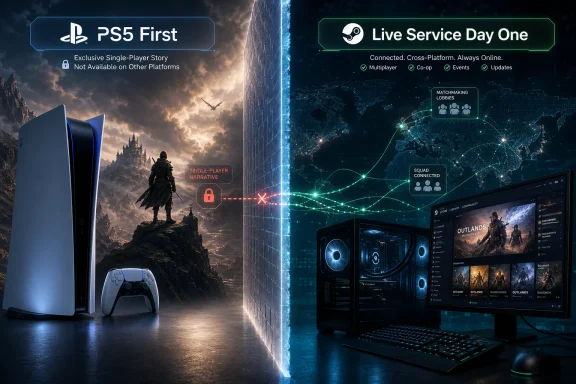 Sony Rediscovers the Value of Saying No
For years, Sony’s PC strategy worked because it was never quite a promise. Horizon Zero Dawn, God of War, Days Gone, Marvel’s Spider-Man, The Last of Us Part I, Returnal, Ratchet & Clank: Rift Apart, and other once-console-bound titles made their way to Windows, but usually after a delay long enough to preserve the PlayStation version’s launch moment. The company could claim it was broadening its audience without fully conceding that a PlayStation console was optional.That compromise became harder to maintain as the windows shortened and the expectations changed. PC players began to see PlayStation releases less as miracles and more as late arrivals. Console buyers, meanwhile, began to wonder whether patience was becoming the cheaper platform strategy.
Hideaki Nishino’s reported framing, and the surrounding reporting from the last several months, suggests Sony has decided that ambiguity costs more than it earns. A first-party single-player game is no longer just software revenue. It is a reason to buy into PlayStation hardware, PlayStation subscriptions, PlayStation accessories, and the broader habit of making Sony’s box the place where certain cultural events happen first.
This is the oldest console logic in the business, but Sony is applying it after having spent years teaching PC users to expect otherwise. That is why the statement lands with more force than a routine platform policy. It is not the invention of a wall. It is the reinstallation of one.
The PC Port Era Was a Success Until It Became a Threat
Sony’s move onto Windows was not irrational, and it was not a failure in any simple sense. The PS4 generation left the company with a deep catalog of acclaimed single-player games that had already done their console-selling work. Putting them on Steam and the Epic Games Store opened a second revenue stream, extended franchise awareness, and gave Windows players a taste of Sony’s production values.At first, the timing was perfect. The PC audience got polished, complete versions of games that had already been heavily marketed and culturally absorbed. Sony got to monetize old work without undermining the core launch cycle. For Microsoft-watchers, it even looked like Sony was cautiously adopting the logic Xbox had embraced more fully: software should travel where players are.
But the more successful that logic became, the more it challenged PlayStation’s basic identity. If every flagship single-player game is understood to be a timed console exclusive, then the PS5 starts to look less like the only place to play and more like the impatient place to play. That distinction matters when hardware is expensive, PC handhelds are improving, and players are increasingly comfortable waiting for patches, discounts, and complete editions.
The issue was not just whether Sony could sell a few million more copies on PC. It was whether the expectation of those PC copies weakened the launch-day gravity of the console version. Once a platform holder starts training customers to wait, it can be difficult to retrain them to care.
Live-Service Games Get the Passport Prestige Games Lose
The exception for live-service games is not a loophole; it is the strategy. Sony is effectively acknowledging that different game designs require different platform economics. A story-driven single-player release can thrive behind a wall because scarcity makes the hardware more attractive. A multiplayer service game, by contrast, can die behind that same wall because empty matchmaking lobbies do not sell ecosystems.That explains why Sony can keep single-player flagships locked to PS5 while still treating PC as essential for games built around recurring engagement. Helldivers 2 demonstrated the upside of a broad PC-and-console launch, becoming one of Sony’s clearest arguments for simultaneous Windows support. Bungie’s Marathon, Marvel Tokon: Fighting Souls, and other multiplayer-oriented projects fit the same logic: they need scale immediately, not years later.
This split also reveals how Sony views the PC audience. Windows players are valuable when they expand an online community, stabilize matchmaking, and support ongoing monetization. They are less valuable, at least in Sony’s current calculation, if their presence undermines the hardware premium attached to a Naughty Dog, Santa Monica Studio, Sucker Punch, or Insomniac-style release.
That is a blunt distinction, and PC players will understandably dislike it. But from Sony’s side of the ledger, it is internally coherent. The company is not asking whether PC revenue exists. It is asking whether that revenue is worth diluting the PS5’s clearest reason to exist.
Windows Gamers Are Back in the Waiting Room
For WindowsForum readers, the practical consequence is simple: the era of assuming every PlayStation single-player blockbuster will eventually arrive on PC is over, or at least no longer safe to assume. Some already-announced ports and edge cases may still happen. Older catalog releases may continue if Sony sees low risk and easy money. But the new posture makes day-one PC access for first-party single-player PlayStation games a nonstarter.That changes the buying calculus for PC-first players. During the last few years, it was reasonable to skip the PS5 and wait for a technically superior PC version. That version often brought higher frame rates, ultrawide support, improved image quality, mod potential, and the convenience of consolidating a library on Steam. The wait could be frustrating, but it was increasingly plausible.
Now the wait may no longer have an end date. A player who wants Ghost of Yotei at launch should expect to need a PS5. A player who wants whatever comes next from Sony’s flagship studios should not plan around a guaranteed Windows version. The correct mental model is no longer “late but likely.” It is “case by case, and possibly never.”
That is a major shift for the PC ecosystem because PlayStation ports had become part of the rhythm of premium Windows gaming. They were not just console leftovers. They were technically demanding showcase releases, benchmark fodder, and a meaningful part of the high-end PC value proposition. Losing that pipeline narrows the cultural overlap between the two platforms.
Sony Is Also Responding to Xbox, Even When It Pretends Not To
No platform strategy exists in a vacuum. Microsoft’s long march toward PC-first, Game Pass-driven, and increasingly multiplatform publishing changed the competitive frame. Xbox spent years telling players that the console was one access point among many, not the sacred center of the business. Sony watched that experiment and appears to have drawn the opposite lesson.Microsoft’s approach has benefits. It makes Windows a first-class gaming platform, expands Xbox’s software reach, and reduces the pain of hardware scarcity or console churn. But it has also made the Xbox console’s role harder to explain. If the games are on PC and increasingly on rival consoles, then the box must justify itself through price, convenience, services, backward compatibility, or living-room simplicity rather than exclusivity.
Sony’s renewed emphasis on PS5-only single-player games is a direct answer to that problem. It says the console still matters because there are experiences that live there first and perhaps only there. It also gives retailers, marketers, and fans a cleaner story: buy the hardware if you want the flagship games.
That does not make Sony’s choice morally superior or consumer-friendly. Exclusivity is good for platform differentiation and bad for access. But commercially, it is a sharper message than “maybe later on PC.” In a market where hardware margins, subscription growth, and development costs are all under pressure, clarity has value.
The Prestige Game Becomes the Hardware Subsidy
The uncomfortable truth is that single-player blockbusters are now doing more than entertaining players. They are carrying the emotional subsidy for expensive hardware. A $500 console, a premium controller, a subscription tier, an expanding digital library, and possibly a mid-generation Pro model all become easier to justify when the platform has games that cannot be replicated elsewhere.That is why Sony’s single-player catalog matters beyond software sales. These games create identity. They generate trailers that close showcases, screenshots that sell televisions, and launch windows that make lapsed players pay attention. They are the glossy tip of a much larger commercial spear.
PC ports complicate that role. A late port can extend a franchise, but an expected port can flatten urgency. If a consumer believes that the best version will eventually arrive on a platform they already own, the console becomes a convenience purchase rather than a necessity. Sony seems to have decided that this is too dangerous, especially as the PS5 moves through the later phase of its lifecycle and attention turns toward whatever comes next.
The timing is important. Late-generation exclusives can keep hardware alive, move upgraded systems, and maintain ecosystem commitment before the next transition. They can also set expectations for the next console. Sony is not only defending the PS5 here. It is preparing the argument for the PS6.
The Reversal Carries Real Costs
There is a temptation to see this as Sony simply returning to what worked. That is partly true, but the market is not frozen in 2018. PC gaming is larger, more visible, and more culturally central than it was during the PS4’s peak. Steam Deck-style handhelds, Windows handhelds, cloud saves, cross-platform accounts, and Discord-centered communities have made platform boundaries feel more artificial to many players.Sony also risks leaving money on the table. A successful PC port can sell to players who were never going to buy a PlayStation console. It can revive interest in a franchise before a sequel. It can create streaming and modding communities that extend the life of a game well beyond its console launch window.
The company may also face a messaging problem. After years of ports, PC players have a reasonable basis for feeling strung along. Sony never promised everything forever, but corporate strategy is not judged only by formal promises. It is judged by patterns, and the pattern had been moving toward more PC support, not less.
There is also the developer-side question. PC versions force studios to think about scalability, input flexibility, and broader technical robustness. They can be painful to produce, especially when outsourced poorly or launched too early, but they also push games beyond a single hardware profile. A retreat from PC may simplify launch planning, but it could reduce the long-tail technical ambition of some projects.
The Last Few Ports Made the Old Strategy Harder to Defend
Sony’s PC push had moments of brilliance and moments of avoidable self-harm. God of War and Marvel’s Spider-Man Remastered arrived on PC with strong reputations and gave Windows players excellent versions of games that had already defined the PlayStation brand. But other releases reminded everyone that PC is not just another storefront. It is a sprawling hardware ecosystem with unforgiving expectations.The Last of Us Part I became an infamous example of how quickly a prestige console release can lose its shine on PC if performance, shader compilation, stability, or hardware scaling disappoint. Even when later patches improve the situation, the launch narrative can calcify. PC players remember bad first impressions, especially when a publisher arrives late and charges premium prices.
Sony also experimented with account-linking requirements and platform policies that were received unevenly across the PC community. Helldivers 2 showed the upside of PC scale, but the backlash over PlayStation Network account requirements showed the danger of imposing console-platform assumptions on a global Windows audience. PC is not just PlayStation without the box; it is a different culture with different expectations about access, ownership, and interoperability.
Against that backdrop, a retreat looks less surprising. If PC ports risk brand damage when they go poorly, and if successful ports train customers to wait, Sony’s calculus becomes harsher. The company may have concluded that PC is worth the complexity for multiplayer scale, but not for every prestige single-player release.
The Word “Exclusive” Now Needs an Asterisk
The challenge is that “exclusive” is no longer a clean word. It can mean exclusive at launch, exclusive for a year, exclusive to console but not PC, exclusive to a subscription tier, exclusive until the next remaster, or exclusive until a spreadsheet changes. Sony’s new position sounds firmer than its recent past, but the industry has taught players to be skeptical of permanent language.That skepticism is justified. Strategies change when leadership changes, when hardware misses targets, when development budgets balloon, or when a title underperforms. A game that is “not planned” for PC in 2026 can become a PC release in 2029 if the economics change. Platform holders rarely benefit from binding themselves forever.
So the safest reading is not that no PlayStation single-player game will ever touch Windows again. It is that Sony no longer wants PC availability to be assumed, immediate, or central to the launch strategy. The default has shifted back to PlayStation hardware, and any PC version must now justify itself as an exception.
That distinction matters. It gives Sony room to port older games later without admitting defeat. It gives the company room to treat certain franchises differently. It also gives the marketing department the clarity it needs in the near term: if you care about the next big PlayStation single-player release, buy the PlayStation.
Players Lose Convenience, But Sony Gains a Cleaner Story
From a consumer standpoint, this is a step backward. More platforms mean more choice, better preservation odds, and fewer reasons to buy hardware for one or two franchises. PC players who invested in powerful rigs have every reason to resent being told that some of the industry’s most lavish single-player productions are again locked away.But the platform-holder view is colder. Sony is not trying to maximize convenience across the entire gaming market. It is trying to maximize the value of the PlayStation ecosystem. If exclusives help sell consoles, retain users, and protect the premium aura of first-party releases, then the company will accept criticism from players outside the wall.
This is where the difference between Sony and Microsoft becomes stark. Microsoft has increasingly treated Windows and Xbox as overlapping expressions of the same software business. Sony still treats the console as the home base. PC is useful, but it is not home.
The result is a more coherent PlayStation, even if it is a less generous one. The PS5 gets a sharper identity. Windows gets fewer guaranteed arrivals. The industry gets another reminder that the open-platform dream always depends on whether the closed-platform owner sees more money in opening the gate.
The Back Half of the PS5 Generation Just Got More Important
Sony’s strategy only works if the games are good enough. Exclusivity can create urgency, but it cannot manufacture affection. A locked-down mediocre game is not a system seller; it is a complaint with a marketing budget.That puts pressure on the upcoming PlayStation lineup. Ghost of Yotei, Saros, future Insomniac projects, and whatever Sony’s other internal studios are preparing now carry more strategic weight than they would in a fully multiplatform world. They must justify not only their own development costs but also the broader argument that PlayStation hardware remains necessary.
There is also a portfolio-balance issue. Sony spent heavily on live-service ambitions in recent years, only to encounter the same brutal reality that has humbled much of the industry: ongoing multiplayer hits are rare, expensive, and culturally unpredictable. If the company is now re-centering single-player exclusives while still launching service games on PC, it needs both halves of the plan to function.
The risk is asymmetry. A failed live-service game burns money in public. A delayed or underwhelming single-player exclusive weakens the console’s differentiator. Sony is choosing a cleaner strategy, but not an easier one.
PC Gamers Should Treat PlayStation Ports as Bonuses, Not Roadmaps
The biggest adjustment for Windows players is psychological. For the last several years, a patient PC gamer could reasonably build an informal PlayStation waiting list. The game would launch on console, the discourse would peak, the patches would arrive, and eventually a PC announcement would follow. That rhythm is now broken.It may not be gone forever, but it is no longer dependable enough to guide purchasing decisions. If a PlayStation first-party single-player game is essential to you, the PS5 is the safe path. If you refuse to buy console hardware, you should assume you may miss it entirely rather than merely play it late.
That does not mean the PC is losing relevance. Quite the opposite: Sony’s live-service exception confirms that Windows is too important to ignore when scale matters. PC remains central to multiplayer growth, creator communities, esports-adjacent visibility, and long-tail revenue. But that is a different role than being the eventual home for every cinematic PlayStation epic.
The distinction will irritate players because it feels selective. Sony wants PC scale when PC scale helps Sony. It is less interested in PC access when PC access weakens the PlayStation proposition. That may be frustrating, but it is also the clearest description of the strategy.
The Fine Print Is Where the Next Fight Will Happen
The next controversy will probably not be about the broad policy. It will be about the edge cases. What counts as first-party? What counts as single-player? What happens to a Sony-published game from an external studio? What about remasters, remakes, multiplayer modes, PC versions already in development, or games that begin as console exclusives and later get expanded into service platforms?These are not academic questions. Modern publishing is full of hybrid arrangements. Sony owns Bungie, but Bungie’s culture and business are deeply multiplatform. Sony can publish external projects without owning the developer. A single-player game can have online features, social hooks, or post-launch expansions. A live-service game can have narrative content. The clean categories will get messier in practice.
That is why Nishino’s remarks matter less as legal doctrine than as strategic posture. The posture is that PlayStation hardware comes first for internally developed single-player prestige games. Everything else will be judged by business logic.
Players and journalists will test that posture every time a major Sony trailer appears. The closing platform card at the end of a showcase will now carry more drama than it did a year ago. “PS5 only” will feel newly meaningful again.
The PS5 Box Becomes the Message Again
The most concrete consequence of Sony’s shift is that the PS5 regains a role the industry had been slowly abstracting away. It is not merely a local device for running Sony software. It is the gatekeeper for Sony’s most brand-defining work. That is a very old idea, but in 2026 it feels newly aggressive because so much of the rest of gaming has moved toward cross-platform normalization.For administrators, power users, and PC builders, the story is not just about one entertainment company’s release calendar. It is about the limits of platform convergence. Windows can be the biggest tent in gaming and still be denied certain first-party console experiences. Technical capability does not guarantee business access.
There is a preservation angle, too. PC releases tend to age better because they can be patched, modded, reconfigured, and carried across hardware generations. Console exclusivity concentrates control in the hands of the platform owner. That can produce a polished, unified experience in the present, but it also gives Sony more power over how and when those games survive beyond the PS5 era.
This is the trade: stronger platform identity now, less openness later. Sony appears willing to make it.
The Console War Did Not End; It Changed Its Accounting
For a brief period, it was fashionable to argue that the console war was dissolving into a services war. Microsoft put games on PC and rival consoles. Sony ported its crown jewels to Windows. Publishers chased cross-play, cross-progression, and recurring monetization. The future seemed less about boxes and more about accounts.That was always only partly true. Hardware still shapes revenue, storefront control, user data, performance targets, and brand loyalty. A console is not just a weak PC under a television. It is a commercial environment where the platform holder sets the rules and collects the tolls.
Sony’s renewed exclusivity push is a reminder that the old model still has power when the content is strong enough. The company is not rejecting the modern industry so much as using modern segmentation to revive an older bargain. Multiplayer goes wide. Prestige goes narrow. PC gets the games that need PC; PlayStation keeps the games that sell PlayStation.
That may be the defining platform compromise of the next few years. Not total exclusivity, not total openness, but selective openness designed to protect the most valuable walls.
The New PlayStation Math Leaves PC Outside the Launch Window
Sony’s position can be reduced to a few practical realities, but the implications are larger than any one release. The company is making a bet that fewer PC ports will strengthen the PlayStation brand more than they reduce software revenue. For Windows players, the smart response is to stop treating PlayStation PC releases as inevitable and start treating them as opportunistic.- Major first-party single-player PlayStation games should now be assumed to launch on PS5 without a simultaneous PC version.
- Live-service and multiplayer-focused Sony games remain the clearest candidates for day-one PC support because they need large shared player populations.
- Older PlayStation games may still reach Windows, but the timing and certainty of those ports are now much less predictable.
- The policy strengthens the PS5’s value proposition while reducing choice for PC-first players.
- Sony’s strategy will succeed only if its upcoming exclusives are strong enough to make the hardware feel necessary rather than merely restrictive.
Sony’s message is now clear enough for anyone building a gaming plan around Windows: PlayStation’s biggest single-player stories are no longer reliable future PC games, they are hardware arguments. That may frustrate players who thought the industry was moving permanently toward openness, but it also clarifies the next phase of the platform fight. Sony is betting that the future still has room for a box you buy because there are games you cannot get anywhere else, and the next few years will show whether players still reward that bargain.
References
- Primary source: games.gg
Published: 2026-06-20T19:30:12.386400
PlayStation Confirms PS5 Single-Player Games Stay Exclusive | GAMES.GG
PlayStation CEO Hideaki Nishino confirms first-party single-player games will stay PS5-exclusive at launch, while live-service titles still launch on PC...games.gg - Related coverage: gamesradar.com
PlayStation CEO responds to reports Sony is abandoning PC, seemingly confirms big single-player games will be PS5 exclusives forever | GamesRadar+
Hideaki Nishino suggests live-service PlayStation games will continue to be multiplatformwww.gamesradar.com - Related coverage: notebookcheck.info
O CEO da PlayStation dá a entender que haverá mais jogos exclusivos para o PS5, mas as versões para PC continuarão sendo lançadas - NotebookCheck.info News
A direção da SIE se pronunciou sobre os rumores de que a Sony estaria reservando mais lançamentos de consoles como exclusivos do PS5. O CEO da PlayStation, Hideaki Nishino, destacou a importância dos jogos multiplataforma com serviços ao vivo. Ele não foi tão claro quanto aos títulos para um... www.notebookcheck.info
- Related coverage: techradar.com
PC gamers, say goodbye to PlayStation exclusives as Sony confirms single-player games aren't coming to PC anymore... except for one | TechRadar
One step forward, two steps backwardswww.techradar.com - Related coverage: windowscentral.com
Report: PlayStation won't release its single player games on Windows PC or Steam anymore — putting pressure on Xbox as it considers bringing exclusives back | Windows Central
Sony is making its single player PlayStation games completely console exclusive. Will Xbox respond?www.windowscentral.com - Related coverage: gematsu.com
- Related coverage: notebookcheck.org
El director ejecutivo de PlayStation insinúa que habrá más juegos exclusivos para la PS5, pero que seguirán lanzándose versiones para PC - NotebookCheck.org News
Los responsables de SIE se han pronunciado sobre los rumores de que Sony podría reservar más lanzamientos de consola como exclusivas de la PS5. El director ejecutivo de PlayStation, Hideaki Nishino, ha destacado la importancia de los videojuegos multiplataforma con servicio en directo. Sin... www.notebookcheck.org
- Related coverage: 3djuegos.com
Le han preguntado al jefe de PlayStation por los planes de Sony con los exclusivos en PC. Da la respuesta más corporativa posible, pero no desmiente nada
Hideaki Nishino, CEO de PlayStation, ha hablado por fin de los rumores sobre los nuevos planes de la compañía con los exclusivos. Durante los últimos meses,...www.3djuegos.com - Related coverage: tweaktown.com
Sony seems to confirm singleplayer first-party PlayStation games will remain console exclusive
PlayStation CEO Hideaki Nishino strongly indicates that all of Sony's new first-party singleplayer games will remain exclusive to PlayStation consoles. www.tweaktown.com
- Related coverage: pushsquare.com
- Related coverage: arstechnica.com
After a rocky six years, Sony cancels future single-player PC game releases - Ars Technica
Titles like Ghost of Yotei will remain exclusive to Sony's hardware.arstechnica.com - Related coverage: gamespot.com
Sony's Single-Player Story Games Are Reportedly Becoming PlayStation Exclusives Again - GameSpot
Sony's shift away from PC ports is seemingly confirmed.www.gamespot.com - Related coverage: tomshardware.com
Industry murmurs suggest Sony will no longer release PS5 exclusives on PC — New leadership might be willing to forgo PC revenue to fortify console platform | Tom's Hardware
Insomniac's Wolverine will likely not come out on PC.www.tomshardware.com - Related coverage: pcgamer.com
Sony retreats from PC gaming, robbing us of maybe 4 games | PC Gamer
The "prestige" Sony game is an increasingly endangered species.www.pcgamer.com - Related coverage: as.com
