SSD Required for Playground Games' Japan Open World Racer with Intel XeSS Upscaling

  • Thread Author
Playground Games’ next big open‑world racer arrives with a pair of non‑trivial caveats: the Japan‑set title is scheduled to debut in May and, for PC players, it requires an SSD to install and run — while also shipping with unusually deep technical tie‑ins to Intel’s latest graphics and upscaling toolchain that promise big performance gains on modest hardware, but not without trade‑offs.

Rain-soaked neon city at night, racing cars glide past pink cherry blossoms and bright signs.Background / Overview​

Playground Games has spent the last decade building the Horizon sub‑series into one of the most visible open‑world racing brands on console and PC. Each new entry has pushed the series’ map size, weather systems, and vehicle roster, while quietly ratcheting up the platform requirements — first nudging players toward faster drives, then to more memory and modern DirectX features. The studio’s upcoming release, set in a sprawling, stylized Japan and carrying a large day‑one car list and festival systems, continues that trajectory.
What makes this release notable beyond the usual “bigger map, more cars” headlines is the technical posture: Playground has set SSD storage as a mandatory requirement for the PC build, and the launch window lines up with broad, first‑party support for Intel’s latest graphics stack — including integrated Arc iGPU entries in the published minimums and driver‑level frame generation that can be applied to games that adopt Intel’s upscaling API. That combination creates new performance pathways for many players, while also raising practical and strategic questions for those who own older hardware, use large HDDs, or care about long‑term game preservation.

Why an SSD is now mandatory​

The technical reasons​

For era‑defining open worlds, the bottleneck is no longer strictly GPU shaders or raw CPU throughput — it’s how quickly the engine can fetch and stream assets (high‑resolution textures, environmental geometry, audio, and physics state) without visible pop‑in or stutters. Modern engines rely on extremely fast sequential and random I/O to:
  • Stream large photogrammetry tiles and high‑resolution texture layers on the fly.
  • Populate dense urban areas with unique NPC, vehicle, and object data without long load screens.
  • Use virtualized memory techniques where storage acts as an extension of main memory (at least for texture and world data), making very fast SSDs functionally necessary to maintain consistent frame pacing.
Playground’s engineering choices for the Japan map — high fidelity city districts, long sight lines, and a dense roster of distinct cars — multiply these demands. Requiring an SSD allows the studio to assume a base level of storage performance and therefore design streaming systems without heavy fallbacks for mechanical drives. The result: faster initial loading, fewer texture pop‑ins, and a more consistent open‑world experience.

What “SSD required” means for players​

  • HDD users cannot install or run the game unless they upgrade; the developer has enforced the restriction to guarantee a baseline experience.
  • Not all SSDs are equal. NVMe drives (PCIe‑based) deliver significantly better performance than SATA SSDs for many streaming workloads; install on a modern NVMe drive is the safest route.
  • Expect the installed footprint to be large. Full installs for modern AAA open‑world titles commonly range from 100–200+ GB, and the requirement for an SSD suggests a similarly hefty size.

The May debut and distribution picture​

Playground has given the game a firm May release window (with a specific day reserved for early access on some editions). The rollout strategy is typical of first‑party Xbox titles:
  • Day‑one availability on subscription services for eligible platforms.
  • Early access windows for premium or deluxe edition purchasers.
  • A staggered console release strategy — primary platforms (Xbox Series X|S and Windows) first; other platforms (e.g., PlayStation) later.
From a commercial standpoint, this schedule lets the developer leverage tight hardware validation and driver partnerships ahead of launch, but it also compresses the QA window when complex driver‑level features (like vendor upscalers and frame generation) are involved.

Intel’s “advanced support”: what it actually is​

Two different but related pieces​

When coverage talks about “advanced support from Intel,” it generally refers to two technical realities working in parallel:
  • Intel Arc / Core integrated GPUs listed in minimum specs. For the first time in many AAA minimum‑config lists you’ll find Intel Arc entries — including recent integrated B‑series parts — recognized as acceptable minimum GPUs. That signals that the studio recognizes Intel’s modern iGPU performance as a legitimate, playable option when coupled with software upscaling and driver‑assisted features.
  • Driver‑level frame generation and XeSS improvements. Intel’s upscaling technology (XeSS) has evolved and, in the latest drivers, includes multi‑frame generation or frame‑generation capabilities that can create synthetic frames to increase apparent framerates. More importantly, the driver implementation exposes a frame‑generation override that can be enabled on titles that already support Intel’s temporal upscaler (XeSS 2), giving Intel‑equipped systems the capacity to apply frame generation without waiting for per‑title patches.
Put together, those two points amount to a practical performance boost vector for players on Intel hardware: a supported Arc or integrated GPU plus the latest driver can meaningfully lift framerates using AI upscaling and frame generation.

How driver‑level frame generation works (briefly)​

  • Traditional upscalers reconstruct higher‑resolution frames from lower‑res renders using temporal data and neural networks to preserve detail.
  • Frame generation goes further: the GPU and driver analyze motion vectors and previous/next frames, then synthesize additional frames. The game’s perceived framerate increases while rendering work per native frame drops.
  • This is an additive performance technique — combine it with an upscaler, and you can multiply the apparent framerate compared to raw native rendering.

The practical benefits for players​

  • Better performance on thin hardware. Players with mid‑range CPUs and integrated Arc iGPUs can reach playable framerates that used to be reserved for higher‑end discrete GPUs.
  • Longer relevance for older PCs. If the game already uses a temporal upscaler (XeSS/FSR/DLSS), driver‑side frame generation can extend the useful life of a system without a GPU upgrade.
  • Smoother open‑world streaming. SSD + DirectStorage‑like data paths reduce stutter and allow designers to push denser scenes and unique content variety.
  • Accessibility through subscription. Day‑one presence on major subscription platforms means more players can try the title without upfront cost — but only if their hardware meets the SSD requirement.

The downsides and risks — why not everyone should celebrate​

1) The SSD mandate excludes a portion of the PC base​

Millions of PCs still rely on HDDs, especially in budget and prebuilt systems. Making an SSD mandatory effectively locks those users out unless they purchase a drive and perform the upgrade. For some, that’s a small cost; for others, particularly in price‑sensitive markets, it’s a genuine blocker.

2) Storage bloat and long‑term preservation​

  • Large mandatory installs stretch limited SSD capacities. Gamers with 256 GB drives will find space tight if they also store other large titles.
  • The shift toward SSD‑only installs complicates digital preservation and archival for hobbyist communities, modders, and historians who rely on readable copies on cheaper storage.

3) Driver‑level tricks introduce fragility​

Enabling frame generation at the driver level is powerful, but it’s a two‑edged sword:
  • Input lag: Synthetic frames can increase effective latency for very fast inputs. For a racing game where split‑second steering and braking matter, that added delay can be noticeable to competitive players.
  • Visual artifacts: Early hands‑on tests and community reports of driver‑forced frame generation show occasional ghosting, doubled motion blur, and transient artifacts in complex scenes.
  • Support and QA complexity: Driver overrides that force frame generation can expose new stability bugs. When a driver feature operates across many titles, regressions become possible and patches sometimes arrive after launch.

4) Platform fragmentation and parity​

  • The PC build’s SSD requirement and advanced Intel tie‑ins set a different baseline than console players. Consoles using fast internal SSDs will generally match or exceed PC loading and streaming behavior, but the rollout timing for other consoles (like PlayStation) can delay cross‑platform parity and shared features.
  • Differences in frame generation availability across GPU vendors mean the experience will vary widely by hardware. NVIDIA, AMD, and Intel have different implementations and trade‑offs.

What this means for ForzaTech and developers​

Playground’s engine choices indicate a strong appetite to push world density and fidelity. By standardizing on commodity high‑speed storage and common upscalers, developers can:
  • Increase the number of unique assets streamed into the world without incurring long loading pauses.
  • Assume an SSD plus driverstack that can handle temporal upscaling and frame generation, allowing more aggressive LOD (level‑of‑detail) schemes.
  • Offer better scalability: mid‑range hardware can achieve acceptable performance through software, while high‑end boxes get full native quality.
But the trade‑off is a narrower set of supported configurations at launch and amplified dependence on the maturity of vendor drivers. That reliance gives platform vendors more influence over user experience and places additional QA burdens on studios.

Recommendations for PC players and system builders​

If you plan to play this new Playground title on PC, here’s a pragmatic checklist to prepare your rig:
  • Install to an NVMe SSD
  • Prefer PCIe 4.0 NVMe (or faster) where possible; these drives offer the best mixed random/sequential I/O for streaming large open worlds. If you only have SATA SSDs, the game may still run, but expect reduced streaming headroom.
  • Reserve plenty of space
  • Keep at least 150–200 GB free on the drive you plan to install the game to. Day‑one patches and future content can push the footprint higher.
  • Update your graphics driver before launch
  • If you have Intel hardware and want to use driver‑level features, install the manufacturer’s latest WHQL driver. Expect iterative driver updates in the weeks following launch.
  • Test frame generation for yourself
  • Try the game with and without frame generation enabled; evaluate input feel and visual fidelity in race conditions that matter to you (high speed, tight turns). Competitive racers may prefer to disable synthetic frames.
  • Consider a small SSD upgrade if you’re on an older machine
  • Affordable NVMe drives have become common; even a 500 GB upgrade can future‑proof your system for multiple AAA titles and save you from juggling installs.
  • Monitor community feedback
  • Driver‑side features often improve rapidly post‑launch. If you encounter issues, keep an eye on driver notes and official patches.

Broader industry implications​

The convergence of mandatory SSD installations, aggressive use of AI upscalers, and driver‑level frame synthesis marks a turning point in AAA PC development:
  • Designers can assume higher I/O floors, enabling richer worlds but also standardizing minimum hardware expectations.
  • GPU vendors gain leverage via software features: driver‑level frame generation and upscalers become differentiators that influence hardware purchase decisions.
  • The debate over user control vs. convenience continues: should vendors be able to override or inject features at the driver level, or should all such functionality live in the game itself, subject to per‑title testing?
We also should expect the following knock‑on effects:
  • An increase in mid‑tier laptop viability for AAA play, because integrated GPUs plus driver features will lift real‑world performance.
  • Continued consolidation of storage expectations — the era of HDD as a recommended configuration for modern AAA gaming is effectively over.
  • Greater fragmentation in competitive play: if some players use frame generation and others don’t, rhythm and responsiveness can diverge.

Final assessment: a necessary evolution — with caveats​

Playground Games’ decision to require an SSD and to lean into Intel’s modern graphics tooling is logical from an engineering standpoint. It lets the studio build a denser, more authentic Japan open world without contorting the engine to support decades‑old mechanical drives. The inclusion of Intel Arc/Integrated GPUs in minimum specs and the practical availability of driver‑driven frame generation broaden the number of players who can achieve a smooth experience without spending on top‑tier discrete GPUs.
That said, the shift tightens the gate for some segments of the PC audience and hands more control over experience smoothing to vendors and drivers. Players who prize low latency, archival portability, or who rely on HDD storage will feel sidelined. Competitive racers will rightly be wary of driver‑synthesized frames unless the input/latency profile is demonstrably safe for high‑speed play.
For players: plan an SSD upgrade if needed, keep drivers current, and evaluate frame generation for your personal tolerance of input feel versus framerate. For the industry: expect more titles to follow this template — and expect continued debate about where the line should be drawn between necessary progress and unnecessary exclusion.
Playground’s Japan Horizon looks poised to be visually and mechanically ambitious. How smoothly that ambition lands for diverse PC hardware depends as much on storage and drivers as it does on the game code; for players and builders alike, the message is clear: storage and software matter now more than ever.

Source: Mix Vale New racing game from Playground Games in Japan requires SSD and debuts in May with advanced support from Intel

 

Cyberpunk 2077 will join Xbox Game Pass on March 10, 2026 — arriving to the service for cloud streaming and console play through the Game Pass Premium and Ultimate tiers, but notably not as a native PC Game Pass title — a move that reframes how Microsoft and CD PROJEKT RED are using subscription distribution for major single‑player blockbusters.

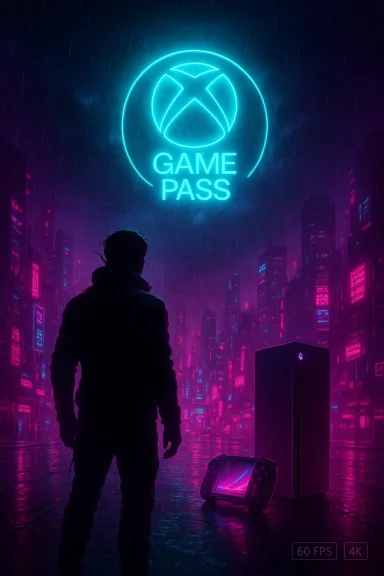
A silhouetted figure stands before a glowing Xbox Game Pass sign in a neon, rain-soaked city.Background​

The first half of March is shaping up as one of the strongest early‑month pushes for Xbox Game Pass in 2026. Alongside CD PROJEKT RED’s flagship title, Microsoft’s wave of additions includes the pixel‑remaster Final Fantasy III, Kingdom Come: Deliverance II, EA Sports F1 25, Planet of Lana II: Children of the Leaf, Hollow Knight: Silksong moving into lower tiers, and several family and simulation entries spread across Cloud, Console, Handheld, and PC designations. Major outlets and the publisher’s announcement collectively confirm the dates and which Game Pass tiers will carry each title.
This rollout is consistent with Microsoft’s ongoing strategy of using Game Pass to anchor subscriber value with a mix of day‑one indie hits, premium third‑party back catalogues, and occasional AAA headliners that arrive to the service after retail release. What makes the March slate unusual is the scale of the headliner — Cyberpunk 2077 — and the platform choices tied to its Game Pass debut.

What Microsoft and CD PROJEKT are actually delivering​

Cyberpunk 2077 on Game Pass: the facts​

  • Release on Game Pass: March 10, 2026.
  • Game Pass tiers: Available to Game Pass Premium and Game Pass Ultimate subscribers via Cloud and Console platforms (Xbox Series X|S and Xbox One). PC Game Pass is not listed as a supported Game Pass platform for this inclusion.
  • Included content: CD PROJEKT RED says the Game Pass console builds come with “every update released for the game since launch,” and Xbox Series X builds support a 60 FPS Performance Mode and a 4K Quality Mode, while Xbox One receives the game with updates up to and including Update 1.6.
These three points — the date, the platform/tier split, and the inclusion of post‑launch updates — are the load‑bearing facts that define what players should expect on March 10. They also shape the practical question every Game Pass subscriber will ask: who can play it, and how will it perform?

The rest of the March lineup (highlights)​

  • Final Fantasy III (Pixel Remaster) — available in early March across Cloud, Xbox Series X|S, and PC for multiple Game Pass tiers.
  • Kingdom Come: Deliverance II — available now on Premium/Ultimate and PC Game Pass across Cloud and console.
  • Planet of Lana II: Children of the Leaf — a day‑one entry for Game Pass Ultimate on March 5.
  • Hollow Knight: Silksong — moving into the Premium tier, expanding access beyond Ultimate and PC Game Pass holders.
These additions demonstrate Microsoft’s continued mix of retro remasters, day‑one indie and mid‑size titles, sports and simulation entries, and the occasional AAA presence.

Why Cyberpunk on Game Pass matters — strategic analysis​

1) A marquee IP arrives at scale​

Putting Cyberpunk 2077 into Game Pass is a notable endorsement of the subscription model by both Microsoft and CD PROJEKT RED. The game is an open‑world, narrative RPG with a large install base and a long tail of updates and expansions; its presence on Game Pass is less about acquisition at launch and more about sustaining long‑term engagement and cultural visibility. For Microsoft, it’s a headline grab that helps drive retention among subscribers who value “big” experiences included in their monthly fee.

2) Platform choices reflect risk management​

The decision to deliver the title via Cloud and Console — and specifically via Premium/Ultimate tiers — but not PC Game Pass is telling. Cloud and console deployments let Microsoft control much of the experience (streaming performance, anti‑cheat environments, consistent updates), while avoiding the extra complexity of integrating a large, heavily modded PC ecosystem into a subscription model where local installs and modding can conflict with publisher intentions. For CD PROJEKT RED, that arrangement minimizes fragmentation while exposing a vast console audience to the game. This is a commercially efficient middle ground: broad reach without the full complexity of PC distribution and support on the Game Pass platform.

3) It validates the “post‑launch as a product lifecycle” model​

CD PROJEKT RED’s statement that the Game Pass builds include all updates since launch — and Xbox Series X enhancements — reframes Cyberpunk 2077 as a living product whose best, most polished form is now the version subscribers will encounter. That narrative matters because many modern publishers now treat major updates and expansions as flagship content in themselves, and Game Pass becomes the easiest place to showcase the best iteration of a game without asking players to repurchase or patch heavily.

What this means for players​

Console and cloud players: lower barrier, higher convenience​

If you subscribe to Game Pass Premium or Ultimate and own an Xbox Series X|S or Xbox One — or rely on Xbox Cloud Gaming — you’ll have access to the fully updated Cyberpunk 2077 on March 10. That’s a major value proposition: a complex AAA RPG included in the subscription without extra purchase. For cloud players, it eliminates hardware barriers; for console owners it removes the friction of a separate purchase.

PC players: notable exclusion​

PC Game Pass subscribers are — according to the announcements — not getting a native Game Pass version of Cyberpunk 2077 as part of this set of additions. That will disappoint PC fans who prefer mod support, local installs, or who already own the game on other storefronts. The absence is also a reminder that Game Pass platform coverage remains intentionally tiered and selective; Microsoft and publishers decide on a case‑by‑case basis whether a title will be offered on PC Game Pass. This choice also affects modders and the broader PC community, who typically demand local file access and the mod ecosystem that has been central to PC Cyberpunk’s long tail.

Performance expectations​

CD PROJEKT RED’s notes on Performance and Quality modes for Xbox Series X mean the game on console can scale between smoother frame rates (60 FPS) or higher resolution fidelity (4K Quality Mode), depending on player preference. That aligns with the technical approach taken by many contemporary console ports of AAA PC games: prioritize either framerate or visual fidelity rather than both. Cloud streams will be subject to network latency and streaming fidelity, which can reduce the benefits of local high‑frame modes for remote players.

The commercial calculus: why both sides benefit​

For Microsoft / Xbox​

  • Headline content like Cyberpunk 2077 increases the perceived value of Game Pass and can reduce churn among subscribers who pay monthly.
  • Using Premium/Ultimate tiers strengthens the rationale behind tier differentiation: Premium/Ultimate can deliver experiences that Essentials cannot, giving Microsoft upsell leverage.
  • The Cloud/Console exclusivity simplifies support and anti‑cheat integration compared to a broad, modded PC release.
These points represent a playbook Microsoft has used repeatedly: alternate day‑one indies with high‑profile third‑party inclusions to keep the catalog fresh and newsworthy.

For CD PROJEKT RED​

  • A major back‑catalog or lived‑service revenue source: Game Pass exposes the game to players who might not buy it at full price, generating engagement spikes that can translate into DLC interest or paid expansions elsewhere.
  • Reputational benefits: After the rough launch years earlier, CD PROJEKT has continually rebuilt Cyberpunk 2077’s reputation through updates. Making the best, most complete version widely available bolsters brand trust and user goodwill.
  • Technical simplicity for support: distributing the console/cloud version through Microsoft’s managed infrastructure reduces the multiplicity of platforms the studio must certify and support simultaneously.

Risks and unresolved questions​

1) Perception risks among PC players and modding communities​

Excluding a PC Game Pass release may be perceived as a snub by PC players who prize modding and local control. If Game Pass becomes associated with console‑first or cloud‑only releases for certain third‑party AAA games, the PC audience may feel increasingly segmented from the subscription’s core value. That can have reputational and commercial costs in communities that drive long‑tail engagement. While CD PROJEKT RED’s console builds include every major update, they don’t necessarily include the PC mod ecosystem or workflow that many players prize.

2) Cloud performance vs. expectation mismatch​

Streaming a dense, open‑world title like Cyberpunk 2077 can be challenging for players on variable networks. For players attracted by “playing on any device” messaging, the reality of latency, input lag, and compression artifacts can blunt the Game Pass advantage. Microsoft has improved cloud infrastructure substantially, but network realities still create inconsistent experiences for streaming AAA games. Players should temper expectations: cloud convenience is real, but fidelity and responsiveness will depend on network conditions.

3) Unclear DLC and expansion economics on Game Pass​

CD PROJEKT’s release note emphasized that the Game Pass version includes all updates up to the point of inclusion, but it did not explicitly outline the availability status for paid expansions or future paid content on Game Pass. Will upcoming expansions be added? Will they be sold separately, or included? The precedent is mixed: some expansions have joined Game Pass over time, others remain paid. This ambiguity is meaningful because expansions can be the key revenue moments after a title appears on subscription platforms. Readers should treat expansion availability as undetermined until a publisher statement clarifies it.

A closer look at technical considerations​

Console builds and modes​

CD PROJEKT RED specifically called out two modes on Xbox Series X: a 60 FPS Performance Mode and a 4K Quality Mode, with Xbox One receiving the game with updates up to Update 1.6. That suggests the console Game Pass packages represent fully realized, optimized builds rather than simple ports of the original launch state. For players on Series X, expecting fluid 60 FPS performance is reasonable, though actual performance will depend on the game settings Microsoft deploys to the service and the Game Pass client’s update cadence.

Save games, cross‑progression, and platform parity​

CD PROJEKT RED has in the past implemented cross‑progression features, and the studio’s continued support for the title implies that cross‑platform conveniences could be part of the experience — but the Game Pass press text for March does not promise cross‑progression between PC copies and Game Pass console/cloud versions. Players concerned about save migration between a retail PC copy and the Game Pass console/cloud version should treat that as an open question and verify cross‑save mechanics before switching platforms wholesale. If cross‑progression is essential to you, check official support channels and save migration tools before assuming transferability.

Modding​

On PC, Cyberpunk 2077 has a robust modding scene that alters gameplay, visuals, and content. Cloud and console Game Pass versions generally do not permit the same level of mod installation and file access that PC versions allow. That difference is important for fans who rely on community content for replayability or personalized experience. Microsoft’s cloud policies and console sandboxing make mods far less accessible in this distribution model. Consider this a design tradeoff between controlled, consistent experiences and the open, community‑driven experimentation of the PC platform.

What players should do on March 10 (practical checklist)​

  • Confirm your tier: Ensure you have Game Pass Premium or Ultimate if you want access to the Game Pass distribution of Cyberpunk 2077. Essentials and PC‑only tiers, per the current announcements, will not receive the console/cloud builds.
  • Decide console vs cloud: If you own an Xbox Series X|S, plan for a console install to take advantage of local performance modes. If you rely on cloud, test your network beforehand and be prepared to tweak streaming quality or controller mappings for optimal responsiveness.
  • Backup saves and check cross‑save: If you have an existing playthrough on PC or another platform, verify whether your saves are transferable to the Game Pass build before abandoning your current progress. Treat cross‑progression as uncertain until explicitly confirmed.
  • Manage expectations on mods: Expect limited or no mod support on the Game Pass console/cloud versions. If mods are integral to your experience, you may prefer to keep or buy a native PC copy outside of Game Pass.

Broader implications for Game Pass and the industry​

Game Pass as a flexible distribution funnel​

Microsoft’s selective platform choices for Cyberpunk 2077 illustrate how Game Pass functions as a flexible distribution funnel rather than a one‑size‑fits‑all storefront. It can be used to:
  • Maximize reach for specific formats (console and cloud) where publisher and platform controls are strongest.
  • Drive retention via marquee titles available at no additional cost to the subscriber.
  • Preserve separate retail and PC ecosystems where publisher economics, modding, or platform exclusivity create friction.
This flexibility is part of the subscription service’s enduring value proposition: it can be tailored per title according to technical, commercial, and community considerations.

Publisher choices will continue to vary​

Expect similar arrangements in the future: large, mod‑heavy PC titles might arrive on Game Pass for console and cloud while staying off PC Game Pass; smaller indies will frequently be day‑one additions to all tiers. The moral is that Game Pass is an elastic channel — publishers choose how and where to lean on it. That won’t please every segment of the gaming ecosystem, but it allows publishers and Microsoft to strike pragmatic compromises that keep both parties’ objectives aligned.

Final verdict — should you be excited?​

Yes — for many players, this is a legitimate win. Console owners and cloud gamers who’ve been curious about Cyberpunk 2077 now get access to the fully updated, optimized iteration without an extra purchase. Microsoft gains a marquee headline for Game Pass in March that will drive engagement and media attention. CD PROJEKT RED benefits from renewed attention and a chance to showcase the title’s long‑term improvements to a broad audience.
But the win is partial: PC players and modders will feel left out if they value native access and the community creations that extend the game’s life. Cloud players will need to reconcile convenience with the potential for latency and compression compromises. And the long‑term economics of expansion releases remain unclear until publishers clarify DLC policies for titles that surface on subscription services.

Conclusion​

The inclusion of Cyberpunk 2077 on Xbox Game Pass on March 10, 2026 is a headline move that underscores how subscription platforms continue to reshape AAA distribution and lifecycle strategies. It illustrates the practical tradeoffs publishers and platform holders make when balancing reach, support complexity, and community expectations. For console and cloud players, Game Pass will deliver a polished, fully updated Cyberpunk experience at no extra cost beyond the subscription tier, while PC‑centric users and modders will need to weigh the advantages of Game Pass convenience against the benefits of native ownership. In short: this is a win for mainstream accessibility and platform synergy, and a reminder that the subscription era will keep producing winners — and deliberate exclusions — as part of its evolving business model.

Source: Windows Central Cyberpunk 2077 confirmed for Xbox Game Pass in March
 

Back
Top