

Tata Consultancy Services was ranked No. 1 in Everest Group’s Top 50 Store Services Providers 2026 report in June 2026, topping a global assessment of companies that help retailers run, modernize, and connect physical stores. The ranking is not just another analyst badge for a large IT services firm. It is a signal that the retail store, after years of being treated as the analog cousin of e-commerce, has become one of enterprise technology’s most contested platforms. TCS is being rewarded for breadth, scale, and a pitch that says the shop floor is now a data, media, fulfillment, and automation environment.
For the better part of two decades, the retail technology story was told as a migration away from the store. E-commerce was cleaner, more measurable, easier to personalize, and less burdened by the practical mess of shelves, staff, queues, returns, shrinkage, and local demand. The pandemic briefly seemed to accelerate that story into inevitability.
But the physical store did not disappear. It became harder to run and more strategically important at the same time.
Retail chains now want stores to serve as showrooms, pickup points, return desks, local warehouses, advertising surfaces, loyalty engines, and fulfillment nodes. That is a radically different operating model from the old store-as-register-and-stockroom setup. It also explains why a services ranking that might once have sounded like back-office procurement news now says something broader about where retail IT budgets are going.
Everest Group’s assessment covered back-end store management, store operations, and in-store experience, with specific attention to inventory management, point-of-sale modernization, retail media networks, and customer engagement. That scope matters. It recognizes that the retailer’s hardest problems are no longer neatly separated between “operations” and “experience.”
A shopper who cannot find an item, a store associate using stale inventory data, a checkout terminal that cannot support new payment flows, and an in-store promotion that is not connected to the customer’s digital profile are all symptoms of the same disease. The store is still physically local, but the systems behind it have to behave like part of a unified commerce stack.
The company’s retail portfolio also gives Everest Group something concrete to evaluate beyond consulting decks. TCS OmniStore is positioned as a unified commerce platform, while TCS Optumera is pitched around retail intelligence and optimization. Together, they let TCS tell a more productized story than the old “we can integrate anything” services pitch.
That does not mean retailers are buying shrink-wrapped simplicity. Store transformation remains a brutally local exercise. Every banner, region, format, labor model, and legacy estate introduces exceptions. But a provider with reusable intellectual property, reference architectures, and implementation muscle starts with an advantage over firms that arrive with only PowerPoint and partner certifications.
The language around TCS’s win is heavy with AI, agentic operations, multimodal data, decision intelligence, and immersive experiences. Some of that is unavoidable in 2026. No enterprise technology announcement escapes the gravitational pull of AI terminology. The more important point is whether those ideas survive contact with checkout lines, store managers, franchisees, warehouse constraints, and the operating rhythms of retail.
That distinction matters. Retail has never lacked experiments. Computer vision trials, smart shelves, RFID deployments, mobile point-of-sale devices, endless aisle kiosks, cashierless checkout concepts, and personalized promotions have all cycled through the industry’s innovation labs. The cemetery is full of promising pilots that could not be scaled economically or maintained consistently across store estates.
The hard work is integration. Inventory signals have to feed labor planning. Promotion calendars have to align with supply chain realities. Store associates need interfaces that do not add friction during peak hours. Checkout modernization must respect security, compliance, uptime, and payment processor constraints. AI recommendations are useless if they create tasks no one in the store can actually perform.
This is where the services market becomes strategically important. Retailers do not merely need software. They need orchestration across hardware, cloud platforms, edge devices, data pipelines, legacy systems, store procedures, and human workflows. TCS’s claim to leadership is therefore less about a single killer app than about being able to sit across that messy stack.
The company says its work has delivered double-digit sales increases, an 85 percent productivity increase, and revenue and margin gains in the 5 to 10 percent range. Those numbers should be read as vendor-reported outcomes rather than universal guarantees. Still, they point to the metrics that matter most to retailers: can a store sell more, waste less, operate with fewer manual bottlenecks, and make better use of staff time?
Modern retail demands more than a terminal that can accept payment. Stores need mobile checkout, buy-online-pick-up-in-store flows, digital receipts, split fulfillment, real-time promotions, cross-channel returns, fraud controls, and support for new payment methods. In many chains, the POS is being asked to behave less like a register and more like a distributed commerce endpoint.
That raises the stakes for providers like TCS. A failed personalization pilot is embarrassing. A failed checkout modernization can stop revenue at the front door. Retailers will tolerate incremental progress in experimental areas, but they have little patience for instability in systems that touch every transaction.
This is why store services rankings increasingly reward the combination of advisory, engineering, implementation, and run capabilities. A provider must help define the roadmap, modernize the platform, migrate data, integrate peripherals, train users, monitor performance, and support ongoing change. The store may look like a consumer environment, but its technology risk profile is pure enterprise.
Retail media began as a digital advertising opportunity, built around sponsored search results, product placements, and first-party shopper data. The next frontier is the physical store, where screens, shelf-edge displays, loyalty apps, digital coupons, and in-store sensors can become part of an advertising network. That makes the store a media surface as well as a sales channel.
This shift explains the phrase “monetizable platform” in Everest Group’s commentary. The store is no longer just a cost center with revenue attached. It is potentially an advertising platform, a data collection point, and a brand engagement venue. That is an attractive story for retailers under margin pressure, especially as traditional digital advertising becomes more expensive and privacy-constrained.
But retail media inside stores also raises operational and reputational risks. Too much advertising can degrade the shopping experience. Poor targeting can feel intrusive. Disconnected campaigns can confuse staff and customers alike. To make in-store media work, retailers need data governance, content management, measurement, compliance controls, and integration with merchandising and loyalty systems.
That again favors large systems integrators and service providers. The value is not in hanging more screens. The value is in making the store’s physical signals, commercial priorities, and digital identity systems work together without turning the customer experience into Times Square with shopping carts.
No single provider owns the entire stack. A modern store estate may include handheld devices, shelf sensors, RFID readers, cameras, electronic shelf labels, workforce tools, payment terminals, local networking, edge compute, cloud analytics, ERP integrations, and customer-facing mobile apps. Even the most capable global integrator has to compose the solution from many parts.
The strategic question is who gets to be the prime contractor for that composition. Retailers do not want to manage dozens of disconnected vendors for every store modernization program. They want accountability, a roadmap, and a provider that can translate business objectives into deployable technology across hundreds or thousands of locations.
TCS’s advantage is that it can speak both languages: the boardroom vocabulary of revenue, margin, productivity, and customer engagement, and the delivery vocabulary of migration, integration, telemetry, support, and change management. That dual fluency is what large retailers tend to buy when the project moves from innovation lab to operating estate.
There is also a WindowsForum angle here that should not be missed. Retail environments remain full of Microsoft infrastructure, Windows endpoints, Azure integrations, identity systems, device management, and security tooling. Even where cloud-native services and specialized edge devices dominate the headlines, the store modernization story often runs through familiar enterprise platforms that IT teams already know how to secure and administer.
The most successful store services programs will be the ones that treat associates as primary users, not afterthoughts. Inventory visibility matters only if staff can trust it. AI tasking matters only if it prioritizes work sensibly. Workforce management matters only if it reflects real store conditions rather than spreadsheet logic. Customer engagement tools matter only if they help associates serve shoppers instead of forcing them into awkward scripts.
TCS’s emphasis on agentic store operations and workforce management points in the right direction, but this is also where vendor claims need scrutiny. Automation can reduce repetitive work, but it can also become a machine for generating instructions faster than humans can execute them. A store does not become intelligent merely because software can produce more recommendations.
The better model is augmentation. Associates need systems that surface exceptions, reduce manual reconciliation, simplify returns, support product lookup, and make inventory promises more reliable. Store managers need labor, sales, replenishment, and promotion signals in a form that supports decisions before the day is already lost.
If TCS and its rivals can make that layer genuinely useful, they will do more for retail productivity than any amount of showroom futurism. If they cannot, AI-led retail will become yet another chapter in enterprise software’s long history of making front-line workers serve the tool instead of the customer.
A grocery chain modernizing fresh inventory and labor scheduling has different needs from an apparel retailer building clienteling experiences, a quick-service restaurant optimizing throughput, or a mass retailer constructing an in-store media network. The right provider depends on estate complexity, geography, incumbent systems, operating model, and the retailer’s tolerance for change.
The ranking does, however, clarify what the market now rewards. Scale alone is not enough. Retail domain knowledge alone is not enough. Cloud partnerships alone are not enough. Providers have to show they can connect store operations, customer experience, data intelligence, and measurable business outcomes.
That is where TCS appears to have built a compelling case. Its breadth across the store services value chain, its global retail footprint, and its IP-led portfolio give it a credible claim to leadership in a market that is moving from fragmented pilots to full-estate modernization.
The caveat is that retail transformation is judged in stores, not reports. If systems fail on weekends, if inventory accuracy remains poor, if associates resist the tools, or if customers find the experience intrusive, the analyst ranking will not matter. The store remains one of the harshest testing grounds in technology because every failure is public, operational, and immediate.
Many retailers still run substantial Windows estates in stores, whether on back-office machines, point-of-sale systems, kiosks, management consoles, or specialized endpoints. Modernization does not always mean ripping those systems out. More often, it means integrating them with cloud services, identity platforms, analytics tools, device management frameworks, and newer edge workloads.
That creates familiar headaches. Patch windows must respect trading hours. Device failures have revenue consequences. Payment environments must remain compliant. Legacy peripherals complicate upgrades. Store networks may be less reliable than headquarters assumes. Local staff are not system administrators, even when they become the first line of support.
A services provider that understands those realities can be valuable. The technology story is not simply about AI in the abstract; it is about deployment discipline across environments that are messy by design. Retailers need modernization without fragility.
This is where Microsoft, cloud platforms, and traditional enterprise management practices remain deeply relevant. A smart store still needs identity, access control, endpoint security, monitoring, backup, update governance, and incident response. The more intelligent the store becomes, the more important those fundamentals become.
Retailers are drowning in signals. Transaction data, loyalty data, workforce data, shelf data, supply chain data, video, weather, local events, promotions, and digital behavior all influence store performance. The problem is not the absence of information. It is the inability to convert information into timely, trusted action.
A perceptive store, in theory, would notice demand changes, detect inventory gaps, recommend labor adjustments, personalize engagement, optimize local promotions, and escalate problems before they damage sales. That is the attractive version. The dangerous version is an over-automated store that chases noisy signals, burdens staff, and creates opaque decisions that managers cannot challenge.
The winners in store services will be providers that understand this tension. Retail does need more intelligence, but intelligence without operational context becomes turbulence. The store is not a spreadsheet with shelves. It is a living environment with customers, employees, constraints, and exceptions.
TCS’s ranking suggests Everest Group believes the company has the breadth to manage that complexity. The proof will be whether retailers can scale these systems in ways that improve both the financials and the human experience of shopping and working in stores.
Yet those are the things that determine whether transformation survives. A retailer can pilot a beautiful smart-store concept in a flagship location and still fail to modernize 1,500 ordinary stores. The economics of retail are made in repetition. Small improvements across large estates matter more than spectacular demos in a handful of showcase locations.
TCS’s scale is therefore central to the story. A provider working across more than 100 retail clients can accumulate patterns: what breaks, what scales, what associates reject, what store managers actually use, what integrations repeatedly cause pain, and what metrics executives care about after the pilot glow fades. That institutional memory is difficult for smaller specialists to match.
The flip side is that large providers can also bring bureaucracy, generic frameworks, and delivery models that move slower than retail markets. TCS will need to prove that its size does not blunt its responsiveness. Store modernization increasingly requires both industrialized delivery and rapid adaptation.
That tension will define the next phase of competition. The market will not be won by the flashiest AI demo or the broadest partner slide. It will be won by providers that can make complex systems dependable enough to become ordinary.
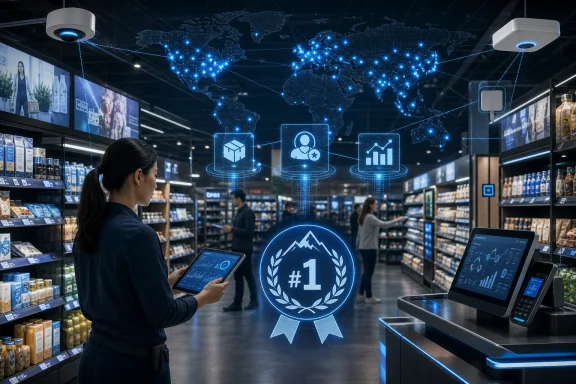 The Store Has Become an Enterprise Platform Again
For the better part of two decades, the retail technology story was told as a migration away from the store. E-commerce was cleaner, more measurable, easier to personalize, and less burdened by the practical mess of shelves, staff, queues, returns, shrinkage, and local demand. The pandemic briefly seemed to accelerate that story into inevitability.But the physical store did not disappear. It became harder to run and more strategically important at the same time.
Retail chains now want stores to serve as showrooms, pickup points, return desks, local warehouses, advertising surfaces, loyalty engines, and fulfillment nodes. That is a radically different operating model from the old store-as-register-and-stockroom setup. It also explains why a services ranking that might once have sounded like back-office procurement news now says something broader about where retail IT budgets are going.
Everest Group’s assessment covered back-end store management, store operations, and in-store experience, with specific attention to inventory management, point-of-sale modernization, retail media networks, and customer engagement. That scope matters. It recognizes that the retailer’s hardest problems are no longer neatly separated between “operations” and “experience.”
A shopper who cannot find an item, a store associate using stale inventory data, a checkout terminal that cannot support new payment flows, and an in-store promotion that is not connected to the customer’s digital profile are all symptoms of the same disease. The store is still physically local, but the systems behind it have to behave like part of a unified commerce stack.
TCS Wins on Breadth, Not Just Buzzwords
TCS’s top placement rests on a familiar but still powerful services-company formula: industry depth, global delivery capacity, proprietary platforms, and a large installed base. The company says its store services work spans more than 100 retail clients across grocery, specialty retail, apparel, quick-service restaurants, and mass retail. That is the kind of cross-segment exposure that analyst firms tend to value because it suggests repeatability rather than one-off transformation theater.The company’s retail portfolio also gives Everest Group something concrete to evaluate beyond consulting decks. TCS OmniStore is positioned as a unified commerce platform, while TCS Optumera is pitched around retail intelligence and optimization. Together, they let TCS tell a more productized story than the old “we can integrate anything” services pitch.
That does not mean retailers are buying shrink-wrapped simplicity. Store transformation remains a brutally local exercise. Every banner, region, format, labor model, and legacy estate introduces exceptions. But a provider with reusable intellectual property, reference architectures, and implementation muscle starts with an advantage over firms that arrive with only PowerPoint and partner certifications.
The language around TCS’s win is heavy with AI, agentic operations, multimodal data, decision intelligence, and immersive experiences. Some of that is unavoidable in 2026. No enterprise technology announcement escapes the gravitational pull of AI terminology. The more important point is whether those ideas survive contact with checkout lines, store managers, franchisees, warehouse constraints, and the operating rhythms of retail.
Retail’s AI Story Is Really an Execution Story
The most grounded reading of TCS’s ranking is not that AI is suddenly transforming every aisle into a futuristic showroom. It is that retailers are looking for service providers that can turn scattered technology pilots into operational systems.That distinction matters. Retail has never lacked experiments. Computer vision trials, smart shelves, RFID deployments, mobile point-of-sale devices, endless aisle kiosks, cashierless checkout concepts, and personalized promotions have all cycled through the industry’s innovation labs. The cemetery is full of promising pilots that could not be scaled economically or maintained consistently across store estates.
The hard work is integration. Inventory signals have to feed labor planning. Promotion calendars have to align with supply chain realities. Store associates need interfaces that do not add friction during peak hours. Checkout modernization must respect security, compliance, uptime, and payment processor constraints. AI recommendations are useless if they create tasks no one in the store can actually perform.
This is where the services market becomes strategically important. Retailers do not merely need software. They need orchestration across hardware, cloud platforms, edge devices, data pipelines, legacy systems, store procedures, and human workflows. TCS’s claim to leadership is therefore less about a single killer app than about being able to sit across that messy stack.
The company says its work has delivered double-digit sales increases, an 85 percent productivity increase, and revenue and margin gains in the 5 to 10 percent range. Those numbers should be read as vendor-reported outcomes rather than universal guarantees. Still, they point to the metrics that matter most to retailers: can a store sell more, waste less, operate with fewer manual bottlenecks, and make better use of staff time?
The Point-of-Sale Is No Longer Just a Till
Point-of-sale modernization is one of the least glamorous phrases in enterprise technology, but it sits at the center of the store reinvention story. The POS estate is where customer experience, payment security, tax logic, inventory updates, promotions, loyalty, returns, and employee workflows collide. It is also where old systems have a habit of lingering far longer than CIOs would like to admit.Modern retail demands more than a terminal that can accept payment. Stores need mobile checkout, buy-online-pick-up-in-store flows, digital receipts, split fulfillment, real-time promotions, cross-channel returns, fraud controls, and support for new payment methods. In many chains, the POS is being asked to behave less like a register and more like a distributed commerce endpoint.
That raises the stakes for providers like TCS. A failed personalization pilot is embarrassing. A failed checkout modernization can stop revenue at the front door. Retailers will tolerate incremental progress in experimental areas, but they have little patience for instability in systems that touch every transaction.
This is why store services rankings increasingly reward the combination of advisory, engineering, implementation, and run capabilities. A provider must help define the roadmap, modernize the platform, migrate data, integrate peripherals, train users, monitor performance, and support ongoing change. The store may look like a consumer environment, but its technology risk profile is pure enterprise.
Retail Media Turns the Aisle Into Inventory
One of the more revealing parts of Everest Group’s assessment is the inclusion of retail media networks. That tells us where the store is heading economically. Retailers are not only trying to sell goods in stores; they are trying to monetize attention, data, and physical proximity.Retail media began as a digital advertising opportunity, built around sponsored search results, product placements, and first-party shopper data. The next frontier is the physical store, where screens, shelf-edge displays, loyalty apps, digital coupons, and in-store sensors can become part of an advertising network. That makes the store a media surface as well as a sales channel.
This shift explains the phrase “monetizable platform” in Everest Group’s commentary. The store is no longer just a cost center with revenue attached. It is potentially an advertising platform, a data collection point, and a brand engagement venue. That is an attractive story for retailers under margin pressure, especially as traditional digital advertising becomes more expensive and privacy-constrained.
But retail media inside stores also raises operational and reputational risks. Too much advertising can degrade the shopping experience. Poor targeting can feel intrusive. Disconnected campaigns can confuse staff and customers alike. To make in-store media work, retailers need data governance, content management, measurement, compliance controls, and integration with merchandising and loyalty systems.
That again favors large systems integrators and service providers. The value is not in hanging more screens. The value is in making the store’s physical signals, commercial priorities, and digital identity systems work together without turning the customer experience into Times Square with shopping carts.
The Partner Ecosystem Is Doing More Than Decorating the Press Release
TCS points to partnerships across robotics, RFID, IoT, computer vision, retail media, cloud platforms, and NVIDIA Omniverse. It would be easy to read that as the usual partner-name confetti. In store technology, however, the ecosystem is not ornamental. It is the product reality.No single provider owns the entire stack. A modern store estate may include handheld devices, shelf sensors, RFID readers, cameras, electronic shelf labels, workforce tools, payment terminals, local networking, edge compute, cloud analytics, ERP integrations, and customer-facing mobile apps. Even the most capable global integrator has to compose the solution from many parts.
The strategic question is who gets to be the prime contractor for that composition. Retailers do not want to manage dozens of disconnected vendors for every store modernization program. They want accountability, a roadmap, and a provider that can translate business objectives into deployable technology across hundreds or thousands of locations.
TCS’s advantage is that it can speak both languages: the boardroom vocabulary of revenue, margin, productivity, and customer engagement, and the delivery vocabulary of migration, integration, telemetry, support, and change management. That dual fluency is what large retailers tend to buy when the project moves from innovation lab to operating estate.
There is also a WindowsForum angle here that should not be missed. Retail environments remain full of Microsoft infrastructure, Windows endpoints, Azure integrations, identity systems, device management, and security tooling. Even where cloud-native services and specialized edge devices dominate the headlines, the store modernization story often runs through familiar enterprise platforms that IT teams already know how to secure and administer.
The Store Associate Is the Hidden User Interface
Technology suppliers like to talk about frictionless checkout, immersive experiences, and AI-powered engagement. Store employees often experience transformation differently: another dashboard, another scanner, another exception queue, another process layered onto a shift that was already understaffed.The most successful store services programs will be the ones that treat associates as primary users, not afterthoughts. Inventory visibility matters only if staff can trust it. AI tasking matters only if it prioritizes work sensibly. Workforce management matters only if it reflects real store conditions rather than spreadsheet logic. Customer engagement tools matter only if they help associates serve shoppers instead of forcing them into awkward scripts.
TCS’s emphasis on agentic store operations and workforce management points in the right direction, but this is also where vendor claims need scrutiny. Automation can reduce repetitive work, but it can also become a machine for generating instructions faster than humans can execute them. A store does not become intelligent merely because software can produce more recommendations.
The better model is augmentation. Associates need systems that surface exceptions, reduce manual reconciliation, simplify returns, support product lookup, and make inventory promises more reliable. Store managers need labor, sales, replenishment, and promotion signals in a form that supports decisions before the day is already lost.
If TCS and its rivals can make that layer genuinely useful, they will do more for retail productivity than any amount of showroom futurism. If they cannot, AI-led retail will become yet another chapter in enterprise software’s long history of making front-line workers serve the tool instead of the customer.
Analyst Rankings Are Signals, Not Verdicts
Everest Group’s ranking gives TCS external validation, but it should not be mistaken for a universal buying recommendation. Analyst reports are useful market signals because they compare providers across defined criteria. They are less useful when readers treat a rank as a substitute for fit.A grocery chain modernizing fresh inventory and labor scheduling has different needs from an apparel retailer building clienteling experiences, a quick-service restaurant optimizing throughput, or a mass retailer constructing an in-store media network. The right provider depends on estate complexity, geography, incumbent systems, operating model, and the retailer’s tolerance for change.
The ranking does, however, clarify what the market now rewards. Scale alone is not enough. Retail domain knowledge alone is not enough. Cloud partnerships alone are not enough. Providers have to show they can connect store operations, customer experience, data intelligence, and measurable business outcomes.
That is where TCS appears to have built a compelling case. Its breadth across the store services value chain, its global retail footprint, and its IP-led portfolio give it a credible claim to leadership in a market that is moving from fragmented pilots to full-estate modernization.
The caveat is that retail transformation is judged in stores, not reports. If systems fail on weekends, if inventory accuracy remains poor, if associates resist the tools, or if customers find the experience intrusive, the analyst ranking will not matter. The store remains one of the harshest testing grounds in technology because every failure is public, operational, and immediate.
The Windows Estate Still Matters in the Smart-Store Era
For IT pros, the fashionable language around perceptive retail and agentic operations can obscure the underlying infrastructure problem. Stores are edge environments. They are distributed, bandwidth-constrained, physically exposed, staff-operated, and highly sensitive to downtime. That makes them a distinctive challenge for security, endpoint management, observability, and lifecycle control.Many retailers still run substantial Windows estates in stores, whether on back-office machines, point-of-sale systems, kiosks, management consoles, or specialized endpoints. Modernization does not always mean ripping those systems out. More often, it means integrating them with cloud services, identity platforms, analytics tools, device management frameworks, and newer edge workloads.
That creates familiar headaches. Patch windows must respect trading hours. Device failures have revenue consequences. Payment environments must remain compliant. Legacy peripherals complicate upgrades. Store networks may be less reliable than headquarters assumes. Local staff are not system administrators, even when they become the first line of support.
A services provider that understands those realities can be valuable. The technology story is not simply about AI in the abstract; it is about deployment discipline across environments that are messy by design. Retailers need modernization without fragility.
This is where Microsoft, cloud platforms, and traditional enterprise management practices remain deeply relevant. A smart store still needs identity, access control, endpoint security, monitoring, backup, update governance, and incident response. The more intelligent the store becomes, the more important those fundamentals become.
TCS’s Retail Pitch Is Also a Bet on Operating Model Change
The phrase “Perceptive Retail” is TCS’s attempt to package a strategic direction: decision intelligence, multimodal data, and machine agents working together to help retailers make better choices. Like most branded enterprise frameworks, it is part concept, part marketing container. But it captures a real shift.Retailers are drowning in signals. Transaction data, loyalty data, workforce data, shelf data, supply chain data, video, weather, local events, promotions, and digital behavior all influence store performance. The problem is not the absence of information. It is the inability to convert information into timely, trusted action.
A perceptive store, in theory, would notice demand changes, detect inventory gaps, recommend labor adjustments, personalize engagement, optimize local promotions, and escalate problems before they damage sales. That is the attractive version. The dangerous version is an over-automated store that chases noisy signals, burdens staff, and creates opaque decisions that managers cannot challenge.
The winners in store services will be providers that understand this tension. Retail does need more intelligence, but intelligence without operational context becomes turbulence. The store is not a spreadsheet with shelves. It is a living environment with customers, employees, constraints, and exceptions.
TCS’s ranking suggests Everest Group believes the company has the breadth to manage that complexity. The proof will be whether retailers can scale these systems in ways that improve both the financials and the human experience of shopping and working in stores.
The Real Prize Is Boring Reliability at Massive Scale
The most interesting thing about the store services market is how much of it depends on unglamorous execution. Everyone wants to talk about AI-enabled immersive shopping. Fewer people want to talk about device uptime, clean master data, store network resilience, peripheral certification, exception handling, and training.Yet those are the things that determine whether transformation survives. A retailer can pilot a beautiful smart-store concept in a flagship location and still fail to modernize 1,500 ordinary stores. The economics of retail are made in repetition. Small improvements across large estates matter more than spectacular demos in a handful of showcase locations.
TCS’s scale is therefore central to the story. A provider working across more than 100 retail clients can accumulate patterns: what breaks, what scales, what associates reject, what store managers actually use, what integrations repeatedly cause pain, and what metrics executives care about after the pilot glow fades. That institutional memory is difficult for smaller specialists to match.
The flip side is that large providers can also bring bureaucracy, generic frameworks, and delivery models that move slower than retail markets. TCS will need to prove that its size does not blunt its responsiveness. Store modernization increasingly requires both industrialized delivery and rapid adaptation.
That tension will define the next phase of competition. The market will not be won by the flashiest AI demo or the broadest partner slide. It will be won by providers that can make complex systems dependable enough to become ordinary.
The Aisle-Level Meaning of TCS’s Everest Win
TCS’s ranking is ultimately less about prestige than about where the retail technology market is putting its confidence. The physical store has re-entered the center of digital strategy, and service providers are being judged on whether they can connect the unglamorous mechanics of operations with the customer-facing ambitions of modern commerce.- TCS was ranked first in Everest Group’s 2026 global assessment of store services providers.
- The assessment focused on back-end store management, store operations, in-store experience, inventory, POS modernization, retail media, and customer engagement.
- TCS’s case rests on global retail scale, more than 100 clients, proprietary platforms including OmniStore and Optumera, and partnerships across cloud, AI, robotics, RFID, IoT, and computer vision.
- The ranking reflects a broader shift in which stores are becoming fulfillment nodes, media platforms, data environments, and customer engagement hubs.
- Retailers should treat the ranking as a strong market signal, but not as a substitute for evaluating fit, execution quality, estate complexity, and measurable operational outcomes.
- For IT teams, the smart-store agenda will still depend on familiar fundamentals: endpoint management, identity, security, uptime, integration, support, and disciplined rollout planning.
References
- Primary source: ecommercenews.com.au
Published: 2026-06-22T07:30:12.539294
TCS tops Everest Group's store services provider ranking
Stores are becoming a bigger tech battleground as retailers seek tighter links between operations, checkout and customer engagement. ecommercenews.com.au
- Related coverage: cxotoday.com
TCS ranked No. 1 in Everest Group’s Top 50™ Store Services Providers 2026 report
Tata Consultancy Services is ranked No. 1 in Everest Group’s Top 50™ Store Services Providers 2026 report. This global ranking recognises companies that deliver services for retailer stores. The recognition is a testament to TCS’ strong AI-led capabilities that help retailers transform physical...cxotoday.com - Related coverage: everestgrp.com
- Related coverage: tcs.com
- Related coverage: nasdaq.com
TP ranks second on Everest Group's Business Process Services Top 50™ 2025 list | Nasdaq
--Global digital services leader TP, announced today that Everest Group ranked TP #2 in the BPS Top 50™ 2025 list, climbing one spot from the previous year. This global ranking from Everest Group ranks the largest third-party providers based on Business Process Services revenues and Year-on-Year...www.nasdaq.com - Related coverage: businesswire.com

- Related coverage: sbs-software.com
BS Ranked #8 by Everest Group in 2026 Core Banking Top 50
SBS is proud to announce that it has been ranked #8 in the Everest Group Top 50 Core Banking Technology Providers 2026 global report. sbs-software.com
- Related coverage: services.global.ntt
