

TD SYNNEX Maverick announced on June 25, 2026, from Barcelona that it has extended its distribution relationship with Ribbon Communications into EMEA, bringing Ribbon’s session border controllers, Teams Direct Routing, SIP, and cloud voice infrastructure products to European partners. The deal is not just another line-card expansion. It is a bet that the next phase of hybrid work will be won less by shiny meeting-room hardware and more by the plumbing that makes cloud voice secure, compliant, and survivable. For WindowsForum readers, the Microsoft Teams angle is the tell: telephony is becoming one of the last stubborn enterprise workloads to be pulled fully into cloud collaboration.
For years, the collaboration market sold itself through cameras, touchscreens, headsets, and huddle-room kits. That hardware still matters, but the harder problem has moved down the stack. Enterprises have standardized on Teams, Zoom, and cloud contact-center platforms, yet many are still dragging along PBXs, SIP trunks, analog endpoints, regulated call flows, and carrier contracts that were never designed for a clean SaaS migration.
That is where Ribbon’s portfolio fits into TD SYNNEX Maverick’s European push. Session border controllers, Direct Routing, and SIP infrastructure are not glamorous technologies, but they are the difference between a Teams deployment that handles chat and meetings and one that can replace a company’s phone system without terrifying the security team.
The announcement frames the partnership around UCaaS and CCaaS, but the subtext is broader. Unified communications and contact centers have converged around the same cloud identity, network, security, and compliance questions that Windows administrators already face across Microsoft 365. Voice is no longer a separate telecom island. It is an application workload, and it increasingly lives inside the same operational universe as Entra ID, Teams governance, endpoint policy, Azure networking, and managed security.
TD SYNNEX Maverick’s value proposition is that resellers and integrators need more than a vendor SKU. They need a distribution layer that can help stitch together collaboration platforms, voice security, cloud marketplaces, financing, deployment support, and regional availability. Ribbon gets a wider route to European channel partners; Maverick gets a more serious cloud communications spine.
That makes distribution strategically important again. Vendors can promote cloud migration all they like, but most midmarket and enterprise customers do not buy communications modernization directly from a press release. They buy it through integrators, MSPs, telecom specialists, and AV partners who understand their estate and can absorb the ugly details.
TD SYNNEX Maverick has spent years positioning itself around collaboration, unified communications, and digital signage rather than treating those markets as generic IT distribution categories. The Ribbon agreement extends that specialty deeper into the infrastructure layer. It gives Maverick partners a way to talk about Teams telephony, contact center modernization, and voice security with a vendor known for carrier-grade communications.
That matters because the hybrid workplace is not just a room-design problem. The employee in a Teams meeting, the receptionist forwarding a PSTN call, the call-center agent handling a regulated customer interaction, and the emergency phone in a public-sector facility may all touch the same communications architecture. The reseller that can join those dots has a better shot at winning the modernization project than the reseller that only sells endpoints.
In practical terms, an SBC helps control SIP traffic, mediate between systems, protect against malformed or malicious sessions, enforce policy, and support interoperability between platforms that may all claim standards compliance while behaving differently in production. That role becomes more important as enterprises connect Microsoft Teams or Zoom Phone to existing telecom services. The cloud platform may host the user experience, but the edge still needs governance.
Teams Direct Routing is the obvious Microsoft hook. Many organizations want Teams to become the primary calling client while retaining their own carriers or complex telephony arrangements. Direct Routing allows that model, but it introduces engineering and support choices that customers cannot ignore. The organization needs certified infrastructure, routing design, emergency calling support, monitoring, failover planning, and a partner who understands both Microsoft’s cloud and the voice network it is replacing.
Ribbon’s appeal to the channel is that it gives partners something concrete to build around. Instead of pitching cloud voice as a licensing exercise, they can pitch it as an architecture: Teams at the user layer, Ribbon at the voice edge, cloud services and SIP connectivity behind it, and managed services wrapped around the whole thing. That is more complex than selling an add-on license, but it is also where margin and customer stickiness tend to live.
That complexity is exactly why a distributor such as TD SYNNEX Maverick matters. Ribbon can make its portfolio technically available, but availability is not the same thing as adoption. Partners need local enablement, presales support, deal registration mechanics, credit, logistics, and a channel motion that fits the way European customers buy.
The announcement’s references to public sector, healthcare, education, and financial services are not accidental. These are sectors where voice reliability and compliance remain non-negotiable. A hospital cannot treat telephony as a disposable app. A financial services firm cannot ignore call recording, retention, monitoring, or fraud risk. A school or government department may be under pressure to modernize, but it often faces procurement and security constraints that slow cloud adoption.
For those customers, “move to the cloud” is too blunt a message. The more credible pitch is migration at a controlled pace: keep what must remain, modernize what can move, integrate with Teams or Zoom where it improves operations, and protect the voice edge throughout. That is the phrase behind the deal’s marketing language, and it is the reason Ribbon’s infrastructure products belong in the same conversation as collaboration endpoints and cloud subscriptions.
Cloud marketplaces have become an increasingly important route for enterprise software and infrastructure purchasing. Customers may have committed cloud spend, procurement frameworks, or internal approval paths that make marketplace-aligned buying easier than classic reseller transactions. For partners, that can change how deals are structured and how services are attached.
The AWS angle does not make this a Windows-only story, but it does make it relevant to Windows-centric IT teams. Microsoft Teams is the collaboration layer in many organizations; Azure may host adjacent workloads; AWS may hold other line-of-business infrastructure; and voice services may need to bridge all of it. The practical enterprise reality is multi-cloud, even when the user-facing collaboration experience is heavily Microsoft.
This is one of the understated tensions in the market. Microsoft would prefer customers to consume as much of the communications stack as possible through Microsoft 365 and Teams Phone. Partners, carriers, and infrastructure vendors often succeed by serving the gaps: hybrid migrations, carrier choice, survivability, interoperability, and specialized compliance. TD SYNNEX Maverick’s Ribbon expansion sits squarely in that middle ground.
That shift is good for capable partners and unforgiving for superficial ones. Selling Teams telephony badly is easy. Delivering it well across a multinational estate is hard. The work cuts across Microsoft 365 administration, network quality, identity, telecom contracts, endpoint devices, and user adoption. A mistake in email migration is annoying; a mistake in emergency calling or inbound customer service can become a business incident.
TD SYNNEX Maverick is trying to give its partners a fuller bag of parts for that reality. Ribbon adds the secure voice and SIP infrastructure layer. Existing collaboration vendors provide rooms, devices, and user experiences. Cloud relationships provide deployment models and procurement paths. The distributor’s role is to make those components feel like a coherent portfolio rather than a scavenger hunt.
The most interesting part of the deal is not that Ribbon products will be available in Europe. It is that TD SYNNEX Maverick is treating communications modernization as an end-to-end channel category. That is how the market increasingly behaves: the customer asks for hybrid work, but the project turns into voice architecture, meeting-room design, cloud procurement, device management, and security.
That does not mean every Windows admin needs to become a SIP engineer. It does mean the decisions made by telecom specialists now affect the Microsoft tenant, the endpoint estate, and the security posture. Teams calling touches user licensing, conditional access assumptions, device sign-in, meeting-room accounts, audit trails, guest access, retention, and support processes. The phone system is becoming another workload in the Microsoft cloud environment.
This is where a distribution deal can have downstream effects. If European partners gain easier access to Ribbon’s Microsoft Teams Direct Routing solutions through TD SYNNEX Maverick, customers may see more packaged offerings around Teams telephony. Those offerings may promise faster migrations, stronger security, or easier hybrid deployment. IT teams should welcome that only if the partner can explain the architecture in operational terms, not just sales terms.
The questions administrators should ask are concrete. How is SBC redundancy handled? What happens when the WAN degrades? How are emergency calls routed? How are call records retained? Who monitors SIP security events? How does the design interact with Teams policies and Microsoft 365 identity controls? A channel partner that cannot answer those questions is not ready to own the migration.
Ribbon’s technology is positioned for that messy middle. SIP interoperability, SBC policy, and cloud voice infrastructure are useful precisely because enterprise communications rarely move in a straight line. An organization may migrate users to Teams Phone, retain a specialized contact center, keep analog lines for facilities, and support Zoom Phone in a subsidiary. The winning architecture is the one that lets that transition happen without losing security or reliability.
Azure’s role is similarly layered. Microsoft’s cloud is the control plane for Teams and many identity-dependent workflows, but Azure also sits in broader modernization projects. Partners that understand Azure networking, Microsoft 365 security, and communications infrastructure can build more convincing propositions than partners that treat voice as a standalone telecom overlay.
The announcement’s language about cloud-driven innovation is vendor-speak, but the underlying market shift is real. Communications is being absorbed into cloud architecture. Once that happens, the buying center changes. CIOs, infrastructure leaders, security teams, and workplace technology groups all get a vote. The classic PBX refresh becomes a cloud transformation project with voice attached.
That is why the phrase “secure, scalable, and cloud-ready” is doing more work than usual in this announcement. Moving voice into cloud collaboration tools does not automatically make it secure. In some cases it expands the attack surface by connecting legacy telephony, internet-facing services, cloud identity, and third-party providers. The security model has to be designed, not assumed.
Session border controllers are one layer of that model. They do not replace identity controls, endpoint security, monitoring, or good operational discipline, but they provide a controlled boundary for real-time communications. In a Teams Direct Routing environment, that boundary can be essential. It is where policy, interoperability, and protection meet the public or carrier-facing side of the voice network.
For European customers, security also has a regulatory flavor. Data protection, critical infrastructure expectations, public-sector procurement rules, and industry-specific compliance can shape communications decisions. A healthcare provider or financial institution may want the productivity benefits of cloud collaboration while still insisting on strict control over call flows, recording, retention, and resilience. Ribbon and Maverick are aiming at that demand.
These customers also tend to have long-lived infrastructure. They may have physical phones in corridors, analog devices in lifts, emergency lines, paging systems, reception desks, branch offices, and legacy call flows embedded in daily operations. The migration path is rarely a clean rip-and-replace. It is a staged process, and staged processes need infrastructure that can bridge old and new systems.
That is where the “at their own pace” message from Ribbon’s channel leadership becomes commercially useful. It acknowledges what cloud purists sometimes miss: many organizations cannot move all communications workloads at once, even if they want to. Budget cycles, compliance reviews, union agreements, device dependencies, and service continuity all slow the process.
The opportunity for partners is to turn that complexity into a managed roadmap. Phase one might secure SIP trunks and enable Teams calling for office workers. Phase two might modernize contact-center workflows. Phase three might rationalize legacy devices and branch survivability. The distributor that can supply the infrastructure and partner support across those phases has a stronger role than one that only fulfills orders.
But Europe is not North America with different plugs. The EMEA channel is more fragmented, and the telecom landscape is more varied. Carrier relationships, language support, data expectations, and partner maturity differ by country. A template helps, but it does not eliminate the local work.
This is why Maverick’s specialist identity matters. A broadline distributor can move boxes and licenses. A specialist unit can, at least in theory, help partners design solutions, match vendors, and pursue more complex opportunities. The Ribbon deal tests whether that positioning can extend from collaboration and AV into the deeper voice infrastructure layer across multiple European markets.
If it works, the partnership could give Ribbon a stronger route into European Teams telephony and cloud voice projects. It could also help TD SYNNEX Maverick become more relevant to partners that want to move beyond meeting-room refreshes into recurring managed communications services. If it underdelivers, it risks becoming just another vendor addition in a crowded portfolio.
The channel’s challenge is to explain when architecture matters without making every sale feel like a consulting marathon. A small business with basic calling needs may not need a complex Direct Routing environment. A multinational enterprise with existing carriers, compliance obligations, and contact-center dependencies probably does. The partner must know the difference.
This is where distribution enablement becomes decisive. If TD SYNNEX Maverick can help partners qualify opportunities, design appropriately sized solutions, and avoid overengineering, the Ribbon portfolio becomes an asset. If partners pitch SBCs and Direct Routing as a generic answer to every Teams voice conversation, customers will either resist or buy the wrong thing.
The best case for this partnership is not maximum complexity. It is controlled complexity. Cloud communications should hide unnecessary pain from users while giving administrators enough control to meet business, security, and regulatory requirements. That balance is hard, and it is exactly where the channel can earn its keep.
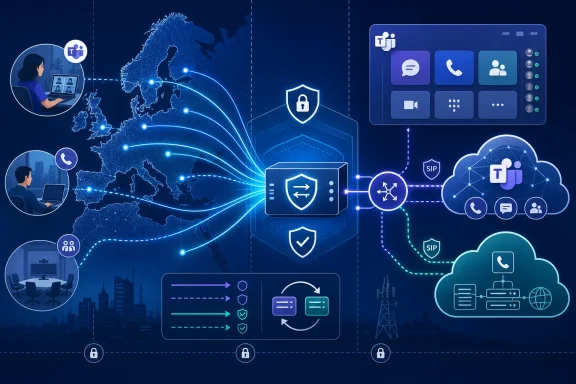 Microsoft Teams Has Become the Front Door to a Much Older Voice Problem
For years, the collaboration market sold itself through cameras, touchscreens, headsets, and huddle-room kits. That hardware still matters, but the harder problem has moved down the stack. Enterprises have standardized on Teams, Zoom, and cloud contact-center platforms, yet many are still dragging along PBXs, SIP trunks, analog endpoints, regulated call flows, and carrier contracts that were never designed for a clean SaaS migration.That is where Ribbon’s portfolio fits into TD SYNNEX Maverick’s European push. Session border controllers, Direct Routing, and SIP infrastructure are not glamorous technologies, but they are the difference between a Teams deployment that handles chat and meetings and one that can replace a company’s phone system without terrifying the security team.
The announcement frames the partnership around UCaaS and CCaaS, but the subtext is broader. Unified communications and contact centers have converged around the same cloud identity, network, security, and compliance questions that Windows administrators already face across Microsoft 365. Voice is no longer a separate telecom island. It is an application workload, and it increasingly lives inside the same operational universe as Entra ID, Teams governance, endpoint policy, Azure networking, and managed security.
TD SYNNEX Maverick’s value proposition is that resellers and integrators need more than a vendor SKU. They need a distribution layer that can help stitch together collaboration platforms, voice security, cloud marketplaces, financing, deployment support, and regional availability. Ribbon gets a wider route to European channel partners; Maverick gets a more serious cloud communications spine.
Distribution Is Becoming the Battlefield for Hybrid Work Infrastructure
The channel announcement may sound routine, but it lands at a meaningful point in the hybrid-work cycle. The first wave of remote work spending was reactive: laptops, VPNs, webcams, Teams rooms, Zoom licenses, headsets, and whatever kept organizations functioning. The second wave is about rationalizing the stack, reducing overlap, hardening security, and deciding which legacy systems finally get retired.That makes distribution strategically important again. Vendors can promote cloud migration all they like, but most midmarket and enterprise customers do not buy communications modernization directly from a press release. They buy it through integrators, MSPs, telecom specialists, and AV partners who understand their estate and can absorb the ugly details.
TD SYNNEX Maverick has spent years positioning itself around collaboration, unified communications, and digital signage rather than treating those markets as generic IT distribution categories. The Ribbon agreement extends that specialty deeper into the infrastructure layer. It gives Maverick partners a way to talk about Teams telephony, contact center modernization, and voice security with a vendor known for carrier-grade communications.
That matters because the hybrid workplace is not just a room-design problem. The employee in a Teams meeting, the receptionist forwarding a PSTN call, the call-center agent handling a regulated customer interaction, and the emergency phone in a public-sector facility may all touch the same communications architecture. The reseller that can join those dots has a better shot at winning the modernization project than the reseller that only sells endpoints.
Ribbon’s Role Is to Make Cloud Voice Less Fragile
Ribbon Communications is not a household name in the way Microsoft or Zoom are, but in voice infrastructure circles it occupies a familiar niche. The company sells technology that helps organizations connect, secure, and manage real-time communications across IP networks, carriers, collaboration platforms, and cloud environments. Its session border controllers are the key piece in this announcement because SBCs sit at the boundary between trusted and untrusted voice networks.In practical terms, an SBC helps control SIP traffic, mediate between systems, protect against malformed or malicious sessions, enforce policy, and support interoperability between platforms that may all claim standards compliance while behaving differently in production. That role becomes more important as enterprises connect Microsoft Teams or Zoom Phone to existing telecom services. The cloud platform may host the user experience, but the edge still needs governance.
Teams Direct Routing is the obvious Microsoft hook. Many organizations want Teams to become the primary calling client while retaining their own carriers or complex telephony arrangements. Direct Routing allows that model, but it introduces engineering and support choices that customers cannot ignore. The organization needs certified infrastructure, routing design, emergency calling support, monitoring, failover planning, and a partner who understands both Microsoft’s cloud and the voice network it is replacing.
Ribbon’s appeal to the channel is that it gives partners something concrete to build around. Instead of pitching cloud voice as a licensing exercise, they can pitch it as an architecture: Teams at the user layer, Ribbon at the voice edge, cloud services and SIP connectivity behind it, and managed services wrapped around the whole thing. That is more complex than selling an add-on license, but it is also where margin and customer stickiness tend to live.
Europe Makes the Deal More Complicated and More Valuable
A pan-European distribution agreement is never just a map with more countries shaded in. EMEA is fragmented by language, regulation, telecom norms, procurement habits, data-residency expectations, and public-sector requirements. A communications product that can be sold easily in one market may need different carrier relationships, compliance documentation, support models, or partner training in another.That complexity is exactly why a distributor such as TD SYNNEX Maverick matters. Ribbon can make its portfolio technically available, but availability is not the same thing as adoption. Partners need local enablement, presales support, deal registration mechanics, credit, logistics, and a channel motion that fits the way European customers buy.
The announcement’s references to public sector, healthcare, education, and financial services are not accidental. These are sectors where voice reliability and compliance remain non-negotiable. A hospital cannot treat telephony as a disposable app. A financial services firm cannot ignore call recording, retention, monitoring, or fraud risk. A school or government department may be under pressure to modernize, but it often faces procurement and security constraints that slow cloud adoption.
For those customers, “move to the cloud” is too blunt a message. The more credible pitch is migration at a controlled pace: keep what must remain, modernize what can move, integrate with Teams or Zoom where it improves operations, and protect the voice edge throughout. That is the phrase behind the deal’s marketing language, and it is the reason Ribbon’s infrastructure products belong in the same conversation as collaboration endpoints and cloud subscriptions.
The AWS Reference Shows How Voice Is Being Pulled Into Cloud Marketplaces
TD SYNNEX also pointed to existing relationships with Amazon Web Services as part of the opportunity around the Ribbon partnership. That detail is easy to skip, but it says something important about where the channel is going. Communications infrastructure is being packaged, financed, and deployed through cloud ecosystems rather than only through traditional telecom procurement.Cloud marketplaces have become an increasingly important route for enterprise software and infrastructure purchasing. Customers may have committed cloud spend, procurement frameworks, or internal approval paths that make marketplace-aligned buying easier than classic reseller transactions. For partners, that can change how deals are structured and how services are attached.
The AWS angle does not make this a Windows-only story, but it does make it relevant to Windows-centric IT teams. Microsoft Teams is the collaboration layer in many organizations; Azure may host adjacent workloads; AWS may hold other line-of-business infrastructure; and voice services may need to bridge all of it. The practical enterprise reality is multi-cloud, even when the user-facing collaboration experience is heavily Microsoft.
This is one of the understated tensions in the market. Microsoft would prefer customers to consume as much of the communications stack as possible through Microsoft 365 and Teams Phone. Partners, carriers, and infrastructure vendors often succeed by serving the gaps: hybrid migrations, carrier choice, survivability, interoperability, and specialized compliance. TD SYNNEX Maverick’s Ribbon expansion sits squarely in that middle ground.
The Channel Is Chasing Services, Not Just Seats
The announcement talks about partner opportunity, and in this case the phrase has substance. UCaaS and CCaaS are no longer merely license resale markets. They are service markets, especially when customers need voice migration planning, tenant configuration, number porting, device integration, contact-center workflows, call recording, analytics, security policy, and ongoing support.That shift is good for capable partners and unforgiving for superficial ones. Selling Teams telephony badly is easy. Delivering it well across a multinational estate is hard. The work cuts across Microsoft 365 administration, network quality, identity, telecom contracts, endpoint devices, and user adoption. A mistake in email migration is annoying; a mistake in emergency calling or inbound customer service can become a business incident.
TD SYNNEX Maverick is trying to give its partners a fuller bag of parts for that reality. Ribbon adds the secure voice and SIP infrastructure layer. Existing collaboration vendors provide rooms, devices, and user experiences. Cloud relationships provide deployment models and procurement paths. The distributor’s role is to make those components feel like a coherent portfolio rather than a scavenger hunt.
The most interesting part of the deal is not that Ribbon products will be available in Europe. It is that TD SYNNEX Maverick is treating communications modernization as an end-to-end channel category. That is how the market increasingly behaves: the customer asks for hybrid work, but the project turns into voice architecture, meeting-room design, cloud procurement, device management, and security.
Windows Administrators Inherit the Telephony Mess
For WindowsForum’s audience, the practical implication is that Teams voice is no longer someone else’s problem. In many organizations, the old boundary between telecom and IT has collapsed. The people who manage Microsoft 365, identity, endpoint security, and network access are increasingly dragged into calling plans, Direct Routing, SBCs, call queues, auto attendants, and compliance workflows.That does not mean every Windows admin needs to become a SIP engineer. It does mean the decisions made by telecom specialists now affect the Microsoft tenant, the endpoint estate, and the security posture. Teams calling touches user licensing, conditional access assumptions, device sign-in, meeting-room accounts, audit trails, guest access, retention, and support processes. The phone system is becoming another workload in the Microsoft cloud environment.
This is where a distribution deal can have downstream effects. If European partners gain easier access to Ribbon’s Microsoft Teams Direct Routing solutions through TD SYNNEX Maverick, customers may see more packaged offerings around Teams telephony. Those offerings may promise faster migrations, stronger security, or easier hybrid deployment. IT teams should welcome that only if the partner can explain the architecture in operational terms, not just sales terms.
The questions administrators should ask are concrete. How is SBC redundancy handled? What happens when the WAN degrades? How are emergency calls routed? How are call records retained? Who monitors SIP security events? How does the design interact with Teams policies and Microsoft 365 identity controls? A channel partner that cannot answer those questions is not ready to own the migration.
The Announcement Is Also a Signal About Zoom and Azure
Although Teams gets the strongest pull in this story, the announcement also mentions Zoom and Microsoft Azure. That matters because the collaboration market is not settling into a single-vendor monoculture. Enterprises may standardize internally on Teams while still supporting Zoom for certain external workflows, board meetings, webinars, or acquired business units. They may also run contact-center or voice workloads across cloud infrastructure that does not map neatly to one collaboration brand.Ribbon’s technology is positioned for that messy middle. SIP interoperability, SBC policy, and cloud voice infrastructure are useful precisely because enterprise communications rarely move in a straight line. An organization may migrate users to Teams Phone, retain a specialized contact center, keep analog lines for facilities, and support Zoom Phone in a subsidiary. The winning architecture is the one that lets that transition happen without losing security or reliability.
Azure’s role is similarly layered. Microsoft’s cloud is the control plane for Teams and many identity-dependent workflows, but Azure also sits in broader modernization projects. Partners that understand Azure networking, Microsoft 365 security, and communications infrastructure can build more convincing propositions than partners that treat voice as a standalone telecom overlay.
The announcement’s language about cloud-driven innovation is vendor-speak, but the underlying market shift is real. Communications is being absorbed into cloud architecture. Once that happens, the buying center changes. CIOs, infrastructure leaders, security teams, and workplace technology groups all get a vote. The classic PBX refresh becomes a cloud transformation project with voice attached.
Security Is the Quiet Center of the Deal
Voice security rarely gets the attention it deserves because users experience calls as ordinary and boring. Attackers do not. SIP infrastructure can be abused for toll fraud, denial-of-service attacks, impersonation, reconnaissance, and disruption. Contact centers are targets for social engineering. Voice systems also intersect with regulated data, customer authentication, and business continuity.That is why the phrase “secure, scalable, and cloud-ready” is doing more work than usual in this announcement. Moving voice into cloud collaboration tools does not automatically make it secure. In some cases it expands the attack surface by connecting legacy telephony, internet-facing services, cloud identity, and third-party providers. The security model has to be designed, not assumed.
Session border controllers are one layer of that model. They do not replace identity controls, endpoint security, monitoring, or good operational discipline, but they provide a controlled boundary for real-time communications. In a Teams Direct Routing environment, that boundary can be essential. It is where policy, interoperability, and protection meet the public or carrier-facing side of the voice network.
For European customers, security also has a regulatory flavor. Data protection, critical infrastructure expectations, public-sector procurement rules, and industry-specific compliance can shape communications decisions. A healthcare provider or financial institution may want the productivity benefits of cloud collaboration while still insisting on strict control over call flows, recording, retention, and resilience. Ribbon and Maverick are aiming at that demand.
The Public-Sector and Healthcare Pitch Is Not Just Marketing
Public sector, healthcare, education, and financial services appear in nearly every enterprise technology announcement, but communications gives those verticals extra weight. These are environments where voice is still operationally critical. A Teams outage in a typical office is disruptive; a communications failure in a hospital, school district, council office, or bank can be much more serious.These customers also tend to have long-lived infrastructure. They may have physical phones in corridors, analog devices in lifts, emergency lines, paging systems, reception desks, branch offices, and legacy call flows embedded in daily operations. The migration path is rarely a clean rip-and-replace. It is a staged process, and staged processes need infrastructure that can bridge old and new systems.
That is where the “at their own pace” message from Ribbon’s channel leadership becomes commercially useful. It acknowledges what cloud purists sometimes miss: many organizations cannot move all communications workloads at once, even if they want to. Budget cycles, compliance reviews, union agreements, device dependencies, and service continuity all slow the process.
The opportunity for partners is to turn that complexity into a managed roadmap. Phase one might secure SIP trunks and enable Teams calling for office workers. Phase two might modernize contact-center workflows. Phase three might rationalize legacy devices and branch survivability. The distributor that can supply the infrastructure and partner support across those phases has a stronger role than one that only fulfills orders.
The North American Relationship Gives Europe a Template, Not a Guarantee
TD SYNNEX said the EMEA agreement builds on a long-standing relationship with Ribbon in North America. That history matters because distribution partnerships are easier to announce than to operationalize. A vendor and distributor that have already worked together in another region have some shared muscle memory around enablement, sales motion, support escalation, and partner packaging.But Europe is not North America with different plugs. The EMEA channel is more fragmented, and the telecom landscape is more varied. Carrier relationships, language support, data expectations, and partner maturity differ by country. A template helps, but it does not eliminate the local work.
This is why Maverick’s specialist identity matters. A broadline distributor can move boxes and licenses. A specialist unit can, at least in theory, help partners design solutions, match vendors, and pursue more complex opportunities. The Ribbon deal tests whether that positioning can extend from collaboration and AV into the deeper voice infrastructure layer across multiple European markets.
If it works, the partnership could give Ribbon a stronger route into European Teams telephony and cloud voice projects. It could also help TD SYNNEX Maverick become more relevant to partners that want to move beyond meeting-room refreshes into recurring managed communications services. If it underdelivers, it risks becoming just another vendor addition in a crowded portfolio.
The Real Competition Is Architectural Simplicity
Ribbon and TD SYNNEX Maverick are not only competing against other SBC vendors, distributors, and UC specialists. They are competing against simplicity. Microsoft, Zoom, and other cloud communications providers all have incentives to make customers believe telephony can be consumed as a straightforward cloud feature. For some organizations, that is true enough. For others, it is dangerously incomplete.The channel’s challenge is to explain when architecture matters without making every sale feel like a consulting marathon. A small business with basic calling needs may not need a complex Direct Routing environment. A multinational enterprise with existing carriers, compliance obligations, and contact-center dependencies probably does. The partner must know the difference.
This is where distribution enablement becomes decisive. If TD SYNNEX Maverick can help partners qualify opportunities, design appropriately sized solutions, and avoid overengineering, the Ribbon portfolio becomes an asset. If partners pitch SBCs and Direct Routing as a generic answer to every Teams voice conversation, customers will either resist or buy the wrong thing.
The best case for this partnership is not maximum complexity. It is controlled complexity. Cloud communications should hide unnecessary pain from users while giving administrators enough control to meet business, security, and regulatory requirements. That balance is hard, and it is exactly where the channel can earn its keep.
The Channel’s Cloud Voice Bet Has a Few Hard Edges
The announcement gives partners plenty to like, but the practical implications are sharper than the marketing language suggests. Cloud voice projects succeed when customers understand what is being modernized, what is being preserved, and who owns each operational risk after go-live.- TD SYNNEX Maverick is extending its Ribbon relationship into EMEA, making Ribbon’s SBC, Teams Direct Routing, SIP, and cloud voice infrastructure portfolio available through its European operations.
- The deal strengthens Maverick’s position in UCaaS and CCaaS by adding more of the secure voice infrastructure needed for serious Teams telephony and managed communications projects.
- European partners may benefit from a more complete route to market, but success will depend on local enablement, telecom expertise, and country-by-country execution.
- Windows and Microsoft 365 administrators should treat Teams calling as an infrastructure workload that touches identity, security, compliance, networking, and endpoint management.
- Customers should be wary of any migration pitch that treats cloud telephony as only a license change, because voice resilience, emergency calling, SIP security, and interoperability still require design.
- The AWS and Azure references show that communications modernization is increasingly tied to cloud ecosystems and marketplace procurement rather than traditional telecom buying alone.
References
- Primary source: rAVe (PUBS)
Published: 2026-06-29T16:42:10.398010
TD SYNNEX Maverick Extends Distribution Agreement with Ribbon Communications to EMEA – rAVe [PUBS]
TD SYNNEX Maverick Extends Distribution Agreement with Ribbon Communications to EMEA — All the latest news coverage of the AV industry from rAVe [PUBS]. From press releases to product announcements, get your news from rAVe [PUBS] first. ravepubs.com
- Related coverage: hub.tdsynnex.com
TD SYNNEX Maverick and Ribbon Communications Extend Distribution Agreement to Power Cloud Communications Across EMEA - TD SYNNEX Hub
BARCELONA, Spain, 25th June 2026 – TD SYNNEX (NYSE: SNX) Maverick has announced a new pan-European partnership with Ribbon Communications (NASDAQ: RBBN), a leading provider of real-time communications and cloud networking technologies. The agreement builds on a long-standing relationship in...hub.tdsynnex.com - Related coverage: ribboncommunications.com
Ribbon and SYNNEX Expand Reseller Partnership Into the Caribbean and Latin America
Westford, MA – Ribbon Communications Inc. (Nasdaq: RBBN), a global provider of real time communications software and network solutions to service providers, enterprises, and critical infrastructure sectors, today announced that it is expanding its relationship with SYNNEX (NYSE: SNX), a Fortune...ribboncommunications.com - Related coverage: installation-international.com
AOPEN adds TD SYNNEX as European distributor - Installation
Agreement covers company's eTILE touch displays, Digital Engine media players, and ChromeOS devices for signage and kiosk applicationswww.installation-international.com - Related coverage: pcr-online.biz
TD Synnex Maverick signs deal with AOPEN - PCR
TD Synnex Maverick has agreed a new pan‑European distribution partnership with AOPEN, the digital sipcr-online.biz - Related coverage: s21.q4cdn.com
TD SYNNEX Wins Global and Regional Distributor of the Year Honors at Cisco Partner Summit 2025 2025
PDF documents21.q4cdn.com
- Related coverage: eu.tdsynnex.com
- Related coverage: tdsynnex.com
