

The year 2025 delivered an unusual kind of obituary list: not people, but products, platforms, and projects that quietly — or spectacularly — reached the end of their road, leaving users, IT teams, and the market to pick up the pieces and ask what these exits say about the direction of consumer tech, enterprise strategy, and sustainability.
2025’s tech obituaries read like a cross-section of an industry in transition: from legacy software and once-cutting-edge devices to ambitious AI hardware experiments and consumer services that never achieved scale. Some passings were expected and procedural — an operating system reaching its scheduled end-of-support, for example — while others were abrupt strategic reversals. The conversation this year wasn’t just about nostalgia; it focused squarely on why these products died, what the exits reveal about business models and market signals, and what users should do next.
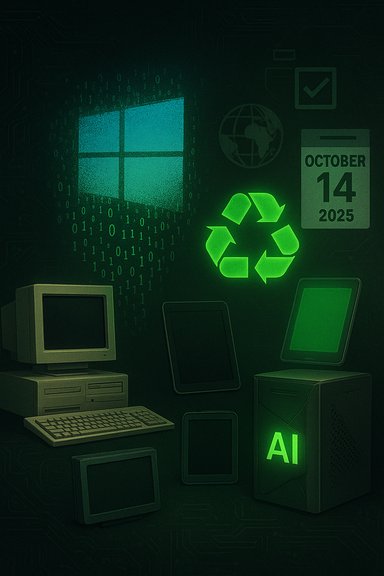
Much of the debate centered on Windows 10’s formal end of mainstream support on October 14, 2025, a watershed that forced millions of users and organizations into migration decisions and sparked a surge of interest in refurbishment, alternative OS options, and policy discussions about software lifecycles and e‑waste. That single calendar cut defined broad technical and social consequences and framed many of the other retirements as part of a wider realignment of priorities.
The final lesson is simple but urgent: in a world where software and cloud services morph rapidly, durable hardware, transparent lifecycle policies, and robust second‑life economies are no longer optional — they are essential for preserving both user trust and the planet’s limited resources.
Source: PCMag UK 404 Forever: The Tech That Died in 2025
 Background
2025’s tech obituaries read like a cross-section of an industry in transition: from legacy software and once-cutting-edge devices to ambitious AI hardware experiments and consumer services that never achieved scale. Some passings were expected and procedural — an operating system reaching its scheduled end-of-support, for example — while others were abrupt strategic reversals. The conversation this year wasn’t just about nostalgia; it focused squarely on why these products died, what the exits reveal about business models and market signals, and what users should do next.Much of the debate centered on Windows 10’s formal end of mainstream support on October 14, 2025, a watershed that forced millions of users and organizations into migration decisions and sparked a surge of interest in refurbishment, alternative OS options, and policy discussions about software lifecycles and e‑waste. That single calendar cut defined broad technical and social consequences and framed many of the other retirements as part of a wider realignment of priorities.
Overview: What actually died in 2025
This is not a simple list of discontinued items; the year’s exits fall into several macro-categories that explain common causes and shared implications.Categories of loss
- Platform and OS lifecycle endings — e.g., Windows 10 mainstream support expiration, with vendors and non-profits scrambling to mitigate the impact.
- Consumer service rationalization — streaming storefronts, loyalty programs, and apps that failed to keep users or monetize effectively.
- Hardware and gadget failures — high-cost, niche devices (including experimental AI hardware) that couldn’t reach mainstream adoption.
- Feature and cloud service retirements — functionality previously bundled into larger platforms (archived streams, legacy app features).
- Strategic corporate pivots — partnerships and initiatives wound down as companies refocused on core strengths.
Deep dive: Windows 10 end-of-support — the year’s tectonic shift
What happened, exactly
On October 14, 2025, mainstream support for Windows 10 ended. That meant routine security patches, feature updates, and free mainstream support ceased for most consumer and business Windows 10 installations. Microsoft offered a limited Extended Security Updates (ESU) program as a temporary bridge, but public reaction made clear that the hard cut would force many households, schools, and small organizations into an uncomfortable choice: upgrade hardware, purchase ESU coverage, switch operating systems, or accept increasing security risk.Why it mattered
- Scale and exposure. Windows 10 retained a sizeable installed base heading into 2025, and the EOL deadline created a mass migration problem unlike ordinary product cycles. The decision had cybersecurity and environmental consequences alike.
- Hardware gating. Windows 11’s stricter hardware requirements (TPM 2.0, Secure Boot, newer CPU families) meant functional, well‑performing PCs could still be ineligible for a free OS upgrade — effectively pushing replacement spending rather than simple software migration. That dynamic accelerated the debate over planned obsolescence and sustainability.
- Community and policy response. Nonprofits and advocacy groups pivoted quickly; refurbished and repurposed hardware initiatives (installing ChromeOS Flex, modern Linux distros, or donating updated devices) emerged as pragmatic mitigations for both digital inclusion and e‑waste reduction. These grassroots responses show how civil society can contain some of the human cost of forced transitions.
Practical steps users and admins took
- Inventory devices and check Windows 11 compatibility (PC Health Check / hardware checks).
- Prioritize mission-critical machines for paid ESU or hardware refresh.
- Consider refurbishment and ChromeOS Flex / Linux for secondary machines to avoid landfill and extend device life.
AI hardware and oddities: when invention doesn’t meet adoption
2025 was also the year many high‑profile AI hardware experiments were judged unsustainable.The Humane AI Pin and other AI gadget flops
Startups and incumbents alike tried to productize AI as a distinct hardware category — devices that would act as always-on conversational agents, novel wearables, or specialized assistants. Several offerings, however, collided with two hard realities: smartphones already cover most general-purpose interactions, and the cost-to-value ratio for consumers was poor.- High price tags, incomplete features, and disappointing user experience made some AI devices non-starters.
- In several cases, larger companies acquired the intellectual property without committing to full product lines — signaling that patents and talent were often more valuable than the consumer device itself.
Services and software that quietly disappeared
Many retirements were pragmatic: low usage, high cost, or strategic consolidation led vendors to kill standalone apps and features.Notable retirements with direct user impact
- Standalone Zelle app retired: continued adoption inside banking apps made the separate app redundant. Users were encouraged to use their bank’s integrated Zelle flows instead.
- Dropbox Password Manager sunset and Dashlane limiting its free tier: the password manager market consolidated around a few large players, and smaller or non-core offerings were wound down.
- Amazon Chime and Skype: legacy communications apps ended as their parent firms rationalized offerings and pushed unified platforms (Teams, integrated conferencing) instead.
Hardware: risky bets and the cost of novelty
Expensive experimentations that didn’t scale
- High-end AR/VR headsets and mixed-reality investments often failed to reach beyond niche prosumer and enterprise markets. Companies shelved product lines, redirected engineering resources, or narrowed ambitions to specific verticals (e.g., industrial AR for training).
- High-priced devices with narrow utility, like air-purifying headphones and star‑trek‑style wearables, drew press attention but not durable market demand. Those product exits are reminders that novelty alone cannot substitute for daily utility, battery life, comfort, privacy assurances, and price.
The Micron/consumer memory pivot (flagged claim)
The industry faced memory and GPU supply pressures driven by AI data-center demand. Reports in late 2025 suggested makers would prioritize data center customers, reshaping consumer component availability and pricing. Readers should treat specific vendor strategy details or timelines with caution unless confirmed by official vendor communications. (Flag: vendor-specific production cutbacks require corporate confirmation for precise dates and product-line impacts.Corporate pivots: partnerships and projects that were unwound
2025 also saw several partnerships and product tie-ins pulled back or restructured.- Consumer loyalty programs, partnerships that didn’t scale, and multi‑company streaming plays were curtailed as conglomerates re-evaluated the economics of exclusive content and shared platforms.
- Strategic reallocations favored core, profitable lines — which is why some collaboration projects were quietly wound down in favor of stronger in‑house initiatives.
The human and environmental cost: obsolescence as public policy issue
E‑waste and the moral calculus
When a widely deployed platform reaches end of support, there’s a ripple effect: secure-but-unsupported devices create security risk, and hardware that is still usable may be retired prematurely — producing e‑waste. Non-profits and consumer advocates stressed the need for longer minimum software support commitments and clearer upgrade pathways to reduce unnecessary disposal. Practical community responses (repair days, refurbishment drives, donation programs) mitigated some damage, but systemic policy changes remain the durable solution.The social equity angle
Those least able to afford new hardware or paid ESU coverage were disproportionately affected by product retirements. Community organizations showed how repurposing working hardware into secure, updated devices helps close the digital divide while lowering environmental harm. These local efforts are valuable, but they don’t replace the need for clearer vendor commitments to software longevity.Critical analysis: what these deaths reveal about industry direction
Strengths revealed by the shakeout
- Market discipline. Companies that strongly align product investment with user adoption and sustainable revenue models tend to survive. This discipline can reduce flailing projects and channel engineering effort into higher-value areas.
- Pragmatic consolidation. Eliminating redundant services and focusing on integrated offerings can produce streamlined user experiences and reduce fragmentation.
- Community resilience. Nonprofits, refurbishment programs, and community-driven solutions proved their value as practical hedges against abrupt vendor exits.
Risks and costs
- Planned obsolescence concerns. Hardware gating for OS upgrades and abrupt EOL timelines raise legitimate sustainability and fairness questions.
- Concentration risk in critical supply. AI data-center demand can crowd out consumer availability (memory, GPUs), driving price inflation and product shortages.
- Loss of user trust. Abrupt shutdowns of long-used services without meaningful migration tools erode consumer confidence and degrade brand reputation.
Recommendations: what readers should do now
For consumers
- Inventory your devices and check OS/compatibility status before a vendor deadline or sale season.
- Prioritize important machines for paid or official upgrade paths; repurpose secondary machines with ChromeOS Flex or a modern Linux distro where feasible.
- Avoid panic buys — look for refurbished, environmentally vetted units if budget is tight; non-profit programs and certified refurbishers can offer good value.
For IT leaders
- Plan migrations with realistic timelines: software lifecycles create immovable deadlines; avoid last-minute scrambles.
- Budget for layered approaches — hardware refresh for critical endpoints, ESU for transitional systems, and repurposing for low-priority devices.
- Insist on lifecycle transparency in procurement contracts: require minimum software-servicing windows aligned with expected hardware life.
For policymakers and advocates
- Require minimum software support disclosures at point of sale, making lifecycle expectations clear to consumers.
- Incentivize repairability and upgrade paths through regulation and procurement guidelines.
- Support refurbishment programs as a public good to reduce e‑waste and enhance digital inclusion.
Strengths, blind spots, and unverifiable claims
The industry regained focus in 2025 by pruning speculative projects and doubling down on scalable services, but several claims circulating in media and commentary lacked firm public confirmation. Notably, vendor-specific production decisions (for example, changes in consumer memory product roadmaps) and precise settlement figures or donations reported in some headlines require independent confirmation from official filings or corporate statements. Where such claims appear in retrospectives, readers should treat the numbers as reported rather than confirmed until corroborated by primary sources.Conclusion
2025’s list of tech that “died” reads less like a tombstone-roll and more like a market stress test: products that failed to offer durable value, or that were collateral in larger strategic restructurings, were culled; community responses filled some gaps; and hard choices about sustainability, hardware gating, and product lifecycles moved into the open. The takeaways are practical and enduring: companies must plan sunsetting responsibly, users should expect finite lifecycles, and society needs better systems to reuse and extend device life.The final lesson is simple but urgent: in a world where software and cloud services morph rapidly, durable hardware, transparent lifecycle policies, and robust second‑life economies are no longer optional — they are essential for preserving both user trust and the planet’s limited resources.
Source: PCMag UK 404 Forever: The Tech That Died in 2025
