

The Cub is now listed for purchase on Microsoft’s Xbox store in Norway as a 2D post-apocalyptic platformer from Demagog Studio and Untold Tales, bringing its 1990s Disney-SEGA-inspired parkour to Xbox One and Xbox Series X|S after an earlier Xbox delay. That small storefront fact matters because The Cub is not merely another late indie port drifting into the catalog. It is a useful snapshot of where Xbox’s indie library now lives: less defined by exclusivity fireworks, more by delayed arrivals, cross-platform afterlives, and games that sell mood as much as mechanics.
When The Cub first launched in January 2024, Xbox was the missing platform. The game arrived on PC, PlayStation, and Switch, while the Xbox version was postponed because the team had reportedly shifted resources. That kind of delay is common enough in the indie space to be forgettable, but it also reveals the hierarchy small studios face when certification, controller support, store operations, and limited engineering time collide.
The new Xbox listing changes the commercial life of the game more than it changes the game itself. For players who already saw reviews, trailers, and Steam impressions in 2024, this is not a discovery event. For the Xbox storefront, however, it is exactly the kind of mid-catalog arrival that gives the platform texture between Game Pass headlines and first-party tentpoles.
That is the business logic behind many late ports. A game like The Cub does not need to dominate the release calendar to matter; it needs to be present when a player is browsing for something compact, stylized, and self-contained. Xbox’s store has increasingly become a long-tail marketplace where timing is less about launch-day noise and more about whether a game can still look distinct when it finally appears.
The Norwegian storefront copy leans into that distinctiveness with unusual confidence. It sells the game as “inspired by the classics” but built for the 21st century, name-checking The Jungle Book, Aladdin, and The Lion King as design ancestors. That is a risky pitch, because anyone old enough to remember those games also remembers their cruelty.
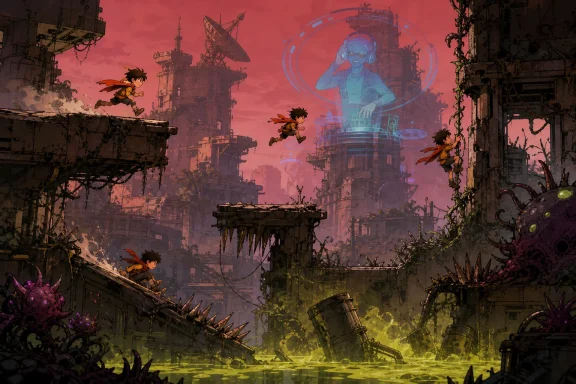
The Cub clearly understands the appeal of that era’s animation-first platforming. Its movement vocabulary is familiar: jumping, sliding, climbing, swinging, fleeing, and reading hazards on the fly. It is not trying to be a systems-heavy Metroidvania or a physics sandbox; it wants the player moving left to right through a hostile diorama with just enough friction to make survival feel earned.
But this is where nostalgia becomes dangerous. Modern players tolerate difficulty when they believe the rules are consistent and the failure is theirs. They are less forgiving when animation priority, collision quirks, or slightly imprecise jumps turn a platformer into an argument with its own controls.
Reviews of the earlier releases generally found the game stylish and atmospheric, while some critics were less convinced that the platforming matched the presentation. That split is important. The Cub is not being sold as a pure art game; it is being sold as “challenging platform parkour.” If the movement does not sing, the nostalgia pitch turns from tribute into liability.
Still, there is a difference between a game with modest mechanical ambition and a game with no point of view. The Cub has a point of view. It wants to recover the side-scrolling chase as a cinematic experience, not just a test of reflexes, and that puts it closer to Another World, Inside, and the old Disney platformers than to the precision-platformer lineage of Celeste or Super Meat Boy.
That continuity matters because The Cub is not simply using climate disaster as background wallpaper. Its premise is blunt: after the Great Ecological Catastrophe, the wealthy flee to Mars and leave everyone else behind. Years later, the Martians return to Earth and discover a child who has adapted to the poisoned planet, triggering a hunt through the ruins.
It is not subtle, but subtlety is not always the virtue people pretend it is. The game’s satire works because it understands that the fantasy of escape is already embedded in modern techno-capitalist culture. Mars is not just a setting here; it is the ultimate gated community, a place where the winners of catastrophe can rebrand abandonment as survival.
The child at the center of the story reverses that power structure. The people who left Earth think of themselves as the future, but the “cub” is the one who actually belongs to the transformed planet. That gives the platforming a thematic shape: every leap through overgrown cities and ruined laboratories is not just traversal, but a demonstration that the abandoned world has produced its own heir.
The Xbox listing emphasizes that environmental storytelling is core to the experience. Crumbling brutalist towers, genetics labs, chemical mines, and overgrown battlefields are not merely level themes. They are evidence, the physical record of a civilization that built the machinery of its own disappearance.
Radio lets the game speak without stopping the player. In a platformer, that is valuable. Cutscenes can smother momentum, collectible logs can feel like homework, and dialogue boxes can interrupt the very movement the design is trying to celebrate. A radio broadcast can turn exposition into atmosphere.
It also sharpens the satire. The people on Mars are not silent gods watching from above; they have media, nostalgia, class anxiety, and culture. They broadcast themselves back toward a planet they abandoned, which makes the soundtrack feel like both companion and indictment.
There is a grim joke in that setup. The player runs through the consequences of elite escape while listening to the leisure-class remnant narrate its own survival. It is the apocalypse as lifestyle programming, a disaster zone scored by the people least entitled to sentimentalize it.
That idea is more interesting than a simple “humanity destroyed nature” parable. The Cub is not only about environmental collapse; it is about who gets to turn collapse into a story, who gets to leave, and who is left to become part of the new ecology.
For a platformer, that clarity is not just aesthetic. The player must know what can be climbed, what can be avoided, what can kill, and where the eye should go next. Stylization can help, provided the game never confuses painterly richness with visual ambiguity.
The late-1990s animation reference is also doing emotional work. Those films were made at the edge of a disappearing production culture, when hand-drawn animation was still mainstream but already under pressure from CG. By borrowing that look, The Cub taps into a memory of lush, expensive, human-made animation and then places it in a world after industrial failure.
That tension is part of the appeal. The game’s apocalypse is not gray-brown rubble; it is colorful, strange, and reclaimed by hostile life. The result is less “nuclear wasteland” than ecological revenge fantasy, where nature has not healed so much as mutated into a new authority.
The danger, again, is that strong art direction can oversell a small game. Players who come expecting a sweeping animated epic may find a compact platformer that lasts only a few hours. But that compactness is not automatically a flaw. In an Xbox ecosystem crowded with endless live-service obligations and 80-hour backlogs, a three- or four-hour game with a distinct visual identity may be exactly the right size.
That makes it a better fit for Xbox than it might initially appear. The platform is often discussed through the lens of blockbusters and subscription value, but its health also depends on small games that fill particular moods. A store cannot live on flagship releases alone.
For WindowsForum readers, that point matters because Xbox is now inseparable from Microsoft’s broader gaming infrastructure. The console, the Windows PC app, cloud entitlements, achievements, store localization, and controller ecosystem all form one messy commercial surface. A late indie port is not a strategic earthquake, but it is part of the everyday reality of Microsoft’s gaming platform.
The Norwegian listing is also a reminder that the Xbox store is not one monolithic front page. Regional pages, localized descriptions, pricing differences, and release timing can shape how a game is encountered. A title may be old news to Steam users and new to a console owner browsing in Oslo, Chicago, or Warsaw.
That fragmented discovery problem is one of the biggest challenges for indie developers. Launch once and the news cycle may miss you. Launch late on another platform and you need a second story. The Cub’s second story is simple: the delayed Xbox version now gives Microsoft’s audience a chance to catch up with a visually strong, politically pointed platformer that was previously absent.
That is refreshing. Digital storefronts often flatten games into feature slurry: explore, upgrade, survive, customize, master. The Cub’s description has a voice. It understands that its appeal is not merely “2D platforming” but the collision of childhood animation memory with adult ecological dread.
There is a commercial risk in being that specific. A player looking for pure mechanical challenge may bounce off the story-heavy mood. A player looking for a narrative adventure may find the chase sequences too gamey. But specificity is also the only way a small game survives a crowded store.
The better comparison may not be to the biggest platformers, but to compact albums or graphic novels. The Cub is selling a tone: chill apocalypse radio, brutalist ruins, evolved wildlife, dangerous flora, and a child fleeing the people who outsourced their guilt to another planet. If that tone lands, the game does not need to be mechanically revolutionary.
The Xbox audience has room for that kind of thing. It is easy to caricature console players as chasing only spectacle, but the modern Xbox library includes plenty of appetite for small, moody, visually assertive games. The challenge is visibility, not compatibility.
The Cub belongs to the second camp. That makes its old-SEGA comparison slightly misleading, or at least incomplete. The classic Disney games were animation showcases, yes, but they were also products of a period when difficulty and licensing economics were intertwined. The Cub borrows the visual memory more than the old business model.
The cinematic platformer lineage is harder to perfect than it looks. If the character has too much animation weight, players feel trapped in the avatar’s body. If the controls are too snappy, the animation loses its authored charm. If the puzzles are too simple, the game becomes sightseeing; if they are too obscure, momentum dies.
That balancing act likely explains the mixed critical tone around the game’s earlier releases. Many players and reviewers admired its world, music, and art direction, while not everyone found the platforming equally compelling. This is the eternal bargain of style-forward games: the more distinctive the wrapper, the more exposed the mechanics become.
But it would be a mistake to dismiss games in this camp as lesser because they are not pure dexterity machines. A cinematic platformer is trying to make movement feel situated in a world. Its success is not measured only by input latency, but by whether the player remembers where they ran and why.
Game Pass partially solves discovery by lowering the cost of curiosity, but it can also train players to wait. Store purchases require a sharper pitch. If The Cub is not in front of the right player at the right moment, its best qualities become invisible.
That is where editorial context matters, even on a forum like WindowsForum.com. The useful question is not simply “Is this game available?” It is “What kind of Xbox player should care?” In this case, the answer is narrower but stronger than a generic recommendation.
Players drawn to short-form, atmospheric platformers should care. Players interested in ecological science fiction should care. Fans of Demagog’s previous apocalypse games should care. Achievement hunters, pure challenge seekers, and players who want deep mechanical progression may want to calibrate expectations.
The store page, to its credit, gives enough clues to make that calibration possible. It promises platform parkour, environmental puzzles, evolved wildlife, hybrid flora, and pursuit sequences. It does not promise a sprawling campaign or endless replayability.
That honesty is valuable. The worst storefront sin is not overselling; it is selling the wrong fantasy. The Cub knows its fantasy, and the Xbox listing preserves it.
It also raises a familiar Microsoft-platform question: why buy on Xbox if a Windows version already exists? For some players, the answer is comfort. The same game can feel different on a living-room display with a controller, achievements, and console suspend behavior.
For others, the answer is ecosystem housekeeping. Xbox users increasingly move between console and PC, but not every game supports the same entitlement structure, save flow, or storefront benefits. A Microsoft Store page does not automatically mean a seamless Xbox Play Anywhere experience, and buyers should check the specific listing details before assuming cross-buy or cross-save support.
That is not a criticism of The Cub so much as a reminder of Microsoft’s branding ambiguity. “Xbox” can mean a console, a store, an app, a controller standard, a cloud service, or a subscription identity. Indie games arriving late often expose the seams because their store presence is practical rather than strategically choreographed.
For IT-minded readers, those seams are familiar. Platform ecosystems are not abstractions; they are policy, packaging, certification, localization, and support matrices. A tiny game can reveal the machinery as clearly as a blockbuster.
That does not mean the game is making a sophisticated policy argument. It is not a white paper about climate adaptation or space colonization. It is a fable, and fables work by compression.
The child protagonist is especially effective because the game avoids making the survivor a conventional action hero. The Cub is hunted, observed, and pursued. The power fantasy is not domination but escape.
That distinction gives the game its political edge. The Martian returnees are not threatened because the child is strong in the usual sense. They are threatened because the child proves that their story about Earth may be wrong. The abandoned world is not empty, and the people who left are not necessarily its rightful inheritors.
In a less stylized game, that could become heavy-handed. In a hand-drawn platformer, it becomes mythic. The player does not need a lecture on inequality when the chase itself expresses the hierarchy.
 The Xbox Arrival Turns a Delay Into a Second Launch Window
When The Cub first launched in January 2024, Xbox was the missing platform. The game arrived on PC, PlayStation, and Switch, while the Xbox version was postponed because the team had reportedly shifted resources. That kind of delay is common enough in the indie space to be forgettable, but it also reveals the hierarchy small studios face when certification, controller support, store operations, and limited engineering time collide.The new Xbox listing changes the commercial life of the game more than it changes the game itself. For players who already saw reviews, trailers, and Steam impressions in 2024, this is not a discovery event. For the Xbox storefront, however, it is exactly the kind of mid-catalog arrival that gives the platform texture between Game Pass headlines and first-party tentpoles.
That is the business logic behind many late ports. A game like The Cub does not need to dominate the release calendar to matter; it needs to be present when a player is browsing for something compact, stylized, and self-contained. Xbox’s store has increasingly become a long-tail marketplace where timing is less about launch-day noise and more about whether a game can still look distinct when it finally appears.
The Norwegian storefront copy leans into that distinctiveness with unusual confidence. It sells the game as “inspired by the classics” but built for the 21st century, name-checking The Jungle Book, Aladdin, and The Lion King as design ancestors. That is a risky pitch, because anyone old enough to remember those games also remembers their cruelty.
Nostalgia Is the Hook, but Control Is the Test
The 1990s licensed platformer is a strange object to revive. Those games were gorgeous, memorable, and often brutally unforgiving in ways that had as much to do with cartridge-era economics as design purity. They stretched limited content with demanding jumps, opaque hazards, and repetition until a short game could occupy a child for weeks.The Cub clearly understands the appeal of that era’s animation-first platforming. Its movement vocabulary is familiar: jumping, sliding, climbing, swinging, fleeing, and reading hazards on the fly. It is not trying to be a systems-heavy Metroidvania or a physics sandbox; it wants the player moving left to right through a hostile diorama with just enough friction to make survival feel earned.
But this is where nostalgia becomes dangerous. Modern players tolerate difficulty when they believe the rules are consistent and the failure is theirs. They are less forgiving when animation priority, collision quirks, or slightly imprecise jumps turn a platformer into an argument with its own controls.
Reviews of the earlier releases generally found the game stylish and atmospheric, while some critics were less convinced that the platforming matched the presentation. That split is important. The Cub is not being sold as a pure art game; it is being sold as “challenging platform parkour.” If the movement does not sing, the nostalgia pitch turns from tribute into liability.
Still, there is a difference between a game with modest mechanical ambition and a game with no point of view. The Cub has a point of view. It wants to recover the side-scrolling chase as a cinematic experience, not just a test of reflexes, and that puts it closer to Another World, Inside, and the old Disney platformers than to the precision-platformer lineage of Celeste or Super Meat Boy.
The Apocalypse Has Become Demagog Studio’s Shared Language
Demagog Studio has built a recognizable identity around beautiful, melancholy ruin. Golf Club: Wasteland, later known as Golf Club Nostalgia, imagined Earth as a deserted playground for the ultra-rich after ecological collapse. Highwater explored a flooded end-of-the-world setting with a lighter tactical-adventure frame. The Cub returns to that same broad satirical universe and makes the apocalypse physical.That continuity matters because The Cub is not simply using climate disaster as background wallpaper. Its premise is blunt: after the Great Ecological Catastrophe, the wealthy flee to Mars and leave everyone else behind. Years later, the Martians return to Earth and discover a child who has adapted to the poisoned planet, triggering a hunt through the ruins.
It is not subtle, but subtlety is not always the virtue people pretend it is. The game’s satire works because it understands that the fantasy of escape is already embedded in modern techno-capitalist culture. Mars is not just a setting here; it is the ultimate gated community, a place where the winners of catastrophe can rebrand abandonment as survival.
The child at the center of the story reverses that power structure. The people who left Earth think of themselves as the future, but the “cub” is the one who actually belongs to the transformed planet. That gives the platforming a thematic shape: every leap through overgrown cities and ruined laboratories is not just traversal, but a demonstration that the abandoned world has produced its own heir.
The Xbox listing emphasizes that environmental storytelling is core to the experience. Crumbling brutalist towers, genetics labs, chemical mines, and overgrown battlefields are not merely level themes. They are evidence, the physical record of a civilization that built the machinery of its own disappearance.
Radio Nostalgia From Mars Is More Than a Soundtrack Gimmick
One of The Cub’s smartest devices is Radio Nostalgia From Mars, the in-game broadcast that follows the player through the world. The store description frames it as a custom soundtrack filled with “apocalypse-wave” tunes, survivor stories, and a smooth-voiced DJ. That sounds like flavor text, but it is also the thing that most clearly ties The Cub to Demagog’s earlier work.Radio lets the game speak without stopping the player. In a platformer, that is valuable. Cutscenes can smother momentum, collectible logs can feel like homework, and dialogue boxes can interrupt the very movement the design is trying to celebrate. A radio broadcast can turn exposition into atmosphere.
It also sharpens the satire. The people on Mars are not silent gods watching from above; they have media, nostalgia, class anxiety, and culture. They broadcast themselves back toward a planet they abandoned, which makes the soundtrack feel like both companion and indictment.
There is a grim joke in that setup. The player runs through the consequences of elite escape while listening to the leisure-class remnant narrate its own survival. It is the apocalypse as lifestyle programming, a disaster zone scored by the people least entitled to sentimentalize it.
That idea is more interesting than a simple “humanity destroyed nature” parable. The Cub is not only about environmental collapse; it is about who gets to turn collapse into a story, who gets to leave, and who is left to become part of the new ecology.
The Art Direction Carries a Heavy Debt to Animation History
The Microsoft store copy is unusually explicit about the game’s visual inspirations. It points to late-1990s animated films such as Atlantis, Tarzan, and The Road to El Dorado, while also invoking Genndy Tartakovsky’s Primal. That is a useful map of the game’s ambitions: broad shapes, strong silhouettes, kinetic poses, and a world that reads instantly in motion.For a platformer, that clarity is not just aesthetic. The player must know what can be climbed, what can be avoided, what can kill, and where the eye should go next. Stylization can help, provided the game never confuses painterly richness with visual ambiguity.
The late-1990s animation reference is also doing emotional work. Those films were made at the edge of a disappearing production culture, when hand-drawn animation was still mainstream but already under pressure from CG. By borrowing that look, The Cub taps into a memory of lush, expensive, human-made animation and then places it in a world after industrial failure.
That tension is part of the appeal. The game’s apocalypse is not gray-brown rubble; it is colorful, strange, and reclaimed by hostile life. The result is less “nuclear wasteland” than ecological revenge fantasy, where nature has not healed so much as mutated into a new authority.
The danger, again, is that strong art direction can oversell a small game. Players who come expecting a sweeping animated epic may find a compact platformer that lasts only a few hours. But that compactness is not automatically a flaw. In an Xbox ecosystem crowded with endless live-service obligations and 80-hour backlogs, a three- or four-hour game with a distinct visual identity may be exactly the right size.
Xbox Needs More Games That Know Their Size
The most underrated quality in a modern game is restraint. Not every release needs seasons, progression trees, crafting layers, or a roadmap. The Cub appears to know the shape of its own idea: a short, stylish, hazardous journey through a specific satirical world.That makes it a better fit for Xbox than it might initially appear. The platform is often discussed through the lens of blockbusters and subscription value, but its health also depends on small games that fill particular moods. A store cannot live on flagship releases alone.
For WindowsForum readers, that point matters because Xbox is now inseparable from Microsoft’s broader gaming infrastructure. The console, the Windows PC app, cloud entitlements, achievements, store localization, and controller ecosystem all form one messy commercial surface. A late indie port is not a strategic earthquake, but it is part of the everyday reality of Microsoft’s gaming platform.
The Norwegian listing is also a reminder that the Xbox store is not one monolithic front page. Regional pages, localized descriptions, pricing differences, and release timing can shape how a game is encountered. A title may be old news to Steam users and new to a console owner browsing in Oslo, Chicago, or Warsaw.
That fragmented discovery problem is one of the biggest challenges for indie developers. Launch once and the news cycle may miss you. Launch late on another platform and you need a second story. The Cub’s second story is simple: the delayed Xbox version now gives Microsoft’s audience a chance to catch up with a visually strong, politically pointed platformer that was previously absent.
The Store Copy Sells a Better Game Than the Safest Version of the Pitch
What stands out in the Xbox description is how little it tries to sand down the premise. The ultrarich flee to Mars. The rest of humanity is left to perish. A child adapted to Earth becomes the target of a safari-like hunt. This is not the neutral language of a product page trying to offend no one.That is refreshing. Digital storefronts often flatten games into feature slurry: explore, upgrade, survive, customize, master. The Cub’s description has a voice. It understands that its appeal is not merely “2D platforming” but the collision of childhood animation memory with adult ecological dread.
There is a commercial risk in being that specific. A player looking for pure mechanical challenge may bounce off the story-heavy mood. A player looking for a narrative adventure may find the chase sequences too gamey. But specificity is also the only way a small game survives a crowded store.
The better comparison may not be to the biggest platformers, but to compact albums or graphic novels. The Cub is selling a tone: chill apocalypse radio, brutalist ruins, evolved wildlife, dangerous flora, and a child fleeing the people who outsourced their guilt to another planet. If that tone lands, the game does not need to be mechanically revolutionary.
The Xbox audience has room for that kind of thing. It is easy to caricature console players as chasing only spectacle, but the modern Xbox library includes plenty of appetite for small, moody, visually assertive games. The challenge is visibility, not compatibility.
The Platforming Revival Has Split Into Two Camps
Modern 2D platformers broadly travel down two roads. One road is mechanical purity: tight jumps, speedrun-friendly levels, readable challenges, and inputs so clean that failure feels diagnostic. The other road is cinematic platforming: atmosphere, animation, chase sequences, environmental puzzles, and a sense that the world is as important as the move set.The Cub belongs to the second camp. That makes its old-SEGA comparison slightly misleading, or at least incomplete. The classic Disney games were animation showcases, yes, but they were also products of a period when difficulty and licensing economics were intertwined. The Cub borrows the visual memory more than the old business model.
The cinematic platformer lineage is harder to perfect than it looks. If the character has too much animation weight, players feel trapped in the avatar’s body. If the controls are too snappy, the animation loses its authored charm. If the puzzles are too simple, the game becomes sightseeing; if they are too obscure, momentum dies.
That balancing act likely explains the mixed critical tone around the game’s earlier releases. Many players and reviewers admired its world, music, and art direction, while not everyone found the platforming equally compelling. This is the eternal bargain of style-forward games: the more distinctive the wrapper, the more exposed the mechanics become.
But it would be a mistake to dismiss games in this camp as lesser because they are not pure dexterity machines. A cinematic platformer is trying to make movement feel situated in a world. Its success is not measured only by input latency, but by whether the player remembers where they ran and why.
A Small Xbox Release Reflects a Bigger Storefront Problem
Microsoft’s challenge with games like The Cub is not acquisition. The Xbox store has no shortage of indie releases, ports, bundles, remasters, and regional listings. The challenge is interpretation: helping users understand why one small game deserves attention over another.Game Pass partially solves discovery by lowering the cost of curiosity, but it can also train players to wait. Store purchases require a sharper pitch. If The Cub is not in front of the right player at the right moment, its best qualities become invisible.
That is where editorial context matters, even on a forum like WindowsForum.com. The useful question is not simply “Is this game available?” It is “What kind of Xbox player should care?” In this case, the answer is narrower but stronger than a generic recommendation.
Players drawn to short-form, atmospheric platformers should care. Players interested in ecological science fiction should care. Fans of Demagog’s previous apocalypse games should care. Achievement hunters, pure challenge seekers, and players who want deep mechanical progression may want to calibrate expectations.
The store page, to its credit, gives enough clues to make that calibration possible. It promises platform parkour, environmental puzzles, evolved wildlife, hybrid flora, and pursuit sequences. It does not promise a sprawling campaign or endless replayability.
That honesty is valuable. The worst storefront sin is not overselling; it is selling the wrong fantasy. The Cub knows its fantasy, and the Xbox listing preserves it.
Windows Players Have Already Seen the Other Side of the Port Equation
Because The Cub previously launched on PC, Windows users are not encountering the game from a position of total mystery. Steam data and player impressions have already established the broad contours: a short, visually distinctive platformer with a strong soundtrack and a reception that is positive but not ecstatic. That matters for Xbox buyers because the uncertainty is lower than it would be for a simultaneous launch.It also raises a familiar Microsoft-platform question: why buy on Xbox if a Windows version already exists? For some players, the answer is comfort. The same game can feel different on a living-room display with a controller, achievements, and console suspend behavior.
For others, the answer is ecosystem housekeeping. Xbox users increasingly move between console and PC, but not every game supports the same entitlement structure, save flow, or storefront benefits. A Microsoft Store page does not automatically mean a seamless Xbox Play Anywhere experience, and buyers should check the specific listing details before assuming cross-buy or cross-save support.
That is not a criticism of The Cub so much as a reminder of Microsoft’s branding ambiguity. “Xbox” can mean a console, a store, an app, a controller standard, a cloud service, or a subscription identity. Indie games arriving late often expose the seams because their store presence is practical rather than strategically choreographed.
For IT-minded readers, those seams are familiar. Platform ecosystems are not abstractions; they are policy, packaging, certification, localization, and support matrices. A tiny game can reveal the machinery as clearly as a blockbuster.
The Martian Class Satire Lands Harder in 2026
The premise of the wealthy escaping Earth has only become more legible. Space tourism, private space companies, climate anxiety, and the language of planetary backup plans have made Mars a cultural symbol as much as a scientific destination. The Cub exaggerates that symbol into a clean moral geometry: the rich leave, the planet changes, and the survivors become inconvenient evidence.That does not mean the game is making a sophisticated policy argument. It is not a white paper about climate adaptation or space colonization. It is a fable, and fables work by compression.
The child protagonist is especially effective because the game avoids making the survivor a conventional action hero. The Cub is hunted, observed, and pursued. The power fantasy is not domination but escape.
That distinction gives the game its political edge. The Martian returnees are not threatened because the child is strong in the usual sense. They are threatened because the child proves that their story about Earth may be wrong. The abandoned world is not empty, and the people who left are not necessarily its rightful inheritors.
In a less stylized game, that could become heavy-handed. In a hand-drawn platformer, it becomes mythic. The player does not need a lecture on inequality when the chase itself expresses the hierarchy.
The Xbox Store Finally Gets Demagog’s Apocalypse on Its Own Terms
The practical take is straightforward: Xbox owners who missed The Cub during its first release cycle now have a chance to play the delayed port, and the game’s storefront description makes a strong case for its identity. The more interesting take is that Xbox is gaining a compact, authored indie that resists the content-bloat assumptions of modern platform libraries.- The Cub is a short, side-scrolling platformer built around chase sequences, environmental hazards, and light puzzle solving rather than deep progression systems.
- Its clearest inspirations are 1990s animated platformers and cinematic adventure games, not modern precision-platformers built solely around perfect input mastery.
- The game expands Demagog Studio’s recurring post-apocalyptic universe, including the Mars-versus-Earth class satire seen across the studio’s recent work.
- Radio Nostalgia From Mars is central to the tone, giving the game a moving soundtrack, narrative texture, and a satirical voice without constantly stopping play.
- Xbox buyers should treat this as a stylish, compact mood piece with platforming challenges, not as a large-scale adventure or endlessly replayable service game.
- The delayed Xbox arrival is a reminder that indie release calendars are often shaped by resource constraints, certification realities, and the long-tail economics of digital storefronts.
References
- Primary source: Microsoft
Published: 2026-06-18T23:12:07.518623
Kjøp The Cub | Xbox
The Jungle Book meets the armageddon. A story-rich, old-school tough platformer inspired by SEGA classics but built for today. Platform parkour through the remains of humanity as smooth apocalypse-wave tunes and stories reveal more.www.microsoft.com - Related coverage: gaming.net
The Cub Review (PS5, PS4, Xbox Series X/S, Xbox One, Switch & PC) – Gaming.net
Jungle Book Meets Armageddon The Cub feels a lot like Demagog’s previous Golf Club Nostalgia and Highwater. It retains the gloomy but atmospheric aesthetic we’ve come to love from the developer. But it also digs deeper, adding fun platforming across a twisted apocalyptic safari hunt. You also...www.gaming.net
- Related coverage: news.xbox.com
- Related coverage: press.excalibur-games.com
- Related coverage: gematsu.com
The Cub launches January 19, 2024 for PS5, PS4, Switch, and PC; Xbox Series and Xbox One versions postponed - Gematsu
The Cub will launch for PlayStation 5, PlayStation 4, Switch, and PC via Steam and Epic Games Store on January 19, 2024, publisher Untold Tales and developer…www.gematsu.com - Related coverage: xboxera.com
