

Windows and Xbox’s brief but pointed reminder—linking the launch of Call of Duty: Black Ops 7 with a practical Xbox Wire guide—is a clear signal: platform-level security is no longer optional for competitive PC gaming, and players, developers, and platform owners must cooperate to preserve fair play.
Call of Duty: Black Ops 7’s PC launch crystallized a trend that has been building for years: publishers are moving anti‑cheat enforcement up the stack, from in‑game heuristics to firmware and platform attestation. Activision has made TPM 2.0 and UEFI Secure Boot explicit prerequisites for the Black Ops 7 beta and launch, tying those firmware protections to its RICOCHET Anti‑Cheat system and a planned remote attestation flow that validates system integrity from the cloud. Microsoft’s Windows 11 requirements already place TPM 2.0 and Secure Boot at the center of the OS security baseline, which makes many modern PCs naturally aligned with these new publisher demands—but not all systems are ready by default. The practical implication is that today’s players can either be part of a security-positive ecosystem that helps developers detect and remove cheaters, or they may face access barriers if their hardware or firmware configuration is out of step. Microsoft’s messaging and the Xbox Wire guidance emphasize enabling and updating firmware and security features as a concrete way for players to support healthy communities.
Source: Windows Blog Help game developers build trusted communities
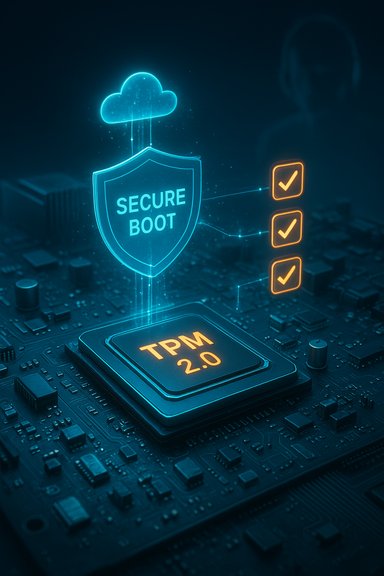 Background / Overview
Call of Duty: Black Ops 7’s PC launch crystallized a trend that has been building for years: publishers are moving anti‑cheat enforcement up the stack, from in‑game heuristics to firmware and platform attestation. Activision has made TPM 2.0 and UEFI Secure Boot explicit prerequisites for the Black Ops 7 beta and launch, tying those firmware protections to its RICOCHET Anti‑Cheat system and a planned remote attestation flow that validates system integrity from the cloud. Microsoft’s Windows 11 requirements already place TPM 2.0 and Secure Boot at the center of the OS security baseline, which makes many modern PCs naturally aligned with these new publisher demands—but not all systems are ready by default. The practical implication is that today’s players can either be part of a security-positive ecosystem that helps developers detect and remove cheaters, or they may face access barriers if their hardware or firmware configuration is out of step. Microsoft’s messaging and the Xbox Wire guidance emphasize enabling and updating firmware and security features as a concrete way for players to support healthy communities. Why publishers are moving to firmware-level enforcement
The technical case for TPM 2.0 and Secure Boot
- TPM 2.0 provides a hardware-anchored root of trust: it stores keys and measurements that can attest that the platform’s boot chain and critical components haven’t been tampered with. This reduces the attack surface for cheats that persist across reboots or attempt to hide in firmware. Microsoft documents TPM 2.0 as a required building block for Windows 11 features such as BitLocker and hardware-backed identity protections.
- UEFI Secure Boot prevents the system from loading unsigned or untrusted boot components, which is precisely where low-level cheats and kernel‑spoofing tools try to insert themselves. It’s a first-line defense against persistent, stealthy modifications to the system that evade userland detection.
How remote attestation changes the game
Remote attestation means the game (or publisher backend) verifies a device’s measured boot state with a trusted cloud service, rather than relying solely on local checks that can be spoofed. Activision’s plan for an Azure‑backed remote verification system for Black Ops 7 aims to make it much harder to fake Secure Boot or pretend TPM is present and properly configured. That level of validation strengthens enforcement, but it also raises legitimate questions about what signals are shared and how they are governed—topics that must be handled with transparent privacy practices.Practical steps players must take (and how developers should communicate them)
Quick checklist to prepare a Windows PC for “secure, fair play”
- Confirm TPM and Secure Boot status:
- Run tpm.msc to check TPM presence and specification version.
- Use msinfo32 or Windows Security > Device Security to verify Secure Boot state and TPM 2.0. Microsoft’s guidance walks through these checks and where to find firmware settings.
- If TPM or Secure Boot is disabled:
- Backup critical data and BitLocker recovery keys before changing firmware settings.
- Convert disk to GPT (if currently MBR) before switching to UEFI/Secure Boot—mistakes here can make a system unbootable if done without backups or care. Expert walkthroughs and vendor manuals should be followed.
- Update firmware and drivers:
- Check motherboard/PC OEM pages for BIOS updates and vendor‑specific documentation on enabling Intel PTT / AMD fTPM.
- Check game-specific guidance:
- Follow publisher instructions and manufacturer guides for the top motherboard vendors—Activision published step‑by‑step resources to help players navigate differences.
Why transparent, step‑by‑step communication matters
A smooth player experience depends on clear messaging from developers and platform owners. When firmware checks are introduced, the support burden spikes: community help desks, in‑game prompts, and vendor pages must explain what to check and how to recover BitLocker keys or convert disks safely. Failing to explain the conversion and backup steps invites user frustration and data‑loss incidents—outcomes that undermine trust in the security measures themselves. Activision’s support pages and OEM guidance are examples of recommended, practical documentation to accompany these changes.For developers: how platform security helps enforce integrity—and what to watch for
Benefits for developers and competitive ecosystems
- Stronger signals: Hardware attestation and Secure Boot give anti‑cheat systems a verifiable baseline—cheats that hook core OS functionality are easier to detect when the boot chain and kernel are known to be untouched before play begins.
- Lower false positives: Attestation reduces reliance on behavioral heuristics that occasionally penalize legitimate players; that improves fairness in enforcement.
- Higher deterrence: With hardware‑level checks, cheat authors must overcome significantly harder engineering and distribution challenges, raising the cost of producing effective bypasses.
Operational and product risks developers must manage
- Player exclusion and fragmentation: Not all players have updateable hardware or firmware access. Requiring TPM 2.0 and Secure Boot can exclude older rigs, handhelds, or custom boot setups (dual‑boot, non‑UEFI). That exclusion can fragment player pools and harm smaller community hubs. Developers should measure the install base impact and provide grace periods or alternative participation paths where feasible.
- Support load and data‑loss risk: Enabling Secure Boot and switching from MBR to GPT can be confusing and, if mishandled, lead to BitLocker recovery or data loss. Robust, vendor‑specific guidance and recovery tooling are non‑negotiable. Publishers who don’t plan detailed support workflows risk a public relations problem equal to or greater than the cheating they sought to prevent.
- Privacy and telemetry governance: Remote attestation involves sending device state to cloud services. Developers and publishers must be explicit about what is sent (measurements vs. data reads), retention policies, and whether measurements can be correlated to individuals. Lack of clarity fuels community skepticism and potential regulatory scrutiny. Independent audits and clear user controls reduce friction.
- Dependency on platform updates: Anti‑cheat functions tied to OS features depend on consistent OS and firmware update channels. Sudden platform changes or broken firmware updates can create game access problems at scale; both publishers and platform vendors must coordinate large launches with firmware and driver vendors.
Designing support flows that maintain trust
Operational best practices for publishers and studios
- Build a phased rollout with a clear timeline: early notification, opt‑in test windows (beta), then mandatory enforcement—this gives players and OEMs time to adapt.
- Publish vendor‑specific firmware steps and provide a troubleshooting hub: converting disks, backing up BitLocker keys, and enabling fTPM or Intel PTT are common stumbling blocks that require step‑by‑step, OEM‑tailored materials. Activision’s top‑ten motherboard guides are a good template.
- Keep an escape hatch for legitimate edge cases: provide a verified exception path for devices that cannot be updated immediately but can be proven to be unmodified by other means, or allow a “grace period” for legacy hardware while monitoring cheat rates.
- Invest in human support and community moderation teams to explain steps, triage BitLocker recovery calls, and quickly address false rejections.
- Publish privacy and telemetry policies that specify precisely what attestation signals are collected, who can access them, and retention windows. Where possible, allow players to view and delete their attestation logs.
Product design changes to consider
- Use progressive enforcement: enforce attestation only where competitive integrity matters (ranked/competitive modes) while allowing casual play for legacy systems—this balances inclusion and fairness.
- Offer in‑client diagnostics that explain precisely why a device won’t pass attestation, with links to OEM pages and a “what to do next” checklist.
- Integrate attestation checks into matchmaking logic so players without firmware protections are automatically placed in compatible pools, not blocked outright—if the design objectives allow it.
Privacy, auditability, and the case for independent verification
The technical benefits of firmware attestation are clear, but so are the societal concerns. When a publisher asserts that attestation “validates boot state rather than reads files,” independent verification matters. Claims like the rapid enforcement stats published by some vendors (for example, high percentages of cheaters removed quickly) may reflect early success but should be treated as company‑supplied metrics until corroborated by third‑party audits or reproducible telemetry sampling. Developers and platform owners should invite independent auditors or publish reproducible methods to verify anti‑cheat efficacy without compromising detection techniques. Flagged claim: some public figures about enforcement speed and ban percentages—while plausible and supported by early publisher reports—require cautious interpretation until independent studies or audit reports corroborate them.Community and fairness considerations
Accessibility and equity
Mandating TPM 2.0 and Secure Boot disproportionately affects certain segments of the PC population: older hardware owners, self‑built rigs without recent firmware updates, handheld PC communities that rely on alternative boot chains, and users of non‑Windows OSes who dual‑boot for development or compatibility reasons. Developers must weigh the fairness benefits of a cleaner competitive environment against the risk of pushing some segments out of active play. In many cases, the best long‑term result is to combine technical enforcement in competitive modes with broad educational outreach and practical pathways for legacy users to modernize safely.Moderation, reporting, and community signals
Technical protections reduce the volume of cheating but do not eliminate it. Community reporting, fast human review, and transparent banning appeals remain essential. Publishers that over‑automate enforcement without clear appeal pathways risk alienating legitimate players who are misidentified by heuristic detection. Balance and auditability are key.Developer checklist: technical, operational, and community items
- Technical:
- Ensure server-side attestation endpoints are secure, rate‑limited, and audited.
- Design anti‑cheat telemetry to avoid collecting file contents—prefer measured hashes and attestation flags.
- Maintain compatibility testing matrices across OEM BIOS versions and major chipsets.
- Operational:
- Publish vendor‑specific guides and a robust support hub (screenshots, video walk‑throughs, recovery key guidance).
- Run a staged beta that includes diverse hardware and geographic representation to surface unexpected failures before mandatory enforcement.
- Community:
- Offer clear FAQs about what attestation means and what data is transmitted.
- Maintain fast appeal processes and transparent ban result summaries that respect privacy but reinforce trust.
The long view: platform hardening as a shared responsibility
The move to firmware‑level anti‑cheat reflects a maturation of the PC gaming ecosystem: platform vendors, publishers, hardware OEMs, and players are all being asked to participate in maintaining trust. For developers, this shift is an opportunity to raise the bar for competitive integrity—but it’s also a test of how well the community can communicate, educate, and support diverse hardware ecosystems.- Players should keep firmware and drivers current, enable the recommended security features, and back up recovery keys and data before making boot‑related changes. Microsoft’s official pages and OEM manuals are the authoritative how‑to resources.
- Developers and publishers must accompany technical enforcement with clear guidance, visible privacy practices, human support, and measured rollout plans to avoid excluding legitimate players.
- Platform owners and OEMs must ensure firmware updates and BIOS guidance are accessible, and collaborate on diagnostics that simplify upgrades without risking data.
Conclusion
The convergence of Windows 11’s security baseline and publisher‑level anti‑cheat demands creates a stronger defense against cheating—one that relies on hardware attestation, Secure Boot, and coordinated platform policies. When done with careful communication, robust support, and transparent privacy governance, these measures make it easier for developers to build trusted communities where competitive play is fair and sustainable. But technical enforcement alone won’t be enough: publishers must balance integrity with inclusion, document every step, and submit their systems to independent review. Only by combining engineering, clear operational playbooks, and community‑centred policies can the industry deliver secure, fun, and equitable multiplayer ecosystems for the long haul.Source: Windows Blog Help game developers build trusted communities
