

Supercomputers overwhelmingly use Linux instead of Windows or macOS because the world’s fastest systems are custom-built clusters that need an operating system their operators can inspect, strip down, rebuild, tune, and support across exotic processors, accelerators, interconnects, schedulers, and storage at enormous scale. That is the plain answer, but it undersells the strategic one. Linux won not because it was merely free, or because researchers enjoy penguin stickers, but because it became the only operating system flexible enough to disappear into the machine. In high-performance computing, the best general-purpose OS is the one that can be made least general-purpose.
The consumer OS market teaches the wrong lesson about operating systems. Windows and macOS are sold, serviced, updated, secured, and judged as end-user platforms; they are expected to provide coherent experiences for people sitting at desks. A supercomputer is not a desktop with more fans. It is a scientific instrument assembled from tens of thousands of CPUs, GPUs, network adapters, memory hierarchies, storage systems, and management nodes, all of which must behave as one machine when the job scheduler says go.
That distinction is why the “why not Windows?” framing often misses the center of gravity. Microsoft has built serious server software, and Windows has had high-performance computing editions in the past. Apple, too, once flirted with clustered computing in a more serious way than many modern Mac users remember. But neither company’s mainstream operating system model maps cleanly onto the way national labs, weather agencies, universities, and hyperscalers actually operate top-tier machines.
Linux maps because it is not one finished artifact. It is a kernel, a licensing model, a development culture, and a vast ecosystem of distributions and components that can be mixed, removed, patched, replaced, audited, and rebuilt. In the supercomputer world, that is not a philosophical nicety. It is procurement strategy.
When Lawrence Livermore, Oak Ridge, Argonne, RIKEN, or a European exascale center brings a new machine online, the operating system is part of the engineering program. It must be integrated with vendor firmware, high-speed interconnects, parallel file systems, job schedulers, compilers, MPI libraries, security controls, container runtimes, telemetry, and power-management systems. A conventional commercial desktop operating system is a poor starting point for that kind of surgery.
The real economics sit elsewhere. Linux avoids per-node licensing friction, yes, but its larger advantage is that it lets the operator spend money on engineering rather than permission. A lab can modify the kernel, rebuild packages, backport fixes, remove services, freeze versions, certify a stack, and run that stack for years without waiting for a vendor’s product roadmap to align with a machine room in Tennessee, California, Japan, Germany, or Switzerland.
That matters because supercomputers are not upgraded like office PCs. They are commissioned, stabilized, benchmarked, opened to users, and then kept productive through carefully controlled software environments. Scientific codes may run for years, and reproducibility is not a decorative concern. A patched kernel, a changed compiler, a revised math library, or a different GPU driver can affect performance and, in edge cases, numerical behavior.
Linux gives HPC operators the ability to decide when change happens. That does not make Linux simple. It makes Linux governable.
Windows, by contrast, is optimized around a vendor-controlled servicing model. That model has advantages in enterprises that want predictable security updates, broad hardware compatibility, and centralized management. But in a supercomputer, “predictable” means something different. It means knowing precisely which kernel, driver, scheduler, firmware, library, and compiler combination has been validated against the machine and its workloads. The operating system is not merely installed; it is domesticated.
This is where Linux’s modularity becomes decisive. Operators can run a fuller environment where users compile code and manage workflows, while compute nodes run leaner images tuned for low jitter, memory locality, and predictable scheduling. The goal is not to make each node pleasant. The goal is to make thousands of nodes boringly consistent.
In HPC, “jitter” is not just an annoyance. If a system is running a tightly coupled simulation across 20,000 nodes, a background service waking up at the wrong time on a small fraction of them can slow the entire job. The cluster moves at the pace of its laggards. That is why supercomputer operating systems are ruthlessly tuned to suppress unnecessary daemons, interrupt noise, unpredictable scheduling, and anything else that steals time from the workload.
Linux is not automatically perfect at this. A stock desktop distribution is not an exascale operating system. But Linux can be carved into one. Windows and macOS are intentionally harder to carve.
A supercomputer center cannot afford to treat its operating system as a black box. If a network driver behaves badly under extreme MPI traffic, engineers need to inspect it. If a scheduler interaction creates latency spikes, they need to trace it. If a GPU memory-management bug appears only at scale, they need cooperation among the lab, the hardware vendor, the OS vendor, the compiler team, and the application scientists. Linux gives all of those parties a shared surface on which to work.
That shared surface is why vendor-backed Linux matters as much as community Linux. Red Hat, SUSE, Canonical, HPE Cray, NVIDIA, AMD, Intel, and the national labs all operate in a world where kernel patches, drivers, compilers, container tools, and cluster-management systems can meet in the open. Not everything is open, and not every vendor behaves with equal transparency. But the center of gravity is open enough to permit deep collaboration.
macOS is the opposite model. It is tightly integrated, polished, and coupled to Apple hardware. That is a virtue for laptops and workstations, where Apple controls the experience from silicon to screen. It is a vice for supercomputers, where the hardware is not a Mac and the operator is not asking Cupertino for permission to re-architect the machine room.
The issue is fit. Windows Server is a commercial server operating system designed for broad enterprise workloads, not for being disassembled into a site-specific operating environment for a 100,000-core simulation platform. It carries assumptions about management, update cadence, binary compatibility, administrative tooling, driver models, and vendor control that are sensible in many corporate contexts and awkward in supercomputing.
Microsoft did make a direct run at HPC with Windows Compute Cluster Server and Windows HPC Server. Those products were interesting, and they served some customers, especially in environments already standardized on Microsoft tooling. But they never displaced Linux at the top of the TOP500 list because the gravitational pull of Unix-like scientific computing was already enormous.
That installed base mattered. HPC users had compilers, MPI stacks, shell scripts, batch systems, file-system tools, monitoring workflows, and decades of Unix-derived habits. Porting an application is not just recompiling source code. It is moving an entire research workflow, including the tribal knowledge that keeps graduate students, postdocs, research programmers, and sysadmins from losing weeks to the machine.
Linux did not merely offer an operating system. It offered continuity with the Unix culture that scientific computing had already chosen.
That workflow makes Linux’s command-line heritage an advantage rather than a historical curiosity. Shells, SSH, package managers, environment modules, batch scripts, containers, and text-based configuration are the lingua franca of HPC. They scale because they can be automated, versioned, audited, and reproduced.
Windows has PowerShell and sophisticated remote-management tooling, but HPC’s center of mass grew around Unix-like conventions long before PowerShell became the strong administrative environment it is today. macOS has a Unix foundation and a pleasant terminal, but it is not licensed or engineered to be the base OS for a non-Apple exascale cluster. It is a developer workstation OS with Unix bones, not a supercomputer platform.
This is why the macOS comparison is mostly theoretical. Apple could build a serious HPC operating system if it wanted to. Apple Silicon has impressive performance-per-watt characteristics, and the company has world-class systems engineers. But Apple’s business model is not to provide a modifiable operating substrate for national laboratories running third-party accelerators and interconnects at planetary scale. Apple sells integrated products. Supercomputer centers buy and build ecosystems.
Linux’s genius is that it can be the neutral ground beneath all of that competition. Vendors can upstream support where it makes sense, maintain out-of-tree code where they must, and work with labs to tune the stack for a given machine. The operating system becomes a platform on which hardware rivalry can proceed without requiring every vendor to invent a full software universe from scratch.
That is especially important as HPC and AI infrastructure converge. The software stack for a modern scientific machine increasingly includes traditional simulation codes, AI training frameworks, Python environments, GPU programming models, container orchestration, and data pipelines that look suspiciously cloud-like. Linux is already the default environment for much of that world.
Windows has made real progress with Linux compatibility through the Windows Subsystem for Linux, but WSL itself is an admission of where the developer and scientific gravity lies. When a Windows machine needs to feel natural to many AI and HPC developers, Microsoft gives it a Linux environment. That is not a failure. It is pragmatism.
The kernel is the foundation, but the operational stack is the building. Schedulers such as Slurm, Flux, and PBS decide where jobs run. MPI libraries coordinate communication among processes. Parallel file systems feed data to thousands of nodes. Compilers and math libraries turn scientific code into machine-specific performance. Monitoring and telemetry systems keep administrators from flying blind. Security tooling enforces policy without ruining throughput.
Linux succeeds because all of those layers expect it. The ecosystem compounds. Developers target Linux because the machines run Linux; machines run Linux because the software targets Linux. At some point, dominance stops being a preference and becomes infrastructure inertia.
This is also why a sudden Windows or macOS breakthrough is unlikely. An alternative OS would not merely need to boot on a large cluster. It would need to recreate the ecosystem, prove itself under exotic workloads, win hardware-vendor support, satisfy government and academic procurement demands, and persuade application teams to move. That is a mountain, not a feature request.
This is where Linux’s reputation can become misleading. The same openness that permits deep customization also creates responsibility. If a lab patches its kernel, pins a driver, or maintains a custom package tree, it owns the consequences. The freedom to change everything includes the freedom to break everything.
Yet that tradeoff is exactly what HPC centers want. They are not trying to minimize responsibility; they are trying to maximize control over risk. A closed operating system can reduce certain categories of operational burden, but it also concentrates decision-making outside the site. For commodity office workloads, that is often a bargain. For a machine scheduled months in advance to run climate models, weapons simulations, molecular dynamics, or fusion research, it can be a constraint.
Linux is not the low-effort option. It is the high-agency option.
Linux’s role here is nuanced. Open source does not magically make software secure. Bugs can sit in public for years. Maintainers can be overloaded. Dependencies can become attack surfaces. But for HPC operators, the ability to audit, patch, rebuild, and minimize the system is valuable.
A supercomputer center can remove unnecessary components, restrict services, compile with specific hardening options, and monitor behavior at a level that would be difficult if the OS were opaque. It can also coordinate with vendors and peer institutions when vulnerabilities appear. In this world, transparency is not a slogan. It is an incident-response tool.
Windows has strong enterprise security features, and Microsoft’s security operation is one of the most capable in the industry. But again, the comparison is not “secure versus insecure.” It is whether the platform’s control model fits the threat model and operating model of HPC. Linux gives supercomputer sites more room to build the security posture around the machine rather than around the vendor’s assumptions.
That is why the operating system must cooperate with the hardware at a granular level. It must understand processor topology, accelerator memory, NUMA behavior, job placement, network routing, and power states. It must support enormous parallel file-system pressure and allow administrators to observe faults before they metastasize into failed jobs.
Linux’s adaptability lets centers tune for those realities. The OS can be made to support new accelerators and interconnects before they are mainstream. It can be patched for a machine that only a few thousand people will ever use. It can carry vendor-specific enhancements while still remaining close enough to a broader ecosystem that users are not stranded.
This is the supercomputer paradox: the machines are bespoke, but they cannot afford bespoke isolation. Linux gives them a way to be custom without being alone.
For Windows, the HPC problem is that Microsoft’s strengths are adjacent rather than central. The company’s real supercomputing story today is less about Windows as the node OS and more about Azure, AI infrastructure, developer tools, and services that happily incorporate Linux where Linux is the right answer. Microsoft did not need Windows to win every machine room. It needed to make peace with the fact that many machine rooms already had a winner.
For macOS, the issue is simpler. Apple does not sell macOS as an install-anywhere server OS, and it does not court the supercomputer market in the way HPE, Lenovo, Dell, Atos/Eviden, NVIDIA, AMD, Intel, Red Hat, SUSE, and Canonical do. A Mac can be a fine front-end workstation for researchers. It is not the substrate for the TOP500.
That does not make either platform inferior. It makes them optimized for different games.
A new supercomputer can be radical in architecture while still presenting users with familiar Linux shells, filesystems, compilers, modules, and schedulers. That continuity lowers the cost of moving from one generation to the next. It lets application teams focus on adapting to GPUs, memory layouts, and parallelism rather than relearning the operating system from scratch.
The industry’s standardization around Linux also creates a labor market. Sysadmins know it. Researchers know it. Vendors support it. Security teams have playbooks for it. Students learn it before they ever touch a leadership-class machine. The result is not just technical dominance but institutional dominance.
That is the kind of moat no marketing campaign can quickly cross. Once the ecosystem assumes Linux, every new tool makes Linux more necessary, and every new Linux-based system makes the tools more valuable.
Linux will turn 35 in 2026 not as a scrappy desktop insurgent finally ready to defeat Windows on consumer laptops, but as the quiet default inside the most ambitious computers humans know how to build. The next generation of supercomputers will be shaped by AI accelerators, sovereign supply chains, energy limits, and scientific workloads that blur simulation and machine learning, but the operating-system lesson is unlikely to change soon: at the high end, the platform that matters most is the one powerful enough to get out of the way.
Source: bgr.com Why Supercomputers Use Linux Instead Of Windows Or macOS - BGR
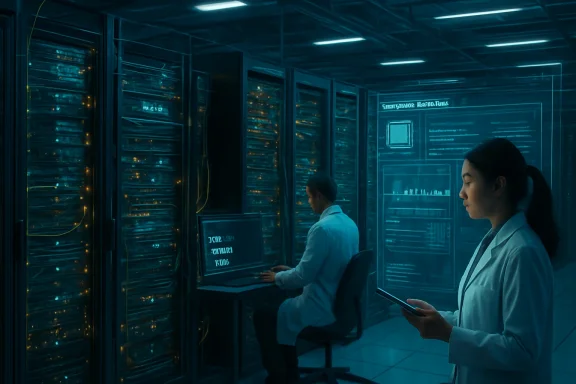 Linux Won the Supercomputer Room by Becoming Infrastructure, Not a Product
The consumer OS market teaches the wrong lesson about operating systems. Windows and macOS are sold, serviced, updated, secured, and judged as end-user platforms; they are expected to provide coherent experiences for people sitting at desks. A supercomputer is not a desktop with more fans. It is a scientific instrument assembled from tens of thousands of CPUs, GPUs, network adapters, memory hierarchies, storage systems, and management nodes, all of which must behave as one machine when the job scheduler says go.That distinction is why the “why not Windows?” framing often misses the center of gravity. Microsoft has built serious server software, and Windows has had high-performance computing editions in the past. Apple, too, once flirted with clustered computing in a more serious way than many modern Mac users remember. But neither company’s mainstream operating system model maps cleanly onto the way national labs, weather agencies, universities, and hyperscalers actually operate top-tier machines.
Linux maps because it is not one finished artifact. It is a kernel, a licensing model, a development culture, and a vast ecosystem of distributions and components that can be mixed, removed, patched, replaced, audited, and rebuilt. In the supercomputer world, that is not a philosophical nicety. It is procurement strategy.
When Lawrence Livermore, Oak Ridge, Argonne, RIKEN, or a European exascale center brings a new machine online, the operating system is part of the engineering program. It must be integrated with vendor firmware, high-speed interconnects, parallel file systems, job schedulers, compilers, MPI libraries, security controls, container runtimes, telemetry, and power-management systems. A conventional commercial desktop operating system is a poor starting point for that kind of surgery.
The Price Tag Matters, but Control Matters More
It is tempting to say Linux dominates supercomputers because it is free. That is true in the narrowest possible sense and misleading in every useful one. Nobody building a billion-dollar exascale system is choosing an operating system because the download costs zero dollars.The real economics sit elsewhere. Linux avoids per-node licensing friction, yes, but its larger advantage is that it lets the operator spend money on engineering rather than permission. A lab can modify the kernel, rebuild packages, backport fixes, remove services, freeze versions, certify a stack, and run that stack for years without waiting for a vendor’s product roadmap to align with a machine room in Tennessee, California, Japan, Germany, or Switzerland.
That matters because supercomputers are not upgraded like office PCs. They are commissioned, stabilized, benchmarked, opened to users, and then kept productive through carefully controlled software environments. Scientific codes may run for years, and reproducibility is not a decorative concern. A patched kernel, a changed compiler, a revised math library, or a different GPU driver can affect performance and, in edge cases, numerical behavior.
Linux gives HPC operators the ability to decide when change happens. That does not make Linux simple. It makes Linux governable.
Windows, by contrast, is optimized around a vendor-controlled servicing model. That model has advantages in enterprises that want predictable security updates, broad hardware compatibility, and centralized management. But in a supercomputer, “predictable” means something different. It means knowing precisely which kernel, driver, scheduler, firmware, library, and compiler combination has been validated against the machine and its workloads. The operating system is not merely installed; it is domesticated.
The Fastest Machines Are Really Many Machines Pretending to Be One
A modern supercomputer is a cluster architecture at a scale that makes ordinary enterprise computing look quaint. There are login nodes, compute nodes, service nodes, management nodes, storage nodes, visualization nodes, and sometimes specialized partitions for AI, analytics, or data movement. Each class of node may run a different configuration, and compute nodes in particular are often stripped down to do as little as possible beyond launching and sustaining jobs.This is where Linux’s modularity becomes decisive. Operators can run a fuller environment where users compile code and manage workflows, while compute nodes run leaner images tuned for low jitter, memory locality, and predictable scheduling. The goal is not to make each node pleasant. The goal is to make thousands of nodes boringly consistent.
In HPC, “jitter” is not just an annoyance. If a system is running a tightly coupled simulation across 20,000 nodes, a background service waking up at the wrong time on a small fraction of them can slow the entire job. The cluster moves at the pace of its laggards. That is why supercomputer operating systems are ruthlessly tuned to suppress unnecessary daemons, interrupt noise, unpredictable scheduling, and anything else that steals time from the workload.
Linux is not automatically perfect at this. A stock desktop distribution is not an exascale operating system. But Linux can be carved into one. Windows and macOS are intentionally harder to carve.
Open Source Is a Supply Chain Strategy
The open-source argument is often reduced to ideology: Linux is open, therefore scientists like it. The more practical truth is that open source is a supply chain strategy for machines that outlive hardware fashions and depend on components from many vendors.A supercomputer center cannot afford to treat its operating system as a black box. If a network driver behaves badly under extreme MPI traffic, engineers need to inspect it. If a scheduler interaction creates latency spikes, they need to trace it. If a GPU memory-management bug appears only at scale, they need cooperation among the lab, the hardware vendor, the OS vendor, the compiler team, and the application scientists. Linux gives all of those parties a shared surface on which to work.
That shared surface is why vendor-backed Linux matters as much as community Linux. Red Hat, SUSE, Canonical, HPE Cray, NVIDIA, AMD, Intel, and the national labs all operate in a world where kernel patches, drivers, compilers, container tools, and cluster-management systems can meet in the open. Not everything is open, and not every vendor behaves with equal transparency. But the center of gravity is open enough to permit deep collaboration.
macOS is the opposite model. It is tightly integrated, polished, and coupled to Apple hardware. That is a virtue for laptops and workstations, where Apple controls the experience from silicon to screen. It is a vice for supercomputers, where the hardware is not a Mac and the operator is not asking Cupertino for permission to re-architect the machine room.
Windows Lost HPC Without Being “Bad”
Windows is not absent from supercomputing because it is technically unserious. Microsoft has long had capable kernel engineers, strong developer tools, mature enterprise management, and deep experience with distributed systems. Azure itself is proof that Microsoft understands large-scale infrastructure, and Microsoft’s own cloud increasingly lives in a hybrid world where Linux is not a rival religion but a routine substrate.The issue is fit. Windows Server is a commercial server operating system designed for broad enterprise workloads, not for being disassembled into a site-specific operating environment for a 100,000-core simulation platform. It carries assumptions about management, update cadence, binary compatibility, administrative tooling, driver models, and vendor control that are sensible in many corporate contexts and awkward in supercomputing.
Microsoft did make a direct run at HPC with Windows Compute Cluster Server and Windows HPC Server. Those products were interesting, and they served some customers, especially in environments already standardized on Microsoft tooling. But they never displaced Linux at the top of the TOP500 list because the gravitational pull of Unix-like scientific computing was already enormous.
That installed base mattered. HPC users had compilers, MPI stacks, shell scripts, batch systems, file-system tools, monitoring workflows, and decades of Unix-derived habits. Porting an application is not just recompiling source code. It is moving an entire research workflow, including the tribal knowledge that keeps graduate students, postdocs, research programmers, and sysadmins from losing weeks to the machine.
Linux did not merely offer an operating system. It offered continuity with the Unix culture that scientific computing had already chosen.
The Supercomputer Desktop Is Usually Not a Desktop
One of the stranger things about explaining supercomputers to normal computer users is that the operating system almost never appears as a graphical environment. Researchers do not sit down at the world’s fastest machine and click through a Finder window. They log in remotely, prepare code, submit jobs to a scheduler, watch queues, inspect output, and move data.That workflow makes Linux’s command-line heritage an advantage rather than a historical curiosity. Shells, SSH, package managers, environment modules, batch scripts, containers, and text-based configuration are the lingua franca of HPC. They scale because they can be automated, versioned, audited, and reproduced.
Windows has PowerShell and sophisticated remote-management tooling, but HPC’s center of mass grew around Unix-like conventions long before PowerShell became the strong administrative environment it is today. macOS has a Unix foundation and a pleasant terminal, but it is not licensed or engineered to be the base OS for a non-Apple exascale cluster. It is a developer workstation OS with Unix bones, not a supercomputer platform.
This is why the macOS comparison is mostly theoretical. Apple could build a serious HPC operating system if it wanted to. Apple Silicon has impressive performance-per-watt characteristics, and the company has world-class systems engineers. But Apple’s business model is not to provide a modifiable operating substrate for national laboratories running third-party accelerators and interconnects at planetary scale. Apple sells integrated products. Supercomputer centers buy and build ecosystems.
Linux Became the Neutral Ground for Hardware Wars
The modern supercomputer is also a battleground among hardware vendors. CPUs may come from AMD, Intel, Arm licensees, or custom national projects. Accelerators may come from NVIDIA, AMD, Intel, or domestic suppliers. Interconnects may use Slingshot, InfiniBand, Tofu, or other specialized fabrics. Storage may rely on Lustre, GPFS, DAOS, or site-specific combinations.Linux’s genius is that it can be the neutral ground beneath all of that competition. Vendors can upstream support where it makes sense, maintain out-of-tree code where they must, and work with labs to tune the stack for a given machine. The operating system becomes a platform on which hardware rivalry can proceed without requiring every vendor to invent a full software universe from scratch.
That is especially important as HPC and AI infrastructure converge. The software stack for a modern scientific machine increasingly includes traditional simulation codes, AI training frameworks, Python environments, GPU programming models, container orchestration, and data pipelines that look suspiciously cloud-like. Linux is already the default environment for much of that world.
Windows has made real progress with Linux compatibility through the Windows Subsystem for Linux, but WSL itself is an admission of where the developer and scientific gravity lies. When a Windows machine needs to feel natural to many AI and HPC developers, Microsoft gives it a Linux environment. That is not a failure. It is pragmatism.
The Kernel Is Only the Beginning
Saying “supercomputers run Linux” is accurate but incomplete. The machines at the top of the rankings typically run specialized Linux-based environments, not whatever a hobbyist downloaded on a spare laptop. HPE Cray systems use vendor-tuned software stacks. National labs may run custom distributions such as the Tri-Lab Operating System Stack. Other sites standardize on Red Hat Enterprise Linux, SUSE Linux Enterprise Server, Ubuntu, or derivatives hardened and modified for local needs.The kernel is the foundation, but the operational stack is the building. Schedulers such as Slurm, Flux, and PBS decide where jobs run. MPI libraries coordinate communication among processes. Parallel file systems feed data to thousands of nodes. Compilers and math libraries turn scientific code into machine-specific performance. Monitoring and telemetry systems keep administrators from flying blind. Security tooling enforces policy without ruining throughput.
Linux succeeds because all of those layers expect it. The ecosystem compounds. Developers target Linux because the machines run Linux; machines run Linux because the software targets Linux. At some point, dominance stops being a preference and becomes infrastructure inertia.
This is also why a sudden Windows or macOS breakthrough is unlikely. An alternative OS would not merely need to boot on a large cluster. It would need to recreate the ecosystem, prove itself under exotic workloads, win hardware-vendor support, satisfy government and academic procurement demands, and persuade application teams to move. That is a mountain, not a feature request.
The Myth of “Free” Hides the Cost of Expertise
Linux may be free to obtain, but elite supercomputing Linux is expensive to operate. The cost is paid in people: kernel engineers, site-reliability specialists, security teams, storage experts, compiler developers, network engineers, and domain scientists who understand where performance problems are real and where benchmark numbers are lying.This is where Linux’s reputation can become misleading. The same openness that permits deep customization also creates responsibility. If a lab patches its kernel, pins a driver, or maintains a custom package tree, it owns the consequences. The freedom to change everything includes the freedom to break everything.
Yet that tradeoff is exactly what HPC centers want. They are not trying to minimize responsibility; they are trying to maximize control over risk. A closed operating system can reduce certain categories of operational burden, but it also concentrates decision-making outside the site. For commodity office workloads, that is often a bargain. For a machine scheduled months in advance to run climate models, weapons simulations, molecular dynamics, or fusion research, it can be a constraint.
Linux is not the low-effort option. It is the high-agency option.
Security Looks Different When the Computer Is a National Asset
A supercomputer is not just a fast box. It may be a national scientific resource, a defense asset, a climate research platform, or a commercial AI system worth hundreds of millions of dollars. Its security model must account for multi-user access, sensitive data, export controls, remote collaboration, supply-chain concerns, and the unpleasant fact that every important computer is a target.Linux’s role here is nuanced. Open source does not magically make software secure. Bugs can sit in public for years. Maintainers can be overloaded. Dependencies can become attack surfaces. But for HPC operators, the ability to audit, patch, rebuild, and minimize the system is valuable.
A supercomputer center can remove unnecessary components, restrict services, compile with specific hardening options, and monitor behavior at a level that would be difficult if the OS were opaque. It can also coordinate with vendors and peer institutions when vulnerabilities appear. In this world, transparency is not a slogan. It is an incident-response tool.
Windows has strong enterprise security features, and Microsoft’s security operation is one of the most capable in the industry. But again, the comparison is not “secure versus insecure.” It is whether the platform’s control model fits the threat model and operating model of HPC. Linux gives supercomputer sites more room to build the security posture around the machine rather than around the vendor’s assumptions.
Exascale Made the Linux Argument Stronger
The arrival of exascale computing did not weaken Linux’s case; it hardened it. At exascale, efficiency becomes existential. Power budgets, cooling constraints, memory bandwidth, network topology, and software overhead all matter. Waste that is tolerable on a rack of servers becomes intolerable across a facility-scale machine.That is why the operating system must cooperate with the hardware at a granular level. It must understand processor topology, accelerator memory, NUMA behavior, job placement, network routing, and power states. It must support enormous parallel file-system pressure and allow administrators to observe faults before they metastasize into failed jobs.
Linux’s adaptability lets centers tune for those realities. The OS can be made to support new accelerators and interconnects before they are mainstream. It can be patched for a machine that only a few thousand people will ever use. It can carry vendor-specific enhancements while still remaining close enough to a broader ecosystem that users are not stranded.
This is the supercomputer paradox: the machines are bespoke, but they cannot afford bespoke isolation. Linux gives them a way to be custom without being alone.
The Windows and Mac Lessons Are Not the Same Lesson
Windows and macOS are often grouped together as the alternatives Linux beat, but they represent different kinds of mismatch. Windows is broadly deployable, enterprise-friendly, and server-capable, but it is not culturally or architecturally centered on open-ended kernel-level customization by the customer. macOS is elegant, Unix-derived, and beloved by many developers, but it is tied to Apple’s hardware and product strategy.For Windows, the HPC problem is that Microsoft’s strengths are adjacent rather than central. The company’s real supercomputing story today is less about Windows as the node OS and more about Azure, AI infrastructure, developer tools, and services that happily incorporate Linux where Linux is the right answer. Microsoft did not need Windows to win every machine room. It needed to make peace with the fact that many machine rooms already had a winner.
For macOS, the issue is simpler. Apple does not sell macOS as an install-anywhere server OS, and it does not court the supercomputer market in the way HPE, Lenovo, Dell, Atos/Eviden, NVIDIA, AMD, Intel, Red Hat, SUSE, and Canonical do. A Mac can be a fine front-end workstation for researchers. It is not the substrate for the TOP500.
That does not make either platform inferior. It makes them optimized for different games.
The Penguin’s Real Victory Was Boring Standardization
Linux’s most impressive supercomputing achievement is not that it runs on the fastest machine in a given year. It is that it became boring. In infrastructure, boring is a superpower.A new supercomputer can be radical in architecture while still presenting users with familiar Linux shells, filesystems, compilers, modules, and schedulers. That continuity lowers the cost of moving from one generation to the next. It lets application teams focus on adapting to GPUs, memory layouts, and parallelism rather than relearning the operating system from scratch.
The industry’s standardization around Linux also creates a labor market. Sysadmins know it. Researchers know it. Vendors support it. Security teams have playbooks for it. Students learn it before they ever touch a leadership-class machine. The result is not just technical dominance but institutional dominance.
That is the kind of moat no marketing campaign can quickly cross. Once the ecosystem assumes Linux, every new tool makes Linux more necessary, and every new Linux-based system makes the tools more valuable.
The Practical Verdict Hiding Under the Benchmark Tables
The reason Linux dominates supercomputers can be reduced to a few concrete realities, but each one points back to the same theme: control at scale beats polish at the edge.- Linux can be modified deeply enough to match unusual processors, accelerators, interconnects, and storage systems.
- Linux avoids per-node licensing and vendor-permission problems that become awkward on machines with thousands or millions of cores.
- Linux fits the Unix-derived workflows that scientific computing has used for decades.
- Linux allows supercomputer operators to minimize background noise and tune systems for tightly coupled parallel jobs.
- Linux gives hardware vendors, national labs, universities, and cloud providers a shared platform for collaboration.
- Windows and macOS remain important computing platforms, but their product models do not align with the way leadership-class supercomputers are built and operated.
Linux will turn 35 in 2026 not as a scrappy desktop insurgent finally ready to defeat Windows on consumer laptops, but as the quiet default inside the most ambitious computers humans know how to build. The next generation of supercomputers will be shaped by AI accelerators, sovereign supply chains, energy limits, and scientific workloads that blur simulation and machine learning, but the operating-system lesson is unlikely to change soon: at the high end, the platform that matters most is the one powerful enough to get out of the way.
Source: bgr.com Why Supercomputers Use Linux Instead Of Windows Or macOS - BGR
