

Dell’s blunt assessment during its latest earnings call that the transition to Windows 11 is “much slower” than the move from Windows 7 to Windows 10 crystallizes a problem that’s been visible for months: the operating system upgrade cycle that once helped refresh entire fleets of PCs now faces tougher technical, economic, and perceptual headwinds.
Windows 11 launched in October 2021 with a clear pitch: a more modern UI, tighter security through hardware-backed features (TPM 2.0, Secure Boot), and a platform built for cloud and AI-first experiences. But adoption has not followed the rapid curve Microsoft enjoyed with Windows 10—enterprise inertia, strict hardware requirements, and mixed perceptions of real user benefit have all slowed the march to the new release. Independent market trackers and analyst coverage throughout 2024–2025 show a prolonged, uneven shift from Windows 10 to Windows 11 rather than the quick flip many expected. Dell’s commentary during its Q3 fiscal call highlighted three headline observations that matter for IT planners and PC buyers alike: (1) the company believes the Windows 11 transition is behind the pace of previous OS migrations by about 10–12 percentage points; (2) there is a still-large installed base of PCs that either can be upgraded but haven’t yet, or that are too old to be upgraded at all; and (3) the PC refresh cycle and new AI-capable hardware (Copilot/NNP-enabled systems) create a sales opportunity tied directly to that upgrade lag.
For IT leaders and procurement teams, the path forward is pragmatic: treat Dell’s figures as directional industry guidance, validate them against internal inventories, and execute a staged migration that balances security, cost, and business continuity. For OEMs and channel partners, the elongated migration creates services and refresh opportunities—if they can translate that runway into repeatable, low-friction migration programs.
The bottom line: the Windows 11 transition is not a sprint. It’s a multi-year migration that will reward thoughtful planning, precise asset management, and a clear alignment between hardware lifecycle and software lifecycle decisions.
Source: Neowin Windows 11's adoption is much slower compared to Windows 10, claims Dell
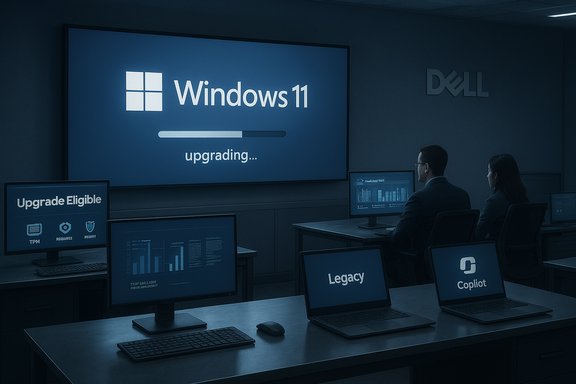 Background
Windows 11 launched in October 2021 with a clear pitch: a more modern UI, tighter security through hardware-backed features (TPM 2.0, Secure Boot), and a platform built for cloud and AI-first experiences. But adoption has not followed the rapid curve Microsoft enjoyed with Windows 10—enterprise inertia, strict hardware requirements, and mixed perceptions of real user benefit have all slowed the march to the new release. Independent market trackers and analyst coverage throughout 2024–2025 show a prolonged, uneven shift from Windows 10 to Windows 11 rather than the quick flip many expected. Dell’s commentary during its Q3 fiscal call highlighted three headline observations that matter for IT planners and PC buyers alike: (1) the company believes the Windows 11 transition is behind the pace of previous OS migrations by about 10–12 percentage points; (2) there is a still-large installed base of PCs that either can be upgraded but haven’t yet, or that are too old to be upgraded at all; and (3) the PC refresh cycle and new AI-capable hardware (Copilot/NNP-enabled systems) create a sales opportunity tied directly to that upgrade lag. Why Dell’s comments matter
Dell speaks for the channel—and the channel sees the hardware problem
Dell is not a neutral observer: as a top PC OEM its view combines sales telemetry, channel feedback, and enterprise procurement trends. When Dell’s COO says the company is “10–12 points behind” the previous OS transition curve, he’s reporting a field-level snapshot of upgrade activity that matters to PC makers and IT vendors because it maps to replacement rates, enterprise refresh budgets, and OEM inventory planning. Those are business signals, not just marketing rhetoric.The numbers Dell cited
On the earnings call Dell quantified the opportunity: roughly 1.5 billion installed Windows PCs in the field, with about 500 million devices technically capable of running Windows 11 that have not been upgraded and another ~500 million machines that are too old to support Windows 11 without hardware replacement. If even a fraction of that pool triggers replacements, it directly affects OEM shipments, channel services, and enterprise budgets. Those raw numbers were presented by Dell management during the Q3 discussion.The data — what trackers and analysts are saying
Market-share snapshots are nuanced but consistent on one point: the shift is slower than previous generations
Different trackers (StatCounter, GlobalStats, Steam Hardware Survey, and enterprise telemetry samples) report slightly different figures, but they converge on a theme: Windows 11 adoption has been gradual and regionally uneven. By mid‑2025 several mainstream trackers noted Windows 11 approaching parity or passing Windows 10 in some measures, driven in part by OEM preloads and the looming Windows 10 end‑of‑support deadline; nevertheless, the installed-base replacement dynamics lagged expectations and varied by segment (consumer vs enterprise vs gaming).Enterprise readiness and the migration gap
Independent reporting and surveys focused on enterprise fleets repeatedly point to compatibility testing, legacy apps, and hardware eligibility as the main bottlenecks. Many organizations prefer staggered pilot programs and app certification rather than an immediate blanket upgrade—this prudence slows adoption but reduces business risk. Analyst writeups and ControlUp / telemetry summaries reinforce that Windows 11 migrations are complex, typically requiring months of remediation for medium-to-large enterprises.Community reporting and forum evidence
Technical communities and enterprise forums also documented the mixed experiences that feed adoption hesitancy: performance complaints on some hardware, bone‑headed incompatibilities with specialized legacy apps, and headaches for IT teams that must manage both Windows 10 and Windows 11 clients during transition windows. Those anecdotal reports are consistent with the larger trends seen by Dell and independent trackers.Why Windows 11 adoption has been slower — a comprehensive analysis
1) Hardware and platform requirements
Windows 11 arrived with a higher bar: TPM 2.0, Secure Boot, UEFI, and a set of CPU generation minimums. Those requirements were deliberate—Microsoft wanted hardware-backed security and a baseline modern platform for future features—but they also created a compatibility cliff that excluded a significant share of existing PCs. The result: millions of otherwise functional devices require motherboard replacements or full system refreshes to qualify. Dell and other OEMs are seeing those hardware realities reflected in slower-than-expected upgrade rates.2) Enterprise migration economics and risk management
Large organizations do not upgrade OSes en masse without validation. Compatibility testing across line-of-business apps, printing workflows, device management stacks, and regulatory requirements requires time and budget. For many enterprises, the cost of certifying and remediating applications on Windows 11 offsets the benefit—and with Windows 10 support extended in certain channels/ESU options for a limited period, CIOs often choose a phased approach. That conservative strategy reduces risk but elongates the migration curve.3) Perception vs. reality: features that didn’t compel rapid migration
For many users Windows 11’s improvements felt incremental rather than transformational. UI tweaks, a centered taskbar, and new productivity niceties do not deliver the kind of immediate ROI that triggers large-scale upgrades—particularly in business contexts where stability and compatibility beat aesthetics. Where Microsoft’s feature set did move the needle—security, DirectStorage/gaming, and integrated AI—adoption still tracked hardware upgrades rather than voluntary migrations. That limited “pull” effect meant Microsoft had to rely more on OEM preloads and the natural replacement cycle.4) Performance and reliability reports
A subset of users and community reports flagged performance regressions on certain systems after upgrading to Windows 11—File Explorer sluggishness, UI stutters, and gaming performance variances were repeatedly called out by reviewers and users. Those concerns amplified upgrade hesitation, especially among power users and gamers who prioritize responsiveness. Microsoft has been iterating to resolve several of these issues, but negative impressions established early can suppress adoption momentum.Dell’s business perspective: risk, opportunity, and strategy
A double-edged market shape for OEMs
Dell’s frank assessment is instructive: slower Windows 11 adoption reduces the urgency to replace machines, which compresses short-term OEM demand—but it also creates a multi-year runway for refresh purchases when organizations inevitably decide to modernize for security, AI enablement, or warranty-driven turnover. Dell frames this as a near-term headwind but medium-term opportunity: upgrade demand exists, it’s just stretched out and tied closely to hardware refresh cycles rather than immediate OS-driven upgrades.AI PCs and the “Copilot” angle
OEMs are positioning AI-capable PCs as part of the refresh incentive: Copilot/NNP-enabled features, on‑device AI acceleration, and marketing for productivity gains are being used to justify replacement spending. Dell’s messaging ties those capabilities to the Windows 11 platform and to the NPU/MPU hardware stack, arguing that certain new workloads and improved workflows will only be practical on modern Windows 11 hardware. That narrative supports Dell’s optimism for future PC demand even while the immediate transition lags.The channel implications
If Dell is correct about a 10–12 percentage point lag versus a past OS transition, channel partners need to plan differently: extended service windows, inventory management that balances legacy and modern SKUs, and managed migration services become essential revenue streams. Professional services, image/lifecycle management, and security hardening are monetizable elements of a prolonged migration period.Risks and downsides — what IT teams should watch for
- Security exposure from delayed migrations: Windows 10’s end of support remains a hard deadline for mainstream updates (exact dates and options must be validated against Microsoft’s published lifecycle policies). Organizations that delay migration without appropriate compensating controls increase their exposure to vulnerabilities and compliance risk.
- Fragmentation costs: Running mixed fleets (Windows 10 and Windows 11) lengthens helpdesk complexity, complicates patching, and increases testing burdens for new software deployments.
- User productivity impacts: If Windows 11 brings unexpected performance regressions for key user cohorts (design, CAD, or gaming), a rushed migration can reduce productivity and raise remediation costs.
- Financial misestimates: OEM claims about the size of the upgradeable base are useful for planning but should be cross-checked with internal asset inventories; Dell’s 1.5 billion installed base figure is a channel-level estimate that should be reconciled with organizational telemetry before committing large refresh budgets.
Tactical recommendations for IT leaders (practical, sequential steps)
- Inventory first: run a hardware and application compatibility audit and tag devices as “Windows 11-ready,” “upgradeable with BIOS/firmware changes,” or “replacement required.”
- Prioritize business-critical apps: identify LOB apps needing vendor certification and schedule pilot windows with rollback plans.
- Leverage staged pilots: move a subset of users (power users, early adopters, or non-critical groups) first to validate imaging, group policies, and deployment tooling.
- Budget for mixed-mode support: allocate resources for a transition period where both OS versions are supported in parallel.
- Consider OEM refresh windows: if replacement is required, bundle Windows 11 adoption with device lifecycle refresh plans that include security baselines and AI-capable hardware where it makes sense.
What Dell’s statement means for PC buyers and enterprises
- For CIOs and procurement teams: Dell’s public comments confirm what many already suspected—migration momentum is slower than expected and will be shaped more by hardware depreciation and replacement cycles than by immediate voluntary upgrades. That gives procurement teams time to negotiate refresh deals, but it also means contracts and warranty timelines should be managed carefully.
- For PC buyers and SMBs: If your device is Windows 11-capable but still on Windows 10, there may be little technical urgency if you have compensating security measures and if your apps are stable. However, longer-term support and feature access favors moving to Windows 11 on a schedule that aligns with future-proofing and security compliance.
- For channel partners and managed service providers: A prolonged transition is an opportunity to upsell migration services, managed updates, and bundled hardware/software packages that emphasize security and AI readiness.
Strengths and weaknesses of the current approach (critical analysis)
Strengths
- Clear hardware baseline improves future OS stability: Requiring TPM and modern CPU features raises the minimum security posture for devices that will run Windows for the next several years.
- OEM ecosystem alignment: OEMs and silicon partners can optimize drivers and firmware for a single, modern baseline, potentially improving future reliability.
- Market clarity: Dell and other OEMs publicly communicating the scale of the upgradeable base helps enterprises and governments plan procurement and budget cycles.
Weaknesses and risks
- Up-front friction for users: The high bar for compatibility increased the friction for many users, slowing voluntary adoption.
- Mixed messaging and perception: When certain high-profile workloads (games, file management) display regressions or inconsistencies, public perception hardens faster than software fixes can be deployed.
- Economic timing: A global economic environment that tightens corporate refresh budgets made a hardware-linked upgrade a costlier proposition than an OS-only migration would have been.
Cross-checking Dell’s claim: how well supported is it?
Dell’s statement that the Windows 11 migration lags previous migrations by “10–12 points” is a management-level observation anchored in their sales and channel telemetry; multiple industry outlets reported the quote after the earnings call and independent trackers show that adoption was indeed slower compared to Windows 10’s historical pace. That triangulation supports Dell’s overall thesis: adoption is slower, and significant upgradeable inventory exists. But two caveats are important:- Datasets vary: Different trackers use different measurement methodologies (pageview-weighted telemetry vs. installed-base samples vs. OEM shipment data). That means headline percentages can diverge across sources even while the overall narrative is consistent.
- Company-level vs. ecosystem-wide views: Dell’s figures are channel-centric and useful for sizing the refresh market; they are not a substitute for organization-specific inventories or for Microsoft’s internal telemetry, which is not publicly granular in many cases. Treat Dell’s numbers as credible industry guidance that should be reconciled with local data.
How this shapes the next 12–24 months
- Expect continued, gradual adoption as OEM preloads, warranty cycles, and end-of-support deadlines force upgrades; some months will likely spike (enterprise batch refreshes, fiscal-year procurement windows), while others will be quiet.
- Device replacement budgets will favor machines that advertise AI acceleration and improved security baselines; OEMs will promote “Copilot/AI-ready” hardware as differentiators in refresh offers.
- Managed services, migration tools, and compatibility remediation will be key revenue streams for IT providers as clients prefer outsourced migration expertise.
Conclusion
Dell’s blunt assessment is not a revelation so much as a confirmation of what the market has been signaling for months: Windows 11’s adoption has been slower and more complex than previous OS transitions. That slowdown is rooted in real technical and economic constraints—hardware eligibility, enterprise risk calculations, and mixed perceptions of Windows 11’s value.For IT leaders and procurement teams, the path forward is pragmatic: treat Dell’s figures as directional industry guidance, validate them against internal inventories, and execute a staged migration that balances security, cost, and business continuity. For OEMs and channel partners, the elongated migration creates services and refresh opportunities—if they can translate that runway into repeatable, low-friction migration programs.
The bottom line: the Windows 11 transition is not a sprint. It’s a multi-year migration that will reward thoughtful planning, precise asset management, and a clear alignment between hardware lifecycle and software lifecycle decisions.
Source: Neowin Windows 11's adoption is much slower compared to Windows 10, claims Dell
