

Microsoft’s Xbox leadership confirmed on May 5, 2026, that it will wind down Copilot in the Xbox mobile app and stop development of the AI assistant for console, reversing a feature push that Microsoft had publicly framed as part of Xbox’s near-term future. The move is less a rejection of AI than a rejection of AI theater. Xbox is under pressure to prove that it still understands what players and developers need, and a chatbot that explains games was never going to fix hardware decline, Game Pass fatigue, or a platform strategy that has often sounded more coherent in investor decks than in living rooms.
There is a certain symbolism in Microsoft backing away from Copilot on Xbox just as the rest of the company continues to staple Copilot branding across Windows, Office, Edge, Teams, and nearly every other surface it owns. For the last two years, Microsoft’s consumer software strategy has often seemed to start with the premise that every product needs an AI companion, and only later ask what problem that companion is meant to solve.
Xbox appears to have reached the second question before the feature became too deeply embedded to remove. That matters. Big platform companies are usually better at launching experiments than retiring them, especially when the experiment happens to align with the corporate strategy of the decade.
The original pitch for Copilot for Gaming was not absurd on its face. A contextual assistant that can help players find friends, remember what they were doing in a sprawling RPG, explain a boss mechanic, or surface accessibility options could be genuinely useful. Games are complex software environments, and many players already rely on wikis, Discord servers, Reddit threads, YouTube walkthroughs, and search engines to decode them.
But the moment the assistant moved from “helpful layer” to “AI sidekick,” it ran into a cultural wall. Players did not buy an Xbox to have a chatbot narrate their hobby back to them. They bought one to play games, own or access a stable library, trust their saves and entitlements, and feel that the platform holder is investing in the box under the TV.
That is why the reported leadership reset around Asha Sharma matters. Her public language about moving faster, reconnecting with the community, and reducing friction is standard executive dialect, but the decision underneath it is concrete. Ending console Copilot says Xbox is willing to cut a Microsoft-wide priority when it does not fit Xbox’s immediate needs.
That is a sharper message than another “gaming is for everyone” campaign. It tells players that not every Xbox surface exists to serve the broader Microsoft AI narrative. It tells developers that the platform team may be more interested in removing obstacles than in adding another Microsoft-mandated overlay to the experience.
The old Microsoft Gaming label had a corporate neatness to it, but “Xbox” still carries the emotional value. People do not talk about their Microsoft Gaming backlog. They do not boot up Microsoft Gaming with friends. The brand that survived the Xbox One reversal, the Game Pass boom, the Bethesda deal, and the Activision Blizzard acquisition is still Xbox, and returning the business to that name is more than nostalgia. It is an admission that the audience’s mental model matters.
A chatbot on console is a conspicuous product. It is easy to announce, easy to demo, and easy to mock. It invites the worst version of the AI backlash because players can immediately imagine it interrupting play, misunderstanding context, or providing confident nonsense in a medium where timing, tone, and immersion matter.
By contrast, AI used to improve real-time graphics, animation, testing, localization, accessibility, moderation, search, matchmaking, recommendation, or developer tooling is less glamorous and more consequential. If an AI system helps a studio reduce certification pain, identify crashes faster, improve upscaling, or make a game easier to navigate for disabled players, nobody needs it to have a mascot.
That distinction is important because Xbox cannot afford a performative AI strategy. Microsoft can talk about Copilot as a unifying layer across productivity software because Office users already work inside documents, meetings, calendars, and email chains where summarization and generation have obvious hooks. Console gaming is different. The player’s attention is the product’s sacred resource.
The best gaming AI may be the kind the user never has to talk to. It should make games run better, load faster, explain themselves more gracefully, and adapt more intelligently. If Xbox is serious about redirecting AI toward “player problems,” the Copilot retreat could be remembered not as an anti-AI moment, but as the point where Xbox stopped confusing chat interfaces with intelligence.
That is the bind Xbox now faces. A console maker can survive a weak quarter. It can even survive a weak generation if the software ecosystem is healthy and the next hardware story is convincing. What it cannot survive indefinitely is a loss of confidence among the people who buy into platforms early and evangelize them for free.
The Copilot decision lands well with many of those users because it gives them something they have been asking for: restraint. Xbox enthusiasts have spent years watching Microsoft talk about cloud, subscriptions, cross-platform publishing, AI, and ecosystem reach while the console experience itself sometimes felt underfed. Dashboard clutter, uneven first-party cadence, confusing messaging around exclusives, and price pressure have all contributed to the sense that Xbox was optimizing around everything except the box.
That perception may be unfair in parts, but perception becomes strategy when it affects purchasing behavior. If players believe Xbox consoles are secondary to Microsoft’s broader services business, they will treat the hardware as optional. Once that happens, the console becomes harder to sell, which then reinforces the internal logic that the console should matter less.
This is the spiral Sharma has to interrupt. Killing Copilot on console does not solve it, but it does signal that Xbox understands the difference between an ecosystem feature and a reason to stay.
The trouble is that subscription businesses eventually stop being judged by novelty and start being judged by price, quality, cadence, and perceived control. Once price increases arrive, the service has to justify itself over and over again. A player who once saw Game Pass as a bargain can start to see it as another bill.
That is why the reported concern that Game Pass had become too expensive for some players cuts to the center of Xbox’s problem. The service cannot be both the affordability story and the margin story forever without tension. If Microsoft wants Game Pass to drive engagement, it needs to feel generous. If it wants Game Pass to satisfy a company that spent tens of billions acquiring content, it needs revenue discipline.
Copilot did not fit neatly into either side of that equation. It was not a substitute for games. It was not a price cut. It was not a clearer ownership model. It was not a stronger console roadmap. In the current environment, asking players to get excited about an AI assistant risked sounding like asking a restaurant customer to admire the app while the meal gets smaller and more expensive.
Players want to know whether their purchases matter. They want to know whether the platform holder will keep supporting the hardware they bought. They want to know whether first-party games will arrive with polish and purpose. They want to know whether Xbox is still competing to delight them, not merely converting them into monthly active users.
Developers have their own version of the same anxiety. They want predictable tools, clear publishing paths, reliable storefront economics, discoverability, hardware targets worth optimizing for, and a platform owner that can articulate where the audience is going. If Xbox is console, PC, cloud, handheld, mobile, and third-party publisher all at once, developers need that sprawl to become opportunity rather than ambiguity.
That is why leadership changes alone will not matter unless they produce visible operational changes. Xbox has had no shortage of smart executives. It has had no shortage of strategic narratives. What it has lacked, too often, is the disciplined connection between strategy and user experience.
The Copilot reversal is encouraging because it is legible. The company looked at a feature, looked at the moment, and decided it did not belong. More of that will be necessary.
PlayStation remains a relatively straightforward proposition: buy the box for Sony’s ecosystem, exclusives, third-party performance, and cultural gravity. Nintendo remains even clearer: buy the hardware because it is the only place Nintendo’s design philosophy fully exists. Steam Deck and PC handhelds sell a different idea: your PC library, made portable.
Xbox has tried to be everywhere, which is strategically rational and emotionally difficult. “Play anywhere” is powerful if the hardware remains the best living-room node in that network. It is weaker if the hardware feels like one endpoint among many, especially when some Xbox-published games are increasingly available elsewhere.
A next-generation Xbox, whether traditional console, hybrid device, Windows-based living-room PC, or something stranger, will need to answer that identity problem directly. It cannot merely be the machine that runs Game Pass. It cannot merely be the Microsoft device that happens to support gaming. It has to be the most convenient, trusted, and desirable way to participate in Xbox.
That is where ending Copilot on console becomes symbolically useful. It clears a little space. It says the next Xbox experience should not be defined by a corporate AI assistant arriving from above, but by the specific demands of games, players, and developers.
Consumer computing has been messier. Windows users have not uniformly embraced AI surfaces inserted into familiar workflows. Gamers, who are especially sensitive to performance, privacy, latency, and unwanted overlays, are even less forgiving. They can smell a feature that exists because a platform owner needs to showcase technology rather than because the community asked for it.
Xbox breaking from the Copilot script is therefore notable inside Microsoft’s own culture. It suggests that even in Redmond, AI adoption is not a one-way ratchet. Products with distinct audiences may need permission to say no.
That permission should become a principle. If Copilot belongs somewhere in Xbox, it should earn its way in through use cases where it is clearly better than existing habits. A player stuck in a game already has search, video guides, community wikis, and friends. An AI assistant has to be faster, more accurate, less intrusive, and more context-aware than those alternatives. “Because Microsoft has Copilot” is not enough.
Here, the first change is small but revealing. Ending Copilot on console is not a grand strategy, but it is a decision with tradeoffs. It risks irritating internal AI champions. It abandons a public roadmap. It acknowledges that a feature Microsoft had been preparing to expand was not aligned with the business Xbox now needs to become.
That is exactly the kind of decision Xbox will need to make repeatedly. It will need to choose which devices deserve priority. It will need to decide how far first-party publishing should go on rival platforms without weakening Xbox hardware beyond repair. It will need to make Game Pass feel valuable without training players to see games as disposable. It will need to make Windows handheld gaming less chaotic if that is part of the future.
Most of all, it will need to stop communicating like a company trying to keep every strategic option open. Players can handle change. What they dislike is ambiguity dressed up as vision.
Microsoft does not need Xbox to be the loudest AI showcase in the house. It needs Xbox to be a platform people trust enough to buy into, build for, and recommend. If Sharma’s Xbox can turn the Copilot retreat into a broader discipline of saying no to distractions and yes to the unglamorous work of platform repair, the company may yet discover that the fastest way forward is not to move fast and break things, but to move deliberately and fix what players already know is broken.
Source: GamesRadar+ https://www.gamesradar.com/platform...n-copilot-on-mobile-and-ending-it-on-console/
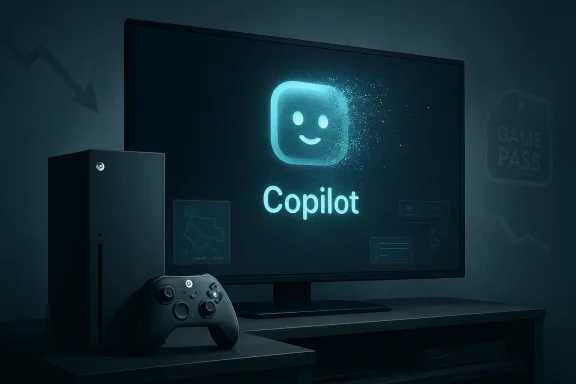 Xbox Finally Finds a Feature It Can Afford to Kill
There is a certain symbolism in Microsoft backing away from Copilot on Xbox just as the rest of the company continues to staple Copilot branding across Windows, Office, Edge, Teams, and nearly every other surface it owns. For the last two years, Microsoft’s consumer software strategy has often seemed to start with the premise that every product needs an AI companion, and only later ask what problem that companion is meant to solve.Xbox appears to have reached the second question before the feature became too deeply embedded to remove. That matters. Big platform companies are usually better at launching experiments than retiring them, especially when the experiment happens to align with the corporate strategy of the decade.
The original pitch for Copilot for Gaming was not absurd on its face. A contextual assistant that can help players find friends, remember what they were doing in a sprawling RPG, explain a boss mechanic, or surface accessibility options could be genuinely useful. Games are complex software environments, and many players already rely on wikis, Discord servers, Reddit threads, YouTube walkthroughs, and search engines to decode them.
But the moment the assistant moved from “helpful layer” to “AI sidekick,” it ran into a cultural wall. Players did not buy an Xbox to have a chatbot narrate their hobby back to them. They bought one to play games, own or access a stable library, trust their saves and entitlements, and feel that the platform holder is investing in the box under the TV.
The Copilot Retreat Is a Platform Strategy in Miniature
The Copilot cancellation is not happening in a vacuum. Xbox has been trying to explain itself for years: console maker, subscription service, cloud platform, PC storefront, publisher, mobile aspirant, and cross-device identity layer. Each identity is defensible on its own; together, they have often blurred the brand.That is why the reported leadership reset around Asha Sharma matters. Her public language about moving faster, reconnecting with the community, and reducing friction is standard executive dialect, but the decision underneath it is concrete. Ending console Copilot says Xbox is willing to cut a Microsoft-wide priority when it does not fit Xbox’s immediate needs.
That is a sharper message than another “gaming is for everyone” campaign. It tells players that not every Xbox surface exists to serve the broader Microsoft AI narrative. It tells developers that the platform team may be more interested in removing obstacles than in adding another Microsoft-mandated overlay to the experience.
The old Microsoft Gaming label had a corporate neatness to it, but “Xbox” still carries the emotional value. People do not talk about their Microsoft Gaming backlog. They do not boot up Microsoft Gaming with friends. The brand that survived the Xbox One reversal, the Game Pass boom, the Bethesda deal, and the Activision Blizzard acquisition is still Xbox, and returning the business to that name is more than nostalgia. It is an admission that the audience’s mental model matters.
The AI Assistant Was Never the Biggest AI Bet
The easy read is that Xbox is retreating from AI. The more accurate read is that Xbox is retreating from visible AI where the value proposition is weakest.A chatbot on console is a conspicuous product. It is easy to announce, easy to demo, and easy to mock. It invites the worst version of the AI backlash because players can immediately imagine it interrupting play, misunderstanding context, or providing confident nonsense in a medium where timing, tone, and immersion matter.
By contrast, AI used to improve real-time graphics, animation, testing, localization, accessibility, moderation, search, matchmaking, recommendation, or developer tooling is less glamorous and more consequential. If an AI system helps a studio reduce certification pain, identify crashes faster, improve upscaling, or make a game easier to navigate for disabled players, nobody needs it to have a mascot.
That distinction is important because Xbox cannot afford a performative AI strategy. Microsoft can talk about Copilot as a unifying layer across productivity software because Office users already work inside documents, meetings, calendars, and email chains where summarization and generation have obvious hooks. Console gaming is different. The player’s attention is the product’s sacred resource.
The best gaming AI may be the kind the user never has to talk to. It should make games run better, load faster, explain themselves more gracefully, and adapt more intelligently. If Xbox is serious about redirecting AI toward “player problems,” the Copilot retreat could be remembered not as an anti-AI moment, but as the point where Xbox stopped confusing chat interfaces with intelligence.
The Hardware Decline Turns Every Feature Into a Referendum
Xbox hardware sales have been falling, and that decline changes the interpretation of every decision. When a platform is growing, experimental features look like ambition. When a platform is shrinking, they look like distraction.That is the bind Xbox now faces. A console maker can survive a weak quarter. It can even survive a weak generation if the software ecosystem is healthy and the next hardware story is convincing. What it cannot survive indefinitely is a loss of confidence among the people who buy into platforms early and evangelize them for free.
The Copilot decision lands well with many of those users because it gives them something they have been asking for: restraint. Xbox enthusiasts have spent years watching Microsoft talk about cloud, subscriptions, cross-platform publishing, AI, and ecosystem reach while the console experience itself sometimes felt underfed. Dashboard clutter, uneven first-party cadence, confusing messaging around exclusives, and price pressure have all contributed to the sense that Xbox was optimizing around everything except the box.
That perception may be unfair in parts, but perception becomes strategy when it affects purchasing behavior. If players believe Xbox consoles are secondary to Microsoft’s broader services business, they will treat the hardware as optional. Once that happens, the console becomes harder to sell, which then reinforces the internal logic that the console should matter less.
This is the spiral Sharma has to interrupt. Killing Copilot on console does not solve it, but it does signal that Xbox understands the difference between an ecosystem feature and a reason to stay.
Game Pass Fatigue Makes the Old Pitch Harder to Sell
Game Pass changed the industry because it gave Xbox a clean, memorable proposition at a time when the console war narrative was not going Microsoft’s way. Pay a monthly fee, get a large library, play first-party games at launch. It was simple, aggressive, and genuinely consumer-friendly.The trouble is that subscription businesses eventually stop being judged by novelty and start being judged by price, quality, cadence, and perceived control. Once price increases arrive, the service has to justify itself over and over again. A player who once saw Game Pass as a bargain can start to see it as another bill.
That is why the reported concern that Game Pass had become too expensive for some players cuts to the center of Xbox’s problem. The service cannot be both the affordability story and the margin story forever without tension. If Microsoft wants Game Pass to drive engagement, it needs to feel generous. If it wants Game Pass to satisfy a company that spent tens of billions acquiring content, it needs revenue discipline.
Copilot did not fit neatly into either side of that equation. It was not a substitute for games. It was not a price cut. It was not a clearer ownership model. It was not a stronger console roadmap. In the current environment, asking players to get excited about an AI assistant risked sounding like asking a restaurant customer to admire the app while the meal gets smaller and more expensive.
Xbox’s Real Friction Is Trust
Executives love the word “friction” because it makes business problems sound mechanical. Remove a step here, streamline a workflow there, and the machine runs faster. In gaming, the harder friction is emotional.Players want to know whether their purchases matter. They want to know whether the platform holder will keep supporting the hardware they bought. They want to know whether first-party games will arrive with polish and purpose. They want to know whether Xbox is still competing to delight them, not merely converting them into monthly active users.
Developers have their own version of the same anxiety. They want predictable tools, clear publishing paths, reliable storefront economics, discoverability, hardware targets worth optimizing for, and a platform owner that can articulate where the audience is going. If Xbox is console, PC, cloud, handheld, mobile, and third-party publisher all at once, developers need that sprawl to become opportunity rather than ambiguity.
That is why leadership changes alone will not matter unless they produce visible operational changes. Xbox has had no shortage of smart executives. It has had no shortage of strategic narratives. What it has lacked, too often, is the disciplined connection between strategy and user experience.
The Copilot reversal is encouraging because it is legible. The company looked at a feature, looked at the moment, and decided it did not belong. More of that will be necessary.
The Console Still Needs a Reason to Exist
The most uncomfortable question for Xbox is no longer whether Microsoft can make great games. It owns too many studios, franchises, engines, tools, and distribution channels for that to be the whole issue. The question is whether Xbox hardware has a specific job that players understand.PlayStation remains a relatively straightforward proposition: buy the box for Sony’s ecosystem, exclusives, third-party performance, and cultural gravity. Nintendo remains even clearer: buy the hardware because it is the only place Nintendo’s design philosophy fully exists. Steam Deck and PC handhelds sell a different idea: your PC library, made portable.
Xbox has tried to be everywhere, which is strategically rational and emotionally difficult. “Play anywhere” is powerful if the hardware remains the best living-room node in that network. It is weaker if the hardware feels like one endpoint among many, especially when some Xbox-published games are increasingly available elsewhere.
A next-generation Xbox, whether traditional console, hybrid device, Windows-based living-room PC, or something stranger, will need to answer that identity problem directly. It cannot merely be the machine that runs Game Pass. It cannot merely be the Microsoft device that happens to support gaming. It has to be the most convenient, trusted, and desirable way to participate in Xbox.
That is where ending Copilot on console becomes symbolically useful. It clears a little space. It says the next Xbox experience should not be defined by a corporate AI assistant arriving from above, but by the specific demands of games, players, and developers.
Microsoft’s Broader Copilot Push Now Has an Xbox-Sized Caveat
Microsoft has invested heavily in making Copilot feel inevitable. In enterprise software, that inevitability is often plausible. Businesses may grumble about licensing, governance, data boundaries, and quality, but the productivity pitch has a clear managerial audience: summarize the meeting, draft the email, query the spreadsheet, automate the workflow.Consumer computing has been messier. Windows users have not uniformly embraced AI surfaces inserted into familiar workflows. Gamers, who are especially sensitive to performance, privacy, latency, and unwanted overlays, are even less forgiving. They can smell a feature that exists because a platform owner needs to showcase technology rather than because the community asked for it.
Xbox breaking from the Copilot script is therefore notable inside Microsoft’s own culture. It suggests that even in Redmond, AI adoption is not a one-way ratchet. Products with distinct audiences may need permission to say no.
That permission should become a principle. If Copilot belongs somewhere in Xbox, it should earn its way in through use cases where it is clearly better than existing habits. A player stuck in a game already has search, video guides, community wikis, and friends. An AI assistant has to be faster, more accurate, less intrusive, and more context-aware than those alternatives. “Because Microsoft has Copilot” is not enough.
The New Xbox Leadership Has Chosen Its First Real Test
Leadership overhauls often produce a fog of titles, reporting lines, and carefully balanced biographies. The public hears about new voices, institutional knowledge, faster decisions, and customer focus. Then everyone waits to see whether anything actually changes.Here, the first change is small but revealing. Ending Copilot on console is not a grand strategy, but it is a decision with tradeoffs. It risks irritating internal AI champions. It abandons a public roadmap. It acknowledges that a feature Microsoft had been preparing to expand was not aligned with the business Xbox now needs to become.
That is exactly the kind of decision Xbox will need to make repeatedly. It will need to choose which devices deserve priority. It will need to decide how far first-party publishing should go on rival platforms without weakening Xbox hardware beyond repair. It will need to make Game Pass feel valuable without training players to see games as disposable. It will need to make Windows handheld gaming less chaotic if that is part of the future.
Most of all, it will need to stop communicating like a company trying to keep every strategic option open. Players can handle change. What they dislike is ambiguity dressed up as vision.
The Copilot Cut Gives Xbox a Rare Clean Message
For once, the message is easy to understand: Xbox is not bringing Copilot to console, and it is winding down the mobile version. That does not fix the business, but it does create a useful marker for judging what comes next.- Xbox has decided that a general-purpose AI assistant is not important enough to occupy console development resources right now.
- The company is still likely to use AI where it can improve games, graphics, services, tooling, and support without demanding constant player attention.
- The decision reflects a broader attempt by new leadership to cut features that do not directly address player and developer pain.
- The retreat lands against a backdrop of falling hardware sales, pressure on Game Pass, and renewed concern about Xbox’s identity as a console platform.
- The next meaningful test will be whether Xbox can apply the same discipline to pricing, storefront design, hardware messaging, and first-party release strategy.
Microsoft does not need Xbox to be the loudest AI showcase in the house. It needs Xbox to be a platform people trust enough to buy into, build for, and recommend. If Sharma’s Xbox can turn the Copilot retreat into a broader discipline of saying no to distractions and yes to the unglamorous work of platform repair, the company may yet discover that the fastest way forward is not to move fast and break things, but to move deliberately and fix what players already know is broken.
Source: GamesRadar+ https://www.gamesradar.com/platform...n-copilot-on-mobile-and-ending-it-on-console/
