

IO Interactive said on June 30, 2026, that its relationship with an external partner on Project Fantasy had ended, prompting layoffs and leaving the independent Danish studio to continue the original fantasy IP without Xbox’s reported publishing support. The announcement lands awkwardly because IOI is otherwise riding high after 007: First Light, a Bond game that reportedly became the studio’s fastest-selling release. But the real story is not that one promising project lost a backer. It is that Microsoft’s games strategy is becoming brutally selective at exactly the moment its partners need predictability.
For most of the Game Pass era, Xbox wanted to be seen as the platform holder willing to say yes. It bought studios, signed day-one subscription deals, backed third-party experiments, and spoke often about reaching players wherever they were. That posture helped Microsoft differentiate itself from Sony’s prestige-console model and Nintendo’s hardware-first exceptionalism.
The IO Interactive news suggests that phase is over, or at least being heavily rewritten. According to reporting around the cancellation, Microsoft was the external partner behind Project Fantasy, the original online fantasy RPG that had circulated for years under the earlier codename Project Dragon. IOI has not named Xbox in its own statement, but Microsoft’s comment to Bloomberg about changing where it invests is the kind of corporate confirmation that says almost everything while avoiding the noun everyone is waiting for.
The company line is not that Microsoft is spending less on games overall. It is that Microsoft is reallocating toward different projects and different priorities. In the abstract, that is ordinary portfolio management; in practice, it means some studios wake up to discover that the spreadsheet has moved on without them.
That matters because Xbox’s promise was never just about console hardware. It was about Microsoft being the one company rich enough, patient enough, and technically integrated enough to fund a broader gaming ecosystem. If that promise now comes with a sharper cancellation trigger, developers will notice.
That is why this cancellation cannot be easily filed under the usual “underperforming partner” narrative. If Microsoft is walking away from a project by a studio with IOI’s recent track record, it suggests the filter has changed. The question is not merely whether a team is talented, or whether the game could be good. The question is whether the project fits Microsoft’s revised internal definition of strategic value.
Project Fantasy was always a curious fit for Xbox. It was reportedly an ambitious online fantasy RPG, a genre with enormous upside but equally enormous operational risk. In the 2020s, “online RPG” is not a simple content bet; it is a long-term service commitment, a production pipeline, a community-management apparatus, and a post-launch content treadmill disguised as a game pitch.
For IOI, the appeal was obvious. The studio has spent years proving that systemic design, player improvisation, and live content can coexist without collapsing into generic service-game mush. A fantasy world from the makers of Hitman is interesting precisely because IOI is not the obvious studio for it.
For Xbox, though, that same originality may have become a liability. A publisher under pressure to show clearer returns may prefer franchises with visible addressable audiences, lower uncertainty, or stronger alignment with first-party platform goals. A strange, expensive, original online RPG from an outside partner may suddenly look less like vision and more like exposure.
That logic was seductive, but it also blurred the distinction between a great game, a useful subscription filler, and a project that could justify years of funding before release. The longer the cycle went on, the more Microsoft had to answer a question that subscription boosters often waved away: which games actually move the business?
A massive company can absorb experimentation for a while, especially when it is trying to change market perception. But once the experiment becomes a mature line item, the language changes. “Creative partnership” becomes “investment discipline.” “Day one value” becomes “highest priorities.” “Portfolio breadth” becomes “where we are investing.”
The reported pullback from Project Fantasy fits that transition. It does not necessarily mean Game Pass is dying, or that Xbox will stop backing external games. It means the company appears less willing to fund every ambitious bet simply because it adds to a story about scale.
That distinction is important for Windows users, too. PC players benefited enormously from the Game Pass push, not just through cheap access but through day-one PC availability, cross-platform releases, and a more serious Microsoft Store presence. If Microsoft’s content strategy tightens, the PC catalog may remain broad, but the kind of weird, expensive, platform-sponsored projects that helped define the service could become rarer.
It is a denial of retreat, but not a denial of cancellation. It is also not a promise that existing relationships are safe. The message is that Microsoft still has money for games, just not necessarily for your game.
That is how large publishers often reset themselves. They rarely announce a philosophical reversal in plain language. Instead, they cancel a project here, decline a renewal there, merge a team somewhere else, and let the pattern become visible only after the people affected have already packed their desks.
The danger for Xbox is that this kind of reset can damage trust faster than it improves margins. Developers understand that projects get cancelled. What they fear is strategic whiplash: a partner who funds a concept under one regime, then abandons it when internal metrics, leadership priorities, or investor pressure change.
For a platform holder, trust is not sentimental. It is infrastructure. If independent studios believe Xbox money can disappear late in development, they will price that risk into deals, demand stronger guarantees, or take their most ambitious pitches elsewhere.
The modern games industry has become alarmingly good at separating corporate optimism from worker instability. Companies announce record engagement, successful launches, and long-term visions in the same quarter they cut headcount. The contradiction is now so common that players almost expect a layoff note to follow a sales milestone.
IOI’s case is particularly grim because the studio’s public message still insists that Project Fantasy is alive. The company says it remains committed to the IP and wants the world to see it. That may be true, and IOI’s independence gives it more flexibility than a wholly owned studio might have.
But losing a major external backer can force a project to shrink, slow down, change business model, or pause while new financing is found. Even when a game survives, it rarely emerges untouched. The layoffs are the first visible consequence; the design consequences may take longer to surface.
Licensed games now carry their own risks, but 007: First Light benefits from a globally recognizable brand. Players understand Bond immediately. Marketing departments understand Bond immediately. Retail partners, platform holders, streamers, and casual buyers all understand the pitch before anyone explains the mechanics.
Project Fantasy has none of that. It has IOI’s name, a genre promise, and the abstract appeal of a new universe. That can be creatively liberating, but it is commercially harder to defend when finance teams start ranking projects by certainty.
This is why the cancellation stings beyond one studio. If an independent developer with a recent blockbuster cannot easily protect an original fantasy game from partner withdrawal, what hope is there for smaller teams pitching equally ambitious new IP? The industry’s appetite for novelty often ends at the first serious budget review.
There is a broader cultural cost here. Players complain about sequels, remakes, and licensed brand extensions, but the system keeps rewarding recognizability. Microsoft’s retreat from Project Fantasy, if understood in that frame, is not an isolated disappointment. It is another reminder that the safest idea in gaming is usually the one the audience already knows.
That uncertainty is part of the problem. Xbox is now surrounded by a fog of reported cuts and rumored cancellations, and every confirmed move becomes evidence in a larger case. IOI losing Microsoft support does not prove every rumor true, but it makes the broader narrative harder to dismiss.
The company has already spent years trying to reconcile competing identities. Is Xbox a console platform? A subscription service? A publisher? A cloud infrastructure play? A multi-platform content company? The honest answer is “all of the above,” but that answer becomes harder to manage when each identity demands different investment priorities.
A console platform wants exclusives. A subscription service wants steady content. A publisher wants high-margin hits wherever they sell. A cloud strategy wants engagement at scale. A publicly traded corporation wants all of this to look rational to investors.
In that context, Project Fantasy may have been caught between models. It was not an internal first-party pillar, not a guaranteed franchise tentpole, not a near-term subscription driver, and not obviously central to Windows or Xbox hardware differentiation. It may have been exactly the kind of project that looked brilliant when Microsoft wanted breadth and vulnerable when Microsoft wanted focus.
Xbox on PC has improved dramatically from the darker days of broken store installs and awkward UWP restrictions. Game Pass for PC helped normalize day-one access, cross-save expectations, and a more serious Microsoft presence outside the console box. Even players who never subscribed benefited from the pressure Microsoft applied to release parity.
But that progress depends on content strategy. If Microsoft becomes more conservative, PC players may still get the big Activision, Bethesda, and Xbox Game Studios releases, but the service’s role as a patron of unusual mid-to-large-budget experiments could diminish. That would leave PC gaming as healthy as ever in aggregate, but less shaped by Microsoft’s willingness to subsidize risk.
There is also a developer tooling and platform story. Microsoft likes to present Windows, Xbox, cloud saves, identity, and storefront services as a connected ecosystem. The more credible that ecosystem is, the easier it is for developers to justify building with Microsoft’s platform assumptions in mind.
A high-profile partner exit complicates that story. It tells studios that Microsoft may be technologically committed to gaming while financially selective about the content that gives the ecosystem life. Those are not contradictory positions, but they produce different kinds of loyalty.
That does not mean replacing Xbox is easy. Large-scale game financing is not a dating app where another publisher simply swipes right. Any new partner will want to inspect production status, budget assumptions, ownership terms, platform plans, release timing, and post-launch obligations.
The fact that IOI publicly reaffirmed commitment to Project Fantasy matters. Studios do not usually say that unless they believe there is still something worth saving. But commitment is not capital, and capital is what keeps a large online RPG moving through the least glamorous parts of development.
The most likely outcome is not a clean continuation as if nothing happened. A new partner could reshape launch platforms, exclusivity terms, scope, monetization, or schedule. IOI may also choose to self-fund more of the project, but that would increase pressure on its other franchises and future Bond plans.
In the best case, this becomes another chapter in IOI’s mythology: the studio that survived Square Enix, mastered assassination sandboxes, conquered Bond, and refused to let its fantasy world die. In the worst case, Project Fantasy becomes one more ambitious codename remembered mostly by leak historians and disappointed forum threads.
The issue is whether the outside world can understand what Xbox is optimizing for. During the acquisition spree, the answer seemed to be scale. During the Game Pass surge, the answer seemed to be subscription value. During the multi-platform pivot, the answer seemed to be reach. During layoff season, the answer starts to look like margin discipline.
None of those goals is inherently irrational. The trouble is that each one changes the meaning of a project like Project Fantasy. Under a scale strategy, it is valuable because it adds breadth. Under a subscription strategy, it is valuable if it keeps players engaged. Under a reach strategy, it is valuable if it can sell everywhere. Under a margin strategy, it is vulnerable unless the upside is obvious.
That is why the IOI move feels bigger than the fate of one game. It exposes a platform strategy still searching for a stable center after years of expansion. Microsoft may know internally where the center is now, but developers and players are learning through cancellations.
That shift has hit every corner of gaming. Publishers are cutting jobs after successful launches. Studios are being reorganized even when their games have passionate audiences. Projects that once would have been kept alive for strategic reasons are being forced to justify themselves as businesses.
Xbox is not unique in facing that pressure. What makes Microsoft different is the gap between its corporate wealth and its gaming division’s apparent austerity. Players see one of the richest companies on earth and understandably ask why it cannot simply keep funding more games.
The answer is that Microsoft is rich because it is disciplined about capital at scale, not because every division gets infinite patience. Once Xbox becomes accountable as part of a broader AI-and-cloud-era Microsoft, even beloved or promising games must compete against other uses of capital. That may be logical, but it is also cold.
For studios, the lesson is harsh. A platform-holder deal can be transformative, but it is not the same as security. If the strategic weather changes, even a well-regarded project can find itself outside the new forecast.
Microsoft’s retreat from IO Interactive’s fantasy project may eventually look prudent, shortsighted, or simply inevitable. For now, it reads like a marker in the road: the moment when Xbox’s grand content expansion gave way to a narrower and more defensive calculation. IOI may yet ship the game, and perhaps even prove Microsoft wrong. But the next generation of ambitious studios will remember that even after Bond, even after Hitman, even after the sales headlines, a Microsoft-backed dream can still wake up to find the money gone.
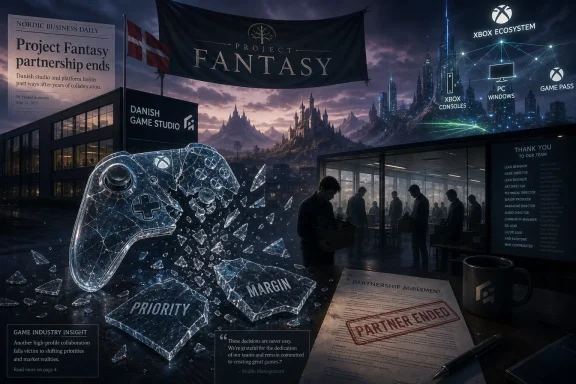 Xbox Is No Longer Acting Like the Patron Saint of Ambition
For most of the Game Pass era, Xbox wanted to be seen as the platform holder willing to say yes. It bought studios, signed day-one subscription deals, backed third-party experiments, and spoke often about reaching players wherever they were. That posture helped Microsoft differentiate itself from Sony’s prestige-console model and Nintendo’s hardware-first exceptionalism.The IO Interactive news suggests that phase is over, or at least being heavily rewritten. According to reporting around the cancellation, Microsoft was the external partner behind Project Fantasy, the original online fantasy RPG that had circulated for years under the earlier codename Project Dragon. IOI has not named Xbox in its own statement, but Microsoft’s comment to Bloomberg about changing where it invests is the kind of corporate confirmation that says almost everything while avoiding the noun everyone is waiting for.
The company line is not that Microsoft is spending less on games overall. It is that Microsoft is reallocating toward different projects and different priorities. In the abstract, that is ordinary portfolio management; in practice, it means some studios wake up to discover that the spreadsheet has moved on without them.
That matters because Xbox’s promise was never just about console hardware. It was about Microsoft being the one company rich enough, patient enough, and technically integrated enough to fund a broader gaming ecosystem. If that promise now comes with a sharper cancellation trigger, developers will notice.
IOI’s Winning Streak Makes the Cut More Revealing
The timing is what makes the Project Fantasy break feel so stark. IO Interactive is not a distressed studio limping from one misfire to another. It is one of the industry’s better comeback stories, having survived its split from Square Enix, rebuilt Hitman into a durable franchise, and then delivered 007: First Light to the kind of commercial response that most publishers would envy.That is why this cancellation cannot be easily filed under the usual “underperforming partner” narrative. If Microsoft is walking away from a project by a studio with IOI’s recent track record, it suggests the filter has changed. The question is not merely whether a team is talented, or whether the game could be good. The question is whether the project fits Microsoft’s revised internal definition of strategic value.
Project Fantasy was always a curious fit for Xbox. It was reportedly an ambitious online fantasy RPG, a genre with enormous upside but equally enormous operational risk. In the 2020s, “online RPG” is not a simple content bet; it is a long-term service commitment, a production pipeline, a community-management apparatus, and a post-launch content treadmill disguised as a game pitch.
For IOI, the appeal was obvious. The studio has spent years proving that systemic design, player improvisation, and live content can coexist without collapsing into generic service-game mush. A fantasy world from the makers of Hitman is interesting precisely because IOI is not the obvious studio for it.
For Xbox, though, that same originality may have become a liability. A publisher under pressure to show clearer returns may prefer franchises with visible addressable audiences, lower uncertainty, or stronger alignment with first-party platform goals. A strange, expensive, original online RPG from an outside partner may suddenly look less like vision and more like exposure.
The Old Game Pass Logic Is Running Into New Accounting
The Game Pass years trained players to think of Microsoft as a buyer of abundance. If enough games entered the library, the subscription would feel indispensable. If enough studios fed the machine, Xbox could turn content flow into ecosystem gravity.That logic was seductive, but it also blurred the distinction between a great game, a useful subscription filler, and a project that could justify years of funding before release. The longer the cycle went on, the more Microsoft had to answer a question that subscription boosters often waved away: which games actually move the business?
A massive company can absorb experimentation for a while, especially when it is trying to change market perception. But once the experiment becomes a mature line item, the language changes. “Creative partnership” becomes “investment discipline.” “Day one value” becomes “highest priorities.” “Portfolio breadth” becomes “where we are investing.”
The reported pullback from Project Fantasy fits that transition. It does not necessarily mean Game Pass is dying, or that Xbox will stop backing external games. It means the company appears less willing to fund every ambitious bet simply because it adds to a story about scale.
That distinction is important for Windows users, too. PC players benefited enormously from the Game Pass push, not just through cheap access but through day-one PC availability, cross-platform releases, and a more serious Microsoft Store presence. If Microsoft’s content strategy tightens, the PC catalog may remain broad, but the kind of weird, expensive, platform-sponsored projects that helped define the service could become rarer.
The Bloomberg Quote Says the Quiet Part Politely
The Microsoft statement reported by Bloomberg is corporate language at its most revealing. “We’re not reducing our overall investment in games,” the spokesperson said, while adding that the company is changing where it invests and what kinds of projects it backs. That is the sentence every partner should read twice.It is a denial of retreat, but not a denial of cancellation. It is also not a promise that existing relationships are safe. The message is that Microsoft still has money for games, just not necessarily for your game.
That is how large publishers often reset themselves. They rarely announce a philosophical reversal in plain language. Instead, they cancel a project here, decline a renewal there, merge a team somewhere else, and let the pattern become visible only after the people affected have already packed their desks.
The danger for Xbox is that this kind of reset can damage trust faster than it improves margins. Developers understand that projects get cancelled. What they fear is strategic whiplash: a partner who funds a concept under one regime, then abandons it when internal metrics, leadership priorities, or investor pressure change.
For a platform holder, trust is not sentimental. It is infrastructure. If independent studios believe Xbox money can disappear late in development, they will price that risk into deals, demand stronger guarantees, or take their most ambitious pitches elsewhere.
The Layoffs Turn a Portfolio Decision Into a Human One
IO Interactive’s own statement acknowledged that the end of the partnership would lead to layoffs. That makes the story more than a business-side reshuffle. For the people building Project Fantasy, Microsoft’s strategic reprioritization is not an abstraction; it is rent, visas, relocation plans, and years of creative investment suddenly placed under strain.The modern games industry has become alarmingly good at separating corporate optimism from worker instability. Companies announce record engagement, successful launches, and long-term visions in the same quarter they cut headcount. The contradiction is now so common that players almost expect a layoff note to follow a sales milestone.
IOI’s case is particularly grim because the studio’s public message still insists that Project Fantasy is alive. The company says it remains committed to the IP and wants the world to see it. That may be true, and IOI’s independence gives it more flexibility than a wholly owned studio might have.
But losing a major external backer can force a project to shrink, slow down, change business model, or pause while new financing is found. Even when a game survives, it rarely emerges untouched. The layoffs are the first visible consequence; the design consequences may take longer to surface.
Original IP Is Still the First Thing to Bleed
The industry keeps saying it wants new worlds. It also keeps making original worlds the most vulnerable assets on the balance sheet. Project Fantasy is a textbook example of the contradiction.Licensed games now carry their own risks, but 007: First Light benefits from a globally recognizable brand. Players understand Bond immediately. Marketing departments understand Bond immediately. Retail partners, platform holders, streamers, and casual buyers all understand the pitch before anyone explains the mechanics.
Project Fantasy has none of that. It has IOI’s name, a genre promise, and the abstract appeal of a new universe. That can be creatively liberating, but it is commercially harder to defend when finance teams start ranking projects by certainty.
This is why the cancellation stings beyond one studio. If an independent developer with a recent blockbuster cannot easily protect an original fantasy game from partner withdrawal, what hope is there for smaller teams pitching equally ambitious new IP? The industry’s appetite for novelty often ends at the first serious budget review.
There is a broader cultural cost here. Players complain about sequels, remakes, and licensed brand extensions, but the system keeps rewarding recognizability. Microsoft’s retreat from Project Fantasy, if understood in that frame, is not an isolated disappointment. It is another reminder that the safest idea in gaming is usually the one the audience already knows.
Xbox’s Internal Rumor Storm Makes the IOI News Look Like a Signal
The Project Fantasy news does not exist in a vacuum. It arrived amid reports that Microsoft is preparing another wave of Xbox cuts, with speculation around studio closures, project cancellations, and possible sales or restructuring across parts of its first-party organization. Some reports have mentioned Arkane, Marvel’s Blade, Undead Labs, and State of Decay 3, though the exact scope remains uncertain until Microsoft acts publicly.That uncertainty is part of the problem. Xbox is now surrounded by a fog of reported cuts and rumored cancellations, and every confirmed move becomes evidence in a larger case. IOI losing Microsoft support does not prove every rumor true, but it makes the broader narrative harder to dismiss.
The company has already spent years trying to reconcile competing identities. Is Xbox a console platform? A subscription service? A publisher? A cloud infrastructure play? A multi-platform content company? The honest answer is “all of the above,” but that answer becomes harder to manage when each identity demands different investment priorities.
A console platform wants exclusives. A subscription service wants steady content. A publisher wants high-margin hits wherever they sell. A cloud strategy wants engagement at scale. A publicly traded corporation wants all of this to look rational to investors.
In that context, Project Fantasy may have been caught between models. It was not an internal first-party pillar, not a guaranteed franchise tentpole, not a near-term subscription driver, and not obviously central to Windows or Xbox hardware differentiation. It may have been exactly the kind of project that looked brilliant when Microsoft wanted breadth and vulnerable when Microsoft wanted focus.
The Windows Angle Is Bigger Than Another Console-War Skirmish
It is tempting to read this story as another Xbox-versus-PlayStation scorecard item. That would be too small. For WindowsForum readers, the more relevant issue is how Microsoft’s gaming priorities shape the PC ecosystem that sits under much of modern gaming.Xbox on PC has improved dramatically from the darker days of broken store installs and awkward UWP restrictions. Game Pass for PC helped normalize day-one access, cross-save expectations, and a more serious Microsoft presence outside the console box. Even players who never subscribed benefited from the pressure Microsoft applied to release parity.
But that progress depends on content strategy. If Microsoft becomes more conservative, PC players may still get the big Activision, Bethesda, and Xbox Game Studios releases, but the service’s role as a patron of unusual mid-to-large-budget experiments could diminish. That would leave PC gaming as healthy as ever in aggregate, but less shaped by Microsoft’s willingness to subsidize risk.
There is also a developer tooling and platform story. Microsoft likes to present Windows, Xbox, cloud saves, identity, and storefront services as a connected ecosystem. The more credible that ecosystem is, the easier it is for developers to justify building with Microsoft’s platform assumptions in mind.
A high-profile partner exit complicates that story. It tells studios that Microsoft may be technologically committed to gaming while financially selective about the content that gives the ecosystem life. Those are not contradictory positions, but they produce different kinds of loyalty.
IOI Still Has Leverage, but Leverage Is Not a Replacement for Funding
If any independent studio can survive this kind of setback, IO Interactive is a strong candidate. The studio owns its identity in a way many teams do not. Hitman remains a durable brand, and 007: First Light has reportedly given IOI a commercial win at precisely the moment it needs leverage.That does not mean replacing Xbox is easy. Large-scale game financing is not a dating app where another publisher simply swipes right. Any new partner will want to inspect production status, budget assumptions, ownership terms, platform plans, release timing, and post-launch obligations.
The fact that IOI publicly reaffirmed commitment to Project Fantasy matters. Studios do not usually say that unless they believe there is still something worth saving. But commitment is not capital, and capital is what keeps a large online RPG moving through the least glamorous parts of development.
The most likely outcome is not a clean continuation as if nothing happened. A new partner could reshape launch platforms, exclusivity terms, scope, monetization, or schedule. IOI may also choose to self-fund more of the project, but that would increase pressure on its other franchises and future Bond plans.
In the best case, this becomes another chapter in IOI’s mythology: the studio that survived Square Enix, mastered assassination sandboxes, conquered Bond, and refused to let its fantasy world die. In the worst case, Project Fantasy becomes one more ambitious codename remembered mostly by leak historians and disappointed forum threads.
Microsoft’s Problem Is Not Spending, It Is Coherence
Microsoft can truthfully say it is still investing heavily in games. It owns an extraordinary collection of assets, from Call of Duty and World of Warcraft to Bethesda’s RPG machine and long-running Xbox franchises. The issue is not whether Microsoft has money, studios, or intellectual property.The issue is whether the outside world can understand what Xbox is optimizing for. During the acquisition spree, the answer seemed to be scale. During the Game Pass surge, the answer seemed to be subscription value. During the multi-platform pivot, the answer seemed to be reach. During layoff season, the answer starts to look like margin discipline.
None of those goals is inherently irrational. The trouble is that each one changes the meaning of a project like Project Fantasy. Under a scale strategy, it is valuable because it adds breadth. Under a subscription strategy, it is valuable if it keeps players engaged. Under a reach strategy, it is valuable if it can sell everywhere. Under a margin strategy, it is vulnerable unless the upside is obvious.
That is why the IOI move feels bigger than the fate of one game. It exposes a platform strategy still searching for a stable center after years of expansion. Microsoft may know internally where the center is now, but developers and players are learning through cancellations.
The Industry Is Entering Its Post-Abundance Phase
The pandemic-era and early subscription-era assumptions are gone. Money is more expensive, production costs are higher, and player attention is harder to capture. The market did not collapse, but it stopped rewarding growth stories without asking what they cost.That shift has hit every corner of gaming. Publishers are cutting jobs after successful launches. Studios are being reorganized even when their games have passionate audiences. Projects that once would have been kept alive for strategic reasons are being forced to justify themselves as businesses.
Xbox is not unique in facing that pressure. What makes Microsoft different is the gap between its corporate wealth and its gaming division’s apparent austerity. Players see one of the richest companies on earth and understandably ask why it cannot simply keep funding more games.
The answer is that Microsoft is rich because it is disciplined about capital at scale, not because every division gets infinite patience. Once Xbox becomes accountable as part of a broader AI-and-cloud-era Microsoft, even beloved or promising games must compete against other uses of capital. That may be logical, but it is also cold.
For studios, the lesson is harsh. A platform-holder deal can be transformative, but it is not the same as security. If the strategic weather changes, even a well-regarded project can find itself outside the new forecast.
The Fantasy Microsoft Walked Away From Will Define the Next Xbox Era
There are a few concrete conclusions to draw from the wreckage, even before Microsoft’s next reported round of cuts becomes clear. The details may change, but the direction is increasingly visible.- IO Interactive has confirmed that an external partnership on Project Fantasy has ended and that layoffs are part of the fallout.
- Reporting indicates that Xbox was the partner behind the project, matching years of earlier reports that connected Microsoft to the game under its former Project Dragon codename.
- Microsoft is framing the move not as a reduction in overall games investment, but as a shift toward different projects and priorities.
- Project Fantasy appears to remain alive at IOI, but losing a major backer can affect scope, timing, staffing, and publishing strategy even when a studio publicly recommits to a game.
- The cancellation reinforces the impression that Xbox is moving from an abundance strategy toward a more selective, return-focused content model.
- For PC and Xbox players, the practical risk is not fewer games overnight, but fewer strange, expensive, original bets that only a platform holder could comfortably bankroll.
Microsoft’s retreat from IO Interactive’s fantasy project may eventually look prudent, shortsighted, or simply inevitable. For now, it reads like a marker in the road: the moment when Xbox’s grand content expansion gave way to a narrower and more defensive calculation. IOI may yet ship the game, and perhaps even prove Microsoft wrong. But the next generation of ambitious studios will remember that even after Bond, even after Hitman, even after the sales headlines, a Microsoft-backed dream can still wake up to find the money gone.
References
- Primary source: Windows Central
Published: 2026-06-30T19:20:39.741649
IO of '007: First Light' and 'Hitman' fame announces that it's lost the backing of Xbox for its 'Project Fantasy' IP — Confirmed. | Windows Central
IO Interactive reports that development on its own original IP, "Project Fantasy" has hit a major roadblock as Xbox has pulled funding from the project.www.windowscentral.com - Related coverage: gematsu.com
- Related coverage: games.gg
007 First Light Sells 1.5 Million Units at Launch | GAMES.GG
IO Interactive's 007 First Light has launched to massive success, selling 1.5 million units in just 24 hours across PS5, Xbox Series X|S, and PC.games.gg - Related coverage: gadgets360.com
- Related coverage: pcgamer.com
007 First Light has sold 1.5 million copies in its first 24 hours and claims the victory of 'fastest selling title in IO Interactive's history' | PC Gamer
I wonder who the seventh person to buy the game was?www.pcgamer.com - Related coverage: engadget.com
Xbox Layoff Plans Reportedly Include Closing Arkane, Canceling Blade
The cuts will apparently start next week.www.engadget.com
- Related coverage: techtimes.com
Gaming Industry Layoffs Spread Beyond Xbox: July Purge Threatens Sony and EA Studios
Gaming industry layoffs 2026 are spreading beyond Xbox as journalist Sylvain Trinel warns July 1 will bring closures at Sony, EA, and BioWare. Ninja Theory is confirmed shut; Arkane Lyon is next. Onewww.techtimes.com - Related coverage: tweaktown.com
Xbox may close 5 studios in July layoffs, including Arkane, Compulsion, Ninja Theory and more
Xbox layoffs are said to begin July 6, and as many as five studios could be shut down with hundreds of layoffs and multiple product cancellations. www.tweaktown.com
- Related coverage: digitalcitizen.life
007 First Light sells 1.5 million copies in one day as IO Interactive proves it can move beyond Hitman
IO Interactive’s first major game outside Hitman in more than a decade is already a commercial success. 007 First Light has sold 1.5 million copies in less than 24 hours after launch, giving the studio a strong start for its new James Bond era and proving that its reputation can carry beyond...www.digitalcitizen.life
- Related coverage: gameblast.com.br
IO Interactive anuncia demissões após fim de parceria com Xbox em Project Fantasy - GameBlast
Apesar dos cortes na equipe, a desenvolvedora afirmou que está comprometida com o desenvolvimento do título. www.gameblast.com.br
- Related coverage: gamesradar.com
007 First Light sells 1.5 million copies in just 2 days | GamesRadar+
A solid start for the Hitman studio's new James Bond gamewww.gamesradar.com - Related coverage: techradar.com
‘We now own the IP’: 007 First Light sequels could face new villain as Amazon Gaming says it might publish potential Bond games | TechRadar
Amazon Gaming has confirmed that Amazon Game Studios will handle the publishing of any potential 007 First Light sequels.www.techradar.com
