• Thread Author
Microsoft’s Xbox Full Screen Experience (FSE) will change how Windows handhelds behave: starting November 21, 2025 Microsoft is rolling out a controller‑first, console‑style shell that can boot directly into the Xbox PC app, trim desktop overhead, and present a thumb-friendly launcher on compatible Windows 11 handheld devices. This is not a fork of Windows but a session posture layered over the OS that aims to reduce idle CPU wakeups, reclaim system memory, and provide a seamless Game Pass, cloud gaming and local‑library front end — all navigable with a gamepad. Early adopters and OEM partners such as ASUS (ROG Xbox Ally family) and MSI (Claw preview) have been central to testing and refinement, and Microsoft is using staged Insider and OEM enablement to expand availability while it collects telemetry and fixes edge cases.

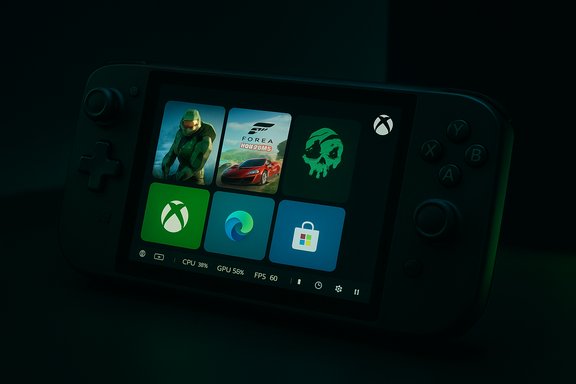
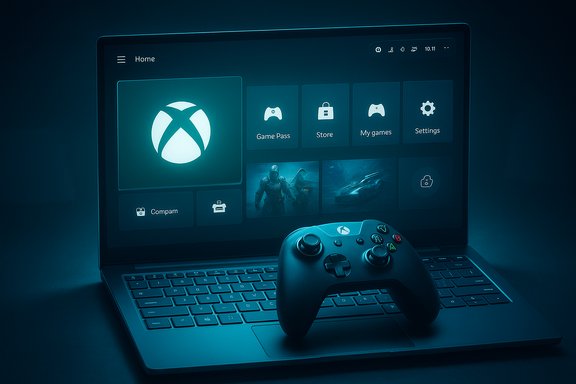
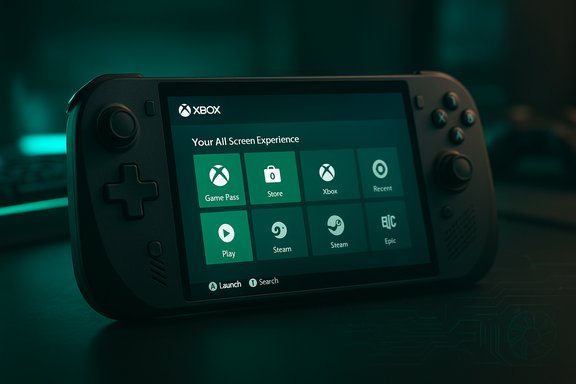
A handheld game console displaying the Xbox home screen.Overview​

Microsoft’s Full Screen Experience is designed to make Windows handhelds behave more like a dedicated console: large tiles, controller-first navigation, and fewer intrusive desktop services. Under the hood Windows remains intact — drivers, kernel and anti‑cheat frameworks continue to run — but when FSE is enabled the system intentionally defers or suppresses non‑essential desktop components and background startup tasks so more resources remain available for games and cloud streaming. That approach preserves Windows’ openness (Steam, Epic, GOG, Battle.net remain usable) while reducing friction for on‑the‑go gaming. The capability was shipped preinstalled on the ASUS ROG Xbox Ally and ROG Xbox Ally X and has been widened through Windows Insider Preview channels for select OEMs.

Background: why Microsoft built FSE​

Windows has long been optimized for keyboard/mouse productivity, not thumb‑friendly handhelds. Small displays, tight thermal envelopes, and the need for instant, controller‑based navigation produce friction on pocketable Windows PCs. Handheld users face tiny UI elements, notifications that interrupt play, and a full desktop stack that can steal memory and produce micro‑stutters.
FSE addresses those pain points by offering:
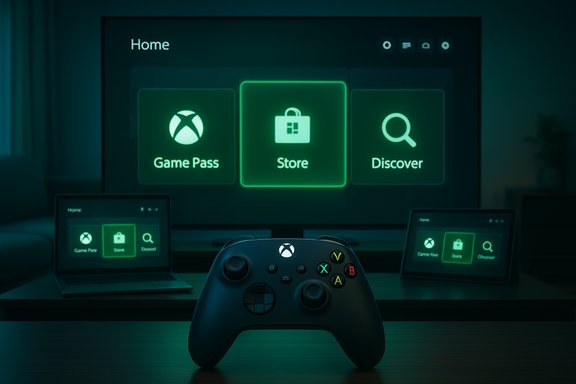
  • A full‑screen, controller‑optimized launcher (the Xbox PC app by default) that aggregates Game Pass, Microsoft Store purchases and discovered titles from other launchers.
  • Controller‑first system navigation (Game Bar, Task View, on‑screen controller keyboard, Xbox‑button integrations).
  • Session policies that defer many desktop services and startup apps while the full‑screen posture is active, reclaiming RAM and reducing background CPU activity.
This is a pragmatic engineering trade: not a replacement OS, but a lean session that gives handheld hardware the best chance of steady framerates and better battery life without breaking access to the broader PC game ecosystem.

What shipped and what’s launching on November 21, 2025​

Microsoft has moved the FSE components into Windows 11’s 25H2 preview stream and is gating visibility with OEM entitlements and staged feature‑flagging. The Windows Insider Preview Build most closely associated with this capability is Build 26220.7051 (KB5067115), which surfaced FSE expansion, Ask Copilot taskbar integration, and a Shared Audio preview. ASUS’ ROG Xbox Ally family shipped with FSE preinstalled; MSI Claw models entered preview rolls via the Insider channels. On November 21, 2025 Microsoft is scheduled to make the Xbox Full Screen Experience broadly available for compatible Windows handhelds (those running Windows 11 version 25H2 or later that meet OEM/hardware prerequisites). Key confirmed release facts:
  • Official rollout date: November 21, 2025.
  • Insider preview: Build 26220.7051 (KB5067115) contains FSE plumbing and Settings controls.
  • Initial OEMs: ASUS (ROG Xbox Ally & Ally X shipped with FSE), MSI Claw entered preview; further OEM enablement forthcoming.

Technical underpinnings: how FSE works (concise)​

FSE is a layered shell — a session posture implemented with existing Windows 11 components and policy controls. It does not alter the kernel or replace drivers, but it changes what the session loads and how certain subsystems behave.
What FSE changes at boot and runtime:
  • Sets a chosen “home app” (Xbox PC app by default) as the full‑screen launcher.
  • Defers loading of some Explorer ornamentation and non‑essential desktop services until the user switches out of FSE.
  • Pauses or delays some background maintenance and notifications to avoid interruptions while gaming.
  • Adapts Game Bar, Task View and input flows for controller navigation and integrates Xbox‑button mappings where available.
Measured, realistic impacts:
  • Independent previews and Microsoft materials cite reclaimed RAM on tuned handhelds in the range of roughly 1–2 GB in favorable scenarios; this is a directional engineering benefit, not a universal guarantee. Results vary by device, driver maturity, installed software and runtime profile.
Caveat on performance claims: some early pieces and company messaging suggested improvements to battery life and thermal behavior. These improvements are plausible because reducing background processes reduces idle CPU wakeups, but the exact percentage gain depends heavily on hardware, firmware, and the workloads run. Any single percentage (for example, “20% battery improvement”) should be treated as an optimistic estimate until validated on the specific hardware configuration. This claim remains variable and user reports differ.

How to enable the Full Screen Experience (official, supported method)​

Microsoft and OEMs gate the rollout; the safest way to enable FSE is to follow official steps. The sequence below reflects Microsoft’s published guidance in the Insider release and the Settings path exposed on supported hardware.
  • Confirm device eligibility: device shipped with or is explicitly enabled by OEM for FSE (ROG Xbox Ally family, preview MSI Claw models, others as enabled).
  • Update Windows: install Windows 11 version 25H2 or a Windows Insider Preview build that includes the FSE plumbing (Build 26220.7051 / KB5067115 where applicable).
  • Open Settings → Gaming → Full screen experience.
  • Choose a home app (Xbox PC app is listed by default) and toggle “Enter full screen experience on startup” if desired.
  • Enter/exit FSE via Task View, Game Bar (Win + G), or the Xbox button mapping on devices that include it.
Advanced: community tools and registry edits exist (ViVeTool flags and other tweaks) and have been widely shared, but they bypass vendor testing and can create unstable or unsupported states. Use such methods only with full backups and recovery media.

Real‑world behavior: early hands‑on reports and community feedback​

Hands‑on coverage and community testing show clear UX wins — larger UI targets, less “launcher hopping,” and a more immediate, console‑like experience for casual sessions. Early reviewers praise the reduction in desktop noise and the convenience of booting directly to a controller‑first launcher on devices built with that intent. Retail ROG Xbox Ally units shipped with the mode active and delivered the expected seamless experience in many cases. At the same time, public community threads and Insider testers report variability:
  • Some users find the navigation smooth and the library aggregation helpful; others report laggy menus or controller mapping quirks on non‑tuned devices.
  • Compatibility with third‑party launchers and anti‑cheat systems can be spotty until drivers and vendor firmware mature.
  • Community unlocks (ViVeTool registry hacks and GitHub one‑click tools) have allowed many to test FSE on unsupported hardware — but these paths can break overlays, disturb input mapping, or create recovery scenarios that require reinstalling Windows.
These early signals align with Microsoft’s staged rollout approach: the binaries live in the 25H2 builds but OEM enablement, telemetry and firmware tuning are essential parts of delivering consistent quality.

Strategic implications: Game Pass, OEM partnerships and the competition​

Microsoft’s FSE rollout is a strategic effort to position Windows handhelds as console‑like endpoints in the Xbox ecosystem. Key implications:
  • Game Pass adoption: a flatter, controller‑first interface that surfaces Game Pass titles and cloud gaming reduces friction for subscription discovery and day‑one play. Making the Xbox PC app the home app is a strategic nudge toward Xbox services. This could increase Game Pass engagement on handhelds where the UX was previously a barrier.
  • OEM partnerships: ASUS’ ROG Xbox Ally franchise served as the early reference device and a real‑world testbed. Microsoft’s ability to deliver the same shell across multiple OEMs (ASUS, MSI, Lenovo in planning) without fragmenting the Windows ecosystem is the key to scaling the experience. OEM firmware and driver tuning will determine whether the experience is consistently good.
  • Competitive pressure: Valve’s Steam Deck and SteamOS have pushed the handheld format forward with a Linux‑centric approach optimized for controllers and offline play. Microsoft’s advantage is Windows’ compatibility and Xbox services. By layering a console‑style shell on Windows, Microsoft seeks to combine the openness of PC gaming with the plug‑and‑play simplicity of a console. That duality is Microsoft’s primary strategic bet.

Strengths and opportunities​

  • Console‑like UX without losing Windows openness: FSE delivers a familiar, controller‑first launcher while allowing users to return to a full Windows desktop for productivity and third‑party clients. This is a major UX win for handheld form factors.
  • Measurable runtime gains: Deferring desktop services has a practical, testable effect on memory and idle CPU behavior; on tuned devices this can translate into steadier frame pacing and modest battery benefits. Independent reports and Microsoft’s preview notes converge on reclamation figures in the 1–2 GB range for favorable configurations, which matters on systems with constrained RAM budgets.
  • Ecosystem leverage for Game Pass and cloud gaming: surfacing subscription and cloud titles directly in a full‑screen home reduces friction for trial and retention.

Risks, limits and unanswered questions​

  • Variability by hardware and drivers: the mode’s benefits depend heavily on OEM firmware, GPU drivers, and anti‑cheat integration. Early community reports show some titles and launchers behaving inconsistently until vendors push tuned updates. This variability is the chief operational risk.
  • Anti‑cheat and DRM: FSE does not change the underlying anti‑cheat or DRM requirements. Some competitive titles with strict anti‑cheat might behave differently when booted from alternate launchers or when components are deferred. This remains an area for cautious validation, especially for competitive gamers.
  • Community unlocks and warranty/support exposure: registry and ViVeTool methods proliferated quickly; while they let enthusiasts experiment, they also create states that OEM support may not cover. Microsoft and OEMs recommend using official Insider and vendor paths.
  • Monetization and platform control questions: surfacing Game Pass and Xbox services more prominently will drive subscription engagement, but it may also raise questions among rival storefronts and developers about discoverability, platform economics and parity of experience across storefronts. The aggregated library behavior involves orchestration and sometimes handing off to native clients for DRM/anti‑cheat — this hybrid behavior needs clear developer guidance.

Practical guidance for owners and buyers​

  • If buying a handheld primarily for an out‑of‑the‑box console‑like experience, prefer OEM‑enabled devices that ship with FSE (ROG Xbox Ally family is the clearest example at launch). These will get the best firmware tuning and support.
  • If using a current handheld you depend on daily, prefer the official Insider/OEM path for FSE previews. Avoid community unlocks unless comfortable with full system backups and recovery USBs.
  • For competitive or anti‑cheat sensitive play, validate each game on your device and wait for vendor‑validated images if reliability matters. Test multiplayer titles on the supported path before assuming parity.
  • Keep firmware/drivers updated via OEM channels. Much of the experience quality comes from device‑specific tuning of power and GPU drivers.

Developer and platform considerations​

Microsoft has published guidance and a Handheld Compatibility Program to help developers optimize UI and text legibility for small screens, and to mark titles as Handheld Optimized or Mostly Compatible. Developers should prioritize:
  • Controller mapping and input handling testing in low‑resource, handheld thermal envelopes.
  • Clear compatibility metadata so users understand expected behavior before install or purchase.
  • Testing with the Xbox aggregated library flow and native client handoffs to ensure DRM and anti‑cheat launch paths do not break.
The developer and OEM ecosystems will decide how quickly the experience stabilizes across models.

Where this leaves the market​

Microsoft’s Full Screen Experience is the clearest, most coordinated attempt yet to make Windows handhelds genuinely usable in a controller‑first world without sacrificing the breadth of the Windows gaming ecosystem. For consumers it promises a simpler, more immediate path to gaming on pocketable PCs; for Microsoft it’s a strategic lever to increase Game Pass engagement and to make Windows the default handheld platform.
Expect a period of iteration: staged rollouts, firmware updates, and developer updates will be required to bring parity between the best, shipped experience on devices designed for FSE (ROG Xbox Ally) and broader adoption across diverse Windows handheld hardware. The next several months will show whether the engineering tradeoffs produce the consistent, low‑friction experience Microsoft intends, or whether fragmentation in drivers and anti‑cheat will keep handheld Windows a hobbyist space for longer.

Final assessment​

The Xbox Full Screen Experience is a pragmatic, well‑scoped engineering solution that addresses a familiar pain point: Windows’ desktop legacy is a poor fit for pocketable, controller‑driven gaming. By inserting a full‑screen, Xbox‑centric shell that conserves resources and prioritizes controller navigation, Microsoft has created a product pathway that can unify handheld UX while preserving PC openness. The strategy’s success will hinge on three practical factors: OEM firmware and driver maturity, clear anti‑cheat and DRM behavior, and Microsoft’s ability to scale the experience across OEM partners without fracturing the Windows platform.
For early adopters with supported hardware, FSE offers a clear and immediate benefit. For the broader market, it is a promising step that requires careful validation and time. The official rollout on November 21, 2025 is the start of that larger test.
Microsoft, OEMs, and developers will continue iterating: expect firmware and Windows updates, clearer compatibility tags, and new developer tools targeted at handheld optimization in the weeks and months ahead.

Source: WebProNews Microsoft Launches Xbox Full Screen for Windows Handhelds on Nov 21, 2025
 

Microsoft’s push to make Windows handhelds feel more like consoles takes a major step forward this week as the Xbox Full Screen Experience (FSE) expands beyond the initial Ally hardware, bringing a controller-first Xbox PC app shell to a broader range of Windows 11 handhelds — with Microsoft’s preview notes and multiple hands-on reports confirming the move. The Full Screen Experience hides the traditional Windows desktop, leans on Game Bar and the Xbox PC app for navigation, and deliberately minimizes background services to prioritize memory and performance for gaming, though some headline performance numbers are reported by journalists rather than being formally published by Microsoft.

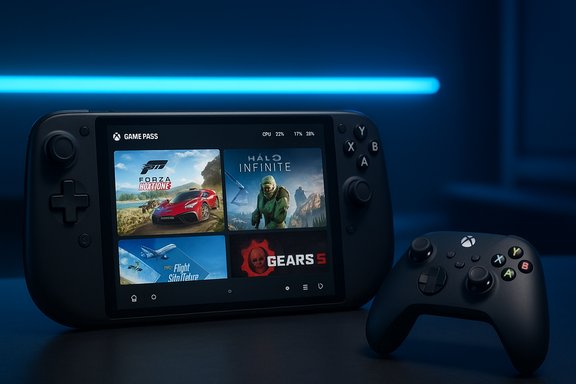
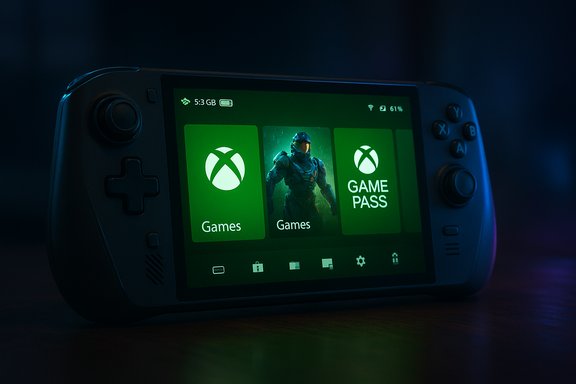
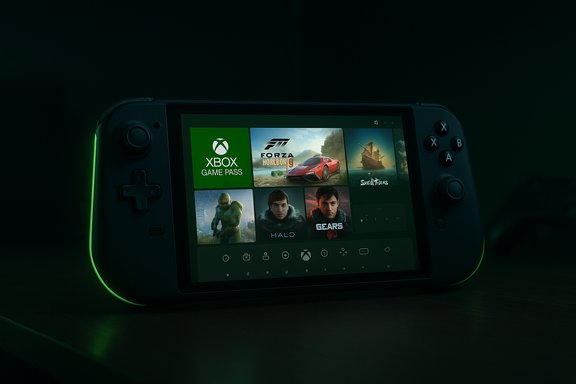
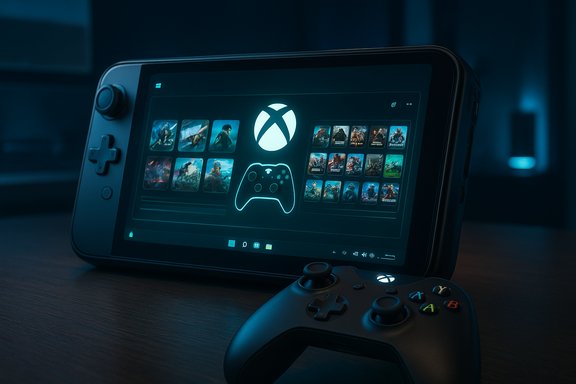
Handheld console displaying Xbox Game Pass with Forza, Halo Infinite, Flight Simulator, and Gears 5.Background and overview​

The Xbox Full Screen Experience is a new startup and shell option for Windows 11 devices that replaces the Explorer desktop at boot with the Xbox PC app and a controller-optimized UI. The objective is simple: provide a console-like, distraction-free home for games on small, controller-first devices while keeping the underlying openness of Windows intact. The experience first shipped on the ROG Xbox Ally family and has been rolled out in preview form to other handhelds such as MSI’s Claw via Windows Insider channels. Microsoft’s Windows Insider notes describe FSE as “designed with console-style navigation in mind” and say it reduces non-essential background activity so gameplay remains responsive. Key functional characteristics:
  • Boots straight into the Xbox PC app instead of the Windows desktop.
  • Uses an enhanced Game Bar and controller-focused task view for navigation.
  • Suppresses the Explorer shell and defers non-essential background processes to free up system resources.
  • Aggregates game libraries across multiple storefronts (Microsoft Store, Steam, Battle.net, etc. inside the Xbox PC app.
  • Can be toggled on or off from Settings and accessed from Task View or Game Bar.
Several outlets reported the next wave of availability and practical user-facing details, while Microsoft’s Insider blog provides the official guidance for enabling the mode on supported devices. Where outlets supply specific numbers or dates that Microsoft’s official notes don’t, that distinction will be made clear in the analysis below.

What’s rolling out, and when​

Microsoft’s official rollout posture​

Microsoft’s Windows Insider blog announced a preview build (Windows 11 Insider Preview Build 26220.7051) that expands FSE availability beyond the initial Ally hardware, explicitly naming MSI Claw models in the preview and indicating additional OEMs will enable the feature in the coming months. The official guidance explains how to enable Full Screen Experience via Settings > Gaming > Full screen experience and confirms the feature’s presence on Ally devices and the MSI Claw preview. The Insider post frames the change as an evolution of Windows for handheld gaming rather than a replacement of Windows itself.

Media reports and specific dates​

Several tech outlets reported that Microsoft will make the Xbox Full Screen Experience generally available to Windows-based handhelds starting November 21, 2025. That date appears in some press reporting summarizing Microsoft’s broader rollout plans, but it does not appear as a specific date in the Windows Insider preview post itself; therefore the November 21 claim should be viewed as reporting from journalists based on Microsoft’s timing statements rather than a formal Microsoft announcement in the Insider blog. This difference matters for readers tracking precise release timing. Analysis takeaway: the preview expansion is official and live for selected Insider builds; the marketing or general availability calendar reported by outlets is consistent with Microsoft saying “coming soon,” but individual dates reported by journalists should be treated as reported dates until confirmed by a dedicated Microsoft consumer announcement.

How the Full Screen Experience works technically​

A controller-first shell over Windows 11​

FSE does not replace Windows at the kernel or OS level; it replaces the desktop shell (Explorer) at boot with the Xbox PC app acting as the primary user interface. Under the hood, Windows 11 still runs, but the initial shell and many desktop-specific background services are deferred or not loaded. This approach keeps the platform open (install Steam, Battle.net, third-party overlays, etc. while presenting a unified, simplified launcher intended for gamepad navigation. Microsoft’s Insider notes and multiple hands-on reports confirm this behavior.

Resource savings and the “2GB” figure — verified context​

A recurring headline around FSE is that it frees “around 2GB” of memory by suppressing the Explorer shell and nonessential background tasks. That figure comes from early hands-on reporting and device tests published by journalists during FSE previews; Microsoft’s official Windows Insider post describes the feature as minimizing background processes but does not publish a specific RAM-savings figure. In short, the approximate “2GB” number is widely reported but not formally quantified in the official Microsoft narrative, so it should be regarded as an independent measurement or estimation rather than a Microsoft guarantee. Why this matters: the exact memory savings a user will see depends on the device configuration, installed apps, drivers, active services, and whether memory-hungry components like third-party overlays are present. The figure is useful as an order-of-magnitude guide but not a universal promise.

Where you’ll see FSE first (devices and OEMs)​

  • ASUS ROG Xbox Ally / ROG Xbox Ally X — launched with the Xbox FSE as the default out-of-box experience.
  • MSI Claw models — included in Windows Insider Preview builds and available to Insiders in the Dev/Beta channels as part of Microsoft’s preview expansion.
  • Lenovo Legion Go 2 — Lenovo has signaled FSE support will arrive for the Legion Go 2 in a later update; OEM timelines vary and may push the feature into 2026 for some devices.
Microsoft’s stated plan is to enable FSE on “additional Windows 11 PC form factors” through Windows Insider and direct OEM enablement, which hints at a staged, hardware-by-hardware distribution rather than a single universal switch.

How to enable and disable Full Screen Experience​

Enabling FSE on a compatible device is straightforward and intentionally reversible:
  • Open Settings in Windows 11.
  • Go to Gaming > Full screen experience.
  • Select Xbox as your home app and (optionally) enable “Enter full screen experience on start-up.”
  • Reboot to begin using the Xbox PC app as your primary shell.
To exit FSE temporarily, use the Game Bar or the controller’s Xbox button to access the task switcher and the option to return to the Windows desktop. Microsoft explicitly warns that the classic desktop is best navigated with touch, a keyboard, or a mouse, and that switching back-and-forth is supported but may be less slick than on a desktop PC.

Strengths: what FSE gets right for handheld gaming​

1. Simpler, console-like experience​

The primary strength of FSE is a lower-friction playback environment. For users whose primary use case on a handheld is gaming, booting directly into a large-tile, controller-first interface removes the awkwardness of touch-sized Windows UI elements and makes discovery, launching, and switching between games smoother.

2. Better resource prioritization​

By deferring the Explorer shell and some background services, FSE can reduce OS noise and free memory for games — meaning fewer context switches and potentially improved frame stability on constrained hardware. Even modest memory savings can have outsized impact on handheld devices that share memory between CPU and GPU. Journalists’ hands-on tests report meaningful savings; exact numbers will vary.

3. Unified game library​

The Xbox PC app in FSE aggregates multiple storefronts and services so your installed PC games, Game Pass titles, and cloud-streamed content appear in one place. For many users this reduces friction from having to juggle multiple launchers and store apps on a 7–8" screen.

4. Developer and OEM momentum​

Microsoft’s partnership with OEMs like ASUS, and the quick inclusion of devices like MSI’s Claw in Insider builds, suggests OEM buy-in. That’s important: a consistent experience across devices will drive adoption and make the idea of “Windows handhelds that behave like consoles” believable.

Risks, limitations, and unanswered questions​

A. Switch friction and maintenance tasks​

Switching from FSE back to full Windows (for installs, troubleshooting, or certain app configurations) is supported — but it’s still a desktop-first workflow that often assumes a keyboard, mouse, or touch. This design makes certain maintenance tasks (drivers, mods, third-party overlays) more frictionful on a handheld and risks interrupting the seamlessness that FSE promises.

B. Fragmentation across OEM implementations​

Because FSE requires OEM cooperation to be fully supported, implementations and extra optimizations may vary by manufacturer. Some OEMs may add extra firmware or launcher logic, leading to inconsistent behavior and support windows across devices. Insufficient OEM testing could cause regressions, surprise behavior after updates, or fragmented user experiences.

C. Unclear performance guarantees​

While the “~2GB” memory savings figure has been widely repeated in press coverage, Microsoft has not published a guaranteed number. Memory and performance gains will vary widely depending on device memory configurations, room for driver activity, installed services, and how often users switch back and forth between modes. Treat early numeric claims as indicative, not definitive.

D. Updater complexity and recovery​

Windows Update, driver updates, and third-party launchers were built for the Explorer shell and general desktop usage. FSE suppresses Explorer — but system-level updates still occur. This layered stack could complicate recovery scenarios (for example, if a required desktop tool needs to run post-update) and may increase the reliance on OEM-specific recovery tools. Users should ensure they understand how to boot into the desktop environment and how to revert FSE if firmware or driver steps require it.

E. Privacy and telemetry considerations​

By making Xbox and Game Bar the focal point, Microsoft is consolidating telemetry and feature controls in a gaming-centered UI. While there’s no indication of new invasive telemetry specifically for FSE, gamers who prefer to minimize telemetry should review settings and privacy controls after enabling FSE — and expect that some game-related features will require online sign-in and service integration.

Practical advice for users​

Before you enable FSE​

  • Confirm your device is listed as supported in Windows Update or your OEM’s support pages, or use Windows Insider builds if you’re comfortable with pre-release software.
  • Back up important files and create a restore point or system image in case you want to revert to a full desktop workflow quickly.
  • Make sure you know how to access the desktop from FSE (Game Bar or Task View) and that you have a keyboard/mouse available if you need to perform installs or driver updates.

Troubleshooting tips​

  • If a game is missing from the Xbox PC app library, verify the store launcher is installed and up to date (Steam, Battle.net, etc., then re-scan or add the game location inside the Xbox app.
  • If audio or Bluetooth accessories behave differently in FSE, switch to the desktop and confirm drivers and accessory software are installed. Restart the device after driver installs.
  • For stability issues after an OS update, exit FSE and check Device Manager and Windows Update history on the desktop to confirm driver status.

Power users: use with caution​

Advanced users who frequently mod games, use kernel-level tools, or rely on third-party overlays should expect occasional friction. Keep a small USB keyboard or a docking plan to expedite installs and troubleshooting.

OEM and developer implications​

  • OEMs should prioritize driver stability and clear recovery instructions. A handheld with a console-first UX demands rock-solid firmware and simple fallback paths.
  • Game developers can improve handheld experiences by adopting dynamic resolution, controller-aware UIs, and power-management profiles that account for battery and thermal constraints.
  • Microsoft’s Windows handheld play model is a significant opportunity for middleware and performance tools (shader preloading, auto-scaling resolution, automated tuning) to gain traction — but that requires robust testing across diverse hardware.

Strategic perspective: why Microsoft is pushing FSE​

Microsoft’s strategy with FSE is straightforward: bring the Xbox brand and its service ecosystem into a form factor traditionally dominated by PC-first UI paradigms, and reduce friction for gamers who want a console-like experience without losing Windows’ app and store openness. The move fortifies Microsoft’s efforts to unify Game Pass, Xbox cloud services, and the Xbox PC app as a hub across hardware. For the Windows handheld market — still nascent compared to consoles and a mature market like Steam Deck — the presence of a curated Xbox-first shell backed by OEM partners elevates Windows handhelds from niche PC curiosities to a plausible “console in your pocket” category.

Looking ahead: what to watch​

  • Expansion cadence: Monitor whether additional OEMs (beyond ASUS, MSI, and Lenovo plans) adopt FSE and how quickly they deliver updates to their existing devices.
  • Mode switching polish: Watch for Microsoft updates that reduce friction when switching between FSE and desktop — instantaneous state preservation and faster reboots would materially improve the UX.
  • Metrics and guarantees: Look for Microsoft or OEM publications of measured performance improvements (frame stability, memory freed, boot times) to replace anecdotal numbers with testable claims.
  • Developer tooling: Adoption of automated optimization tools for handhelds (auto-resolution scaling, shader precompilation) will determine whether FSE is a superficial shell or part of a serious handheld performance stack.

Conclusion​

The Xbox Full Screen Experience is a pragmatic and plausible answer to one of Windows’ oldest handheld problems: the mismatch between Windows’ desktop-first legacy and the expectations of console-style portable gaming. By turning the Xbox PC app and Game Bar into a primary, controller-first shell, Microsoft has created a credible pathway for Windows handhelds to deliver simpler, more immersive play on small screens.
That said, the rollout is still staged and iterative. Official Microsoft messaging confirms the concept and preview expansion, while specific performance claims and launch dates reported in press coverage should be read as journalist reporting until Microsoft publishes definitive, device-by-device figures. Users who care about stability, modding, or advanced installs should plan for the desktop fallback and keep recovery tools ready. For the majority of gamers who simply want a fast, console-like way to pick up and play PC titles on handheld hardware, FSE may already be the best evolution of Windows handheld UX to date — provided OEMs and Microsoft follow through on polish, consistent support, and clearer performance guarantees.
Source: The Verge Windows handhelds are getting the new Xbox Full Screen Experience tomorrow
 

Microsoft’s Full Screen Experience will begin appearing on a wider set of Windows handhelds on November 21, 2025, converting supported devices into a controller‑first, console‑style environment that boots straight into the Xbox PC app and intentionally bypasses the traditional Windows desktop shell to free memory and reduce background noise for games.

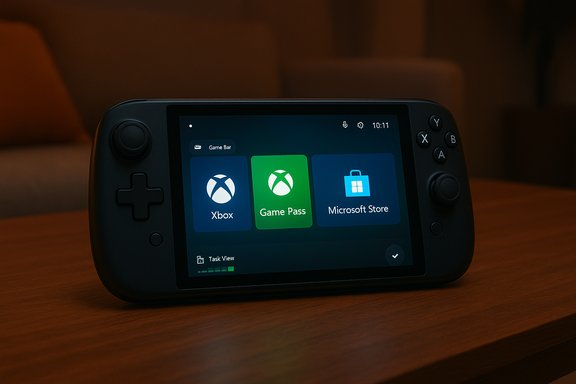
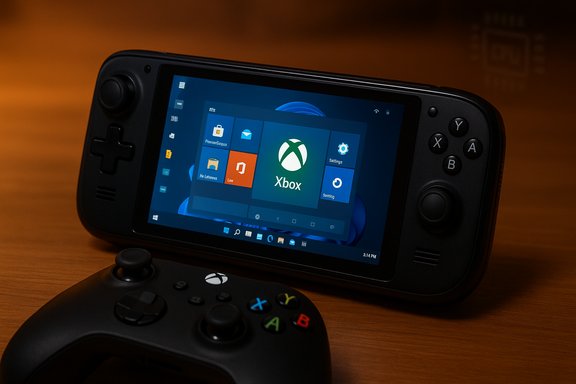
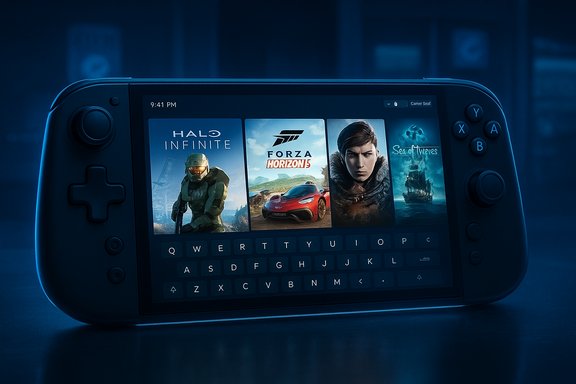
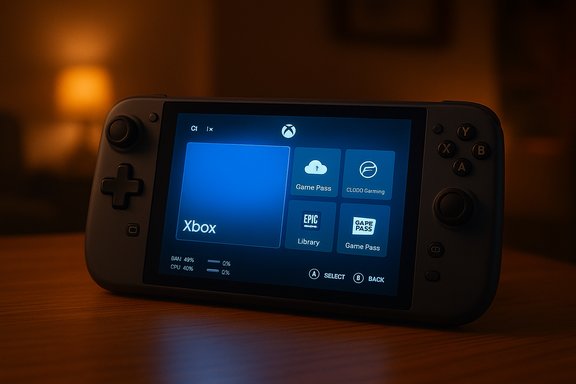
A handheld gaming console on a wooden table, showing Xbox, Game Pass, and Microsoft Store tiles.Background / Overview​

Windows has long contended with a fundamental mismatch for handheld gaming: a desktop‑first operating system running on devices designed for thumb controls, tight thermal envelopes, and portable battery life. The new Xbox Full Screen Experience (FSE) is Microsoft’s answer — not a new operating system, but a session posture layered on Windows 11 that transforms the device’s runtime and user interface while leaving core drivers, kernel services, and anti‑cheat frameworks intact.
FSE first shipped preinstalled on the ASUS ROG Xbox Ally family and was expanded through Windows Insider preview channels to other OEM devices. Microsoft’s preview work has been delivered in a Windows 11 25H2 preview build that carries the FSE plumbing and Settings controls, enabling OEMs to gate availability per product and enabling staged rollouts. On November 21, 2025, Microsoft moved to a broader rollout posture, making the FSE option available to a larger set of Windows handhelds that meet OEM and hardware prerequisites.
This shift is about practical trade‑offs: reduce the cost of running desktop ornamentation and defer background maintenance so handhelds can behave more like dedicated consoles when the user wants to play.

What the Full Screen Experience actually is​

A session posture, not a kernel patch​

  • The Full Screen Experience is a layered shell that starts a selected “home app” in full‑screen (the Xbox PC app by default) and suppresses many desktop UI ornaments and non‑essential startup processes for the active session.
  • It does not replace the Windows kernel, swap drivers, or disable core system protections. GPU and CPU drivers, DRM and anti‑cheat modules, and the underlying operating system still operate normally.
  • The change is implemented by altering which userland components and services load at session start and by applying session policies that reduce background CPU wakeups and memory held by desktop subsystems.

Visible behavior users will notice​

  • Devices boot directly into a console‑style launcher with large, controller‑friendly tiles that aggregate games from Game Pass, the Microsoft Store, and discovered titles from third‑party storefronts like Steam, Battle.net and Epic.
  • Controller‑first navigation is elevated: an enhanced Game Bar overlay, a controller‑optimized Task View, and an on‑screen controller keyboard let users operate the device without a physical keyboard or mouse.
  • Notifications, wallpaper, and many Explorer ornaments are muted or delayed to avoid interruptions while gaming.

What changes under the hood​

  • The system suppresses Explorer shell startup and delays a subset of background tasks and maintenance jobs while FSE is active.
  • Some desktop services and startup applications are postponed until the user switches back to the Windows desktop, reclaiming memory and reducing idle CPU activity.
  • The design is intentionally reversible: users can enter or exit FSE from Settings, Game Bar, Task View, or mapped hardware buttons on supported devices.

Technical specifics and verified details​

  • The FSE plumbing surfaced in the Windows 11 25H2 preview stream tied to Insider Preview Build 26220.7051 (KB5067115), which includes the Settings UI for enabling the mode and additional handheld‑focused features.
  • ASUS’ ROG Xbox Ally and ROG Xbox Ally X shipped with the experience preinstalled and tuned as an out‑of‑box option; other OEMs such as MSI have enrolled select models into preview testing.
  • On supported devices, FSE is exposed in Settings under: Settings → Gaming → Full screen experience, where you choose a home app (Xbox by default) and may enable “Enter full screen experience on startup.”
These specific build and Settings pathways are part of Microsoft’s supported rollout and were confirmed in the official Insider preview materials and OEM product notes.

The much‑quoted “2 GB” memory figure — what it means and what it doesn’t​

A recurring headline around FSE is that skipping Explorer and deferring desktop services frees around 2 GB of RAM for games. That number is best treated as an order‑of‑magnitude, practical observation rather than an ironclad promise.
  • Independent previews and Microsoft’s engineering language both describe reclaimed RAM in the range of roughly 1–2 GB in favorable scenarios, but the exact savings will vary substantially by device, installed software, active background agents, overlays, and driver maturity.
  • Some hands‑on measurements on tuned handhelds have shown ~1.1 GB reclaimed in specific test configurations; internal engineering tests on some Ally‑class hardware reported savings near 2 GB. These are directional measurements and not guaranteed for every setup.
  • The reason the figure varies is simple: the desktop shell cost depends on which startup apps and services are present. A clean device with minimal background software will see different savings than a machine with many resident utilities, overlays, or telemetry agents.
Readers should treat “2 GB freed” as a useful benchmark for the scale of benefit, but expect device‑specific variance when they test it themselves.

How to enable FSE safely (supported path)​

Follow the supported route to minimize stability and driver mismatches:
  • Confirm that your device is listed by the OEM as eligible for FSE or that it shipped with FSE preinstalled.
  • Enroll in the appropriate Windows Insider channel if your OEM has enabled FSE through preview flights, and update to the preview build that carries the FSE bits.
  • Update the Xbox PC app and any OEM utilities (e.g., Armoury Crate, MSI Center) and firmware to the latest vendor releases to reduce overlay and driver conflicts.
  • Open Settings → Gaming → Full screen experience, select Xbox (or another supported app) as the home app, and optionally choose “Enter full screen experience on startup.”
  • Reboot to begin using FSE; use Game Bar, Task View, or the hardware Xbox button to enter/exit during a session.
Advanced community methods that force the experience via registry edits or community tools exist, but these bypass vendor testing and can create unsupported states. Only use such approaches with full backups and a tested recovery plan.

Measured impacts: performance, battery, and frame pacing​

Why FSE can help sustained frame delivery on handheld APUs:
  • Handhelds are thermally constrained and sensitive to frequent, small CPU wakeups from background tasks; reducing those wakeups improves frame‑time consistency.
  • Reclaiming memory reduces paging and cache pressure, which can reduce stutters in memory‑heavy scenes and improve perceived smoothness.
  • Muting notifications and deferring maintenance reduces interruptions that would otherwise trigger CPU spikes or I/O during gameplay.
What reviewers and testers have reported so far:
  • RAM reclaimed typically falls in the 1–2 GB range on tuned hardware; results are variable and depend on installed software and drivers.
  • Battery life and thermals: trimming background activity plausibly reduces idle power and can improve battery life in some scenarios, but percentage gains depend on the specific device, power limits, and title played.
  • FPS and frame pacing improvements have been reported in hands‑on tests for isolated titles on specific devices; some outlets saw mid‑range uplifts in frame rate or steadier frametimes, but these were not universal and depended on driver/firmware tuning.
Bottom line: FSE improves the environment the game runs in by reducing OS noise. It is not a magical performance booster that rewrites drivers or increases raw CPU/GPU throughput; measurable benefits are tied to less resource contention and smoother runtime behavior on devices that previously suffered from desktop overhead.

Developer and OEM implications​

  • For OEMs, FSE provides a sharable UI and session model that can be tuned per device while keeping Windows as the underlying platform. That allows vendors to ship a console‑like experience without forking the OS.
  • For game developers, nothing in FSE changes the runtime or anti‑cheat requirements; titles still launch under the same drivers and DRM stacks. However, the UX differences (Game Bar, controller login flows) may affect how overlays and input flows are tested.
  • For middleware and overlay authors (capturers, performance tools), FSE raises new testing targets: ensure overlays behave when Explorer isn’t front and center and that your tools don’t rely on desktop‑specific hooks.
Expect Microsoft to continue enabling FSE for additional Windows 11 PC form factors through OEM partnerships and the Windows Insider program, which could eventually make the experience available to some laptops and desktops as an optional console posture.

Risks, compatibility caveats, and support concerns​

While promising, FSE introduces practical tradeoffs and failure modes users should be aware of:
  • Anti‑cheat and DRM compatibility: FSE does not remove anti‑cheat or DRM restrictions. Games that require specific client hooks or overlay integrations may behave differently if third‑party overlays are suppressed or delayed.
  • Overlay and utility conflicts: OEM utilities and third‑party overlays (Discord, RivaTuner, Nvidia/AMD OSDs) can cause unexpected interactions when the Explorer shell is not the primary session. Update firmware and vendor tools before enabling FSE.
  • Staged enablement and server gating: Microsoft and OEMs use server‑side entitlements to control availability. Installing a preview build does not guarantee FSE will appear on every device; distribution is phased by hardware and region.
  • Telemetry and privacy: Changing the session posture does not inherently change Microsoft’s telemetry, but users should verify their privacy settings and vendor utilities’ behavior when running in FSE.
  • Support and warranty: Using community unlocks or forcing the feature via unsupported tools may void certain vendor support agreements or create states vendors aren’t obliged to troubleshoot.
  • Enterprise management: Organizations that manage fleets should assume that FSE changes session behavior and should evaluate any line‑of‑business dependencies on Explorer shell services before enabling FSE on managed devices.

Practical advice for enthusiasts and buyers​

  • If you own a handheld that shipped with FSE preinstalled (for example, certain ASUS ROG Xbox Ally models), the experience should be supported and tuned by the OEM out of the box.
  • If you are an early‑adopter using preview builds on a device from another OEM, follow the supported enabling steps — enroll in the Windows Insider channel specified by your OEM and keep firmware and utilities updated.
  • For critical workflows or competitive titles with strict anti‑cheat, wait for vendor‑verified releases before switching to FSE for regular use.
  • When testing FSE yourself:
  • Create a full system backup and ensure you have recovery media.
  • Update Windows, the Xbox PC app, and OEM utilities.
  • Enable FSE, then run a selection of your common titles to assess memory, frametimes, and battery behavior.
  • If you encounter issues, disable FSE and gather logs (Feedback Hub) to share with Microsoft or your OEM.

Market implications: Windows handhelds vs. dedicated handheld OSes​

Microsoft’s FSE is a strategic move to close the usability gap between Windows handhelds and dedicated handheld consoles. Rather than asking OEMs or consumers to choose between Windows’ openness and a console‑like launcher, FSE makes a pragmatic compromise: present an appliance‑like front end while preserving the openness and compatibility of Windows underneath.
  • For buyers comparing Windows handhelds to closed systems (for example, Linux‑based handhelds or purpose‑built consoles), FSE narrows the convenience differential by simplifying game discovery and controller navigation.
  • For the wider ecosystem, the risk is fragmentation: a growing set of session postures and OEM‑specific tuning could make uniform user experience and developer testing harder. That said, Microsoft’s approach of layering the experience on top of Windows preserves the ability to run all existing PC storefronts and services.

Final assessment: strengths, limitations, and who benefits most​

Strengths
  • Practical, focused gains: FSE addresses real pain points for handheld Windows gaming — memory pressure, background CPU wakeups, and clumsy controller navigation — with an engineering approach that reuses existing Windows components.
  • Openness preserved: Because this is a session posture, games from Steam, Epic, Battle.net and other stores remain usable; users keep access to the full PC ecosystem.
  • OEM enablement path: Shipping FSE preinstalled on tuned hardware (ROG Xbox Ally family) lets vendors tune drivers and firmware for the right result.
Limitations and risks
  • Benefit variance: RAM reclaimed and battery or frame‑rate uplifts vary widely by device and installed software — the commonly quoted “2 GB” savings is directional, not guaranteed.
  • Compatibility edges: Overlay and anti‑cheat interactions remain the most significant friction points; some games or utilities may require vendor or Microsoft patches to work seamlessly in FSE.
  • Staged rollout: Not every device will see FSE immediately; Microsoft and OEMs gate visibility to minimize issues during staged enablement.
Who benefits most
  • Owners of handhelds that ship with FSE preinstalled and tuned by the OEM will likely see the strongest, most reliable improvements.
  • Enthusiasts comfortable with Insider builds and backups can test the mode early on other handhelds, but should expect to troubleshoot and to revert if needed.
  • Users who prioritize a console‑like, controller‑first experience and want to preserve access to PC storefronts will find FSE compelling.

Microsoft’s Xbox Full Screen Experience is a meaningful and pragmatic evolution for Windows handheld gaming: it does not reinvent Windows, but it strategically reduces desktop noise and wraps a controller‑first launcher around the PC game ecosystem. Expect measurable benefits on well‑tuned hardware, but also expect variance and the occasional compatibility hiccup as Microsoft, OEMs, and third‑party developers iterate toward a stable, widely supported experience. The safest path to a smooth experience remains vendor‑enabled releases and the supported Settings route; users seeking early access should prepare with backups and be ready to update firmware and tools as vendors release tuned updates.

Source: The Tech Buzz https://www.techbuzz.ai/articles/mi...l-screen-experience-to-all-windows-handhelds/
 

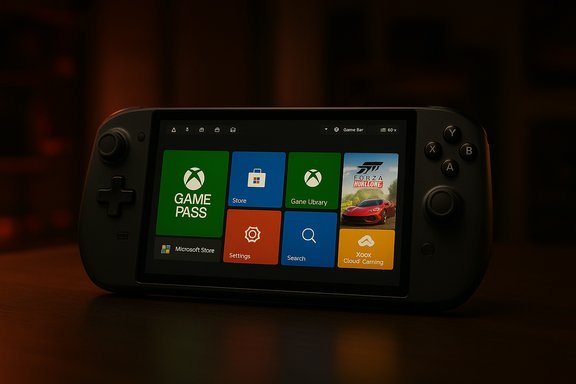
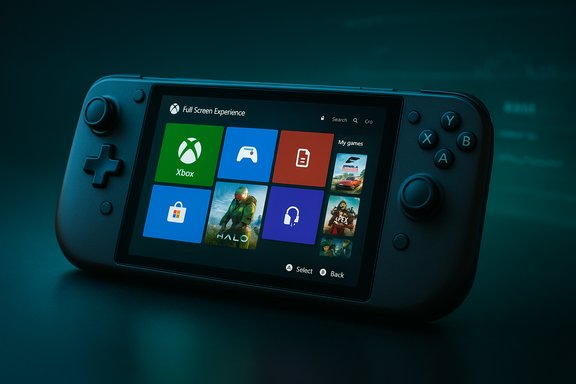
A handheld game console displaying a Windows-style tile menu with Xbox Game Pass.
Microsoft’s Xbox Full Screen Experience (FSE) is arriving on a broader set of Windows handhelds sooner than some OEM timelines suggested, with owners of devices such as the Lenovo Legion Go 2 already seeing previews and other handhelds moving into staged rollouts via the Windows Insider channel — but the practical outcome for users is mixed: meaningful gains in memory headroom and a cleaner, controller‑first UI are offset by compatibility quirks, controller-input edge cases, and uneven OEM gating.

Background​

Windows has historically been optimized for keyboard-and-mouse desktops and productivity laptops, not for thumb-controlled, thermally limited handheld gaming devices. The Xbox Full Screen Experience is Microsoft’s attempt to bridge that gap without creating a separate OS: instead of rewriting core drivers or the kernel, the company layered a controller-first, full-screen session posture on top of Windows 11 that makes a chosen “home app” (the Xbox PC app by default) act like a console shell. That design aims to reduce OS noise, free memory, and present a unified launcher for Game Pass, Xbox purchases, and discovered titles from other storefronts. Microsoft shipped FSE preinstalled on the ASUS ROG Xbox Ally family and has been expanding it through Windows Insider Preview builds to additional hardware such as MSI’s Claw models. Multiple outlets and community reports show the preview plumbing is now present in Windows 11 25H2 Insider builds (notably Build 26220.7051 / KB5067115), and Microsoft is gating visibility per device using OEM entitlements and staged feature flags. That means the binaries can be in your Windows build even if your device isn’t authorized to enable the mode yet.

What the Full Screen Experience actually does​

At a glance: visible behavior​

  • Boots directly into a full‑screen, tile‑based launcher built around the Xbox PC app instead of the traditional Windows desktop.
  • Offers controller‑first navigation: on‑screen controller keyboard, controller-driven login flows, and a Task View optimized for bumpers and sticks rather than mouse and keyboard.
  • Elevates Game Bar as a central overlay for quick toggles, captures, and switching between games and apps.
  • Aggregates libraries from Game Pass, Microsoft Store, and discovered titles from third‑party launchers (Steam, Battle.net, Epic, etc. into a single grid.

Under the hood: why it can help performance​

FSE does not change kernel scheduling, GPU drivers, anti‑cheat, or DRM stacks. Instead it changes what userland components load at session start and applies session-level policies that defer or suspend some desktop‑centric subsystems (for example, wallpaper, some Explorer features) and delay non‑essential startup apps. On tuned handheld hardware this can free up directional amounts of RAM — outlets and OEM materials commonly cite up to ~1–2 GB reclaimed in some scenarios — and reduce idle CPU wakeups that cause micro‑stutters, yielding steadier frame delivery and improved battery behavior. Treat those numbers as approximate engineering estimates; real gains depend heavily on device configuration, drivers, and installed background software.

Timeline and rollout — where confusion arises​

Not all public timelines agree, which is the core of the “earlier than expected” narrative.
  • Notebookcheck and several hands‑on reports signaled FSE availability moving onto devices like the Lenovo Legion Go 2 and other Windows handhelds sooner than Lenovo’s original guidance suggested. Those community‑facing reports show users finding the FSE toggle and reporting early experiences.
  • Lenovo’s public statements toward media placed Legion Go 2 FSE availability in a spring 2026 window in some reports, suggesting a conservative OEM timeline to allow for firmware and driver tuning. The Verge’s coverage captured that Lenovo timeline while other outlets reported earlier Insider-based availability.
  • Microsoft’s Insider and Xbox communications show the FSE plumbing in the 25H2 preview stream and confirm staged expansion across OEMs; some press coverage summarized a wider availability push beginning November 21, 2025, reflecting Microsoft’s staged rollout posture. Whether a specific device shows the option depends on the Insider build, the Xbox app version, OEM updates, and server‑side entitlements.
Bottom line: the capability is being distributed via Insider and OEM gates. Some users on supported builds see the feature immediately; others wait for vendor entitlements and firmware tuning. The discrepancy between press reports and vendor timelines explains headlines that say FSE “arrives earlier than expected.”

Lenovo Legion Go 2, ROG Ally, MSI Claw and others — practical differences​

Who shipped with FSE preinstalled​

  • ASUS ROG Xbox Ally / Ally X: co‑developed with Microsoft and shipped with the Xbox FSE as a central experience. That product set the baseline for controller-first handheld Windows behavior.

Who’s getting FSE via Insider preview​

  • MSI Claw models were among the first non‑ASUS devices to get preview enablement through Windows Insider (Build 26220.7051 / KB5067115). Community testers reported the option appearing in Settings > Gaming > Full screen experience once the necessary Xbox app and Insider bits were present.
  • Lenovo Legion Go 2: community reports and some press coverage show owners enabling and testing FSE in preview earlier than Lenovo’s own advertised timetable. That led to the Notebookcheck headline noting it’s arriving earlier than expected, even though Lenovo previously suggested a spring 2026 rollout window.

Practical OEM differences that matter​

  • OEMs control final enablement and often ship vendor utilities (Armoury Crate SE, MSI Center, Lenovo Vantage) that interact with input mapping, power profiles, and firmware. Those utilities must be updated alongside FSE to achieve the smoothest experience; mismatched versions increase the chance of glitches.

Real‑world experience: strengths and current limitations​

Strengths (what reviewers and testers consistently report)​

  • Cleaner, controller‑first UX — the launcher reduces desktop friction and is easier to navigate with thumbsticks and bumpers. Testers praise the large tiles and Xbox-integrated discovery flows.
  • Measurable resource headroom — multiple hands‑on tests indicate reclaimed RAM and reduced background CPU wakeups, which can improve sustained framerates and reduce thermal throttling in CPU/GPU bound scenarios. Independent coverage reports mid‑teens to mid‑20% frame‑rate swings in specific configurations, though results vary.
  • Retention of Windows compatibility — because FSE is a layered session rather than an OS fork, players can still run Steam, Epic, GOG and other PC clients — albeit with caveats around input and overlays in some cases.

Limitations and reliability problems to watch​

  • Controller input and third‑party app behavior: early users of ROG Ally and preview rollouts report controller functionality not always working as intended with non‑Xbox apps. Some Steam, Epic and GOG titles show broken or inconsistent input mappings when launched through the FSE shell in early builds. Community threads and hands‑on accounts document a mixture of fixes and lingering issues.
  • Switching to desktop still imperfect: while FSE defers desktop startup tasks for performance, exiting to the Windows desktop sometimes triggers a full desktop load that requires a reboot or yields inconsistent state for startup utilities. Some testers report the desktop coming up only after a restart in early previews.
  • Fragile early‑preview experience: because Microsoft and OEMs gate FSE with server entitlements and device checks, community workarounds (vivetool, registry edits) exist but are unsupported and can break updates, drivers, or anti‑cheat behavior. Users who went the unofficial route have posted recovery and driver‑rollback stories.
  • Not a perfect replacement for a console UX: critics argue that a UI designed as a console OS (from the kernel and driver stack up) would avoid many of the friction points FSE still exhibits because it could make deeper, platform-level tradeoffs. FSE’s advantage is compatibility; its tradeoff is that legacy Windows behavior sometimes leaks into sessions.

Technical specifics and verification​

  1. Official Insider build and KB: the FSE plumbing is associated with Windows 11 Insider Preview Build 26220.7051 (KB5067115) in the 25H2 preview stream; that build exposes Settings > Gaming > Full screen experience on entitled devices.
  2. Typical memory/headroom claim: Microsoft/OEM materials and independent hands‑on reports commonly indicate up to ~1–2 GB of reclaimed RAM on tuned handhelds, with the caveat that these are directional estimates rather than guaranteed numbers. Always verify on your specific device.
  3. Boot behavior: when FSE is enabled with “Enter full screen experience on startup” selected, Windows will defer many desktop startup apps until you explicitly switch to the desktop, helping preserve frame stability during gaming sessions. Exiting FSE brings desktop services back (which can cause a more substantial load).
These technical claims are cross‑checked with Microsoft’s Insider notes and multiple independent hands‑on reports and press coverage; the pattern is consistent even where precise numeric gains vary with hardware.

How to enable the Xbox Full Screen Experience (official, supported path)​

Follow the supported path to avoid unsupported hacks and reduce risk of driver/anti‑cheat issues:
  1. Enroll the device in the Windows Insider Program (choose the channel your OEM recommends for FSE exposure — Dev, Beta or Release Preview depending on the staged rollout).
  2. Update Windows to the preview build that contains the FSE plumbing (Insider build family associated with Build 26220.xxxx / KB5067115).
  3. Install or update the Xbox PC app (preview/beta channel if required) and sign in.
  4. Update your OEM utilities (Armoury Crate SE, MSI Center, Lenovo Vantage) and device firmware so drivers and vendor services match FSE expectations.
  5. Open Settings > Gaming > Full screen experience, choose Xbox as the home app (or another supported gaming app if listed), and optionally toggle Enter full screen experience on startup.
  6. Reboot and test: use Game Bar (Win + G), Task View (Win + Tab), or the Xbox/hardware button to enter and exit FSE.
If the option is not visible: confirm Insider build, Xbox app version, and OEM update state. Avoid community hacks (vivetool/regedit) unless you are comfortable with clean installs and recovery; those paths are unsupported and can complicate future updates.

Compatibility, anti‑cheat and enterprise considerations​

  • Anti‑cheat and DRM stacks run in the same kernel and driver context regardless of FSE; however, differences in how overlays, input layers, and game-launch paths are handled in the shell can yield behavioral differences. If you rely on games or apps that use delicate overlay or input hooks, validate them on your specific hardware before switching permanently.
  • Enterprise and shared devices: FSE is a consumer‑facing session posture. For managed or corporate hardware, treat FSE like a user-level configuration change and coordinate with IT because deferred background tasks and altered startup behavior may interact with endpoint protection, telemetry, or management agents.
  • Warranty and support: enabling FSE via the official path is generally supported on devices OEMs have enabled; unofficial methods may void support or complicate warranty servicing. Manufacturers are explicitly gating access for this reason.

Comparison: FSE vs SteamOS / Valve’s handheld approach​

  • SteamOS (and other console‑like OSes) are full platform forks designed from the kernel and driver set to deliver a uniform console experience. They can make deeper tradeoffs (for example, driver stacks tuned for a narrower set of hardware, or different input subsystems) that may yield less friction for controller-first play.
  • FSE’s advantage is compatibility: it preserves Windows’ openness (all your PC clients remain usable) while adding a reduced-overhead shell for handheld scenarios.
  • FSE’s tradeoff is that legacy Windows behavior can still surface during sessions (desktop services reloading, input differences between desktop and FSE), creating scenarios where a purpose-built console OS still feels smoother or more predictable for certain users.

Practical recommendations for users and buyers​

  • If you own a supported handheld and value an immediate controller-first experience, enable FSE via the supported Insider/OEM path once your device and drivers are updated. Back up your system first.
  • If you depend on specific third‑party launchers (Battle.net, GOG Galaxy, older overlays), test those titles in FSE before committing to booting into it by default. Some users have encountered mapping or overlay issues that require adjustments.
  • For buyers choosing a handheld now: prefer vendors that explicitly commit to supporting FSE and update their system software shortly after Microsoft's preview releases. If a seamless console-like handheld is top priority, evaluate SteamOS/Valve-focused options as a contrast point.
  • Avoid unsupported hacks unless you have a recovery plan. Community unlocks exist and can be tempting, but they are by definition unsupported and raise the chance of driver or update failures.

Risks, unknowns and what to watch next​

  • Microsoft and OEM telemetry will drive iterative improvements. Expect fixes for controller mapping, Game Bar behavior, and desktop-switch stability as preview telemetry accumulates.
  • The exact memory and frame‑rate uplift will remain device-specific. Reported figures (up to 1–2 GB freed) are directional: verify on your hardware and workload before assuming identical gains.
  • Vendor-specific utilities and firmware updates will be essential to a smooth experience. The degree of polish and OEM responsiveness will determine whether FSE is a neat novelty or a game‑changing feature for handheld Windows gaming.

Conclusion​

The Xbox Full Screen Experience represents a pragmatic bet: rather than fragmenting Windows into another OS, Microsoft applied a session posture that converts selected handheld Windows PCs into a more console‑like surface. That design preserves openness — you still have Steam, Epic and other clients — and yields tangible benefits on thermally constrained hardware by trimming desktop noise and reclaiming memory. Early adopters enjoy a cleaner, controller‑first launcher and measurable runtime improvements in many cases.
Yet the preview stage exposes real tradeoffs. Controller input quirks, desktop-switching oddities, and the need for up‑to‑date OEM drivers mean the path to a seamless handheld experience is incremental. For owners of devices such as the Legion Go 2 and MSI Claw models, the practical advice is simple: update Windows and vendor software, enable FSE via the supported Insider path when your device is entitled, and validate your most-played games. For buyers, FSE is promising but not yet a universal silver bullet — it’s a significant step toward making Windows handhelds feel like consoles, but it will reach its full potential only when OEM tuning, driver maturity, and Microsoft’s iterative fixes converge.

Source: Notebookcheck Xbox Full Screen Experience arrives on Legion Go 2 and other Windows handhelds earlier than expected
 

Microsoft’s console-style Xbox Full Screen Experience (FSE) has moved beyond a single OEM experiment and is now rolling out to a broad set of Windows handheld gaming PCs — but the reality is more nuanced than headline statements that “every Windows handheld” received it today. The update repackages Windows 11 into a controller-first, full‑screen session that boots into the Xbox app, trims desktop overhead to reclaim user‑space memory, and centralizes games from Game Pass, Steam, Epic, Battle.net and more — a major UX and platform play aimed at making Windows feel more like a handheld console while retaining full PC compatibility.

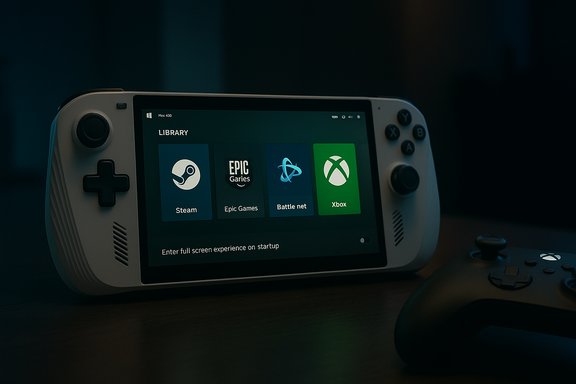
A white handheld gaming device shows Steam, Epic Games, Battle.net, and Xbox tiles.Background / Overview​

Microsoft first shipped FSE as a core part of the ROG Xbox Ally family developed with ASUS, where the OS launches into a full‑screen Xbox app tailored for controller navigation. That initial launch showed the concept in the wild and gave Microsoft and OEM partners a controlled environment to tune both firmware and session policies. Since then, Microsoft has pushed the underlying components into Windows 11’s 25H2 preview stream so other OEMs can adopt the mode under a staged, device‑gated rollout. The feature is deliberately not a forked OS. Instead, FSE is a layered session posture: the chosen “home app” (Xbox by default) becomes the primary shell while Windows defers or suspends many desktop ornaments and non‑essential startup services. That design preserves drivers, kernel behavior and anti‑cheat requirements while creating a console‑like front door to games. The practical goal is to reduce background noise on thermally constrained handheld APUs and present a more consistent, controller‑first experience.

What the Full Screen Experience actually does​

A session posture, not a new operating system​

  • Boots directly into a full‑screen launcher (the Xbox app) instead of the traditional Windows desktop, with large tiles and controller navigation.
  • Defers desktop ornamentation—wallpaper, some Explorer subsystems, and many startup applications—until the user explicitly switches back to the desktop. This is the primary mechanism for reclaiming system memory and trimming background CPU wakeups.
  • Keeps kernel, GPU drivers, DRM and anti‑cheat stacks intact; game compatibility remains governed by the same low‑level Windows subsystems. In short: not a new kernel, but a lighter user session.

UX and system changes visible to users​

  • Controller-first navigation: the Game Bar, Task View and app switcher are refactored for bumpers, sticks and an Xbox-style button workflow.
  • Aggregated Library: Xbox app aggregates and lists games discovered on the device from Steam, Epic, Battle.net and other launchers to create a single searchable library and simplify launching on a controller-first device.
  • Startup option: users can enable “Enter full screen experience on startup” so the handheld feels like a dedicated gaming appliance out of the box.

Technical specifics and verified claims​

Microsoft and early hands‑on reporting agree on several technical touchpoints. The plumbing for FSE lives in Windows 11 25H2 preview builds, notably builds in the 26220 family and associated cumulative packages. The toggle appears under Settings → Gaming → Full screen experience on devices that have been entitled by Microsoft/OEM servers. This gating means the feature binaries can be present in a Windows build even when a device cannot yet enable FSE without a server flag. Memory/headroom claims: repeated reporting cites directional savings of roughly 1–2 GB of user‑space RAM in favorable configurations when FSE defers desktop services — a meaningful figure for handhelds with constrained RAM budgets. These figures are estimates based on OEM materials and independent hands‑on tests; real gains vary by installed apps, drivers, and device firmware. Treat the numbers as directional engineering benefits, not guarantees. Redesigned overlays and game controls: Game Bar has been retooled for FSE — quick toggles, captures, and switching workflows are mapped to controller actions, and Task View supports bumper-based switching rather than mouse gestures. This is a UX layer the Xbox app and Windows Game Bar now share on entitled handhelds.

Rollout: what changed and where the confusion comes from​

Headlines that claim “FSE expands to all Windows handhelds from today” oversimplify Microsoft’s staged approach. The rollout model is explicitly hardware‑gated and staged through Windows Insider preview channels and OEM entitlements, so exposure can vary by device, region, and whether OEM utilities and firmware are up to date. Microsoft has expanded preview availability beyond the Ally family — for example, MSI’s Claw models have been included in Insider preview distributions, and OEMs such as Lenovo publicly scheduled support for models like the Legion Go 2 in spring 2026. That staged, partner-driven timetable explains why some outlets report immediate availability on certain devices while others see only preview or delayed support. Practical reality for owners:
  • Some devices (ROG Xbox Ally family) shipped with FSE preinstalled.
  • Preview expansion landed on MSI Claw devices and is available to Insiders on qualifying builds.
  • Other OEMs (Lenovo, AYANEO, older ROG Ally units) are on planned timetables or will expose FSE after OEM firmware and app updates; timelines differ.
Because of this gating, blanket statements that "every Windows handheld" got FSE "today" are sometimes inaccurate: the binaries may be broadly distributed, but device entitlements and OEM updates determine when the end user actually sees and can enable the feature.

Hands‑on performance: what reviewers and testers are seeing​

Independent hands‑on articles and community benchmarks show a mix of promising gains and real‑world caveats.
  • Reported gains: some reviewers saw measurable improvements in frame stability and in a handful of synthetic and real‑game benchmarks where background OS noise was mitigated. One hands‑on noted boost levels (for specific games) that made perceptible differences in sustained frame pacing on thermally constrained handheld silicon. These results align with the mechanism — reclaiming user‑space RAM and reducing idle wakeups — rather than low‑level driver or GPU improvements.
  • Benchmarks are mixed and highly device dependent: on machines with minimal background services the delta is smaller; when many startup apps and vendor utilities are present, the marginal gain is larger. In other words, FSE helps the environment more than the hardware itself.
  • Battery and thermal behavior: some tests show modest battery life improvements due to a tighter session and fewer background wakeups, but manufacturers still need to tune firmware and driver power policies to lock in those gains. Microsoft’s session-level optimizations are complementary to, not a replacement for, vendor power management work.

UX and compatibility quirks reported by early adopters​

The community has documented several real issues that matter to daily users:
  • Controller quirks: some testers report that certain controller actions — for example, the “X” button behavior in app switcher contexts — didn’t always act as expected. These are often interoperability problems between OEM button mappings, Armoury Crate or vendor OSD layers, and the Xbox overlay.
  • Windows UI leakage: users have noticed occasional desktop UI elements or notifications surfacing inside FSE sessions. These leaks are symptomatic of layered session behavior — Windows still runs beneath and may surface elements that OEMs and Microsoft will need to patch or suppress server‑side.
  • Mixed audio and background clients: cases were reported where switching between games or launchers left audio streams active in the background or produced duplicate audio when overlays didn’t properly suspend other clients. These are synchronization issues between the Xbox launcher and third‑party launchers or audio subsystems.
  • Visibility volatility during preview: Insiders have seen the FSE toggle appear and disappear depending on server-side flags and Xbox app previews; that inconsistency is typical of a staged rollout but frustrating to testers.
Microsoft has acknowledged that FSE is a work in progress and is actively iterating based on feedback. OEMs must also coordinate firmware and utility updates to ensure overlays (Armoury Crate, MSI Center, Lenovo Vantage, etc. do not conflict with the new launcher environment.

How to get it (official, safe path) — verified steps​

For users who want FSE through supported channels, follow the official path rather than community hacks:
  • Join the Windows Insider Program on the channel your OEM recommends (Dev, Beta or Release Preview depending on staged availability).
  • Update to the Windows 11 preview build that carries the FSE binaries (Insider builds in the 25H2 preview family; testers often reference builds in the 26220.x series).
  • Update the Xbox PC app to the latest preview channel and sign in. Some components arrive via Xbox app updates rather than Windows Update.
  • Update OEM firmware and utilities (Armoury Crate SE, MSI Center, Lenovo Vantage) so vendor overlays match the new behavior.
  • Open Settings → Gaming → Full screen experience, select Xbox as your home app, and optionally toggle Enter full screen experience on startup. Reboot and test.
Community workarounds (ViVeTool toggles, registry DeviceForm edits) are widely documented and can force exposure, but they carry risk and can complicate future updates. For users who rely on stable behavior, the supported path is recommended.

Strategic implications: Microsoft, OEMs and the Windows gaming ecosystem​

FSE is more than a UI experiment — it signals a strategic push with several implications:
  • Microsoft is iterating on a controller-first UX that narrows the friction between console and PC ecosystems, a move that benefits Game Pass and cross‑device continuity. Aggregating games into the Xbox app increases convenience for most users and strengthens Microsoft’s role as the default game launcher on Windows handhelds.
  • OEM coordination matters: FSE requires OEM firmware and overlay updates to avoid conflicting system utilities. The success of FSE depends on hardware partners shipping tuned drivers, updated utilities, and ergonomically mapped buttons. ASUS’ Ally family was the testbed; other OEMs will need time to tune their stacks.
  • Competition with alternative front ends: Playnite, GOG Galaxy, and Valve’s SteamOS remain competitive alternatives for those who want deeper aggregation, plugin ecosystems, and more control. Microsoft’s advantage is first‑party integration with Windows and Game Pass, but power users will still gravitate toward community-driven solutions unless Microsoft broadens customization and telemetry transparency.
  • Console/PC convergence speculation: the broader rollout of FSE onto desktops through Xbox and Windows Insider channels may feed speculation that Microsoft’s next Xbox generation will adopt a more PC-like approach under the hood. While plausible, that remains speculative; FSE is a session posture and not evidence of a wholesale platform merge. Keep that distinction clear.

Risks, caveats and what to watch​

  • Expect device‑dependent variability: RAM savings, battery impact, and stability will vary widely based on installed software, vendor utility behavior and driver maturity. Early gains are promising but not universal.
  • Anti‑cheat and DRM remain a constraint: since FSE does not bypass kernel‑level anti‑cheat, titles that require privileged drivers still follow the same rules, and some publishers may require extra work to ensure compatibility on handheld hardware.
  • Preview volatility: toggles can be gated, appear/disappear, or behave differently across Insider channels. Users who use their devices for production tasks or who rely on stable behavior should avoid enabling preview flags or community hacks.
  • Telemetry & privacy concerns: when a first‑party launcher gains aggregator power, questions about data collection, usage and retention become relevant. Microsoft will need to be transparent about what the Xbox app collects when it indexes third‑party libraries. This remains an area power users will watch closely.
  • OEM dependency: some issues stem from vendor overlay conflicts. Until OEM firmware and utilities are updated, early adopters may experience quirks that require patches from manufacturers rather than Microsoft.

Practical recommendations for owners and prospective buyers​

  • If stability matters: wait for your OEM’s official support announcement and the required Armoury Crate / device‑utility updates before enabling FSE. That path reduces the chance of overlay and driver conflicts.
  • If you’re a tester and willing to accept preview instability: use the Windows Insider Program, update the Xbox app preview, and keep your OEM utilities and firmware current. Back up your system and create a restore point before enabling preview features.
  • For power users: retain knowledge of, and workflows for, alternative launchers (Playnite, GOG Galaxy) and accept that Microsoft’s aggregator will improve convenience at the cost of control. Keep third‑party manager backups and metadata exports if you rely on heavy modding or custom metadata.

Conclusion​

The Xbox Full Screen Experience marks a significant step in Microsoft’s handheld strategy: it delivers a console-like front door for Windows games, tries to reclaim memory and reduce background noise, and centralizes game libraries in a controller‑friendly UI. Early tests show tangible benefits on tuned hardware, but the rollout is intentionally staged — gated by OEM entitlements, firmware readiness and Xbox app updates — which makes blanket claims that “all Windows handhelds got FSE today” misleading.
For owners, the sensible course is pragmatic: update firmware and vendor utilities, follow OEM guidance, and use the supported Windows Insider path if you want to preview FSE. For Microsoft and partners, the work ahead is coordination: smoothing overlay conflicts, closing UX leaks, and delivering consistent behavior across devices so the promise of a seamless, console‑like Windows handheld experience becomes reality rather than a preview‑only novelty.
Source: channelnews.com.au channelnews : Xbox Full Screen Experience Expands To All Windows Handheld Gaming PCs
 

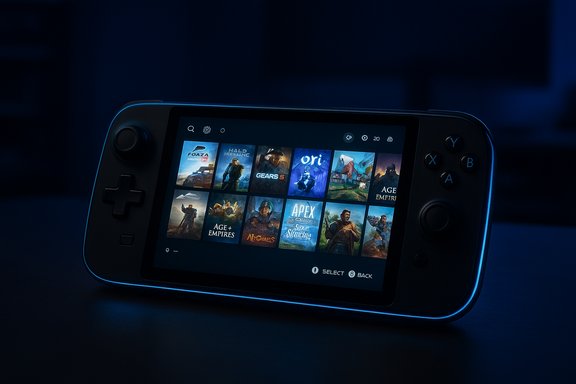
A Nintendo Switch–style handheld console displaying colorful game icons on its home screen.
Microsoft's Xbox Full Screen Experience is rolling out to every Windows-based handheld starting November 21, 2025, bringing a console-style, controller-first launcher to devices beyond the ROG Xbox Ally family and offering a new way to boot, navigate, and play without landing on the traditional Windows 11 desktop first.

Background​

The Xbox Full Screen Experience (FSE) is a newly introduced UI layer that presents the Xbox PC app as a full-screen, controller-centric home interface and trims Windows desktop subsystems to produce a more console-like session on handheld hardware. Designed to be an alternate shell rather than a replacement OS, FSE combines the Xbox PC app, an expanded Game Bar, and startup/boot optimizations so a handheld can boot directly into a tiled game hub that aggregates titles and services from multiple storefronts.
This rollout is part of a staged plan that began with the ROG Xbox Ally and ROG Xbox Ally X, expanded into trial and Insider channels on other handhelds, and—starting today, November 21, 2025—moves into a broader distribution across Windows handhelds running supported Windows 11 builds. The primary goals are simpler navigation for controller-first play, faster game startup, and lower background resource usage so more memory and battery headroom remain for games.

What exactly is the Xbox Full Screen Experience?​

A full‑screen shell, not a new OS​

  • The FSE uses the Xbox PC app as the primary launcher and the Game Bar as the overlay and system control surface.
  • Underneath the interface, Windows 11 remains intact: kernel, drivers, and installed apps operate as usual. The difference is what Windows loads (or doesn't load) when you enter the FSE posture.
  • Instead of loading the full Explorer shell, desktop wallpaper, and many background services at boot, FSE defers or suppresses those elements to create a lean, controller-friendly session.

Core user-facing features​

  • A single aggregated view for games and apps from the Microsoft Store, Steam, Epic Games Store, Ubisoft Connect, and other installed launchers.
  • Controller-first navigation across the UI: large tiles, a controller keyboard, PIN-based login flows, and Xbox button shortcuts that mimic a console experience.
  • Integrated Game Pass discovery and subscription prompts inside the same hub.
  • Options to enter FSE from Game Bar, Task View, or to start directly into the experience at login.

How to enable FSE on a compatible Windows handheld​

  1. Ensure your device is running a supported Windows 11 build and that core gaming apps are updated.
  2. Update the Xbox app and Game Bar via the Microsoft Store (or device OEM update channels).
  3. Open Settings > Gaming > Full screen experience.
  4. Choose your preferred home app from the Set your home app dropdown (for the Xbox-flavored FSE, choose Xbox).
  5. Optionally enable Enter full screen experience on startup to boot directly into the FSE on login.
These controls let you opt into the experience and also revert to the regular desktop whenever necessary.

Why Microsoft built this: design goals and expected benefits​

Cleaner, controller-first UX for handhelds​

Windows has been designed primarily for keyboard/mouse on large screens. Handheld gaming requires a different interaction model: quick, thumb-friendly navigation, easy access to performance toggles, and on-screen input that doesn't demand an external keyboard.
FSE addresses that gap by:
  • Delivering a game-centric home screen that surfaces installed titles and Game Pass offerings in one place.
  • Reworking the Game Bar into a persistent control surface for quick app switching, performance overlays, and system toggles.
  • Providing controller-oriented input flows so users can manage basic tasks without attaching a keyboard.

Resource savings and performance headroom​

One of the headline claims around FSE is that it reduces background overhead by not loading much of the Explorer shell and by deferring startup apps. That produces two practical benefits for handhelds:
  • Lower idle memory usage — which can free gigabytes of RAM that would otherwise be consumed by desktop services and auto-start apps.
  • Reduced background CPU and power drain — improving battery life and thermal behavior during gaming sessions.
Manufacturers and Microsoft have discussed potential memory savings in the vicinity of up to roughly 2 GB on tuned devices; this is a hardware- and configuration-dependent figure and should be treated as an estimate rather than a guarantee.

Early testing and real‑world behavior: what hands‑on reviewers and users are seeing​

Performance changes​

Early practical tests and hands-on coverage show that FSE can deliver measurable performance improvements in some titles, primarily by reducing system background activity and increasing available RAM to the game. Reported improvements range from modest framerate smoothing to larger gains in specific scenarios—especially on devices with limited memory where avoiding Explorer and many background services meaningfully increases the runtime headroom.
That said, gains vary widely by:
  • Device model and memory/CPU/GPU configuration.
  • Which background apps and services were present prior to enabling FSE.
  • Driver maturity and OEM-specific power profiles.
A few early benchmarks reported double-digit percentage improvements in isolated tests, but those should be considered example cases rather than universal outcomes.

Stability, bugs, and daily updates​

The launch cadence and user reports indicate the experience is still maturing. Early adopters have encountered issues including:
  • Occasional regressions where the FSE option disappears after updates or cloud restores.
  • Input quirks with certain controller mappings and overlays.
  • Interactions with vendor software (like OEM control suites) that can disable or break parts of the experience.
Microsoft and OEMs are issuing frequent updates to the Xbox app, Game Bar, and Windows Insider builds to refine the system. Users who want a stable day-one experience may prefer to wait for vendor-validated images and firmware.

Community methods to enable FSE​

Enthusiast tools and registry tweaks have circulated to enable FSE on devices where the option is hidden. Community-created utilities automate steps and deploy driver-mode changes to emulate the handheld posture.
These community methods can let advanced users test FSE early, but they are:
  • Unsupported by Microsoft and OEMs.
  • Potentially risky; misapplied registry edits or unsigned driver changes can cause instability.
  • Likely to produce inconsistent behavior compared to official, OEM-integrated rollouts.

Which devices and timelines matter​

  • The Asus ROG Xbox Ally and ROG Xbox Ally X shipped as the first devices with FSE integrated and ready at launch.
  • Microsoft has used Insider Preview channels (notably 25H2 previews) to expand access to other handhelds during testing.
  • Partners such as MSI (Claw models) and Lenovo (incl. Legion Go 2 statements) have been named as recipients in staged rollouts; OEM timing varies and may extend into 2026 depending on QA cycles and firmware alignment.
  • Desktop PCs will see a version of the FSE option through Windows 11 Insider builds for users who want a gaming-focused boot option, but that desktop rollout is phased and aimed primarily at gaming-focused machines.

Deep dive: what FSE changes under the hood​

Shell and startup behavior​

FSE changes what the Windows session loads at boot:
  • It avoids loading many Explorer shell components, including desktop composition elements and certain taskbar extensions.
  • Startup and auto-run apps can be deferred unless explicitly allowed to run during FSE sessions.
  • The Xbox app becomes the primary foreground process and can act as the primary "shell" for the session.
These changes are implemented as system-level policies and session hooks rather than a forked OS, which preserves broad compatibility with existing drivers and Windows applications.

Game Bar evolution​

Game Bar is no longer a small overlay; in FSE it becomes the primary multitasking layer with:
  • An accessible Home button to return to the Xbox app.
  • Widgets and overlays optimized for small touch and controller interaction.
  • Shortcuts for performance modes, capture, and overlays that are finger- and thumb-friendly.

Handheld compatibility and the developer side​

Microsoft is pairing the UX with a set of handheld compatibility indicators and a "Handheld Optimized / Mostly Compatible" program to inform users which games are expected to play well in small-screen, controller-first environments. This helps manage expectations and guides developers and publishers on how to adapt UIs and control mappings.

Benefits for users and OEMs​

  • Faster, simpler boot-to-game on handheld hardware for users who primarily want gaming-only behavior.
  • Lower memory footprint at idle, which can be critical on systems with 8–16 GB of RAM.
  • A single hub for multiple storefronts that reduces friction in launching games from varied sources.
  • Better controller-only usability, enabling casual or on-the-go gaming without peripherals.
  • OEM differentiation: device makers can advertise an out-of-the-box console-like experience on Windows handhelds.

Risks, caveats, and long‑term considerations​

1. Performance claims are variable​

The frequently cited "up to ~2 GB" RAM savings are an engineering estimate that depends on what the device would otherwise be loading. Systems with many startup agents will see larger benefits than a clean, minimal install. Treat headline numbers as directional.

2. Compatibility and regression risk​

Because FSE changes session startup and defers components, some desktop apps and OEM utilities may behave unexpectedly. Features that rely on Explorer hooks or background services could need reconfiguration. Frequent updates to the Xbox app and Windows 11 preview builds have produced regressions for some users during early rollout phases.

3. Community hacks and unsupported tools​

Third-party utilities and registry hacks can forcibly enable FSE. They provide early access but come with real risks:
  • They bypass OEM and Microsoft validation processes.
  • They may lead to driver or firmware mismatch problems.
  • They can complicate warranty support or RMA processes.

4. The "illusion" of no Windows​

While FSE presents a console-like UI, the underlying OS remains Windows. Switching to the desktop for installs or advanced settings can reduce the FSE benefits until you reboot back into the trimmed session. Users expecting a completely sandboxed or separate OS will be disappointed.

5. Fragmentation across the handheld ecosystem​

OEMs must align drivers, firmware, and OEM utilities around FSE for a consistent experience. The phased rollout and vendor-specific QA will mean that user experiences vary by device; a polished Ally experience may not match early preview behavior on older or less supported handhelds.

Practical advice for users and power users​

  • If you value stability: wait for your OEM to publish validated updates (firmware + drivers + software) that support FSE. OEM-validated images reduce the risk of regressions.
  • If you want to experiment: use official Insider Preview channels and follow manufacturer guidance. Avoid registry hacks unless you understand how to recover your system (backup, recovery image).
  • Keep drivers and the Xbox app/Game Bar updated. Many early issues are fixed by incremental Microsoft and OEM updates.
  • If you rely on background services (sync clients, cloud backups, overlay apps), configure them in Settings > Apps > Startup to explicitly allow them to run in FSE or accept they may be deferred.
  • For desktop users who want a console-like boot: the Windows 11 Insider route will expose similar options, but expect the usual preview caveats and potential instability.

How FSE changes the competitive landscape​

Microsoft is positioning FSE as a middle ground between the openness of Windows and the convenience of console-style UIs. That strategy aims to:
  • Keep PC-specific storefronts (Steam, Epic, GOG, Ubisoft) accessible while presenting a unified home screen.
  • Compete with alternative OS-focused handheld solutions (like SteamOS and other Linux-based UIs) by offering a less radical change for customers who want Windows compatibility.
  • Provide OEMs a built-in playbook to market Windows handhelds as ready-for-console play without sacrificing the broad PC ecosystem.
This approach increases Windows' relevance in the handheld market, but it also raises the bar on interoperability and polish—areas where specialized, purpose-built systems have an advantage.

Conclusion​

The Xbox Full Screen Experience represents a pragmatic evolution of Windows for handheld gaming: a controller-first, full-screen shell layered over Windows 11 that trims desktop overhead to free memory and make handhelds feel more like portable consoles. Rolling out broadly on November 21, 2025, FSE gives users a path to boot directly into an Xbox-like launcher that aggregates their installed titles and streamlines game discovery via Game Pass.
The promise—faster game launches, a simplified controller-driven UI, and measurable resource savings—is credible and already visible in early hands-on reports. However, those benefits come with real caveats: performance gains are variable and workload-dependent, the experience is still maturing with frequent updates and occasional regressions, and community hacks to force-enable the feature carry risk.
For most users, the wisest route is measured adoption: wait for your OEM to provide a validated build, keep core Xbox and system apps updated, and treat community tools as experimental. For players who want to push the envelope and can tolerate preview instability, FSE opens a compelling new way to experience PC gaming on handheld devices—bringing Windows a step closer to the "turn on and play" convenience console users expect, while keeping the PC's openness and storefront diversity intact.

Source: glitched.online All Windows Handhelds Are Getting The Xbox Full Screen Experience Today
 

Microsoft's console-style interface for handheld Windows PCs—the Xbox Full Screen Experience—lands on a wide range of devices tomorrow, promising a more console-like UX, leaner background processes, and tighter Game Pass integration for ROG Ally, Legion Go, MSI Claw, AYANEO and other Windows handhelds.

A handheld gaming device displays Xbox Game Pass tiles on a green user interface.Background​

Microsoft introduced the Xbox Full Screen Experience (often abbreviated XFSE or FSE) with the ROG Xbox Ally and ROG Xbox Ally X as a tailored, controller-first shell built on top of Windows 11 components. Rather than replacing Windows, FSE changes what initializes when a handheld is used in “console mode”: the system boots into a full-screen Xbox app interface, reduces the Explorer footprint, and trims non-essential background services to free system memory and lower idle power draw. The aim is straightforward: make handheld Windows PCs feel and behave more like dedicated gaming consoles while preserving access to the full Windows desktop when needed. What’s new is scope. Microsoft announced at the Xbox Partner Preview that XFSE will be broadly available to Windows handhelds starting November 21, 2025, and will arrive on additional PC form factors through Xbox and the Windows Insider programs in the near future. That means owners of devices such as the original ROG Ally, Lenovo Legion Go series, MSI Claw, AYANEO models and other Windows handheld gaming PCs can expect the option to switch into the console-like experience without having to install a third-party launcher or switch to a different OS.

What Xbox Full Screen Experience actually does​

XFSE is both a UI and a system behavior modifier. It performs three primary functions:
  • Presents a controller-first Xbox app UI that aggregates installed titles, Game Pass content, PC Store purchases, and some third-party storefront entries into one hub.
  • Reduces Windows desktop overhead by avoiding Explorer as the shell for the session and limiting non-essential background services and processes.
  • Provides quick, gamepad-driven system navigation and a simplified input flow tuned for small, handheld screens.
These design choices allow handhelds to boot directly into Xbox, improving discoverability for Game Pass content and speeding access to games. The memory and process trimming is intended to free up RAM for games and reduce idle power usage—two crucial gains for battery-constrained handheld devices. The Verge and PC Gamer both report practical memory savings and fewer background tasks in FSE sessions, with The Verge noting roughly 2GB of memory reclaimed in certain configurations.

How it’s surfaced to users​

On supported machines XFSE can be enabled from Windows Settings under Gaming > Full screen experience, where an Xbox option can be selected as the home app. Devices can be configured to start directly into the full-screen shell on boot, or users can toggle in and out through task view or the Game Bar, depending on OEM integrations and system updates. Early-adopter guidance and activation steps are already circulating following Windows Insider previews and OEM updates.

Which devices get XFSE at launch (and what “supported” means)​

The initial consumer-facing rollout targets a class of Windows handhelds: devices with dedicated gamepad inputs and screens optimized for close-range use. Specifically, Microsoft and multiple outlets list the following as supported or expected to be supported on or soon after November 21, 2025:
  • ASUS ROG Xbox Ally and ROG Xbox Ally X (launched with XFSE preinstalled).
  • Original ASUS ROG Ally models (eligible via update).
  • MSI Claw handhelds (Windows Insider availability and staged rollouts).
  • Lenovo Legion Go series (including the first Legion Go; Lenovo has also discussed later support for Legion Go 2 in spring 2026).
  • AYANEO handheld models and a range of other Windows handheld gaming PCs.
“Supported” in practice varies by OEM: some will enable XFSE via an official firmware or Windows update, others via the Windows Insider channel first, and the experience may be tempered by each device’s thermal and power profile, OEM drivers, and custom utilities (for example, Armoury Crate variants on ASUS hardware). PC Gamer and other outlets confirm MSI Claw availability through Insider builds, while Lenovo has publicly scheduled their Legion Go 2 support for spring 2026.

Why this matters: strengths and immediate benefits​

Microsoft’s pitch for XFSE is pragmatic: if handhelds are going to run Windows, make them behave more like consoles when the user wants a console experience. The tangible benefits include:
  • Cleaner, game-first UI: FSE puts games, Game Pass, and installed titles front and center in a controller-friendly interface—this removes friction for users who primarily play games on handhelds.
  • Reduced background overhead: By trimming non-essential Windows processes and avoiding Explorer as the session shell, XFSE frees system memory and reduces CPU cycles used by background services—translating to potentially smoother gameplay and improved battery life. Reported memory savings in real-world testing are meaningful on low-memory handhelds.
  • Better boot and resume behavior for gamers: Because the system boots directly into a console-like environment, the time-to-game and the gameplay-first UX feel closer to a dedicated handheld or home console experience. This is especially welcome on smaller-screen devices where desktop windows and touch-first UX can become cumbersome.
  • Game Pass synergy: For Game Pass subscribers, the integration reduces friction to cloud and local play: fetching, installing, and launching Game Pass titles becomes a single-controller flow—valuable for players who prize simplicity over the flexibility of the full Windows desktop.
From a platform perspective, XFSE is also a strategic move: it lowers the UX gap between Windows handhelds and alternatives like Steam Deck with SteamOS, aiming to retain Windows’s ecosystem advantages—compatibility, broad AAA support, and native Windows apps—while minimizing the handheld UX pain points that have driven some users toward Linux-based handheld OSes.

The performance question: how XFSE stacks up against SteamOS and Linux​

One of the central debates around XFSE is performance. Multiple independent tests and hands-on reviews show that while XFSE reduces Windows overhead, SteamOS or Linux-based setups still often enjoy superior raw performance on the same hardware, especially for titles that run well on Linux and when kernel-level optimizations are leveraged.
  • TechRadar’s benchmarking found SteamOS frequently outperforms Microsoft's FSE-on-Windows configurations in CPU- and GPU-bound scenarios, citing better frame rates and efficiency under Linux in several titles.
  • PC Gamer and other outlets report that FSE improves the Windows handheld experience but does not universally match SteamOS’s performance edge, particularly in workloads where Linux drivers or lower-level power management deliver gains.
Those results have practical corollaries: if maximum FPS and thermal/power efficiency with native Linux drivers are the primary goal, SteamOS remains the stronger option today. But there are trade-offs: SteamOS’s Linux base still struggles with some anti-cheat protected multiplayer games and certain proprietary Windows-only titles. XFSE’s advantage is that it keeps the entire Windows ecosystem intact—including legacy apps, Xbox Game Pass, and games that require Windows-specific DRM or anti-cheat—while offering a middle ground between full Windows desktop and SteamOS.

Risks, caveats, and areas Microsoft still needs to address​

XFSE is a strong step forward, but it’s not a silver bullet. Here are the most important caveats:
  • It’s a UX bandage, not a platform rewrite: XFSE changes the session shell and drops background processes, but it doesn’t fundamentally change Windows’ architecture. Deep platform issues—particularly around sleep states, fast resume behavior, and certain driver interactions—remain. Some reviewers have characterized FSE as a “band-aid” for UX problems rather than a fix for Windows’ handheld-specific challenges.
  • OEM variability will shape the user experience: Because OEMs control drivers, power profiles, and additional utilities, XFSE outcomes will vary notably between an Ally, a Claw, an AYANEO or a Lenovo device. That means inconsistent performance and feature availability across devices despite the same XFSE layer.
  • Stability and update surface: XFSE depends on Windows components and the Xbox app—updates to either could change behavior or introduce regressions. Early Insider builds already show that some features (e.g., fullscreen toggle bindings and Armoury Crate integrations) require coordinated OEM updates. Users should expect patch cycles and teething problems in the first months of broad availability.
  • Not a complete replacement for Linux performance: For users who prioritize maximum sustained frame rates or who play titles that run extremely well on Linux, SteamOS remains the stronger technical option in many cases. XFSE narrows the gap but does not erase it.
  • Potential privacy and telemetry concerns: Any overlay or system-layer that changes session behavior introduces more integration points where telemetry and system checks can be collected. While this isn’t unique to XFSE, users who are privacy-conscious should verify what data is shared when they opt into XFSE, particularly if OEM or Xbox app telemetry differs from standard Windows behavior.
  • Storefront and storefront-mix friction: XFSE aggregates multiple sources, but full parity with every storefront’s features (patch support, mod support, cloud saves for third-party stores) is not guaranteed. Users relying on non-Microsoft storefront ecosystems may have an inconsistent experience launching or managing certain titles in XFSE.

How to enable XFSE and practical setup tips​

For users with a supported handheld, enabling XFSE is straightforward, but a few preparatory steps will smooth the experience:
  • Update Windows and your OEM utilities (Armoury Crate, Control Center, etc. to the latest versions.
  • If you want early access or your device doesn't yet have the update, join the Windows Insider Program (beta/dev channel) only if you're comfortable with preview-grade software.
  • Navigate to Settings > Gaming > Full screen experience and select Xbox as the home app. Choose whether to boot into XFSE by default.
  • Reconfigure power and performance profiles through your OEM tool (for example, Armoury Crate) to match desired battery/performance targets.
  • Test your most-played titles for input mapping, controller responsiveness, and cloud-save behavior. Toggle back to desktop mode to validate DRM/anti-cheat compatibility for multiplayer titles if needed.
Practical tips:
  • Back up any custom controller mappings and save-data before toggling XFSE as some games may create separate config files per session type.
  • Keep both firmware and GPU drivers up to date; some performance benefits depend on OEM and GPU driver cooperation.
  • If you’re experimenting, use discrete partitions or separate boot options for SteamOS vs Windows to avoid risking your primary setup.
These steps reflect the activation path and recommendations publicized during the rollout and Insider previews.

Troubleshooting and roll-back steps​

If you try XFSE and aren’t satisfied, reverting is possible but depends on your device and how XFSE was installed:
  • In Settings > Gaming > Full screen experience, switch the home app away from Xbox or toggle the feature off.
  • If an OEM-provided update is required to fully remove XFSE behavior, check the vendor’s support pages or use their update tools to restore standard shell behavior.
  • When using Insider builds, rolling back to a stable release may require a clean install or using Windows rollback options, depending on how far you are into the preview channel.
Because XFSE modifies session initialization, the safest path for those unsure is to test XFSE while preserving a fallback image/restore point or a Factory Reset USB so you can quickly restore a known-good configuration.

What XFSE means for the handheld market and for PC gaming at large​

XFSE is a strategic play as much as a technical feature. Microsoft wants to reduce the friction that pushes handheld owners to Linux-based solutions. By offering a console-like shell without sacrificing Windows’ vast compatibility—especially with Game Pass, cloud gaming, and Windows-native titles—Microsoft hopes to keep players inside a Windows + Xbox ecosystem.
Industry implications:
  • OEM differentiation by software: With XFSE, OEMs can more easily position Windows handhelds as console-like devices without pushing customers to SteamOS. That may accelerate more handheld releases and more first-party software tailoring from manufacturers.
  • Consumer choice intensifies: SteamOS versus XFSE-on-Windows is now a clearer choice for users: better raw performance and Linux advantages versus tighter Game Pass integration and a more plug-and-play Windows experience.
  • Potential for broader Windows form-factor changes: Microsoft’s comment that XFSE will expand to other Windows 11 form factors via the Insider and Xbox programs hints at possible adaptations for clamshell laptops or Surface-like devices that might benefit from a simplified, controller-friendly session mode. How that will be implemented and which form factors will see meaningful gains remains to be seen.

Verdict and recommendations​

The Xbox Full Screen Experience is a meaningful and welcome improvement for Windows handhelds: it addresses the most visible pain points—UX awkwardness and background overhead—while preserving the Windows ecosystem’s advantages. For most handheld users who prioritize convenience, Game Pass access, and the broadest game compatibility, XFSE is worth trying. The ease of toggling and the ability to revert mitigates the risk of experimentation.
However, for performance-first users and those who primarily play games that run exceptionally well on Linux, SteamOS remains a compelling option. Anyone deciding between XFSE and SteamOS should weigh:
  • Whether the games you play are fully supported and optimized on Linux.
  • Whether Game Pass integration and Windows-native features are critical to your experience.
  • Your tolerance for preview software if you need to use Windows Insider channels for early access.
If your handheld is supported tomorrow, try XFSE with a careful backup plan: test key titles, validate multiplayer and anti-cheat behavior, and compare battery and frame-rate metrics. If you see meaningful gains and enjoy the console-like simplicity, XFSE will likely become a permanent part of your handheld workflow. If not, you still have clear alternatives: revert to desktop Windows or explore SteamOS.
XFSE narrows the competition gap and brings much of the promise of a console-first handheld to Windows users—but it does not yet replace the need for deeper, platform-layer optimizations that could make Windows the unequivocal leader on handheld performance. The next six months of OEM updates, driver work, and Microsoft refinements will determine whether XFSE is the stopgap critics fear or the foundation for a genuinely handheld-first Windows era.
The Xbox Full Screen Experience’s arrival on a broad set of Windows handhelds tomorrow is a clear signal that Microsoft believes handheld gaming PCs are a strategic battleground—and that the company is willing to iterate quickly to keep Windows competitive. For players, the result is a new, low-friction option: a console-like way to enjoy Game Pass and PC gaming without abandoning Windows. For enthusiasts, the results will be measurable: battery life, frame rates, and overall usability will determine whether XFSE is an evolutionary step or the start of a larger handheld renaissance for Windows.
Source: Windows Central https://www.windowscentral.com/hard...full-screen-experience-and-it-drops-tomorrow/
 

Microsoft has begun rolling out the Full Screen Experience (FSE) — the Xbox-branded, controller-first full‑screen shell for Windows 11 — to a wide range of Windows handheld gaming PCs, removing the ROG‑exclusive lock and giving owners of devices like the Lenovo Legion Go, MSI Claw, and AYANEO machines a supported way to boot straight into a console‑style interface that aggregates games, trims desktop overhead, and prioritizes controller navigation and runtime resources for gaming.

A handheld gaming device displaying a Windows-like Xbox dashboard on its screen.Background / Overview​

Microsoft introduced the Full Screen Experience as a layered session posture in Windows 11 rather than as a new operating system. On devices that support it, FSE elevates a chosen “home app” — most commonly the Xbox PC app — to be the device’s primary full‑screen launcher, and applies session policies that defer or suppress many desktop‑oriented UX elements and background tasks to free RAM, reduce idle CPU wakeups, and create a more console‑like, controller‑first flow. The experience first shipped preinstalled on the ASUS ROG Xbox Ally family and has been expanded through Windows Insider preview builds and staged OEM enablement for additional handheld models. The practical effect is straightforward: when FSE is active the system boots into the Xbox app instead of the Windows desktop, large tiles and controller navigation replace desktop-focused UI, and Windows tries to limit non‑essential background processing so more memory and CPU headroom remain available for games. Users can still access the traditional desktop when needed. That balance — console-like convenience while retaining Windows openness — is the central promise of Microsoft’s approach.

What changed this week: availability and platforms​

Microsoft’s rollout and official controls​

Microsoft has moved the FSE components into the Windows 11 25H2 preview stream and is enabling the feature across eligible handhelds via the Windows Insider / OEM entitlement mechanism. On supported machines you can enable FSE from Settings > Gaming > Full screen experience and select your home app; there is also an option to boot directly into FSE on startup. Microsoft’s support documentation explains the Settings path and the expected behavior in FSE sessions (enter/exit via Game Bar, Task View, Win+F11, etc.. Microsoft’s staged approach means not every device will get FSE at the same time even if it meets the basic Windows build requirements; OEM enablement and server-side feature flags control visibility. Early preview builds that contained the FSE plumbing include Windows 11 Insider Preview Build 26220.7051 (KB5067115), and the company has explicitly named some devices (MSI Claw series, ASUS ROG Ally family) in preview rollouts while promising broader enablement for other handhelds in market.

Which devices benefit immediately​

  • ASUS ROG Xbox Ally and ROG Xbox Ally X — shipped with FSE preinstalled on select SKUs.
  • MSI Claw family — added to the FSE preview in Insider builds.
  • Lenovo Legion Go series and similar handhelds — listed by outlets and OEMs as supported or targeted for staged enablement.
  • AYANEO and other Windows handhelds — in many cases eligible via Insider or OEM updates.
Expect OEM timelines to vary: some will push an official, fully supported update; others may only expose FSE initially in Insider channels. The rollout’s device list continues to expand, and Microsoft’s public messaging emphasizes staged, gated enablement rather than a single universal flip.

What Full Screen Experience actually does — technical snapshot​

A session posture, not a kernel change​

FSE is a layered shell implemented on top of Windows 11 rather than a replacement OS. The kernel remains the same, device drivers continue to run, and anti‑cheat/DRM frameworks are not bypassed. What changes is the set of userland components Windows initializes when you enter the FSE posture:
  • The selected gaming home app becomes the visible launcher in full screen.
  • The desktop shell (Explorer) and many cosmetic or productivity‑oriented services are deferred or suppressed while FSE is active.
  • Notifications and non‑essential background maintenance tasks are muted or delayed to reduce interruptions.
  • Game Bar and Task View are adapted for controller navigation; an on‑device Xbox button can be mapped to overlay and switching functions.

Practical benefits — what to expect​

  • Cleaner, controller‑first UX: Large tiles, on‑screen controller keyboard, and quick access to Game Pass and locally installed games simplify handheld play.
  • Potential memory reclaimed: Independent hands‑on accounts and early tests report directional memory savings — commonly cited in the 1–2 GB range on tuned handhelds — because desktop subsystems are not loaded at session start. Treat headline numbers as directional rather than guaranteed.
  • Fewer idle CPU wakeups: With scheduled background tasks and non‑essential services suppressed, devices often show reduced background activity and fewer micro‑interruptions to gaming.
  • Faster access to games: Booting straight into the Xbox app or selecting games from a unified hub reduces friction on small‑screen, thumb‑first devices.

How to enable FSE (supported path) — step‑by‑step​

  • Ensure your handheld is running a Windows 11 build in the 25H2 preview stream or later where FSE plumbing has been included.
  • Update the Xbox PC app and Game Bar to the latest versions (beta channels may be required for preview hooks).
  • Enroll in the Windows Insider Program if the feature is gated to preview channels for your OEM, or check for an OEM firmware update that enables FSE.
  • Open Settings > Gaming > Full screen experience.
  • Choose the desired home app (select Xbox to use Microsoft’s Xbox PC app as the launcher).
  • Optionally toggle Enter full screen experience on startup to boot directly into the FSE shell.
If you don’t see the setting, confirm you’ve installed the correct Insider build, updated the Xbox and Game Bar apps, and that your OEM has entitlement to enable FSE on your device. Microsoft and OEMs use phased feature gating, so patience is sometimes required.

Power users and community workarounds — risks and reality​

Registry tweaks and community tools​

Before the official expansion, hobbyists discovered the FSE plumbing in Windows 11 preview builds and produced registry tweaks and small utilities to force‑enable FSE on non‑entitled devices. These approaches typically require Windows 11 version 25H2 or the relevant Insider build and make low‑level configuration changes to present the Xbox PC app as a full‑screen home app. Community tools automate those steps but come with clear caveats: they are unsupported, may bypass OEM enablement checks, and can destabilize system behavior or conflict with vendor utilities.

Why support matters​

  • OEM enablement ensures correct driver tuning, power management and integration with vendor utilities (thermal and performance profiles, quick access menus).
  • Server‑side entitlement prevents mismatches between what Windows expects and the device firmware or OEM drivers provide.
  • Unsupported hacks can break sleep/wake, cause inconsistent overlays, or result in edge cases that OEMs won’t troubleshoot.
For most users, the supported path (Insider or OEM update) is the safest route. Enthusiasts who proceed with hacks should maintain full backups and be prepared to restore stock images.

Performance: realistic expectations and measured results​

What FSE can and cannot do​

FSE reduces background overhead and can free memory that would otherwise be held by desktop components, which in some configurations yields improved stability and occasionally higher average framerates. However, FSE does not change GPU or CPU drivers, scheduling, or anti‑cheat enforcement; it simply attempts to reduce the OS noise that can cause micro‑stutters and reduce available RAM.
Because of this, performance gains are highly workload‑dependent:
  • Titles that are memory‑constrained on handhelds may benefit more when FSE reclaims RAM.
  • Games limited by GPU raw performance or driver efficiency will see smaller or no gains.
  • Thermal throttling still governs sustained performance; FSE does not change a device’s thermal envelope.

Early hands‑on reports and independent verification​

Multiple outlets and independent testers have measured directional benefits from FSE: reduced background processes and reclaimed memory often in the ballpark of ~1–2 GB in specific scenarios, with some testers reporting smoother 1% lows and fewer micro‑stutters while gaming. These figures come from early hands‑on journalism and community testing rather than a Microsoft‑published performance whitepaper, so they should be treated as real‑world observations rather than universal guarantees.

Linux alternatives and the Bazzite example — a cautionary comparison​

The conversation around FSE is often juxtaposed with community Linux distributions optimized for handhelds. Bazzite, a Fedora‑based gaming OS tailored for handheld hardware, has been shown in some independent tests to produce notable framerate and stability improvements on certain handhelds — in some cases double‑digit FPS gains or improved 1% lows compared to Windows performance in specific power modes.
However, coverage and community reports are mixed:
  • Some hands‑on tests and articles report meaningful FPS uplifts and smoother frame delivery when using Bazzite on devices like the ROG Ally X, especially when paired with tuned performance modes. These reports show results such as high single‑digit to low‑double‑digit FPS gains in select titles under specific power profiles.
  • Other community feedback documents inconsistent results or compatibility headaches: certain games, anti‑cheat systems, controller features, or vendor utilities may work differently or not at all on Linux, and users report variable outcomes depending on drivers, Proton versions, and device firmware.
Bottom line: Linux variants like Bazzite can offer higher or more stable FPS in specific scenarios, but they introduce compatibility trade‑offs, driver variability, and additional maintenance that many mainstream users may not want to accept. For most owners who prefer Windows compatibility (DRM, anti‑cheat, vendor utilities), FSE offers a supported, lower‑risk path to a more console‑like experience on Windows handhelds.

Developer and ecosystem implications​

For game developers​

FSE doesn’t alter runtime APIs or driver models, but it emphasizes the importance of handheld‑friendly UX and reliable controller navigation. Developers should:
  • Validate input handling for controller‑first flows.
  • Test for resume/suspend behaviors under FSE (muted notifications and deferred background tasks can change edge‑case timing).
  • Monitor anti‑cheat compatibility since handheld profiles may be more sensitive to differences in background policy and overlay behavior.

For OEMs​

OEMs gain a standardized Microsoft‑backed front end they can ship or enable on handhelds, but they must:
  • Tune drivers and power profiles for their thermal envelopes.
  • Integrate vendor utilities (battery/perf controls, quick menus) with FSE entry/exit.
  • Coordinate with Microsoft for staged enablement and server entitlements to avoid mismatches that would result in broken functionality.

Strengths, risks, and final verdict​

Strengths​

  • Streamlined UX: FSE offers a true controller‑first experience that significantly reduces friction for handheld gaming.
  • Supported, incremental approach: Because FSE is a layered shell in Windows 11, it preserves compatibility with Steam, Epic, Battle.net and other storefronts while providing a console‑style entry point.
  • Measurable runtime improvements: Early reports consistently show reclaimed memory and reduced background processes that often translate into smoother gameplay in some scenarios.

Risks and caveats​

  • Variable performance gains: Improvements depend on game, driver maturity, and device tuning; the often‑quoted “~1–2 GB” memory savings is directional not guaranteed.
  • Staged enablement and support fragmentation: OEM gating and server flags mean that identical Windows builds can behave differently across devices; unsupported workarounds exist but carry real risks.
  • Compatibility trade‑offs with community OSes: Alternative Linux-based solutions like Bazzite can produce greater FPS gains in specific setups but sacrifice vendor utilities and introduce compatibility complexity.

Final assessment​

The Full Screen Experience is a pragmatic compromise — a Microsoft‑backed way to make handheld Windows devices behave more like dedicated consoles without fragmenting the Windows ecosystem. For mainstream users and those who want a supported route to a controller‑first handheld experience with fewer surprises, FSE is the sensible path forward. Enthusiasts who demand the absolute maximum frame counts, or who are comfortable troubleshooting Linux‑based stacks and compatibility quirks, will still find motivation to explore alternatives like Bazzite — but those options remain specialist choices with clear trade‑offs.

Quick reference: what to check before you enable FSE​

  • Confirm Windows build (25H2 preview build or later with FSE plumbing).
  • Update the Xbox PC app and Game Bar to the latest (beta) versions.
  • Back up critical data before trying community workarounds.
  • Prefer OEM or Insider enabled paths to ensure driver and firmware compatibility.
  • If you care about anti‑cheat titles, verify compatibility with your favorite games after enabling FSE.

The arrival of FSE across Windows handhelds marks a meaningful shift: Microsoft is acknowledging handheld gaming as a distinct posture and shipping OS-level ergonomics to match. The result should make Windows handhelds far more approachable to players who value a “turn on and play” flow, while preserving the PC’s inherent versatility. Expect iterative improvements from Microsoft and OEMs as telemetry from Insiders and early adopters surfaces real‑world edge cases and performance opportunities.
Source: Tom's Hardware https://www.tomshardware.com/video-...longer-exclusive-to-the-asus-rog-xbox-ally-x/
 

Microsoft’s long-promised, controller‑first Xbox Full Screen Experience is now rolling out to a wider set of Windows 11 handhelds, finally giving non‑Ally owners an officially supported way to boot into a console‑style launcher that trims desktop overhead, frees memory, and prioritizes thumb‑friendly navigation.

A handheld gaming device running Windows with a prominent Xbox tile on its home screen.Background: why Microsoft built the Full Screen Experience (FSE)​

Microsoft designed the Full Screen Experience (FSE) as a pragmatic answer to a simple problem: Windows 11 is a desktop‑first OS, and that heritage shows when you try to run demanding games on small, thermally constrained handheld PCs. The FSE is not a new operating system or a kernel‑level patch; it is a session posture and a full‑screen shell that elevates a chosen “home app” (the Xbox PC app by default) into the active interface while deliberately deferring or suppressing many desktop‑oriented services. The engineering trade is clear and modest: by avoiding Explorer ornamentation, delaying non‑essential startup tasks, and routing navigation through a controller‑first Game Bar and task switcher, Windows can reclaim runtime resources and reduce idle CPU wakeups—practical wins for battery life and sustained frame stability on handheld APUs. Early testing and vendor notes commonly describe reclaimed memory in the directional ballpark of roughly 1–2 GB on tuned devices, though results vary by hardware, drivers, and installed software. Treat headline numbers as estimates, not guarantees.

What changed this week: broader availability and what that means​

Microsoft and several outlets have reported a staged expansion of the FSE footprint through Windows 11’s 25H2 preview stream, and November 21 is being treated as the date when FSE moves from tightly gated previews toward broader availability on supported Windows handhelds. The Verge summarized the availability move as starting on November 21, 2025, while Microsoft’s published support documentation explains the feature and how to enable it via Settings → Gaming → Full screen experience. Key rollout facts you can verify now:
  • The FSE components were added to the Windows 11 25H2 / Insider preview stream that carries the plumbing for the feature (notably Build 26220.7051 / KB5067115 in preview channels).
  • Devices that shipped with FSE preinstalled (notably the ASUS ROG Xbox Ally family) keep that experience out of the box; MSI Claw models have been named as the first non‑Ally devices to receive preview enablement.
  • The Settings path to enable FSE is Settings → Gaming → Full screen experience; you choose a home app (Xbox by default) and can opt to “Enter full screen experience on startup.” This is Microsoft’s supported flow.
Those three points are the most load‑bearing factual claims: Microsoft’s support doc explains the UI and the behavior; the Insider preview build notes document the controlled preview distribution; and multiple reputable outlets reported the broader availability move.

How FSE works, technically — simple but effective changes​

A session posture, not a new kernel​

FSE works by changing which user‑space components are launched and by applying session policies at login. The kernel, drivers, DRM and anti‑cheat systems remain unchanged; those low‑level systems continue to run exactly as they do under the regular desktop shell. This means games still rely on the same GPU drivers and anti‑cheat requirements as before. FSE optimizes what the OS loads and how it behaves when the device is used as a handheld.

Visible UX changes​

  • Boots directly into a full‑screen, tile‑based launcher centered on the Xbox PC app (or another chosen home app).
  • Controller‑first navigation: adapted Game Bar, an on‑screen controller keyboard, bumper/stick Task View navigation, and Xbox‑button integrations on supported hardware.

Under‑the‑hood behaviors that matter​

  • Defers Explorer ornamentation and many startup apps while FSE is active, reducing memory pressure and idle CPU wakeups.
  • Delays background maintenance jobs and non‑essential services until you switch back to the desktop, which can produce measurably steadier framerates on thermally constrained devices.

What it does not do​

FSE does not:
  • Replace Windows or change kernel scheduling.
  • Replace or remove DRM/anti‑cheat. Games that need kernel‑level anti‑cheat will still require the same drivers and runtimes.
  • Guarantee specific battery‑life percentages or FPS uplifts — those depend on device configuration, power limits, driver maturity, and the game being played. Community tests report a broad range of outcomes.

Which handhelds get FSE now, and which ones may wait​

At launch and in the preview phase, vendors fall into three practical categories:
  • Vendors that shipped devices with FSE preinstalled: ASUS (ROG Xbox Ally and Ally X). These devices offer the cleanest, officially tuned experience.
  • Vendors in the staged Insider preview path: MSI Claw models have been explicitly named as preview recipients in the Insider build notes and in press coverage, allowing Insiders on supported channels to enable FSE.
  • Smaller or specialty handheld makers (Ayaneo, GPD and similar boutique vendors): these may eventually receive official enablement, but their rollouts will depend on how quickly each vendor verifies drivers and implements any firmware hooks OEMs require. Some enthusiasts have been using community tools and registry tweaks to “fudge” support in the meantime, but that path is unsupported and can be unstable.
Practical guidance:
  • If you own an Ally family device, you already have the supported experience.
  • If you own an MSI Claw, check the Windows Insider channels and the Settings path; MSI and Microsoft expanded preview support for Claw via Build 26220.7051 / KB5067115.
  • If you own a boutique handheld, watch your vendor’s announcements — expect a slower, device‑by‑device validation process.

How to enable FSE the supported way (step‑by‑step)​

Follow this official flow for the safest result; it respects OEM gating and avoids unsupported tweaks:
  • Confirm your device is eligible (ROG Xbox Ally family, or an OEM‑enabled device such as MSI Claw in preview).
  • Install the Windows 11 build that includes the FSE components (Windows 11 25H2 preview stream / Build 26220.7051 where applicable) or ensure you have the released 25H2 bits per your OEM guidance.
  • Update the Xbox PC app to the latest version (preview/beta if required by your OEM).
  • Open Settings → Gaming → Full screen experience. Choose Xbox (or another supported home app) and toggle Enter full screen experience on startup if you want to boot into FSE by default.
  • Use Game Bar (Win+G), Task View, or the mapped Xbox button on your hardware to enter/exit FSE as needed.
Advanced note: community tools (VivETool flags, registry edits, third‑party installers) exist and are widely documented in forums, but they bypass OEM testing and may produce unstable or unsupported states. Back up your system and create recovery media before experimenting.

Early real‑world impacts: performance, battery, and UX​

Independent coverage and hands‑on testers consistently report the same qualitative benefits: a cleaner, controller‑centric interface and directional runtime improvements that can aid battery life and frame stability. Measured gains vary, and realistic expectations are crucial.
  • Memory reclamation: many reports and Microsoft internal materials suggest roughly 1–2 GB of system RAM reclaimed in tuned scenarios, because desktop services and non‑essential startup apps are deferred when FSE is active. This is a directional engineering benefit and not guaranteed on every configuration.
  • Battery life: reducing background activity and idle CPU wakeups logically reduces power draw during play, but concrete battery gains depend heavily on the game’s GPU/CPU load, thermal limits, and the device’s power management profiles. Any single percentage claim should be treated as optimistic until validated on the specific hardware.
  • Frame stability: by lowering system noise, FSE can reduce stutters caused by background tasks waking the CPU. Expect the biggest wins on handhelds with limited RAM and tight thermal headroom.
Real‑world testers show a broad distribution of outcomes: for some titles and power profiles the difference is obvious; for others it’s marginal. The important takeaway is that FSE changes the session composition, which improves the odds of steady gameplay on constrained hardware, but it is not a silver bullet that fixes every performance bottleneck.

The ecosystem effects: Game Pass, storefronts, and openness​

One strategic reason Microsoft implemented FSE as a layered shell rather than a new OS is to preserve the openness of Windows. FSE’s launcher aggregates Game Pass, Microsoft Store purchases, and discovered titles from other storefronts such as Steam, Epic and Battle.net, maintaining access to the PC ecosystem rather than locking users into a single storefront. That makes FSE a meaningful competitor to more closed handheld ecosystems while keeping Windows’ broad app compatibility. This approach gives Microsoft several advantages:
  • It makes Windows handhelds easier to use with a controller while preserving third‑party storefront access for users who prefer Steam or GOG.
  • OEMs can tune firmware and drivers per device while shipping the same UI plumbing.
  • Microsoft can iterate via Windows Insider and Xbox app updates rather than forcing hardware revisions.

Risks, caveats and things to watch​

No new platform feature is risk‑free. Here are the main caveats and potential pitfalls users and IT teams should consider.
  • Support fragmentation and gating: FSE rollout is staged and often gated by OEM entitlements and server flags. That means identical hardware can behave differently depending on whether the OEM has enabled FSE for that SKU or whether your device is enrolled in the right Insider channel. Expect uneven availability in the short term.
  • Stability and driver maturity: FSE relies on the device’s drivers and firmware behaving well in a session posture that defers desktop components. If a vendor’s driver is not fully tuned, users may experience compatibility issues, input mapping bugs, or crashes. Vendors must sign off on enablement to avoid a poor out‑of‑box experience.
  • Anti‑cheat and DRM: Because FSE does not bypass kernel‑level anti‑cheat or DRM, some games that enforce strict runtime checks may still require the desktop environment or extra support steps. Don’t assume FSE will eliminate launch or compatibility problems for protected titles.
  • Unsupported community methods: Enthusiasts will, and already do, use community tools to force FSE onto unsupported devices. That route is unsupported, and while it can work, it increases the risk of bricked configurations, lost support, or unexpected behavior after system updates. Back up before you experiment.
  • Marketing vs. reality: press reporting (including some prominent outlets) has used crisp dates and percentages; Microsoft’s own documentation focuses on behavior and settings. Treat date claims from journalists as accurate only if corroborated by vendor announcements; treat performance percentages as estimates until tested on your hardware.

What this means for the handheld market (and SteamOS competition)​

FSE materially improves Windows’ argument in the handheld space. Previously, SteamOS and dedicated handheld front‑ends had a UX advantage: controller‑first, distraction‑free navigation and OS‑level optimizations for gaming. FSE narrows that gap by giving Windows devices a native, controller‑friendly shell and measurable runtime optimizations while preserving the breadth of the PC ecosystem.
For OEMs and buyers, this shifts emphasis:
  • OEMs can differentiate on thermals, battery capacity, display quality and driver tuning rather than just on software UI.
  • Buyers can choose Windows handhelds with greater confidence that a console‑like experience is available without leaving Windows. Expect ASUS, MSI, Lenovo and other major vendors to push FSE as part of their handheld value propositions over the coming months.

Practical verdict and recommendations​

  • For most users who value a polished, supported experience: wait for your OEM to enable FSE officially and follow the supported Settings path (Settings → Gaming → Full screen experience). This avoids the fragility of community workarounds and ensures vendor‑tested drivers and firmware are in place.
  • For experienced enthusiasts who are comfortable with Insider builds and full backups: enroll in the appropriate Windows Insider channel and follow your OEM’s preview guidance if you want early access. Expect occasional teething issues in preview.
  • For boutique handheld owners: track vendor communications. Smaller vendors will eventually enable FSE on their hardware, but their timelines will vary and may be slower as they validate drivers and firmware.

Looking forward: what to expect next​

Microsoft has signaled it will expand FSE to more Windows form factors through the Xbox and Windows Insider programs, and industry watchers are taking that as a hint that future Xbox‑branded PC products or next‑gen hybrids could adopt the same session posture as a default experience. That remains speculative until Microsoft makes a hardware announcement; treat any claims about future Xbox‑branded PCs being “built on FSE” as plausible but unconfirmed. Flagged as a rumor: potential future Xbox PC hardware built around FSE has not been formally announced by Microsoft.
Expect these developments in the months ahead:
  • OEM rollouts for more mainstream handheld SKUs (Lenovo, other partners).
  • Continued tuning of the Xbox PC app and Game Bar to close remaining interaction gaps (controller text entry, overlay consistency, cloud streaming hooks).
  • Community tooling and guides that make it easier to enable FSE on unsupported machines—useful for experimentation but risky for daily drivers.

Conclusion​

The Xbox Full Screen Experience is a pragmatic, well‑targeted improvement that makes Windows 11 handhelds feel more like consoles without sacrificing the platform’s openness. For handheld owners it is a meaningful UX upgrade and a practical performance optimization that can free RAM and reduce background noise—improvements that matter on small, thermally constrained devices. However, measured expectations are essential: FSE changes session posture rather than core driver behavior, so the size of the benefit depends heavily on the device’s hardware, firmware, and the games you run. Use the official Settings path when possible, watch your OEM’s rollout schedule, and treat community hacks as last‑resort options for experimentation. (Note: Microsoft’s official support page describes the Settings path and behavior for FSE; press coverage and vendor previews confirm staged availability and the early OEM list. Treat performance figures and specific release dates as reported values that should be validated on your hardware before you make purchasing decisions.

Source: TechRadar https://www.techradar.com/computing...e-its-now-coming-to-all-windows-11-handhelds/
 

Microsoft has begun testing the Xbox full screen experience (FSE) broadly across Windows 11 devices, moving the console‑style, controller‑first shell Microsoft developed for the ROG Xbox Ally into a wider preview that can be enabled on many Windows handhelds—and, with third‑party tools, even on standard desktops and TVs. The move reshapes how Windows treats handheld gaming by replacing the traditional desktop session with a streamlined launcher that boots straight into the Xbox app, reduces background overhead, and offers a far more couch‑and‑controller friendly way to launch PC games from Steam, Battle.net, Epic, and the Microsoft Store.

A handheld gaming console on a table mirrors app icons on the TV in a cozy living room.Background / Overview​

Microsoft first shipped the Xbox full screen experience as a defining feature of the ROG Xbox Ally family, which launched on October 16, 2025. The Ally devices boot directly into a controller‑friendly UI that aggregates installed PC stores and cloud services, with the Xbox app acting as the primary “home” launcher. Over the past weeks Microsoft expanded FSE availability through Windows Insider preview builds, and as of late November 2025 the company has signaled a broader rollout to additional Windows 11 handhelds running supported releases.
The full screen experience is implemented as a session posture on top of Windows 11 (supported on Windows 11 version 24H2 and 25H2). Instead of replacing the kernel or drivers, FSE changes which userland components and services run at session start and launches a chosen gaming home app in full screen, optimizing the runtime for games and reducing non‑essential background activity. That design preserves native support for Windows drivers, DRM and anti‑cheat modules while presenting a console‑like UI for quick, controller‑only navigation.

What exactly is the Xbox full screen experience?​

At its core, the FSE is a lightweight shell that:
  • Boots the device into a controller‑first environment where the Xbox app acts as a full‑screen home launcher.
  • Suppresses the standard Explorer desktop, wallpaper, and many non‑essential startup processes for the active session.
  • Provides a Game Bar and task picker tuned for gamepad navigation (Xbox button, sticks, shoulder buttons).
  • Lets users switch back to the regular Windows desktop as needed; the feature is a session posture, not a permanent OS replacement.
  • Offers settings in Windows to select a preferred home app and to enter full screen experience at startup.
Those characteristics allow handhelds to behave more like consoles when gaming, while retaining access to the full Windows ecosystem when the desktop is needed.

Supported builds and hardware posture​

  • The FSE controls are surfaced under Windows Settings > Gaming > Full screen experience on supported Windows 11 builds (notably 24H2 and 25H2).
  • OEMs can gate or preconfigure availability per product, so not every Intel/AMD Windows laptop or older tablet will be eligible out of the box.
  • Microsoft has used the Windows Insider channel to test rollout on devices beyond the Ally hardware—MSI Claw and other handhelds have already seen Insider preview access.

How it works technically​

The full screen experience acts by changing the session policy and which userland processes are launched during sign‑in. Practically this means:
  • Explorer.exe is avoided as the primary shell for the session; instead the Xbox app (or another chosen home app) is launched full screen.
  • Windows defers or prevents many background startup apps and services from initializing until the user returns to the desktop, which reduces memory footprint and background CPU wakeups.
  • Game Bar is enhanced as a first‑class system overlay for navigation and multitasking while in FSE.
  • Key OS services, drivers, DirectX, kernel security, and anti‑cheat frameworks remain intact—this preserves compatibility with PC titles that rely on kernel‑level anti‑cheat systems.
This design choice balances two needs: the light, low‑overhead environment console players expect, and the continued ability to run Windows‑native games that require Windows drivers and anti‑cheat.

Why Microsoft is doing this: the practical benefits​

  • Faster game start and reduced overhead. By avoiding Explorer and limiting background processes, devices reclaim memory and CPU cycles for the game. Early hands‑on reports and testing by reviewers show practical memory and performance gains, with some users and outlets reporting roughly 2 GB of reclaimed RAM under FSE on machines with heavy desktop overhead. Exact numbers vary by device and installed apps.
  • Controller‑first UX. Small handheld displays and controllers are poorly served by a mouse‑and‑keyboard desktop layout. FSE delivers large targets, gamepad navigation, and one‑press access to libraries and settings.
  • Unified launcher for multiple stores. The Xbox app in FSE aims to aggregate installed titles from Steam, Battle.net, Epic, GOG (where feasible) and the Microsoft Store so players can browse and launch games without switching to the desktop.
  • Preserved anti‑cheat and DRM compatibility. Because this is a Windows session posture rather than an OS fork, titles that require kernel‑level anti‑cheat (or other Windows‑native technologies) remain supported—an important advantage over some Linux‑based handheld solutions where anti‑cheat compatibility can be inconsistent.
  • OEM value proposition. Handheld makers can market devices as “controller‑first” out of the box, with quick boot to games and integrated power and thermal controls accessible from the overlay.

Performance claims — what’s verified and what needs caution​

Multiple hands‑on reviews and community tests indicate tangible gains when switching from a full desktop session to FSE on handheld hardware. Reported improvements include:
  • Memory reductions: Many early reports show around 2 GB of RAM freed by avoiding desktop subsystems, although the exact amount depends on installed services, startup apps, and OEM software.
  • Frame and responsiveness gains: Some benchmarked scenarios show meaningful FPS improvements in certain titles when background processes are silenced, with certain tests reporting double‑digit percentage increases in constrained power envelopes.
Caveats and reality checks:
  • The “2 GB saved” figure appears consistently in journalist and community testing, but it is not a guaranteed number from Microsoft’s documentation. Actual gains will vary by device, installed software, firmware, and power configuration.
  • Savings are most meaningful on memory‑constrained handhelds; machines with abundant RAM will see smaller relative gains.
  • Not every game will gain measurable FPS: titles bound by GPU throughput or limited by CPU thermal headroom may not see big differences despite reduced background activity.
In short, FSE optimizations are real and measurable on many handhelds, but users should treat reported numbers as indicative—your mileage will vary.

How to enable the full screen experience (official path)​

If your Windows handheld or PC is eligible and Microsoft has enabled FSE for that device, the official onboarding is:
  • Update Windows 11 to a supported build (Windows 11 24H2 or 25H2 where the FSE plumbing is available).
  • If necessary, enroll in the Windows Insider Program and choose a channel with the preview build that includes FSE for your hardware.
  • Open Settings > Gaming > Full screen experience.
  • Use the “Set your home app” dropdown to select Xbox (or another available home app).
  • Optionally enable Enter full screen experience on startup to boot straight into FSE when you sign in.
  • Use the Xbox button or Game Bar to navigate FSE, or press Windows + F11 to toggle in and out of the experience.
This official route ensures the experience is enabled in a supported way and that OEM firmware and drivers work with the session posture Microsoft sets.

How to try FSE now on unsupported devices (unofficial / community tools)​

For users who don’t want to wait for an official OEM‑gated rollout, the community has already produced tools that expose the hidden FSE functionality present in Windows builds. One of the most used is a GUI installer distributed as an .msi package that automates the registry tweaks and system checks needed to surface the feature on non‑handheld machines.
Typical steps the community tool uses (summary of the widely circulated method):
  • Download the latest .msi package from the tool’s distribution (commonly provided on GitHub).
  • Run the installer and start the application from the desktop shortcut.
  • Select the desired panel mode or device emulation option described in the tool’s UI (e.g., emulate handheld device or override screen dimensions for TV/monitor setups).
  • Click the button to enable the new frontend and reboot.
  • After reboot, update the Xbox Game Bar from the Microsoft Store’s Downloads & Updates page to ensure the overlay is current.
  • Open Settings > Gaming > Full screen experience and pick Xbox under Choose Home app; enable Enter full screen experience on startup as desired.
  • To revert, use the tool’s Disable & Restore option and reboot.
Important: community tools often automate deep modifications, such as adding device type emulation, overriding screen dimensions, and altering session registration values. The toolmakers typically warn that changes are reversible by the same tool, but backups and a recovery plan are essential.

The risks of using unofficial tools — don’t skip the warnings​

  • Deep system changes. These utilities may edit registry keys, override shell settings, and tweak system policies. Mistakes or incompatibilities can render a device difficult to use—especially if the on‑screen keyboard or touch input is affected.
  • Boot and login issues. Because the session boot behavior changes, autologin or other tweaks are commonly required; misconfiguration can leave a device that boots into a full‑screen shell without a viable way to interact if controllers aren’t recognized.
  • Driver and OEM software incompatibilities. OEM components that expect a normal Windows session (performance utilities, thermal controls, on‑screen overlays) may behave unpredictably.
  • Security and store updates. Running third‑party installers requires temporarily loosening reputation‑based protection or SmartScreen in some cases, and that carries risk if you’re not obtaining the tool from a trusted channel.
  • Potential for data loss. Any modification outside normal Windows Update paths should be backed up. Create a full system image or restore point and know how to reinstall Windows if necessary.
  • Unsupported states. If you break something, Microsoft or the OEM may decline to support your device while it’s in a modified state.
If you value convenience and official support, wait for your OEM to enable FSE for your specific model via official Windows Update or firmware patches.

UX realities: desktop, controller, and small screens​

The FSE solves several friction points for handhelds:
  • Small screens and controller navigation are now the default UX; the Xbox button and Game Bar become primary navigational tools.
  • Task switching is controller‑friendly: Task View and Game Bar actions are mapped to gamepad inputs for quick app switching and background app management.
  • The desktop is still available, but returning to it is a consciously chosen action rather than the default. That reduces accidental interruptions, Windows update prompts, and other desktop‑oriented notifications while playing.
However, there are limits:
  • The experience assumes a controller and a hardware Xbox button/shortcut. Devices without such buttons may require remapping or gestures to replicate the same navigation flow.
  • Desktop‑only workflows (heavy multitasking, productivity apps, non‑controller input) will remain better served by a standard Windows session.
  • Screen dimension overrides are required for many desktop monitor or TV setups if you force FSE onto non‑handheld devices—expect some manual tuning for scaling and UI layout.

Competitive landscape: SteamOS, Linux builds, and Valve​

FSE is Microsoft’s pragmatic answer to Valve’s SteamOS and other Linux‑based handheld interfaces. Key differences:
  • FSE keeps Windows as the underlying OS and preserves native anti‑cheat and DRM compatibility. That matters for many competitive and anti‑cheat‑protected titles that historically have been problematic on Linux.
  • SteamOS (and community distributions like Bazzite) often deliver lower system overhead and better out‑of‑the‑box performance for some workloads; community testing has shown cases where Linux variants outperform Windows on identical hardware in FPS and power efficiency.
  • Valve and the Linux community have made strides in anti‑cheat support via Proton and vendor opt‑ins, but not every developer or publisher chooses to support Linux anti‑cheat paths—so compatibility remains game‑specific.
Microsoft’s strategy is not to replace SteamOS; it aims instead to make Windows handhelds less awkward for couch‑and‑controller play while preserving the broad compatibility of PC gaming. For customers who need flawless anti‑cheat support or specific Windows‑only tools, FSE is the more straightforward choice. For users willing to trade some compatibility for pure performance and battery efficiency, Linux alternatives will remain attractive.

OEM implications: what this means for handheld makers​

  • OEMs shipping Windows handhelds now have a path to offer a console‑like out‑of‑the‑box experience that can be enabled in firmware and marketing collateral.
  • Manufacturers can customize power profiles and integrate quick toggles into the Game Bar or FSE overlay to make mode switching seamless.
  • The FSE rollout creates a vendor interplay: some OEMs may prefer to keep the full screen posture off by default until driver and firmware updates are optimized, while others may ship devices with FSE preenabled (as Asus did with the ROG Xbox Ally).
  • Support ecosystems (warranty, repair, and support desks) will need to train staff on diagnosing issues that stem from session posture changes.

Recommendations for users​

  • If you own a supported handheld and want the console experience: follow the official path—update Windows, join Insider if required, and enable FSE through Settings. That gives the safest, supported option.
  • If you’re willing to experiment on non‑handheld hardware: only use community tools if you understand the risks, have a tested backup or recovery drive, and are comfortable manually adjusting scaling or installing additional overlays like an on‑screen keyboard replacement.
  • If you need absolute anti‑cheat compatibility (competitive shooters and similar): prefer the Windows route (FSE or desktop) because crucial anti‑cheat stacks run natively on Windows and are more likely to remain compatible than Linux workarounds.
  • Keep device firmware and GPU drivers up to date, and test games in both modes. Some titles may need the desktop session for certain launchers or installers.

The bigger picture: Windows gaming’s consolidation​

Microsoft’s full screen experience is a small but meaningful step in reshaping Windows for a world where handhelds and console‑style interactions matter. It acknowledges two trends:
  • Players expect a low‑friction, controller‑first launcher on handheld hardware.
  • Developers and publishers still depend on Windows for anti‑cheat, DRM, and broad compatibility.
By providing a session that looks and feels like a console while remaining Windows at heart, Microsoft tries to have both advantages: the familiarity and compatibility of Windows and the immediacy of console UX. How broadly FSE achieves mainstream acceptance will depend on execution across OEMs, the polish of the Xbox app as a universal launcher, and Microsoft’s responsiveness to user feedback while the feature matures.

Final assessment — strengths, weaknesses, and what to watch​

Strengths:
  • Practical, incremental approach. FSE repurposes Windows session management rather than rearchitecting the OS—this retains important compatibility guarantees.
  • Immediate wins for handhelds. Memory and background process savings are real on constrained devices, and the controller UX solves a longstanding friction point.
  • Preserves anti‑cheat and DRM support. That’s a decisive advantage for many Windows gamers and publishers.
Weaknesses and risks:
  • Variable real‑world gains. Reported memory and FPS improvements depend heavily on device, firmware, and installed software—expect variance.
  • Dependency on Xbox app as hub. Centralizing discovery and launch in a Microsoft‑managed app raises UX and competition questions for users who prefer Steam’s ecosystem.
  • Unofficial mods carry real risk. Community tools make the feature accessible today but can leave devices in unsupported states.
What to watch next:
  • OEM rollouts and whether major handheld makers ship FSE preenabled.
  • Microsoft’s cadence of improvements to the Xbox app’s third‑party launcher integrations and library aggregation.
  • Any changes in developer anti‑cheat policy that make Proton/SteamOS more or less viable versus the Windows route.

Microsoft’s Xbox full screen experience is not a new OS; it’s a purposeful refinement of Windows 11’s session model to serve a growing handheld market and any Windows device used with a controller or TV. For owners of Windows handhelds, it can make the platform feel closer to a living, breathing console—fast to boot, easy to navigate, and focused squarely on the game. For tinkerers and early adopters, community tools make it available now, but they arrive with the usual caveats: back up your system, understand the edits being made, and be prepared to revert if something goes wrong.
The full screen experience represents a pragmatic, user‑facing evolution of Windows gaming. Over the coming months its success will be judged by how seamlessly Microsoft and OEMs deliver it across hardware, how many games and launchers the Xbox app reliably aggregates, and whether the community’s appetite for modding gives way to stable, supported deployments that unlock the best of Windows gaming in both handheld and living‑room contexts.

Source: TechSpot Microsoft is now testing the Xbox full screen experience on all Windows 11 PCs
 

A handheld gaming device showing an Xbox home screen with Game Pass, Microsoft Store, and Steam tiles.
Microsoft’s push to make Windows handhelds behave more like consoles took a major step forward this week as the Xbox Full Screen Experience (FSE) — the controller‑first, console‑style shell that debuted on the ROG Xbox Ally family — is now rolling out to a wider set of Windows 11 handhelds, including devices from Lenovo, ASUS (original ROG Ally), MSI (Claw), AYANEO and other handheld PC makers. This rollout brings the Xbox PC app to the foreground as a full‑screen home launcher, trims desktop background services to free runtime resources for games, and consolidates titles across multiple storefronts while keeping the underlying Windows 11 platform intact.

Background / Overview​

The Xbox Full Screen Experience is not a separate operating system or a kernel-level replacement for Windows; it’s a session posture and full‑screen shell layered on top of Windows 11. When enabled, FSE replaces the Explorer desktop at session start with a controller‑friendly Xbox app UI, delays or suppresses non‑essential desktop services, and routes system navigation through a Game Bar‑centric overlay and a task switcher optimized for gamepads. The goal is to reduce interface friction on small, thermally constrained handheld devices while reclaiming memory and cutting idle CPU wakeups that can harm sustained framerates or battery life. Key user-facing features are:
  • A full‑screen Xbox PC app acting as the home launcher, aggregating games from Game Pass, Microsoft Store and discovered titles from Steam, Epic, Battle.net and other installed launchers.
  • Controller‑first navigation elements (on‑screen controller keyboard, controller‑driven login and a task switcher suited to bumpers/sticks).
  • An enhanced Game Bar overlay for quick performance toggles, captures and friend/chat integration.
  • Session policies that reduce desktop ornamentation (wallpaper, Explorer start tasks) so more RAM and battery headroom are available for games.
Microsoft has been expanding the feature via Windows Insider preview builds and OEM enablement. Devices that shipped with FSE preinstalled (the ASUS ROG Xbox Ally and Ally X) continue to offer it out of the box; other vendors are enabling it on qualifying models through staged rollouts and OEM‑specific entitlements. The feature appears in Settings under Gaming → Full screen experience and can be set to start automatically at login.

What’s new in this rollout (devices and timing)​

Devices included​

The broader rollout means owners of many modern Windows handheld gaming PCs will see the option to enable FSE on supported Windows 11 builds. Headline devices now included in the wave are:
  • ASUS ROG Xbox Ally (preinstalled) and original ROG Ally.
  • MSI Claw family (first non‑ASUS devices to receive preview enablement).
  • Lenovo Legion Go (and upcoming Legion Go 2 variants on OEM timing).
  • AYANEO handheld PCs and selected other handhelds that meet Microsoft/OEM gating.

Timing and availability​

Microsoft has moved FSE from a narrow OEM preinstall into a staged preview and broader rollout via Windows Insider channels and OEM firmware enablement. The feature plumbing is included in 25H2/Insider preview builds (examples: Build 26220.xxxx / KB5067115 showed up in preview channels), but visibility is gated by OEM entitlements and server‑side flags — so showing up in a preview build does not guarantee immediate availability on every device. Consumers should expect a phased rollout over weeks and months, with some OEMs scheduling later availability windows (for example, Lenovo previously signalled spring 2026 availability for some Legion hardware).

How FSE works technically (concise, verifiable points)​

  • FSE is a session posture: it starts a chosen “home app” full‑screen (commonly the Xbox PC app) instead of Explorer and defers desktop subsystems for the session. It does not change kernel scheduling, GPU drivers, or anti‑cheat/DRM kernels. Those remain active and necessary where required.
  • Resource trimming is achieved by delaying Explorer, desktop decorations and many startup/background tasks until the user exits the full‑screen session and returns to the desktop. Early hands‑on testing and Microsoft’s notes describe directional memory reclamation in the 1–2 GB range on tuned handhelds, but actual results depend on installed apps, drivers and OEM firmware. Treat headline numbers as estimates, not guarantees.
  • Navigation is controller‑first: Game Bar (or an Xbox hardware button where present) summons quick toggles and capture tools, a controller‑optimized Task View simplifies switching, and the UI supports PIN login and an on‑screen controller keyboard to remove the dependency on a physical keyboard while gaming.

How to enable FSE (practical steps)​

  1. Ensure the device is on a supported Windows 11 build (25H2/Insider preview family where the FSE plumbing is available).
  2. Update the Xbox PC app and Game Bar through the Microsoft Store or your OEM update channel.
  3. Open Settings → Gaming → Full screen experience.
  4. Set your home app to Xbox (or another supported installed gaming home app).
  5. Optionally toggle Enter full screen experience on startup to boot directly into FSE at login.
  6. Enter or exit FSE at any time using Game Bar (Win+G), Task View (Win+Tab) or the mapped Xbox button/hotkey (or F11).
Note: On many devices the setting is gated by OEM entitlement; you may need a manufacturer update or the Insider preview path to see the option. If the toggle is missing, check the OEM support pages or Windows Insider documentation.

Performance claims, independent verification and real‑world tests​

Microsoft and early reviewers frame FSE as an engineering trade: by removing desktop noise and deferring background services, handhelds can reclaim memory and reduce idle CPU wakeups — both useful for sustained gaming on constrained APUs. Multiple outlets have measured or reported improvements, with some tests noting roughly 1–2 GB of freed RAM and smoother frame pacing in real workloads. However, results are highly variable and depend on the device, drivers and which background tasks are present. Independent hands‑on and benchmarking coverage shows a mixed picture:
  • The Verge reported that enabling FSE can free about 2GB of RAM in some configurations and yields a more console‑like launcher experience, simplifying game discovery and controller navigation.
  • PC Gamer and other outlet testing confirm improved responsiveness and lower idle overhead in many cases, but emphasize that gains are scenario‑dependent and not a universal performance multiplier.
  • TechRadar’s tests comparing FSE (on Windows 11) to Valve’s SteamOS show SteamOS retains an advantage in raw performance in certain game/driver combinations, particularly because Linux-based SteamOS avoids Windows‑specific overhead and benefits from Valve’s OS‑level optimizations. FSE narrows the gap in some cases but does not always match SteamOS on identical hardware.
Bottom line: FSE can and does reduce desktop overhead and improve the handheld experience in many real‑world scenarios, but the magnitude of benefit varies and SteamOS remains a strong alternative for users prioritizing the highest possible performance on Linux‑supported titles. Cross‑referencing The Verge, PC Gamer and TechRadar underscores both the promise and the limits of the feature.

Competitive implications: Microsoft vs Valve (SteamOS) and the handheld market​

Microsoft’s strategy is explicitly to offer a console‑like interface while keeping the vast compatibility of Windows — a different trade than Valve’s SteamOS, which is an OS optimized around Steam and Linux. FSE gives Microsoft several advantages:
  • Seamless access to Game Pass and Xbox ecosystem services from the home screen.
  • Out‑of‑the‑box compatibility with software that requires Windows (certain anti‑cheat systems, DRM‑protected titles, Windows‑only launchers).
  • Simpler, controller‑first UX without forcing users to abandon Windows.
However, Valve keeps distinct technical advantages for Linux-native games and for titles that have been widely optimized to run under SteamOS. Benchmarks demonstrate SteamOS can outperform Windows (even with FSE’s trimming) in specific titles due to kernel/driver differences and more direct GPU stack control. For users who prioritize maximum FPS and the most mature suspend/resume behavior, SteamOS still looks compelling. That said, the Windows route with FSE offers broader software compatibility and, crucially, access to Game Pass — an attractive value proposition for many gamers.

Strengths and opportunities​

  • Controller‑first UX with minimal friction: FSE simplifies the gaming path on handhelds and reduces the friction of mouse/keyboard‑centric Windows interfaces on small screens. This is a direct win for handheld usability.
  • Game Pass and storefront consolidation: Aggregating Game Pass, Microsoft Store purchases and discovered titles from other launchers makes discovery simpler and increases Game Pass visibility on handhelds — a strategic boost for Xbox ecosystem retention.
  • Practical performance & battery benefits: Deferring background services and shell ornamentation is a pragmatic way to reclaim memory and reduce idle CPU wakeups without abandoning the Windows ecosystem — an approach that can produce meaningful gains on thermally constrained APUs.
  • OEM and Windows ecosystem leverage: By baking FSE into Windows and offering OEM enablement, Microsoft provides a repeatable template for partners to deliver a console‑like handheld experience without heavy custom firmware work.

Risks, caveats and items to watch​

  • Performance variance and broken expectations: Not every title or configuration benefits equally. Some early independent tests show SteamOS still edges out Windows in certain titles and workloads. Users should treat headline gains (e.g., “~2GB reclaimed”) as directional and expect real-world results to vary.
  • Preview instability and gated rollouts: Much of the broader availability has been via Windows Insider preview builds and OEM entitlements. Preview builds can contain regressions; buyers should prefer OEM‑validated releases before relying on FSE in everyday use.
  • Sleep/resume and power state behavior: Handhelds’ suspend/resume behavior is platform dependent. Community reporting has flagged sleep/resume quirks on Windows handhelds compared with SteamOS’s mature suspend mechanics; these may require firmware/driver updates to equal Linux experiences. Treat any claims about improved battery life or sleep behavior with caution until your specific device is tested.
  • Compatibility and anti‑cheat: FSE does not remove anti‑cheat or DRM requirements — those layers remain and can still prevent games from running regardless of shell posture. Some titles may still require desktop mode or specific launcher combos to run correctly. Verify game compatibility before assuming all titles are fully supported in FSE.
  • OEM gating and fragmentation: The experience depends on OEM enablement and firmware. That means support will be uneven across devices and may fragment the user experience from one handheld to another. Users should consult their device vendor for timelines and validated builds.

Practical advice for buyers and current handheld owners​

  • If you value Game Pass integration and broad Windows compatibility, FSE is an attractive improvement that makes Windows handhelds feel more like a living‑room console without forcing an OS change.
  • If peak Linux‑native gaming performance and the most polished suspend/resume are your top priorities, SteamOS (or a dual‑boot setup where possible) still deserves serious consideration. Benchmarks indicate SteamOS retains advantages for many titles, though FSE narrows the usability gap.
  • For existing owners: wait for your OEM to publish a validated build or driver bundle if you depend on rock‑solid stability. If you’re an adventurous tester, the Windows Insider channels will surface FSE earlier — but expect bugs and be prepared to revert if a build causes issues.
  • Before enabling FSE for a critical gaming session (competitive play, online multiplayer), confirm that the titles you intend to play function correctly under FSE and that anti‑cheat systems are supported. Some community reports indicate edge cases where games require desktop mode.

What this means for Microsoft and the Windows gaming roadmap​

FSE signals a wider strategic posture: Microsoft wants Windows to be flexible enough to offer console‑like simplicity without abandoning the full PC software ecosystem. Rolling FSE beyond a single OEM to broad handheld support demonstrates Microsoft is moving from an exploratory UX experiment to a platform capability that OEMs can leverage to differentiate handheld hardware.
That path raises new expectations:
  • Strong OEM coordination (drivers, firmware, entitlement servers) will be required to deliver consistent, polished behavior.
  • Continued investment in low‑level power, suspend and driver improvements will be critical if Windows handhelds are to match the seamlessness of SteamOS in day‑to‑day handheld use.
  • FSE may act as a springboard to introduce similar session postures on other PC form factors where console‑style UX is desirable (living‑room small-form PCs, TV‑connected PCs and more). Microsoft has signalled plans to expand FSE through the Xbox and Windows Insider programs in the coming months, indicating broader experiments with form‑factor‑aware interfaces.

Final assessment​

The Xbox Full Screen Experience is a pragmatic, well‑targeted move that addresses a clear UX and performance pain point for Windows handheld gaming. It preserves Windows’ strengths — broad software compatibility, Game Pass access and familiar driver stacks — while delivering a controller‑first front end that will feel much closer to a console for handheld users.
That strength is tempered by important caveats. Independent testing shows that gains are real but variable; SteamOS maintains performance leadership in specific scenarios; and the staged, OEM‑gated rollout means the experience will be inconsistent across the fragmented handheld market until OEMs ship validated builds. For most users, the right approach is cautious optimism: FSE is a meaningful improvement that’s worth trying once your OEM provides a validated update, but don’t expect it to be a universal performance silver bullet or to replace the need for careful driver/firmware updates on your device.
Microsoft’s expansion of FSE gives Windows handhelds a much cleaner competitive posture against purpose‑built OS alternatives while keeping the PC’s openness. The result should make handheld Windows devices more approachable for casual players and Game Pass subscribers, and it gives power users a new tool for squeezing more stable gameplay out of thermally constrained hardware — provided vendors and Microsoft follow through on the driver, firmware and stability work that still remains.

Source: livemint.com Microsoft expands Xbox full-screen experience to more Windows handhelds | Mint
 

Microsoft has begun rolling the Xbox Full Screen Experience (FSE) out beyond the Asus ROG Xbox Ally family, making the console‑style, controller‑first UI available across Windows handhelds in market as part of a broader Windows 11 push — an expansion Microsoft announced during its Xbox Partner Preview broadcast on November 20 and which outlets report will take effect starting November 21.

A Nintendo Switch displays Xbox, Game Pass, Steam, and Epic Games tiles on its screen.Background / Overview​

Microsoft introduced the Xbox Full Screen Experience as a core differentiator for the ROG Xbox Ally and Ally X, devices co‑engineered with Asus to make Windows feel more like a console for handheld gaming. The mode was designed to boot players directly into the Xbox app, minimize non‑essential background tasks, and present an aggregated game library that surfaces titles from Xbox, Game Pass, Steam, and other PC storefronts in a single, controller‑friendly interface. Before this official expansion, FSE existed in a kind of hybrid state: visible on Ally hardware at launch and also discoverable inside Windows 11 builds, but not broadly enabled on non‑Ally devices without intervention. Enthusiast developers and community tools exposed the hidden capability and offered one‑click utilities to enable it on other handhelds and even desktop PCs running the right build of Windows 11. That community work helped demonstrate both demand and practical paths for Microsoft to take the experience wider. This rollout marks an important shift: Microsoft is moving the FSE from an OEM‑first feature on bespoke hardware to a mode available to a wider set of Windows handhelds, effectively acknowledging that a console‑like front end matters to people who use Windows for portable gaming. The expansion arrives via Windows updates and the Xbox/Windows Insider programs, and Microsoft’s documentation now describes FSE as an official Windows gaming mode for handhelds.

What the Xbox Full Screen Experience actually does​

The Full Screen Experience is less a separate operating system and more a curated Windows mode tailored to controllers and handheld ergonomics. The principal technical behaviors Microsoft describes are:
  • Windows will start the chosen gaming home app (for example, the Xbox app) as the launcher and run games full screen.
  • The system reduces background activity by not loading non‑essential processes and deferring some system tasks, freeing memory and CPU cycles for games.
  • The UI hides traditional desktop elements — including the taskbar and desktop wallpaper — providing a focused, controller‑first navigation model.
  • FSE integrates an aggregated library that surfaces installed and storefront titles (Xbox, Game Pass, Steam, Battle.net, Epic, etc. inside a single, scrollable interface.
These choices are intended to provide a more console‑like feel — faster boot into games, fewer notifications, and a simpler, gamepad‑first discovery flow. Microsoft’s support documentation frames this as a performance optimization for handhelds, where hardware envelopes are tighter and resource prioritization matters more than on full‑size desktop rigs.

The limits of what Microsoft actually changes​

FSE is not a wholesale replacement of Windows. It does not:
  • Replace the kernel, drivers, or core OS services.
  • Remove the Windows desktop permanently — users can exit FSE and return to the traditional desktop to manage storage, install drivers, or run auxiliary apps.
  • Replace the need for Windows updates, antivirus, or Windows management tooling for enterprise scenarios.
Microsoft explicitly positions FSE as a mode that “optimizes the Windows user interface” and chooses which background tasks to start so the system performs more like a dedicated gaming device, rather than as a standalone console operating system.

Devices, compatibility, and rollout timeline​

The first public shipping devices to launch with FSE built in were the ROG Xbox Ally and ROG Xbox Ally X, which shipped in October with FSE as the default boot experience on those machines. Since then, Microsoft has moved to make FSE available to a broader set of handhelds:
  • MSI Claw handhelds have been among the first non‑Ally devices to receive FSE via Windows Insider and Windows updates.
  • OEMs including Lenovo (Legion Go lineage), AYANEO, and other Windows handheld makers are listed by vendors and outlets as targeted devices for expansion; the specific timing for each OEM varies and in some cases remains dependent on partner testing cycles.
  • Microsoft’s Xbox Partner Preview broadcast announced that FSE will be generally available across “all gaming handhelds currently in market,” signaling that the company intends immediate availability to compatible devices rather than a months‑long staggered program. That announcement was made on November 20 with availability described as beginning November 21.

Windows versions and build requirements​

Microsoft’s official support documentation lists the feature as applicable to Windows 11 version 24H2 and version 25H2 builds, confirming that the feature is integrated into the mainstream Windows release train rather than being an isolated OEM hack. Community tooling and reverse‑engineered utilities indicate that certain build‑level prerequisites (specific build numbers and cumulative updates) are necessary before the Settings option appears. Users running older builds or unpatched systems will not see the FSE toggle until their system meets those requirements.

How to enable the Full Screen Experience​

Microsoft has integrated FSE into the standard Windows Settings app, which simplifies activation for supported devices. The canonical steps now documented by Microsoft are:
  • Open Settings → Gaming → Full screen experience.
  • Under “Set your home app,” choose Xbox (or another installed gaming home app that supports the experience).
  • Optionally enable Enter full screen experience on startup to make the device boot directly to the Xbox home app.
  • Enter and exit FSE via Game Bar (Win+G / Xbox button) or Task View (Win+Tab); some devices also offer a dedicated hardware button or key mapping to toggle the mode.
For devices that do not yet have the Settings toggle visible, enthusiasts have used community tools to surface the hidden feature flags — a route that is unsupported and carries risk but has been used to trial the FSE ahead of official rollouts.

Early impressions: interface, library aggregation, and usability​

The interface, as deployed on Ally hardware and seen in early Insider builds for other handhelds, emphasizes a simple, gamepad‑navigable home screen with aggregated library access. Key points from early hands‑on reviews and reporting:
  • Library aggregation works in practice: installed games from multiple storefronts appear in one place, making game discovery and launching faster on handhelds.
  • The UI is deliberately spartan compared with mature console dashboards and well‑established PC front ends such as Steam’s Big Picture Mode (now Steam Deck’s UI). Observers note that FSE today lacks many of the enterprise features and deep settings Steam has accumulated over years.
  • For many tasks — storage management, driver installs, advanced settings — the Windows desktop remains necessary. That means users will frequently toggle between FSE and the traditional desktop for non‑game tasks.
These early impressions point to a practical but incomplete first step: FSE delivers on boot speed and a cleaner, controller‑first presentation, but it does not yet obviate the desktop for day‑to‑day device administration.

Community modifications, Vivetool and the third‑party one‑click utilities​

Enthusiasts uncovered the underlying Windows capability and built tools that automate the enabling process. The most notable community project is a one‑click GUI tool hosted on GitHub that simplifies activation for users who have compatible Windows builds. That tool uses ViVeLib (a wrapper for ViVeTool’s feature‑flag controls) and, for non‑handheld systems, techniques to emulate handheld screen dimensions so the FSE becomes visible.
  • These community tools are open source and transparent about the risks, but they require administrative privileges and modify underlying system behavior.
  • The tools generally check for compatible Windows build numbers and will refuse to run if the system is below the required version — a safety measure that helps prevent bricking older installs.
While community tools accelerated experimentation and broadened awareness, the forthcoming official rollout reduces the need for unsupported interventions. Users who do opt to use third‑party utilities should treat them like any system‑level utility: create a full backup, ensure restore points, and be prepared to roll back changes.

Performance claims, what’s verified and what remains anecdote​

Microsoft’s documentation and vendor materials emphasize improved performance as a principal benefit of FSE: fewer background tasks, reduced notifications, and a streamlined UI mean more memory and CPU headroom for games. Microsoft’s support page explains that enabling “Enter full screen experience on startup” prevents the system from loading some background processes that are not required in FSE mode and will therefore optimize performance on handhelds. Independent media coverage and some hands‑on reporting have attempted to quantify gains, with one outlet reporting roughly 2GB of RAM savings and smoother framerates in select scenarios. That figure and similar numbers originate from reporting and testing by third parties and are not provided as an official Microsoft guarantee in the support documentation; performance will vary significantly by game, driver stack, and per‑device thermals. Treat specific headline numbers as indicative rather than definitive, and expect the real‑world benefit to be workload and hardware dependent.

Practical takeaways on performance​

  • Expect modest, reliable gains in responsiveness and reduced background churn on lower‑end or thermally constrained handhelds.
  • Don’t expect FSE to turn a weak CPU/GPU into a high‑end gaming platform; gains are primarily about resource prioritization and UI simplification.
  • Real, measurable framerate improvements depend on GPU drivers, OS patches, and game engine behavior; results will vary title by title.

Comparisons: FSE vs Steam Big Picture Mode and Valve’s Deck UI​

Steam’s Big Picture Mode (and Valve’s later Deck UI iterations) have years of polish and a full ecosystem of features tailored to game discovery, controller mappings, Proton compatibility, and storage management in a console‑like shell. In contrast, Microsoft’s FSE is newer and intentionally narrower in scope:
  • Steam’s UI has deep integrations for game compatibility layers (Proton on Linux), per‑game controller mapping, and storefront features that date back through multiple generations of Steam hardware and software.
  • Microsoft’s FSE aims for a tighter Windows integration: aggregation across Windows storefronts, smoother boot into the native Xbox app, and explicit prioritization of Windows processes for gaming. This approach helps retain Windows compatibility (no Proton abstraction) but also means the desktop remains necessary for many tasks Steam handles in its ecosystem.
In short, FSE and Steam’s Big Picture solve overlapping but distinct problems. Steam’s solution is a mature, cross‑platform front end; Microsoft’s is a Windows‑native mode meant to reduce friction for gamers who want to treat Windows handhelds more like consoles without forfeiting Windows compatibility.

Risks, caveats, and enterprise considerations​

Rolling Windows into a console‑style mode introduces a series of trade‑offs and operational considerations:
  • Support and updates: Enterprises and IT administrators must treat FSE as a mode rather than a separate OS. Systems management tools (Intune, SCCM, group policy) still operate at the Windows layer; enabling FSE does not bypass patch management or security processes.
  • Driver and peripheral compatibility: Because FSE changes which background tasks load at startup and how input is prioritized, some drivers or third‑party utilities that expect a full desktop may not behave as intended in FSE mode. Early user reports on forums indicate occasional input issues or missing functionality that require toggling back to desktop to resolve.
  • Use of third‑party activation tools: Unofficial utilities that enable FSE on unsupported builds perform system modifications that carry risk. These tools can be helpful for testing, but they are unsuitable for unmanaged production devices.
  • Privacy and telemetry: Running a gaming‑optimized mode does not change the underlying Windows telemetry or privacy settings by default. Organizations and security‑conscious users should treat FSE as a superficial UI layer and verify telemetry/diagnostic settings in the standard Windows Settings if they have compliance requirements.
Flag: a number of early performance claims reported by journalists and community researchers (e.g., exact RAM savings expressed as single‑digit gigabytes) are not accompanied by consistent, reproducible test methodology in the public domain and should be treated cautiously. Where possible, rely on controlled benchmarks per device and per title rather than aggregate headline numbers.

Recommendations for users and buyers​

For handheld owners and prospective buyers, the practical guidance is:
  • Update Windows to the latest released cumulative update and ensure you are on a supported build (Windows 11 24H2/25H2) before expecting the FSE toggle to appear.
  • If the toggle isn’t visible yet and early access is desired, enroll in the Windows Insider program on the Beta or Dev channels only after backing up data — Insider builds are pre‑release and carry risk.
  • For consumer testers: create a system restore point and backup before using any third‑party one‑click tool. Only download such utilities from their original, reputable GitHub repositories and inspect the repository for transparency.
  • Expect to use the Windows desktop for storage management, driver installs, and system configuration. FSE simplifies gameplay but does not eliminate administrative tasks.
  • For enterprise and IT managers: evaluate FSE as a user mode change and include it in test plans for imaging, driver validation, and user support documentation.

What Microsoft still needs to do​

The Full Screen Experience is a clear step in the right direction for handheld gaming on Windows, but several improvements are needed to make it a genuine alternative to Steam’s front ends and to serve a broader audience robustly:
  • Expand the FSE feature set to include robust storage management and simple driver update flows inside the FSE shell to reduce context switching back to the desktop.
  • Add per‑game profile management (controller mapping, per‑title performance modes) to match established front ends.
  • Improve discovery and storefront parity so that users can manage non‑Xbox storefront installs (patching, DLC, mods) without leaving the FSE.
  • Publish reproducible performance data and benchmarks for a set of representative titles and hardware classes to give users a realistic expectation of gains and trade‑offs.
Delivering these features will require both platform work from Microsoft and cooperation with OEMs and third‑party storefronts to surface metadata and actionable controls inside the FSE shell.

Final analysis — why this matters​

The expansion of the Xbox Full Screen Experience beyond Microsoft’s own Ally hardware is meaningful for three reasons:
  • It signals a strategic recognition that the Windows ecosystem must adapt to new form factors like handheld gaming PCs if Microsoft wants to compete with purpose‑built devices such as the Steam Deck.
  • It leverages Windows’ flexibility: rather than fragmenting the platform, Microsoft has created a mode that improves gaming on constrained hardware while leaving the full power of Windows available when needed.
  • It reduces the friction for mainstream users to treat a Windows handheld more like a console — faster boot to games, fewer interruptions, and single‑place discovery — a user experience increasingly important in the handheld market.
That said, FSE in its current form should be seen as a first‑iteration product: functional and promising, but not yet a complete console replacement. Users and IT professionals should welcome the expansion while remaining pragmatic about the trade‑offs: manage expectations around performance claims, avoid unsupported hacks on production hardware, and watch for the next wave of updates that will determine whether FSE becomes a full‑featured, controller‑first environment or remains a handy but limited gaming shell.
In practical terms, owners of supported Windows handhelds should check Windows Update, look for the new Settings → Gaming → Full screen experience toggle, and experiment with FSE where appropriate — but do so with backups and a readiness to switch back to the desktop when deeper system tasks arise.
The Xbox Full Screen Experience is no longer an Ally‑exclusive curiosity; it is now a platform feature that will shape how Windows approaches portable gaming. The coming months will show whether Microsoft can evolve FSE into a complete console‑style environment or whether it remains a useful but complementary mode within Windows’ broader PC ecosystem.
Source: Thurrott.com Xbox Full Screen Experience is Coming to All Windows Handhelds Tomorrow
 

Microsoft has begun turning a console-style experience into a standard option on Windows handhelds, rolling the Xbox Full Screen Experience (FSE) out beyond the ROG Xbox Ally family and into a wider class of Windows 11 handheld devices — a move that promises a cleaner, controller-first launcher, measurable resource savings on constrained hardware, and a fresh positioning for Windows in the handheld gaming market.

A handheld gaming device displaying the Xbox home screen with tiles for Game Pass, Store, and Halo.Background / Overview​

Microsoft introduced the Xbox Full Screen Experience as a layered, controller‑first shell that runs on top of Windows 11 rather than replacing it. At sign‑in FSE can start a selected “home app” (most commonly the Xbox PC app) full screen, suppress many Explorer- and desktop-related subsystems, and surface a tiled, controller-navigable library that aggregates Game Pass, Microsoft Store purchases, and discovered titles from third‑party launchers. The official Windows Insider documentation frames FSE as a console-style posture designed specifically for handhelds with physical gamepad input and compact displays. That architectural choice — a session posture rather than a new kernel or OS — matters. Drivers, anti‑cheat frameworks, DirectX, and Windows security primitives continue to run as normal; the change is in which userland components start automatically and how the session is presented to the user. In practice this means the system defers or suppresses certain background tasks and desktop ornamentation while a user is in FSE, with the stated goal of freeing memory and reducing idle CPU wakeups on thermally constrained handheld APUs.

What Microsoft announced and when​

During Microsoft’s recent Xbox Partner Preview, the company confirmed an expansion of FSE’s availability so that the experience is now available across a broader set of Windows handhelds. Published coverage and Microsoft’s own Insider blog make the rollout clear: the FSE plumbing was included in Insider preview builds (notably in the Windows 11 25H2 preview / Build 26220.7051), and OEMs will gate or enable the feature per device. Several outlets reported the consumer‑facing rollout began on November 21, 2025. Key published points confirmed in the rollout messaging:
  • FSE is surfaced in Windows under Settings > Gaming > Full screen experience, where you can choose a home app and opt to enter FSE on startup.
  • The initial preinstalled experience remains on ASUS ROG Xbox Ally and ROG Xbox Ally X devices, while preview and staged enablement have expanded to other handhelds such as MSI Claw and Lenovo Legion series devices.
  • Wider exposure to non‑handheld Windows 11 form factors will be made available selectively through the Windows Insider Program.

How the Full Screen Experience works (technical view)​

A session posture, not a replacement OS​

FSE operates by changing the shell and session policies at sign‑in. Instead of launching Explorer as the primary shell, Windows can start a full‑screen “home app” and delay loading non‑essential desktop services and startup apps. This reduces memory usage attributed to the desktop and decreases background CPU wakeups that can hurt sustained framerate stability on under‑cooled handheld chips. The kernel, driver stacks, and security frameworks are unchanged.

What is suppressed or deferred​

  • Desktop wallpaper and many Explorer ornaments are delayed until the user exits FSE.
  • Some background maintenance tasks and startup programs are held off while the full-screen posture is active.
  • Notifications and desktop-centric UI interruptions are muted to reduce friction while gaming.

What is elevated or integrated​

  • The Xbox PC app becomes the default home launcher (tiles, library aggregation, Game Pass discovery).
  • Game Bar acts as a first‑class system overlay: performance toggles, captures, and a controller-centric task picker become primary navigation paths.
  • Controller-first input flows (on-screen controller keyboard, Xbox-button mapping, and bumper/stick-friendly task switching) receive priority.

User-facing features and benefits​

FSE targets three practical problems handheld PC users often face: clumsy controller navigation, memory/CPU overhead from desktop services, and discoverability of games across multiple storefronts. The headline user benefits are:
  • A controller-first home that presents large, thumb-friendly tiles and a consistent launcher experience.
  • Aggregated library view combining Game Pass, Microsoft Store, and discovered titles from Steam/Epic/Battle.net where possible.
  • Resource headroom by reclaiming memory and reducing idle CPU activity, which can translate into smoother minimum framerates and better battery life in some workloads. Reviewers have reported memory savings in the ballpark of 1–2 GB on some devices and measurable improvements in sustained framerate in specific titles.
Practical benefits for end users include faster, less cluttered access to games, fewer tappable UI elements that are too small for a handheld, and a boot option that sends the device directly into a gaming posture.

Verified rollout specifics and device support​

Microsoft’s rollout strategy is OEM‑gated and staged:
  • The ROG Xbox Ally and ROG Xbox Ally X shipped with FSE preinstalled as a central part of the product experience.
  • Microsoft pushed FSE plumbing into Windows 11 preview builds (25H2 stream — e.g., Build 26220.7051), enabling OEMs to enable the feature via entitlement and firmware hooks. This means FSE presence is not strictly controlled by the Windows build number alone — OEMs can choose when and which devices to expose it to.
  • Preview enablement has shown up on MSI Claw models and is expected on other handhelds like Lenovo Legion devices and select AYANEO hardware in staged windows. Independent coverage and OEM comments indicate some devices will follow later — for example, Lenovo signaled spring 2026 availability for some Legion hardware in earlier communications.
This OEM gating is deliberate: FSE changes startup and session behavior in ways that may interact with drivers, custom firmware, and vendor‑specific services.

How to enable the Full Screen Experience​

Officially supported activation steps are straightforward on devices where OEMs or Microsoft have enabled the feature:
  • Update Windows 11 (ensure you are on a supported 25H2 preview or later build where your OEM has enabled FSE).
  • Update the Xbox PC app and Game Bar through the Microsoft Store (or apply OEM updates).
  • Open Settings > Gaming > Full screen experience and choose a home app (select Xbox to get the Xbox‑flavored launcher). Optionally enable “Enter full screen experience on startup” to boot directly into the launcher.
Note: visibility of the option is controlled by OEM entitlements and server flags, so even if your Windows build contains the plumbing, the control might not appear until your device’s OEM enables it. Community reports have shown that registry hacks and third‑party tools can expose the options earlier, but those approaches carry risk.

Early performance testing and real‑world impact​

Independent reviews and hands‑on testing paint a consistent but nuanced picture: FSE can help, but the gains are workload‑dependent.
  • Several outlets and reviewers reported memory reclamation of roughly 1–2 GB on heavily loaded desktop configurations when FSE deferred Explorer and startup apps — a meaningful gain on handhelds with limited RAM.
  • In benchmarks, some titles (notably F1 24 in HotHardware’s tests) showed sizable improvements in minimum framerates due to reduced contention for memory bandwidth when background services were absent. Other titles produced marginal improvements or none at all, reflecting differences in engine memory usage, GPU load patterns, and driver maturity.
  • Hands‑on reporting indicates results will vary across devices, APUs, drivers, and installed software. In other words, FSE is not a universal performance silver bullet — it optimizes the runtime by removing desktop overhead, but it doesn’t change kernel scheduling or the power limits of the SoC.
The practical takeaway: users on memory- or background‑task‑sensitive devices will see the biggest wins; others will experience convenience and UI improvements more than measurable framerate increases.

Risk profile and limitations​

FSE introduces meaningful benefits, but it also carries trade‑offs and risks that users should weigh.
  • Anti‑cheat and DRM: Because FSE is still Windows under the hood, anti‑cheat kernels and DRM remain active. However, some edge cases or poorly behaved third‑party launchers and overlays may interact oddly with deferred startup semantics. Users should expect some titles to still require desktop mode or specific launchers to be present.
  • Stability and preview caveats: Early Insiders and community testers reported instability and issues with controller input in some configurations. Microsoft’s staged approach is intended to let OEMs validate their drivers and firmware before wide exposure. Community hacks that force-enable FSE can produce unpredictable behavior and are not recommended for mainstream users.
  • Fragmentation risk: OEM gating means the experience will be inconsistent across the handheld market during rollout. That fragmentation creates support complexity: features, bug fixes, and performance tuning will be OEM‑dependent, potentially leading to a patchwork of experiences across the ecosystem.
  • Not a universal desktop replacement: FSE is a gaming posture. Users who rely on desktop workflows, USB accessories, or enterprise provisioning should treat FSE as optional and reversible. Enterprises will need to consider imaging, provisioning, and security policies before endorsing FSE on managed devices.

Community reactions and third‑party tooling​

The enthusiast community reacted quickly. Before Microsoft’s staged rollout, community tools and registry edits were used to expose FSE on unsupported or non‑OEM-enabled devices, demonstrating demand and a fast feedback loop of practical issues. Those community approaches helped identify shortcomings and drove public discussion about stability and usability. However, they also created confusion for less technical users when reported behaviors varied widely. Manufacturers and Microsoft’s staged enablement approach are, in part, responses to that early community activity: the vendor‑controlled path reduces the chance of driver mismatches, anti‑cheat conflicts, and support incidents that would arrive if FSE were simply unblocked across all hardware overnight.

Strategic analysis: why Microsoft is pushing FSE​

Microsoft’s move is pragmatic and strategic:
  • It lets Windows compete more credibly with console-like front ends and Linux-based handheld UIs (such as SteamOS) by offering an out‑of‑the‑box, controller-centric experience while preserving access to the full Windows software ecosystem. This is particularly important for Game Pass subscribers and OEMs that want a “turn on and play” story without abandoning Windows compatibility.
  • By making FSE a layered session posture rather than a new OS, Microsoft preserves the commercial and technical value of Windows: broad driver and application compatibility, enterprise management, and the ability to run titles tied to Windows anti‑cheat and DRM. That lowers the migration cost for consumers who want console convenience but need Windows compatibility for certain PC titles.
  • For OEMs, FSE provides a marketing point that differentiates handheld SKUs (gamepad integration, tiled launcher, Game Pass alignment) without requiring a full switch in platform strategy. It’s a software hook that can be tuned via firmware and driver updates to fit each vendor’s hardware profile.

Competition and market implications​

FSE is a direct play against purpose‑built gaming OS environments and launcher vendors that have targeted handhelds for years. Valve’s SteamOS and numerous Linux front ends already occupy a performance‑focused niche, particularly for users who prefer a unified, open stack and predictable updates.
Microsoft’s advantage is the breadth of the Windows ecosystem and Game Pass network effects. If executed well, FSE could make Windows handhelds more approachable for mainstream gamers who want console‑like simplicity without sacrificing Windows compatibility. But execution will matter: performance parity, update cadence, and OEM support will determine whether Windows can match the polish of alternative ecosystems.

Recommendations for users and OEMs​

For consumers:
  • Prefer the OEM‑enabled path: wait for your device maker to provide an official build exposing FSE rather than forcing it via community tools.
  • Test games you care about: try a few titles in FSE and desktop modes to see where you get real gains.
  • Treat FSE as reversible: you can opt to boot back to the desktop when full Windows functionality is required.
For OEMs and reviewers:
  • Prioritize driver and firmware updates that address input latency, power management, and thermal profiles when enabling FSE.
  • Publish clear guidance on which titles and anti‑cheat systems were validated in FSE to reduce user confusion and support load.
For IT and enterprise:
  • Treat FSE as a consumer feature initially; evaluate provisioning and security impacts before enabling on managed devices. FSE defers startup tasks and may change how imaging or endpoint controls behave at login. Validate with targeted pilots.

What remains unverified or variable​

Several claims and performance numbers circulated in early reviews and community posts. While broad directional claims — reclaimed memory and reduced background process counts — are well supported by multiple hands‑on reports, specific, repeatable performance deltas are highly environment‑dependent.
  • Exact memory reclamation and framerate improvements vary by device, installed apps, drivers, and what background services were active before FSE. Some reviews reported large gains in minimum framerate in particular titles, but those gains are not universal across the installed base. Treat headline numbers as example results rather than guarantees.
  • Dates reported by outlets for general availability (for example, the November 21 rollout) are consistent across several independent publications and Microsoft’s Xbox Partner Preview messaging, but the timing of OEM‑specific enablement remains subject to vendor schedules and server‑side gating. Check your OEM’s support channels for device‑specific windows.
These distinctions matter: the experience is live and official, but the pace at which any particular device sees it will vary.

Conclusion​

The Xbox Full Screen Experience is a pragmatic, well‑scoped effort to make Windows handhelds feel like consoles without discarding Windows’ openness. By layering a controller‑first, full‑screen shell over Windows 11 and deferring desktop overhead, Microsoft has delivered a sensible compromise: the convenience and discoverability of a console UI with the compatibility and ecosystem reach of Windows.
The rollout to more handhelds — enabled via Windows Insider plumbing and OEM entitlements — will matter most in the coming months as vendors tune drivers, firmware, and support documentation. Users on memory‑constrained handhelds and Game Pass subscribers stand to benefit first, while enthusiasts and reviewers will continue to probe the limits and edge cases.
Adoption should be measured but optimistic: enable FSE when your OEM publishes a validated path, expect meaningful UX improvements and sometimes measurable performance wins, and remain cautious about community hacks that bypass vendor‑level validation. The new mode strengthens Windows’ handheld story and positions Microsoft to more credibly compete in a space where a polished, controller‑first UX is increasingly table stakes.
Source: HotHardware Microsoft Rolls Out Xbox Full Screen Experience To All Windows 11 Handhelds
 

Microsoft’s Xbox-branded, console-style Full Screen Experience (FSE) for Windows handheld gaming PCs has moved out of its narrow OEM-only role and into broad availability for current Windows handhelds, giving devices from ASUS, MSI, Lenovo and others an officially supported way to boot into a controller-first, full‑screen Xbox launcher that trims desktop overhead and prioritizes runtime resources for games.

A handheld gaming console glows with neon green edges, displaying the Xbox Game Pass dashboard.Background / Overview​

Microsoft first introduced the Full Screen Experience as a co-engineered differentiator on the ASUS ROG Xbox Ally family, where the device boots directly into a full‑screen Xbox UI rather than the standard Windows desktop. That initial implementation established the core idea: provide a controller‑first launcher, reduce non‑essential desktop services during gaming sessions, and surface Game Pass and installed titles in a single, thumb‑friendly UI. Over the past weeks Microsoft folded the FSE plumbing into Windows 11’s preview stream (notably the 25H2 preview builds) and began enabling it for other handheld vendors through staged, OEM‑gated rollouts. The Windows Insider preview that carried the broader FSE support is identified as Build 26220.7051 (KB5067115), which also bundled other preview items such as the taskbar “Ask Copilot” and Shared Audio tests. On November 21, 2025 Microsoft announced the feature is now generally available across Windows handhelds currently in market. This is an important shift in strategy: rather than shipping a single branded handheld, Microsoft is shipping a mode — a session posture layered on top of Windows 11 — that OEMs can enable per‑device. It promises the convenience of a console-like “turn on and play” flow while keeping the underlying openness of Windows intact (Steam, Epic, GOG and other PC stores still work inside the platform).

What the Full Screen Experience actually does​

A session posture, not a new OS​

FSE is not a separate operating system or kernel replacement. It is a full‑screen shell that changes which userland components load at session start and applies session policies to defer or suppress certain desktop features. Core OS elements — the kernel, drivers, DirectX, DRM and anti‑cheat frameworks — continue to operate as before. The change is about the session footprint: who launches first, what stays quiet while you play, and how navigation works with a controller.

Key technical behaviors​

  • Boots the device into a chosen “home app” full screen (the Xbox PC app is the default).
  • Avoids Explorer.exe as the primary shell for that session and suppresses desktop ornamentation (wallpaper, some Explorer services).
  • Defers a set of non‑essential background startup tasks and maintenance jobs while FSE is active to reduce idle CPU wakeups and free memory for games.
  • Elevates Game Bar and controller integration for quick access to captures, performance toggles and an on‑screen controller keyboard.
  • Lets users exit FSE to the full desktop at any time, restoring the normal process startup behavior.
These behaviors are controlled from Settings → Gaming → Full screen experience on supported devices. On compatible hardware the option can be enabled and set to “enter on startup” so the handheld boots directly to the Xbox launcher.

Devices and availability: who gets it, and when​

Microsoft’s public messaging makes three practical points:
  • Devices that shipped with FSE preinstalled — the ASUS ROG Xbox Ally and ROG Xbox Ally X — continue to offer it out of the box.
  • The Windows Insider Preview build (26220.7051 / KB5067115) expanded the preview to additional handhelds; MSI’s Claw models were among the first non‑ASUS devices in preview.
  • Starting November 21, 2025, Microsoft declared FSE generally available to “all” Windows handhelds currently in market, with OEMs gating the feature via entitlements and staged server flags. That means owners of Lenovo Legion Go series, AYANEO devices, original ROG Ally units and other handhelds meeting hardware prerequisites can expect the option to appear through Windows Update or OEM firmware/driver channels.
A few important caveats apply: availability is phased. Even if your device is technically capable, OEM entitlement and server‑side gating can delay the visible option. Insiders and enthusiasts saw the capability earlier when Microsoft placed binaries in preview builds; OEMs then enable the feature selectively after partner validation.

How to enable FSE (official path)​

Enabling FSE the supported way reduces the risk of driver/firmware mismatches and avoids unsupported registry hacks or third‑party tools.
  • Confirm you’re running a supported Windows 11 build (25H2 or later where the FSE plumbing is present).
  • Update the Xbox PC app and Game Bar via the Microsoft Store.
  • Open Settings → Gaming → Full screen experience.
  • Choose your home app (select Xbox to get the Xbox‑flavored FSE) and optionally enable “Enter full screen experience on startup.”
  • Reboot or switch into FSE via Task View / Game Bar when the option appears.
If the control is missing, check OEM update channels and confirm your device vendor has enabled the entitlement. Using community tools or registry workarounds can force visibility, but that risks instability and will leave you outside OEM support paths.

Performance claims — what’s verified and what remains contextual​

A core selling point for FSE is resource reclamation: by avoiding Explorer and delaying certain background tasks, the session can free memory and reduce background CPU activity — both meaningful on handhelds with limited RAM and shared integrated graphics.
  • Multiple outlets and Microsoft’s messaging describe directional memory gains in the ballpark of about 1–2 GB of reclaimed RAM on tuned handhelds; some publishers and hands‑on testers frequently cite roughly 2 GB as an illustrative number. These are realistic, device‑dependent estimates that match hands‑on coverage. Treat headline numbers as estimates, not absolutes, because the actual benefit depends on installed apps, drivers, and system configuration.
  • Early benchmarking and reviewer measurements show improved frame pacing and fewer background interruptions in many scenarios, but gains vary by game and hardware. One review noted a 26% boost in a specific benchmark under stripped‑down conditions, but that is a single data point and not a universal result. Independent testing on your own device is the only reliable way to measure real impact.
Why the variance? Two reasons:
  • Windows desktop services and background apps differ wildly between machines; a heavily customized system with many startup tasks will show bigger wins than a relatively clean install.
  • Driver and firmware tuning matter. OEMs can optimize power profiles and GPUs differently; enabling FSE without matched driver updates can expose regressions.
Bottom line: expect practical, situational improvements — not guaranteed game‑changing leaps for every title. Consider FSE a pragmatic optimization for handheld form factors that often helps but does not replace careful system and driver tuning.

UX and the competition: how FSE stacks up against SteamOS​

FSE is Microsoft’s answer to the friction Valve solved with SteamOS on the Steam Deck: a simple, controller‑centric environment that lifts the burden of a full desktop. Unlike SteamOS, however, FSE:
  • Keeps Windows’ broader app and driver compatibility (including titles dependent on Windows‑only anti‑cheat) and Microsoft’s Game Pass ecosystem.
  • Is implemented as a mode on top of Windows, preserving access to the full desktop when needed.
  • Relies on OEM and Microsoft coordination for enablement and polish, which introduces staged rollouts and device‑specific entitlements.
Observers note trade‑offs: SteamOS typically wins for raw simplicity and tighter integration on validated hardware, while FSE brings Windows’ compatibility advantages back into the handheld form factor. Users who need the broadest game compatibility (especially titles with kernel‑level anti‑cheat) may prefer FSE’s Windows base; those prioritizing a Linux‑first, minimal stack may still favor SteamOS.

Community feedback and early stability issues​

The rollout has produced a mixed early reaction. Enthusiasts praise the convenience and smoother experience; at the same time, there are real, early‑adopter headaches:
  • Several users reported the FSE option disappearing after certain updates or encountering scaling and input problems that made the UI difficult to use on small screens. These reports surfaced on community forums and Reddit and highlight the fragility of a staged rollout where firmware, drivers and feature flags must align.
  • Some owners used community tools to force FSE onto unsupported devices; while these methods often “work,” they place the user outside OEM update and support paths and can require additional workarounds for controller input or vendor utility incompatibilities. Microsoft and OEMs explicitly advise following official enablement channels where possible.
These teething issues are typical for a major UI and session‑management change that depends on coordinated vendor software. Expect incremental bugfixes in subsequent Insider builds and OEM driver updates.

Risks and limitations every buyer or tester should know​

  • Compatibility with third‑party utilities: Custom vendor utilities (overclocking apps, power managers, custom controllers) can behave differently under FSE. Some features may be deferred until the desktop resumes.
  • Anti‑cheat and DRM: FSE does not circumvent anti‑cheat or DRM; titles that rely on kernel‑level anti‑cheat will continue to enforce usual requirements. This preserves compatibility where SteamOS / Linux cannot match it, but also means some cross‑platform parity is impossible to deliver purely through a shell change.
  • OEM gating and support: Because Microsoft uses server‑side entitlements, a device might be technically capable yet not show the option until the OEM flips the flag. If you force‑enable via registries or community tools, you may lose official troubleshooting pathways.
  • Update regressions: Community reports show that Windows cumulative updates or OEM packages can sometimes remove the FSE option or reset scaling; keep a recovery plan (create a system image, know how to revert drivers) before experimenting.
  • Not a substitute for system tuning: FSE reduces session noise, but driver/FW optimizations, thermal management and per‑title settings remain crucial for best results.
Flag: any specific headline number (for example, “exactly 2 GB saved on every device”) should be treated as directional and validated on your own hardware. Real results will vary.

Practical advice for users and testers​

  • If you want the officially supported path:
  • Enroll in the Windows Insider Program only if your vendor recommends it for your device, and prefer the Beta or Release Preview channel according to OEM guidance.
  • Update Xbox app and Game Bar through Microsoft Store, then look under Settings → Gaming → Full screen experience.
  • After enabling, run your most-played titles and measure battery, thermals and frame pacing to determine net impact.
  • If you’re an enthusiast considering unofficial methods:
  • Understand you will be outside OEM support.
  • Back up a drive image and note your original display scaling and driver versions.
  • Expect fiddling: some third‑party overlays and input layers may need disabling or reconfiguration.
  • Measurements to collect:
  • Baseline idle RAM usage on desktop mode.
  • RAM and CPU at game launch and steady state.
  • Battery drain during a 30‑minute looped gameplay session.
  • Frame pacing / frametime stability logs if you can capture them.
  • Report problems to Feedback Hub under Gaming and Xbox → Gaming Handhelds; OEMs and Microsoft collect telemetry and often respond in subsequent updates.

Longer term implications and what to expect next​

FSE signals a strategic pivot for Microsoft’s Xbox ecosystem: instead of building boxed hardware, the company is refining Windows to make modes that adapt the OS to the device form factor. Expect these outcomes:
  • More Windows form factors will receive tailored “postures” for specific use cases (handheld gaming, couch gaming, kiosk/streaming devices) using the same idea: preserve Windows compatibility, but present a tuned entry experience.
  • OEMs will iterate on driver and firmware bundles to pair with FSE, smoothing early fragility and improving controller handling and power profiles over the next months.
  • Competing ecosystems (Valve, third‑party Linux distributions) will push back on compatibility and performance comparisons; the real battlefield will be sustained game support, driver maturity and update cadence.
Watch for Microsoft and OEMs to move beyond handhelds — Microsoft has stated it will expand FSE-like experiments to additional Windows 11 PC form factors through Xbox and Windows Insider programs. That could reshape how Windows surfaces tailored experiences without fragmenting the underlying platform.

Conclusion​

The Xbox Full Screen Experience is a pragmatic and meaningful improvement for Windows handheld owners: it brings a console‑style launcher and controller‑first UX to devices that historically struggled with a desktop‑first OS, and it can reclaim system resources that matter on tightly constrained hardware. Microsoft’s staged rollout and OEM gating mean the experience will vary across devices and vendors, and headline performance numbers should be treated as directional estimates until verified on your specific hardware. For the cautious enthusiast, the safest path is the official one — update via Windows Update/OEM channels and test with your regular games. For more experimental users the benefits can be compelling, but plan for driver/firmware mismatches and be prepared to roll back if needed. The move is an important step in making Windows more competitive with console‑style handheld environments, and the next several months of OEM driver releases and Insider updates will determine how universally useful FSE becomes for the handheld PC community.
Source: pc-tablet.com Microsoft Rolls Out Console-Like Xbox Full Screen Experience to All Windows Gaming Handhelds
 

Microsoft has begun previewing the Xbox Full Screen Experience (FSE) on a wider range of Windows 11 devices — not just handhelds — turning the Xbox PC app into an optional, console‑style, controller‑first shell for laptops, desktops, and tablets in the Windows Insider program.

Gaming laptop with an Xbox-style home screen and a controller resting on the keyboard.Background / Overview​

Microsoft first shipped the Full Screen Experience as a tightly integrated part of handheld efforts (notably the ASUS ROG Xbox Ally family) to provide a console‑like “home” for games on small, thermally constrained devices. Instead of creating a separate operating system, Microsoft built a session posture: when FSE is enabled, Windows boots into a full‑screen UI where the Xbox PC app acts as the home launcher and common desktop chrome is suppressed to reduce distraction and background activity. The leap announced on November 21, 2025 expands that posture in preview form to more Windows 11 form factors through Windows Insider Preview builds, offering a consistent controller‑first surface for PC players who want a console‑like experience without leaving Windows. The rollout is staged: the feature is present in current Insider builds but visibility and availability are gated by Microsoft and OEM entitlements.

What the announcement actually says​

  • Microsoft issued a Windows Insider blog post confirming that the Full Screen Experience is starting to roll out to additional Windows 11 PC form factors — laptops, desktops and tablets — via Insider Preview builds. The post lists entry points (Task View, Game Bar, and a keyboard shortcut) and emphasizes that the Xbox app (from the Microsoft Store) is required to use the mode.
  • The Xbox team published a companion post clarifying how Xbox Insiders can join the preview and opt into the PC Gaming preview via the Xbox Insider Hub.
  • Independent outlets and community testing have already documented the feature on MSI Claw and other handhelds — demonstrating the staged expansion away from Ally‑exclusive hardware.
These are the key, verifiable points: the Full Screen Experience is now in Insider preview beyond Ally handhelds; it is a layered shell (not a fork of Windows); the Xbox PC app is the expected “home app”; and you can enter/exit via Task View, Game Bar settings, or a keyboard shortcut (Win + F11).

How the Full Screen Experience works (technical summary)​

A session posture, not a kernel change​

FSE does not alter the kernel, drivers, DRM, or anti‑cheat at the OS level. Instead it changes which user‑facing components and background processes are loaded at session start. When FSE is active:
  • Explorer shell elements (wallpaper, taskbar decorations, some Explorer ornamentation) are suppressed or deferred.
  • Non‑essential startup apps can be delayed until you switch back to the desktop.
  • The Xbox PC app runs full screen and becomes the main UI, presenting an aggregated view of games from Game Pass, the Microsoft Store, and discovered titles installed from other storefronts (Steam, Battle.net, Epic etc..
These behavioral changes are implemented with session‑level policies, not driver rewrites. That design preserves Windows’ openness while creating a more focused runtime for gaming on low‑margin hardware like handhelds.

Controller‑first navigation and UI adaptation​

  • The UI is tile‑based and optimized for gamepads, with an on‑screen controller keyboard, controller‑friendly Task View, and modified keyboard shortcuts (some desktop shortcuts behave differently to keep immersion intact).
  • The Xbox button (long press) or the on‑screen Task View lets you switch quickly between open games and apps in FSE. Game Bar becomes a central overlay for captures, toggles and switching.

What changed in the latest Insider preview (practical details)​

Microsoft’s Windows Insider blog identifies the preview build used for this expansion and the release mechanics. The announcement references Windows Insider Preview Build 26220.7221 (though the post contains an adjacent line that shows 26220.7271 in one place — an internal numbering inconsistency that readers and testers should note and verify against Windows Update and the Insider release notes on their device). This discrepancy appears in the official post itself and is worth flagging when tracking the exact build. Entry/exit methods in the preview:
  • Task View: hover the Task View icon to choose Xbox Full Screen Experience or open Task View by pressing Win + Tab.
  • Game Bar: open Game Bar > Settings and select the Xbox full screen experience option.
  • Keyboard shortcut: press Win + F11 to toggle the experience.
Availability is phased and gated; not all Insiders will see the feature immediately. Joining the Xbox Insiders Program and opting into the PC Gaming preview via the Xbox Insider Hub increases the chance of early access.

Performance claims — what’s verified and what to treat cautiously​

A central claim circulating in coverage is that FSE frees memory and reduces background CPU wakeups by suppressing desktop subsystems — figures like “roughly 1–2 GB” reclaimed or “around 2 GB” have been reported in early hands‑on tests and secondary reporting. Independent previews and Microsoft’s materials both point to resource trimming as a design goal, but precise gains depend heavily on device configuration, running processes, drivers and OEM tuning. Treat headline memory reclaim numbers as directional estimates, not guarantees. Why caution is warranted:
  • The exact memory freed is workload‑dependent. A system with many background services and startup apps will see different gains than a lightly loaded one.
  • Some reviewers used community workarounds to enable FSE on unsupported hardware; results from these community experiments are useful but not equivalent to vendor‑tuned builds.
In short: the design is explicitly optimized to reduce OS noise and improve perceived responsiveness on handhelds; measurable savings have been seen in testing, but readers should verify gains on their own hardware and driver stack.

How to try the Full Screen Experience (Insider preview path)​

Follow these steps to test FSE in the supported preview flow:
  • Join the Windows Insider Program and enroll the device in the Dev or Beta channel (as specified by Microsoft for the FSE rollout).
  • Install the required Xbox PC app from the Microsoft Store (the experience depends on the updated Xbox app).
  • Join the Xbox Insiders Program and opt into the PC Gaming preview using the Xbox Insider Hub if you want to be prioritized.
  • On supported devices, go to Settings > Gaming > Full screen experience and select the Xbox app as your home app. Optionally toggle “Enter full screen experience on startup.”
  • Enter/exit during a session from Task View, Game Bar settings, or by pressing Win + F11.
Important safety practices:
  • Make a full system backup or create a restore point before enabling preview features.
  • Ensure GPU and platform drivers are up to date. OEM firmware (BIOS/UEFI) and driver updates from vendors will often be required for the best experience.

Compatibility and support realities — what to expect​

OEM gating and staged rollouts​

Microsoft distributes the underlying binaries through Windows updates, but OEMs and Microsoft gate feature visibility via server‑side entitlements and device firmware hooks. That means installing an Insider build does not automatically enable FSE on every device — OEMs must elect to expose the setting for their hardware, and Microsoft further phases the rollout for telemetry and stability reasons. Expect different timelines across manufacturers and models.

Anti‑cheat, overlays, and competitive gaming​

FSE does not change kernel driver stacks or anti‑cheat enforcement, but switching shells and deferring some background services can affect how overlays and third‑party tools behave. Competitive titles and anti‑cheat systems are sensitive to session changes; players who need strict anti‑cheat stability or vendor‑backed compatibility should wait for OEM‑supported firmware updates rather than relying on community unlocks.

Third‑party storefronts and overlays​

Microsoft designed FSE to keep Windows’ openness — Steam, Epic, Battle.net and other storefronts remain usable. However, third‑party overlays, launchers and anti‑cheat hooks may need updates to work seamlessly in an FSE session. Expect intermittent issues until drivers and vendor software explicitly add support or until Microsoft/OEMs push compatibility changes.

Strengths and opportunities​

  • Console‑like, low‑friction UX for controller players. FSE reduces friction for players who primarily use a controller and want a living‑room or pocketable console feel without sacrificing PC openness. The large‑tile launcher and Game Bar integration remove the need to “launcher‑hop” between storefronts in many cases.
  • Resource mindfulness for constrained hardware. By deferring desktop subsystems and startup apps, FSE helps improve sustained gameplay stability in thermal‑limited devices — a practical win for handheld PC design. Early hands‑on reporting indicates meaningful UX gains on tuned hardware.
  • Platform coherence across OEMs. Bringing a consistent FSE to multiple OEMs can make handheld Windows PCs feel like a coherent ecosystem rather than a collection of disparate experiments, which improves discoverability for developers and accessory makers.

Risks, unknowns, and potential downsides​

  • Support fragmentation during staged rollout. Because visibility is gated by OEM entitlements, users on the same Insider channel might see different behavior — complicating troubleshooting and community advice.
  • Driver and anti‑cheat fragility. Early adopters who force the experience onto unsupported hardware may encounter driver regressions, anti‑cheat conflicts, or issues with third‑party overlays. These problems can be particularly painful for competitive players or those who rely on specific peripherals.
  • Overstated headline performance claims. Coverage quoting flat “2 GB saved” numbers simplifies a complex reality. Real gains vary widely, and treating a single figure as universal can mislead less technical readers. Where precise measurements matter (e.g., reviews or enterprise testing), readers should verify on representative hardware.
  • User confusion with keyboard shortcuts and session behavior. Some keyboard shortcuts intentionally behave differently in FSE to preserve immersion; that can be confusing for users who switch frequently between desktop and FSE sessions. Clear UI communication and education materials are essential.

Community reaction and the “enthusiast unlocking” phenomenon​

The enthusiast community has rapidly experimented with unlocking FSE on non‑handheld PCs using community tools and registry tweaks. Those experiments demonstrate both the feature’s portability and the risks of sideloading configurations that vendors haven’t validated. Community guides and ViVeTool toggles proliferate quickly, but they carry stability, warranty, and support tradeoffs. Microsoft and OEMs are recommending the supported Insider path for a reason: the safest experiences come from vendor‑tested pairings of firmware, drivers and system images.

Practical advice for readers​

  • If you rely on your PC for work or competitive gaming: wait for OEM‑supported releases and driver updates rather than enabling preview flags or community unlocks.
  • If you own a supported handheld and want to test FSE: back up your system, update drivers, join the Xbox Insider Program + the Windows Insider Program as directed, and provide feedback via Feedback Hub.
  • If you are a developer or accessory maker: treat FSE as a new session posture that may change how your integrations (overlays, cloud sync, streaming, or anti‑cheat) behave; test on vendor images and multiple device profiles.

What to watch next​

  • OEM enablement timelines — which manufacturers finalize FSE support for their handhelds and when they extend that to laptops and tablets.
  • Driver and anti‑cheat compatibility notes from major vendors — NVIDIA, AMD and Intel releases that explicitly confirm tested interactions with FSE.
  • Microsoft’s final public messaging on build numbers and availability — note the small inconsistency observed in the Insider blog where two close but different build numbers appear; testers should cross‑check Windows Update, the Insider release notes, and the Windows Insider blog for authoritative build identifiers.

Conclusion​

The Xbox Full Screen Experience’s move beyond handheld exclusivity is a meaningful evolution in Microsoft’s approach to PC gaming UX. By offering a controller‑first, low‑distraction shell that preserves Windows’ openness, Microsoft provides a clear path for handheld and couch‑style gaming without fragmenting the PC ecosystem. The preview expansion to laptops, desktops and tablets in the Windows Insider channels promises better parity for controller players and tighter integration between Xbox services and Windows.
At the same time, the transition raises practical questions about support, driver maturity, anti‑cheat compatibility and how consumers interpret performance claims. Enthusiasts will push the feature onto unsupported hardware quickly — but the safest, most reliable path remains the official Insider and OEM‑supported routes. For users who value stability, waiting for vendor‑tuned releases is the prudent choice; for curious testers who embrace caution and backups, the Insider preview offers an intriguing, console‑like way to experience your PC game library.
(Verified against Microsoft’s Windows Insider blog and Xbox Wire announcements, and cross‑checked with independent coverage and community reporting; where numbers or exact build identifiers vary between reports, those differences are noted above and should be confirmed on your device before you act.
Source: Windows Report Microsoft Expands Xbox Full Screen Experience to More Windows 11 Devices
 

The Full Screen Experience is rolling out to Windows 11 handhelds today and — through the Xbox and Windows Insider programs — is entering preview on a wider range of PCs, bringing a controller‑first, console‑style shell, performance‑focused session trimming, and an Xbox‑centric home that can boot directly into the Xbox app for a faster, more seamless time‑to‑game.

A handheld gaming console displaying Halo Infinite, Forza Horizon 5, and Sea of Thieves among game covers.Background / Overview​

Microsoft’s Xbox Full Screen Experience (FSE) is a new session posture layered on Windows 11 that aims to give PC handhelds — and, in preview, other Windows 11 form factors — a more console‑like way to play. Rather than replacing Windows, FSE changes which user‑level components and services start when you sign in and presents the Xbox PC app (or another supported “home” app) as the full‑screen shell. The result is a large‑tile, controller‑navigable UI, tightened Game Bar integration and a Task Switcher optimized for game‑first multitasking.
FSE first shipped as a defining feature on the ROG Xbox Ally family and has been expanded via the Windows Insider channel to additional handhelds (and is now generally available on handhelds in market). Microsoft is using staged rollouts and OEM gating to control exposure while gathering telemetry from Insiders. The rollout for other Windows 11 PC form factors (laptops, desktops, tablets) is currently in preview for Insiders and Xbox Insiders.
Key visible behaviors:
  • Boots directly into a full‑screen Xbox home (optional).
  • Suppresses or defers many Explorer shell ornaments and non‑essential background services for the active session.
  • Provides a controller‑first UI with large tiles, an on‑screen controller keyboard, and Xbox button shortcuts.
  • Aggregates games from Game Pass, Microsoft Store and discovered titles from installed third‑party storefronts (Steam, Epic, Battle.net, etc..
  • Offers quick task switching between games and apps via an Xbox‑optimized Task Switcher.

What’s changing under the hood​

FSE is not a new OS or a different kernel; it’s a session configuration and a shell target. When you select the Xbox app as your home in Settings → Gaming → Full screen experience, Windows will launch that app in place of the traditional Explorer desktop for that session and apply session policies that reduce desktop overhead.
Technical highlights:
  • Explorer.exe is avoided as the active shell for the session, meaning desktop wallpaper, some Start/Taskbar subsystems and other Explorer‑centric artifacts are muted or delayed.
  • A subset of startup apps and background services are deferred until the user returns to the regular desktop, freeing memory and reducing idle CPU wakeups.
  • Game Bar is elevated to a first‑class control overlay with controller mappings and shortcuts for entering/exiting FSE and task switching.
  • Anti‑cheat, drivers, kernel protections and DRM remain intact because the change is in userland; games still run under the same drivers and kernel modules that they always have.
This design aims to preserve Windows’ openness (all the usual stores and apps remain usable) while reducing the “OS noise” that can hamper smooth gaming on thermally constrained handhelds.

What to expect: user experience and features​

Console‑style home and controller navigation​

FSE presents a controller‑first, tile‑based home screen framed around the Xbox PC app. Tiles and UI elements are scaled for thumb navigation, and the UI exposes controller‑friendly idioms:
  • Large game tiles and prominent Game Pass discovery.
  • Controller‑navigable menus and an on‑screen controller keyboard for text entry without a physical keyboard.
  • An Xbox button shortcut that opens the Task Switcher and other quick actions.

Faster time‑to‑game and task switching​

By booting directly into the Xbox home and deferring background services, FSE reduces the friction between powering on and playing. The Task Switcher is reworked to allow long‑press of the Xbox button (or mapped keyboard shortcut) to flip between games and the desktop quickly, without a full reboot or long sign‑out cycle.

Aggregated libraries and store interoperability​

FSE aggregates discovered games across installed storefronts into a single view so you can browse and launch titles without switching to a desktop launcher. The experience maintains access to Steam, Epic Games Store, Battle.net and others — the intent is integration rather than exclusivity.

System controls and toggles​

Entry points into FSE include Settings → Gaming → Full screen experience, Game Bar settings, Task View (Win + Tab) and a hotkey (Win + F11) to toggle the experience. You can opt to start directly in FSE at boot or enter it as needed.

Performance claims — what they mean in practice​

A central marketing point for FSE is that trimming desktop and background activity frees memory and reduces background CPU interruptions, producing smoother frame delivery and better battery behavior on handhelds. Early reporting and hands‑on testing from several outlets and community testers show directional benefits.
What the numbers say:
  • Microsoft and OEM materials, as well as reviewers, present the memory and idle‑power wins as estimates rather than guarantees. Typical claims suggest up to roughly 1–2 GB of RAM may be reclaimed on some devices by avoiding Explorer and deferring startup tasks.
  • The actual gains are highly dependent on device configuration, installed software, OEM utilities, and driver state. Systems with many startup agents and third‑party services will show larger wins than a minimalist clean install.
Practical interpretation:
  • Expect improved responsiveness and lower background resource use on many handhelds, especially older or heavily configured devices.
  • Do not expect any raw CPU/GPU performance increase from FSE alone; the mode reduces contention and background interruptions rather than increasing clock speeds or GPU throughput.
  • Battery improvements are plausible because fewer background wakeups and reduced idle RAM residency can lower system power draw, but results will vary by hardware.
Flagged claim: any headline “2 GB saved” number should be treated as a best‑case engineering estimate rather than a universal metric.

Availability and how to get it​

FSE is available today for Windows 11 handhelds currently in market. For other Windows 11 PCs (laptops, desktops, tablets) FSE is available in preview to Insiders.
How to join the preview (official, supported path):
  • Join the Xbox Insider Program and opt into the PC Gaming Preview in the Xbox Insider Hub.
  • Join the Windows Insider Program and select an appropriate channel (Dev or Beta) as recommended for the staged rollout.
  • Update Windows to the Insider preview build that contains the FSE plumbing and the Xbox app preview where required.
  • Update OEM utilities and firmware (Armoury Crate SE, MSI Center, Lenovo Vantage, etc. before enabling FSE.
  • Open Settings → Gaming → Full screen experience, choose the Xbox app (default) as the home app and enable Enter full screen experience on startup if desired.
Notes on staged rollout:
  • Microsoft and OEMs are using controlled feature rollouts and device entitlements. The FSE toggle might be present in your build but gated by server side flags or OEM entitlements.
  • If the option does not appear immediately, verify your Insider channel, Xbox app version and OEM firmware, and be prepared to wait for phased enablement.

Strengths and why this matters for Windows gaming​

  • Reduced friction for handheld gamers. Booting straight into a controller‑first UI removes the clunky desktop-to-controller friction that made many Windows handhelds feel like a compromise compared with purpose‑built OSes.
  • Preserves Windows openness. FSE aims to give console‑like convenience while keeping Steam, Epic, GOG and other stores available — a key advantage over platform‑exclusive approaches.
  • Better resource hygiene. Deferring Explorer and background services is a pragmatic, low‑risk engineering choice that can free memory and trim idle CPU wakeups, improving sustained frame times on thermally limited hardware.
  • Task Switcher and controller-first UX. The redesigned Task Switcher and enhanced Game Bar provide real utility on devices where keyboard and mouse are secondary or absent.
  • Strategic for Game Pass and Xbox services. Surfacing Game Pass and Xbox discovery in a primary position increases the likelihood of engagement for subscribers and players testing cloud/local titles.

Risks, caveats and what can go wrong​

Variable performance gains​

The headline memory and battery wins are situational. Devices with minimal background services will see less benefit. Treat performance numbers as directional.

Compatibility with overlays, utilities and anti‑cheat​

  • FSE changes which userland hooks are active at session start and how overlays are surfaced. Some third‑party overlays, OSD tools (RivaTuner, Afterburner, Nvidia/AMD OSD) or OEM utilities that expect the Explorer shell may behave differently or require updates.
  • Anti‑cheat and DRM frameworks run in kernel and driver space and are not removed by FSE, but the altered session behavior may create edge‑case interactions. Competitive titles with strict anti‑cheat stacks require validation on your hardware and driver versions.

Staged gating and OEM variance​

Not all devices will receive FSE at the same time; OEMs can choose to enable or block the feature on specific models. That means your device’s experience will vary and vendor updates matter.

Community hacks and unofficial enables​

Registry tweaks, ViVeTool toggles and third‑party “unlockers” circulated early in the feature’s preview. These provide access but can:
  • Leave your device in an unsupported state.
  • Break warranty or vendor support expectations.
  • Introduce driver mismatches and future update problems.
    Official guidance: use the supported Insider and OEM paths unless you are prepared to recover from a clean reinstall.

Accessibility and shortcut changes​

Some keyboard shortcuts and desktop behaviors intentionally behave differently inside FSE to preserve the gaming focus. Power users who rely on particular shortcuts should test the environment before making FSE their default.

Privacy and telemetry considerations​

Switching to a gaming posture doesn’t inherently change the telemetry policy, but altered session behavior can change which vendor utilities are invoked and when. Review your privacy settings if you have concerns.

Troubleshooting and practical tips​

  • Before enabling FSE:
  • Create a system restore point or full backup.
  • Update GPU drivers, firmware and OEM utilities to the latest versions.
  • Update the Xbox PC app to the latest preview or public build if required.
  • If the FSE toggle is missing:
  • Confirm you are in a supported Windows Insider channel and on the recommended build.
  • Confirm you are registered in the Xbox Insiders PC Gaming Preview.
  • Update OEM packages (some vendors gate FSE behind specific firmware/drivers).
  • Screen scaling or UI glitches after enabling FSE:
  • Check display scaling in Settings → Display and adjust to the device’s recommended DPI.
  • Reboot into the desktop and reapply scaling or driver updates.
  • If games or overlays misbehave:
  • Update overlay utilities to their latest versions.
  • Temporarily exit FSE and test the game on the standard desktop to isolate whether the issue is FSE‑specific.
  • If you used an unofficial unlocker and see errors:
  • Consider restoring a clean Windows image and rejoining the Insider program via official channels.
  • Contact OEM support only after reverting to a supported state; unofficial states may be outside warranty.
Real user reports show a range of outcomes — some users report smooth, console‑like behavior; others have temporary regressions, scaling resets or missing settings after updates. Those mixed reports are consistent with a staged, device‑gated rollout in the wild.

Recommendations: who should try FSE and how to prepare​

  • Power users who rely on Steam or multiple storefronts: proceed cautiously and validate your most‑used titles and overlays before making FSE your default.
  • Handheld owners who want a console‑like experience: FSE is compelling and worth trying via the official Insider and OEM channels — but make a backup first.
  • Competitive multiplayer players with strict anti‑cheat requirements: test on non‑ranked sessions; ensure your favorite titles are stable with the vendor driver/utility set.
  • Enterprise or managed device owners: do not enable FSE on managed systems without IT approval; the session posture can change background agent timing and endpoint protection behavior.
  • Enthusiasts tempted by community unlocks: avoid unofficial methods unless you understand the repair path and are comfortable with potential support and warranty implications.
Checklist before enabling:
  • Full system backup or restore point.
  • Updated GPU drivers and OEM firmware.
  • Latest Xbox PC app update.
  • Familiarize yourself with how to exit FSE (Game Bar, Task View, Win key).
  • Know how to reimage your device in case of problems.

Strategic implications and the ecosystem​

FSE represents an important strategic move for Microsoft: it narrows the UX gap between Windows handhelds and dedicated handheld OSes while keeping Windows’ broad compatibility. For OEM partners, FSE is a way to ship a more console‑like product without forking the platform. For Game Pass and Xbox services, giving Game Pass discovery prime real estate in a default home screen is a clear product advantage.
However, the feature also raises questions:
  • Will pushing an Xbox home by default lead to tension with rival storefronts or developers concerned about discoverability?
  • How will warranty and support be handled as more users enable FSE on hardware that was not originally marketed with it?
  • Will enterprise and managed environments need new guidance to account for session posture differences?
These are live questions that Microsoft and OEMs will need to answer over the coming months as the rollout widens beyond early adopters and Insiders.

Final verdict — practical, but not magical​

The Xbox Full Screen Experience is a pragmatic, well‑targeted response to a concrete problem: Windows 11 handhelds were powerful but often hamstrung by desktop‑centric UX assumptions. FSE removes friction, surfaces controller‑first navigation, and can unlock meaningful runtime headroom on constrained hardware. It preserves Windows’ openness while offering a console posture when players want it.
That said, FSE is not a silver bullet. Gains vary by device and configuration, overlays and specialized utilities may need updates, and unofficial hacks remain risky. The rollout‑by‑entitlement approach is sensible for managing risk, but it also means the experience will vary by OEM, region and device generation for the near term.
For owners of supported handhelds who want a closer experience to a dedicated gaming device, the Full Screen Experience is worth trying — but do so through the official Insider/OEM path, make backups, update firmware and drivers, and validate the games and tools you rely on before committing to it as your default environment.

Quick reference: enable FSE (official path)​

  • Join Xbox Insider → opt into PC Gaming Preview via the Xbox Insider Hub.
  • Join Windows Insider → select an Insider channel that includes the FSE preview (Dev/Beta as recommended).
  • Update Windows to the preview build and install the latest Xbox PC app.
  • Update OEM utilities and firmware.
  • Settings → Gaming → Full screen experience → choose Xbox and toggle Enter full screen experience on startup if desired.
  • Use Game Bar / Task View / hardware Xbox button to enter and exit FSE.

The Full Screen Experience is a meaningful evolution for Windows 11 gaming on handhelds and — cautiously — other PC form factors. It leans on good engineering tradeoffs: keep Windows, reduce what runs at sign‑in, and present a game‑first frontend. That combination delivers real user value for the right audience while preserving Windows’ strengths. The rollout will reveal how robust the implementation is across vendors and titles; early adopters and Insiders will play a crucial role providing the feedback that shapes the experience as it matures.

Source: Xbox Wire Starting today, Full Screen Experience for Windows 11 PCs is available for Xbox Insiders! - Xbox Wire
 

Microsoft’s console-style Full Screen Experience (FSE) for Windows 11 handhelds is out of preview and rolling more broadly to Windows handhelds today, bringing a controller-first, Xbox-led full-screen shell to supported devices and giving handheld gamers an opt‑in path to boot directly into the Xbox PC app for a leaner, more console-like gameplay session.

A handheld gaming console displays a grid of game covers on its screen, bathed in blue light.Background / Overview​

Microsoft designed the Full Screen Experience (FSE) as a layered session posture inside Windows 11 rather than a separate operating system. When enabled, FSE elevates a selected “home app” (the Xbox PC app by default) to act as a full-screen launcher and intentionally suppresses or defers many desktop subsystems and background startup tasks to free resources for gaming. The goal: make pocketable Windows gaming PCs behave more like consoles — large, thumb-friendly tiles; controller-first navigation; fewer desktop distractions; and reduced background CPU wakeups. The feature debuted preinstalled on ASUS’ ROG Xbox Ally family and has been iteratively expanded through the Windows Insider program. That staged expansion has now moved to a broader availability posture for handhelds in-market, with Microsoft confirming the feature is generally available for Windows 11 handhelds and is being previewed on additional PC form factors.

What the Full Screen Experience actually is​

A session posture, not a kernel rewrite​

FSE does not change the Windows kernel, driver models, or anti‑cheat/DRM enforcement. Those low‑level components continue to run exactly as they always have. Instead, FSE changes which userland shell elements and background tasks load at session start, applying session policies to reduce desktop overhead while the full‑screen launcher is active. This design preserves Windows’ openness — third‑party stores like Steam, Epic and GOG still work — while offering a focused controller-first surface.

Visible user-facing changes​

  • A full-screen, tile-based launcher (Xbox PC app by default) that aggregates Game Pass, Xbox purchases, and many locally installed titles into a single grid.
  • Controller-first navigation: an on-screen controller keyboard, modified Game Bar behavior, and a Task View optimized for bumpers and sticks.
  • Options to boot directly into the full-screen launcher and to enter/exit the posture quickly via Game Bar or Task View.

Under the hood: what it trims​

  • Deferred Explorer shell initialization (wallpaper and some shell ornaments).
  • Delayed or suspended non‑essential startup apps and maintenance tasks while FSE is active.
  • Policies that aim to reduce idle CPU wakeups and reclaim RAM so handheld APUs have steadier thermal and power behavior. Independent hands‑on reports and Microsoft notes point toward directional memory savings (commonly cited around 1–2 GB on tuned handhelds), though results vary by device and installed software.

The rollout: where and when​

Microsoft’s official Xbox channel announced FSE is generally available for Windows 11 handhelds starting November 21, 2025, and the company is previewing the capability on more PC form factors (laptops, tablets, desktops) through Xbox and Windows Insider channels. Before reaching general availability, the feature was delivered in Windows 11 Insider Preview builds (the 25H2 preview stream). The rollout included Build 26220.7051 (KB5067115) as the build that carries FSE plumbing and the Settings UI to enable the mode; OEMs and Microsoft use controlled feature gating so not every device on the preview build will immediately see the toggle. MSI’s Claw family was among the first non‑ASUS devices confirmed to receive preview enablement in that build. Major outlets reporting on the staged expansion echoed the same device-first approach: ASUS ROG Xbox Ally launched with FSE preinstalled, MSI Claw moved into preview via Insiders, and Microsoft signaled more OEMs will follow over the coming months.

How to enable FSE on a supported handheld (official path)​

If your device is supported and you want the safest experience, use Microsoft’s supported flow rather than registry hacks or third-party tools.
  • Enroll the device in the Windows Insider Program (if required by your OEM and the build you need).
  • Install the Windows build that contains the handheld bits (insider builds in the 25H2 preview stream included FSE plumbing).
  • Update the Xbox PC app to the version that exposes the handheld UI (store updates can be required).
  • Open Settings → Gaming → Full screen experience and choose your home app (Xbox by default). Optionally enable “Enter full screen experience on startup.”
  • Use Task View or Game Bar to enter or exit FSE during a session.
Note: Microsoft and OEMs gate enablement with server-side flags and firmware checks; installing a preview build does not guarantee the FSE toggle will appear. The supported path avoids mismatches between firmware, drivers, and server entitlements that cause the most serious stability issues.

Performance: measured gains, expectations, and caveats​

What FSE can realistically deliver​

The engineering intent behind FSE is pragmatic: reduce nonessential desktop noise so handheld APUs that run hot and tight on power have fewer competing tasks. In practice that can translate to:
  • Reclaimed memory: many tests and internal docs cite roughly 1–2 GB freed on tuned handhelds when desktop subsystems and startup apps are deferred. Treat this figure as directional — helpful for performance headroom but not a guaranteed uplift for all games.
  • Smoother sustained frame delivery: fewer idle CPU wakeups and less background contention can reduce frame-time variance and microstutters on thermally constrained devices.
  • Longer effective runtime: under some workloads, putting less load on background maintenance and notification handling can yield measurable battery improvements.

Benchmarks and hands‑on reports​

Independent hands‑on reports vary. Some early community testers reported single‑digit to low‑double‑digit FPS uplifts in specific titles and conditions, with a few anecdotes of larger gains in older or particularly noisy software environments. However, many modern handhelds show modest improvements because their drivers and firmware were already tuned. The right mental model: FSE trims overhead and removes interruptions; it does not rewrite GPU/CPU performance profiles.

Why gains are variable​

  • Game bottlenecks: If a title is GPU- or core-limited, freeing a few hundred megabytes of RAM or trimming background CPU activity may not move average FPS dramatically.
  • Driver and firmware maturity: OEM-specific power profiles and throttling behavior dominate performance on handheld APUs; driver updates and firmware tuning often have greater effect than shell-level changes.
  • Anti‑cheat and DRM: Some anti‑cheat systems and launchers introduce their own processes and kernel-mode behavior that FSE cannot alter; compatibility or additional background services required by certain titles may blunt benefits.

Compatibility, anti‑cheat, and ecosystem trade‑offs​

Anti‑cheat and DRM remain authoritative​

FSE does not bypass anti‑cheat frameworks, DRM modules, or necessary launchers. If a game requires Easy Anti‑Cheat, BattlEye, or a specific launcher prayer, those components still load and must remain supported by OEM drivers. Some titles may therefore require desktop-mode workflows or additional troubleshooting. Microsoft’s design choice was deliberate: preserve platform integrity and fairness while delivering a cleaner front end.

Access to third‑party storefronts​

The Xbox PC app aggregates titles from multiple storefronts, but that aggregation is a launch surface — FSE keeps Windows’ openness intact. Steam, Epic, GOG and other PC stores continue to run, although some older launcher integrations may present occasional friction during the initial weeks of rollout.

Enterprise and IT considerations​

For IT teams that might manage fleets with handheld devices (developer kiosks, testing rigs, or specialized deployments), the controlled rollout and server-side gating mean patching and firmware synchronization are required to ensure support. Enabling FSE on production machines without validating driver/launch dependencies could create unpredictable support cases.

OEM strategy and market implications​

Why OEMs are onboard​

OEMs shipping handheld PCs want their devices to feel polished for gaming. Preinstalled FSE on devices like the ROG Xbox Ally gave ASUS a console-like out-of-the-box experience; expanding FSE to MSI’s Claw and other partners lets vendors offer a similar polished entry point without building bespoke shells. The shared platform-level approach lowers duplication while letting OEMs tune drivers and firmware for their silicon and thermal design.

A cross‑OEM standard for handhelds?​

Microsoft’s layered approach positions FSE as a potential cross‑OEM standard for Windows handheld gaming UI. If OEMs uniformly adopt the posture and supply tuned drivers, handheld Windows gaming could converge on a consistent, console-like UX that still preserves Windows’ flexibility — a potential advantage vs fragmented custom shells or platform-specific OS alternatives.

Troubleshooting and best practices​

  • Always update firmware and GPU/drivers before enabling FSE. Mismatched driver stacks are the most common source of instability during staged rollouts.
  • Use the supported Settings-based enablement path when possible; registry hacks and third‑party flags (ViVeTool-style) can work for hobbyists but risk corruption or inconsistent behavior.
  • If a game fails to launch in FSE, switch back to desktop mode and verify the launcher, anti‑cheat, and related services — some titles require desktop-mode diagnostics to complete updates or recover.
  • Report stability issues via Feedback Hub on Insider builds so Microsoft and OEMs receive actionable telemetry; the staged rollout exists precisely so those early reports can shape broader availability.

Security, privacy, and reliability risks​

  • Feature gating and remote enablement: Microsoft and OEMs sometimes gate features server-side. While convenient for staged rollouts, that dynamic can surprise users who expect a new Settings toggle after installing a preview build. For production environments, this creates an additional variable to track.
  • Unverified anecdotal benchmarks: Several outlets and community posts reported performance uplifts; however, headline FPS gains are often environment-specific and should be treated with caution until reproducible benchmarks across multiple devices and titles are published. Where test numbers are quoted, they are frequently directional rather than guaranteed.
  • Anti-cheat and overlay interactions: Any new system-level overlay or full-screen shell can interact unpredictably with anti‑cheat or capture tools. Microsoft kept anti‑cheat behavior unchanged at kernel level, but implementation details of overlays and capture hooks can require patches for certain titles to be fully compatible. Verify mission‑critical titles behave as expected before switching workflows for competitive play.

Developer and platform implications​

  • For game developers: FSE doesn’t change runtime APIs or driver stacks, but it does create a more controller‑centric front door for players on handhelds. Developers should ensure controller bindings, UI scaling, and capture/overlay behaviors are robust in full‑screen environments.
  • For indie storefronts and launchers: Aggregation in the Xbox PC app improves discoverability, but smaller launchers should test detection and launch flows under FSE to avoid broken user journeys.
  • For benchmarking and tools vendors: Expect a new baseline for “handheld mode” testing — tools must be able to reproduce FSE’s suppressed-startup state to generate apples-to-apples comparisons.

What we still don’t have fully verified​

  • Universal uplift numbers across titles and devices: multiple independent reports show benefits on specific hardware, but a statistically robust, cross-device dataset is not yet public. Treat any single headline number (for example, “2 GB reclaimed” or “20–25% FPS uplift”) as a directional indicator that requires context.
  • Long-term stability across anti‑cheat ecosystems: while Microsoft states anti‑cheat modules are unaffected at kernel level, the interaction between overlay, capture, and anti‑cheat layers sometimes surfaces new issues weeks after broader rollouts. Continued community reporting and OEM patches will be needed.

Bottom line​

The Full Screen Experience is a practical, well‑scoped engineering move: it gives Windows handheld owners a way to get a console-like, controller-first launcher and a lower-noise runtime posture without fragmenting the Windows ecosystem. Early adopters and testers can expect smoother, more focused handheld sessions in many workloads, especially on devices where desktop startup and background services historically stole precious RAM and CPU cycles. That said, the gains are context-dependent — not a magic bullet — and users should follow the supported enablement path, update firmware/drivers, and validate their favorite titles before making FSE the default for competitive or mission-critical play. For Windows handheld owners who want a console-like, controller-forward experience, FSE is now a practical option to try; for developers, OEMs and IT teams, the arrival of a standardized full-screen posture is an opportunity to align UI/UX expectations and driver support across the burgeoning Windows handheld ecosystem.

Source: VideoCardz.com https://videocardz.com/newz/xbox-full-screen-experience-reaches-other-windows-handhelds-today/
 

Microsoft has begun rolling the Xbox Full Screen Experience (FSE) out to a wider range of Windows 11 PCs, moving the controller‑first, console‑style launcher beyond handheld exclusives and into a staged Insider preview for laptops, desktops, and tablets. The feature is available to Windows and Xbox Insiders as part of the recent Windows 11 preview builds and is exposed in Settings under Gaming → Full screen experience, letting you choose a “home app” (typically the Xbox PC app) that becomes the full‑screen launcher and entry posture for gameplay.

Neon-green Xbox Home menu displayed on a big screen with a controller in the foreground.Background / Overview​

Microsoft first introduced the Full Screen Experience as the out‑of‑box shell for the ASUS ROG Xbox Ally family, where the Xbox PC app functions as the device’s home screen and the OS adopts a controller‑first posture optimized for handheld gameplay. That handheld debut aimed to reduce desktop noise, defer nonessential background processes, and present a consolidated game library that includes Game Pass, Microsoft Store titles, and discovered games from other storefronts. The company has since expanded the feature into the Windows 11 25H2 preview stream, and the preview is now being enabled—on a phased basis—for more PC form factors via Insider builds. This shift is significant because it treats FSE as a session posture rather than a separate operating system: Windows remains the underlying platform, but session policies and shell components are adjusted so the Xbox home app can act as the primary launcher while desktop elements are deferred until the user switches back. That model preserves the openness of the PC ecosystem (Steam, Epic, Battle.net, GOG remain usable) while delivering a simplified, controller‑friendly interface when you want it.

What the Full Screen Experience actually does​

A layered, controller‑first shell — not a new OS​

FSE replaces the visible desktop shell for the duration of the session with the chosen home app, but it does not modify Windows kernel behavior, GPU driver models, or anti‑cheat/DRM fundamentals. Instead, it changes which userland components and UI elements load at session start and adjusts several behavior policies to reduce background CPU wakeups and memory overhead while gaming. That distinction matters for compatibility and security; anti‑cheat and DRM stacks remain in place and still govern whether a game will run correctly.

Key user‑facing changes​

  • A full‑screen Xbox home that aggregates multiple game libraries and storefront entries into large, gamepad‑friendly tiles.
  • A reworked Game Bar and Task View tailored to controller navigation, including Xbox‑button long‑press switching and on‑screen controller keyboard support.
  • Entry and exit points from Task View, Game Bar, and a direct toggle (Windows key + F11) once FSE is enabled. The toggle is off by default; you must enable the feature in Settings first.
These changes are intentionally scoped to reduce friction for pick‑up‑and‑play sessions, particularly on devices where a gamepad is the primary input. The aim is to bring more of the console experience — fast launch, minimal distractions, predictable navigation — to Windows 11 without losing the platform’s core flexibility.

How to get the FSE preview on your PC (official path)​

  • Join the Windows Insider Program (Dev or Beta channels where the preview builds are seeded).
  • Join the Xbox Insider Program and enroll in the PC Gaming preview via the Xbox Insider Hub.
  • Update Windows to the Insider Preview build that includes the FSE components (the recent preview family referenced in Microsoft’s announcement is build 26220.x; the staged rollout for the latest preview is associated with build 26220.7271 in current notes).
  • Install or update the Xbox PC app from the Microsoft Store (the app acts as the “home app” for the experience).
  • Open Settings → Gaming → Full screen experience and choose Xbox (or another supported app) as the home app. Optionally enable Enter full screen experience on startup to boot directly into FSE at login.
Microsoft emphasizes that rollout is phased and gated by OEM entitlements and server‑side flags, so even on the right build you may not immediately see the option. Official guidance recommends updating OEM utilities and the Xbox app preview if the setting isn’t visible.

Hands‑on impressions and performance signals​

Early hands‑on reviews and internal tests across handheld devices have shown practical benefits: reduced desktop overhead, quicker task switching, and in some cases measurable memory reclamation that can help stabilize minimum framerates on thermally constrained hardware. Several outlets and independent testers report device‑dependent savings in the ballpark of 1–2 GB of RAM on tuned systems when FSE defers Explorer ornamentation and startup apps. Those figures are useful as directional evidence but are not published Microsoft guarantees; actual gains will vary with device configuration, installed software, and OEM tuning. Practical impressions across early previews:
  • Controller navigation flows are genuinely smoother on small screens; long‑press Xbox button switching and bumper/stick navigation in Task View reduce friction compared with desktop Alt‑Tab sequences.
  • On handhelds, deferring desktop wallpaper, background utilities, and nonessential startup services can reduce idle CPU wakeups and create steadier sustained performance in long sessions.
  • On larger laptops and desktops, the UX value is more mixed: some users appreciate a clean, controller‑friendly launcher for living‑room play, while others will miss quick access to power‑user tooling and desktop utilities.
These observations align with a key technical point: FSE improves user‑space resource headroom and reduces UI noise, but it does not change low‑level scheduling or driver behavior. Where measurable FPS or battery gains appear, they typically stem from reduced background activity and fewer OS‑driven interrupts rather than GPU/CPU driver changes.

Community tools, unofficial methods, and the support landscape​

Before Microsoft’s staged expansions, community developers and enthusiasts published tools and tweak guides to enable FSE‑like behavior on unsupported devices. A recent open‑source tool on GitHub automates the compatibility checks and toggles needed to mimic the Xbox Full Screen Experience on Windows 11, and hobbyists have shared registry and feature flag tricks that force the setting to appear. Those community methods can be useful for experimentation but carry support and stability risks; they are not supported by Microsoft or OEMs. Forum conversation and community threads show repeated patterns: users who force the feature often encounter missing toggles, conflicting OEM overlays (MSI Center, Armoury Crate), or flaky behavior until official OEM updates arrive. That underlines Microsoft’s staging approach: the company distributes the underlying binaries broadly but gates visibility per device to give OEMs time to validate firmware, OV‑OSD interactions, and driver packaging.

Risks, caveats, and technical limitations​

1. Fragmentation and OEM dependency​

FSE’s quality and reliability will vary by OEM and model. Devices that ship with FSE preinstalled (e.g., ROG Xbox Ally) will typically be better tuned and validated than devices where FSE is later enabled via Insider builds. Expect differences in hotkeys, overlay behavior, and the completeness of controller mappings across vendor ecosystems.

2. Anti‑cheat and DRM complexity​

Because FSE is a session posture rather than a platform rewrite, anti‑cheat and DRM stacks still apply and may interact unpredictably with FSE‑specific flows. Competitive gamers must validate each title under FSE before participating in rank‑sensitive play; some titles could require desktop‑mode launchers or specific session conditions.

3. Maintenance, driver updates, and recovery workflows​

FSE hides parts of the desktop and alters startup behavior; that can complicate driver installs, troubleshooting, modding, or deep diagnostics that assume Explorer and standard startup apps are present. IT pros should document how to exit FSE (Task View/Game Bar/Win key) and maintain recovery media when testing preview builds.

4. The “~2 GB” headline — treat it cautiously​

The often‑quoted figure that FSE reclaims “around 1–2 GB” of RAM originates from independent hands‑on tests and press measurement on specific devices; Microsoft’s official messaging describes background minimization without a universal numeric guarantee. The memory savings are real in many cases, but results vary by installed apps, overlays, and firmware. Treat headline numbers as device‑dependent observations, not absolutes.

5. Telemetry and privacy considerations​

FSE centralizes the Xbox app and Game Bar flows, changing where some telemetry and game‑related integration live. There’s no evidence of new invasive telemetry in the FSE preview, but privacy‑conscious users should review Xbox app and privacy settings after enabling FSE and be aware of how game discovery and subscription data are surfaced.

Strategic analysis: why Microsoft is doing this​

Microsoft’s move is a pragmatic, platform‑level answer to the market trend toward console‑like gaming experiences on Windows devices. FSE advances several strategic priorities:
  • Product alignment with Game Pass and Xbox discovery: surfacing Xbox and Game Pass in a full‑screen home increases the likelihood of engagement and simplifies subscription discovery.
  • Competitive defense against alternative gaming OSes: Valve, SteamOS vendors, and console‑centered handhelds emphasize a curated launcher; FSE lets Windows offer a similar posture without fragmenting the platform.
  • Device tailoring without forking Windows: by making FSE a session posture, Microsoft can scale the UX across devices while preserving core Windows compatibility for developers and PC storefronts.
The move also reflects a pragmatic acceptance: many users want a quick, controller‑first path into games, and Microsoft can deliver that while keeping the massive PC software ecosystem intact. Success depends on consistent OEM execution, robust anti‑cheat testing, and clear, device‑specific performance guidance.

Practical guidance for users and IT pros​

  • Confirm support: check your OEM’s support pages and firmware update notes before enabling FSE on a device that didn’t ship with it preinstalled. OEMs will often publish compatibility lists and tuned driver packages.
  • Use the official path: prefer Insider enrollments and official Xbox app preview flights rather than community hacks. Community tools are useful for experimentation but may break support or create instability.
  • Test critical titles: validate anti‑cheat and multiplayer titles under FSE before competitive play. If a game requires desktop mode, keep a recovery plan to switch back quickly.
  • Keep OEM utilities updated: overlay and OEM software (MSI Center, Armoury Crate, Lenovo Vantage) can conflict with FSE behavior; install vendor updates to reduce edge cases.
  • Back up and prepare recovery media: when testing Insider builds and preview UX features, create a recovery USB or system image so you can return to a supported state if needed.
Step‑by‑step checklist to try FSE on eligible hardware:
  • Join Windows Insider (Dev/Beta).
  • Join Xbox Insider and enroll in PC Gaming preview.
  • Update Windows to the preview build with FSE binaries (26220.x family).
  • Update Xbox PC app and OEM utilities.
  • Enable Settings → Gaming → Full screen experience and choose your home app. Reboot if required.

Where this could go next​

Short term, expect Microsoft to continue the controlled, device‑by‑device rollout and to work with OEM partners to smooth overlay, firmware, and driver interactions. Longer term, the Full Screen Experience could expand into richer living‑room PC scenarios, tighter Game Pass integration across form factors, and even optional telemetry toggles that better explain the performance trade‑offs for users.
Key signals to watch:
  • OEM release notes and firmware updates that explicitly certify FSE for particular models.
  • Developer and community reports on anti‑cheat behavior across major online titles.
  • Independent benchmarking across a consistent device set that quantifies typical memory savings, CPU wakeups, and battery impacts rather than a single-device anecdote.

Conclusion​

The Xbox Full Screen Experience is a well‑targeted, technically conservative way for Microsoft to give Windows devices a console‑like posture without fracturing the platform. For handhelds and other controller‑first devices the benefits are immediate: cleaner navigation, less desktop noise, and measurable headroom in many real‑world scenarios. On larger PCs the appeal will depend on how many users want a console‑style launcher versus the full desktop; for those who do, FSE promises a more streamlined pick‑up‑and‑play pathway.
The preview rollout is an important — and cautiously staged — experiment. Microsoft’s approach preserves Windows’ openness while giving OEMs the time and control to tune the user experience. Users and IT teams should adopt a cautious testing posture: validate critical games, prefer official enablement paths, and treat headline performance numbers as directional rather than guaranteed. If Microsoft and partners can align firmware, drivers, and anti‑cheat testing at scale, FSE could become a useful, mainstream option for gamers who want the console feel without abandoning the PC’s flexibility.
Source: Windows Central https://www.windowscentral.com/micr...xpanding-beyond-handhelds-for-the-first-time/
 

Microsoft’s Xbox Full Screen Experience has shed its limited‑run tag: starting November 21, 2025 the console‑style, controller‑first shell that shipped with the ASUS ROG Xbox Ally family is being made available across compatible Windows 11 handhelds, expanding from a vendor‑specific novelty into a platform feature for portable PC gaming.

A handheld Xbox device displaying the Xbox UI with tile shortcuts like Game Pass, Store, and Steam.Background / Overview​

The Xbox Full Screen Experience (FSE) is Microsoft’s attempt to make Windows handhelds behave more like a dedicated gaming console without replacing Windows itself. It presents a full‑screen, tile‑based launcher (the Xbox PC app by default), emphasizes controller navigation, and intentionally suppresses many non‑essential desktop components and background tasks while the mode is active. The goal is fewer interruptions, more available RAM, and steadier frame pacing on thermally‑constrained handheld hardware. The feature first appeared as a core, out‑of‑box experience on the ASUS ROG Xbox Ally and ROG Xbox Ally X—devices co‑engineered with Xbox—and has since been moved into Windows Insider preview builds to allow staged enablement on other OEM hardware. Microsoft confirmed the broader availability date during its Xbox partner briefings; mainstream outlets reported the wider rollout timed for November 21, 2025.

What the Full Screen Experience actually is​

A session posture, not a new operating system​

FSE is best understood as a session posture or layered shell within Windows 11 rather than a fork or separate OS. Core system components—kernel scheduling, GPU drivers, DRM and anti‑cheat frameworks—remain unchanged. What FSE changes is which user‑mode components load and how the shell behaves: the Xbox app is promoted to the home screen, certain Explorer ornamentation and startup services are deferred, and the Game Bar and Task View are adapted for controller inputs. That preserves compatibility with Steam, Epic, GOG and other PC storefronts while reducing desktop noise.

Key visible behaviors​

  • Boots into a full‑screen launcher (the Xbox PC app by default) with large, controller‑friendly tiles.
  • Muted or delayed system notifications and deferred background maintenance jobs.
  • Controller‑first navigation: on‑screen controller keyboard, Xbox‑button mappings, Game Bar integrations.
  • Quick access to installed titles across multiple storefronts via an aggregated library view.

Timeline and rollout mechanics​

How Microsoft moved from Ally exclusivity to platform availability​

ASUS’ ROG Xbox Ally models shipped with FSE built in as the default experience when they launched, which was framed as a close collaboration between Microsoft, Xbox, and ASUS. Microsoft then folded the necessary binaries and controls into the Windows 11 25H2 Insider preview stream so OEM partners could gate enablement per device. The Insider build most frequently associated with the handheld FSE expansion is Windows 11 Insider Preview Build 26220.7051 (KB5067115); that build also exposed other previews such as Ask Copilot in the taskbar and a Shared Audio feature. Microsoft uses server‑side gating and OEM entitlements to stage exposure. Multiple outlets and hands‑on reports confirm that MSI’s Claw handhelds were among the first non‑ASUS devices to receive FSE in preview via the Insider program; Microsoft’s partner briefings then announced the broader availability window that begins November 21, 2025. Expect additional OEM rollouts to follow as vendors validate drivers, thermal throttling, and firmware interactions.

Why Microsoft stages availability​

FSE modifies session startup and defers background tasks—changes that interact with device firmware, drivers, and OEM utilities. Staged enablement allows Microsoft and hardware partners to collect telemetry, fix edge‑case compatibility problems, and avoid shipping a one‑size‑fits‑all toggle that could create unstable experiences on devices with older drivers or unique power/thermal profiles. The preview pathway also lets OEMs tune power limits and Game Bar mappings for specific hardware.

Devices: who gets it now, and who’s next​

Available now (initial wave)​

  • ASUS ROG Xbox Ally and ROG Xbox Ally X — shipped with FSE preinstalled as a defining feature.
  • MSI Claw — entered preview availability through Windows Insider builds and was named by early preview reporting.

Coming later (confirmed/planned)​

  • Lenovo Legion Go 2 — Lenovo publicly signalled a spring 2026 enablement window for FSE on some Legion hardware, indicating OEMs plan staggered rollouts into 2026.
  • Other Windows 11 handhelds — Microsoft said it would enable FSE “across all gaming handhelds currently in market” on the announced date, but that visibility depends on OEM support and the user’s Windows channel.

Caveat: “available” ≠ “enabled everywhere”​

Although Microsoft has said FSE is being made available across handhelds, that availability is still controlled by OEM entitlements and server‑side feature flags. Practically, that means installing the Insider build or applying a cumulative update does not guarantee the FSE toggle will appear unless your device is on the vendor list and has compatible firmware/drivers. Community guides and registry hacks exist to unlock the UI on unsupported devices, but they are unsupported and risk instability.

How to enable Full Screen Experience (official method)​

On supported, enabled devices Microsoft exposes FSE in a single Settings path. Follow the supported sequence to avoid unexpected breakage:
  • Enroll in the Windows Insider Program (if OEM requires preview channel access).
  • Update Windows to the preview/cumulative that contains the FSE bits (Insider Preview Build 26220.7051 / KB5067115 or later for the 25H2 preview stream when indicated by Microsoft/OEM).
  • Open Settings → Gaming → Full screen experience.
  • Choose your home app (Xbox is the default) and optionally toggle Enter full screen experience on startup.
  • Reboot and verify you can enter/exit FSE via Task View or Game Bar (Win+G) or the hardware Xbox button on devices that include it.
Recommended precautions:
  • Create a full system backup or restore point before switching insider channels.
  • If critical work depends on your device, avoid enabling preview features on your daily driver.
  • Prefer the OEM‑supported path; avoid community hacks unless you accept the risk and know how to restore system images.

Performance claims and real‑world impact​

What Microsoft and reviewers report​

Microsoft and early reviewers highlight two tangible benefits on tuned handheld hardware:
  • Reclaimed RAM: In favorable scenarios FSE can free roughly 1–2 GB of memory by deferring Explorer ornamentation and non‑essential startup apps.
  • Reduced background noise: By muting notifications and delaying maintenance tasks, devices can avoid micro‑stutters and reduce idle CPU wakeups, improving sustained frame pacing and occasionally delivering measurable FPS gains.
Independent hands‑on reviews have reported meaningful uplifts in certain titles on particular hardware, with a variety of numbers depending on the testbed and power limits. Documented gains are plausible and repeatable in tuned conditions, but they are not universal.

Why results vary​

  • Thermal headroom and power limits set by OEM firmware heavily influence whether freed resources translate to higher FPS.
  • Game engines and drivers react differently to freed RAM or fewer background interrupts; CPU‑bound titles may benefit less than GPU‑bound ones.
  • Installed third‑party software, overlays, or background utilities can reintroduce overhead unless properly deferred or disabled.

Practical takeaway​

Expect directional improvements on handhelds specifically tuned for FSE (like the Ally family). Treat single percentage claims (for example, “20% battery improvement”) with caution: they are optimistic best‑case figures and should be validated on the specific hardware and workload you care about.

How FSE compares to other launcher/overlay systems​

Steam Big Picture / Deck UI​

Functionally, FSE occupies the same user‑need space as Steam’s Big Picture Mode or the Steam Deck’s UI: a controller‑focused launcher and aggregation surface. Where it differs is strategic: FSE is a Windows‑level session posture integrated with the Xbox PC app and Microsoft’s ecosystem, while Steam’s modes are application‑level overlays provided by Valve. That means:
  • FSE can alter session startup behavior and defer system services, potentially delivering system‑level resource wins.
  • Steam Big Picture/Deck UI remains an application overlay that does not change Windows’ startup posture as deeply.
For users who prefer a single, system‑level console‑style front end on Windows handhelds, FSE presents a compelling alternative to relying solely on per‑launcher overlays.

Compatibility, security, and developer concerns​

Anti‑cheat and DRM​

Because FSE leaves kernel drivers, GPU stacks, and anti‑cheat frameworks intact, game protection systems should function the same as on desktop Windows. However, any change to session startup timing or overlay behavior can interact unpredictably with anti‑cheat modules or launcher integrations, especially for games with fragile injection or startup timing assumptions. Microsoft and OEMs are collecting telemetry during the staged rollout to uncover these issues before broad exposure.

Third‑party overlays and tools​

Overlays and background utilities (Discord overlays, third‑party performance tools, mod managers) may behave differently in FSE because some background services are deferred. Gamers who rely on these tools should verify compatibility on their specific devices before making FSE their default boot posture.

Unsupported hacks and driver risk​

Community utilities and registry tweaks can force FSE to appear on non‑handheld devices. These approaches are explicitly unsupported and can introduce driver mismatches, broken update paths, or the need for recovery media if the device becomes unstable. Use supported OEM paths when possible.

For OEMs and developers: implications and recommendations​

For OEMs​

  • Validate drivers and firmware with FSE enabled during driver certification and power/thermal tuning.
  • Use staged enablement to gather telemetry about thermal throttling, battery drain, and driver timing issues before pushing FSE to retail devices.
  • Consider exposing OEM utilities that integrate with FSE to preserve features (battery slider, fan control) that users expect on handhelds.

For game developers​

  • Test startup sequences and overlay hooks in FSE sessions to find timing regressions or input mapping issues.
  • Ensure anti‑cheat modules are resilient to delayed background services and alternative session launch flows.
  • If your game relies on external launchers or background services, document any special handling needed for FSE.

How to decide whether to enable FSE on your handheld​

  • Choose FSE if you primarily use the device for gaming and want a console‑style launcher with fewer desktop interruptions.
  • Avoid FSE if you need immediate access to desktop productivity software at boot, rely on specific background services, or are uncomfortable running Insider builds.
  • If you’re an advanced user, test FSE in an Insider preview or on a secondary device first, and keep recovery media ready.

Final analysis: strengths, risks, and the broader strategy​

Microsoft’s Full Screen Experience is a pragmatic engineering response to a real problem: Windows’ desktop heritage doesn’t fit handheld gaming ergonomics. By building FSE as a layered shell rather than a separate OS, Microsoft preserves Windows’ openness while giving handhelds a console‑like entry point that can reclaim system resources and simplify controller navigation. That design is a strategic win: it standardizes a handheld UX across OEMs while funneling users toward the Xbox PC app and Game Pass, strengthening Xbox’s presence on PC while keeping the PC ecosystem open. Notable strengths:
  • System‑level gains from deferring background workloads can improve sustained framerate and battery behavior on tuned handhelds.
  • Controller‑first UX reduces friction for thumb navigation and quick game switching.
  • OEM flexibility lets vendors tune FSE for their specific thermal and driver stacks rather than forcing a one‑size approach.
Principal risks:
  • Compatibility edge cases with drivers, anti‑cheat, overlays and third‑party utilities remain a realistic risk during the staged rollout.
  • User confusion when identical Insider builds expose different features because of OEM gating—frustration and support load could rise if enablement channels aren’t clearly communicated.
  • Overreliance on headline numbers: reported RAM or battery gains are directional; buyers should validate performance claims on the exact hardware and workloads they use.

Conclusion​

The Xbox Full Screen Experience moving from a single‑device showcase to platform availability marks a meaningful shift in how Microsoft and its partners intend to make Windows more usable on handheld gaming PCs. For owners of devices that support FSE, the feature can deliver a cleaner, more immersive, controller‑centric experience and measurable runtime improvements in some scenarios. For OEMs and developers, it introduces a new session posture to validate against firmware, drivers, and game startup flows. The staged rollout and server‑side gating protect users against broad instability, but careful testing and conservative adoption remain prudent—especially for those running mission‑critical workloads on their devices. If you plan to enable FSE, follow the official Settings path on an OEM‑enabled device and treat community unlocks as experimental. The promise is real: a handheld Windows PC that boots into a console‑like experience without losing the power and flexibility of Windows—provided the hardware and software ecosystem keep pace with the new session model.

Source: PCWorld Xbox Fullscreen Experience now available on 'all' Windows handhelds
 

Microsoft has begun widening access to the Xbox Full Screen Experience on Windows 11, moving the console‑style, controller‑first interface from a handful of ROG Xbox Ally devices into a broader preview for all Windows 11 handhelds and — for the first time — rolling the experience into the Windows Insider preview for laptops, desktops, and tablets.

A handheld gaming device displays an Xbox-themed game library with a glowing controller outline under blue light.Background / Overview​

The Xbox Full Screen Experience (FSE) is a new launcher and session mode built around the Xbox app that presents a full‑screen, controller‑optimized UI on Windows 11 devices. First introduced on the ROG Xbox Ally family of handhelds, FSE aims to reduce friction between power‑on and play by booting directly into a game‑centric environment, deferring non‑essential desktop elements, and providing quick, controller‑friendly task switching.
Microsoft’s staged rollout now covers:
  • General availability of FSE on all supported Windows 11 handhelds currently in market.
  • A preview expansion for other Windows 11 form factors (laptops, desktops, tablets) via the Windows Insider Program (Dev and Beta channels).
  • Multiple entry and exit points — Task View, Game Bar settings, and a keyboard shortcut (Win + F11) — plus configuration options in Windows Settings > Gaming > Full screen experience.
The move marks a clear push to close the UX gap between Windows handhelds and console/Steam Deck style front ends. It also signals a tighter coupling between the Xbox app and Windows as a gaming platform: FSE is not a new operating system, but a shell and session policy layered on top of Windows 11 to prioritize gaming workflows.

What the Xbox Full Screen Experience actually is​

Core design goals​

  • Controller‑first navigation. Every main surface is designed to be navigable with a gamepad, including a grid of installed games and storefront titles.
  • Console‑like launcher. The Xbox app acts as the home app; when configured, devices can boot straight into that launcher instead of the Windows desktop.
  • Performance optimization. FSE reduces desktop bloat by deferring or suspending non‑critical Windows shell components and background processes so system resources are more available for gaming.
  • Fast task switching. A dedicated Task Switcher and controller shortcuts make it simpler to move between games and apps without relying on the full Windows desktop.

Technical mechanics (high level)​

FSE changes session behavior more than core OS plumbing. The kernel, drivers, and anti‑cheat systems continue to run under Windows 11; what changes is the active shell and which background services are started at login. That trimmed runtime makes more memory and CPU headroom available to games, especially on memory‑constrained handheld hardware.

How to try it (Insiders and supported devices)​

Requirements and what to join​

  • Install the Xbox app from the Microsoft Store.
  • Join the Xbox Insider Program and opt into the PC Gaming preview via the Xbox Insider Hub.
  • Join the Windows Insider Program and opt into the Dev or Beta channel so that your device receives the preview build that includes FSE plumbing.

How to enable and enter FSE​

  • Open Windows Settings > Gaming > Full screen experience and set your preferred home app (choose Xbox to use FSE).
  • Enter FSE from one of these entry points:
  • Task View (click the Task View icon on the taskbar or press Win + Tab) and choose Xbox full screen experience.
  • Game Bar > Settings and select the option to enter FSE.
  • Press Win + F11 to toggle FSE directly.
  • Exit FSE using Task View, Game Bar settings, or by pressing the Windows key — no reboot is required.

How to provide feedback​

  • Press Win + F to open the Feedback Hub and file reports under Gaming and Xbox > Gaming Full Screen Experience.
  • Insiders should prioritize filing reproducible bugs, performance traces, and compatibility notes for specific games and controllers.

What hands‑on reports and tests show​

Early testers and reviews frequently report a measurable reduction in idle system memory and fewer background processes when booted into FSE. Hands‑on tests on certain Windows handhelds found that skipping the Windows desktop and Explorer shell can free on the order of 1–2 GB of system memory in favorable circumstances. That reclaimed headroom can translate into better frame stability or allow games to utilize more memory on integrated GPU systems.
Important caveats:
  • The exact memory savings vary by device, configuration, and what background services are present. Device A may reclaim 2+ GB in a test; Device B with different drivers and preloaded services might see less.
  • Microsoft’s official documentation describes performance optimizations and background minimization but does not publish a single universal memory‑savings figure that applies to every device.
  • Reported gains come from a combination of deferring desktop shell components and limiting auto‑starting apps; they are not magic performance multipliers and will not replace hardware limitations such as CPU/GPU throughput or slow storage.

Strengths — What FSE brings to Windows handhelds and PCs​

  • Faster path to play. FSE reduces the time and UI complexity between powering on and launching games; that convenience matters a lot on small handheld screens.
  • Controller‑first UX. The interface addresses a real pain point: Windows desktop UIs are not designed for stick and bumper navigation at 7–8 inches.
  • Consolidated library view. The home app surface aggregates games from Game Pass, Microsoft Store, and many third‑party launchers so users can find titles without wrestling with multiple storefront UIs.
  • Resource prioritization. On constrained handheld hardware, deferring the desktop shell and unnecessary background tasks creates measurable headroom for games and may reduce thermal/power spikes during quick launches.
  • Seamless switching. Task View and the in‑mode Task Switcher allow rapid movement between games and apps without a full desktop round trip.
  • Optional and reversible. The mode is configurable and can be disabled if it doesn’t fit a user’s workflow.

Risks, limitations, and notable concerns​

  • Not a replacement for a lightweight OS. FSE is a shell that runs on Windows 11 — it does not fundamentally change the underlying OS footprint like a dedicated Linux distribution can. For users who prefer a truly minimal system, SteamOS or a custom lightweight shell still offer a different class of optimization.
  • Compatibility with anti‑cheat and third‑party launchers. While core Windows security and anti‑cheat systems remain active, some third‑party launchers and helper apps assume a desktop environment. Users may encounter edge cases where launchers need a visible desktop window to authenticate or patch properly.
  • Potential feature regressions. Keyboard shortcuts and some OS behaviors intentionally behave differently inside FSE to maintain focus on gaming; that could confuse users who expect desktop behavior (search, show desktop, etc. to behave identically.
  • Telemetry and privacy questions. Any new, tightly integrated experience raises the same privacy and telemetry questions that accompany other Microsoft services. Device telemetry in FSE can be useful for debugging and tuning, but enterprise and privacy‑conscious users should audit settings and corporate policies.
  • Update and recovery UX. Because FSE is a shell replacement at login, scenarios such as system updates, recovery, or driver failures can be more friction prone on devices where the desktop is not the default start surface. OEMs and Microsoft must ensure robust fallbacks for servicing.
  • Fragmentation risk. Different OEMs may implement FSE support unevenly; that could result in a fragmented experience across the Windows handheld ecosystem if hardware vendors ship different default choices and driver sets.
  • Value proposition for desktops/laptops. On full‑size PCs with ample RAM and CPU headroom, FSE’s resource optimizations are less meaningful. The UX benefits are strongest on handhelds and small‑form‑factor PCs.

How FSE compares to SteamOS / Valve’s approach​

  • SteamOS’s appeal is rooted in a lean OS footprint, tight control over suspend/resume and power states, and an integrated “Big Picture” experience that was designed for controller navigation from the start.
  • FSE offers a similar front‑end feel but keeps the Windows ecosystem’s compatibility advantages — notably broad support for Windows‑native games and anti‑cheat systems.
  • Key tradeoffs:
  • SteamOS: lean OS, potentially superior suspend/resume and lower baseline resource use, but historically higher friction for some Windows‑only features (anti‑cheat, some DRM).
  • Windows + FSE: broader game compatibility and the Windows driver/display ecosystem, but less radical system‑level footprint reduction than a purpose‑built Linux OS.
  • For users who prioritize maximum compatibility and full Windows feature set, FSE narrows the UX gap without forcing a platform switch. For those whose primary metric is minimal OS overhead, a native lightweight Linux variant still holds appeal.

Developer, OEM, and ecosystem implications​

  • For developers and game publishers: FSE creates a more predictable, controller‑focused environment to target for handheld experiences. Behavior around app activation, windowing, and controller mappings should be tested in FSE to ensure smooth user experiences.
  • For OEMs: Partnered devices such as the ROG Xbox Ally highlight the value of deep collaborations between Microsoft and hardware vendors. OEMs that embrace FSE can differentiate their handheld offerings with a turnkey console‑like user experience.
  • For Microsoft: FSE is another lever to shape how PC gaming is consumed on Windows hardware. It strengthens the Xbox app’s role in the ecosystem and positions Microsoft to better compete with Valve’s vertically integrated approach.

Practical recommendations (for enthusiasts, testers, and buyers)​

  • Enthusiasts and testers:
  • Join the Xbox Insider Hub and Windows Insider Program (Dev/Beta) if willing to run preview software.
  • Install the Xbox app from the Microsoft Store and opt into the PC Gaming preview.
  • File precise, reproducible feedback via Feedback Hub (Win + F) and attach repro steps and system logs when possible.
  • Prospective buyers (of handhelds or FSE‑enabled devices):
  • Treat FSE as an optional convenience layer rather than a wholesale replacement for Windows. Verify that key launchers and online services used daily (Steam, Epic, EA, Uplay/Ubisoft Connect) behave correctly in FSE mode on the device you plan to buy.
  • If you rely on specific background utilities or enterprise tools, test them in FSE to confirm they continue to meet operational needs.
  • OEMs and enterprise IT:
  • Validate update, recovery, and servicing experiences where FSE may be the default shell, and document fallback workflows clearly for end users.

Notable editorial observations and unresolved points​

  • Build numbering in the Insider channel can be confusing: different Microsoft postings and distribution channels have been observed referencing closely related 26220.x builds with slightly different trailing identifiers. The practical takeaway is that FSE plumbing appears in the 26220.x family of Insider builds and is being rolled out in phases; the exact update package on any given device will depend on Insider channel settings and phased rollouts.
  • Memory savings numbers (commonly reported in hands‑on coverage as around 1–2 GB) should be treated as device‑dependent observations rather than platform guarantees. Independent reviews and user reports have consistently observed measurable memory reclamation on certain handhelds, but results vary by workload and system configuration.
  • Some reviewers and community members remain skeptical about whether FSE will meaningfully change the handheld landscape. Critics point to SteamOS’s deeper system‑level optimizations as a more permanent solution for power and resume behavior. Supporters argue FSE brings the best of both worlds: Windows compatibility with a console‑like UX.

Why this matters for the Windows ecosystem​

The Xbox Full Screen Experience is an important step in Microsoft’s long‑running effort to evolve Windows into a more flexible platform for different classes of hardware and user scenarios. By delivering a controller‑first, full‑screen launcher that remains optional and reversible, Microsoft is testing a user interface pattern that could improve playability on small screens without fragmenting the underlying operating system.
This matters for three reasons:
  • It reduces friction for a growing market segment — small Windows handhelds — that would otherwise be hampered by desktop‑first UX assumptions.
  • It positions Microsoft’s Xbox app as a central surface for cross‑store discovery and Game Pass access on Windows devices.
  • It offers a platform for Microsoft and OEMs to iterate on power, performance, and controller ergonomics without requiring customers to leave the Windows ecosystem.

Conclusion​

The rollout of the Xbox Full Screen Experience to all supported Windows 11 handhelds — and its preview expansion to other PC form factors for Windows Insiders — is a notable push to bring a console‑style UX to Windows gaming. The feature delivers tangible convenience: faster access to games, controller‑centric navigation, and practical runtime optimizations that can matter on memory‑limited handhelds.
At the same time, FSE is not a one‑size‑fits‑all answer. It is a configurable shell layer with clear advantages for handheld form factors, but its benefits on full‑size desktops are muted and its memory‑savings claims remain device‑dependent. Testing, careful rollout, and continued feedback will determine whether FSE becomes a mainstream way to play on Windows or remains primarily a handheld convenience.
For now, the early verdict is pragmatic: FSE is a welcome, user‑friendly experiment that gives Windows owners a fast, console‑like path to their games while preserving the compatibility and ecosystem strength of Windows. Users and OEMs are encouraged to try it via the Insider program, report bugs and oddities, and watch how Microsoft tunes the experience as it scales beyond handhelds into the wider Windows PC family.

Source: Neowin Xbox Full Screen Experience testing expands to all Windows 11 machines
 

Back
Top