• Thread Author
Microsoft’s Xbox Full Screen Experience (FSE) will change how Windows handhelds behave: starting November 21, 2025 Microsoft is rolling out a controller‑first, console‑style shell that can boot directly into the Xbox PC app, trim desktop overhead, and present a thumb-friendly launcher on compatible Windows 11 handheld devices. This is not a fork of Windows but a session posture layered over the OS that aims to reduce idle CPU wakeups, reclaim system memory, and provide a seamless Game Pass, cloud gaming and local‑library front end — all navigable with a gamepad. Early adopters and OEM partners such as ASUS (ROG Xbox Ally family) and MSI (Claw preview) have been central to testing and refinement, and Microsoft is using staged Insider and OEM enablement to expand availability while it collects telemetry and fixes edge cases.

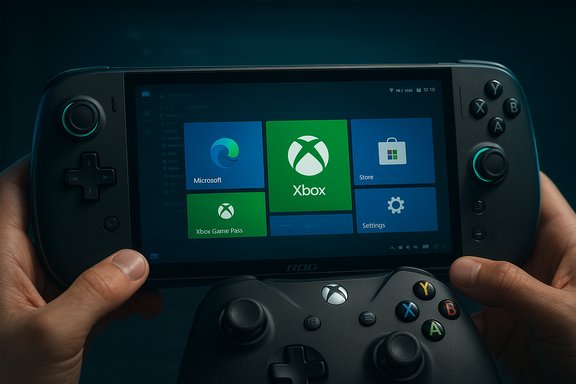
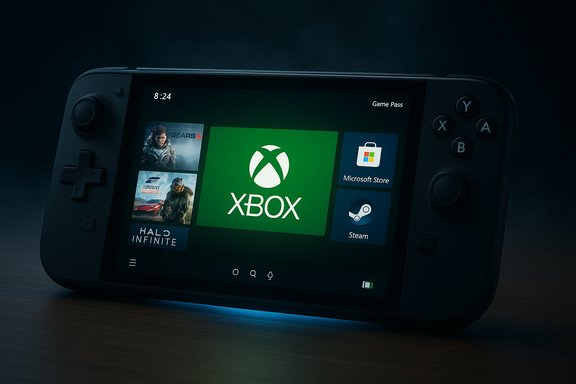
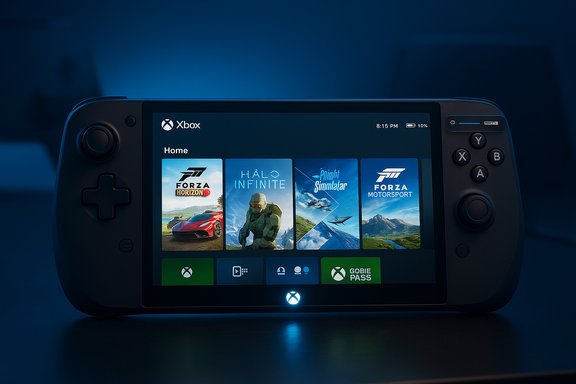
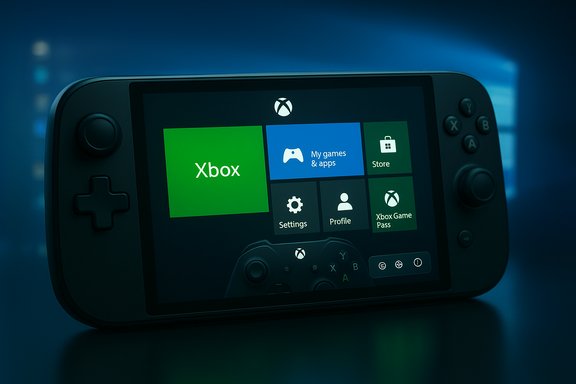
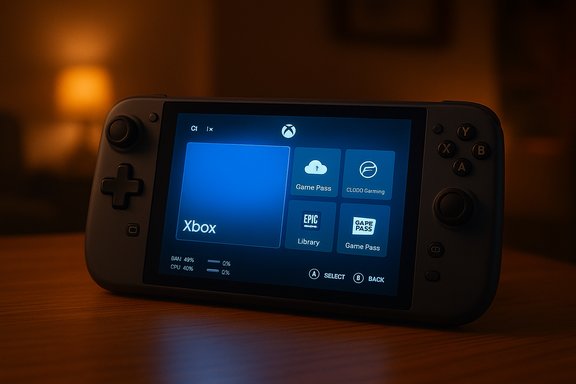
A handheld game console displaying the Xbox home screen.Overview​

Microsoft’s Full Screen Experience is designed to make Windows handhelds behave more like a dedicated console: large tiles, controller-first navigation, and fewer intrusive desktop services. Under the hood Windows remains intact — drivers, kernel and anti‑cheat frameworks continue to run — but when FSE is enabled the system intentionally defers or suppresses non‑essential desktop components and background startup tasks so more resources remain available for games and cloud streaming. That approach preserves Windows’ openness (Steam, Epic, GOG, Battle.net remain usable) while reducing friction for on‑the‑go gaming. The capability was shipped preinstalled on the ASUS ROG Xbox Ally and ROG Xbox Ally X and has been widened through Windows Insider Preview channels for select OEMs.

Background: why Microsoft built FSE​

Windows has long been optimized for keyboard/mouse productivity, not thumb‑friendly handhelds. Small displays, tight thermal envelopes, and the need for instant, controller‑based navigation produce friction on pocketable Windows PCs. Handheld users face tiny UI elements, notifications that interrupt play, and a full desktop stack that can steal memory and produce micro‑stutters.
FSE addresses those pain points by offering:
  • A full‑screen, controller‑optimized launcher (the Xbox PC app by default) that aggregates Game Pass, Microsoft Store purchases and discovered titles from other launchers.
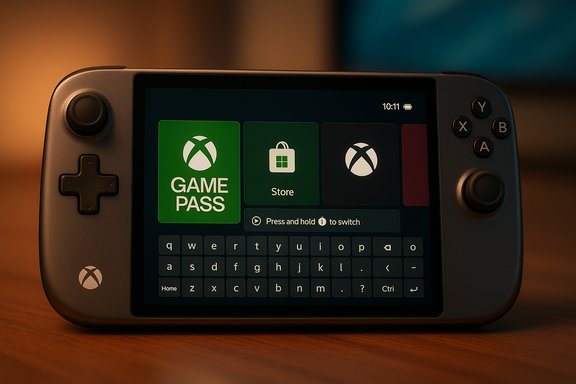
  • Controller‑first system navigation (Game Bar, Task View, on‑screen controller keyboard, Xbox‑button integrations).
  • Session policies that defer many desktop services and startup apps while the full‑screen posture is active, reclaiming RAM and reducing background CPU activity.
This is a pragmatic engineering trade: not a replacement OS, but a lean session that gives handheld hardware the best chance of steady framerates and better battery life without breaking access to the broader PC game ecosystem.

What shipped and what’s launching on November 21, 2025​

Microsoft has moved the FSE components into Windows 11’s 25H2 preview stream and is gating visibility with OEM entitlements and staged feature‑flagging. The Windows Insider Preview Build most closely associated with this capability is Build 26220.7051 (KB5067115), which surfaced FSE expansion, Ask Copilot taskbar integration, and a Shared Audio preview. ASUS’ ROG Xbox Ally family shipped with FSE preinstalled; MSI Claw models entered preview rolls via the Insider channels. On November 21, 2025 Microsoft is scheduled to make the Xbox Full Screen Experience broadly available for compatible Windows handhelds (those running Windows 11 version 25H2 or later that meet OEM/hardware prerequisites). Key confirmed release facts:
  • Official rollout date: November 21, 2025.
  • Insider preview: Build 26220.7051 (KB5067115) contains FSE plumbing and Settings controls.
  • Initial OEMs: ASUS (ROG Xbox Ally & Ally X shipped with FSE), MSI Claw entered preview; further OEM enablement forthcoming.

Technical underpinnings: how FSE works (concise)​

FSE is a layered shell — a session posture implemented with existing Windows 11 components and policy controls. It does not alter the kernel or replace drivers, but it changes what the session loads and how certain subsystems behave.
What FSE changes at boot and runtime:
  • Sets a chosen “home app” (Xbox PC app by default) as the full‑screen launcher.
  • Defers loading of some Explorer ornamentation and non‑essential desktop services until the user switches out of FSE.
  • Pauses or delays some background maintenance and notifications to avoid interruptions while gaming.
  • Adapts Game Bar, Task View and input flows for controller navigation and integrates Xbox‑button mappings where available.
Measured, realistic impacts:
  • Independent previews and Microsoft materials cite reclaimed RAM on tuned handhelds in the range of roughly 1–2 GB in favorable scenarios; this is a directional engineering benefit, not a universal guarantee. Results vary by device, driver maturity, installed software and runtime profile.
Caveat on performance claims: some early pieces and company messaging suggested improvements to battery life and thermal behavior. These improvements are plausible because reducing background processes reduces idle CPU wakeups, but the exact percentage gain depends heavily on hardware, firmware, and the workloads run. Any single percentage (for example, “20% battery improvement”) should be treated as an optimistic estimate until validated on the specific hardware configuration. This claim remains variable and user reports differ.

How to enable the Full Screen Experience (official, supported method)​

Microsoft and OEMs gate the rollout; the safest way to enable FSE is to follow official steps. The sequence below reflects Microsoft’s published guidance in the Insider release and the Settings path exposed on supported hardware.
  • Confirm device eligibility: device shipped with or is explicitly enabled by OEM for FSE (ROG Xbox Ally family, preview MSI Claw models, others as enabled).
  • Update Windows: install Windows 11 version 25H2 or a Windows Insider Preview build that includes the FSE plumbing (Build 26220.7051 / KB5067115 where applicable).
  • Open Settings → Gaming → Full screen experience.
  • Choose a home app (Xbox PC app is listed by default) and toggle “Enter full screen experience on startup” if desired.
  • Enter/exit FSE via Task View, Game Bar (Win + G), or the Xbox button mapping on devices that include it.
Advanced: community tools and registry edits exist (ViVeTool flags and other tweaks) and have been widely shared, but they bypass vendor testing and can create unstable or unsupported states. Use such methods only with full backups and recovery media.

Real‑world behavior: early hands‑on reports and community feedback​

Hands‑on coverage and community testing show clear UX wins — larger UI targets, less “launcher hopping,” and a more immediate, console‑like experience for casual sessions. Early reviewers praise the reduction in desktop noise and the convenience of booting directly to a controller‑first launcher on devices built with that intent. Retail ROG Xbox Ally units shipped with the mode active and delivered the expected seamless experience in many cases. At the same time, public community threads and Insider testers report variability:
  • Some users find the navigation smooth and the library aggregation helpful; others report laggy menus or controller mapping quirks on non‑tuned devices.
  • Compatibility with third‑party launchers and anti‑cheat systems can be spotty until drivers and vendor firmware mature.
  • Community unlocks (ViVeTool registry hacks and GitHub one‑click tools) have allowed many to test FSE on unsupported hardware — but these paths can break overlays, disturb input mapping, or create recovery scenarios that require reinstalling Windows.
These early signals align with Microsoft’s staged rollout approach: the binaries live in the 25H2 builds but OEM enablement, telemetry and firmware tuning are essential parts of delivering consistent quality.

Strategic implications: Game Pass, OEM partnerships and the competition​

Microsoft’s FSE rollout is a strategic effort to position Windows handhelds as console‑like endpoints in the Xbox ecosystem. Key implications:
  • Game Pass adoption: a flatter, controller‑first interface that surfaces Game Pass titles and cloud gaming reduces friction for subscription discovery and day‑one play. Making the Xbox PC app the home app is a strategic nudge toward Xbox services. This could increase Game Pass engagement on handhelds where the UX was previously a barrier.
  • OEM partnerships: ASUS’ ROG Xbox Ally franchise served as the early reference device and a real‑world testbed. Microsoft’s ability to deliver the same shell across multiple OEMs (ASUS, MSI, Lenovo in planning) without fragmenting the Windows ecosystem is the key to scaling the experience. OEM firmware and driver tuning will determine whether the experience is consistently good.
  • Competitive pressure: Valve’s Steam Deck and SteamOS have pushed the handheld format forward with a Linux‑centric approach optimized for controllers and offline play. Microsoft’s advantage is Windows’ compatibility and Xbox services. By layering a console‑style shell on Windows, Microsoft seeks to combine the openness of PC gaming with the plug‑and‑play simplicity of a console. That duality is Microsoft’s primary strategic bet.

Strengths and opportunities​

  • Console‑like UX without losing Windows openness: FSE delivers a familiar, controller‑first launcher while allowing users to return to a full Windows desktop for productivity and third‑party clients. This is a major UX win for handheld form factors.
  • Measurable runtime gains: Deferring desktop services has a practical, testable effect on memory and idle CPU behavior; on tuned devices this can translate into steadier frame pacing and modest battery benefits. Independent reports and Microsoft’s preview notes converge on reclamation figures in the 1–2 GB range for favorable configurations, which matters on systems with constrained RAM budgets.
  • Ecosystem leverage for Game Pass and cloud gaming: surfacing subscription and cloud titles directly in a full‑screen home reduces friction for trial and retention.

Risks, limits and unanswered questions​

  • Variability by hardware and drivers: the mode’s benefits depend heavily on OEM firmware, GPU drivers, and anti‑cheat integration. Early community reports show some titles and launchers behaving inconsistently until vendors push tuned updates. This variability is the chief operational risk.
  • Anti‑cheat and DRM: FSE does not change the underlying anti‑cheat or DRM requirements. Some competitive titles with strict anti‑cheat might behave differently when booted from alternate launchers or when components are deferred. This remains an area for cautious validation, especially for competitive gamers.
  • Community unlocks and warranty/support exposure: registry and ViVeTool methods proliferated quickly; while they let enthusiasts experiment, they also create states that OEM support may not cover. Microsoft and OEMs recommend using official Insider and vendor paths.
  • Monetization and platform control questions: surfacing Game Pass and Xbox services more prominently will drive subscription engagement, but it may also raise questions among rival storefronts and developers about discoverability, platform economics and parity of experience across storefronts. The aggregated library behavior involves orchestration and sometimes handing off to native clients for DRM/anti‑cheat — this hybrid behavior needs clear developer guidance.

Practical guidance for owners and buyers​

  • If buying a handheld primarily for an out‑of‑the‑box console‑like experience, prefer OEM‑enabled devices that ship with FSE (ROG Xbox Ally family is the clearest example at launch). These will get the best firmware tuning and support.
  • If using a current handheld you depend on daily, prefer the official Insider/OEM path for FSE previews. Avoid community unlocks unless comfortable with full system backups and recovery USBs.
  • For competitive or anti‑cheat sensitive play, validate each game on your device and wait for vendor‑validated images if reliability matters. Test multiplayer titles on the supported path before assuming parity.
  • Keep firmware/drivers updated via OEM channels. Much of the experience quality comes from device‑specific tuning of power and GPU drivers.

Developer and platform considerations​

Microsoft has published guidance and a Handheld Compatibility Program to help developers optimize UI and text legibility for small screens, and to mark titles as Handheld Optimized or Mostly Compatible. Developers should prioritize:
  • Controller mapping and input handling testing in low‑resource, handheld thermal envelopes.
  • Clear compatibility metadata so users understand expected behavior before install or purchase.
  • Testing with the Xbox aggregated library flow and native client handoffs to ensure DRM and anti‑cheat launch paths do not break.
The developer and OEM ecosystems will decide how quickly the experience stabilizes across models.

Where this leaves the market​

Microsoft’s Full Screen Experience is the clearest, most coordinated attempt yet to make Windows handhelds genuinely usable in a controller‑first world without sacrificing the breadth of the Windows gaming ecosystem. For consumers it promises a simpler, more immediate path to gaming on pocketable PCs; for Microsoft it’s a strategic lever to increase Game Pass engagement and to make Windows the default handheld platform.
Expect a period of iteration: staged rollouts, firmware updates, and developer updates will be required to bring parity between the best, shipped experience on devices designed for FSE (ROG Xbox Ally) and broader adoption across diverse Windows handheld hardware. The next several months will show whether the engineering tradeoffs produce the consistent, low‑friction experience Microsoft intends, or whether fragmentation in drivers and anti‑cheat will keep handheld Windows a hobbyist space for longer.

Final assessment​

The Xbox Full Screen Experience is a pragmatic, well‑scoped engineering solution that addresses a familiar pain point: Windows’ desktop legacy is a poor fit for pocketable, controller‑driven gaming. By inserting a full‑screen, Xbox‑centric shell that conserves resources and prioritizes controller navigation, Microsoft has created a product pathway that can unify handheld UX while preserving PC openness. The strategy’s success will hinge on three practical factors: OEM firmware and driver maturity, clear anti‑cheat and DRM behavior, and Microsoft’s ability to scale the experience across OEM partners without fracturing the Windows platform.
For early adopters with supported hardware, FSE offers a clear and immediate benefit. For the broader market, it is a promising step that requires careful validation and time. The official rollout on November 21, 2025 is the start of that larger test.
Microsoft, OEMs, and developers will continue iterating: expect firmware and Windows updates, clearer compatibility tags, and new developer tools targeted at handheld optimization in the weeks and months ahead.

Source: WebProNews Microsoft Launches Xbox Full Screen for Windows Handhelds on Nov 21, 2025
 

Microsoft has quietly begun folding the Xbox console-style full-screen interface into Windows 11, giving PCs a controller-first “home” that boots into the Xbox PC app and trims desktop overhead for gaming — a capability now available to Windows and Xbox Insiders in the latest preview builds and rolling out to supported handhelds and select PCs through a staged, OEM-gated preview.

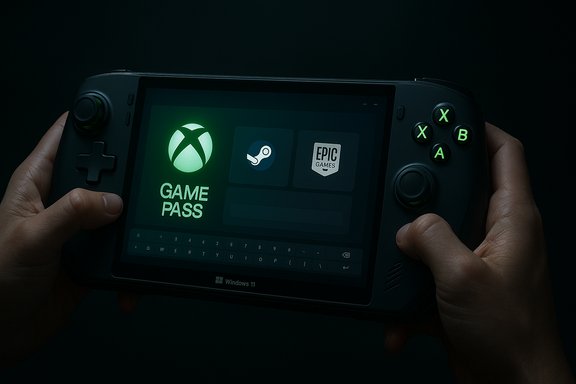
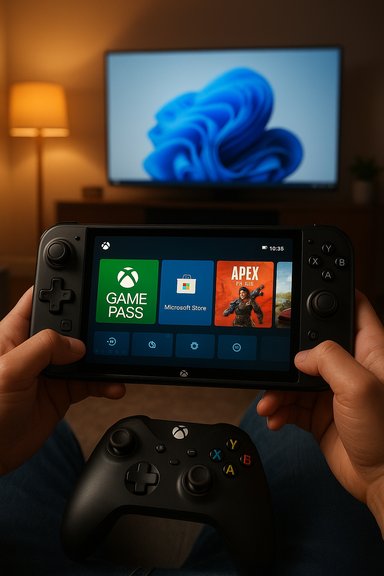
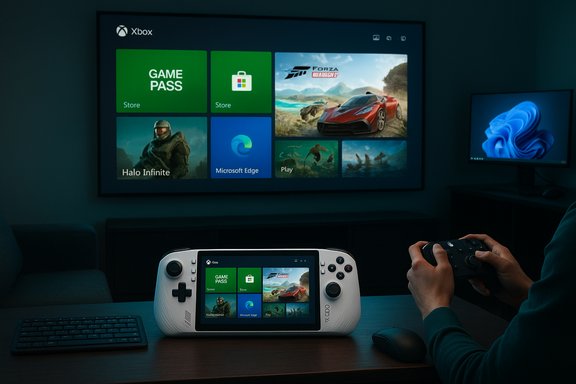
Hands hold a handheld console displaying a Windows/Xbox start screen with tiles.Background​

Microsoft introduced the Full Screen Experience (FSE) as the defining UX for its new handheld hardware, notably the ASUS ROG Xbox Ally family, where the system boots into a console-like interface that places the Xbox PC app front and center. That same engineering — a session posture layered on top of Windows 11 rather than a forked operating system — is now being extended through the Windows Insider program to more handhelds and previewed on other form factors. The feature reached Insider preview channels in November 2025 and is surfaced in Settings under Gaming → Full screen experience on qualifying builds.
This move is intended to reduce the friction of pick-up-and-play PC gaming on handhelds and controller-first devices by suppressing non-essential desktop elements and prioritizing games and game-related services. Instead of rewriting low-level components, the Full Screen Experience changes which user-mode components and services load at session start, which lets Windows preserve drivers, DRM, and anti-cheat stacks while presenting a streamlined launcher optimized for thumb navigation.

What the Full Screen Experience is — and isn’t​

A session posture, not a new OS​

  • What it is: FSE is a layered shell: when enabled, Windows launches a chosen “home app” (the Xbox PC app by default) full screen at logon and applies session policies that delay or hide many Explorer-centric UI elements, notifications, and nonessential startup apps. The UI is controller-optimized with large tiles, an on-screen controller keyboard, and Xbox-button shortcuts.
  • What it isn’t: It does not change kernel behavior, GPU driver models, or the way anti-cheat and DRM systems work. Those low-level components remain intact because the change is implemented in userland. This reduces the risk of incompatibility at the driver and kernel level, but it does not eliminate the need for tested drivers and compatible anti-cheat implementations on a per-device basis.

Why Microsoft chose this approach​

The design is pragmatic: by keeping Windows’ security and driver model unchanged, Microsoft preserves the PC ecosystem’s openness (Steam, Epic, Battle.net, GOG and others remain accessible) while offering an experience that more closely resembles a console for controller-first sessions. This lets OEMs advertise a “turn on and play” handheld UX without fragmenting the platform into a separate OS. Early reporting indicates the architecture is a session-level tradeoff that can free memory and reduce background CPU wakeups on thermally constrained hardware.

How the Xbox full-screen mode works (user-facing)​

Entry and exit points​

Once enabled via Settings → Gaming → Full screen experience, users can enter FSE from multiple places:
  • The taskbar / Task View.
  • The Game Bar overlay.
  • A keyboard shortcut or mapped controller action (various reports reference quick toggles and an Xbox-button long-press for switching).
When in FSE, your desktop session is effectively replaced for that sign-in session by the Xbox home app, but you can switch back to the traditional desktop as needed. The session model preserves the desktop underneath rather than performing a hard OS switch, which improves convenience for users who still need regular Windows access.

Controller-first navigation and multitasking​

The UI has been reworked for gamepad use: large, thumb-friendly tiles, a controller-navigable Task View, and an on-screen controller keyboard for text entry. You can have multiple games open as separate full-screen entries and switch between them with the controller, which mimics console-style multitasking and brings a more familiar flow for players used to Xbox consoles.

The builds, rollout status, and a note on version numbers​

Microsoft rolled the feature into the Windows 11 25H2 preview stream and has been enabling it through Windows Insider Preview builds. There are two build numbers commonly cited in early reporting — Build 26220.7051 (KB5067115) and a later preview label Build 26220.7271 — and community reporting notes small inconsistencies in documentation versus the visible build on devices. Insiders should therefore verify the precise build ID reported by Windows Update and the Windows Insider release notes for their channel before assuming the feature is present.
Microsoft is using staged rollouts and OEM gating: the binaries are broadly distributed in preview channels, but visibility and enablement are controlled by server-side feature flags and OEM entitlements, so being on the right build does not guarantee immediate access. The official path to test this feature is to enroll in the Windows Insider Program and the Xbox Insider Program where needed.

Hands-on realities: performance, battery, and resource trimming​

What Microsoft and early testers claim​

Early hands-on reports and Microsoft materials point to directional resource gains — typically in the range of roughly 1–2 GB of reclaimed RAM on tuned handheld devices, along with fewer background CPU wakeups, which can translate into smoother frame pacing and improved battery steadiness in thermally constrained scenarios. These are realistic engineering outcomes because deferring Explorer subsystems and startup apps reduces user-mode memory usage and periodic background tasks. However, the reported benefits are variable and highly dependent on device configuration, installed software, and driver maturity.

Why gains vary​

  • Device firmware, OEM power profiles, and driver quality strongly influence the outcome.
  • The active app mix and number of background services on a particular installation determine how much memory and CPU the session will free.
  • Anti-cheat or DRM interventions required by some games may still trigger additional runtime activity that undermines potential gains.
Because FSE trims user-mode overhead rather than changing GPU or kernel scheduling, it’s a helpful but not decisive lever: expect variable, workload-dependent improvements rather than universal performance leaps.

Compatibility, anti-cheat, and developer concerns​

Anti-cheat and DRM​

Because FSE does not alter kernel-mode drivers or the GPU runtime, anti-cheat systems that operate at kernel level remain in place. That preserves compatibility for titles that rely on kernel-mode anti-cheat, but it also means that any anti-cheat-related constraints (and the potential for conflicts) still exist. Developers and publishers should test their titles under FSE conditions to confirm behavior, and users should expect occasional regressions during the preview phase as anti-cheat vendors update and certify compatibility.

Third-party storefronts and installed titles​

The Xbox home aggregates installed titles discovered from other storefronts, which preserves access to Steam, Epic, Battle.net, and more. That aggregation is central to Microsoft’s pitch: a console-like launcher that doesn’t lock you into the Microsoft Store. In practice, discovery results and how titles are presented will evolve as the Xbox app and system integrations iterate.

Developer testing expectations​

Developers should test UI scaling, input handling, and session resume/restore behavior under FSE since the controller-first navigation model and deferred background tasks could expose edge cases in save/restore flows, overlay integrations, or third-party utilities that assume Explorer is the active shell. Early adopters have reported occasional usability or startup issues on some devices, which underscores the value of thorough testing before broad deployment.

OEM gating, rollout strategy, and what to expect​

Microsoft’s staged enabling is deliberate: by gating visibility with OEM entitlements and server-side flags the company ensures that OEMs can tune firmware and drivers before exposing FSE widely. This minimizes fragmentation and reduces the likelihood of poor first impressions on hardware that hasn’t been tuned for the new session posture. Expect a rolling timetable where handheld OEMs that preinstalled FSE on new models (like ASUS for the ROG Xbox Ally) will continue to lead, while other OEMs (MSI, Lenovo and others) will follow with validated builds.
Important practical notes for users:
  • The safest path is vendor-enabled updates; wait for your OEM to push a tested build.
  • If you opt into the Insiders preview route, create a full system backup and be ready to roll back if you encounter stability or driver issues.
  • Expect frequent updates and potential regressions during the preview phase; treat community hacks and registry workarounds as experimental.

Strengths and opportunities​

  • Improved usability on handhelds: The console-style launcher reduces friction for controller-first play, making Windows handhelds more inviting to players who want a living-room/portable console experience. This can broaden Windows’ appeal in the handheld market and help OEMs better position their devices.
  • Preserves the PC ecosystem: Because FSE is a session posture layered on Windows, users retain access to the full Windows ecosystem, including third-party storefronts, productivity apps and the desktop. This is a major advantage over purpose-built, closed console OSes.
  • Practical performance wins: On properly configured handhelds, the session-level trimming yields measurable benefits for memory and background wakeups, which can improve throttling behavior and perceived responsiveness in real workloads.
  • OEM differentiation: Manufacturers can ship FSE preinstalled and tuned, offering a product-level talking point that may attract console-minded buyers without forcing a separate OS strategy.

Risks, limitations, and open questions​

  • Preview instability: As with any early-wide preview, expect bugs, regressions, and driver mismatches. Users on primary or mission-critical devices should avoid enabling preview features until OEM-validated builds land.
  • Driver and firmware dependency: Gains rely heavily on up-to-date firmware and GPU drivers; poorly tuned or out-of-date builds will reduce benefits and may cause regressions. That makes OEM involvement essential.
  • Inconsistent messaging on builds: Early communications show small inconsistencies in referenced build numbers and release notes; Insiders should cross-check the Windows Insider blog, Windows Update, and OEM guidance to confirm the exact build that contains FSE for their device. Where build identifiers vary between reports, treat them as tentative until confirmed on device.
  • Developer testing burden: Game and utility developers must validate behavior under the new session posture. Overlays, launchers, and utilities that expect a standard Explorer session may require updates.
  • Ecosystem concentration risk: The feature reinforces Microsoft’s role as both platform and discoverability gatekeeper; while aggregation benefits users, the increased centrality of Xbox services raises longer-term questions about marketplace dynamics and developer economics. This is a strategic tension common to platform owners that also operate storefronts.

Practical guidance for enthusiasts and IT pros​

  • If you own a handheld that shipped with FSE preinstalled, expect the smoothest experience; keep firmware and drivers updated and test with your typical game mix first.
  • If you’re an Insider who wants to test FSE:
  • Enroll in the Windows Insider Program and update to the preview build family that includes FSE.
  • Install the latest Xbox PC app preview from the Microsoft Store.
  • Back up your system and create a recovery USB before enabling FSE.
  • Enable FSE via Settings → Gaming → Full screen experience and opt into startup behavior only after confirming compatibility.
  • For IT and procurement teams evaluating devices: treat FSE as a value-add for handheld gaming use cases, but require OEM-validated test results for any procurement decisions where gaming performance under the session posture matters.

Industry and market implications​

The Full Screen Experience is a strategic stitch: it helps Microsoft position Windows as a more console-like platform for controllers and handhelds while preserving the PC’s openness. That positioning supports Microsoft’s subscription and discovery economics (Game Pass + Xbox app), strengthens OEM differentiation for gaming handhelds, and pushes a familiar Xbox UX into the PC space.
However, the consolidation of discovery and the deep integration of Xbox services into the Windows gaming surface could concentrate platform influence. Developers and competitors will watch closely to see whether aggregation improves user acquisition for indies or whether it tilts bargaining power toward platform-favored partners. Microsoft’s success with FSE will hinge on a careful balance: deliver clear consumer value without eroding developer choice or fragmenting the market.

The short-term outlook​

In the immediate term, expect incremental availability through Insider channels and OEM updates, with ASUS and other early partners continuing to lead in polished experiences and other OEMs (MSI, Lenovo, etc. following once they finish validation. The feature is now publicly previewed and accessible to Insiders on qualifying builds, but broad consumer availability across desktops and laptops will depend on OEM enablement, driver vendor testing, and developer validation. Until then, the experience is compelling for handheld owners and experimental Insiders but not yet a mainstream replacement for the standard Windows session.

Conclusion​

The Xbox Full Screen Experience for Windows 11 is a pragmatic and technically defensible attempt to bring console-style simplicity to PC gaming without fracturing the Windows platform. By implementing FSE as a session posture rather than a separate OS, Microsoft preserves drivers and anti-cheat systems while delivering a controller-first launcher that can materially improve the pick-up-and-play experience on handhelds.
Early results are promising: practical memory savings and reduced background noise can yield smoother gameplay on thermally constrained devices, and the controller-first UX is a meaningful quality-of-life win for players who prefer gamepad navigation. Yet the feature is still in preview and gated by OEM entitlements. Insiders and enthusiasts should proceed with caution, create backups, and rely on vendor-validated builds for the most reliable experience. For the broader gaming ecosystem, FSE reframes how Microsoft can unify its services and hardware partners to deliver a console-like experience on Windows — and that could reshape portable PC gaming if OEMs, driver vendors, and developers align on quality and compatibility.


Source: Insider Gaming Windows 11 Adds Xbox Full Screen Capability to PCs
 

Microsoft has begun rolling out the Xbox Full Screen Experience (FSE) beyond its Xbox Ally family, making a console-style, controller-first interface available to Windows 11 handhelds and offering easier access to Xbox Game Pass and aggregated PC storefront libraries starting November 21, 2025.

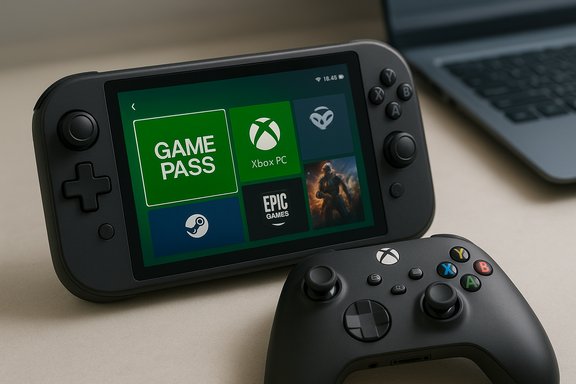
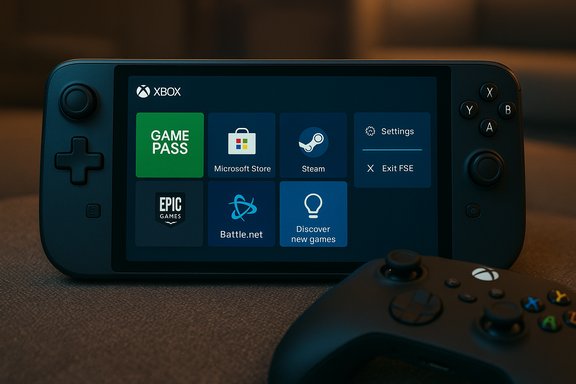
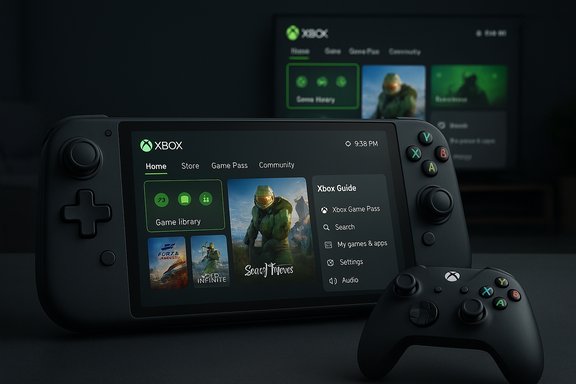
A handheld gaming console screen displays Xbox Game Pass, Steam, and Epic Games icons.Background​

Microsoft introduced the Full Screen Experience as a tailored shell that sits over Windows on handheld PCs, first shipping it on the ROG Xbox Ally and ROG Xbox Ally X. The feature was designed to make handheld gaming feel more like a console session—focusing on controller navigation, a streamlined game library, and quick access to Game Pass—while trimming or sidestepping elements of the full desktop that get in the way on a small, thumb-stick driven device. Over the past weeks Microsoft expanded availability: FSE is now accessible to a broader range of Windows 11 handheld devices via staged rollouts that begin on November 21, 2025 and move through Insider preview channels before wider distribution.
This shift represents a deliberate strategy: bring the convenience and discoverability of the Xbox ecosystem to Windows handhelds, while preserving the openness of Windows itself. For handheld buyers and enthusiasts, it promises faster, cleaner access to games from multiple storefronts. For Microsoft, it tightens the integration between Windows and Xbox services, including Game Pass—an outcome that carries both clear user benefits and important trade-offs.

What exactly is the Full Screen Experience?​

The idea in one line​

The Full Screen Experience is a controller-first, console-like shell built from updated Xbox PC app components, Game Bar improvements, and deeper system hooks that change what Windows initializes during a handheld gaming session.

How it behaves on a handheld​

  • It presents a single, full-screen hub that aggregates games from Game Pass, the Xbox library, and installed titles from PC storefronts like Steam and the Epic Games Store.
  • It emphasizes large, controller-friendly UI elements and an on-screen controller keyboard to let users operate the device without touching the desktop.
  • It reduces background desktop services and non-essential UI layers to improve responsiveness and, in many cases, battery life on lower-powered handheld hardware.
  • It provides a direct pathway into Game Pass and cloud gaming for subscribers, including play-from-cloud options where available.

How users enter and exit FSE​

The Full Screen Experience can be launched and toggled by several simple actions that are consistent with a handheld-first workflow:
  • Hovering over the Task View icon and selecting the Xbox full screen experience entry.
  • Opening the Game Bar and navigating to its Full Screen Experience toggle.
  • Pressing the keyboard shortcut Win + F11 to enter or exit the experience.
  • On devices preconfigured by OEMs, FSE may boot automatically as the device’s default home shell.
Some OEM handhelds ship with FSE set as the default home app so the device boots directly into the console-like interface; others will make it optional. Users retain the option to disable FSE and revert to the traditional Windows desktop experience.

Who gets it and when​

Microsoft’s rollout began on November 21, 2025, and follows a phased approach:
  • Immediate availability via Windows Insider Preview builds for devices enrolled in the Dev and Beta channels and members of Xbox Insider.
  • Gradual extension to mainstream Windows 11 handhelds from OEM partners; some devices received the experience quickly, while others will follow in the coming months.
  • OEMs can choose to ship devices with FSE preinstalled (as ASUS did for the ROG Xbox Ally line) or enable it via system updates and drivers.
Because the rollout is staged and tied to both the Xbox app and Windows updates, not every handheld will see FSE on day one. Expect initial availability on handhelds that have close partnerships or recent driver/firmware support from vendors; competitors and smaller OEMs will be added on their timelines.

Why this matters: benefits for handheld gaming​

A more console-like, frictionless experience​

The Full Screen Experience removes many of the pain points handheld owners previously complained about: fiddly desktop navigation with a controller, scattered storefronts, and the need to jump between apps to access Game Pass or cloud-streamed games. The unified library and controller-optimized UI reduce friction and speed player time-to-play.
  • Single hub: Aggregates Game Pass, Xbox library, Steam, Epic Games Store, and installed titles so users can search and launch without juggling multiple launchers.
  • Controller-first navigation: Large on-screen controls, Xbox button integration, and emphasis on thumb-stick and button input rather than mouse-and-keyboard.
  • Quick Game Pass access: Subscribers get more visible access to cloud-play options and library browsing from one place.

Potential performance and battery advantages​

By trimming non-essential desktop services and reducing the graphic and I/O overhead associated with a full Windows shell, FSE can improve responsiveness on constrained hardware. For handhelds with modest CPUs or integrated GPUs, this lighter-weight shell creates a smoother, less resource-taxing foundation for games—particularly beneficial on devices where thermal and battery ceilings shape real-world performance.

Improved discoverability and cross-platform convenience​

Consolidating storefront entries and highlighting Game Pass titles promotes discovery of games users already own or can stream. For Microsoft, this increases Game Pass funneling; for players, it means fewer moments wasted searching for installed content across separate launchers.

Technical mechanics and implementation notes​

It’s a shell, not a fork​

FSE is not a separate operating system. It’s a full-screen shell composed from Xbox app components, the Game Bar, and system-level hooks. That design choice keeps Windows underneath intact while swapping the top-layer UI when appropriate.
This architecture gives Microsoft several advantages:
  • It allows the experience to be updated via the Microsoft Store and Windows Update pathways rather than shipping a separate OS bundle.
  • It preserves the ability to exit to a full Windows desktop for productivity, emulation, or non-gaming tasks.
  • It leaves room for third-party software to co-exist, although behavior varies by launcher and compatibility.

Requirements and channels​

  • Users will typically need the Xbox app installed from the Microsoft Store and Windows components introduced in current Insider builds or recent cumulative updates.
  • Some features initially arrive in Windows Insider preview channels (Dev/Beta) and then move to general availability as OEM drivers and firmware roll out.
  • On certain devices the FSE experience can be toggled on and off; on others OEMs may set it as the default home app with the option to opt out.

Compatibility with other launchers​

While FSE aggregates third-party storefront titles into a single view, not every feature of every launcher maps perfectly into the shell. Some third-party launchers, anti-cheat systems, or overlay features may not behave identically inside FSE. Users should test their favorite titles for compatibility, and developers may need to adapt overlay or controller handling for the new environment.

How to enable, customize, or disable FSE (practical steps)​

For users who want to try FSE or revert to the desktop, these practical steps summarize current behavior:
  • Ensure the Xbox app is installed and updated from the Microsoft Store.
  • If you’re on an Insider build, verify you’re in the Dev or Beta channel where FSE preview bits are distributed.
  • To launch FSE manually:
  • Hover over the Task View icon and choose Xbox Full Screen Experience, or
  • Open Game Bar, go to Settings, and toggle Full Screen Experience, or
  • Press Win + F11 to toggle it on/off.
  • To disable FSE at startup (if your device boots into it by default):
  • Open the Full Screen Experience menu in Windows Settings (under Gaming) and change the home app to "None" or set it to the desktop.
  • If you prefer another launcher on startup, third-party tools exist that can point the FSE hook to a different home app, but these tools may vary in compatibility and carry their own maintenance overhead.
Note: specifics may differ slightly by device and Windows update. If you depend on a particular launcher or overlay (e.g., an anti-cheat requiring desktop mode), test thoroughly before making FSE your primary environment.

What this means for OEMs and the Windows handheld ecosystem​

OEMs can preinstall FSE to deliver an out-of-the-box console-like experience—this is the route ASUS took with the ROG Xbox Ally devices. Shipping FSE by default lets OEMs promise a polished, controller-centric experience on day one.
However, bringing FSE to a wider set of devices requires OEM collaboration:
  • Driver and firmware updates need coordination so the shell can access optimal performance and power-management features.
  • Some handhelds may need additional tuning (thermal/power profiles) to match the expected experience, particularly as FSE changes what processes load during a session.
  • OEMs who prefer to preserve a pure Windows experience can still allow the FSE option while making it non-default.
Long term, wider OEM adoption will increase competition among Windows handhelds where the software experience is less of a differentiator and hardware, battery, and cooling take precedence.

Strengths and real user wins​

  • Faster time-to-play: Less fiddling with the desktop and storefront switching means more time spent playing.
  • Cleaner handheld UX: On small screens with thumbsticks, a controller-first shell is simply more usable.
  • Aggregated libraries: One place for titles across multiple storefronts reduces friction and supports discovery.
  • Game Pass prominence: Subscribers get simpler access to streaming and download options, enhancing Game Pass value on handhelds.
  • Potential battery/performance gains: The lighter shell can reduce system overhead, especially on low-power handhelds.
These tangible benefits will be immediately visible to handheld-first users who prize convenience, discovery, and a familiar Xbox-like navigation model.

Risks, trade-offs, and things to watch​

1. Centralization pressures and platform leverage​

Putting Microsoft’s Xbox UI front and center on Windows handhelds increases the prominence of Game Pass and the Microsoft Store. While aggregation includes Steam and other storefronts, the user journey increasingly funnels through Microsoft’s Xbox services. That dynamic may push more playtime and purchases toward Microsoft-controlled flows, which raises questions about platform leverage and consumer choice.

2. App and launcher compatibility​

Not all third-party launchers and overlays behave identically in FSE. Some anti-cheat systems, mod managers, or overlay tools may require the traditional desktop to function properly. Gamers who rely on mods or complex toolchains should test compatibility before committing to FSE as their default.

3. Privacy and telemetry implications​

Because FSE is built atop the Xbox app and Microsoft services, it tightens the link between device usage and a Microsoft account. Telemetry, cloud saves, and personalized recommendations are features many will welcome, but privacy-conscious users should review account settings and telemetry controls. Where possible, users should audit Xbox app permissions, cloud save settings, and Microsoft account sync options.

4. Possible fragmentation in how OEMs implement FSE​

OEMs can ship FSE in different ways—preinstalled and default, optional via update, or disabled entirely. That variability can lead to fragmentation: the same FSE label might feel and behave differently across devices because of OEM tuning, thermal limits, or driver maturity.

5. Update complexity and support burden​

Because FSE uses components distributed via the Xbox app and Windows updates, troubleshooting across multiple update channels (Windows cumulative updates, Microsoft Store app updates, OEM firmware) can become complex. Users and support teams should be prepared for cross-layer interactions when diagnosing problems.

6. Potential for a reduced multitasking experience​

The console-like shell focuses on games. For users who split time between productivity and gaming on a handheld, frequent switching between FSE and the full desktop may be disruptive. This is mitigated by the ability to exit to desktop, but users must consciously switch workflows.

The competitive angle: Valve, SteamOS, and the wider handheld market​

Microsoft’s move blurs the lines between handheld Windows PCs and console-like handheld products. Valve’s handheld strategy (and alternative OS options like SteamOS) is pressure-tested by an Xbox-centric, tightly integrated experience on Windows.
  • For users who want a dedicated gaming UI with strong store aggregation, FSE reduces the gap between Windows handhelds and SteamOS-based devices.
  • For users who prefer full Linux/SteamOS openness, FSE is optional; the underlying OS remains Windows 11 and users can choose not to engage the Xbox shell.
  • The key differentiator will increasingly be hardware choices (thermals, display, battery) and how OEMs tune Windows + FSE for real-world gaming sessions.

Practical recommendations for Windows handheld owners​

  • If you prize a console-like, controller-first experience and Game Pass access, try FSE—especially on devices with good driver support from OEMs.
  • If you rely on mods, overlays, or third-party tools, test your favorite titles in FSE before making it your daily driver.
  • Keep your Xbox app and Windows updates current; FSE is evolving and early releases arrive first through Insider channels.
  • Review Xbox account and privacy settings if you prefer to limit telemetry or cloud synchronization.
  • If the device boots to FSE and you prefer the desktop, change the home app setting in Windows Gaming settings or use the FSE home app toggle to disable startup behavior.
  • For power users: third-party utilities exist to control which launcher loads in full-screen mode—use them cautiously and track compatibility with future updates.

What to expect next​

Expect the Full Screen Experience to continue iterating. Microsoft will likely refine controller navigation, add more storefront integrations, and tune power profiles and driver hooks for better battery life. Hardware vendors will ship firmware and software updates to better match FSE’s behavior with their thermal and power designs. At the same time, third-party tools and community projects will emerge to customize or replace the FSE startup flow.
Regulatory and market scrutiny may intensify if aggressive bundling of Xbox services or preferential placement for Microsoft’s store features appear to disadvantage other storefronts. The balance between convenience for consumers and healthy competition among digital storefronts will be an ongoing conversation.

Conclusion​

The Xbox Full Screen Experience arriving on a broad set of Windows 11 handhelds marks a meaningful inflection point for handheld PC gaming. It offers a polished, controller-oriented interface that simplifies library access, spotlights Game Pass, and can improve responsiveness on constrained hardware. For users who want a console-like session on a Windows handheld, the benefits are immediate and compelling.
At the same time, FSE tightens Microsoft’s software grip at the top layer of the Windows handheld experience, which creates trade-offs around platform centralization, launcher compatibility, telemetry, and update complexity. The experience has clear wins for discoverability and usability, but it also invites scrutiny from power users and marketplace observers who care about openness and competition.
For now, Windows handheld owners have a choice: embrace a more Xbox-like, frictionless gaming shell, or retain the full Windows desktop and the flexibility it offers. That choice—made per device and per user—will determine whether FSE is a welcome convenience or a new decision point in the growing, diverse handheld ecosystem.

Source: Inshorts Microsoft makes Windows handheld gaming more Xbox-like with full screen experience
 

Microsoft’s Xbox “Full Screen Experience” — the simplified, controller‑first shell that made the ROG Xbox Ally X feel more like a console than a raw Windows PC — is no longer an Ally exclusive: the feature has begun rolling out to a wider set of Windows 11 devices through the Windows Insider program, bringing the same full‑screen Xbox UI, Game Pass integration, and trimmed Windows background services to handhelds, laptops, tablets and desktops running the Insider Preview.

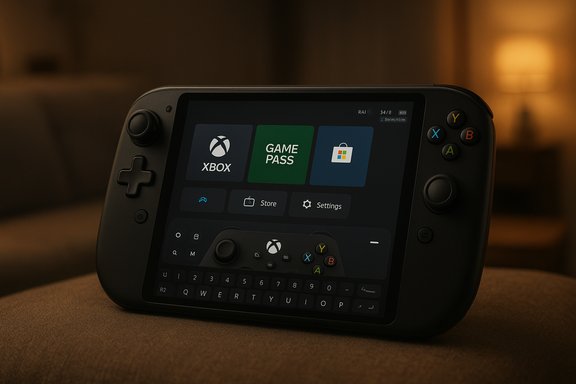
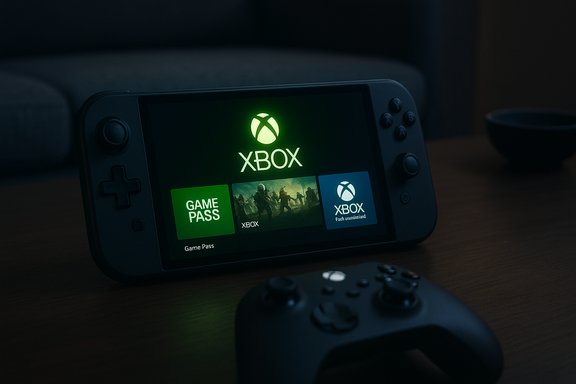
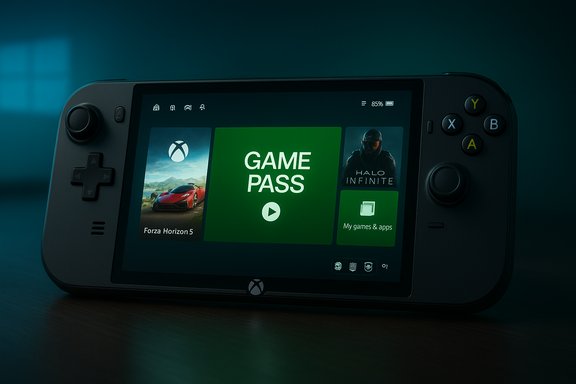
A handheld gaming console displays Game Pass tiles beside an Xbox controller.Background​

Microsoft introduced the Xbox Full Screen Experience (FSE) to address a persistent problem: Windows 11 is built for keyboard and mouse on big displays, not for small handhelds and controller‑first sessions. The FSE is not a replacement operating system; it’s a session posture — a full‑screen shell that launches a chosen “home app” (most commonly the Xbox PC app) as the active interface and intentionally defers or suppresses non‑essential desktop subsystems to reduce UI friction and reclaim runtime resources for games. Initially shipped as a defining feature on the ROG Xbox Ally family (the standard Ally and the higher‑end Ally X), FSE has been available on limited devices and preview builds. As of the recent Insider updates, Microsoft has extended access to the experience more broadly to Windows 11 Insider Preview Build 26220.7271 (Dev and Beta channels), and is enabling the capability across multiple PC form factors for Insiders who are also registered Xbox Insiders.

What the Full Screen Experience actually does​

A console‑style shell, layered on Windows​

The FSE layers a console‑style home launcher over Windows 11; it does not change the kernel, drivers, or installed software. Instead, it:
  • Presents the Xbox PC app as a full‑screen home UI with large tiles and controller‑centric navigation.
  • Aggregates games from Game Pass, Microsoft Store, Xbox Play Anywhere, and discovered titles from other storefronts (Steam, Epic, etc., subject to compatibility and discovery settings.
  • Reduces Explorer and other desktop “ornamentation” at session start to free memory and lower idle CPU activity.
  • Adapts navigation and keybindings (some keyboard shortcuts behave differently) to preserve a focused gaming session.

How users enter and exit FSE​

Microsoft exposes multiple entry points so the experience fits into normal PC workflows:
  • Settings > Gaming > Full screen experience — choose a home app (select Xbox to get the Xbox FSE).
  • Task View (Win + Tab) — hover over or choose the Xbox Full Screen Experience.
  • Game Bar settings or the Game Bar overlay (Win + G).
  • Hotkey toggle: Windows key + F11 toggles FSE on and off.
  • Controller shortcut: long‑press the Xbox button on a paired Xbox controller to switch between FSE and desktop apps.
You can opt to “Enter full screen experience on startup” so the device boots directly into the FSE; Windows may recommend a restart to apply some runtime optimizations if you enable this option.

Why this matters: clean UI and practical resource gains​

For handhelds and controller‑first devices, the FSE solves two practical problems:
  • Interface friction: Small screens and thumb navigation don’t mix well with Windows’ desktop UI. The FSE prioritizes large targets, predictable controller flows, and direct access to games.
  • Constrained resources: Handheld APUs and batteries are thermally and power constrained. By deferring desktop services and Explorer tasks, FSE can reclaim memory and reduce background CPU wakeups, improving sustained frame stability and battery life in some scenarios. Independent reporting and Microsoft documentation consistently describe directional resource gains rather than dramatic uplifts — commonly in the ballpark of roughly 1–2 GB of reclaimed RAM on tuned systems, although results vary by device, installed software, and driver stacks.
That last point is critical: FSE helps by trimming the soft overhead Windows carries, but it does not change how anti‑cheat drivers, DRM or game engines allocate CPU and GPU time. For titles where CPU/GPU bottlenecks are purely thermal or GPU‑bound, the FSE will have less perceptible effect.

The ROG Xbox Ally X — the hardware that showed what FSE could be​

ASUS’s ROG Xbox Ally X was the first high‑profile device to ship with FSE preinstalled and tuned alongside custom hardware. It’s positioned as a premium Windows handheld with the following headline specs that are consistent across OEM materials and early reviews:
  • Chipset: AMD Ryzen AI Z2 Extreme (Z2‑class APU)
  • RAM: up to 24 GB LPDDR5X‑8000
  • Storage: 1 TB M.2 2280 NVMe (user‑upgradeable)
  • Display: 7‑inch 1080p, 120 Hz touchscreen
  • Battery: ~80 Wh
  • Dimensions: 290.8 x 121.5 x 50.7 mm and weight around 715 g depending on SKU and configuration.
The Ally X represents a design philosophy: build a capable, ergonomically refined handheld and layer a console‑grade front end on top of Windows. The pairing helped the broader industry picture how a tailored UI + system posture can make Windows feel usable as a handheld console without abandoning the PC ecosystem.

Availability: who can try the FSE now​

  • The FSE rollout has moved from OEM preinstalls (ROG Ally family) to a staged Windows Insider Preview distribution. Microsoft began pushing FSE components in preview builds of the Windows 11 25H2 line, and the most recent stated preview identifier is Build 26220.7271 for the Dev and Beta channels. Enrollment in both the Windows Insider Program and the Xbox Insider Program (PC Gaming preview) is recommended to get earlier access.
  • The rollout is phased: not every Insider will see the feature immediately. OEM entitlements and server‑side flags also control visibility, so two identical machines may differ on whether the option appears in Settings. Early access has been granted to a variety of handhelds (MSI Claw, Lenovo Legion Go family, AYANEO devices and more are being included in waves).

Practical setup: step‑by‑step (Insider preview)​

  • Join the Windows Insider Program and set your channel to Dev or Beta.
  • Join the Xbox Insider Program and opt into the PC Gaming preview via the Xbox Insider Hub.
  • Update Windows to Insider Preview Build 26220.7271 (or newer, if available).
  • Update the Xbox app and Xbox Game Bar from the Microsoft Store.
  • Open Settings > Gaming > Full screen experience, select Xbox as your home app, and optionally enable Enter full screen experience on startup.
  • Use Win + F11, the Game Bar, or Task View (Win + Tab) to enter and leave FSE. Long‑press the Xbox button on a controller to swap between apps and games while in FSE.
Note: enabling FSE and particularly the “enter on startup” option may prompt Windows to suggest a restart so the runtime optimizations take effect. You can use FSE immediately without a restart, but a reboot can apply additional background suppression for maximum resource reclamation.

Benefits and early wins​

  • Faster pick‑up‑and‑play: Large tiles, Game Pass integration and controller‑first navigation make jumping into games faster than navigating the Windows desktop on small screens.
  • Unified game aggregation: Installed games across storefronts can appear inside the Xbox home experience (discovery depends on compatibility settings and whether those launchers are detectable).
  • Resource trimming: Freeing up idle RAM and suppressing non‑essential services gives measurable headroom on memory‑limited handhelds and may improve sustained framerate stability in thermally limited scenarios.

Notable limitations and risks​

  • It’s a session posture, not a fix for drivers or anti‑cheat
    FSE does not change kernel scheduling, GPU drivers, or third‑party anti‑cheat systems. Games that depend on vendor‑specific drivers or that are sensitive to anti‑cheat middleware will behave the same as on desktop Windows. Expect some titles to require desktop mode or additional troubleshooting.
  • OEM gating and inconsistent rollout
    Visibility is controlled by OEM entitlements and Microsoft feature flags. Users should not expect universal availability the moment a preview build appears — the staged rollout can be uneven and occasionally reversible as Microsoft or OEMs iterate. Community reports show intermittent availability and occasional pullbacks for additional testing.
  • Partial storefront aggregation
    While the Xbox home can surface installed titles from other launchers, integration depends on those launchers cooperating or being discoverable. Expect some titles not to show up or to require launching through their native clients for features like mods or certain overlays. The FSE is a convenience layer — not a unified platform replacement.
  • Complexity for power users
    Enthusiasts who frequently tweak drivers, overclock, or use advanced launchers may find FSE’s simplified behavior restrictive. Booting into the desktop remains available, but switching contexts can expose Windows prompts, updates, or background tasks that reintroduce friction.
  • Performance gains vary
    Reports of reclaimed memory and smoother frame times are real but situational. The typical headline of “~2 GB freed” comes from device‑specific measurements; treat that as an indicator rather than a guaranteed uplift. Some community tests have shown larger gains on light, memory‑heavy workloads; others found minimal change on GPU‑saturated titles. Cross‑platform verification is still limited.

How FSE stacks up against SteamOS and other alternatives​

  • SteamOS provides a purpose‑built Linux session optimized for gaming and often yields direct performance advantages on handheld silicon because drivers and compositor behavior can be tuned end‑to‑end.
  • FSE’s strength is choice: it keeps Windows’ ecosystem benefits — broad compatibility, Game Pass, cloud streaming, and legacy apps — while offering a console‑like shell when you want it.
  • For users prioritizing absolute maximum native performance, Linux‑first handheld setups will still be attractive; FSE aims instead to reduce friction without forcing a platform change.

Recommendations for enthusiasts and early adopters​

  • Test FSE in a controlled way: enable it on a non‑primary device or ensure you can revert the setting quickly. The Insider channel is for experimentation; don’t treat preview builds as stable production software.
  • Keep anti‑cheat and DRM needs in mind: if you play competitive titles with strict anti‑cheat, validate game behavior in FSE before relying on it.
  • If you use multiple storefronts heavily, verify which titles appear in the Xbox home and document any launcher exceptions you encounter.
  • Consider restarting after enabling FSE on startup to let Windows re‑optimize background services — some users report modest additional gains after a reboot.

What still needs watching​

  • OEM support cadence: Will mainstream OEMs adopt FSE as an optional mode on more devices, and how will OEMs tailor the experience to their hardware? Early signals show MSI, Lenovo, AYANEO and others getting preview enablement, but rollout timing still varies.
  • Developer responsiveness: How quickly will PC developers and anti‑cheat vendors certify behavior under FSE sessions? Clear guidance and compatibility documentation will be necessary.
  • Long‑term Windows posture: Is FSE the start of a broader Microsoft effort to reconceive Windows as multi‑posture (desktop, tablet, console‑like) or simply a pragmatic stopgap? Watch future Insider releases and Microsoft’s policy guidance for clues.

Conclusion​

The arrival of the Xbox Full Screen Experience on a broader set of Windows 11 devices is a meaningful step: it proves a hybrid approach can make Windows behave more like a console when you want that, while keeping the full PC ecosystem intact. For handheld owners, FSE is a practical quality‑of‑life upgrade that reduces interface friction and can free modest system resources. For PC owners who like the Xbox Series X UI and primarily use their machines for gaming, it’s an attractive optional shell to try.
That said, FSE is not a silver bullet. It’s a session posture layered on top of Windows with clear limits: driver and anti‑cheat behavior are unchanged, OEM gating creates uneven availability, and measurable performance gains depend heavily on the device and workload. Early adopters should treat FSE as an experiment worth trying — especially on handhelds where controller‑first navigation and lighter UI make the most sense — and continue to verify individual game behavior and performance in their own environments. Microsoft’s move shows a pragmatic path forward for Windows handhelds: give users a familiar console‑style entry point without closing off the PC’s democratic openness. If the staged rollout expands and developers/OEMs follow through, the FSE could become a standard part of how Windows teams think about posture — switching between desktop and console modes depending on the way you want to use your machine.
Source: Pocket-lint The ROG Xbox Ally X’s secret weapon just landed on every Windows 11 device
 

Microsoft’s console-style “Full Screen Experience” for Xbox is no longer limited to the ROG Xbox Ally family: the Xbox Full Screen Experience (FSE) is now generally available on current Windows 11 handhelds and is rolling out in preview to a wider range of Windows 11 PCs — including laptops, desktops and tablets — through the Windows Insider and Xbox Insider programs.

A handheld gaming console displaying Xbox Game Pass tiles on its screen.Background / Overview​

Microsoft first shipped the Full Screen Experience as a defining part of ASUS’ ROG Xbox Ally devices to give handheld Windows PCs a console-style, controller-first launcher and a lighter runtime footprint for games. Rather than creating a new operating system, Microsoft implemented FSE as a session posture layered on top of Windows 11: when active, the Xbox PC app becomes the full-screen “home” UI and a number of Explorer-and-desktop-oriented components are deferred to reduce surface friction and background resource use. Over the past months Microsoft moved FSE from Ally-only hardware into Windows Insider preview builds, and on November 21, 2025 the company confirmed that the feature is generally available on handhelds in market and is entering a preview phase for additional PC form factors in the Windows Insider Dev and Beta channels. The rollout is staged and OEM-gated: the plumbing is in the 25H2 preview stream (26220.x family), but availability is controlled by entitlement flags and OEM firmware tuning.

What the Full Screen Experience actually is​

A session posture, not a new OS​

  • FSE does not replace Windows 11 kernel, drivers, DRM or anti‑cheat subsystems.
  • It replaces the visible desktop shell for the session with a chosen home app (the Xbox PC app by default) and applies session-level policies to reduce desktop ornamentation and delay non‑essential user-mode processes.
  • This design preserves Windows’ compatibility with third‑party storefronts (Steam, Epic, Battle.net, GOG) while giving players a simplified, controller-first surface.

Key behaviors and UI changes​

  • Boots the user session into a full‑screen Xbox home with large, controller‑friendly tiles and aggregated game discovery (Game Pass, Microsoft Store, discovered games from other storefronts).
  • Suppresses or defers Explorer-related UI (wallpaper, some Start/Taskbar ornaments) and delays non-essential startup apps while FSE is active.
  • Elevates Game Bar and introduces controller-friendly Task View and an on‑screen controller keyboard.
  • Entry and exit points: Task View (hover or Win + Tab), Game Bar (Win + G) settings, or a direct toggle (Win + F11). On controller‑enabled devices, a long-press of the Xbox button provides quick switching behavior.

Why Microsoft built FSE — the practical rationale​

Windows is built as a desktop-first platform; smaller handheld displays and gamepad navigation expose friction points and resource overhead that hurt gaming on constrained hardware. FSE’s design goals are pragmatic:
  • Deliver a pick-up-and-play time-to-game that resembles a console.
  • Reduce background CPU wakeups and reclaim user-mode memory to improve sustained frame stability and battery behavior on thermally constrained APUs.
  • Provide a controller-first launcher that aggregates games across storefronts without fragmenting the PC ecosystem.

Verified technical specifics and where numbers come from​

Microsoft’s Insider posts and Xbox Wire describe the rollout and behavior but do not publish a universal, guaranteed number for resource savings. Independent hands‑on tests and community reports consistently describe directional memory gains, commonly in the ballpark of roughly 1–2 GB of reclaimed RAM on tuned handhelds when Explorer and multiple startup agents are deferred. Those figures are realistic for devices that normally run many background utilities and overlays, but the savings will vary widely by configuration, installed software, and which resident utilities are present. Treat the 1–2 GB range as an order‑of‑magnitude observation, not a guarantee. Practical verification points:
  • Microsoft’s Windows Insider blog identifies the feature as part of the 25H2 preview stream and references preview builds in the 26220.x family for the staged rollout to Dev and Beta channels.
  • Independent outlets and community testing (The Verge, Windows Central, PC Gamer) confirm memory reclamation and report real‑world variability in framerate and memory improvements.
  • Multiple community measurements show reclaimed memory in the neighborhood of 1.1 GB in some tests, with a few vendor-tuned scenarios approaching ~2 GB; these differences depend on background software and OEM tuning.
Caveat: some early reporting and blog posts show slight inconsistencies in build labels (26220.7221 vs 26220.7271 vs 26220.7051) in different documents and announcements. That reflects Microsoft’s staged packaging and internal editorial noise — Insiders should check Windows Update and the official Insider release notes for the authoritative build identifier on their device.

Real user experience — what reviewers and early adopters are saying​

Early hands‑on testing and community feedback share a consistent pattern:
  • The console-style launcher and controller integration are a clear improvement for pick-up-and-play scenarios on handhelds and for users who prefer a couch-and-controller workflow.
  • The UI and controller navigation still need polish; multiple reviewers and owners (including early Ally X users) report jank, occasional freezes in the launcher, and UX rough edges compared to mature alternatives like Steam’s Big Picture Mode. Community threads stress that FSE is promising but not yet as refined as Steam’s controller-first surfaces.
  • On performance, some reviewers see measurable benefits in minimum framerate and steadier thermal behavior on lower-power APUs — but others see only minor gains. When big improvements appear, they are correlated with heavy desktop overhead being removed (antivirus scanners, vendor telemetry, utility overlays).
  • Comparative testing on the same hardware sometimes shows significantly larger FPS gains when running a lean Linux gaming environment versus Windows with FSE active — illustrating that FSE narrows the gap but does not fully match the efficiency of some Linux-based, lightweight game OSes.

How to try the Xbox Full Screen Experience (official path)​

  • Join the Xbox Insider Program and opt into the PC Gaming preview via the Xbox Insider Hub.
  • Join the Windows Insider Program and choose the Dev or Beta channel (the FSE preview is seeding there for PC form factors).
  • Update Windows to the Insider preview build that includes the FSE plumbing for your channel (26220.x family). If the Settings option is visible, install the latest Xbox PC app from the Microsoft Store.
  • Open Settings → Gaming → Full screen experience and choose a “home app” (Xbox is the default). Optionally enable “Enter full screen experience on startup” if you want your device to boot straight into the launcher.
Notes and safety tips:
  • Microsoft and OEMs gate availability with server-side flags — installing a preview build does not guarantee the toggle will appear. Check OEM support pages and update firmware/drivers.
  • Avoid community hacks or unofficial enablement utilities unless you’re comfortable restoring images; unsupported methods can break vendor integrations or create recovery headaches.

Deep dive: compatibility, anti‑cheat, and developer considerations​

Compatibility and anti‑cheat​

FSE purposefully leaves kernel-mode components, GPU drivers, DRM and anti-cheat frameworks intact. This avoids changing the fundamental security and compatibility posture for games. However, anti‑cheat and overlay vendors must validate behavior in the FSE posture; some third‑party overlays, vendor utilities or anti‑cheat hooks may require updates to behave properly in a session where Explorer isn’t acting as the primary shell. Microsoft’s staged rollout and OEM gating help reduce the exposure of widespread incompatibilities while vendors validate their stacks.

For developers and launchers​

Microsoft’s guidance encourages developers and launcher maintainers to detect FSE and adapt:
  • Developers can query whether FSE is active and adjust UIs and background work accordingly.
  • Launchers should consider minimizing resident background agents while acting as a home app to maximize the reclaimed memory available to games.

How FSE compares to Steam’s Big Picture Mode and SteamOS​

  • Steam Big Picture Mode (and SteamOS) are mature, controller-first ecosystems with years of polish specifically for living‑room and handheld navigation. Their UIs, input remapping, and curated storefront flows are purpose-built for that context.
  • FSE’s advantage is that it preserves Windows’ open ecosystem and compatibility with the broad PC game library, accessories, anti‑cheat systems, and vendor tools. It gives users controller-first convenience without abandoning Windows’ compatibility.
  • In practice today, Big Picture Mode often feels more refined for controller navigation than FSE’s early implementations. FSE’s edge is being a platform posture that can be updated and tuned across OEMs; it’s a practical option for users who need Windows’ compatibility but want a console-like launcher. Early community commentary frames FSE as promising but not yet displacing Steam’s UI crown for controller-first navigation.

Strengths: what FSE gets right today​

  • Reduced “OS noise.” Deferring Explorer and startup apps reclaims memory and reduces background wakeups in many real-world setups, improving sustained game behavior on constrained hardware.
  • Controller-first flows. Large tiles, Game Bar integration and Xbox‑button task switching reduce friction for pick‑up‑and‑play sessions.
  • Preserves Windows openness. Steam, Epic, Battle.net and other stores keep working — an important advantage over closed gaming OSes.
  • OEM tuning path. Because FSE is layered and OEMs can gate and tune it, vendors can optimize performance and button mappings per device.

Risks and unresolved issues​

  • Polish and UX gaps. Early adopters report UI jank, occasional freezes, and inconsistencies versus mature controller-first platforms. Expect iterative improvements but not perfection at launch.
  • Compatibility edge cases. Some overlays, vendor utilities (Armoury Crate, Adrenalin, etc. and anti‑cheat interactions may require updates. That’s precisely why Microsoft is using staged entitlement rollouts.
  • Variable performance gains. The oft-cited “1–2 GB” reclaimed memory is device-dependent and not guaranteed; users with clean installations or few resident utilities will see smaller gains. Treat headline numbers as directional.
  • Sleep/suspend behavior. Some community reports indicate suspend/resume and multitasking behaviors are rough on certain devices, particularly early builds and non‑OEM‑tuned installations. Test before you switch to FSE as your default if you rely on smooth suspend/resume cycles.

Practical recommendations for Windows gamers and power users​

  • If you own a supported handheld that shipped with FSE preinstalled (ASUS ROG Xbox Ally / Ally X), try it — those OEM images are tuned and offer the smoothest experience.
  • If you’re an enthusiast on other hardware, use the official Insider/OEM path (Windows Insider + Xbox Insider) and keep backups. Avoid unofficial enablement tools unless you can restore your system image.
  • If you rely on anti‑cheat heavy multiplayer titles or vendor overlays for your workflow, validate your core games and apps before committing to FSE as your daily environment.
  • For testers: report bugs via Feedback Hub (WIN + F) under Gaming and Xbox > Gaming Full Screen Experience, and include repro steps and device information so Microsoft and OEMs can tune behavior quickly.

The strategic picture: why FSE matters beyond handhelds​

FSE signals Microsoft’s intent to make Windows flexible for multiple gaming postures. Its layered approach — delivering a console-like launcher while keeping Windows’ openness — gives Microsoft a practical path to converge PC and console UX expectations. For OEMs, it’s a way to offer a polished out-of-box handheld experience without fragmenting the Windows ecosystem. For gamers, it’s another option in the toolbox: a console-like home for those who want it, and a full desktop for those who don’t.
At the same time, FSE’s long-term success depends on developer and vendor alignment (anti‑cheat, GPU drivers, overlays), and on Microsoft and OEMs delivering the polish that player-facing UI surfaces require. If those pieces fall into place, FSE could become a mainstream, supported way to get “console convenience” out of Windows while keeping the flexibility PC gamers prize.

Conclusion​

The Xbox Full Screen Experience arriving in preview on more Windows 11 PCs marks a meaningful, pragmatic evolution in Microsoft’s gaming UX strategy. It’s a session-level solution that can free measurable runtime resources on certain devices and deliver a more console-like launcher for controller-first play — while keeping Windows’ openness intact. However, early adopters should set expectations: FSE is in preview for broader Windows form factors, gains are device-dependent, and the UI still needs refinement before it can match the polish of Steam’s controller-focused surfaces.
For owners of tuned handhelds that shipped with FSE, the experience is most compelling today. For laptop, desktop and tablet owners curious to try it, the official path is available via Xbox Insider + Windows Insider (Dev/Beta channels) — but proceed cautiously, verify build numbers in Windows Update, update OEM utilities, and validate your critical games and anti‑cheat interactions before switching to FSE as a daily driver.

Source: FullCleared Xbox Full Screen Experience Available on Windows 11 PC Preview - FullCleared
 

Microsoft’s Xbox Full Screen Experience is no longer confined to handhelds: Microsoft has begun rolling the console‑style, controller‑first Full Screen Experience (FSE) out to a wider range of Windows 11 devices — including laptops, desktops, and tablets — via staged Insider previews and OEM enablement, while declaring general availability for current Windows handhelds that shipped with the feature preinstalled.

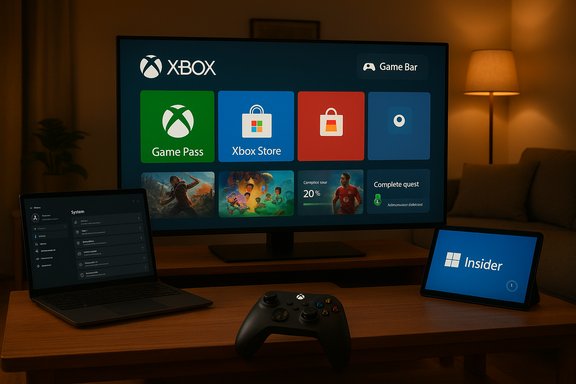
Laptop displays Xbox Game Pass UI with game tiles and a nearby controller in a dimly lit room.Background​

Microsoft introduced the Xbox Full Screen Experience as a tailored, controller‑first session posture designed to make Windows behave more like a living‑room console on small, thumb‑driven hardware. The feature originally debuted as a core element of the ASUS ROG Xbox Ally family, where the Xbox PC app functions as the device’s home launcher and the system prioritizes a simplified, full‑screen UI at sign‑in. Rather than replacing Windows, FSE is implemented as a session shell: the Xbox app (or another chosen “home app”) is launched in full screen and a number of desktop‑oriented components and startup tasks are deferred or suppressed for the duration of that session.
The current expansion moves that layered session posture out of hardware exclusivity. Handhelds that already ship with FSE are now generally recognized as supported, and Microsoft has exposed the FSE plumbing in Windows 11 Insider Preview builds for the Dev and Beta channels so laptop, desktop, and tablet users — who are also enrolled in the Xbox Insider Program — can test and evaluate the experience. Availability is staged and gated: the underlying binaries exist in the preview stream, but Microsoft and OEMs control visibility with entitlement flags and product‑specific tuning.

What the Full Screen Experience actually does​

A session posture, not a new operating system​

At its core, the Full Screen Experience is a session‑level shell. It does not rewrite the Windows kernel, GPU driver model, or anti‑cheat and DRM subsystems. Instead, FSE changes which userland components and background processes are launched and how the session is presented to the user. When active, Explorer is not used as the primary shell for that session; the Xbox PC app becomes the “home” UI and the system suppresses or delays wallpaper, some Explorer ornamentation, and non‑essential startup applications to create a lighter runtime environment.
This design preserves Windows’ compatibility with third‑party storefronts (Steam, Epic, Battle.net, GOG) and standard drivers, while offering a controller‑first, tile‑based launcher optimized for quick, game‑focused navigation. The practical idea is simple: reduce desktop noise, reclaim a few hundred megabytes to a couple gigabytes of RAM in favorable scenarios, and present a console‑like pick‑up‑and‑play experience on devices where a standard desktop interface is awkward.

Key visible changes​

  • Boots the session into a full‑screen Xbox home with large, controller‑friendly tiles and consolidated game discovery.
  • Adapts Game Bar and Task View for controller navigation and Xbox button behaviors.
  • Provides an on‑screen controller keyboard and controller‑driven task switching.
  • Optionally defers Explorer chrome and non‑essential startup apps while FSE is active.
These behaviors give handheld and controller‑first users immediate usability gains while preserving the full Windows desktop as an escape hatch when required.

How to enable and access FSE on supported PCs​

Microsoft exposes FSE controls in Windows Settings and provides multiple entry points to make the mode accessible during normal workflows. The supported activation paths for Insiders and OEM‑enabled devices are:
  • Settings → Gaming → Full screen experience — select your preferred home app (Xbox is the default) and optionally enable “Enter full screen experience on startup.”
  • Hover over the Task View icon on the taskbar and choose “Xbox full screen experience.”
  • Game Bar (Win + G) → Settings — enable or toggle the full‑screen experience from the overlay.
  • Toggle via Win + F11 to quickly enter or exit the session posture.
On devices with a physical Xbox button, long‑press behaviors can be mapped to switch between desktop and FSE sessions, creating an intuitive controller‑driven toggle for pick‑up‑and‑play use cases. Note that the Xbox PC app must be installed from the Microsoft Store to use the Xbox home as the FSE launcher.

What to expect from the staged rollout​

Microsoft is using a cautious, staged rollout model that combines Insider preview builds and OEM entitlements. The binaries for FSE are present in the Windows 11 25H2 preview stream (26220.x family), but visibility differs between devices because OEMs may gate the feature or ship their own validated FSE configuration. That means joining the Windows Insider Dev or Beta channels — and the Xbox Insider program for PC Gaming previews — is the supported testing path, but it does not guarantee immediate access on every machine.
Staged rollouts let Microsoft and partners gather telemetry and ensure drivers, power profiles, and firmware are tuned to each device’s thermal and power envelope before broadly enabling the mode. Early recipients include devices already designed for controller use (ROG Xbox Ally family, MSI Claw, select Lenovo Legion devices and other handhelds), while laptops and traditional desktops will see availability only after OEM validation.

Measured gains and practical benefits — what reviewers are finding​

Independent hands‑on testing and early reviews show the FSE can deliver tangible user‑experience improvements on the right hardware:
  • Cleaner, game‑first UI and reduced navigation friction for controller users.
  • Measurable memory headroom in many test cases — reviewer measurements often fall in the directional ballpark of roughly 1–2 GB of RAM reclaimed on systems where desktop services and many startup apps were previously loaded. These gains are device‑ and configuration‑dependent and should be treated as approximate, not guaranteed.
  • Lower idle CPU wakeups and a lighter background process footprint, which can translate to steadier minimum frame rates and modest battery improvements for thermally constrained handheld APUs.
It’s important to emphasize that these improvements stem from userland and session‑level trimming — not driver rewrites or lower‑level GPU scheduling changes. FSE’s gains come from deferring Explorer and other desktop tasks, freeing memory and reducing background interruptions for games.

Strengths and opportunities​

  • Console‑style simplicity without losing Windows openness. FSE offers the familiar Xbox Series‑style UI and controller experience while keeping Steam, Epic, GOG, and other PC storefronts accessible. That lowers the barrier for players who prefer a couch‑friendly launcher without leaving the Windows ecosystem.
  • Improved battery and thermal behavior on handhelds. By trimming non‑essential services at session start, FSE can ease memory pressure and background CPU usage — two critical levers on handheld hardware that directly influence sustained game performance and battery life.
  • Multiple entry and exit points. The Settings toggle, Task View, Game Bar, Win + F11, and controller button mapping make the feature easy to adopt and to revert from, lowering risk for exploration.
  • OEM‑driven polish potential. When OEMs ship devices with FSE preconfigured and validated, the experience can feel seamless — which is exactly what Microsoft and partners aim for on devices like the ASUS ROG Xbox Ally family.

Risks, trade‑offs, and places to test carefully​

Anti‑cheat, DRM, and compatibility edges​

FSE does not alter kernel‑level anti‑cheat or DRM stacks. That’s a double‑edged reality: it preserves compatibility for titles that require kernel components, but it also means that some games may require the desktop session, specific launchers, or administrative workflows to function correctly. Competitive and anti‑cheat‑sensitive players should validate each game under FSE before attempting ranked play.

OEM fragmentation and inconsistent availability​

Because OEMs control enablement and often tune driver and power profiles to their products, the FSE experience will vary. A device that ships with FSE preinstalled typically offers a more polished, tested behavior than a machine where FSE is later enabled through Insider entitlements. Expect differences in hotkeys, on‑device remapping, and thermal/power outcomes across vendors.

Feature gating, build identifiers, and inflation of headline numbers​

Insider blog posts and preview notes have used multiple build callouts (different 26220.x variants) in close succession, creating some confusion about exact build numbers and KB identifiers. Where precise OS package identifiers matter — for example, when troubleshooting missing toggles — confirm the exact build and KB with Microsoft or your OEM before proceeding. Similarly, the oft‑cited “~2 GB” memory reclamation headline is an independent, device‑dependent observation from early reviews; treat it as an estimate, not a Microsoft‑guaranteed metric.

Unsupported community unlocks​

Community tools and feature‑flag tricks can coax FSE onto unsupported machines, but those methods are unofficial and risk instability. The supported path — Windows Insider + Xbox Insider + OEM validation — is the recommended approach for users who value stability and predictable system behavior.

Practical guidance: how to test FSE safely​

  • Confirm your device and update state
  • Ensure your system is enrolled in the Windows Insider Dev or Beta channel (per OEM guidance) and that you have the preview build family carrying FSE plumbing.
  • Install the Xbox PC app from the Microsoft Store and, if necessary, join the Xbox Insider Program and opt into the PC Gaming preview via the Xbox Insider Hub.
  • Back up any important data and create a system restore point
  • FSE is a session posture that is reversible, but Insider builds can introduce instability. Guard critical data before you experiment.
  • Enable FSE through supported controls
  • Settings → Gaming → Full screen experience, or hover Task View → choose Xbox full screen experience. Use Win + F11 to toggle quickly during testing.
  • Validate your common games
  • Launch each game you rely on and confirm launch flow, controller behavior, performance, and anti‑cheat acceptance. Test both single‑player and any multiplayer modes you use.
  • Measure before and after
  • Record baseline memory, idle CPU wakeups, and frame time variance in desktop mode, then repeat the measurements with FSE active. This comparison will reveal whether FSE’s session trimming produces meaningful gains on your specific setup.
  • Report issues using Feedback Hub
  • File precise, reproducible feedback (include build numbers and device model) under Gaming and Xbox → Gaming Full Screen Experience to help Microsoft and OEMs fix problems quickly.

What this means for the PC gaming landscape​

The Full Screen Experience is a pragmatic architectural step: instead of shipping a separate OS or fragmenting Windows, Microsoft introduced a multi‑posture shell that lets Windows behave like a console when it makes sense. This approach preserves the Windows ecosystem — including the ability to run multiple storefronts and developer tools — while giving an option for a more streamlined, controller‑first experience on devices that benefit from it.
That trade‑off is noteworthy. Valve’s Steam Deck and Valve’s SteamOS pursue a Linux‑first approach that gives deep OS‑level control for gaming. Microsoft’s FSE, by contrast, is a session posture layered on top of the existing Windows stack — a lower‑risk, less disruptive path that leverages Microsoft’s Xbox ecosystem and OEM partnerships rather than building a new platform. Early reviews show FSE narrows some UX gaps between Windows handhelds and console‑style front ends, but it does not universally outrun focused OS‑level alternatives where extreme optimizations are the aim.
If Microsoft and OEMs can align on driver testing, anti‑cheat validation, and firmware tuning, FSE could become a standard option for users who want the console feel on a PC. The long‑term question is whether multi‑posture shells like FSE will become a recognized design pattern for Windows: multiple validated session topologies (desktop, tablet, console‑style) that users can pick depending on how they want to use the device.

Final analysis and recommendations​

The Xbox Full Screen Experience is a significant UX experiment that delivers a meaningful console‑like interface to Windows without fracturing the PC ecosystem. Its strengths are clear: an accessible, controller‑first UI; practical memory and background‑process trimming on constrained devices; and multiple, reversible activation points that make adoption low‑risk for end users.
At the same time, several pragmatic caveats limit its immediate applicability for some users: OEM gating will create uneven availability and behavior; anti‑cheat and DRM interactions must be validated per title; and headline performance numbers are device‑specific rather than universal. Early adopters should proceed through the supported Insider and Xbox Insider channels, back up data, and validate each game they care about under FSE before relying on it for competitive or critical play.
For handheld owners and controller‑first players, FSE is already a welcome improvement: it reduces friction and delivers a familiar Xbox‑style launcher without leaving Windows. For mainstream laptop and desktop users, the feature will be most appealing to those who prefer a console‑like front end for casual play and who want a fast, simple pick‑up‑and‑play path — provided their OEM supports it and their critical games behave correctly under the session posture.
Ultimately, FSE represents a pragmatic middle way: a console experience that respects the PC’s openness. Its success will come down to OEM enablement, driver and anti‑cheat validation, and Microsoft’s continued attention to both performance and compatibility as the preview widens. For now, Insiders and handheld owners can try it, measure the effects on their machines, and help shape a potentially important new posture for gaming on Windows.

Source: The Verge You can now try the Xbox Full Screen Experience on any PC, laptop, or tablet
 

A handheld gaming console displaying Xbox Game Pass tiles on its home screen.
Microsoft's move to make Windows handheld gaming more "Xbox-like" is no cosmetic tweak — it's a deliberate reshaping of the Windows session on pocketable devices that flips the Xbox PC app into a console-style, controller-first home and gives Game Pass and cloud play a far more prominent pathway into play.

Background / Overview​

Microsoft introduced the Full Screen Experience (FSE) as a way to make handheld Windows machines behave more like dedicated consoles without replacing Windows itself. The feature first appeared as a co-engineered differentiator on the ASUS ROG Xbox Ally family, where the device boots directly into a full-screen Xbox dashboard. Microsoft has now expanded the plumbing of that experience into Windows 11 so other OEMs can enable a controller-first, full-screen shell on qualifying handhelds. The public rollout for handhelds began in late November 2025. FSE is explicitly a session posture — a layered shell that alters which user-mode components load at sign-in — rather than a new kernel, OS fork, or replacement of core drivers and anti‑cheat systems. That design choice keeps DirectX, kernel scheduling, DRM, and anti‑cheat stacks intact while changing the user-facing shell, background tasks, and navigation model to favor gamepad-driven interactions.

What is the Full Screen Experience (FSE)?​

A session posture, not a separate OS​

At its core, the Full Screen Experience is a controller-friendly shell that:
  • Boots a chosen “home app” (the Xbox PC app is the default) as the full-screen launcher.
  • Defers or suppresses many Explorer shell ornaments and non‑essential background startup tasks during the FSE session.
  • Adapts Game Bar, Task View, and other UI elements for bumper/trigger and thumb-stick navigation.
  • Provides an on-screen controller keyboard and controller-driven sign-in and switching flows.
Because the change is in userland, low-level compatibility with games remains governed by the same Windows subsystems as before; however, the session footprint is intentionally leaner to reduce UI noise and free resources for games.

How FSE behaves in practice​

Users will notice three immediate differences when FSE is active:
  • Console-style home screen: Large, thumb-friendly tiles and a single aggregated library that surfaces Game Pass titles, Xbox purchases, and discovered installed games from third-party launchers.
  • Controller-first navigation: Game Bar becomes a primary overlay for quick actions, and the Task View / app switching is tuned for controller inputs rather than mouse gestures.
  • Reduced desktop overhead: Wallpaper, some Explorer subsystems, and many startup apps are delayed until the user exits FSE, which can reclaim user-space memory and reduce idle CPU wakeups.
The practical result is faster time-to-play, fewer interruptions from desktop notifications, and a cleaner navigation surface for handheld gaming.

How to enable and use FSE​

Enabling FSE (the short path)​

  1. Ensure the device is running a supported Windows 11 build and that the Xbox PC app and Game Bar are up to date.
  2. Open Settings → Gaming → Full screen experience.
  3. Set your preferred gaming home app from the dropdown (choose Xbox to get the Xbox‑style experience).
  4. Optionally enable “Enter full screen experience on startup” to boot directly into the Xbox home app.
You can also enter and exit FSE from the Game Bar, Task View, or by pressing Win + F11 when the toggle is available. OEMs may ship devices preconfigured to boot into FSE by default.

UX notes and fallbacks​

  • The desktop is still present beneath FSE — users can switch back to the full desktop at any time, at which point deferred background tasks and Explorer components will resume.
  • Some OEMs will gate FSE by device model and firmware readiness; merely installing a Windows update does not guarantee FSE will be immediately enabled on every machine.
  • Insiders on Dev/Beta channels and Xbox Insider Program members will often see FSE earlier in staged rollouts; general availability timelines are controlled by Microsoft and OEM entitlements.

Devices and rollout: who gets FSE and when​

Microsoft’s rollout path has been staged and OEM‑gated:
  • First wave: ASUS ROG Xbox Ally and ROG Xbox Ally X shipped with FSE preinstalled as a core differentiator.
  • Preview expansion: MSI Claw and several other handheld models received preview enablement via Windows Insider builds.
  • General rollout for handhelds: Microsoft announced handhelds in market can enable FSE starting November 21, 2025, with OEMs controlling per-device availability.
Expect variability in timing: some OEMs will push validated firmware and drivers quickly; others will schedule later availability windows tied to testing and optimization. Lenovo publicly discussed spring 2026 timelines for some Legion Go 2 variants, highlighting that OEM schedules remain a material factor in adoption.

Why Microsoft built FSE: design goals and immediate benefits​

Solve handheld UX friction​

Windows’ decades-long desktop-first design causes friction on small, controller-driven hardware: tiny UI elements, notification interruptions, background processes that steal memory, and a desktop shell optimized for mouse and keyboard. FSE directly addresses these pain points by presenting a single launcher and minimizing desktop noise.

Performance and battery headroom​

Microsoft and independent hands-on reporting point to directional improvements rather than guaranteed uplift. Testers and OEM materials commonly report reclaimed user-space memory on the order of roughly 1–2 GB on tuned handheld configurations when desktop services and startup apps are deferred — a significant margin on devices with tight RAM budgets. Some outlets have cited figures closer to 2 GB in favorable setups. These numbers represent practical, use-case dependent savings; they are not universal guarantees. Potential runtime benefits include:
  • Fewer idle CPU wakeups from background maintenance jobs.
  • Less memory pressure, which can reduce paging or driver contention.
  • Reduced UI overhead and fewer frame-time spikes caused by random background tasks.
All of these can produce steadier frame pacing and better battery endurance in real-world handheld gaming sessions — especially on thermally constrained APUs. However, measured gains vary by device firmware, installed software, and per-title behavior.

A cleaner pathway for Game Pass and cloud gaming​

FSE makes Game Pass far more discoverable by placing subscription content at the center of the home launcher and surfacing cloud-play options when available. For Game Pass subscribers, this reduces friction to try new titles and to launch cloud-streamed games without swapping apps or navigating multiple storefronts. That flow is a clear win for reach and discoverability.

Game Pass integration: what's new and what it means​

FSE consolidates game discovery and launching into a single, Xbox‑centered front door. That front door:
  • Highlights Game Pass titles prominently in the main grid.
  • Exposes cloud play options (where supported) directly from the hub so subscribers can stream without navigating the desktop.
  • Aggregates installed PC games and discovered titles from other stores into one searchable library for controller-driven launch.
This tightens Microsoft’s UX and value proposition for Game Pass subscribers: a universal “turn on and play” flow that resembles console behavior. For Microsoft, it increases Game Pass engagement and the likelihood of converting casual players into subscribers or keeping existing members actively playing. For users, it reduces friction — but also increases platform lock-in for the primary, default gaming surface on handheld Windows devices.

Compatibility, anti‑cheat, and developer concerns​

Compatibility is largely unchanged — but test titles​

Because FSE changes the session shell and not the kernel or drivers, games should run under the same low-level stacks they always did. That preserves compatibility with DirectX, drivers, DRM, and anti‑cheat systems. However, the session posture and deferred background services can expose edge cases:
  • Games or launchers that expect helper background services to be present at launch may behave differently in FSE until the desktop services are loaded.
  • Some per-title overlays or third-party utilities might assume Explorer or background processes are running; these can require updates or explicit testing.
Microsoft’s guidance and independent hands‑on reporting both recommend validating compatibility on a per-title basis after enabling FSE.

Anti‑cheat and security posture​

Anti‑cheat frameworks and DRM run in kernel/driver space and are unaffected by the choice of user shell. That said, because the session initializes differently, OEMs and developers should confirm that any anti‑cheat hooks and related services initialize reliably under FSE. Microsoft has emphasized that FSE is a user-mode session posture and not a path to bypass security primitives.

Privacy and telemetry considerations​

FSE increases the prominence of Xbox services and Game Pass discovery on handhelds. That centrality implies:
  • Greater visibility of Xbox‑centered notifications and suggestions while in FSE.
  • Potentially reduced visibility of non‑Xbox notifications during active sessions because desktop notification flows are deferred.
  • No public indication that FSE itself changes Windows privacy controls, but users should review what data is shared with Xbox services and Game Pass when they sign into the Xbox app.
Users who are privacy-conscious should audit Xbox app permissions, sign-in scopes, and related telemetry toggles; OEMs and Microsoft documentation list controls for the Xbox app and Game Bar that are unchanged in their privacy model when FSE is enabled. When using shared devices or public networks, standard account hygiene and two‑factor authentication remain important.

OEM strategy and market implications​

A new surface to differentiate​

For OEMs, FSE is both an opportunity and a test:
  • Opportunity: Ship devices that feel more like a handheld console out-of-the-box, improving appeal to players who want a low-friction, portable gaming appliance. ASUS’ ROG Xbox Ally family exemplifies this approach.
  • Test: Provide validated firmware, drivers, and validated app stacks so FSE performs consistently. OEMs that ship FSE without careful validation risk variability in performance and stability.
Because Microsoft gates FSE by OEM entitlements and firmware readiness, early adopter OEMs with close collaboration (e.g., ASUS) will produce the smoothest experiences. Other vendors will catch up, but expect fragmentation in timing and polish across the handheld landscape.

Competitive effects​

FSE makes Windows handhelds more approachable to console-minded players and reduces the gap between dedicated handheld consoles and Windows PCs. This improves Windows’ competitiveness against alternative handheld OS ecosystems, such as SteamOS, which have historically been attractive because they ship with leaner, game‑first shells out of the box.
That said, SteamOS and other Linux-based approaches can still retain an advantage in certain performance and customization scenarios; FSE narrows the UX gap but does not rewrite driver-level performance realities. Enthusiasts and power users will continue to evaluate both OS-level and firmware-level trade-offs.

Risks, caveats and what to watch​

  • Variable gains: Memory and battery improvements are real but variable. The common headline of ~1–2 GB reclaimed is directional; actual gains depend on installed apps, drivers, and OEM firmware. Treat any single figure as an estimate rather than a promise.
  • Staged availability: Microsoft uses server-side entitlements and OEM gating. Seeing FSE in an Insider build doesn’t guarantee immediate availability on every device. Check OEM channels and validated updates before assuming your handheld will receive FSE on day one.
  • Third-party overlays and utilities: Some overlays or background utilities may require fixes to behave correctly in the deferred-start posture. Game developers and utility vendors will need to test and possibly ship updates.
  • Lock-in dynamics: The stronger Game Pass integration is beneficial for subscribers but increases the perceptual centrality of Microsoft’s ecosystem on handhelds. Users who prefer to avoid subscription‑centric discovery should know how to change the home app or disable FSE.

Practical advice for handheld owners​

  1. If you care about stability, wait for your OEM to publish a validated firmware/driver bundle that ships with FSE support.
  2. If you’re curious and willing to test, enroll in the Windows Insider program (or Xbox Insider where applicable) and back up your data before toggling FSE.
  3. After enabling FSE, run through the titles you play most often to confirm overlays, anti‑cheat, and launcher behaviors remain functional.
  4. If you prefer a non‑Xbox‑centered launcher, remember you can change the home app or set FSE to “None” in Settings → Gaming → Full screen experience to disable it.

Reading the tea leaves: long-term implications​

FSE signals a broader Microsoft willingness to treat Windows as a multi‑posture platform — one that can be a desktop, tablet, or console-like device depending on how you want to use it. That flexibility could evolve Windows into a more posture‑aware OS where the visible shell and session policies match the user intent: productivity, touch/tablet, or controller-first gaming.
If Microsoft pursues this posture model, developers will increasingly see optimizations targeted at specific session types, and OEMs will treat posture as a product differentiator rather than only a software setting. That could be good for consumers if it results in better, validated experiences, but it will require strong coordination between Microsoft, OEMs, and the game developer community.

Conclusion​

The Full Screen Experience is a meaningful, pragmatic step toward making Windows handhelds feel more like consoles while preserving the openness and compatibility of the PC ecosystem. For players it offers a cleaner, controller-first path to games and clearer access to Game Pass and cloud play. For Microsoft and OEMs it offers a way to deliver appliance-like experiences without abandoning Windows’ flexibility.
The technical and UX wins are real — especially on thermally constrained hardware where reclaiming memory and reducing background activity matters — but the gains will vary by device, driver quality, and per-game behavior. Users should test cautiously, rely on OEM-validated builds when possible, and treat headline memory‑savings numbers as directional estimates rather than guarantees. The bigger story is that Windows is becoming posture-aware: when you want it to behave like an Xbox, Microsoft is increasingly giving you an explicit, supported path to do so.
Source: Inshorts Microsoft makes Windows handheld gaming more Xbox-like with full screen experience
 

Microsoft’s console-style Xbox dashboard — the same “Full screen experience” that ships as the default shell on the ROG Xbox Ally — is now headed to ordinary Windows 11 PCs, first as a preview for Insiders and Xbox Insiders and soon to a wider audience, a move that formally extends the console-like, controller-first gaming shell beyond handheld hardware and into laptops, desktops, and tablets.

Xbox PC setup: monitor shows Xbox PC App with Game Pass and Store; laptop shows Settings.Background / Overview​

The Full screen experience (FSE) is not a new operating system; it’s a session posture layered on top of Windows 11 that makes a chosen “home app” (commonly the Xbox PC app) act as the full-screen launcher while deferring many desktop services and Explorer-related ornamentation to free memory and reduce background interruptions during gameplay. Microsoft documents the feature in its support guidance and explicitly frames FSE as a controller-first, gaming-first environment that’s configurable from Settings → Gaming → Full screen experience. FSE first appeared as an out-of-box differentiator on ASUS’s co-designed ROG Xbox Ally and ROG Xbox Ally X handhelds, which shipped in October with the Xbox full-screen shell available by default; Microsoft and ASUS used those devices as a real-world testbed for the experience. Microsoft has since folded the necessary plumbing into Windows Insider preview builds and, on November 21, 2025, announced FSE was generally available on current Windows handhelds and entering a PC preview for Windows Insiders and Xbox Insiders. Multiple mainstream outlets and platform blogs confirm the staged rollout: the Windows Insider Blog and Xbox Wire both explain the preview path (Dev/Beta channels for Windows Insiders plus Xbox Insider registration for PC access), and coverage from outlets such as The Verge, PCWorld, and Digital Trends detail what users will see when they opt in.

What the Full screen experience does — practical features​

The Full screen experience shifts how a Windows session behaves so players get a more console-like UX and fewer desktop distractions. Key functional elements are:
  • Controller-first UI: Large, tile-based home with controller navigation and an Xbox-button-driven workflow.
  • Home app selection: Users can choose a home app (Xbox PC app or other gaming-capable apps) under Settings → Gaming → Full screen experience.
  • Boot-to-console option: The experience can be configured to start automatically at login, bypassing the Windows desktop for a “turn on and play” flow.
  • Task Switcher optimized for controllers: Quick movement between games and apps using controller inputs, including a long-press Xbox-button task switch.
  • Process and startup trimming: When enabled to enter on startup, Windows defers non-essential startup apps and background jobs to reclaim memory and reduce idle CPU wakeups — intended to improve battery life and frame stability on constrained hardware.
  • Aggregated library: The Xbox app surfaces Game Pass, Microsoft Store titles, and discovered installs from many mainstream PC storefronts, providing a single discovery surface.
These behaviors are configurable: FSE can be toggled on/off from Settings, entered and exited via Game Bar or a WIN+F11 hotkey, and individual startup apps can be whitelisted if the user needs them to run even while FSE is active.

How to get access (Insider preview path)​

Microsoft and Xbox are making desktop and laptop access available initially through preview programs rather than an immediate broad release:
  • Join the Xbox Insider Program, install the Xbox Insider Hub, and opt into the PC Gaming preview.
  • Join the Windows Insider Program and set the device to the Dev or Beta channel (build family noted in Microsoft posts: 26220.x family and specific previews such as Build 26220.7271/7221 in recent posts).
  • Update the Xbox PC app from the Microsoft Store and, on supported builds and entitlements, enable FSE in Settings → Gaming → Full screen experience.
Microsoft warns the rollout is phased; not all Insiders will get the preview immediately and OEM entitlements can gate exposure. The Windows Insider Blog and Xbox Wire both recommend providing feedback through Feedback Hub and the Xbox Insider channels to help refine the experience.

Verified technical claims and where they come from​

Several of the headline claims about FSE can be independently verified:
  • The feature is documented by Microsoft in the support article “Windows Gaming: Full screen experience,” which explains the UI, settings, and behavior of the feature. That documentation lists the Windows versions that include the capability (24H2, 25H2) and details how startup and background process trimming works.
  • Xbox Wire’s official blog post announces that FSE is “generally available” on current Windows handhelds and is “available in preview” for additional Windows 11 PC form factors, explicitly naming laptops, desktops, and tablets for the PC preview. The post includes instructions for Insiders to join and test the experience.
  • The Windows Insider Blog confirms the expansion into Windows 11 PC form factors via a specific Insider Preview build and reiterates the controller-first design posture.
  • Independent testing and early coverage from outlets such as The Verge and Digital Trends report measurable runtime differences on handheld hardware (notably a commonly-cited ~2GB of memory reclaimed and fewer background processes), which aligns with Microsoft’s claims about process deferral — though exact numbers vary by device and configuration. These outlet reports reflect hands-on testing and telemetry rather than a Microsoft-published metric.
Where claims are not fully open to external verification, the article flags them. For example, Microsoft’s support page describes what FSE does but does not publish a one-size-fits-all memory-savings figure applicable to every device; the numeric “~2GB” figure originates from early third-party hands-on tests and should be treated as an estimate that depends on each device’s process mix and OEM software stack.

What this means for Windows PCs — benefits​

For gamers and OEMs, the extension of FSE to standard Windows PCs brings several meaningful advantages:
  • Faster, more consistent entry to games: Boot-to-home-app and deferred startup reduce the friction of launching games, especially on handhelds or laptops configured for gaming-first sessions. Users can bypass the full desktop and reach their library quickly.
  • Controller-first usability on PC: Desktop and laptop gamers who prefer a couch-style controller experience will get a first-class, thumb-friendly Task Switcher and navigation model similar to consoles.
  • Resource hygiene for constrained devices: On battery- or thermally-constrained hardware (handhelds, ultra-thin laptops), reducing background tasks can free RAM and reduce micro-stutters, providing steadier frame pacing. Early reports observe measurable gains in realistic scenarios.
  • Unified game discovery: Aggregation of Game Pass, Microsoft Store, and discovered installs from other storefronts helps users find and launch titles from a single surface without juggling multiple launchers.
  • OEM differentiation without fragmenting Windows: OEMs can offer a console-like out-of-box experience while preserving the full Windows desktop for advanced users — a middle path that keeps Windows compatibility while serving a new usage pattern.

Risks, limitations, and practical caveats​

The technical and strategic promise carries important trade-offs and risks that readers should weigh:
  • Preview instability and gated rollout: The PC preview is limited to Insiders and Xbox Insiders initially. Preview builds can be unstable; OEM-specific drivers and utilities may interact poorly with FSE until validated. Microsoft explicitly stages exposure to collect telemetry and reduce regressions.
  • Not a replacement OS — but still impactful: FSE is layered over Windows; it does not change kernel behavior or driver models. That preserves compatibility but means some optimizations (e.g., anti-cheat or DRM) remain bound to existing Windows constraints. Developers and anti-cheat vendors may need to validate behavior in FSE sessions.
  • Potential app and background-service surprises: Deferring startup apps improves game-facing resources but can break workflows for apps that depend on immediate background services (cloud sync, communication tools, overlay utilities). Microsoft provides per-app startup controls, but users must proactively whitelist services that need to run in the background.
  • Telemetry and privacy questions: Because Microsoft and OEMs will rely on telemetry to tune the experience, some users will reasonably ask what data is collected during FSE sessions and how it’s used. The preview nature of the program means telemetry collection will be active to guide fixes and changes. Users should review their privacy settings and Feedback Hub reporting options.
  • Community enablement tools carry risk: Prior to the official PC preview, community projects surfaced tools to force-enable FSE on unsupported devices. These utilities may bypass security checks and require altering system settings; using them risks instability or security exposures. Community developers and users have reported mixed outcomes with such tools. Any user tempted to experiment should understand the trade-offs and prefer OEM-validated updates when possible.
  • Fragmentation in experience quality: While FSE behaves consistently at a UI level, the quality of the experience will vary by OEM, drivers, and firmware. Devices with robust driver stacks and OEM validation (like the ROG Ally co-engineered experience) will feel more seamless than older laptops or niche hardware. Expect variation.

Strategic implications for Microsoft, OEMs, and the wider PC ecosystem​

This move is more than a UX tweak; it’s a signal in Microsoft’s long-term platform strategy.
  • Microsoft is creating a lighter, console-like entry point into Windows that preserves PC openness while offering the simplicity many console users prefer. That hybrid approach allows Microsoft to compete on convenience without sacrificing the broad compatibility and storefront diversity of Windows.
  • OEMs gain a new marketing axis: ship a gaming-first experience that looks and feels like a console at first boot, yet still leaves the full Windows desktop available for power users. This can be a differentiator for gaming laptops and handhelds. ASUS’s ROG Xbox Ally demonstrated the commercial playbook by shipping with FSE preinstalled.
  • For game developers and anti-cheat vendors, Xbox’s move means more surface area to validate: games must behave correctly in sessions where desktop subsystems are de-prioritized and where overlays and telemetry may act differently. Studios will need to test for FSE to ensure consistent behavior.
  • Long-term, the presence of a Windows-layered Xbox shell increases the plausibility of future Microsoft hardware or living-room devices that present a console-grade shell while running Windows beneath — a possibility that has been widely discussed in industry reporting but not officially confirmed as a product plan. Observers should treat this as a strategic direction rather than a product promise.

How to safely try FSE on a PC (practical guide)​

For readers who want to experiment, follow this conservative path:
  • Back up important data and create a system restore point before switching channels or enabling preview features.
  • Join the Windows Insider Program (Dev or Beta channel) and ensure the Xbox app is updated.
  • Join the Xbox Insider Program and opt into the PC Gaming preview through the Xbox Insider Hub to expose the PC preview flags.
  • Enable FSE via Settings → Gaming → Full screen experience only after confirming your device’s drivers and firmware are up to date; prefer OEM-provided drivers and update utilities to avoid incompatibilities.
  • If you rely on background apps (cloud sync, voice comms, recording tools), whitelist them in Settings → Apps → Startup or test their behavior in FSE to ensure they run when needed.
  • Use Feedback Hub to report regressions or missing functionality; the Insider preview is explicitly designed for iterative fixes.
Avoid third-party “force enable” tools unless you understand the full implications; community enablement scripts have proven useful for experimentation but can expose security or stability risk and may require disabling reputation-based protections.

Early reception and independent testing — what reviewers say​

Hands-on reports from outlets that tested FSE on handheld hardware repeatedly highlight the smoother, more immediate gaming flow and measurable resource gains, while also noting that the experience is most polished on hardware co-engineered with Xbox. Early reviewers emphasize:
  • Faster wake and launch times on Ally-class hardware when booting directly to the Xbox home.
  • Reclaimed memory and fewer background tasks in FSE sessions, improving frame stability on thermally-limited hardware — numbers vary by testing methodology but are consistent in direction across reports.
  • UX polish differences between OEMs: ASUS’s Ally implementations show deeper integration (hardware buttons, default home behavior), while other OEMs are bringing FSE via staged updates that sometimes require driver validation and firmware tweaks.
These early impressions line up with the strategy Microsoft and OEM partners described: provide a console-like, controller-first entry point while preserving Windows’ compatibility model beneath.

Verdict — strengths, risks, and what to watch​

The Full screen experience is arguably the most consequential Windows UX change for console-minded PC gamers in years: it brings a console-like, controller-first surface to Windows without throwing away the platform’s openness. That hybrid approach is both clever and pragmatic.
  • Strengths: immediate usability gains for controller-first users, better runtime posture for handheld hardware, unified game discovery, and OEM differentiation without fragmenting Windows.
  • Risks: preview instability, variability across OEMs, potential breakage for background-dependent apps, telemetry and privacy sensitivity, and the temptation by some users to force-enable FSE on unsupported hardware with community tools.
What to watch next:
  • How broadly Microsoft opens the PC rollout beyond Insiders and how quickly OEMs validate stable configurations.
  • Whether developers and anti-cheat vendors publish compatibility notes for FSE sessions (important for competitive and online titles).
  • Whether Microsoft publishes aggregate telemetry on measured resource savings or CPU/RAM improvements across representative hardware — today’s memory-savings figures are predominantly from third-party testing and will benefit from official benchmarks.

Conclusion​

The Xbox Full screen experience arriving on standard Windows 11 PCs marks an evolution in how Microsoft thinks about gaming on Windows: it’s not about replacing the desktop, but about offering an alternative, console-like entry point that’s tuned for controllers, faster game access, and better resource hygiene on constrained hardware. For consumers, the immediate payoff is convenience and potentially smoother gameplay on handhelds and laptops; for Microsoft and OEMs, it creates a new axis of differentiation that preserves Windows’ openness while giving gamers a “turn on and play” option.
Insider participants and cautious early adopters should test FSE via the official preview channels and rely on OEM-validated updates where possible. Power users and enterprise administrators should monitor driver updates, anti-cheat guidance, and OEM advisories before enabling FSE on production machines. The feature’s success will depend on careful tuning, clear communication about trade-offs, and robust validation across the wide variety of Windows hardware in the market — but the initial rollout makes one thing clear: Microsoft is serious about making Windows feel more like a console when you want it to, and more like Windows when you need it to.
Source: Pure Xbox https://www.purexbox.com/news/2025/...ll-soon-be-available-on-standard-windows-pcs/
 

A portable gaming console displaying Xbox Game Pass tiles on its screen.
Microsoft has begun previewing the new Xbox full screen experience (FSE) more broadly: the console‑style, controller‑friendly shell that first launched on the ROG Xbox Ally is rolling out to Windows Insiders in the Dev and Beta Channels as part of the Windows 11 preview build 26220.7271, and the feature is being made generally available for current Windows handhelds today.

Background​

Microsoft introduced the Xbox full screen experience as an alternate session posture for Windows 11 rather than a new operating system. The goal is straightforward: give gamers a cleaner, controller‑first home with fast access to games (including Game Pass), reduce desktop clutter and background work during play, and make handheld Windows devices behave more like dedicated gaming consoles. The Windows Insider announcement and companion Xbox posts explain that the FSE uses the Xbox PC app as a “home” launcher and exposes entry/exit points via Task View, Game Bar, and a keyboard shortcut (Win + F11). This rollout is staged and OEM‑gated: the underlying FSE plumbing ships in the 25H2 preview stream (builds in the 26220.x family), but visibility is controlled by Microsoft and hardware partners. That means installing the preview build does not guarantee immediate access for every device — Insiders on supported hardware will see the toggle appear as Microsoft and OEMs expand the entitlements.

What the Xbox Full Screen Experience actually is​

A session posture, not a kernel patch​

The FSE is best described as a layered shell that changes what Windows loads at session start. It does not replace the Windows kernel or swap drivers. Instead, it defers or suppresses certain Explorer shell components, desktop ornaments, and non‑essential user‑mode services for the active session to prioritize games and controller navigation. The system still runs drivers, anti‑cheat modules, and DRM frameworks as required by games.

What you see and how you interact​

  • A full‑screen Xbox home with large, controller‑friendly tiles that aggregate:
    • Xbox Game Pass titles
    • Microsoft Store games
    • Detected installs from Steam, Epic, Battle.net, and other storefronts
  • Controller‑first navigation, including an expanded Game Bar overlay and a Task View tuned for quick switching between games and apps.
  • Entry and exit methods designed for convenience: Task View (hover or Win + Tab), Game Bar settings, and a direct toggle via Win + F11. You can revert to the desktop instantly by pressing the Windows key or selecting Desktop from Task View.

Why Microsoft built it​

FSE is a strategic response to two market pressures: the rise of dedicated handheld gaming experiences (like the Steam Deck and purpose‑built handhelds) and the desire to surface Xbox ecosystem services (Game Pass and Xbox discovery) more prominently on Windows. It lets Microsoft and OEM partners deliver a more predictable gaming posture on thermally constrained hardware while keeping the openness and compatibility of Windows.

What’s new in Windows 11 preview build 26220.7271​

Microsoft has packaged the FSE expansion into the Windows 11 preview build 26220.7271 for the Dev and Beta Channels. That build begins the gradual preview of FSE on more PC form factors (laptops, desktops, and tablets) for Insiders, while the feature is being made generally available on eligible handhelds in market. The Windows Insider blog and the Xbox announcements list the supported entry points, note the requirement for the Xbox PC app from the Microsoft Store, and explain that Xbox Insider registration is currently required to be prioritized in the phased rollout. The preview build also bundles other features worth noting for Insiders:
  • Point‑in‑time restore in the Windows Recovery Experience (a new troubleshooting recovery option).
  • Fluid Dictation improvements for Voice Typing on devices with an NPU, improving on‑the‑fly grammar, punctuation, and filler‑word handling.
  • Cross‑device continuity for certain Android browsers and Microsoft 365 Copilot editing workflows.
  • Small app updates such as Microsoft Store library uninstall controls and expanded Notepad formatting for Insiders.

How to try the Xbox Full Screen Experience (official path)​

If you want to test FSE on a supported device, follow this official, supported route — it minimizes the risk of instability versus community hacks.
  1. Join the Windows Insider Program and enroll the device in the Dev or Beta channel as specified by Microsoft.
  2. Install the latest Insider preview build (build 26220.7271 or later) through Settings > Windows Update.
  3. Install or update the Xbox app from the Microsoft Store (FSE uses the Xbox PC app as the home launcher).
  4. Join the Xbox Insider Program and opt into the PC Gaming preview inside the Xbox Insider Hub if you want to be prioritized; Microsoft expects to expand access to Insiders without Xbox registration later.
  5. Enable FSE from Settings > Gaming > Full screen experience, choose Xbox as the home app, and optionally toggle “Enter full screen experience on startup.” Enter/exit via Task View, Game Bar, or Win + F11.

The performance claims: what’s real and what’s estimated​

One of the most frequently repeated headlines around FSE is that it frees memory and reduces background activity, improving game performance on constrained handhelds. Independent coverage and early tests have produced consistent themes — FSE removes much of the desktop overhead and defers startup tasks — but the exact gains vary by device, installed apps, drivers, and the workload.
  • Several outlets and hands‑on tests report roughly 2 GB of memory reclaimed in the FSE posture on certain handhelds. That number is widely cited but is an engineering estimate dependent on what Windows would otherwise load on that device.
  • Real‑world frame‑rate improvements are workload dependent: some reviewers measured double‑digit percent increases in FPS for GPU‑heavy titles on certain devices; others found little to no change depending on power limits and driver tuning. Expect variability.
It’s important to treat the headline numbers as directional. When testers or Microsoft say “~2 GB” or “fewer background jobs,” those are helpful, but not universal guarantees. The amount of memory reclaimed and the extent of CPU idle reduction depend on how many background agents and OEM utilities are present on a specific machine. Community testing and independent benchmarking remain the best way to quantify the benefit on any particular device.

UX and ecosystem benefits​

Cleaner, controller‑first navigation​

FSE delivers a console‑style UX with large tiles and D‑pad navigation, lowering the friction of discovery and launch on small handheld screens. This is a clear win for users who primarily play with a controller and want fast access to an aggregated game library. The Game Bar integration and the revamped Task View help maintain quick task switching without needing to leave the gaming posture.

Unified game discovery​

By surfacing titles from Game Pass, the Microsoft Store and discovered installs from third‑party storefronts in a single home, FSE makes it simpler to find and launch games without flipping between different launchers. For Microsoft, this drives engagement with Game Pass and the Xbox ecosystem; for users, it reduces friction.

Battery and sleep behavior improvements (device dependent)​

On handhelds that ship with FSE tuned at the OEM level, Microsoft and some OEMs report improved idle power draw and faster wake behavior when the system uses the FSE posture. These gains are hardware and firmware dependent and will vary by partner tuning.

Compatibility, caveats, and risks​

FSE is a practical feature, but it introduces real tradeoffs. Anyone planning to enable it should understand the possible impacts:
  • App compatibility: Some desktop apps and OEM utilities rely on Explorer shell hooks or background services. If those are deferred, utilities may not behave as expected within FSE. Test critical applications before switching on your daily driver.
  • Anti‑cheat, DRM, overlays: The posture does not remove anti‑cheat or DRM, but overlay behavior and third‑party integrations (Discord overlay, RTSS, vendor OSDs) may be affected. Games with fragile overlay hooks can show regressions in early previews.
  • Staged enablement & OEM gating: Installing the preview build doesn’t guarantee the toggle will appear. Microsoft and OEMs gate rollout using server‑side entitlements to manage stability and compatibility. Expect different timelines across vendors and models.
  • Unsupported hacks carry risk: Community registry tweaks and third‑party tools can force FSE on unsupported hardware. Those hacks bypass OEM validation and can lead to driver or firmware mismatches. They may complicate support and potentially void certain vendor assistance. Avoid unsupported unlocking on a production machine.
  • Telemetry and privacy: Some reports and hands‑on commentary have suggested FSE reduces telemetry or “disables telemetry” on certain OEM‑tuned Ally builds. That claim is not confirmed as a universal property of FSE and is best treated with caution — changing the session posture does not inherently remove Microsoft’s diagnostic telemetry settings. Users who are privacy conscious should review Xbox app and Windows privacy controls before and after enabling FSE.

How FSE compares with alternate approaches (SteamOS, lean Linux images)​

FSE is a pragmatic compromise: it gives Windows users a console‑like shell without requiring a separate OS. That preserves compatibility with Windows‑exclusive titles, anti‑cheat stacks, and the broader PC ecosystem.
  • SteamOS and purpose‑built Linux gaming distributions often yield raw performance advantages on identical hardware because they can afford radical power‑management and driver stacks tuned for one purpose. Independent tests have shown the ROG Xbox Ally performs better under Linux in some scenarios. Still, those gains come with tradeoffs: fewer Windows‑exclusive titles and possible driver or compatibility headaches.
  • FSE’s value is the “no‑OS‑switch” angle: users keep Windows compatibility and the full library while gaining a console posture for play sessions. That’s attractive for users who need Windows apps or want guaranteed access to titles that only run on Windows.

Recommendations for Insiders and enthusiasts​

  • If you’re an early tester, use a non‑critical device or ensure you have a complete system image and restore point before switching channels. Early preview code can regress.
  • Update GPU drivers and OEM firmware before enabling FSE — vendors will likely push device‑specific patches that improve behavior.
  • For head‑to‑head performance comparison, run controlled benchmarks with and without FSE on the same power profile and game settings. That gives a clearer picture of benefits for your hardware.
  • Avoid registry hacks or unsupported utilities to forcibly unlock FSE unless you fully accept the risks and know how to recover your system. Community hacks can be useful for experimentation but are not a substitute for OEM‑validated support.

OEM, developer, and ecosystem implications​

For OEMs, FSE presents both a challenge and an opportunity. Manufacturers that commit to rigorous driver and firmware tuning can present handhelds that demonstrate the most consistent benefits: better idle power draw, reduced background latency, and a cleaner consumer experience. OEMs unwilling to invest in per‑device tuning may produce softer wins for end users.
For developers and anti‑cheat vendors, FSE adds another session posture to consider. Software that implicitly depends on Explorer hooks or background agents may need updates or guidance to operate predictably under this mode. An explicit compatibility checklist and testing plan will reduce user‑facing regressions as FSE expands across devices. From a platform strategy standpoint, FSE is also a defensive move: it narrows the feature gap between Windows and curated gaming OSes, while keeping Windows’ openness intact. For Microsoft, surfacing Game Pass and Xbox discovery in a full‑screen context is a deliberate engagement play. For users, it’s a convenience and performance option — when it works well, it meaningfully improves the handheld experience without abandoning the Windows ecosystem.

Final analysis — strengths, limits, and what to watch next​

Strengths:
  • Cleaner, controller‑first UX for handhelds and other form factors, reducing navigation friction.
  • Real‑world performance headroom in many cases by deferring Explorer and non‑essential services; independent reports cite roughly 2 GB reclaimed on some devices and measurable FPS gains in selected titles. Expect variability.
  • No OS switch required — keeps Windows compatibility while offering a console posture, which is critical for Windows‑exclusive titles and certain DRM/anti‑cheat stacks.
Limits and risks:
  • Variable benefits across devices — the gains depend on installed software, drivers, and OEM tuning; headline numbers are directional, not guaranteed.
  • Compatibility friction for overlays, OEM utilities, or LOB applications that expect a full Explorer session.
  • Staged rollout and OEM gating means availability will be uneven and patience is required for many users.
  • Avoid unsupported hacks: community tricks can unlock FSE early, but they bring real risk and can complicate support channels.
What to watch next:
  1. How Microsoft and OEM partners quantify performance with standardized tests across multiple devices and titles. Independent repeatable benchmarks will be the clearest proof of value.
  2. How anti‑cheat and overlay vendors adapt to the posture to prevent regressions.
  3. Whether Microsoft follows through on expanding access to all Insiders in Dev and Beta without requiring Xbox Insider registration — the company has signalled that priority enrollment will ease over time.

Conclusion
The Xbox full screen experience brings a practical, controller‑friendly console posture to Windows 11 — a sensible engineering compromise that preserves Windows compatibility while removing desktop noise during play. Early results are promising: cleaner navigation and measurable resource savings on many handhelds. But the benefits are not uniform; they hinge on OEM tuning, updated drivers, and how individual machines are configured. For Insiders and handheld owners, FSE is worth testing in a controlled way. For broader adoption, Microsoft and hardware partners will need to iron out compatibility edges and provide clear, repeatable performance evidence across the installed base.
Source: Thurrott.com Xbox Full Screen Experience is Now Available for Dev and Beta Insiders
 

Microsoft has quietly flipped the switch: the Xbox Full Screen Experience (FSE) is now rolling out to all Windows-based handheld gaming consoles, giving portable Windows PCs a fast, console-like startup into the Xbox PC app and a stripped-down system mode designed to reduce Windows overhead and improve gaming responsiveness.

Handheld gaming console displaying the Xbox Game Pass home screen with Xbox, Store, and Steam tiles.Background​

The Full Screen Experience launched in limited form earlier this autumn on a handful of purpose-built devices, but a broader rollout began on Friday, November 21 when Microsoft extended the feature to all Windows handhelds. The change turns many handheld gaming PCs into a more console-like experience by making the Xbox PC app the device’s default home environment, while still preserving access to the full Windows 11 desktop when needed.
This move is a clear bid by Microsoft to blur the line between the traditional Windows gaming PC and a console-grade lounge experience. It aims to address the two biggest complaints handheld users often raise: inconsistent performance because of desktop background processes, and an awkward UI for gaming on small touchscreens and compact controllers. The Full Screen Experience promises a snappier UI, more predictable performance, and easier access to multiple launchers — from Microsoft Store titles to Steam, Epic, and third-party launchers — all within a single, simplified entry point.

What is the Xbox Full Screen Experience?​

At its core, Xbox Full Screen Experience is an Xbox-branded, full-screen shell that launches in place of the Windows desktop. It’s not a hypervisor or a full replacement OS; instead, it acts as a focused runtime environment that:
  • Boots directly into the Xbox PC app (when configured) and treats that app as the “home” environment.
  • Limits the usual Windows desktop services, background processes, and startup items that contribute to CPU, GPU, and memory overhead.
  • Provides a simplified, controller- and touch-friendly UI with a handheld-friendly task view and an integrated Game Bar-style launcher to hop between games and game stores.
  • Maintains the ability to back out to the full Windows 11 desktop when advanced tasks or settings are required.
Put simply, FSE is a lightweight front-end for gaming on Windows devices that prioritizes low-latency UI interactions and predictable performance by reducing OS noise.

Why this matters for handheld gaming PCs​

Handheld gaming PCs run on smaller batteries and thermally constrained chassis compared with desktop PCs. Those constraints make anything that reduces wasted cycles — background services, startup bloat, and desktop compositor overhead — highly valuable.
  • Performance stability: By not loading the full desktop and its services at boot, CPU and GPU headroom are preserved for the game and the GPU driver, reducing frame drops and stutters caused by background tasks.
  • Faster UI responsiveness: Handheld users expect immediate reactions to controller and touchscreen inputs. A minimal UI reduces input processing latencies and speeds up navigation.
  • Simplified gaming workflow: Launchers like Steam, Epic, and Battle.net are accessible from the Xbox PC app or via the integrated Game Bar, making it easier to access disparate libraries without switching between desktop windows.
  • Battery and thermal benefits: Lower background activity can translate to lower CPU/GPU idle power draw, which may extend battery life and reduce thermal throttling during sustained gaming sessions.
For anyone who’s used a Windows handheld and thought “this feels like a full PC in a small box, but not a great gaming appliance,” FSE promises to close that UX gap.

How Xbox FSE actually works (technical overview)​

The Full Screen Experience is implemented as a shell-level environment and not a separate operating system. Key functional pieces include:
  • A shell launcher that can be set as the device’s home app. When configured, system boot flow passes to this launcher instead of the standard Windows explorer shell.
  • A curated Xbox UI that embeds the Xbox PC app and a simplified task view optimized for controller and touch navigation.
  • Selective service suppression: nonessential services and startup items are either deferred or suppressed while the full-screen shell is active, freeing CPU cycles and memory.
  • Compatibility layers for third-party launchers: the shell acts as a conduit to open Steam, Epic, Battle.net, and other game clients either embedded or in focused windows.
  • A graceful escape to the Windows desktop: users can exit the Xbox shell to access full Windows functionality when required.
This design balances performance-first operation while retaining the versatility of Windows 11. It is important to note that the degree of service suppression and exact performance impact will vary by OEM, device configuration, and installed software.

How to enable Xbox Full Screen Experience on your handheld​

Enabling the Full Screen Experience is straightforward once the update hits your device. The steps below reflect the new option exposed in Windows Settings on compatible devices:
  • Open Settings on your handheld.
  • Navigate to Gaming.
  • Select Full screen experience.
  • Choose Xbox as your home app.
  • Restart the handheld (if prompted) to make the Xbox PC app the default startup environment.
After enabling, your handheld will boot straight into the Xbox PC app. From there you can access games installed via the Microsoft Store, Steam, Epic Games Store, Battle.net, and other launchers available on your device. If you need to access the Windows 11 desktop, you can back out of the fullscreen app and return to the normal desktop environment.

Practical walkthrough and tips​

  • If you depend on background utilities (e.g., cloud sync clients, overlay utilities, VPNs), test each workflow after enabling FSE. Some utilities may be deferred or require a manual start from the desktop.
  • Use the handheld-friendly task view and Game Bar to create shortcuts to your most-used launchers. This saves time navigating when you want to switch between platforms.
  • If you use third-party overlay or mod tools, confirm they work reliably in FSE. Not all overlays behave identically when the system shell is altered.
  • Keep an eye on power profiles; FSE reduces background activity but does not automatically switch to a high-performance thermal profile. Adjust power settings if you need maximum sustained performance.
  • If a title requires direct desktop access (for mods, third-party launchers, or launch-time options), exit FSE and launch the game from the desktop to avoid potential compatibility issues.

What works and what may not​

The FSE rollout is designed for mass compatibility, but there are practical limitations to expect during the early days of broad availability.
What typically works well:
  • Native storefronts integrated with the Xbox PC app and Game Bar.
  • Most Steam, Epic, and Microsoft Store titles that follow standard launch chains.
  • Titles that use standard anti-cheat systems compatible with Windows 11.
What may be flaky or require extra steps:
  • Third-party launchers or installers that expect a full Windows desktop at boot may need manual launching.
  • Some overlays, injectors, or unofficial tools could fail or be blocked if FSE suppresses related background services.
  • Workflow automation that depends on background services (sync, cloud saves, launcher updates) might not run until you drop into the desktop.
Expect OEM-specific quirks. Since manufacturers tailor device drivers, power profiles, and thermal limits, your mileage will vary between, for example, a Lenovo Legion Go S and an ASUS ROG Ally variant.

Supported devices and rollout notes​

The Full Screen Experience initially appeared on select ROG handhelds and device previews, then moved to a wider set of Windows handhelds on November 21. Known device categories and examples include:
  • ASUS ROG Xbox Ally X and ROG Xbox Ally (early deployments)
  • MSI handhelds that participated in Windows Insider previews (preview users)
  • Lenovo Legion Go S and other similar Windows handheld gaming devices
Microsoft indicated the feature will expand to additional Windows 11 form factors through the Xbox and Windows Insider programs. Details on an explicit timeline or a comprehensive device list have not been broadly published by Microsoft; expect OEM announcements and Windows Insider builds to surface broader compatibility and additional features over the coming weeks.

Security and privacy considerations​

Changing the system shell and suppressing background services can have security and privacy implications that should be considered before enabling FSE on a daily-driver device.
  • Auto-start security tools: Some antivirus and endpoint tools rely on services that run at boot. Verify whether system security software remains active when FSE is enabled. If a critical protection service is deferred, re-enable or adjust settings before gaming on untrusted networks.
  • Updates and patches: Automatic update mechanisms for launchers or system components may be paused in Full Screen Experience. Manually check for important updates before starting multiplayer sessions.
  • Network exposure: If you rely on VPNs or corporate network access, confirm whether those connections persist in FSE or require the standard desktop to initialize.
  • Telemetry and privacy: There is no public indication that FSE changes telemetry behavior by default, but any change to system startup could alter when and how background telemetry happens. Review privacy settings if this is a concern.
Treat FSE as a change to the system’s runtime behavior. Confirm essential protections are active before relying on the device in high-risk network situations.

Performance expectations and trade-offs​

FSE is targeted at lowering overhead — but the magnitude of benefit depends on several factors: device thermals, CPU/GPU architecture, driver maturity, and the specific mix of background processes previously running.
Expected gains:
  • Lower baseline CPU usage when not running desktop apps.
  • Reduced UI stutters when switching between the launcher and games.
  • More consistent frame-times for sustained gaming sessions as background spikes are less likely.
Potential trade-offs:
  • Deferred background tasks might cause delayed updates, syncs, or notifications.
  • Temporary incompatibilities with third-party tools that expect a full desktop session at boot.
  • User confusion if they expect desktop behavior (e.g., certain peripherals or utilities starting automatically) and FSE defers them.
Technical users who heavily customize their system may notice fewer benefits than users running stock Windows installations, because their hand-tuned background optimizations already reduce overhead. For the mainstream handheld owner, the experience should feel visibly snappier, especially on devices where driver and OS integration are tuned by the OEM.

Developer and OEM implications​

The Full Screen Experience introduces new touchpoints for both device makers and game/launcher developers.
OEMs must:
  • Test and potentially tune power/thermal profiles when the system boots into FSE.
  • Validate driver initialization behavior in a shell-first boot flow.
  • Provide clear UX messaging if important utilities are deferred or unavailable in FSE mode.
Game and launcher developers should:
  • Ensure launchers correctly handle being invoked from a fullscreen shell and return to it cleanly after updates or restarts.
  • Validate anti-cheat and overlay systems work reliably within the FSE runtime model.
  • Consider lightweight launcher modes or embedded management flows that minimize desktop dependencies.
For ecosystem partners, FSE is an opportunity to streamline game access on handhelds but also a technical challenge—apps and services that assume a full Windows session must be tested and potentially adapted.

Multiplayer, cloud play, and controller support​

FSE includes a handheld-friendly Game Bar and controller-first navigation, which aligns well with cloud game streaming and tournament play.
  • Cloud gaming: Services that stream games (including Xbox Cloud Gaming where available) should see improved UI responsiveness under FSE since the system is in a focused runtime state; however, actual streaming quality is still bound by network conditions.
  • Controller behavior: Expect controller mappings and hotkeys to behave consistently inside the Xbox shell. Custom controller profiles that rely on desktop drivers may need adjustments.
  • Multiplayer sessions: Lower system jitter can reduce perceived input lag in competitive play, but network latency still dominates multiplayer outcomes.

Troubleshooting and rollback​

If FSE causes problems, you can revert to the standard Windows desktop shell:
  • Open Settings (if you can within FSE, otherwise back out to desktop).
  • Navigate to Gaming > Full screen experience.
  • Change the home app from Xbox to Windows Explorer (or turn off Full screen experience).
  • Restart the device.
If the device becomes unresponsive or you cannot get to Settings:
  • Power-cycle the device (hold power button) and attempt to boot into safe mode or recovery.
  • Use a secondary input method (keyboard or USB-C hub) to access the desktop if your controller is not functioning.
  • Reset OEM recovery if necessary, but back up data first.
Always make a note of installed software and settings before making significant shell changes so you can restore your preferred environment quickly.

Recommendations for different user types​

For the casual handheld gamer:
  • Enable FSE to gain the most console-like and frictionless gaming experience.
  • Use it as the default for day-to-day gaming sessions and switch to the desktop only when you need to install or update software.
For the power user or content creator:
  • Test workflows before switching permanently. Video capture, stream overlays, and editing tools may require the full desktop and specific background services.
  • Keep a desktop profile optimized for content workflows and switch to it when producing or streaming content.
For enterprise or security-conscious users:
  • Verify endpoint protection and VPN behavior before enabling FSE on corporate-managed devices.
  • Consult IT policies for devices used under corporate management.

Risks and unknowns​

Microsoft’s move to extend FSE is promising, but there are several open questions and potential risks to watch:
  • Long-term compatibility: As more games and launchers employ complex anti-cheat, overlay, and DRM systems, ensuring stable behavior in a simplified shell will be an ongoing engineering task.
  • Update flow complexity: If FSE defers automatic launcher updates, users may encounter out-of-date client issues unless they remember to occasionally visit the desktop.
  • OEM variance: Because OEMs control drivers and power profiles, experience parity across devices is unlikely at first. Some handhelds will feel superb; others may lag due to driver or firmware differences.
  • User confusion: Less technical users may not understand why notifications or background syncs behave differently after switching to FSE. Clear UI messaging is important.
  • Enterprise control: Devices managed by corporate policies could experience unexpected behavior if the shell change interferes with management agents.
Flagged claims and cautionary notes:
  • Performance benefits vary by device; empirical testing on your device is necessary to quantify gains.
  • Compatibility with every third-party utility cannot be guaranteed; treat any claims of universal compatibility with caution until validated on your specific hardware and software mix.

Where Microsoft can improve​

For FSE to become a broadly accepted mode of operation, Microsoft should focus on:
  • Publishing a clear compatibility checklist for OEMs and developers.
  • Offering an SDK or guidelines for launchers and utilities to operate smoothly under the FSE shell.
  • Providing robust controls for which services are suppressed, with per-app overrides so advanced users can tailor behavior.
  • Rolling out telemetry and diagnostics tools that help OEMs measure where desktop services were blocked or deferred to improve future iterations.
  • Ensuring security tools, VPNs, and management agents stay functional or provide clear fallbacks.

What to watch next​

In the coming weeks and months, attention will be on a few measurable indicators:
  • OEM updates that tune FSE behavior for specific devices.
  • Windows Insider channels for early features extending FSE to more form factors.
  • Developer and launcher updates that explicitly add FSE compatibility.
  • User-reported stability and compatibility issues across handheld models.
  • Any Microsoft statements clarifying expansion plans beyond handhelds to clamshell PCs, tablets, or other Windows 11 devices.
These signals will determine whether FSE remains a niche improvement for handhelds or evolves into a mainstream alternative boot mode for gaming on Windows.

Final analysis: a pragmatic leap toward console-like handhelds​

The Xbox Full Screen Experience is a pragmatic, incremental step that acknowledges a simple truth: many handheld gaming PC owners want the flexibility of Windows but the simplicity and performance predictability of a console. By offering a shell that reduces Windows overhead while keeping the desktop accessible, Microsoft gives users the best of both worlds.
Strengths of the approach are clear: improved responsiveness, less thermal/power noise, and a unified entry point for multiple game launchers. For users who primarily game and want fewer distractions, FSE will feel like a meaningful refinement.
At the same time, the shift introduces new variables: OEM-dependent behavior, possible incompatibilities with niche utilities, and a need for clearer guidance from Microsoft for developers and enterprises. Users and IT teams should treat FSE as a valuable option rather than a mandatory replacement. Test on your hardware, validate critical workflows, and keep your device’s recovery options in mind.
For handheld PC gamers, this is a welcome move toward more polished, predictable gaming sessions on Windows hardware. For the broader Windows ecosystem, FSE represents a design pattern that could be refined and extended — as long as Microsoft, OEMs, and software partners collaborate to iron out compatibility and management edges. The next few months of Insider builds, OEM updates, and community feedback will determine whether the Xbox Full Screen Experience becomes a standard feature of portable Windows gaming or an optional convenience primarily for casual play.

Source: Tom's Guide https://www.tomsguide.com/gaming/xb...full-screen-experience-what-you-need-to-know/
 

Microsoft has rolled out the Xbox Full Screen Experience (FSE) to Windows 11 handhelds and opened a preview of the same console-style environment to more PC form factors through the Windows and Xbox Insider programs, delivering a controller-first, immersive way to play that boots directly into the Xbox app and deprioritizes non-essential background activity to favor gameplay.

A handheld gaming device shows the Xbox dashboard with Game Pass tiles.Background​

The Full Screen Experience (FSE) is a purpose-built gaming shell for Windows 11 that mirrors many of the conveniences of console interfaces while maintaining the flexibility of PC gaming. Originally tested on a subset of "Ally" branded handhelds, Microsoft has expanded availability so that handheld gaming PCs currently on the market can boot directly into the Xbox app and run in a full-screen, controller-friendly environment that minimizes desktop distractions.
FSE is designed to reduce background activity, defer non-critical tasks, and simplify navigation with gamepads. The aim is straightforward: make handheld Windows devices behave more like dedicated consoles during gaming sessions while preserving the ability to return to the traditional Windows desktop when needed.

Overview of the Full Screen Experience​

What FSE brings to handhelds and PCs​

  • Console-style interface: a full-screen Xbox home UI optimized for controller navigation.
  • Focused performance: background tasks are suppressed or deferred to free system resources for games.
  • Unified library access: Game Pass, Xbox titles, Xbox Play Anywhere, and supported games from other PC storefronts are accessible directly from within the Xbox app.
  • Seamless switching: quick task switching is possible via a long-press of the Xbox controller button or keyboard shortcuts, keeping workflow interruptions to a minimum.
The experience is available as a phased rollout to Windows 11 handhelds today and is being offered in preview for additional Windows 11 PCs through the Windows Insider Preview program (Dev and Beta channels). The rollout requires the Xbox app from the Microsoft Store and the PC to be running a compatible preview build.

Key technical entry points​

Windows exposes FSE entry points in Settings under Gaming > Full screen experience, where users can select whether to boot into Xbox as their “home app.” Once enabled, the device can start directly into the Xbox app instead of the Explorer desktop shell. Exiting back to the desktop is quick and non-destructive: users can exit from the Game Bar settings, use a Windows key press, or select the Windows desktop option from the FSE task view.

Supported Devices and System Requirements​

Handhelds and early OEM partners​

FSE is targeted primarily at Windows handheld gaming PCs that are on sale now. The roll-out initially targets devices that have already demonstrated interest in a console-like handheld experience. Known supported devices include:
  • ASUS ROG Ally and ROG Ally X
  • MSI Claw series
  • Lenovo Legion Go (where applicable)
  • Various AYANEO models and similar handheld PCs
  • Devices marketed with “Ally” branding (initial launches)
Manufacturers are expected to adopt the FSE experience across more SKUs in the coming months. OEMs may provide firmware/driver updates to tailor and optimize the experience for specific hardware configurations.

Windows Insider build and app requirements​

  • FSE preview for broader Windows 11 PCs is rolling out via the Windows Insider Preview Build channel (preview build referenced for initial availability).
  • The Xbox app must be installed from the Microsoft Store for FSE to operate correctly.
  • Availability is phased; not all Insider seats will see the feature at once.

How FSE Works: Under the Hood​

Performance-focused behavior​

FSE is designed to prioritize gaming by minimizing background activity and deferring non-essential system tasks. Practically, this can reduce memory and CPU consumed by the desktop environment and background services, allowing more headroom for games. Third-party reporting and early tests have indicated measurable memory savings on some devices, although exact amounts will vary by configuration, running services, and installed software.

Boot path and shell behavior​

When FSE is enabled and Xbox is selected as the home app:
  • Windows boots as normal at the system level.
  • Instead of presenting the Explorer desktop as the primary UX, the system launches the Xbox app in a full-screen mode designed as a shell-like experience.
  • Explorer and desktop remain available and can be restored without a system reboot.
This approach preserves the ability to run full Windows apps while offering a quick, console-like switch into gaming mode.

Controller-first navigation and task switching​

FSE is built for gamepad navigation:
  • The UI is accessible entirely via a controller, with consistent focus and input models.
  • A long-press of the Xbox button brings up task switching, enabling quick app swaps without touching the desktop.
  • Keyboard shortcuts such as Win + F11 can toggle the full-screen environment on supported PCs.
  • Game Bar settings and Task View are integrated so users retain control of system-level features.

How to Enable and Configure FSE​

  • Join the Windows Insider and/or Xbox Insider programs if you want early access.
  • Ensure your device is on a supported Windows 11 Insider Preview build and has the latest Xbox app installed from the Microsoft Store.
  • Open Settings > Gaming > Full screen experience.
  • Toggle Full screen experience on and select Xbox as your home app.
  • Restart the device to boot into the Xbox full-screen environment.
Quick toggles for switching in and out:
  • Use Win + F11 to toggle full screen on compatible PCs.
  • Long-press the Xbox controller button for task switching while in FSE.
  • Exit to desktop with the Windows key or via Task View.
Note: The rollout is phased. If the UI option isn’t visible, confirm that the device is on the required preview build and that the Xbox app is updated. Some community users have used low-level tools to enable flags when the UI is missing on release builds, but such methods are not officially supported.

What Works Well — Strengths of FSE​

1. Cleaner, distraction-free gaming​

By removing the visual clutter of the desktop and reducing background tasks, FSE delivers an interface that helps handheld gaming feel more like a dedicated console. For short play sessions and on-the-go gaming, this reduces friction and speeds the path to play.

2. Consolidation of libraries​

The Xbox app’s “My games” and library integrations consolidate installations and launch points, simplifying access to Game Pass, Xbox titles, and many PC storefronts. For players who primarily use Game Pass, FSE offers direct, polished access to their subscription catalog.

3. Controller-first ergonomics​

Everything from the home screen to task switching is designed for the gamepad, which is essential for comfortable handheld use where keyboard and mouse are secondary. This makes navigation during couch- or commute-style gaming predictable and fast.

4. Rapid switching without losing play state​

The task switcher and Game Bar integration allow users to switch back and forth without heavy context switching, preserving both the full-screen environment and the underlying Windows session.

Known Issues and Limitations — Risks to Watch​

Compatibility with third-party launchers and overlays​

Community reports show friction when combining FSE with third-party launchers (Steam, GOG Galaxy, Ubisoft Connect) and overlays. Specific pain points reported include:
  • Steam overlay and Guide button chords being blocked or repurposed by FSE.
  • Difficulty launching non-store games directly or reliably from the Xbox UI.
  • Inconsistent or missing artwork and metadata for titles from some stores.
These are active areas of feedback, and users reliant on Steam’s overlay shortcuts or advanced overlay features may find the experience degraded.

Controller button mapping and Game Bar behavior​

Some handheld owners report that the Xbox button behavior in FSE differs meaningfully from standard Windows behavior; disabling Game Bar mappings in desktop mode does not always persist in FSE. This can break custom controller mappings and requires workarounds or waiting for fixes.

Stability and crashes​

A subset of users has reported increased crashing in certain games after enabling FSE on specific hardware. This appears related to driver interactions and how the environment manages background services, and may require driver updates or feature toggling.

Limited choice of home app (initially)​

At launch, the system primarily allows Xbox as the designated full-screen home app. Players wanting to boot directly into third-party shells like Steam Big Picture require extra steps and, in some cases, registry edits or third-party tools. That reduces the out-of-box flexibility that some PC gamers expect.

Privacy and background services​

Booting into an app-first environment means that services tied to the Xbox app may start earlier or be more persistent. Users concerned about background telemetry or bandwidth use should review Xbox app privacy settings and Game Bar configurations.

Community Feedback: Early Adoption Notes​

Early adopter communities have shared a variety of experiences that help flesh out the real-world behavior of FSE:
  • Several users noted no perceptible increase in raw framerate but observed smoother responsiveness due to reduced background load.
  • Others reported better battery life in long sessions, though results vary by title and device power profiles.
  • Problems reported include the Xbox button being “hardwired” to certain behaviors in FSE, difficulties integrating emulated or non-standard game launchers, and intermittent UI bugs in app switching.
These community-sourced observations underscore that FSE delivers meaningful UX improvements for many handheld gamers but still faces integration work for deep PC-centric workflows.

Practical Recommendations​

Who should enable FSE now​

  • Players using handheld Windows devices who primarily live in Game Pass and the Xbox ecosystem.
  • Users who value controller-first navigation and a console-like quick-boot experience.
  • Gamers who run titles that are fully compatible with the Xbox app and don’t rely on complex overlay toolchains.

Who should wait​

  • Users who rely heavily on Steam overlay features, custom controller chords, or a mixed toolkit of third-party launchers and emulators.
  • Professionals and power users who need immediate and uninterrupted access to desktop apps and complicated multi-window workflows.
  • Anyone uncomfortable with being on Insider builds or troubleshooting device-level issues.

Best practices before turning on FSE​

  • Update to the latest graphics and chipset drivers from your OEM.
  • Update the Xbox app via the Microsoft Store and ensure Windows is on the recommended Insider build if testing preview features.
  • Create a system restore point or full backup so you can quickly revert if the experience causes instability.
  • Test with a few games and validate overlays, screenshots, and cloud-save behavior before committing to daily use.
If problems occur, the quickest fix is disabling FSE in Settings > Gaming > Full screen experience and rebooting back to the standard desktop environment.

OEM and Microsoft Roadmap — What to Expect Next​

FSE represents a strategic push by Microsoft to make the Xbox app the central hub for PC gaming experiences, particularly on handheld hardware. Planned or likely next steps include:
  • Expanded OEM adoption and optimizations across more device families.
  • Improved integration with mainstream store clients, better game metadata detection, and expanded third-party launcher support.
  • More granular user controls to let players set a different home app or customize button behavior more fully.
  • Stability and overlay compatibility improvements targeted at the most common friction points reported by players.
Over time, Microsoft aims to deliver consistent, cross-device UX parity across console, handheld, and PC, but the current staged rollout reflects an iterative approach where community feedback will inform priorities.

Critical Analysis: Strengths, Weaknesses, and Strategic Positioning​

Strengths​

  • FSE addresses a real user need: handheld Windows devices must reduce friction and support controller-first interactions.
  • The integration of Game Pass and Xbox library services offers a strong value proposition for subscription-first gamers.
  • The system-level optimization model (deferring background tasks) can yield tangible UX improvements on resource-constrained handheld hardware.

Weaknesses and risks​

  • Early integration friction with Steam and other third-party ecosystems exposes a key risk: many PC gamers expect platform-neutral launchers and overlays. Prioritizing the Xbox app as the primary shell risks alienating this audience unless compatibility improves quickly.
  • The initial lack of choice for custom home apps reduces flexibility, pushing users who prefer Steam-centric workflows toward workarounds or non-FSE usage.
  • Rolling out FSE via Insider preview builds and OEM collaborations means user experiences will be inconsistent across hardware and drivers, potentially complicating support and fueling fragmentation.
  • The console-like shell approach may encourage additional background services to run persistently, raising privacy and resource concerns for some users.

Strategic posture​

FSE is a pragmatic step by Microsoft to make Windows handhelds more enjoyable for mainstream gamers, and it aligns with their larger strategy to centralize gaming around the Xbox ecosystem. Success will depend on how quickly Microsoft and OEMs address overlay and launcher compatibility and provide power-user controls that respect the open nature of PC gaming.

Looking Ahead​

The Full Screen Experience is not a final, monolithic redefinition of Windows gaming; rather, it’s a new mode tailored for specific device types and play styles. The most important indicators of long-term success will be:
  • Whether Microsoft expands supported app types and allows users to choose alternate home apps without hacks.
  • How quickly compatibility issues with Steam overlay and other third-party tooling are resolved.
  • Whether OEMs deliver driver and firmware updates that stabilize and enhance FSE performance uniformly across models.
If those gaps are closed, FSE can become a polished, valuable feature that makes handheld Windows gaming feel less like juggling a desktop and more like simple, immediate play.

Conclusion​

The introduction of the Xbox Full Screen Experience to Windows 11 handhelds marks a meaningful step toward simplifying gaming on small, controller-first devices. It brings a cleaner, console-like UX, deeper Game Pass integration, and device-level optimizations aimed at improving real-world play sessions. At the same time, early adopters should weigh compatibility trade-offs—particularly around Steam overlays, third-party launchers, and button mapping—and take sensible precautions before committing their primary device to FSE.
For handheld-first gamers who want a streamlined, controller-friendly environment and primarily use Xbox services, FSE is a welcome addition. For power users and those deeply invested in a mixed-launcher, overlay-dependent PC workflow, patience and careful testing remain advisable until the feature matures and integration gaps are addressed. The feature’s phased rollout and the active feedback loop through Insider channels indicate Microsoft will continue iterating; the next few months will determine how broadly FSE reshapes the handheld Windows gaming experience.

Source: GamingTrend Xbox Full Screen Experience arrives for all handhelds
 

Microsoft has quietly given Windows 11 gaming PCs a console‑style front door: the Xbox Full Screen Experience (FSE) — the controller‑first, full‑screen shell that debuted on the ROG Xbox Ally — is now being rolled out more broadly to Windows handhelds and is available as a preview on other PC form factors, letting compatible machines boot directly into the Xbox PC app, suppress much of the Explorer desktop, and present a simplified, game‑focused UI.

Handheld gaming console showing Xbox Game Pass and Store tiles on screen.Background / Overview​

Microsoft designed the Full Screen Experience as an opt‑in session posture inside Windows 11 rather than a new operating system. When enabled, it replaces the usual Explorer desktop at session start with a full‑screen Xbox PC app acting as the home launcher, augments the Game Bar for controller-first overlays and quick actions, and defers or suppresses many non‑essential desktop services and visual ornamentation so more runtime resources are available for games. This is the same behavior that shipped preinstalled on the ASUS ROG Xbox Ally family and has now been expanded via staged preview builds and OEM gating. The feature is explicitly marketed as a convenience for handheld and controller‑centric play: larger tiles, controller navigation, an on‑screen controller keyboard, and a long‑press Xbox‑button task switch that feels more like a living‑room console than a traditional desktop PC. Microsoft exposes FSE under Settings → Gaming → Full screen experience, and users can choose a “home app” (Xbox is the default) and even set the device to boot directly into FSE.

What exactly is the Xbox Full Screen Experience?​

A session shell, not a kernel rewrite​

FSE is a user‑space, session‑level shell. It does not change Windows kernels, GPU driver models, anti‑cheat, or DRM systems. Low‑level compatibility — drivers, kernel scheduling, and anti‑cheat — remain unchanged. The practical difference is which userland components and background processes the session initializes: FSE defers Explorer ornaments (wallpaper, some shell services), delays non‑essential startup apps, and surfaces a controller‑friendly UI on top of the normal Windows runtime. Treat FSE as a different entry point into Windows optimized for gaming, not an OS fork.

Key user‑facing features​

  • A full‑screen Xbox PC app that acts as the home launcher, aggregating Game Pass titles, Microsoft Store purchases, and discovered installs from Steam, Epic, Battle.net and other storefronts.
  • Controller‑first navigation: large tiles, on‑screen controller keyboard, and Xbox‑button driven task switching.
  • Boot‑to‑console option: set FSE to enter on startup so the device boots straight into a console‑like launcher.
  • Game Bar enhancements and a Task View optimized for bumpers and sticks.
  • Quick toggle methods: Task View, Game Bar, and a keyboard shortcut (Win + F11) to enter or exit the mode.

Availability: which devices and how to get it​

Handhelds first, then preview on other PCs​

Microsoft opened FSE to handhelds first — notably the ASUS ROG Xbox Ally and Ally X — as a co‑engineered differentiator. On November 21, the company broadened availability so a wide set of Windows handhelds can enable FSE, and it began previewing the experience for laptops, desktops, and tablets through Windows Insider and Xbox Insider preview channels. Availability is staged and OEM‑gated; the underlying binaries ship in Windows 11 preview builds (25H2 preview stream), but OEM entitlements and server‑side flags control which devices actually see the toggle. Known families that have been included in the rollout or previews:
  • ASUS ROG Xbox Ally / Ally X (preinstalled)
  • MSI Claw family (preview)
  • Lenovo Legion Go (where OEMs have enabled support)
  • AYANEO and other handheld makers (staged rollouts)
    Coverage from hands‑on testing and Microsoft’s Insider notes indicates rollout timing can vary by OEM and SKU; even Insiders may not immediately see FSE on all devices until partner flags are flipped.

How to enable FSE (supported path)​

  • Ensure your device is on a supported Windows 11 build (Insider preview build for wider trials, or OEM‑enabled public builds for handhelds).
  • Update the Xbox PC app and Game Bar from the Microsoft Store.
  • Open Settings → Gaming → Full screen experience.
  • Select Xbox (or another supported home app) from the dropdown.
  • Optionally enable “Enter full screen experience on startup” to boot directly into the Xbox home app.
  • Use Win + F11, Task View, or the Game Bar to toggle entry/exit once enabled.
Advanced and unsupported workarounds exist in the community for non‑handheld Windows PCs, but they are experimental and carry risk; the safest route is the Settings toggle on OEM‑enabled hardware.

Performance claims: what’s verifiable and what’s hype​

A central selling point of FSE is resource reclamation: by suppressing Explorer and deferring many desktop tasks, the session frees memory and reduces idle CPU wakeups, which can produce smoother sustained frame rates on thermally constrained handheld APUs and potentially extend battery life.
  • Independent outlets and early hands‑on reports measure directional memory savings typically quoted in the roughly 1–2 GB range on tuned handhelds, though results vary by device, installed software, background services, and OEM tuning. The Verge and Digital Trends both reported similar directional figures after hands‑on testing.
  • Those gains come from userland trimming, not low‑level driver optimizations. Anti‑cheat and DRM subsystems still run and will continue to affect game startup and compatibility in the same way they do on desktop Windows. FSE cannot, by itself, bypass or improve kernel‑level performance constraints.
Caveat: the magnitude of perceived performance improvement depends heavily on the baseline state of the machine. A heavily laden desktop session with dozens of startup apps and background services will show a bigger improvement than a lean gaming PC that already has minimal background activity. Benchmarks from independent reviewers should be treated as indicative, and users should test on their own hardware to quantify real‑world impact.

Practical limitations, compatibility and risks​

Compatibility and anti‑cheat​

Because FSE is a session posture layered over Windows rather than a replacement OS, all existing drivers and anti‑cheat modules still load as required by titles. That means games that depend on kernel‑level anti‑cheat or specific launcher integrations remain subject to the same compatibility constraints. FSE does not remove the need for signed drivers or workarounds for legacy DRM.

OEM gating and inconsistent rollout​

Availability is controlled by OEM entitlements and server flags. Two identical SKUs may differ in FSE availability depending on manufacturer firmware, carrier/region configuration, or staged server toggles. Users should expect a phased experience rather than an immediate universal enablement. This plays well for staged quality assurance but is frustrating for enthusiasts who want immediate access.

Ecosystem prominence and discoverability trade‑offs​

FSE elevates the Xbox PC app and Game Pass to the device’s foreground. That is a deliberate business and UX decision: Game Pass discovery becomes far easier, and Microsoft's Xbox ecosystem gains a more prominent path to players on Windows handhelds. For gamers who prefer other storefronts or want a neutral launcher (for example, a fully Steam‑first experience), this may feel like a tilt toward Microsoft services. The FSE still discovers and surfaces Steam and other installed stores, but the default discoverability path favours Xbox ecosystems.

Privacy and telemetry concerns​

Any feature that centralizes services and discovery naturally raises questions about telemetry and default settings. Users should check Xbox app privacy settings and the Windows telemetry controls before enabling auto‑start boot‑to‑FSE if they are concerned about what is being collected or surfaced by default. While Microsoft documents typical data collection in its standard privacy guidance, users who are privacy‑sensitive should audit app permissions and telemetry levels before adopting FSE as a daily driver.

How FSE compares with existing console‑style PC experiences​

Microsoft’s move places Windows handhelds closer to known console‑style PC experiences:
  • Steam Big Picture / Steam Deck mode: Steam has long offered a controller‑first UI that boots into a Big Picture‑like mode and integrates tightly with the Steam ecosystem. FSE differs by being an OS‑level session posture that elevates the Xbox app and Game Bar rather than Steam; it preserves Windows openness while optimizing the session footprint. For Steam‑centric users, Steam’s console UI remains more tightly integrated with Steam features and community features.
  • SteamOS / Linux alternatives: Users who want a minimal, console‑focused OS still find SteamOS and other Linux solutions attractive because those approaches can achieve leaner system overhead by design. FSE aims for a middle path: console‑like UX while keeping the full Windows desktop and compatibility with Windows‑only games and DRM. That trade‑off keeps compatibility with DirectX‑only titles and Windows‑only anti‑cheat stacks but sacrifices some of the raw minimalism of a dedicated gaming OS.

Recommendations for users and OEMs​

For gamers considering FSE​

  • Try it on your hardware before switching permanently. If you’re on a handheld with tight thermal/power budgets, FSE can produce meaningful UI and perceived performance improvements.
  • Keep a recovery plan. If you experiment on a laptop or desktop using community tools, back up your system image and settings first; unofficial workarounds can be risky.
  • Audit privacy and startup settings. Review Xbox app permissions and telemetry options if you enable boot‑to‑FSE.
  • Don’t expect magic: FSE reclaims user‑space resources and reduces background noise — but it won’t change GPU drivers or magically make incompatible titles work.

For OEMs and developers​

  • Test thoroughly against anti‑cheat and DRM stacks. Because FSE changes session initialization, app startup flows, overlays, and service discovery may behave differently; validation is essential for a polished experience.
  • Expose clear user controls. Give users simple toggles to opt out and to whitelist critical startup apps that must run even during FSE sessions.
  • Document telemetry and discovery behavior clearly to avoid user confusion about which services will be surfaced in the FSE UI.

What this means for the Windows gaming landscape​

FSE represents a strategic move by Microsoft to narrow the UX gap between PC handhelds and dedicated consoles while preserving Windows’ flexibility. For consumers, that means an easier path to pick up a Windows handheld and have a "turn on and play" experience familiar from consoles. For Microsoft, it strengthens Game Pass discoverability and the Xbox PC app’s position as a hub for Microsoft’s gaming services. For the broader ecosystem, it introduces a new platform posture OEMs and developers must validate against but does so without forcing a single closed OS model.
However, the feature’s staged rollout, OEM gating, and the fact that improvements are achieved through user‑space session trimming (not low‑level driver enhancement) mean the real competitive benefits will be incremental. Enthusiasts and users who prize absolute performance or prefer other storefront-first experiences may continue to prefer SteamOS or Steam’s Big Picture flows, but FSE closes an important usability gap for handheld Windows hardware and could influence how OEMs design future PC consoles and handhelds.

Conclusion​

The Xbox Full Screen Experience is a pragmatic engineering and UX effort to make Windows handhelds and controller‑first PCs feel more like consoles without abandoning the full Windows platform. It delivers a cleaner, controller‑optimized front door to games, clearer Game Pass discovery, and measurable user‑space resource savings in many real‑world cases. That makes it a sensible option for handheld owners and players seeking a less cluttered, more immediate gaming session.
At the same time, FSE is not a silver bullet: it’s gated by OEM rollout plans, dependent on session‑level trimming for gains, and leaves kernel‑level constraints and anti‑cheat issues unchanged. Users should test the feature on their hardware, understand the trade‑offs, and apply it where the improved UX and trimmed background activity deliver real value. For Microsoft and OEMs, FSE is a step toward a more console‑like living‑room and handheld experience on Windows — one that could reshape expectations for the next generation of portable Windows gaming devices.
Source: VideoCardz.com https://videocardz.com/newz/your-pc...t-enables-xbox-full-screen-experience-on-pcs/
 

Microsoft has quietly extended the Xbox Full Screen Experience (FSE) — the console‑style, controller‑first shell that debuted on the ASUS ROG Xbox Ally — beyond Ally units and into a staged preview for a broad set of Windows 11 devices, making it possible for handhelds to boot directly to the Xbox PC app and enabling Insiders to test a full‑screen Xbox home on laptops, desktops, and tablets.

A person plays Xbox Game Pass on a handheld console in a cozy living room.Background / Overview​

Microsoft built the Xbox Full Screen Experience as a session posture inside Windows 11 rather than a separate operating system. When enabled, FSE replaces the normal Explorer desktop for that sign‑in session with a full‑screen Xbox PC app acting as the home launcher, trims many desktop ornaments and background startup tasks, and adapts Game Bar and Task View for controller‑first navigation. The design goal is straightforward: make Windows behave more like a living‑room console on handheld and controller‑centric devices while preserving the underlying Windows kernel, drivers, DRM and anti‑cheat stacks. The feature first shipped preinstalled on ASUS ROG Xbox Ally and Ally X devices as a co‑engineered differentiator. Over recent Insider releases Microsoft folded the underlying FSE plumbing into the Windows 11 25H2 preview stream, and on November 21, 2025 it declared FSE generally available on in‑market Windows handhelds and available in preview to Windows Insiders (Dev and Beta) and Xbox Insiders for testing on other form factors. The relevant Windows Insider preview family is referenced in the 26220.x build family, with specific preview rollouts associated with build 26220.7271.

What the Xbox Full Screen Experience actually is​

A session shell, not a kernel rewrite​

FSE is implemented as a user‑mode session configuration and shell target. It does not change kernel scheduling, the GPU driver model, or anti‑cheat/DRM requirements. Instead, when a user opts into FSE the system launches a selected “home app” (the Xbox PC app by default) as the full‑screen shell and applies session policies to delay or suppress many desktop‑oriented subsystems and non‑essential startup tasks. That approach preserves compatibility with Steam, Epic, Battle.net and other PC storefronts while reducing UI friction for controller navigation.

Key visible behaviors​

  • Boots directly to a full‑screen Xbox home with large, gamepad‑friendly tiles and consolidated discovery (Game Pass, Microsoft Store, and discovered installs from other storefronts).
  • Controller‑first navigation: on‑screen controller keyboard, Xbox‑button long‑press task switching, and a Task View tuned to bumpers/sticks.
  • Game Bar elevation: Game Bar becomes a central overlay for captures, performance toggles and quick switching.
  • Entry/exit methods include Settings → Gaming → Full screen experience, Task View (Win + Tab), the Game Bar (Win + G), and a hotkey (Win + F11). A hardware Xbox button can be mapped to Task View or Game Bar behaviors on supported OEM designs.

Technical mechanics — what changes, and what stays the same​

What FSE modifies​

  • Shell behavior: Explorer is not used as the active shell for the FSE session; instead the Xbox PC app is the visible front end. That mutes desktop wallpaper and some Start/taskbar visual ornamentation while active.
  • Startup & background policy: The OS defers or suspends many non‑essential user‑mode startup apps and background services until the user returns to the regular desktop, which can reduce idle CPU wakeups and free memory.
  • Input mappings and UX: Some keyboard shortcuts and UI flows behave differently in FSE to preserve immersion and controller ergonomics.

What FSE does not touch​

  • Kernel, drivers and anti‑cheat: GPU drivers, kernel scheduling, kernel‑mode anti‑cheat components and DRM frameworks remain unchanged; games still require the same runtimes and anti‑cheat drivers they had before. This is a userland change, not a low‑level rewrite.

Why that design matters​

By operating at the session level, FSE preserves Windows' openness — you still have access to third‑party stores and full desktop features — while offering an optimized “pick up and play” front end for handheld and controller‑first play. That lowers the risk of compatibility regressions that would arise from deeper OS changes, but it also limits how much performance can be gained because kernel and driver behavior remain identical.

User‑facing features and workflows​

What players will see​

  • A consolidated, full‑screen Xbox home that surfaces Game Pass recommendations, installed games, and discovered titles from Steam, Epic, Battle.net and others in one place.
  • Large, easily selectable tiles and a controller‑friendly navigation hierarchy.
  • On‑screen controller keyboard and controller‑first login flows for minimal keyboard dependence.
  • A Task Switcher optimized for controller use; long‑pressing the Xbox button (controller or mapped key) switches between games and desktop.

How to enable and use FSE (official, supported path)​

  • Join the Windows Insider Program (Dev or Beta channels) for PC preview access, if you want to try FSE on laptops/desktops/tablets.
  • Join the Xbox Insider Program and opt into the PC Gaming preview via the Xbox Insider Hub, if required.
  • Update to a Windows 11 preview build that includes FSE plumbing (builds in the 26220.x family, rollout associated with 26220.7271).
  • Update the Xbox PC app and Game Bar via the Microsoft Store.
  • Open Settings → Gaming → Full screen experience and select the Xbox app (or another supported home app). Optionally enable “Enter full screen experience on startup” to boot straight into the Xbox home.
  • Use Win + F11, the Game Bar (Win + G), Task View, or the Xbox button on supported hardware to enter/exit FSE during a session.
These steps are the supported route; Microsoft and OEMs control feature visibility via staged entitlements, so you may not see the toggle on every device even if your Windows build includes the FSE bits.

Availability, rollout and OEM gating​

Microsoft is applying a controlled, staged rollout. The binaries for FSE live in the Windows 11 25H2 preview builds, but feature visibility is gated by Microsoft and OEM entitlement flags. That means installing the preview build on a given PC will not automatically enable FSE unless the device and account are included in the staged rollouts. The company made FSE generally available on handhelds already in market on November 21, 2025, while previewing the capability on other PC form factors for Insiders and Xbox Insiders. OEMs are an important part of this equation. Some handheld vendors (ASUS, MSI, Lenovo and others) are shipping or planning support with varying timelines and testing windows; OEM firmware and drivers often require coordinated testing to ensure task switching, Xbox button mappings and custom OEM utilities work smoothly in the new session posture. Expect manufacturers to control when and how FSE appears on their devices in market.

Performance claims and practical impact — what the data says (and what it doesn’t)​

Microsoft and some early reviewers frame FSE as a way to reduce background noise and reclaim memory and battery headroom on thermally constrained handheld hardware. Early engineering estimates and hands‑on tests commonly report directional benefits:
  • Memory reclamation: reviewers and OEM materials commonly quote numbers in the ballpark of up to 1–2 GB of RAM freed in favorable scenarios when the system boots directly into FSE and defers desktop subsystems. Treat these figures as directional estimates, not guarantees — real gains depend heavily on installed apps, background services, OEM tuning and the device’s memory footprint.
  • Idle CPU wakeups and background activity: deferring maintenance tasks, notifications and startup apps reduces OS “wake” cycles and can moderate micro‑stutters on sustained gaming sessions.
  • Time‑to‑game: boot‑to‑Xbox shortcuts and fewer UI transitions shorten the path from device power on to game launch, delivering a more console‑like experience.
These measured benefits come from user‑space trimming — not driver or kernel performance upgrades — so they won’t yield large frame‑rate jumps on high‑end hardware. Instead, the biggest wins will be on low‑power handheld APUs where every MB of memory and every background wake matters. Caution: community reports of “2GB saved” are situational. Independent testing shows variance based on what apps and services were present before entering FSE, and some modern systems with ample RAM will show negligible practical difference. Any specific memory or battery claim should therefore be considered a best‑case scenario rather than an everyday guarantee.

Compatibility, security and anti‑cheat considerations​

Because FSE is a session‑level shell on Windows 11, anti‑cheat and DRM subsystems remain in place and govern whether a game can run. That reduces one class of risk: games that require kernel‑mode anti‑cheat will still demand those drivers. But the new session posture alters which user‑mode services and overlays are active, so interactions with third‑party launchers, overlay tools, and custom controller drivers should be tested.
Key compatibility notes:
  • Games that depend on overlays, third‑party capture tools, or unusual runner services might behave differently if those services are deferred during an FSE session. It’s recommended to whitelist essential startup apps if you rely on them for captures or overlays.
  • Anti‑cheat: kernel‑mode anti‑cheat remains intact; FSE does not bypass or modify anti‑cheat frameworks. If a title requires a specific anti‑cheat driver, that path remains necessary.
  • Recovery: because FSE is opt‑in and controlled via Settings, fallback to the desktop is immediate (Win key, Task View, or exiting Game Bar). Still, users should create a restore point and full backups before experimenting on production machines.

The community, third‑party workarounds, and risks​

Enthusiasts have already created community tools and registry tweaks to enable FSE on unsupported desktops and laptops running the right Insider builds. Those projects demonstrate demand, but they also carry real risks: untested registry nudges, task scheduler hacks or optional kernel drivers can lead to boot issues, driver mismatches or stability problems. Microsoft and OEMs gate FSE for a reason — to coordinate firmware, drivers and entitlement testing — and unofficial workarounds should be considered unsafe for most users. Practical advice for those tempted by community tools:
  • Always have a tested recovery plan: system image, recovery USB, and knowledge of safe mode entry.
  • Prefer the official path (Insider + Xbox Insider + Settings toggle) when possible.
  • Keep anti‑cheat drivers and GPU drivers up to date before trying FSE, official or unofficially enabled.
  • Understand that community patches are unsupported and may complicate warranty or OEM support interactions.

How FSE fits into Microsoft’s gaming strategy​

FSE is both a UX play and a strategic one. It helps Microsoft make the Xbox PC app and Game Pass more discoverable on Windows hardware that benefits from a console‑style entry point, while keeping the full openness of Windows intact. For OEMs, FSE provides a polished out‑of‑box experience for handhelds that can differentiate products without fragmenting the Windows ecosystem. For players, it offers a familiar, simplified front door to Game Pass and PC libraries when a controller is primary input.
That said, FSE will live or die on polish and ecosystem interoperability. For mainstream adoption it must match the reliability and intuitiveness of console dashboards (quick switching, consistent capture behavior, stable overlays) while avoiding surprises for power users who depend on desktop workflows. Early feedback suggests the UI is promising for handhelds, but greater developer and OEM coordination will be needed to make it a daily driver for a wider audience.

Practical checklist — before you enable FSE​

  • Confirm your device is listed by the OEM as supported for FSE or that you are comfortable using Windows Insider preview builds.
  • Update Windows to a preview build that contains the FSE bits (26220.x family) if testing on non‑handheld hardware.
  • Update the Xbox PC app and Game Bar from the Microsoft Store.
  • Back up your system or create a recovery image before toggling experimental session modes.
  • If you need third‑party startup apps or overlays while gaming, whitelist them so they’re not deferred during FSE sessions.

Strengths, concerns and what to watch next​

Strengths​

  • Cleaner, controller‑first UX for handhelds that makes Windows feel more like a console and reduces friction for controller navigation.
  • Tactical performance wins for thermally constrained hardware due to reduced background services and fewer idle CPU wakeups.
  • Preserves Windows compatibility, since the change is userland and does not alter low‑level drivers or anti‑cheat systems.

Concerns and risks​

  • Gated rollout and fragmentation: OEM entitlements mean feature availability will vary, and inconsistent rollouts could confuse buyers and support teams.
  • Third‑party compatibility: overlays, capture tools and specialized controller drivers may behave differently when deferred, requiring whitelisting or additional OEM support.
  • Overstated performance expectations: early memory and battery claims are directional and device‑dependent; they should not be treated as guaranteed boosts across the board. Flag any specific claim that lacks independent reproducible testing.

What to watch​

  • OEM support schedules — whether major handheld and laptop vendors publish clear FSE timelines and support notes.
  • Developer guidance — whether major PC game publishers publish compatibility notes for their anti‑cheat and overlay stacks when running in FSE sessions.
  • User feedback from Insiders and early adopters — especially reports from varied hardware (low‑RAM handhelds vs. high‑end laptops) to see where FSE yields meaningful gains.

Conclusion​

The Xbox Full Screen Experience is a pragmatic, incremental step that gives Windows 11 a console‑like front door for controller‑first and handheld gaming without splitting the platform. By operating at the session level Microsoft preserves the broad compatibility that defines PC gaming while providing tangible usability gains where they matter most — on small, battery‑ and thermally‑constrained handhelds. The rollout that began on November 21, 2025 makes FSE generally available on in‑market handhelds and opens previews for other PC form factors for Windows and Xbox Insiders. Early reports of memory and responsiveness gains are promising but variable; those benefits are rooted in user‑space trimming rather than deep kernel or driver changes, so real‑world results will differ by device and configuration. For regular users, the safest path is the official toggle in Settings → Gaming → Full screen experience on supported hardware or enrolled Insider devices. Enthusiasts and tinkers will experiment with community tools, but those routes carry risk and should be taken only with complete backups and recovery plans. If Microsoft and OEMs coordinate polish, developer guidance and broad compatibility testing, FSE could become a mainstream option that makes handheld Windows gaming more approachable and more like the console experiences many players expect.

Source: TechPowerUp Xbox Full Screen Experience Comes to Every Windows PC
 

Cozy living-room gaming setup with an Xbox on a large screen, plus laptop, tablet, and controller.
Microsoft is bringing the Xbox Full Screen Experience — a controller-first, console-style shell that trims background services and centralizes games from multiple storefronts — to Windows 11 laptops, desktops, and tablets as a preview for Windows Insiders, while continuing the broader rollout across Windows handhelds.

Background: what the Full Screen Experience is and why it matters​

The Xbox Full Screen Experience (FSE) started as a tailored interface for Windows-based handheld gaming PCs and consoles-style devices, designed to make a Windows machine behave more like a living-room console when the user wants a controller-first, distraction-free play session. Instead of replacing Windows, FSE alters what the session loads: the Xbox PC app becomes the primary foreground shell, certain Explorer components and non-essential background services are deferred, and the Game Bar is elevated into a persistent control surface for quick app switching, performance toggles, and captures. That combination of UI and session-level optimization aims to deliver three practical benefits:
  • A simplified, controller-friendly interface for browsing and launching games.
  • Lower background overhead at idle, freeing memory and reducing power draw to improve runtime headroom and battery life on constrained devices.
  • A single hub for titles across Xbox/Game Pass and many third-party storefronts, easing discovery and launch flows for players.
These are not abstract marketing lines: Microsoft and partner OEMs have rolled FSE into the ROG Xbox Ally family and other handhelds, and are now enabling it as a preview option for a wider set of Windows 11 PCs through the Windows Insider program. The rollout strategy is phased and tied to Insider Preview builds in the Dev and Beta channels.

How FSE is surfaced on Windows 11 — entry points and toggles​

Microsoft designed a short, controller-friendly path to enter and exit FSE on PCs so that users can transition between desktop and console-style sessions without rebooting.

Entry points​

  • Hover over Task View on the taskbar and choose Xbox full screen experience.
  • Open the Game Bar (Win + G) and toggle the Full Screen Experience option in Game Bar > Settings.
  • Use a keyboard shortcut: Win + F11 toggles the FSE session on and off.

Controller behavior and quick switching​

  • A long press on the Xbox button (on compatible controllers) triggers a Task Switcher that makes switching between games and apps quick and intuitive.
  • Hitting the Windows key returns the session to the normal desktop, preserving the active state so you can pick up where you left off.
These entry points were built to be discoverable and reversible: FSE is a session posture rather than a one-way change to the system, and Microsoft has exposed the toggle in Settings under Gaming > Full screen experience so users can disable it entirely if they prefer the classic desktop-first flow.

What changes under the hood: session behavior and resource impacts​

FSE is not a separate operating system. It is a curated session posture implemented via session hooks, policy, and the Xbox PC app acting as a launcher/shell. The key technical differences from a standard Windows desktop session are:
  • Explorer shell components and some desktop services are deferred or suppressed, reducing memory and background CPU usage.
  • Startup and auto-run apps can be deferred, giving foreground games more runtime headroom.
  • The Xbox PC app and Game Bar take on the role of the primary UI/overlay, optimized for controller and touch navigation.
Early hands-on testing and manufacturer guidance indicate tangible system impacts on resource-constrained devices. On many handhelds the change can free up gigabytes of RAM that would otherwise be consumed by desktop services and vendor utilities, creating meaningful advantages for gaming titles on systems with 8–16 GB of memory. Reported savings vary by device and configuration; practical gains depend on what was running in a typical desktop session before entering FSE. Some early measurements and reports suggest savings in the range of around 1–2 GB on tuned handhelds, but this is highly device-dependent and should be considered an estimate rather than a guaranteed figure. Caveat: the exact memory and performance gains depend on:
  • The baseline set of background apps and services on each machine.
  • OEM driver and firmware tuning.
  • How aggressively startup tasks are deferred in the FSE profile.
Because FSE relies on existing Windows components, updates to the Xbox app, Game Bar, or Windows can change behavior — which is why Microsoft is using a phased Insider rollout and close feedback loops through Feedback Hub.

Which devices are included and how OEMs fit in​

FSE launched pre-integrated on the Asus ROG Xbox Ally and ROG Xbox Ally X, and Microsoft has expanded the feature to all Windows-based handhelds in market as part of the November rollout. Insider visibility has widened to additional handhelds (Lenovo Legion Go family, MSI Claw, AYANEO devices, and others) and Microsoft is now enabling an FSE preview for laptops, desktops, and tablets via Windows Insider builds. OEM validation remains a gating factor: some manufacturers will ship vendor-validated builds that include specific power profiles and UI tuning, while others will enable FSE via Insider or firmware updates later. What this means in practice:
  • Handheld-first devices will get the most immediate benefit because they ship with controller hardware and tuned thermals.
  • Traditional laptops and desktops will be supported in preview first for Insiders; broad consumer availability will follow after OEM and driver validation.

How to try FSE today (Insiders and early adopters)​

Microsoft is gating PC preview access behind both the Windows Insider program (Dev or Beta channels) and the Xbox Insider Program (PC Gaming preview) in the initial rollout. The basic steps for testers are:
  1. Join the Xbox Insider Program and opt into the PC Gaming preview via the Xbox Insider Hub.
  2. Join the Windows Insider Program and select the Dev or Beta channel to receive the builds publishing FSE (Windows Insider Preview Build 26220.7271 is part of this rollout).
  3. Confirm you have the Xbox PC app installed from the Microsoft Store, then use Task View, Game Bar settings, or the Win + F11 shortcut to toggle FSE.
Practical advice for testers:
  • Back up important data and create a restore point before switching to Dev channel builds.
  • Keep Xbox app, Game Bar, and GPU drivers up to date to minimize input or overlay regressions.
  • Use Feedback Hub under Gaming and Xbox > Gaming Full Screen Experience to report bugs and usability issues.

Real-world strengths: where FSE delivers immediate value​

  1. Controller-first navigation: FSE finally gives Windows a native, coherent controller UX for managing libraries, launching games, and handling quick system tasks without resorting to a mouse or touch. Tiles, large visuals, and Xbox-button flow make for a far smoother couch/handheld experience than the traditional desktop offers.
  2. Aggregation and discovery: By surfacing content from Game Pass, installed titles, and many third-party storefronts in one hub, FSE reduces friction when you just want to play. Game Pass discovery within the same shell is particularly compelling for subscribers.
  3. Performance headroom on constrained devices: On handhelds and low-RAM systems, deferring desktop services and non-essential processes can free enough memory and power to produce smoother gameplay and better battery behavior in some titles. Early hands-on reports show tangible gains in scenarios where every megabyte and CPU cycle matters.
  4. Seamless switching: The ability to long-press the Xbox button for a Task Switcher and drop back to desktop via the Windows key makes FSE a flexible posture, allowing users to switch between console-like play and full desktop productivity without a reboot.

The risks and trade-offs you should weigh​

FSE brings benefits, but it also introduces several practical and strategic risks that gamers, IT pros, and OEMs should consider.

1. Fragmented behavior across devices​

Because OEMs can gate features and because FSE tuning depends on device firmware, driver maturity, and vendor utilities (Armoury Crate, Control Center, etc., the user experience will vary. Early adopters reported cases where the FSE option disappeared after updates or where vendor software interfered with controller mappings. This fragmentation is predictable in a phased launch but important to anticipate.

2. Variable performance gains and expectations​

Headline numbers like "free up to ~2 GB of RAM" are useful marketing shorthand but are workload- and device-dependent. Systems with a lot of background agents will see bigger relative improvements than systems already trimmed to a minimal install. Treat performance claims as directional rather than guaranteed.

3. Compatibility with anti-cheat, overlays, and DRM​

Any session-level changes that modify how Windows loads background services and shell components risk interacting poorly with anti-cheat drivers, launcher overlays (Steam/Epic/Uplay), and DRM systems. Test competitive and multiplayer titles carefully before committing to FSE for online play. Microsoft’s phased rollout is aimed at discovering and addressing exactly these kinds of regressions.

4. Privacy and telemetry implications​

A centralized Xbox shell and deeper Xbox/Microsoft integration create more touchpoints for telemetry and platform-level services. While this is standard for platform features, privacy-conscious users should review telemetry and diagnostic settings and consider how FSE may change what’s collected or how data is associated with Xbox services. This is an area users and privacy auditors should watch closely as FSE expands.

5. Potential storefront and ecosystem tension​

By centralizing discovery and surfacing Game Pass prominently, FSE increases Game Pass’s visibility — a strategic win for Microsoft. However, it may create perception or reality of preferential treatment that third-party storefronts and publishers will monitor. While FSE aggregates many sources, parity of features (patching, mod support, community integrations) for non-Microsoft storefronts is not guaranteed. Expect publishers and store operators to push for parity where it matters to them.

Developer and OEM considerations​

For developers and OEMs, FSE introduces both opportunities and responsibilities:
  • Game developers should validate controller mappings and UI scale at the session level to ensure local and cloud titles behave predictably under FSE posture.
  • OEMs must coordinate firmware, thermal profiles, and power management to make FSE deliver on promised battery and thermal improvements.
  • Anti-cheat and anti-tamper vendors need to certify compatibility with the session model to avoid false positives or blocked launches in competitive titles.
Microsoft is asking Insiders to test and report regressions so the ecosystem can iterate prior to mass rollout. OEM-specific validation remains crucial for a smooth consumer experience.

How FSE compares to competing approaches (Steam Big Picture / SteamOS)​

FSE is Microsoft’s answer to console-like experiences on PC, but it follows a distinctly different philosophy from Valve’s Steam Big Picture/SteamOS approach:
  • SteamOS/Big Picture is an entire OS or OS-mode designed primarily for gaming, while FSE is a session posture layered on top of full Windows 11, preserving the full desktop when needed.
  • SteamOS emphasizes Linux-native stacks and deeper system-level tuning for sustained performance in many titles, whereas FSE focuses on lowering overhead within Windows and preserving compatibility with the broad Windows software ecosystem.
  • For users who want a dedicated gaming OS experience with the absolute maximum sustained performance in certain titles, SteamOS or Steam Deck may still hold an advantage. For users who want a console-like, controller-first experience without sacrificing Windows compatibility and access to native Windows titles, FSE narrows the gap significantly.

Strategic implications for Microsoft​

FSE is strategically aligned with Microsoft’s vision of Windows as a platform for gaming that spans hardware form factors. There are three notable strategic angles:
  1. Game Pass and platform lock-in: FSE removes friction for Game Pass discovery and play, which supports Microsoft’s subscription-first strategy by making the catalog easier to navigate with a controller. That boost in discoverability has long-term implications for content consumption patterns.
  2. Windows remains the universal compatibility layer: By keeping FSE as a session on top of Windows rather than a separate OS, Microsoft preserves the breadth of Windows compatibility for PC games and applications — an advantage versus alternative OS-level approaches.
  3. OEM differentiation and new device categories: FSE enables OEMs to market Windows handhelds as turn-on-and-play devices while still offering a full Windows desktop when needed. This flexibility encourages more hardware partners to enter the handheld and hybrid gaming category while keeping Windows at the heart of the ecosystem.

Speculation to treat with caution​

Tech commentary has suggested that a future “next-gen Xbox PC” could be built around FSE, effectively shipping a Windows 11 PC with Xbox as the primary shell. That is speculative: while FSE’s behavior makes such a device plausible, there is no confirmed product announcement from Microsoft stating that the company will ship a mass-market Xbox-branded PC that uses FSE as its default posture. Treat suggestions that FSE signals a specific forthcoming hardware product as possible strategy commentary rather than a confirmed roadmap item.

Recommendations — who should adopt early and how to proceed​

  • Casual players who prioritize stability and broad compatibility should wait for OEM-validated builds before enabling FSE on a daily driver. OEM images will smooth driver and power-profile integration.
  • Enthusiasts and testers who are comfortable with Insider builds can try FSE but should:
    1. Join Windows Insider Dev or Beta and the Xbox Insider PC Gaming preview.
    2. Back up data or use a secondary device for preview testing.
    3. Report behaviors and provide reproducible steps in Feedback Hub.
  • IT administrators and integrators evaluating FSE for enterprise-managed gaming labs or shared devices should test anti-cheat compatibility and automation tooling before rolling to users in production.

Final analysis: a pragmatic pivot toward console convenience — with caveats​

Microsoft’s expansion of the Xbox Full Screen Experience to more Windows 11 form factors is a thoughtful, pragmatic move that closes a long-standing UX gap for controller-first play on Windows. By keeping Windows intact and providing a reversible, session-level console posture, FSE offers the convenience of a console experience without sacrificing Windows compatibility — a meaningful trade-off for both consumers and OEMs. That said, the experience is early: performance gains are situational, cross-device behavior will vary during the phased rollout, and compatibility with anti-cheat, vendor utilities, and third-party storefronts will require attention. Privacy-conscious users and professional testers should scrutinize telemetry implications and test multiplayer, anti-cheat, and overlay-dependent titles before adopting FSE as a default workflow. For users who value a fast, controller-driven path to play on handhelds and living-room PCs, FSE is a strong step in the right direction. For power users who prize the maximum, sustained performance or who require strict determinism across a wide set of desktop utilities, the full Windows desktop remains the safer choice — at least until FSE and the ecosystem have gone through more iterations and OEM validation cycles.

The Xbox Full Screen Experience is now visible in Windows Insider Preview Build 26220.7271 on the Dev and Beta channels and is rolling out to Xbox Insiders and handheld owners; Insiders can enable it through Task View, Game Bar settings, or Win + F11, while Microsoft continues to refine the feature based on feedback. Users who want to try a more console-like, controller-first Windows experience should plan their adoption based on device support, expected behavior for their game library, and readiness to accept preview-level instability. The feature is a clear signal: Microsoft intends to make Windows as friendly for pick-up-and-play controller gaming as it is for traditional desktop work — a strategic move that will continue to shape the PC gaming landscape in the months ahead.
Source: TechRadar https://www.techradar.com/computing...full-screen-experience-across-windows-11-pcs/
 

Microsoft’s console-style Xbox Full Screen Experience (FSE) has moved out of the ROG Ally’s launch window and into wider circulation: the mode is now generally available on all supported Windows handhelds in market and is rolling out in preview to laptops, tablets and desktops through the Windows Insider program.

A handheld gaming device displays an Xbox home screen with Game Pass and Steam icons.Background / Overview​

Microsoft introduced the Full Screen Experience as a purpose-built, controller-first session posture layered on top of Windows 11. Rather than shipping a different operating system, FSE instructs Windows to launch a chosen “home app” (the Xbox PC app by default) as the active, full-screen shell while intentionally deferring many desktop ornaments and nonessential background services. The goal is simple: give handhelds and controller-first sessions a console-like front door without changing kernel behavior, drivers, anti-cheat or DRM. The feature first shipped as the defining out-of-box experience on the ASUS ROG Xbox Ally family. That real-world runway let Microsoft and OEM partners tune both firmware and session policies before expanding availability via staged Insider previews and OEM gating. The staged approach means the plumbing for FSE is present in recent Windows 11 preview builds, but visibility is controlled by device entitlements, server-side flags and OEM readiness checks.

What FSE actually is (and is not)​

  • FSE is a session posture, not a separate OS or kernel fork. It changes which user-level components load at sign-in and which UI surface is presented.
  • The Xbox PC app becomes the full-screen home shell; Explorer wallpaper, some taskbar decorations and many startup apps can be deferred until the user returns to the desktop.
  • Critical low-level components remain unchanged: GPU drivers, kernel scheduling, DRM frameworks and kernel-mode anti-cheat are still intact—the change lives in userland session policies.

What changed in this rollout​

On November 21, 2025 Microsoft announced that FSE is generally available on supported Windows handhelds and that it is entering a preview phase for other Windows 11 form factors (Dev and Beta Insider channels). The Insider Preview Build called out in the announcement is Build 26220.7271, which surfaces the settings and the entry points for PC previews. The rollout remains staged: not every Insider sees the toggle immediately because Microsoft and OEMs gate exposure to manage telemetry and compatibility. Independent outlets and hands-on reviewers corroborated the date and availability: multiple publications reported that manufacturers beyond ASUS—MSI Claw, Lenovo Legion Go and other handheld makers—are receiving support via Insider builds or OEM updates, and that the FSE toggle now appears in Settings → Gaming → Full screen experience on qualified devices.

User-facing features — what you will see​

The Full Screen Experience reframes how Windows presents games and controller navigation. Key visible behaviors are:
  • A large-tile, controller-navigable launcher centered on the Xbox app that aggregates Game Pass, Microsoft Store purchases, Xbox Play Anywhere titles and discovered games from installed storefronts (Steam, Epic, Battle.net, etc..
  • Controller-first navigation: on-screen controller keyboard, controller-friendly Task View, and Xbox-button shortcuts that mimic console behavior (short press vs. long press behaviors are surface-dependent).
  • Game Bar elevation: Game Bar becomes the primary overlay for captures, performance toggles and quick switching while in FSE.
  • Multiple, convenient entry/exit points: hover Task View and choose “Xbox full screen experience,” use Game Bar > Settings, or press the hotkey (Win + F11) to toggle FSE. Exiting FSE returns you to a regular desktop session—no reboot required.
These changes are designed for pick-up-and-play sessions: a faster time-to-game, less UI noise and a more consistent experience for couch or handheld play.

Under the hood — technical mechanics and realistic performance expectations​

At a technical level, FSE achieves gains by trimming userland overhead during the gaming session:
  • The session avoids using Explorer.exe as the active shell, so desktop wallpaper, some Start/Taskbar decorations and Explorer ornaments are suppressed or delayed.
  • The system defers nonessential startup applications and certain background maintenance tasks, which reduces idle CPU wakeups and frees user-mode memory for foreground apps.
  • Game Bar and session policies are reworked for controller navigation and fast task switching without the full desktop restoring itself.
Early hands-on reports and Microsoft/OEM materials present directional figures for memory reclamation—commonly in the roughly 1–2 GB ballpark on tuned handhelds. Independent coverage has repeated the claim that the trimmed session can yield measurable RAM savings and steadier battery/thermal behavior on constrained APUs, but reviewers consistently warn that results vary widely by device configuration, installed software and OEM tuning. Treat the headline numbers as engineering direction, not guaranteed uplift.

Why the gains matter — practical effects​

On handheld devices with limited memory and thermally constrained SoCs, any reduction in background memory or wakeups can translate to:
  • Reduced frame-time jitter and fewer micro-stutters during long play sessions.
  • Slightly better battery life under identical workloads by avoiding periodic background work.
  • Faster perceived time-to-game when FSE boots directly into the Xbox home instead of loading a full desktop environment.
Again: the magnitude of these improvements depends on system state, drivers and what software is installed. Users with heavy background services or large numbers of startup apps will see the most noticeable lift; lean, freshly installed systems will show less dramatic change.

Compatibility, anti-cheat and driver considerations​

A central engineering constraint has been to keep kernel-level mechanics unchanged. Microsoft designed FSE so that:
  • GPU drivers, kernel-mode anti-cheat, and DRM continue to function exactly the same as in desktop mode. Games that require kernel-mode anti-cheat will keep those dependencies; FSE is not a shortcut around driver or anti-cheat requirements.
  • Because the change is in userland, drivers from NVIDIA, AMD and Intel still govern performance behavior. However, OEMs and Microsoft will need coordinated driver validation to ensure the trimmed session does not expose edge-case regressions. Early rollout plans emphasize staged enablement while telemetry accumulates.
This design reduces the risk of breaking compatibility, but it does not eliminate the possibility of unforeseen interactions—especially with third-party launchers, overlays, or anti-cheat drivers that make assumptions about Explorer or desktop shell behavior.

Rollout, gating and how to enable FSE​

Microsoft’s distribution model is deliberately conservative:
  • The binaries for FSE are included in the Windows 11 25H2 preview stream, but visibility is gated by Microsoft and OEM entitlements. Installing an Insider build does not guarantee immediate access.
  • To be eligible for the PC preview of FSE you must be a Windows Insider (Dev or Beta channel) and an Xbox Insider for the Xbox PC app previews—Microsoft listed both programs as the supported path to early access.
Official enablement path (recommended):
  • Join the Windows Insider Program (Dev or Beta channels where the FSE preview is seeded).
  • Join the Xbox Insider Program and opt into the PC Gaming preview via the Xbox Insider Hub.
  • Update Windows to the Insider Preview build that contains FSE plumbing (example build: 26220.7271).
  • Update the Xbox PC app (Microsoft Store) and Game Bar.
  • Open Settings → Gaming → Full screen experience and choose your preferred home app (Xbox by default). Optionally enable “Enter full screen experience on startup.”

Community workarounds and the risks of unofficial enablement​

Enthusiast developers quickly reverse-engineered the enablement flow for non-handheld PCs and released community tools that expose the hidden toggle on unsupported hardware. These projects typically automate the registry, scheduled task and entitlement changes needed to present the Xbox PC app as a full-screen shell on desktops and laptops. While technically effective, these workarounds carry real risks:
  • They bypass OEM and Microsoft gating, which removes safety nets that prevent incompatible firmware/driver combinations from encountering breakage.
  • Some community tools offer multiple modes of enablement, including one that relies on additional low-level tweaks; those modes increase the risk of instability or security implications.
  • Unsupported enablement can complicate troubleshooting with OEM support and may produce unpredictable anti-cheat interactions.
For most users the safest path is to use the official Insider/OEM channel for testing and to avoid third-party unlockers unless you fully understand the tradeoffs and have reliable system backups.

Practical guidance — how to test FSE safely​

If you want to evaluate FSE on your device, follow these steps to minimize risk:
  • Back up the system or create a full image before changing channels.
  • Prefer OEM-provided Insider guidance: check your device maker’s support pages for recommended Insider channels and driver updates.
  • Join the Windows and Xbox Insider programs only on a test device if you rely on the PC for work.
  • Update GPU drivers to the latest OEM or vendor release before enabling FSE.
  • Test critical games one at a time and report reproducible issues to Feedback Hub (WIN + F) under Gaming and Xbox > Gaming Full Screen Experience.
  • Avoid unofficial tools unless you can recover from driver or boot failures.
These steps align with the conservative posture Microsoft and OEM partners expect for a staged rollout.

Risks, unanswered questions and what to watch​

The FSE rollout is consequential but not without open questions:
  • Anti-cheat and multiplayer stability: Even though kernel-level anti-cheat remains in place, real-world compatibility testing across a large catalog of games and anti-cheat vendors is ongoing. Any regressions in anti-cheat detection or overlay interactions could impact multiplayer titles. Microsoft and OEMs will need to publish explicit compatibility notes as the preview expands.
  • Driver and firmware coordination: OEMs must validate graphics, firmware and power profiles for the new session posture to ensure stable thermal and performance behavior. Staged gating exists precisely because these integrations take time.
  • User expectations vs. reality: Marketing-friendly numbers (for example, “up to 2 GB reclaimed RAM”) can create unrealistic expectations. Users should treat reported performance gains as illustrative of potential, not guaranteed outcomes.
  • Ecosystem implications: If users embrace FSE, there is potential pressure on Microsoft and partners to expand console-like front ends to other Windows devices or to surface tighter Xbox-App-driven experiences—raising questions about platform openness and the role of third-party storefronts. Early messaging emphasizes continued support for Steam, Epic and other stores, but the UX and discoverability shifts are meaningful.

Strategic and industry implications​

The Full Screen Experience is more than a UI tweak; it signals a broader strategy and experimentation:
  • It demonstrates Microsoft’s willingness to experiment with hybrid UX models that blend console simplicity and PC openness. For handhelds, that hybrid makes practical sense—users want fast, thumb-driven access to games without losing PC flexibility.
  • The feature provides Microsoft with a pathway to make the Xbox PC app a more central hub across Windows form factors, strengthening the Xbox brand while preserving third-party storefront access. This is a subtle but important shift in platform dynamics: the Xbox app is no longer just a store overlay; it can become an entrypoint for entire play sessions.
  • For OEMs, FSE offers differentiation for handhelds and living-room-style PCs. For Microsoft, the mode is an experiment in UX that could inform future hardware or console designs that run Windows under the hood. Industry reporting suggests the FSE experiment factors into discussions about future high-end, curated Xbox hardware that may run a Windows stack under a TV-optimized shell. Those ideas are exploratory and not fully confirmed; treat them as strategic signals rather than firm product timelines.

Conclusion​

The Xbox Full Screen Experience marks a notable evolution in Windows gaming UX: a pragmatic, layered session posture that gives handhelds and controller-first PCs a console-like front door without abandoning the Windows ecosystem. The November 21 rollout makes FSE generally available on supported handhelds and previews it to a broader set of Windows 11 devices via the Insider channels—an approach that balances experimentation, telemetry collection and OEM validation. For users, the takeaway is straightforward: FSE offers real benefits for constrained handheld hardware—cleaner navigation, faster time-to-game and measurable resource trimming—but the precise gains will vary by device, drivers and installed software. Test on supported devices via official Insider/OEM paths, back up systems, and avoid community unlockers unless you accept the risks. For Microsoft and OEMs, FSE is an intriguing lever for reshaping PC gaming UX; for developers and anti-cheat vendors, it’s a new surface to validate. The coming months of Insider feedback and OEM rollouts will reveal whether FSE becomes a mainstream option for PC players or remains a specialized posture for handheld and living-room scenarios.
Source: TechPowerUp Xbox Full Screen Experience Comes to Every Windows PC | TechPowerUp}
 

Gamer uses a handheld Xbox console while the TV shows the Xbox home screen.
Microsoft’s console-first approach to Windows just moved closer to the living room: the Xbox Full Screen Experience (FSE) — the simplified, controller-ready shell that debuted on handhelds like the ROG Xbox Ally — is now rolling out in preview to a broader set of Windows 11 PCs, including laptops, desktops and tablets, via the Windows Insider program. The change converts Windows into a session posture that boots a chosen “home app” (typically the Xbox PC app) as a full-screen launcher, trims nonessential desktop services while gaming, and presents a controller-optimized UI for pick-up-and-play sessions—but it’s a staged, gated rollout with important compatibility caveats that owners and IT teams must treat cautiously.

Background / Overview​

Microsoft first shipped the Full Screen Experience as the out-of-box shell on vendor-built handhelds — most prominently the ASUS ROG Xbox Ally family — to solve a long‑standing mismatch: Windows 11’s desktop-first design doesn’t map well to thumb-driven, thermally-constrained handheld gaming. Instead of forking the OS, Microsoft implemented FSE as a layered shell and session posture. When enabled, the Xbox PC app becomes the visible home screen and certain Explorer ornamentation and nonessential startup items are deferred to free runtime resources. The result is a console-like launcher with controller-first navigation and a simplified task flow that keeps Windows underneath and preserves access to PC storefronts.
This week’s development is tactical: the same FSE plumbing that shipped on Ally devices is being distributed in Windows 11 25H2 preview builds and exposed—on a phased basis—to more PC form factors for Insiders. However, Microsoft and OEMs are gating visibility through server-side entitlements and firmware/vendor enablement, so having the preview build alone doesn’t guarantee the toggle will appear on every machine.

What the Full Screen Experience actually is​

A session posture, not a new OS​

One of the most important clarifications: FSE is a shell and session configuration, not a separate operating system. Core platform components — kernel scheduling, GPU driver models, anti-cheat and DRM stacks — remain intact. The experience changes which user-mode components load quickly, which UI appears at sign-in, and how background maintenance and notifications are handled during FSE sessions. That design preserves the openness of Windows (Steam, Epic, Battle.net, GOG, and native apps remain usable) while offering a more console-like front-end.

Key visible behaviors​

  • Boots into a full-screen Xbox PC app (or another selected “home app”) as the primary launcher.
  • Presents large, controller-friendly tiles and a simplified discovery experience that aggregates Game Pass, Microsoft Store and discovered titles from other storefronts.
  • Delays or suppresses Explorer ornamentation and some startup apps, which reduces visual clutter and frees runtime resources.
  • Reworks Game Bar and Task View for controller navigation and Xbox-button driven switching.
  • Offers multiple entry/exit paths to the desktop without uninstalling FSE.

How to enable and access FSE (official preview path)​

Microsoft is exposing FSE to Windows Insiders in Dev and Beta channels and prioritizing enrollment through the Xbox Insider program for PC Gaming previews. The supported path to enable FSE on qualifying machines is:
  1. Join the Windows Insider Program and enroll your device in the Dev or Beta channel where the FSE preview components are seeded.
  2. Install or update the Xbox PC app from the Microsoft Store (the Xbox app acts as the home app).
  3. Optionally join the Xbox Insider Program and opt into the PC Gaming preview via the Xbox Insider Hub to increase priority for early enablement.
  4. On supported devices, open Settings → Gaming → Full screen experience and select Xbox as the home app. Enable Enter full screen experience on startup if you want the system to boot straight into FSE.
Entry points once FSE is available include hovering over Task View and selecting Xbox full screen experience, configuring it through Game Bar settings, or using the keyboard shortcut Win + F11 to toggle while the mode is enabled. The feature is off by default and must be toggled on through Settings first.

Devices and OEM rollout: who gets it and when​

FSE started as a defining UX for the ASUS ROG Xbox Ally and Ally X, devices co-developed with Xbox hardware teams. Microsoft then moved the capability into the Windows 11 preview stream to allow staged deployment across additional OEM hardware.
  • Initially shipped on: ASUS ROG Xbox Ally family (Ally, Ally X).
  • Preview expansion to handhelds: MSI’s Claw family and other Windows handheld vendors have already seen preview enablement via Insider builds.
  • Reported early availability on Lenovo hardware (Legion Go 2) prompted media headlines about earlier-than-expected rollouts, but OEM timelines vary and some vendors had publicly signaled later dates for broader consumer enablement. That timing discrepancy is important: Microsoft’s staged approach means availability will be inconsistent across models and vendors until each OEM publishes its own support plan.
Expect FSE to appear first on handhelds and then to be rolled to laptops, tablets and desktops where Microsoft and OEMs determine the experience is beneficial and stable. Visibility is gated by both Microsoft and OEM entitlements — so an Insider build on its own may not show the toggle.

Verified technical notes and build identifiers​

Multiple preview posts and early reports reference the FSE plumbing in the Windows 11 25H2 preview stream. Build identifiers mentioned in community and Insider posts include the 26220 family (examples reported include Build 26220.7051, and later Insider notes referring to Build 26220.7271 or 26220.7221). The Insider posts themselves contain minor numbering inconsistencies in a few places, so testers should verify the specific build listed in Windows Update and the official Insider release notes on their devices before assuming a particular build is required. Treat build numbers as directional and verify them locally.

Performance claims — what’s verified and what to treat cautiously​

One of the central selling points for FSE is that it trims desktop overhead, freeing memory and reducing idle CPU wakeups so games can run with steadier frame delivery. Independent hands‑on reports and early reviewer tests have observed measurable memory reclamation and improved sustained performance on tuned handheld hardware.
  • Reported memory savings are commonly cited in the range of about 1–2 GB in favorable scenarios; this comes from independent testing and reviewer measurements rather than a Microsoft-guaranteed number. Real-world gains vary widely with installed apps, overlays, drivers, and OEM tuning. Treat headline memory reclaim numbers as directional estimates, not absolute guarantees.
  • Frame rate and sustained performance improvements have been observed in CPU/GPU-bound titles on thermally constrained handhelds when switching from a desktop session to FSE. Some reviewers documented double-digit percentage FPS gains in specific titles and device configurations, but results depend heavily on chipset power limits, driver efficiency and background processes.
Why caution matters: FSE trims userland subsystems and defers some background jobs, but it does not change low-level driver models or bypass anti-cheat/DRM systems. Therefore, the most significant improvements come from reducing desktop noise (fewer background threads, deferred Explorer features, muted notifications) rather than any kernel-level GPU optimization. Test performance on your hardware and driver stack; don’t assume universal gains across all games or devices.

Compatibility, anti‑cheat, and third‑party tools​

FSE preserves Windows’ underlying platform behavior — including anti-cheat and DRM — but switching shells and deferring some services can affect overlays, input middleware, and how third‑party tools behave. Practical considerations:
  • Anti‑cheat: Kernel-mode anti-cheat drivers and DRM stacks still apply. FSE does not bypass or relax those systems; games that require specific anti-cheat drivers will still need them installed and functioning.
  • Overlays and launchers: Overlay behavior (Discord, Steam, NVIDIA/AMD overlays) may differ while Explorer or some services are deferred. Some overlays are user-mode and will still work, but behavior can vary and requires testing on a per-game basis.
  • Input and controllers: The experience is designed for controllers (on-screen controller keyboard, Xbox-button shortcuts). Expect better behavior for standard XInput/Xbox controllers; niche HID devices or custom mapping tools could require adjustments.
Because FSE affects session behavior, competitive gamers, esports setups and pro workflows should test thoroughly before adopting FSE for critical sessions. Vendors and Microsoft will likely publish guidance as the rollout broadens; until then, conservative testing is the safe path.

Strengths — what Microsoft gets right with FSE​

  • Cleaner, controller-first UX: For couch gaming and handheld sessions, FSE dramatically reduces the friction of navigating Windows with a gamepad. The tile-based Xbox home and large artwork tiles are immediately more usable on small screens and TVs.
  • Preserves Windows openness: Because this is a shell, users keep access to other PC storefronts and apps — Windows remains the underlying platform. That balance of console-like UX and PC openness is a pragmatic middle ground.
  • Measured performance upside on tuned hardware: On devices where OEMs tune firmware, drivers and default software stacks, FSE can free RAM and reduce idle wakeups, which translates into real-world improvements in sustained frame pacing and battery behavior for handhelds.
  • Multiple, frictionless entry/exit paths: Task View, Game Bar and keyboard shortcut support make switching between FSE and the desktop convenient for mixed-use sessions.

Risks and gaps — where users and IT should be cautious​

  • Gated rollout and OEM entitlements: The binaries are seeded broadly, but visibility is controlled. That can lead to confusion: having the right Insider build does not guarantee the option will be available on your device. OEM firmware and driver readiness remain a gating factor.
  • Compatibility edge cases: Third‑party overlays, unusual anti‑cheat flows, or custom input stacks may experience unpredictable behavior when the desktop shell is suppressed. Competitive and mission-critical setups should avoid switching to FSE until validated.
  • Variability in performance gains: The widely repeated “~2 GB reclaimed” figure is an approximate, not an assurance. Users with different software profiles will see different outcomes. Test on your hardware.
  • Insider preview instability: Running preview builds always carries more risk than stable channels. Backups, system restore points and recovery media are recommended before enabling preview features.
  • Mixed messaging on build numbers and timelines: Some Microsoft posts and press coverage differ slightly on the exact build identifiers and release windows, so rely on your device’s Windows Update and the official Insider release notes for authoritative build numbers.

Practical guidance: how to test FSE safely​

  • Back up your system or create a disk image / restore point before enabling Insider preview features. This is standard practice but essential when toggling session-level shells.
  • Update platform firmware and GPU drivers from your OEM and GPU vendor (NVIDIA/AMD/Intel). Compatibility and stability often depend on vendor-tuned updates.
  • Install the latest Xbox PC app (and Xbox Insider Hub if you plan to enroll), and confirm that the app is updated to the preview/beta channel where appropriate.
  • Join the Insider channels intentionally: Dev and Beta differ in risk/recency. Follow Microsoft’s recommendation for which channel is currently carrying FSE and check the Insider release notes for build numbers that include the feature.
  • Test key titles and workflows: launch your most-played games, verify overlay/voice/streaming functionality, and confirm anti-cheat compatibility for online titles. If a title fails, revert before relying on FSE for important sessions.
  • If the option doesn’t appear after updating, check OEM utilities (MSI Center, Armoury Crate SE, etc. and confirm the Xbox app is present — some early adopters found those steps necessary for the toggle to surface.

What OEMs and developers must do​

OEMs and developers are the linchpins for a broadly successful FSE rollout. OEMs must validate firmware, power management, thermal limits and drivers when Windows boots into the FSE session posture. Game developers, anti-cheat vendors and overlay/tool authors need to test games and utilities in the FSE environment to confirm compatibility and to surface any integration work required. Microsoft’s staged rollout (server-side entitlements + OEM signoff) is intended to give these partners time to align; customers will benefit from vendor‑tuned releases rather than community workarounds.

The broader significance: Windows, gaming UX, and the living room​

FSE signals Microsoft’s willingness to let Windows adopt multiple postures: productivity-first on the desktop, console-first on the couch or handheld. That flexibility is meaningful: it allows a single platform to address a wider variety of use cases without forking the OS or fragmenting the ecosystem. For gamers who want the quick, low-friction, controller-first experience of a console but the broad library and openness of a PC, FSE is an important step. However, the transition to a hybrid UX model raises practical questions about support, anti-cheat validation, driver maturity and how consumers will perceive performance claims. The safest path for mainstream users will be the vendor‑enabled releases and Microsoft’s stable channel guidance; enthusiasts may experiment in the Insider channels but should do so with proper safeguards.

Conclusion​

The Xbox Full Screen Experience moving beyond handheld exclusivity is a pragmatic and significant evolution for Windows gaming UX. It brings a real, usable controller-first shell that can make handhelds and living-room PCs feel more like consoles — while keeping Windows’ flexibility intact. Early tests show measurable resource savings and an immediately friendlier interface for controller users, but gains vary by hardware, driver stack and installed software. The rollout is staged and gated for a reason: OEMs, Microsoft and third-party vendors need time to validate firmware, drivers, overlays and anti-cheat compatibility.
For enthusiasts ready to experiment: join the Windows Insider and Xbox Insider programs, update the Xbox app, make a full backup, and test on non-critical hardware. For the majority of users and IT teams: wait for OEM-enabled, vendor-tuned updates on stable channels. This balanced approach preserves the upside of a console-style gaming path on Windows while minimizing the operational and compatibility risks that come with preview-level change.

Source: Notebookcheck Microsoft expands Xbox Full Screen experience to PC
 

Microsoft has started rolling out the Xbox Full Screen Experience (FSE) to every Windows-based handheld device, a console-style shell that boots directly into the Xbox PC app and deliberately avoids loading much of the usual Windows 11 desktop environment to free resources for games. The staged rollout began with the ROG Xbox Ally family and preview builds on select MSI Claw models; Microsoft made the broader handheld availability official on November 21, 2025, while preview access for more Windows 11 PC form factors is being delivered through the Windows and Xbox Insider channels.

A handheld Xbox console displays the Home screen with game tiles like Forza and Halo Infinite.Background / Overview​

Windows handhelds — devices like the ASUS ROG Ally, Lenovo Legion Go series, MSI Claw, and a growing list of niche Windows gaming portables — have struggled with a familiar tension: Windows 11 offers desktop openness and compatibility, but the desktop-centric UI and its supporting background services are not optimized for gamepad-driven, battery-constrained handheld sessions. Microsoft’s Xbox Full Screen Experience is a targeted response: instead of shipping a new OS, FSE provides an alternate session posture that acts as a lightweight, controller-first shell over the existing Windows kernel and drivers. The goal is simple: reduce desktop overhead, present a console-like home for installed and storefront games, and give more memory and power headroom to games running on the device. FSE first shipped with the ROG Xbox Ally and ROG Ally X in October and has since been previewed on additional hardware via Insiders. On November 21, 2025, Microsoft expanded the rollout to all Windows handhelds and signaled that preview builds for desktops, laptops, and tablets would follow for Windows and Xbox Insiders. That staged approach allows OEMs and Microsoft to gate the feature with device entitlements and driver compatibility checks.

What the Xbox Full Screen Experience actually does​

A shell, not a rewrite of Windows​

FSE is an alternate session shell. It does not replace the Windows kernel, drivers, or installed apps. Instead, it changes what Windows loads when you start a session: the OS initializes at the system level as usual, but rather than presenting Explorer and the desktop shell as the foreground user interface, it launches the Xbox PC app in full-screen as the primary UX. Explorer and the desktop remain available and can be restored without rebooting. This approach preserves Windows openness while prioritizing a streamlined gaming posture.

How FSE trims system overhead​

To prioritize games, FSE suppresses or defers nonessential desktop elements and background services that would normally load for a full Windows session. The practical, user-facing effects include:
  • Booting directly into the Xbox app rather than the desktop.
  • A controller-first tiled UI optimized for thumb navigation.
  • A redesigned Game Bar and a task view built for handheld ergonomics.
  • Reduced background processes and a smaller memory footprint, freeing resources for running games.
Numerous hands-on reports have observed noticeable memory savings in FSE sessions; journalists and testers commonly report order-of-magnitude gains (commonly cited as around 2GB of reclaimed RAM on some systems), but that exact figure varies with device configuration, installed apps, and drivers. Microsoft’s official messaging describes reduced background activity but does not publish a universal “GB saved” guarantee — treat specific numbers as empirical observations rather than fixed promises.

Navigation and convenience features​

FSE is intentionally controller-first:
  • The Xbox button long-press brings up task switching between games and apps.
  • The Game Bar becomes the primary overlay for quick system controls and switching.
  • Large tiles, a controller-oriented on-screen keyboard, and PIN-based login flows make the interface usable without a keyboard.
  • Shortcuts exist to toggle FSE quickly (for example, hovering over Task View to choose Xbox full screen experience, or using Win + F11 on supported PCs). The Xbox app from the Microsoft Store is required for the experience.

Verifying the performance claims — what the numbers mean​

The "2GB reclaimed" headline: context and caveats​

One of the most-cited figures in early coverage is that FSE “frees about 2GB of memory” by not loading Explorer and other desktop-related services. That number emerged from hands-on testing and journalistic reporting during previews. Independent outlets such as The Verge and Digital Trends reported similar order-of-magnitude savings in their coverage and hands-on impressions, noting that the figure will vary by device, system build, running services, and third-party software like overlays and anti-cheat components. Microsoft, in its Windows Insider commentary, frames the change as minimizing background activity rather than promising a fixed memory delta. In short: expect meaningful memory savings on many devices, but do not treat “2GB on every machine” as an ironclad guarantee.

What this memory gain buys you — frame rates, stutters, and battery​

Freeing RAM and reducing background CPU activity can reduce paging, lower microstutter instances, and reduce contention for shared system resources. For battery-constrained handhelds, trimming idle processes can also improve battery life modestly. Early reviews and community tests report smoother task switching, fewer brief stutters in certain titles, and slightly improved battery hang time. The performance benefits are most visible on lower-memory or thermally constrained devices where background services could otherwise compete with games. However, FSE is not a transformative driver-level optimization: it does not alter GPU drivers, scheduling policies, or thermal limits. Where CPU/GPU drivers, scheduler behavior, or platform-level inefficiencies are the root cause of lower performance compared to another OS, FSE cannot fully close that gap.

How to enable Xbox Full Screen Experience (practical steps)​

Enabling FSE is straightforward on supported Windows 11 builds, but the feature’s availability depends on your device, OEM entitlements, and whether you’re on the required Insider build when Microsoft stages the rollout.
  • Update Windows 11 to the required build (FSE plumbing is surfaced in Windows 11 preview streams; Insiders often see it first).
  • Update the Xbox app and Game Bar via the Microsoft Store.
  • Open Settings > Gaming > Full screen experience.
  • Choose your preferred “home app” (select Xbox to get the Xbox-flavored FSE).
  • Optionally enable “Enter full screen experience on startup” to boot directly into the Xbox shell.
Quick toggles and entry points:
  • Hover over Task View on the taskbar and choose Xbox full screen experience.
  • Open Game Bar > Settings and launch FSE.
  • Press Win + F11 to toggle FSE where supported.
These steps reflect the official guidance and widely reported workflows. If the FSE option isn’t visible, confirm that your device has a supported Windows build and that the Xbox app is updated; OEM firmware and custom drivers can gate visibility on some hardware.

Which devices are supported and how OEMs are involved​

FSE was built with handheld gaming PCs in mind and initially shipped with the ROG Xbox Ally and ROG Ally X. Microsoft expanded early previews to MSI Claw models and has signaled support or forthcoming compatibility for other handhelds, including Lenovo Legion Go models and niche brands like AYANEO. Availability is subject to OEM adoption, driver stability, and staged feature-flagging; some device makers will enable FSE via official firmware or Windows updates, others via Insider channels first. Microsoft’s roadmap also includes previewing FSE on desktops, laptops, and tablets for Insiders. OEM involvement matters because:
  • Device-specific drivers, thermal profiles, and utilities (e.g., Armoury Crate) can change how much resource headroom FSE actually delivers.
  • Manufacturers may release tuned updates that improve the integration between FSE and device power/performance tools.
  • Some devices may need firmware updates before FSE is allowed or shown in Settings.

How FSE compares to the alternatives (Linux, SteamOS, Windows 10-postures)​

A frequent narrative in the handheld gaming community is that Linux distributions, or SteamOS specifically, can outperform Windows 11 on some handheld hardware. That comparison typically hinges on several factors:
  • Kernel and driver differences: Linux and Valve’s SteamOS can have different graphics driver stacks and scheduling behavior that sometimes favor particular workloads or thermal characteristics.
  • Minimal desktop overhead: SteamOS and certain Linux setups often boot into a lightweight Steam Big Picture or Game Mode UI that is lean by design, similar in spirit to FSE.
  • Vendor driver support: On some GPUs or platform combinations, Linux drivers have matured differently than their Windows counterparts.
Where FSE matters: it narrows one of the gaps by making Windows behave more like a console-focused shell during gaming sessions, reducing desktop overhead and improving controller navigation. It does not, however, change GPU driver maturity, compiler toolchain differences, or kernel-level scheduling — areas that can still favor Linux in specific benchmarks or titles. For users choosing between OSes primarily for raw driver-level performance, SteamOS or specialized Linux setups can still make sense. But for those who need broad Windows compatibility (especially for Windows-only titles, anti-cheat, or vendor tools), FSE now gives a lighter Windows posture with many of the UI advantages of a console mode.

Strengths: what FSE gets right​

  • Cleaner, controller-first UX: FSE’s tiled home UI and Game Bar redesign make handhelds feel less like cramped PCs and more like pocket consoles. That improves discoverability and accessibility for Game Pass and installed titles.
  • Real-world resource wins: Many tests show meaningful reclaimed memory and fewer background tasks, which translate into smoother app switching and fewer short stutters on constrained devices.
  • Non-destructive: Because FSE is a session posture rather than a separate OS, users keep full access to the Windows desktop and installed apps, avoiding siloed ecosystems.
  • OEM-friendly rollout: Staged deployments allow manufacturers to tailor integrations and test driver interactions on each device model.
These strengths give handheld Windows users a practical middle ground: console-like behavior when gaming, with Windows openness when productivity or non-gaming tasks are needed.

Risks, trade-offs, and what to watch for​

1. Overpromised numbers and variable results​

Performance benefits vary by device, installed software, and thermal limits. The commonly cited “~2GB freed” figure is a useful heuristic but not a universal promise. Users should test FSE on their hardware to understand the real gains.

2. Compatibility and update fragility​

The feature is surfaced via staged Insider builds and OEM gating, and early adopters have reported odd behaviors after some updates — for example, missing Settings entries or scale/reset issues after certain patches. Community threads show users resorting to non-official workarounds to restore or tweak FSE behavior when updates misconfigure UI elements. Those are anecdotal, but they illustrate the fragility of a newly distributed shell across a fragmented device ecosystem. If you rely on your handheld for travel or uninterrupted sessions, consider waiting for a stable, non-insider build from your OEM.

3. Third-party overlays, anti-cheat, and services still matter​

Because FSE does not change the kernel or drivers, anti-cheat systems, vendor overlays, and third-party services still determine compatibility. Some overlays can still consume memory in the background, and anti-cheat behavior remains governed by its own service architecture. Users chasing absolute performance gains must audit running services and overlays beyond simply switching to FSE.

4. Security and tooling friction​

Early reports indicate that installing unofficial utilities to manage or modify FSE behavior can require relaxing security controls such as reputation-based protections. That introduces risk if users download unsigned tools or make registry-level changes. Stick to official updates and judge third-party tools carefully.

5. UX compromises and discoverability​

FSE is optimal for gaming but intentionally reduces desktop affordances. Side-loading apps, managing nuanced productivity workflows, or running developer tools is less convenient inside the FSE shell. Users will need to exit back to desktop for many non-gaming tasks.

Practical advice for owners of Windows handhelds​

  • If you own a supported device and want to try FSE: update Windows and the Xbox app, then enable FSE and test a set of your most-played games to evaluate real gains.
  • For battery-limited devices: measure battery drain with and without FSE in representative play sessions; differences will vary by device and title.
  • If you’re risk-averse or rely on your device for urgent tasks: wait for your OEM’s stable release rather than chasing Insider builds; OEM firmware updates often include important driver or power-profile fixes.
  • If you use third-party overlays, streaming tools, or anti-cheat sensitive titles: test compatibility individually — FSE reduces desktop overhead but does not alter core driver or anti-cheat mechanics.
  • For enthusiasts who value maximum raw performance across titles: keep SteamOS or Linux in mind as alternatives, but expect potential trade-offs in Windows-only compatibility and certain vendor tools.

Strategic implications and what this means for Windows handheld ecosystem​

FSE is both a pragmatic engineering fix and a strategic product signal. Pragmatically, it addresses a real pain point: Windows 11’s desktop-first assumptions created friction for small, controller-first devices. By giving users a console-like shell without abandoning Windows’ openness, Microsoft narrows the experiential gap between dedicated handheld consoles and multifunctional Windows PCs.
Strategically, FSE tightens Xbox and Game Pass integration into the Windows handheld story, improving discoverability for Microsoft’s services while maintaining support for multiple storefronts. The staged rollout and OEM gating show Microsoft is conscious of device fragmentation; long-term success depends on consistent OEM adoption, driver quality, and timely firmware updates.

Final verdict — useful, but not a silver bullet​

The Xbox Full Screen Experience is a sensible and welcome addition to the Windows handheld toolkit. It materially improves console-like navigation and can free meaningful resources for games on constrained hardware. For many users, FSE will make handheld Windows devices feel fresher and more purpose-built for gaming.
However, it is not a cure-all for every performance complaint about Windows 11. Because it changes session behavior and not the system kernel, driver stack, or scheduling primitives, FSE cannot eliminate all sources of platform-level discrepancy between Windows and other operating systems. Users should see FSE as a strong UX and resource-optimization tool — not a replacement for driver updates, targeted kernel improvements, or platform-level optimization work that may still be required to match the best results seen on alternative OSes.
For handheld owners, the pragmatic path is clear: try FSE on your device, measure the impact for your most-played games, and balance the UX trade-offs against the performance gains. For Microsoft and OEMs, the next phases of rollout — broad desktop previews, more OEM integrations, and firmware tuning — will determine whether FSE becomes a headline feature that restores the “console feel” to Windows handhelds or remains a helpful but incremental improvement in a bigger performance and compatibility story.
Conclusion
Xbox Full Screen Experience delivers a focused, controller-first shell for Windows 11 handheld gaming that both streamlines user interaction and trims background overhead to favor games. The rollout to all Windows handhelds on November 21, 2025 marks a notable step toward making Windows feel more like a console in handheld scenarios, but the exact performance gains will be device-dependent and should be validated through hands-on testing. Users and OEMs alike should treat FSE as a pragmatic improvement — valuable and timely — while recognizing it is one piece of a broader, ongoing effort to optimize Windows for small-screen, battery-sensitive gaming hardware.
Source: ProPakistani Xbox Full Screen Mode for Windows is Microsoft's Answer to Slow Gaming Performance
 

Microsoft’s Xbox “Full Screen Experience” (FSE) — the controller‑first, console‑style shell that debuted on the ASUS ROG Xbox Ally handhelds — is now shipping broadly to Windows handhelds and is entering preview on laptops, desktops and tablets through the Windows Insider and Xbox Insider programs, offering a new, optional way to boot directly into a full‑screen Xbox PC app launcher while Windows runs underneath.

A handheld Xbox console displaying a Windows-style Start screen with colorful tiles.Background / Overview​

Microsoft designed the Full Screen Experience (FSE) as a session posture layered on top of Windows 11 rather than as a new operating system. When enabled, a chosen “home app” (the Xbox PC app by default) is launched in full screen as the primary shell; many desktop ornaments and some non‑essential background services are deferred or muted for the duration of the session. The goal is twofold: provide a console‑like, controller‑first interface tuned for small, handheld screens and reclaim user‑space resources (RAM and CPU cycles) that would otherwise be consumed by Explorer and desktop services. The capability first appeared as an out‑of‑box differentiator on the ROG Xbox Ally family, where Microsoft and ASUS co‑engineered the experience to give handheld Windows devices a “turn on and play” flow. Over late 2025 Microsoft folded the underlying components into Windows 11’s preview channels and began gating visibility with OEM entitlements, then announced a staged expansion: general availability across Windows handhelds already in market and a preview rollout for other PC form factors via Windows Insider Preview Build 26220.7271.

What the Full Screen Experience actually does​

Visible, user‑facing changes​

  • Boots a session into a full‑screen, tile‑based Xbox PC app that aggregates Game Pass titles, Microsoft Store purchases, Xbox Play Anywhere games, and discovered installs from other storefronts.
  • Presents a controller‑first UI: large tiles, on‑screen controller keyboard, and navigation mapped to sticks/bumpers.
  • Integrates Game Bar as the central overlay for captures, performance toggles and quick switching.

Under‑the‑hood behavior (what changes in Windows)​

  • FSE is a session-level shell: it does not modify the kernel, drivers, DRM, or anti‑cheat frameworks. Games run on the same system stacks; the difference is which userland components load at session start.
  • Explorer.exe is avoided as the active shell for the FSE session; wallpaper, some taskbar/start decorations and selected Explorer services are suppressed or deferred.
  • The system may defer non‑essential startup apps and maintenance jobs, which can lower idle CPU wakeups and free user‑space RAM for games. Independent reporting and Microsoft’s communications describe these as measurable but variable gains.

How users enter and exit FSE​

Microsoft exposes multiple entry points so the mode fits into standard PC workflows:
  • Settings → Gaming → Full screen experience — choose a home app (select Xbox for the Xbox FSE).
  • Task View (hover over the Task View icon or press Win + Tab) to choose Xbox Full Screen Experience.
  • Game Bar → Settings or the Game Bar overlay.
  • Keyboard shortcut: Win + F11 toggles FSE on/off.
  • Controller shortcut: a long‑press of the physical Xbox button can switch between FSE and the desktop in supported builds.
You can opt to “Enter full screen experience on startup” so the device boots directly into the Xbox home; switching back to the desktop is immediate and does not require a reboot.

How to enable FSE on supported devices (step‑by‑step)​

Follow the official, supported path for the safest experience:
  • Confirm your device has the required Windows Insider Preview build (the preview expansion is distributed via Build 26220.7271 in Dev/Beta channels at announcement).
  • Join both the Windows Insider Program (Dev or Beta channel as directed by Microsoft) and the Xbox Insider Program if you want early access via the PC Gaming preview.
  • Update the Xbox PC app and Game Bar from the Microsoft Store.
  • Open Settings → Gaming → Full screen experience, select Xbox as the home app, and optionally toggle Enter full screen experience on startup.
If your OEM has enabled FSE server‑side, you will see the option; Microsoft and OEMs are using staged rollouts and entitlements, so not every compatible hardware will show the setting immediately.

Verified technical claims and numbers — what is (and isn’t) proven​

  • Build number and distribution: Microsoft’s Windows Insider blog names Windows 11 Insider Preview Build 26220.7271 as the channel that broadens FSE preview to more PC form factors. This is the authoritative build identifier to check in your Insider settings.
  • Memory and performance claims: Microsoft and several outlets have reported directional memory savings and lower idle CPU activity when FSE defers desktop subsystems, with some tests citing roughly 1–2 GB of reclaimed RAM in favorable configurations. These figures come from early hands‑on testing and Microsoft messaging; real‑world results vary widely by device, background services, installed apps and drivers. Treat headline memory numbers as estimates rather than guarantees.
  • Anti‑cheat, drivers, DRM: FSE does not bypass OS‑level protections. Kernel‑mode anti‑cheat and driver stacks remain in place; any game requiring such drivers will continue to do so under FSE. Compatibility issues (anti‑cheat, GPU drivers) are possible and should be validated per device.
If you see a claim about dramatic framerate improvements or kernel‑level optimizations tied to FSE, flag it as suspicious: FSE’s gains are primarily from reduced userland overhead and UI simplification, not from low‑level GPU or scheduler changes. Multiple independent writeups and Microsoft’s own posts make this clear.

Strengths and practical benefits​

  • Console‑like pick‑up‑and‑play UX: FSE delivers a simplified, controller‑centric launcher that reduces friction for living‑room and handheld play sessions. It normalizes the “open game” path across multiple storefronts, which is valuable for users who want an appliance‑like experience.
  • Resource prioritization for gaming: By deferring Explorer and non‑essential background tasks, FSE can free memory and reduce idle CPU wakeups that sometimes cause microstutters or battery inefficiency on thermally constrained handheld APUs. This is particularly meaningful on small devices where every MB and CPU cycle counts.
  • OEM flexibility and parity: Treating FSE as a session posture layered on Windows lets OEMs ship and tune the experience per device without fragmenting the underlying platform. It enables consistent behavior across Ally‑class handhelds and, through the Insider preview, across laptops and tablets where it makes sense.
  • Preservation of Windows openness: Because the underlying OS, drivers and anti‑cheat frameworks remain intact, players can still access Steam, Epic, Battle.net and other storefronts while enjoying the simplified launcher. This avoids the ecosystem lock‑in that would come with a separate operating system.

Risks, trade‑offs, and real‑world caveats​

  • Staged rollout and OEM gating: Microsoft and device makers use server entitlements and firmware hooks to gate FSE availability. That means even if your Windows build contains FSE components, the option may remain hidden until your OEM flips the entitlement. Attempting to force it on unsupported devices can cause instability.
  • Compatibility with drivers and anti‑cheat: Some GPU or anti‑cheat drivers may not have been validated against the FSE session posture on all hardware, producing runtime problems in certain titles. Enterprises and users who rely on specific software should test thoroughly before trusting FSE for daily use.
  • Preview instability: The current expansion is part of a preview program. Preview builds can introduce regressions; consider using a secondary device or image if you rely on your machine for productivity. The safest path is to wait for OEM‑validated updates if stability is critical.
  • Community unlocks carry risk: Third‑party utilities that enable FSE on unsupported desktops and laptops exist and have been used by enthusiasts, but these bypass official entitlements and can use methods that are unsupported by Microsoft (including kernel‑level approaches in some packages). Using such tools increases the attack surface, can break updates, and can void OEM support. Proceed only with full backups and an understanding of the tool’s methods.
  • Misreading performance claims: Publicity often cites headline memory savings (e.g., ~2 GB), but the real benefits are conditional. Battery life, sustained framerate, and startup time improvements will vary by build, driver, and installed background software. Treat early benchmarks as preliminary.

How the community is reacting (and important user guidance)​

Community reaction has been mixed but highly engaged. Enthusiasts appreciate Microsoft bringing a console‑like flow to PC, especially for handhelds, but several community posts and guides call out the need to:
  • Prefer official enablement (Insider + OEM support) over community unlocks when possible.
  • Validate critical games for anti‑cheat and driver compatibility before switching to FSE for extended play.
  • Keep clear recovery steps ready: how to exit FSE, how to restart Explorer, and how to roll back preview builds if necessary.
Multiple mainstream outlets published how‑to and how‑to‑stop guides near the rollout window, acknowledging both the convenience of FSE and the desire of some users to revert to other launchers (Playnite, Steam Big Picture, LaunchBox, etc.. These guides also document official disablement via Settings and community utilities intended to replace or suppress FSE on boot.

Developer, OEM and platform implications​

  • For OEMs, FSE is an opportunity to differentiate handheld UX without diverging from Windows as a platform. However, OEMs must validate drivers, firmware, and thermal profiles under the FSE posture to ensure steady performance and avoid user frustration.
  • For game developers and anti‑cheat vendors, the expanded preview highlights the continuing need for robust cross‑session testing. Because FSE changes session behavior (but not the kernel), most anti‑cheat should remain functional, but platform owners must confirm and publish compatibility statements.
  • For the Xbox platform, FSE is a strategic UX lever: tighter Game Pass and Xbox PC app integration in a console‑like flow can increase discovery and time spent in subscription catalogs, strengthening Microsoft’s services play while keeping PC storefront openness. This coordination is deliberate and visible in partner messaging around handheld launches.

Practical checklist before you try FSE​

  • Ensure you have complete backups or a system image before changing preview settings.
  • Verify the Windows Insider build on your device (check winver; compare to Microsoft’s published preview build numbers).
  • Update the Xbox PC app and Game Bar from the Microsoft Store.
  • If you need strict anti‑cheat/game compatibility, test the titles you care about in a controlled session before relying on FSE.
  • Prefer OEM‑enabled updates; treat community tools as experimental and risky.

Final analysis: a pragmatic move with conditional value​

The Xbox Full Screen Experience is a technically conservative but strategically important evolution in how Microsoft presents gaming on Windows. By implementing FSE as a session posture rather than a separate OS, Microsoft avoids fragmenting the platform while still delivering the console‑like UX many players want on handhelds and couch scenarios. That design preserves compatibility with the wider PC ecosystem and lets OEMs tune the experience per device.
The immediate, verifiable value is highest on handheld hardware where small screens, thermal limits and battery life make user‑space overhead more consequential. On laptops and desktops, FSE’s appeal becomes subjective: it offers a clean, controller‑first launcher for those who prefer it, but many users will still prefer the full Windows desktop for productivity and multitasking.
Critically, the rollout strategy — preview channels plus OEM gating — is wise from a quality perspective but means users must temper expectations and validate compatibility. The most important risks are preview instability, potential driver/anti‑cheat mismatches on unsupported hardware, and the hazards of community enablement tools that bypass entitlements. For players who want the console feel and are comfortable with preview channels, FSE is a compelling new option; for everyone else, waiting for OEM‑validated updates is the prudent path.

The Xbox Full Screen Experience extends a familiar console metaphor onto Windows without rewriting the platform, and its staged arrival across handhelds and PC form factors marks a meaningful shift in Microsoft’s playbook for PC gaming UX. It promises convenience and resource improvements where they matter most, but the gains are conditional — dependent on device tuning, driver maturity and careful testing — and the route to a stable, supported experience runs through official Insider and OEM channels rather than community shortcuts.
Source: [H]ard|Forum https://hardforum.com/threads/xbox-full-screen-experience-comes-to-every-windows-pc.2044949
 

Microsoft has quietly taken a major step toward making Windows handhelds feel and behave more like consoles by expanding the Xbox Full Screen Experience (FSE) beyond ASUS’ ROG Xbox Ally line and rolling it out to a wide class of Windows 11 handhelds — with a staged preview now available to Windows and Xbox Insiders for laptops, tablets and desktops as well.

Handheld Xbox console displaying Game Pass UI with Forza Horizon 5 and Halo Infinite.Background / Overview​

The Xbox Full Screen Experience was first introduced as a co‑engineered differentiator on the ASUS ROG Xbox Ally family, where Microsoft and OEM partners built a controller‑first, full‑screen launcher to overcome the friction of running Windows on small, thumb‑driven hardware. Rather than shipping a separate operating system, Microsoft implemented FSE as a session posture: when enabled, the Xbox PC app becomes the active, full‑screen shell and many desktop ornaments and non‑essential background processes are deferred for that session. This preserves Windows’ drivers, kernel, DRM and anti‑cheat stacks while presenting a simplified, console‑style UI on top. Microsoft’s official documentation frames FSE as a gaming posture that is “designed with console‑style navigation in mind,” and it describes the primary entry points, configuration path, and behavioral expectations in Settings → Gaming → Full screen experience. The company is also using staged, OEM‑gated rollouts and Insider preview builds to manage compatibility across diverse hardware.

What the Full Screen Experience actually does​

A controller‑first shell, not a replacement OS​

At its core, the Full Screen Experience is a user‑mode session configuration that changes which UI shell loads at sign‑in. It does not replace the Windows kernel or low‑level driver model; instead, it:
  • Boots the chosen home app (Xbox PC app by default) as the full‑screen launcher.
  • Defers or suppresses various Explorer and desktop startup tasks so more memory and CPU cycles are available to games.
  • Reworks input and task switching to favor controller and thumbstick navigation (on‑screen controller keyboard, Xbox button long‑press task switching, Game Bar as central overlay).
  • Keeps compatibility with third‑party storefronts — Steam, Epic, Battle.net and others — by aggregating discovered installed games inside the Xbox app’s library.
This architectural choice gives Microsoft a practical compromise: deliver a console‑like front door while preserving the openness and compatibility of Windows.

User‑facing features (what you’ll see)​

  • A full‑screen Xbox home UI with large, gamepad‑friendly tiles and a consolidated Game Pass / installed games library.
  • Multiple entry and exit points: Task View (hover or Win + Tab), Game Bar (Win + G), a toggle (Win + F11), and the option to boot into FSE at startup via Settings → Gaming → Full screen experience.
  • A Task Switcher optimized for quick movement between games and apps with controller-friendly gestures and long‑press behavior on the Xbox button.
  • Optional runtime optimizations: when “Enter full screen experience on startup” is enabled, Windows will delay many startup apps until the desktop is opened, which Microsoft says reduces background activity and can improve performance and battery life on handhelds.

Rollout, device support, and OEM gating​

Microsoft began the public expansion of FSE via Windows Insider Preview builds in the 25H2 preview stream (notably builds in the 26220.x family). Starting November 21, 2025, the feature moved from Ally‑exclusive to a staged rollout for all Windows 11 handhelds in market, and it’s being previewed on other PC form factors through the Windows and Xbox Insider programs. That rollout is deliberately phased: the plumbing is in recent Insider builds, but visibility is controlled by device entitlements and OEM readiness checks. Multiple outlets and OEM notes confirm that the rollout encompasses devices from manufacturers including ASUS (ROG Xbox Ally), Lenovo (Legion Go family), MSI (Claw models), and AYANEO handhelds — although the timing for each model is OEM‑dependent and some vendors will stage enablement in coordination with their own firmware and driver updates. Lenovo has announced planned availability for specific Legion models at vendor timelines, and MSI models were explicitly named in earlier Insider previews. Treat device‑by‑device availability as dynamic and subject to OEM schedules.

How to enable the Xbox Full Screen Experience (step by step)​

Microsoft’s supported flow to enable FSE on a compatible device is intentionally straightforward. The verified steps are:
  • Open Settings.
  • Go to Gaming → Full screen experience.
  • Under “Set your home app”, choose Xbox (or another supported gaming home app if present).
  • Optionally enable Enter full screen experience on startup to boot directly into the Xbox home shell.
  • Use the Game Bar, Task View, or Win + F11 to enter and exit the experience.
Notes and caveats:
  • The Xbox PC app from the Microsoft Store is required for the Xbox home option to appear.
  • Because exposure is phased, the option may not appear on every device even if your build includes FSE plumbing; OEM entitlement and server flags matter. If your model doesn’t show the toggle, check your OEM support channels and Insider program enrollment.

Performance and battery claims — what’s verified and what’s reported​

Microsoft’s official guidance emphasizes reduced background activity and delayed startup apps when FSE boots on startup, which should in theory free memory and reduce idle CPU wakeups — concrete benefits for thermally constrained handheld APUs. The Windows support page explicitly documents that apps will only start when you switch to the Windows desktop if the startup option is enabled, and that this behavior “improves system performance while gaming, battery life, and reduces the startup time of your device.” Independent reviews and early hands‑on reports have measured real gains on some devices. Several outlets reported reclaimed memory figures in the approximate ballpark of 1–2 GB on tuned handheld hardware and case‑specific improvements in minimum framerate or reduced stutter. The Verge and Tom’s Hardware both published practical, hands‑on coverage suggesting savings around ~2 GB of RAM and smoother background behavior on certain test devices, but they stress the results are device‑dependent. Those headline numbers are journalistic measurements, not a universal guarantee from Microsoft. Treat them as illustrative — helpful to set expectations, but not absolute. Key takeaways on performance:
  • Gains are real on many handhelds, especially those with tight memory and aggressive background services.
  • Exact margins vary widely by installed apps, drivers, firmware, and game workload.
  • SteamOS and other lightweight systems may still lead in specific scenarios because they change kernel‑level scheduling, driver stacks, or shipping behavior beyond what a session posture can do. Microsoft’s FSE is a pragmatic trade‑off — console‑like UX plus Windows compatibility.

Strengths — why this matters for Windows handhelds​

  • Console‑like accessibility: FSE addresses a longstanding UX mismatch between Windows’ desktop heritage and handheld gaming, offering large targets, controller navigation, and a familiar Xbox home interface that reduces friction for casual and subscription‑first players.
  • Preserves Windows compatibility: Unlike installing a separate OS, this approach keeps the full Windows stack intact (drivers, anti‑cheat, DRM), which is critical for wide storefront compatibility and titles that require Windows-specific components.
  • Tangible battery/performance wins: For devices with constrained memory and thermal budgets, deferring desktop subsystems and startup apps can yield meaningful runtime headroom and smoother frame delivery in sustained gaming scenarios.
  • A path to tighter Xbox/Windows integration: The FSE consolidates Game Pass, Xbox discovery, cloud streaming entry points and installed games into one surface — valuable for Microsoft’s ecosystem goals and for users who prefer a single launcher.

Risks, limitations, and areas to watch​

1. Fragmented availability and OEM dependency​

Rollout is gated by OEM entitlements and server flags, so not every handheld will see FSE at once. This creates a fragmented experience across the market and increases support complexity; customers should check their OEM support pages for validated enablement windows.

2. Variable performance uplift​

Measured gains depend on the device’s existing background load, driver maturity, and installed software. Some reviewers recorded significant improvements while others found modest or situational benefits. The 1–2 GB reclamation figures are useful but not universal — treat them as examples rather than guarantees.

3. Anti‑cheat and compatibility edge cases​

Because FSE changes session behavior, some games or overlays that expect a standard Explorer shell might show oddities until developers validate their titles on the posture. Microsoft’s design keeps low‑level anti‑cheat and DRM intact, but compatibility testing remains necessary across the installed base. The staged rollout mitigates risk, but early adopters should test their most important titles.

4. Potential for user confusion and community workarounds​

Community tools and registry hacks appeared early in the FSE story; while they show demand and ingenuity, they can be risky. Third‑party utilities that force FSE on unsupported systems or flip hidden flags may break expected behavior and complicate warranty/repair workflows. Use the official Settings flow or wait for OEM‑validated updates.

5. Ecosystem and commercial implications​

A built‑in, Xbox‑centred shell tightens Microsoft’s ability to surface Game Pass and Xbox services to players on handhelds. That’s beneficial for subscribers and for discoverability, but it raises competitive questions vis‑à‑vis storefront neutrality and how aggregated discovery will prioritize Microsoft first‑party content. For fans of competing ecosystems or those who prefer SteamOS‑style openness, FSE is optional — not mandatory — but it will shape expectations.

Community response and the modding angle​

The announcement and preview rollout triggered intense interest in enthusiast forums. Community threads captured both excitement (controller‑first UI and easier Game Pass access) and caution (boot‑time quirks, missing toggles on non‑entitled devices, and occasional failures to fully enter FSE after enabling). Those community reports are important early data points: they reflect real users’ experiences and highlight the value of staged, OEM‑backed enablement.
Open‑source tools that surfaced early — packaged as convenience utilities to flip hidden settings — illustrate two things: there is demand for the feature, and some users will try experimental routes when official options are gated. Microsoft’s supported path is the safest route; community tools can be a testing ground but carry risk.

How FSE compares to SteamOS and other console‑style front ends​

  • SteamOS (and Valve’s Big Picture / Gaming Mode) is a purpose‑built platform approach with an OS‑level focus on gaming and very small UX/foreground services by default. That gives SteamOS a performance advantage in some scenarios because it can make decisions at the OS and driver layers that a session posture on Windows cannot.
  • Microsoft’s FSE is a pragmatic compromise: deliver similar UX benefits without forcing users off Windows and while preserving PC compatibility. That makes it more approachable for users who rely on Windows‑only titles, certain anti‑cheat stacks, or software outside games.
  • For mainstream handheld buyers, the right choice depends on priorities: maximum raw efficiency and simplicity (lean toward SteamOS or Valve’s path) vs. compatibility, Game Pass integration and Windows-specific software support (FSE’s stronger suit).

Practical advice for owners and buyers​

  • If you already own a supported handheld and use it primarily for casual gaming and Game Pass, try FSE once your OEM officially enables it. It’s reversible and designed to be optional, and many devices will see practical improvements in responsiveness and battery life.
  • Keep expectations measured: test your most‑played titles after enabling FSE and confirm no odd behavior with overlays, anti‑cheat, or accessories. If you rely on a specific game or app, validate it before making FSE your daily launcher.
  • Avoid unofficial registry or vivetool hacks unless you are comfortable troubleshooting and restoring your system — use the official Settings path or OEM updates when possible. Community tools exist, but they are best left to enthusiasts who can live with edge cases.
  • Keep your Xbox and Game Bar apps up to date via the Microsoft Store after enabling FSE to ensure the UI surfaces and discovery behave as intended. Microsoft’s documentation highlights that the Xbox app must be installed and kept current.

What to watch next​

  • OEM rollouts and firmware/tuning updates — these will define how well FSE performs on each model and whether some early device‑specific issues are resolved.
  • Developer validation — how quickly major PC games and overlays validate FSE sessions and whether any anti‑cheat or capture tool issues emerge at scale.
  • Microsoft’s broader posture — whether FSE evolves into a mainstream multi‑posture vision for Windows (desktop, tablet, console‑like) or remains a handheld‑focused convenience layer. Early signals from Insider blog posts indicate Microsoft is treating this as a posture that could expand to other form factors via preview channels.

Conclusion​

Microsoft’s expansion of the Xbox Full Screen Experience to all Windows 11 handhelds is a pragmatic and important move: it addresses a clear UX and performance pain point for handheld PC gaming while preserving Windows’ broad compatibility. For gamers who value Game Pass integration and a console‑style launcher without leaving Windows, FSE is a major usability improvement. For enthusiasts and power users, it’s another tool in the toolkit — useful, sometimes transformative on constrained hardware, but not a universal replacement for platform‑level optimizations delivered by alternatives like SteamOS.
The rollout is deliberately staged and OEM‑gated, and early measurements show real but variable gains. The safest path is to enable FSE through official Settings once your OEM confirms support, validate your key titles, and avoid community hacks unless you are prepared to troubleshoot. If Microsoft and OEM partners follow through with driver and firmware updates, FSE has the potential to make Windows handhelds a far more approachable and consistent gaming experience — while keeping the flexibility that has always been Windows’ greatest strength.
Source: eTeknix Microsoft Expands Xbox Full Screen Experience to All Windows 11 Handhelds
 

Microsoft has quietly folded a console-style front door into Windows 11: the Xbox Full Screen Experience (FSE) — the controller‑first, full‑screen shell that debuted on the ROG Xbox Ally handhelds — is now available to a broader set of devices via the Windows Insider and Xbox Insider preview channels, and the plumbing for the feature appears in Windows 11 Insider Preview Build 26220.7271 (25H2 family).

A cozy living room with a TV displaying Xbox Game Pass and two gaming devices on the table.Background / Overview​

Microsoft introduced the Full Screen Experience as a purposely lightweight, controller‑centric session posture layered on top of Windows 11 rather than a separate operating system. When you opt into FSE, Windows launches a selected “home app” (the Xbox PC app by default) as a full‑screen shell and intentionally delays or suppresses many Explorer and desktop‑oriented services so the system behaves more like a living‑room console for the duration of that session. The company has framed this as a solution for handhelds and controller‑first setups where the traditional desktop is an awkward entry point. The November Insider roll‑out begins as a staged preview: Microsoft says the FSE components are present in the Windows 11 preview build family (notably Build 26220.7271 made available to Dev and Beta channels), but visibility is gated by staged entitlements and OEM readiness checks. Insiders who are also enrolled in the Xbox Insider Program and the PC Gaming preview will be among the first to see the toggle appear in Settings → Gaming → Full screen experience.

What exactly is the Xbox Full Screen Experience?​

A session shell, not a kernel rewrite​

  • FSE is a user‑space, session‑level shell that changes which userland components run at sign‑in; it does not rewrite kernels, change GPU driver models, or alter anti‑cheat and DRM subsystems.
  • The practical effect is a different entry point into Windows: a full‑screen Xbox home that suppresses wallpaper, delays non‑essential startup apps, and prioritizes a controller‑optimized UI so runtime resources are more available to games.

Key user‑facing features​

  • A full‑screen Xbox PC app as the home launcher, aggregating Game Pass titles, Microsoft Store purchases, and discovered installs from Steam, Epic, Battle.net and other storefronts.
  • Controller‑first navigation: large tiles, an on‑screen controller keyboard (where supported), and Xbox‑button behaviors that mimic console flows.
  • A controller‑optimized Task View and Game Bar integration for quick captures, performance toggles, and switching between games and apps.
  • Boot‑to‑console option: set the device to enter FSE at startup for a “turn on and play” flow.

How to access and use FSE on Windows 11​

Microsoft exposes multiple entry points so FSE fits into different workflows. On qualifying Insider builds you can:
  • Enable the feature under Settings → Gaming → Full screen experience and choose your home app.
  • Enter FSE from Task View (Win + Tab), from the Game Bar overlay (Win + G) or by pressing Win + F11 as a direct toggle.
  • Use a controller long‑press on the Xbox button to switch between the FSE session and the desktop in supported configurations.
If you choose “Enter full screen experience on startup,” the system will skip loading many desktop startup processes until you switch back to the desktop, which is intended to free memory and reduce idle CPU wakeups — particularly valuable on thermally constrained handheld hardware.

Availability and device support: staged rollout, OEM gating​

Microsoft first shipped the FSE as the defining out‑of‑box shell for the ASUS ROG Xbox Ally and Ally X handhelds. The November preview campaign expands that footprint: FSE is now generally available on supported Windows handhelds in market and is entering preview on additional Windows 11 form factors (laptops, desktops, tablets) for Insiders in Dev and Beta channels who are registered Xbox Insiders. The rollout is intentionally staged — not every Insider will see the toggle immediately — and OEMs can delay visibility via entitlement flags while they finish compatibility testing. Headline handhelds already associated with the FSE wave include ASUS ROG Xbox Ally (and Ally X), MSI Claw models, Lenovo Legion Go variants, and other modern Windows handhelds from AYANEO and similar vendors. Expect OEM‑specific timing and possibly firmware updates to land before full enablement on some devices.

Early performance claims and hands‑on observations​

Multiple hands‑on reports and Microsoft’s own documentation describe measurable—but variable—runtime benefits when the system boots into the FSE posture:
  • Practical memory savings: community and press testing often report hundreds of megabytes to ~1–2 GB of user‑space RAM reclaimed in favorable scenarios, primarily from delaying Explorer decoration, some shell services, and startup apps. These gains are device‑dependent and will vary with installed software and background services. Treat headline numbers as directional.
  • Reduced idle CPU wakeups: by deferring scheduled maintenance and non‑essential processes during FSE sessions, handhelds with constrained thermal budgets can preserve battery and sustain framerates more reliably in certain workloads.
These are real, plausible wins because the changes are concentrated in userland process startup behavior and desktop visuals; they do not come from low‑level driver or kernel optimizations. That means gains are achieved by reclaiming user‑space resources, not by rewriting scheduling or graphics pipelines.

Known issues, risks and compatibility considerations​

Known preview limitations​

Microsoft’s release notes for Build 26220.7271 explicitly flag a pair of early issues Insiders should expect:
  • The virtual keyboard does not appear for controller users on devices without a touchscreen; physical keyboard input is required as a workaround.
  • Some apps may misbehave in FSE, especially those that assume fixed window sizes or spawn additional windows/pop‑outs. These behaviors are under investigation.
Community testers also report other preview quirks: the FSE toggle can appear and disappear due to staged gating, input mappings and the Xbox button function can behave inconsistently on unsupported or untuned hardware, and switching in/out of FSE can, in edge cases, require a reboot. These are symptoms of a feature still undergoing broad hardware validation.

Anti‑cheat, overlays and driver interactions​

Because FSE preserves the same kernel and driver stacks, in theory anti‑cheat and DRM systems should behave the same as they do on the desktop. In practice, overlay handoffs, vendor power utilities, and undocumented registry or entitlement tweaks can create conflicts that affect anti‑cheat recognition or overlay capture—especially for competitive titles with strict kernel‑mode drivers. The safest path is to rely on OEM‑enabled preview builds rather than manual tweaks; validate the games you care about before switching to FSE as a daily workflow.

UX and accessibility trade‑offs​

FSE intentionally shifts some keyboard and system shortcut behavior to prioritize controller navigation. That includes changes where desktop‑oriented shortcuts behave differently and where a lack of an on‑screen keyboard on non‑touch devices forces a physical keyboard dependency. Accessibility advocates and power users should evaluate whether the session posture supports their workflows, especially for tasks like text entry, productivity apps or multi‑window windowed workflows that assume full desktop affordances.

How FSE compares to Valve’s revived Steam hardware strategy​

Microsoft’s FSE is a software‑side answer to the same design problem Valve and others are tackling with hardware: make PC gaming feel like a console on living‑room or handheld form factors. Valve’s renewed Steam hardware initiative — including a new Steam Machine and a family of SteamOS devices — targets the same user desire for a simplified, plug‑and‑play gaming experience but does so by shipping a Linux‑first stack with a unified OS surface. Valve’s approach reduces OS fragmentation by tying hardware and software more tightly, whereas Microsoft’s FSE pursues a layered approach inside Windows to preserve the PC ecosystem’s openness (Steam, Epic, Battle.net and others remain accessible). The two approaches reflect different trade‑offs:
  • Valve (Steam Machine, SteamOS): single integrated stack, more control over the runtime and input model, easier to guarantee a unified experience across hardware; however, it relies on Proton/compatibility layers for many Windows titles and requires ecosystem buy‑in.
  • Microsoft (FSE on Windows 11): session posture layered on a ubiquitous OS, preserves broad store compatibility and drivers, but requires OEM and driver vendor coordination to achieve the level of polish console users expect.
Valve’s new Steam Machine announcement includes ambitious hardware claims and promises broad cross‑device interoperability (microSD shared libraries, Steam Controller updates, and Steam Frame VR work), but some specs and performance multipliers are vendor‑provided and should be examined critically until independent benchmarks appear. Microsoft’s FSE, by contrast, offers a practical path for OEMs that want to differentiate Windows handhelds without fragmenting the underlying platform. Both moves are signs that the market is increasingly converging on dedicated, console‑like flows for PC gaming.

Practical guidance for testers and early adopters​

  • If you value stability, install Build 26220.7271 only on a secondary machine or a spare installation. The rollout is preview‑level and includes known UI and compatibility issues.
  • Join both the Windows Insider Program (Dev/Beta channels) and the Xbox Insider Program, then opt into the PC Gaming preview via the Xbox Insider Hub to be eligible for the feature.
  • Update the Xbox PC app and Game Bar to the latest Insider releases — parts of the FSE experience are surfaced through app updates as well as system builds.
  • Before switching FSE on as a daily driver, verify the functionality of your most important games (particularly competitive titles that use kernel anti‑cheat) and any vendor overlays or power utility apps. If you run into problems, exit FSE and file feedback through Feedback Hub and the Xbox Insider channels.

Why this matters for Windows gaming​

The Full Screen Experience is a pragmatic and technically conservative answer to a real UX problem: Windows’ desktop‑first design fits desktops well, but it’s clumsy on handhelds and living‑room rigs. By implementing FSE as a session posture, Microsoft preserves the breadth and openness of the Windows ecosystem while offering an optional, more familiar console flow for controller‑centric play. If Microsoft and its OEM partners manage driver and overlay compatibility at scale, FSE can materially improve time‑to‑play, reduce idle background noise on constrained devices, and make handheld Windows gaming more approachable for mainstream consumers. At the same time, success depends on three practical factors: consistent OEM enablement, tested drivers and anti‑cheat stacks, and careful UX polish that addresses missing features such as a virtual controller keyboard on non‑touch devices. The feature’s staged rollout — and Microsoft’s explicit caveats in the release notes — reflect an appropriate caution while telemetry and compatibility testing proceed.

Final assessment — strengths and potential risks​

Notable strengths​

  • Console‑like convenience without a separate OS: FSE gives a familiar launcher and controller flow while keeping the Windows ecosystem intact.
  • Tangible runtime wins for constrained hardware: By deferring desktop services, FSE can free user‑space RAM and reduce background wakeups, which helps battery life and steady framerates on handhelds.
  • Multiple access points: Settings, Game Bar, Task View and a keyboard hotkey (Win + F11) make FSE easy to test and toggle.

Practical risks and unknowns​

  • Compatibility gaps remain: the lack of an on‑screen keyboard for controller users on non‑touch devices and some app misbehavior indicate the feature is not fully production‑ready across all PCs. Microsoft has documented these issues in the build notes.
  • Driver and anti‑cheat edge cases: although FSE keeps the same kernel/driver stack, real‑world integration with third‑party anti‑cheat and overlays needs vendor validation to prevent surprises.
  • Perception and fragmentation: if OEMs and Microsoft do not consistently gate exposure and communicate supported hardware, users may experience a fragmented preview where the option appears inconsistently across seemingly similar devices — a confusion pitfall already observed by early testers.

Conclusion​

Microsoft’s Xbox Full Screen Experience is a measured attempt to bring console‑style simplicity to PC gaming without fracturing the Windows platform. The implementation as a session posture is technically sensible: it preserves drivers, DRM and anti‑cheat stacks while delivering a focused, controller‑first UI that can materially improve the experience on handhelds and controller‑centric setups. The November Insider preview (Build 26220.7271) marks the beginning of a staged expansion beyond ASUS’ Ally family; the rollout is gated by OEM entitlements and remains in active refinement, with Microsoft openly documenting limitations such as virtual keyboard gaps and app compatibility issues. For enthusiasts and testers, FSE is an intriguing, practical experiment that is worth trying on secondary hardware. For mainstream adoption, the feature needs continued polish from Microsoft, OEMs, and third‑party vendors — especially around input, overlays, and anti‑cheat — before it can be recommended as a daily driver. The move also places Microsoft’s approach alongside Valve’s renewed hardware initiatives as evidence that the market is doubling down on console‑like simplicity for PC gaming — two different roads with the same destination: easier, more accessible play on a wide range of devices.

Source: igor´sLAB Microsoft brings the console to the PC: Xbox Full Screen Experience now available in the new Windows Insider Preview | igor´sLAB
 

Microsoft has rolled the Xbox Full Screen Experience out to every Windows 11 handheld currently in the market, turning the console-inspired dashboard that first shipped on the ASUS ROG Xbox Ally into a broadly available, controller-first shell for portable Windows gaming PCs.

A handheld gaming device shows the Xbox home UI with game library and controller.Background​

Microsoft first introduced the Xbox Full Screen Experience (FSE) as part of a close partnership with ASUS's ROG Xbox Ally line, where the console-like UI served as the handheld's primary launcher and a distinctive selling point. That early implementation emphasized a quick, game-first boot, tight Game Pass integration, and a simplified, controller-friendly navigation model intended to make Windows handhelds feel more like dedicated gaming consoles. Throughout autumn, Microsoft quietly expanded testing to additional OEM devices via Windows Insider channels — most notably MSI's Claw handhelds — and invited feedback from Xbox Insiders and Windows Insiders. On November 21, 2025, the company announced general availability of the Full Screen Experience for all compatible Windows 11 handhelds, while simultaneously opening a preview of FSE to more Windows 11 form factors (laptops, desktops, and tablets) for Insiders. The move is significant for two reasons. First, it shifts how Microsoft positions Windows as a platform for handheld gaming: from a general-purpose desktop OS with gaming apps bolted on, to a device-aware, game-first experience that can replace the desktop shell for certain sessions. Second, it signals that Microsoft sees value in standardizing a unified gaming UI across a fragmented ecosystem of retail storefronts and OEM customizations — an especially consequential change for users juggling Game Pass, Steam, Epic, Battle.net, and launchers from multiple publishers.

What the Xbox Full Screen Experience Is (and Is Not)​

A console-like shell, not a new operating system​

The Full Screen Experience is a shell — an alternate user interface — that runs on top of Windows 11 and can be configured as the device’s “home app.” When enabled, handhelds can boot directly into the Xbox app rather than the traditional Windows desktop. The UI focuses on controller navigation, a central game library, and a simplified task switcher designed for handheld play. It is not a separate operating system or a replacement for Windows; desktop functionality remains accessible and users can switch back to the full Windows environment when needed.

What it brings to handhelds​

  • A controller-first UI optimized for thumb sticks, D-pad navigation, and an Xbox-style guide accessed via an Xbox controller button.
  • An aggregated gaming library that surfaces Game Pass, Xbox Play Anywhere titles, and installed games from third-party storefronts in one unified view.
  • A Task Switcher and Game Bar integration tailored to quickly move between running games and essential apps without returning to the desktop.
  • The option to boot directly into FSE at startup for a distraction-free, console-like session.

How to Enable and Use FSE on Windows 11 Handhelds​

Where to find the setting​

Microsoft provided straightforward controls for enabling the experience: Settings > Gaming > Full screen experience, then choose Xbox as the home app and opt to Enter full screen experience on startup if desired. FSE can also be entered and exited via Task View, the Game Bar, or a keyboard shortcut (Windows + F11). For Insiders and early adopters the feature is rolling out via Windows Insider Preview builds in the Dev and Beta channels, with a phased rollout to avoid wide-scale disruption.

Quick entry points​

  • Task View (Win + Tab) — hover or select the Xbox full screen experience option.
  • Game Bar — open Game Bar, go to Settings, and toggle FSE.
  • Keyboard shortcut — press Win + F11 to toggle the experience on supported builds.
  • Settings — make Xbox the home app for Full screen experience and enable startup behavior.

Controller behavior​

Once FSE is active, controllers become the primary navigation tool: the Xbox button opens an overlay guide, long-presses allow quick task switching, and the UI prioritizes gamepad-centric menus. Mouse and keyboard input still work, but the experience is intentionally tuned for hands-on handheld operation.

What Microsoft Says About Performance​

Microsoft positioned FSE as a way to reduce system overhead and deliver a cleaner path into games. In marketing language, the company emphasizes minimizing background activity and deferring non-essential tasks to dedicate more system resources to gameplay. The Windows Insider and Xbox Wire postings highlight faster game launch, less desktop clutter, and smoother switching between apps and games as primary benefits. Multiple outlets and early testers have quantified those improvements in concrete terms. Several reports cite a reduction in memory usage of approximately 2 GB when the Full Screen Experience replaces the full Explorer desktop shell — a claim that, if accurate on a given device, can materially affect frame-rate stability and loading behavior on handhelds with limited RAM. Other coverage describes reductions in background processes and a measurable cut in idle CPU and I/O activity when FSE is active. Caveat: Microsoft’s official messaging focuses on freeing “more system resources” rather than committing to a single universal number. The ~2 GB figure is commonly reported by press outlets and users, but real-world savings will vary by device, installed apps, and background services. Treat the 2 GB figure as a frequently cited measurement rather than a guaranteed specification from Microsoft.

Practical Benefits for Handheld Gamers​

Tangible advantages​

  • Improved effective memory for games. On devices with constrained RAM, reclaiming even a couple of gigabytes can permit higher quality textures, larger preloads, and fewer stutters.
  • Reduced background interference. Fewer background tasks and deferred system activity decrease the likelihood of unexpected CPU spikes or network activity that can interrupt gameplay.
  • Faster access to games. Booting directly to a unified launcher reduces menu navigation friction and accelerates game launch times.
  • Controller-first ergonomics. Menus, store access, and social overlays designed for thumb navigation make hands-on handheld sessions feel cohesive and instinctive.

Battery and thermals​

By reducing non-essential background processing, FSE can also produce modest improvements in power efficiency and thermal stability — especially important on tiny chassis where cooling is already a constraint. The actual battery savings depend on the workload profile; games with heavy CPU/GPU loads will still dominate power draw, but background reduction can help during menu navigation and idle periods. Independent testing is required to quantify battery impact on specific hardware.

Compatibility, Limitations, and Activation Edge Cases​

Device and software requirements​

  • Windows 11, version 25H2 (or later preview builds for some Insiders).
  • The Xbox PC app from the Microsoft Store.
  • A compatible handheld or Insider Preview build for non-handheld PCs; the rollout is phased and may not appear on every device simultaneously.

Known gotchas and rollout hiccups​

The deployment has been broadly smooth for many users, but early adopters have reported a handful of issues that prospective users should consider:
  • Some users found the FSE toggle missing after updates, or settings that disappeared until specific app updates were applied. Community threads and social posts document cases where the enablement toggle vanished after a reboot or an OEM utility tweak.
  • Screen scaling, touch calibration, and third-party overlay compatibility can behave differently in FSE; users with customized accessibility settings might need to reconfigure fonts and scaling when switching modes.
  • Not every storefront or launcher integrates perfectly; while the aggregated library pulls installed games into the Xbox app, some third-party launchers may require updated versions to appear reliably or to honor game-specific launch arguments.

When to avoid it​

  • If your workflow relies on desktop apps running continuously in the background (streaming tools, VoIP clients, or real-time overlays tied to the desktop), FSE could be disruptive since it intentionally defers non-essential background tasks.
  • Users who rely on granular control from tools like Steam’s Big Picture integration or who have heavily customized input mappings should test FSE before choosing to always boot into it.
  • Enterprise-managed devices or machines with strict security policies may not show the option until IT admins or OEM firmware updates permit the alternate shell.

How FSE Fits in the Wider Handheld Ecosystem​

Competing visions: SteamOS, Big Picture, and native Windows​

Steam has long offered a “big-screen” and controller-optimized experience in Steam Big Picture and Deck UI. Microsoft’s Full Screen Experience is effectively Windows’ native answer to those modes: a system-level, Xbox-branded shell that aggregates disparate launchers and emphasizes Game Pass as a core distribution channel on handheld hardware. Where SteamOS is a platform-level alternative to Windows, FSE keeps Windows as the base OS while giving handheld users a console-style front end when they want it.

OEM partnerships and form-factor normalization​

The initial showpiece was the ROG Xbox Ally, but the rapid extension to MSI, Lenovo’s Legion Go (timelines vary), AYANEO, and other handhelds suggests OEM willingness to adopt Microsoft’s vision rather than build bespoke launchers. For OEMs, shipping a tested, Microsoft-maintained console UI can reduce development costs and create surface parity for customers who expect a consistent handheld experience across brands.

Security and Privacy Considerations​

What changes when you switch shells​

Switching to FSE affects which apps and services are prioritized at boot and which background tasks are deferred. While Microsoft frames this as a performance optimization, deferring background services can interact with security agents, enterprise endpoint tools, and backup/anti-malware behaviors. Admins and advanced users should validate that essential security services remain active and are not unintentionally deferred.

Third-party tools and modifications​

Community tools that enabled FSE before Microsoft’s broad rollout demonstrate demand but also underscore the risks of sideloaded modifications. Users who resort to third-party enabling tools should weigh the convenience against reputational protection features in Windows (e.g., SmartScreen and reputation-based protection). Installing unsigned or third-party utilities can require lowering system protections and may expose devices to supply-chain or malware risks.

Developer and Modder Impacts​

For game developers​

FSE is largely a UI-level change; games continue to run on Windows directly. However, developers of launcher-era utilities, overlay apps, and controller mapping tools should verify compatibility with the FSE environment, particularly around focus behavior, input capture, and how overlays are displayed when the system intentionally deprioritizes non-essential tasks.

For modders and community tooling​

Community projects that surfaced FSE early show there’s appetite for desktop users to try the mode. Modders should expect Microsoft to continue to refine access controls, especially as FSE reaches desktops and laptops; community tools may require frequent updates to remain compatible with Insider builds and shipping Windows updates.

Critical Analysis: Strengths, Trade-offs, and Risks​

Strengths​

  • Usability for handheld gaming: FSE solves a real UX problem: a full Windows desktop is awkward on small, controller-driven screens. The Xbox UI provides a unified, predictable experience that reduces friction for gamers on the go.
  • Performance-minded design: By deferring non-essential services and offering a streamlined boot path, FSE can translate into measurable gains in memory and CPU headroom for games on constrained hardware. Early reports pointing to roughly 2 GB of reclaimed RAM are meaningful for many handhelds.
  • Platform consolidation: Aggregating games from multiple storefronts into a single library reduces launcher-hopping and simplifies the portable gaming experience for a broad set of users.

Trade-offs and risks​

  • Not a one-size-fits-all fix: FSE addresses the symptoms of desktop awkwardness on handhelds but does not replace the underlying complexity of Windows as a general OS. Users who rely on multitasking, niche utilities, or enterprise controls may find the mode too limiting as a default boot path.
  • Rollout fragility: Community threads show that toggles can disappear or behave inconsistently during staged rollouts; device-specific OEM software and Windows updates can create conflicts that delay or complicate the experience for end users. Expect teething issues during the phased rollouts.
  • Third-party integration variance: The quality of the “aggregated library” depends on third-party store cooperation and app updates. Some launchers may not present perfectly within the Xbox shell without vendor-side changes.

Recommendations for Users and OEMs​

For handheld owners​

  • Test FSE for a few sessions before setting it as your default boot mode. Use the toggle (Win + F11) and Task View to switch back quickly if you need desktop functionality.
  • Update the Xbox app and all storefront launchers before enabling FSE to reduce the likelihood of missing entries in the aggregated library.
  • If you rely on background services (streaming software, VoIP, or enterprise agents), verify they remain functional in FSE or avoid setting FSE as the default at startup until you confirm compatibility.

For OEMs and developers​

  • Prioritize testing of OEM control panels, display scaling, and power profiles for compatibility with FSE. Messaging about FSE readiness should be explicit so customers know whether or not the experience is fully supported.
  • Work with storefronts to ensure installed games appear in the aggregated Xbox library with correct launch parameters and controller mappings.

The Bigger Picture: Windows, Xbox, and the Portable Future​

Microsoft’s Full Screen Experience is more than a UI tweak — it’s a strategic bridge between Windows’ openness and Xbox’s console simplicity. For consumers, it reduces friction and brings a familiar navigation paradigm to handheld PC gaming. For Microsoft, FSE is a lever to better surface Game Pass and Xbox services across Windows devices while preserving Windows’ flexibility for more advanced use-cases.
Longer term, FSE may normalize how Windows behaves on constrained form factors, potentially influencing OEM hardware design, thermal profiles, and even how publishers optimize PC titles for small-screen, controller-centric play. The rollout to desktops and laptops (via Insider previews) also suggests Microsoft sees value in offering a “lean gaming mode” even on larger devices — a signal that the company plans to iterate on FSE beyond handhelds.

Conclusion​

The expansion of the Xbox Full Screen Experience to all Windows 11 handhelds represents a pragmatic and user-centric step toward making PC handheld gaming less fiddly and more immediate. By offering a controller-first shell that consolidates libraries, reduces background load, and provides a console-like boot path, Microsoft has given handheld owners a meaningful new option.
The implementation is not without trade-offs: compatibility oddities, staged rollout issues, and the reality that FSE does not fundamentally alter Windows’ role as a general-purpose OS mean it won’t replace the desktop for everyone. Nevertheless, for gamers who prize streamlined usability and better resource allocation on limited hardware, FSE is a notable and welcome improvement — one that could reshape expectations for portable Windows gaming going forward.
Source: Editorialge https://editorialge.com/xbox-interface-windows-11-handhelds/
 

Back
Top