
As first detailed in Neowin’s weekly recap, KB5101681 moves Windows 11 version 26H1 to build 28000.2608, and KB5101684 advances Windows 11 24H2 and 25H2 to builds 26100.8973 and 26200.8973. Both are optional, non-security cumulative previews, meaning they are principally a look at what should arrive for broader audiences in the next regular security release rather than a mandatory update to rush onto production PCs.
Microsoft’s own release notes confirm that the updates carry a mix of visible feature work, reliability fixes, and a few changes that matter more to IT than to a typical home user. That is the useful part of this week’s Windows news: underneath the Insider headlines are several changes that could remove familiar friction from support calls and managed deployments.
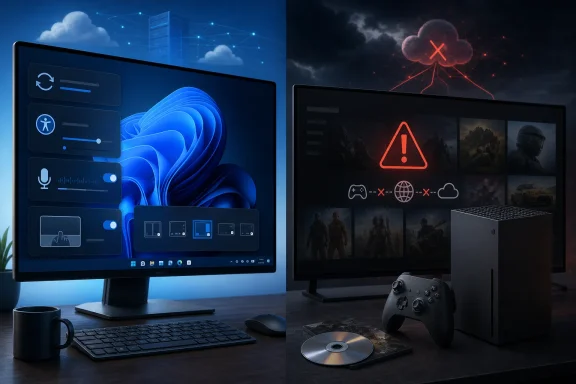 The Preview Updates Make Windows 11 More Configurable
KB5101681’s build 28000.2608 includes a more restrained Widgets experience and new accessibility work, including Screen Tint and refinements to Magnifier. Microsoft also lists improvements to File Explorer, Bluetooth audio reconnection, networking reliability, WSL mirrored networking with VPNs, and explorer.exe stability. For businesses, the update addresses an issue that could leave newly provisioned or recovered PCs incorrectly marked noncompliant after MDM enrollment, potentially blocking access to corporate resources.
The more immediately visible feature set is split across versions. In KB5101684, Microsoft is adding Voice Isolation to Voice Access. The feature is designed to filter other speakers and background noise, with separate modes for isolating the user’s voice, removing non-speech noise, or applying no filtering. Voice Access also gains Korean support.
The same 24H2 and 25H2 preview introduces more precision-touchpad controls, including separate scroll-and-zoom speed settings and accelerated scrolling. Microsoft is also simplifying Lock screen Widgets for new users by defaulting to Weather alone, changing taskbar notification badges to use the Windows accent color rather than red, and improving Start menu preference retention.
The accessibility and input changes are not glamorous, but they are exactly the sort of adjustments that tend to matter after a PC has been deployed. An accessibility feature that fails in a noisy shared workspace or a touchpad that scrolls too aggressively is not a launch-event problem; it is a daily productivity problem.
Neowin also highlighted a more fundamental update-management change in the 26H1 preview: calendar-based scheduling for Windows Update pauses. The outlet describes this as allowing users to defer updates indefinitely through scheduling rather than relying on the familiar limited pause window. Microsoft’s public documentation for the July previews emphasizes update progress and cleanup improvements, but administrators should treat any new pause behavior as something to validate in a test ring before assuming it changes policy or compliance behavior across managed devices.
Insider Builds Are Testing the Bigger Interface Changes
The Windows Insider program had a dense week, according to Neowin, with Future Platforms builds 29634.1000 and 29639.1000 bringing Voice Isolation and braille-display support in Narrator. The same builds reportedly continue testing the new scheduling framework for Windows updates.
The more conspicuous change is taskbar customization. Beta builds 26220.9022 and 28020.2623 reportedly let testers move the taskbar to the top, left, or right edge of the display, or shrink it down. That is one of Windows 11’s longest-running interface complaints: the operating system has resisted placement options that Windows 10 users took for granted.
Experimental builds 26300.9032 and 28120.2630 add smarter Search indexing, Phone Link previews in Start, and adaptive hibernation intended to help battery life, Neowin reports. Those features remain test-channel material, not commitments for a specific release. The distinction matters. Microsoft has become more willing to expose work-in-progress experiments, and not every experiment ships in its first form—or at all.
One operational detail should not be overlooked: the Insider flights also contain a renewed flight certificate ahead of the existing certificate’s August 11 expiration. Devices left on Insider channels can become unexpectedly awkward to maintain when flight infrastructure deadlines are missed, so organizations with test machines should ensure they are checking in and updating normally rather than assuming a dormant lab system will resume flights later.
Microsoft is reportedly considering an additional cleanup of the Windows 11 context menu, with a smaller design centered on common actions and a Customize control to reorder or hide entries. That work has not been announced by Microsoft, so it belongs firmly in the watch, don’t plan around it category. Still, it recognizes a real problem: the modern menu has often traded discoverability for compactness, then required users to open the legacy menu to find the command they expected.
Fake Utility Sites Turn Familiar App Names Into a Security Risk
The week’s sharper security warning did not come from a Patch Tuesday CVE. It came from a cluster of lookalike sites impersonating Windows utilities.
Neowin reported that Wintoys developer Bogdan_X found a fake site using the wintoys.app domain and traced its contact information to more than 70 other domains posing as tools such as PowerToys, CrystalDiskMark, WinUtil, and Quick Assist. In the observed case, the download link led to the legitimate Microsoft Store listing and the page included a disclaimer saying it was not affiliated with Wintoys. That does not make the operation harmless.
A convincing landing page can accumulate search traffic and user trust long before its operator swaps a safe link for a malicious installer, a credential-harvesting form, adware, or a paid download wrapper. Neowin reported that action against the domains led the operator to move registrars rather than disappear, which is a familiar pattern in low-cost, disposable infrastructure.
For Windows enthusiasts, the practical rule is simple: treat software names as insufficient proof of identity. Reach projects through a developer’s verified GitHub organization, an established official site, or the Microsoft Store; confirm the publisher shown by Windows; and be especially wary of a domain that exactly mirrors a product name but uses a new top-level domain. A clean-looking site is not an authenticity signal.
Wintoys itself also received a substantial performance-focused update, moving to .NET 10 and Windows App SDK 2.3.1. Meanwhile, Microsoft’s Notepad, Calculator, Clock, and Media Player updates have been comparatively quiet, emphasizing fixes and stability rather than major new functionality. Neowin expects those inbox-app updates to reach regular users around the next Patch Tuesday cycle.
Xbox’s Licensing Failure Was an Ownership Problem in Practice
The major Xbox outage began on July 27 and was mitigated the following day after roughly 16 hours of disruption, according to Windows Central, Tom’s Hardware, GameSpot, and other outlets. The outage affected account sign-in, Store access, libraries, game launches, and mobile services.
Xbox CTO Scott Van Vliet said the root cause was a licensing service outside Xbox itself that the platform depends on for entitlement checks. That explanation is technically plausible but uncomfortable: it means an upstream service failure can become a console-wide inability to validate access to paid games.
Reports that physical-disc titles also failed during the incident made the episode considerably worse. Van Vliet later said disc-based entitlement checks are not supposed to prevent play and that Microsoft had identified an issue with consoles correctly using saved entitlements during the outage. That distinction is important. A disc should be a local recovery path, not just another trigger for an online licensing decision.
The service has been restored, but the corrective work matters more than the apology. Xbox needs reliable offline and cached-entitlement behavior, clear status communication, and better fault isolation when a shared Microsoft service fails. For a company increasingly selling subscriptions, cross-device libraries, and digital ownership, availability is part of the product.
Record Cloud Results Do Not Erase the Gaming Questions
Microsoft closed fiscal year 2026 with $90 billion in April-through-June revenue, up 18% year over year. The Associated Press reported that Microsoft Cloud revenue reached $59.3 billion for the quarter, Azure and other cloud services grew 43%, annual Azure revenue surpassed $100 billion, and Microsoft 365 Copilot exceeded 30 million paid seats.
Those figures explain why investors reacted positively to the earnings report: Microsoft is now demonstrating both cloud-infrastructure demand and paid AI-product adoption. But the company’s gaming operation faces a different set of pressures.
Microsoft confirmed a major Gamescom 2026 presence, with Neowin reporting 140 gaming stations and 25 playable titles as Xbox marks its 25th anniversary. The listed lineup includes Call of Duty: Modern Warfare 4, Fable, and Alien: Isolation 2. That kind of physical show-floor investment remains valuable, particularly as Xbox tries to make its ecosystem legible across console, PC, cloud, and third-party storefronts.
The rest of the gaming news was less celebratory. Double Fine reportedly laid off 23 people—about 30% of its workforce—after separating from Xbox, while Ubisoft reportedly canceled its Project Maverick Far Cry extraction shooter. Ubisoft is also allowing Xbox console owners to unlock PC versions of selected owned games through Ubisoft Connect, a small but practical move toward reducing friction between platform libraries.
Finally, Gears of War: E-Day’s newly shown 12-player Horde Siege mode signals that Xbox’s biggest franchises are still being positioned as social, long-tail experiences. Three four-player squads sharing one map is a more ambitious cooperative structure than traditional Horde, but it will also depend on the same account, licensing, matchmaking, and service foundations that failed so visibly this week.
Windows 11’s preview features will likely reach broader audiences in the August servicing cycle. Xbox, meanwhile, has a less predictable deadline: it must show that the next service interruption cannot turn a library of digital—and even disc-based—games into an inaccessible collection.
